
Global Petrochemicals Market Outlook to 2030
Region:Global
Author(s):Shivani Mehra
Product Code:KROD3097
Region:Global
Author(s):Shivani Mehra
Product Code:KROD3097
December 2024
88
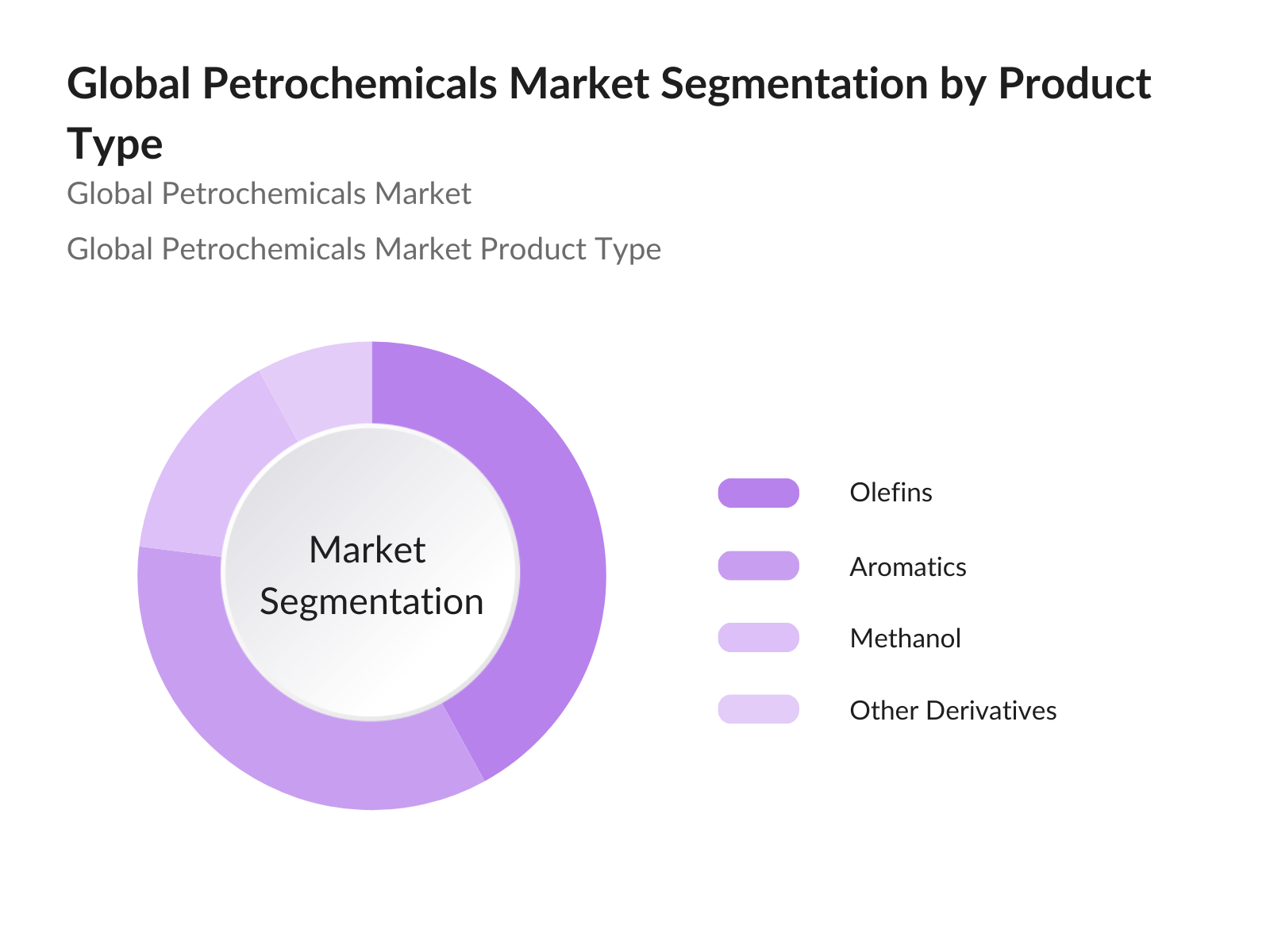
By Product Type: The global petrochemicals market is segmented by product type into olefins, aromatics, methanol, and other derivatives. Olefins, which include ethylene and propylene, dominate this segment due to their extensive applications in manufacturing plastics, synthetic fibers, and rubber. The versatile nature of olefins in creating essential everyday products contributes to their substantial market share.
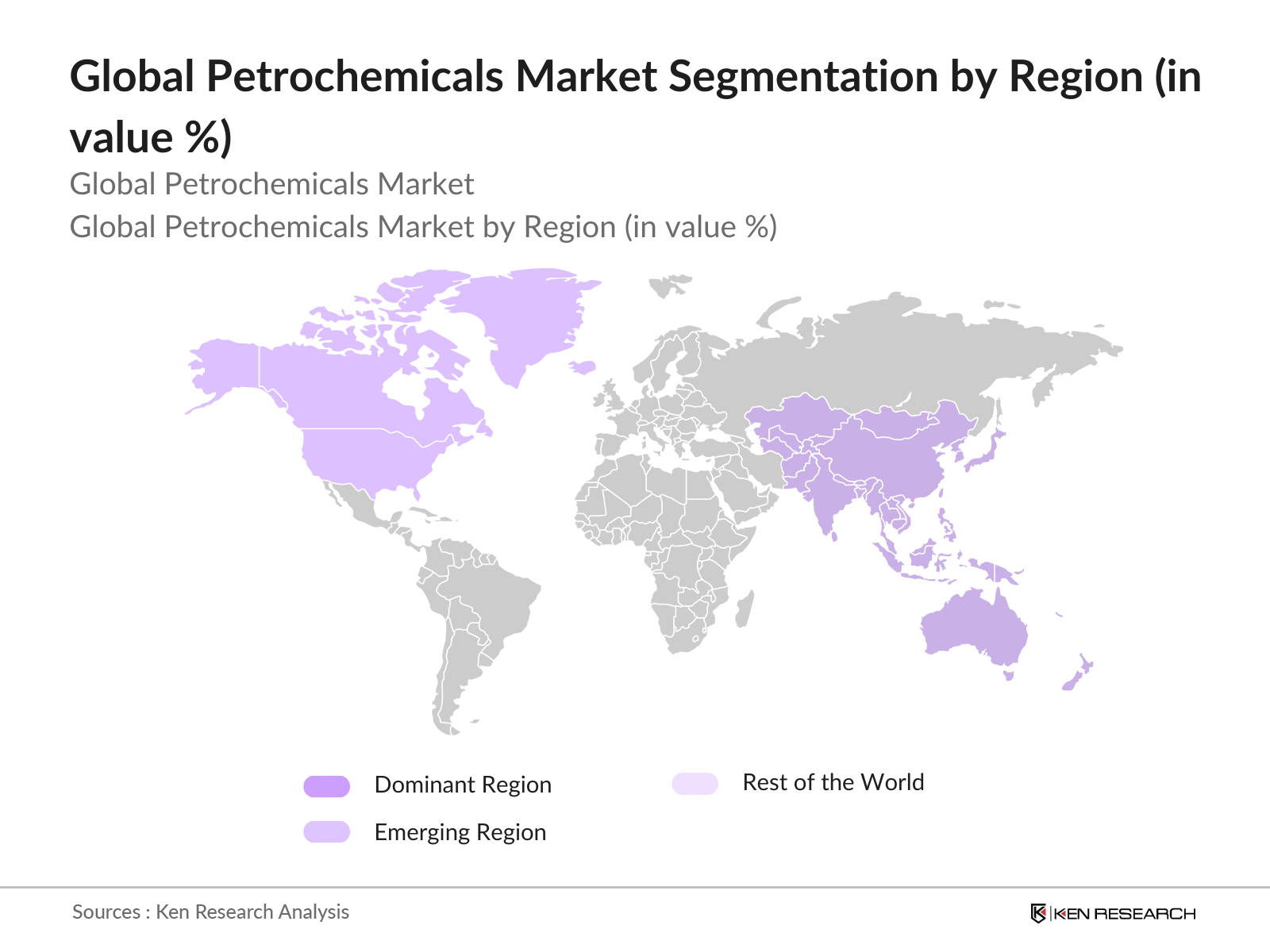
 By Region: The market is segmented by region into North America, Europe, Asia-Pacific, Middle East & Africa, and Latin America. Asia-Pacific dominates, largely due to high demand from industrializing countries and an expanding manufacturing sector. Countries like China and India contribute significantly due to their rising consumer markets and supportive government policies for petrochemical industry growth.
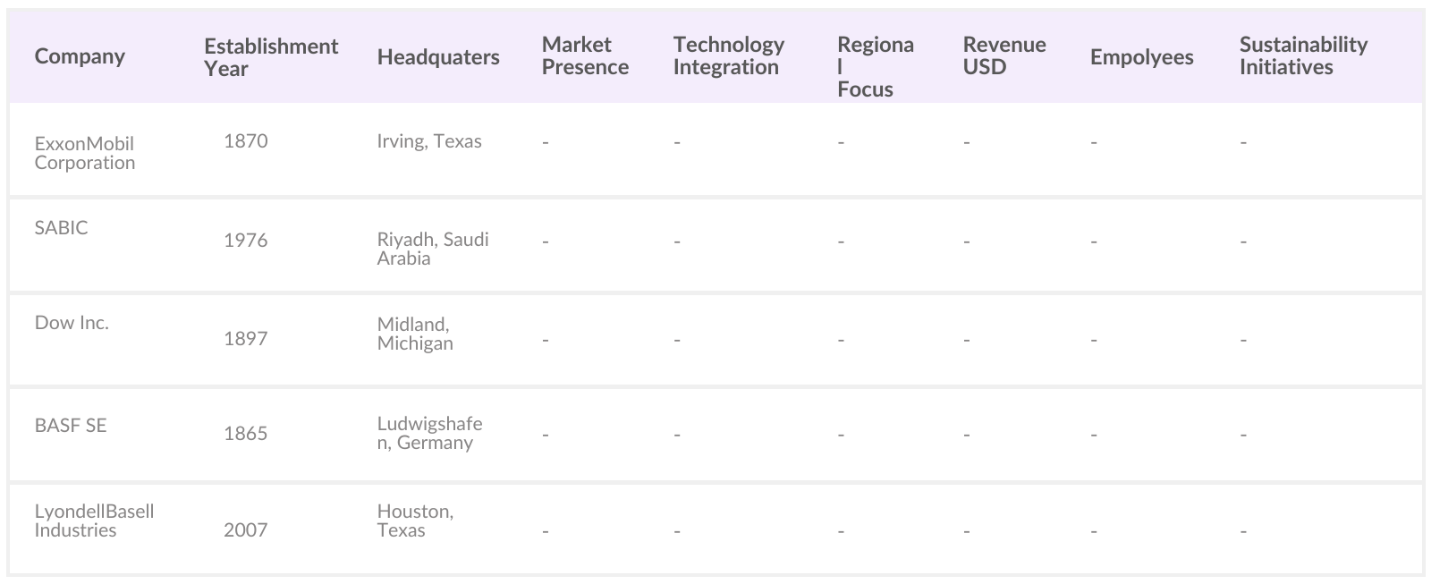
 Global Petrochemicals Market Competitive Landscape
The global petrochemicals market is dominated by several key players who leverage extensive production capacity, advanced technologies, and robust distribution channels.
Market Growth Drivers
Market Challenges:
Over the next five years, the global petrochemicals market is expected to experience notable growth driven by increased demand for petrochemical derivatives in packaging, automotive, and construction industries. Additionally, advancements in sustainable and bio-based petrochemical processes are likely to create significant opportunities for market expansion. Growth is also anticipated from ongoing investments in new production technologies and environmental initiatives, aiming to reduce emissions associated with petrochemical production.
Market Opportunities:
|
By Product Type |
Olefins Aromatics Methanol Styrene Butadiene |
|
By Feedstock |
Crude Oil Natural Gas Coal Renewable Sources |
|
By End-Use Industry |
Packaging Automotive Electronics Construction Textiles |
|
By Process Technology |
Steam Cracking Catalytic Reforming Methanol-to-Olefins (MTO) Fluid Catalytic Cracking (FCC) |
|
By Region |
North America Europe Asia-Pacific Middle East & Africa Latin America |
1.1 Definition and Scope
1.2 Market Taxonomy
1.3 Market Growth Rate (Demand Growth, Production Expansion)
1.4 Market Segmentation Overview (Product Type, Feedstock, End-Use Industry, Region, Process Technology)
2.1 Historical Market Size (Production Volume, Revenue, Demand-Supply Gap)
2.2 Year-On-Year Growth Analysis (Production Capacity, Consumption Volume)
2.3 Key Market Developments and Milestones (Capacity Expansions, Project Launches, Mergers)
3.1 Growth Drivers
3.1.1 Industrialization in Emerging Economies
3.1.2 Increased Demand in End-Use Industries (Automotive, Construction)
3.1.3 Rising Investments in Chemical Processing Technologies
3.1.4 Strategic Expansion of Production Facilities
3.2 Market Challenges
3.2.1 Volatility in Feedstock Prices
3.2.2 Regulatory Restrictions on Emissions
3.2.3 Sustainability and Environmental Concerns
3.2.4 Competition from Alternative Materials
3.3 Opportunities
3.3.1 Technological Advancements in Petrochemical Processes
3.3.2 Integration with Renewable Feedstocks
3.3.3 Regional Market Expansion in Asia-Pacific and MEA
3.4 Trends
3.4.1 Shift Towards Bio-Based Petrochemicals
3.4.2 Increasing Focus on Circular Economy
3.4.3 Digital Transformation in Production and Logistics
3.5 Regulatory Landscape
3.5.1 Emission Standards (Carbon Emissions, Hazardous Waste)
3.5.2 Safety Compliance and Environmental Impact Assessments
3.6 SWOT Analysis
3.7 Supply Chain Analysis (Raw Material Procurement, Distribution Channels)
3.8 Porters Five Forces Analysis
3.9 Competitive Landscape and Ecosystem
4.1 By Product Type (In Value %)
4.1.1 Olefins
4.1.2 Aromatics
4.1.3 Methanol
4.1.4 Styrene
4.1.5 Butadiene
4.2 By Feedstock (In Value %)
4.2.1 Crude Oil
4.2.2 Natural Gas
4.2.3 Coal
4.2.4 Renewable Sources
4.3 By End-Use Industry (In Value %)
4.3.1 Packaging
4.3.2 Automotive
4.3.3 Electronics
4.3.4 Construction
4.3.5 Textiles
4.4 By Process Technology (In Value %)
4.4.1 Steam Cracking
4.4.2 Catalytic Reforming
4.4.3 Methanol-to-Olefins (MTO)
4.4.4 Fluid Catalytic Cracking (FCC)
4.5 By Region (In Value %)
4.5.1 North America
4.5.2 Europe
4.5.3 Asia-Pacific
4.5.4 Middle East & Africa
4.5.5 Latin America
5.1 Detailed Profiles of Major Companies
5.1.1 ExxonMobil Corporation
5.1.2 SABIC
5.1.3 Dow Inc.
5.1.4 BASF SE
5.1.5 Royal Dutch Shell
5.1.6 Reliance Industries
5.1.7 LyondellBasell Industries
5.1.8 INEOS Group
5.1.9 Chevron Phillips Chemical
5.1.10 Mitsubishi Chemical Holdings
5.1.11 LG Chem
5.1.12 Sumitomo Chemical Co.
5.1.13 China National Petroleum Corporation (CNPC)
5.1.14 TotalEnergies
5.1.15 Formosa Plastics Group
5.2 Cross Comparison Parameters (Revenue, Feedstock Capacity, Production Facilities, Product Portfolio, Market Share, Investment in R&D, Environmental Compliance)
5.3 Market Share Analysis
5.4 Strategic Initiatives (Expansion, Collaborations, Technology Partnerships)
5.5 Mergers and Acquisitions
5.6 Investment Analysis
5.7 Venture Capital and Funding
5.8 Government Grants and Subsidies
5.9 Private Equity Investments
6.1 International Emission Standards
6.2 Product Quality Standards
6.3 Environmental Compliance Regulations
6.4 Certification and Licensing Requirements
7.1 Future Market Size Projections
7.2 Key Factors Driving Future Market Growth (Demand for Light Feedstocks, Advanced Process Technologies)
8.1 By Product Type (In Value %)
8.2 By Feedstock (In Value %)
8.3 By End-Use Industry (In Value %)
8.4 By Process Technology (In Value %)
8.5 By Region (In Value %)
9.1 Total Addressable Market (TAM) Analysis
9.2 Market Expansion Opportunities
9.3 Technology Adoption Strategies
9.4 Emerging Growth Regions Analysis
The initial phase includes creating an ecosystem map involving all primary stakeholders in the global petrochemicals market. This is supported by extensive secondary research from industry databases to identify critical factors influencing the market, such as production capacity and consumer demand.
This phase involves a detailed analysis of historical market data for the petrochemicals industry, assessing production levels and end-use consumption. Key metrics like feedstock availability and processing capacity are analyzed to ensure accurate market estimates.
Hypotheses on market trends and growth drivers are validated through interviews with industry experts, including senior managers from leading petrochemical firms. This provides direct insights into operational trends and emerging technologies that impact market dynamics.
The final synthesis phase involves consolidating data gathered from proprietary models and industry insights, ensuring an accurate and verified analysis. Data validation through real-world case studies and production metrics finalizes the report for comprehensive industry coverage.
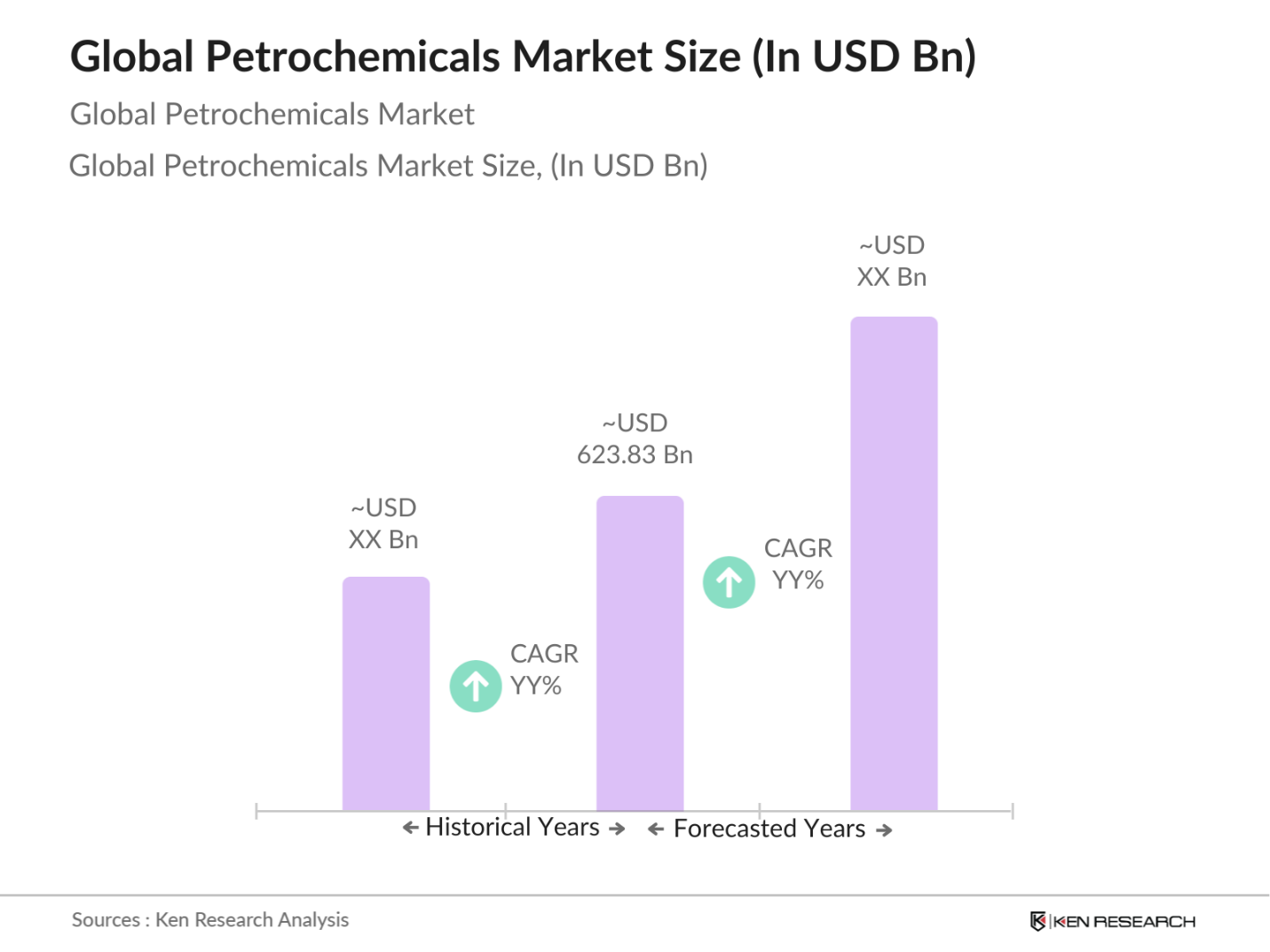
The global petrochemicals market is valued at USD 623.83 billion, supported by the high demand for petrochemical derivatives across multiple industries.
Challenges include fluctuating feedstock prices, regulatory pressure for emission reductions, and competition from alternative, eco-friendly materials.
Key players include ExxonMobil, SABIC, Dow Inc., BASF SE, and Royal Dutch Shell, known for their extensive production capacities and technological advancements.
The market is driven by rising industrial demand, technological advancements in production, and increasing use in end-use industries like automotive and packaging.

What makes us stand out is that our consultants follows Robust, Refine and Result (RRR) methodology. i.e. Robust for clear definitions, approaches and sanity checking, Refine for differentiating respondents facts and opinions and Result for presenting data with story

We have set a benchmark in the industry by offering our clients with syndicated and customized market research reports featuring coverage of entire market as well as meticulous research and analyst insights.

While we don't replace traditional research, we flip the method upside down. Our dual approach of Top Bottom & Bottom Top ensures quality deliverable by not just verifying company fundamentals but also looking at the sector and macroeconomic factors.

With one step in the future, our research team constantly tries to show you the bigger picture. We help with some of the tough questions you may encounter along the way: How is the industry positioned? Best marketing channel? KPI's of competitors? By aligning every element, we help maximize success.

Our report gives you instant access to the answers and sources that other companies might choose to hide. We elaborate each steps of research methodology we have used and showcase you the sample size to earn your trust.

If you need any support, we are here! We pride ourselves on universe strength, data quality, and quick, friendly, and professional service.