
Global Pharmaceutical Manufacturing Market Outlook to 2030
Region:Global
Author(s):Yogita Sahu
Product Code:KROD7442
Region:Global
Author(s):Yogita Sahu
Product Code:KROD7442
November 2024
83
Listen to the audio summary
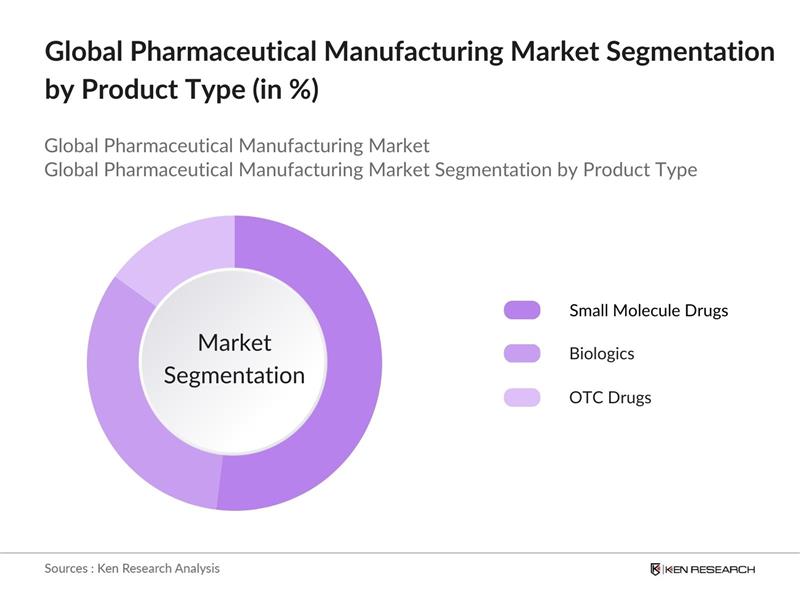
By Product Type: The market is segmented by product type into small molecule drugs, biologics, and over-the-counter (OTC) drugs. Small molecule drugs dominate the segment due to their simpler production process, extensive applications across multiple therapeutic areas, and established role in generic drug manufacturing. Biologics, while requiring more complex manufacturing processes, are also growing due to their efficacy in treating chronic and rare diseases. OTC drugs remain crucial as consumer demand for accessible healthcare products continues to rise.
By Application: The market is categorized by application into oncology, cardiovascular, neurology, and infectious diseases. Oncology holds a significant share due to a higher prevalence of cancer cases globally and continuous innovation in targeted therapies. Neurology and cardiovascular segments are also prominent, driven by aging populations and increasing incidences of neurological and cardiovascular conditions, respectively. Infectious diseases remain vital due to ongoing demand for antibiotics and antiviral drugs.
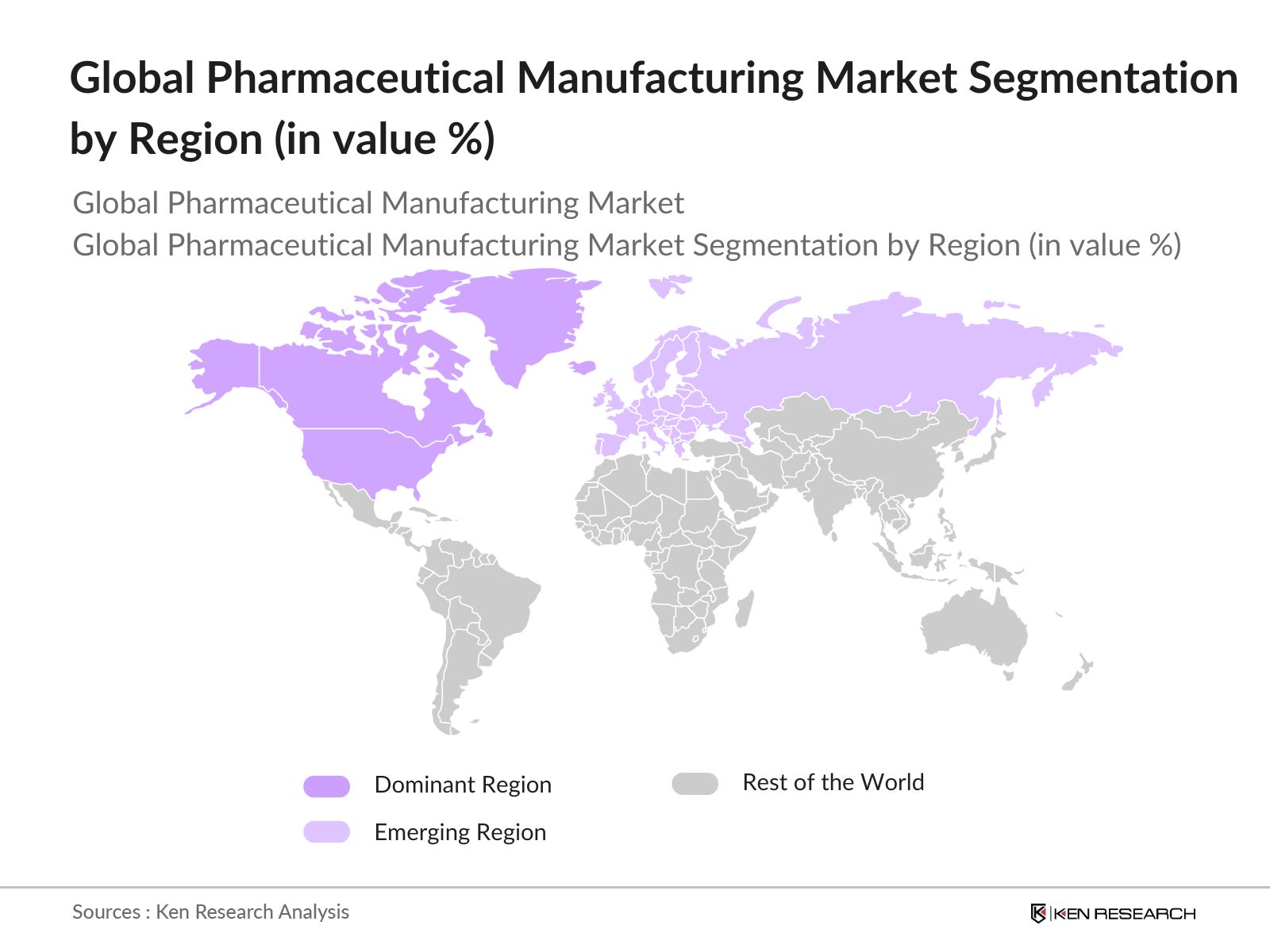
By Region: The market is segmented regionally into North America, Europe, Asia-Pacific, Latin America, and Middle East & Africa. North America dominates due to its well-established healthcare infrastructure and substantial pharmaceutical R&D investment. Asia-Pacific follows closely, benefitting from lower manufacturing costs and increasing demand for pharmaceuticals, while Europe leverages strong government support for pharmaceutical innovation. The market in Latin America and Middle East & Africa is expanding as healthcare access improves and demand for affordable drugs rises.
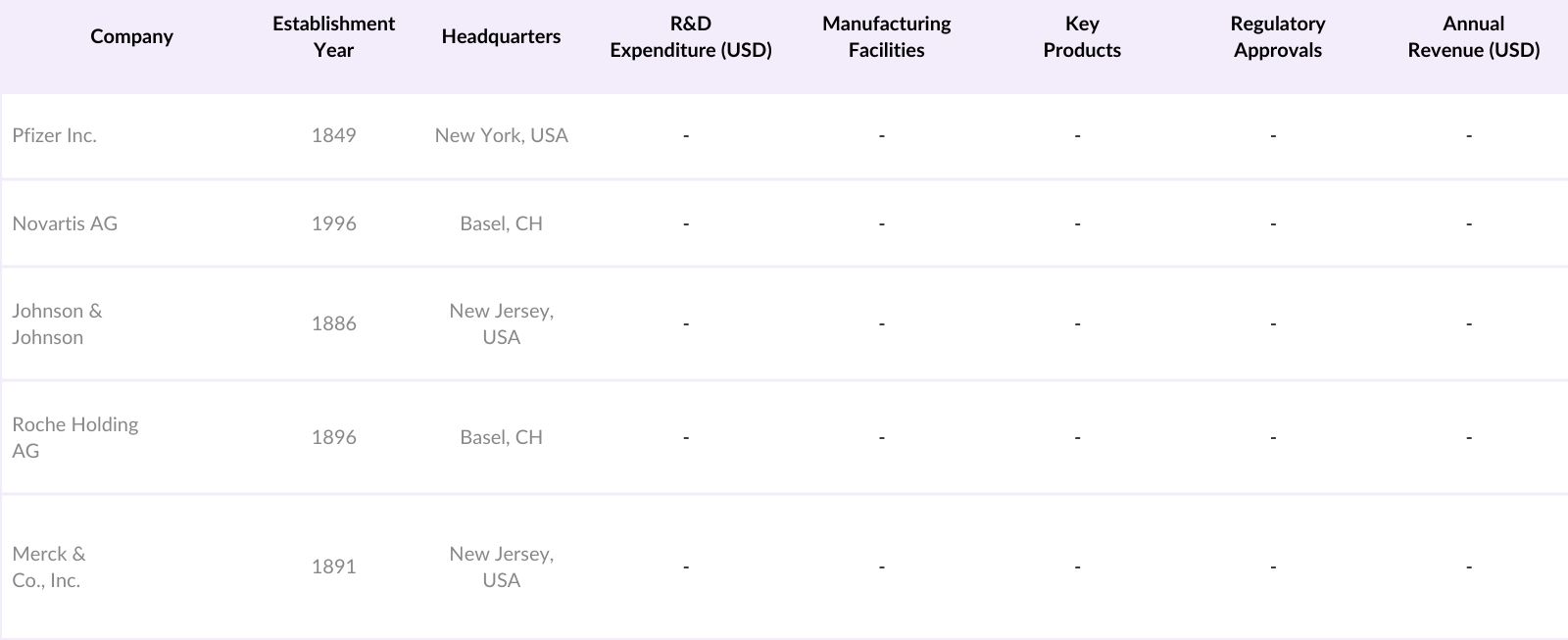
The market is concentrated among key players who drive innovation and maintain significant influence over global supply chains.
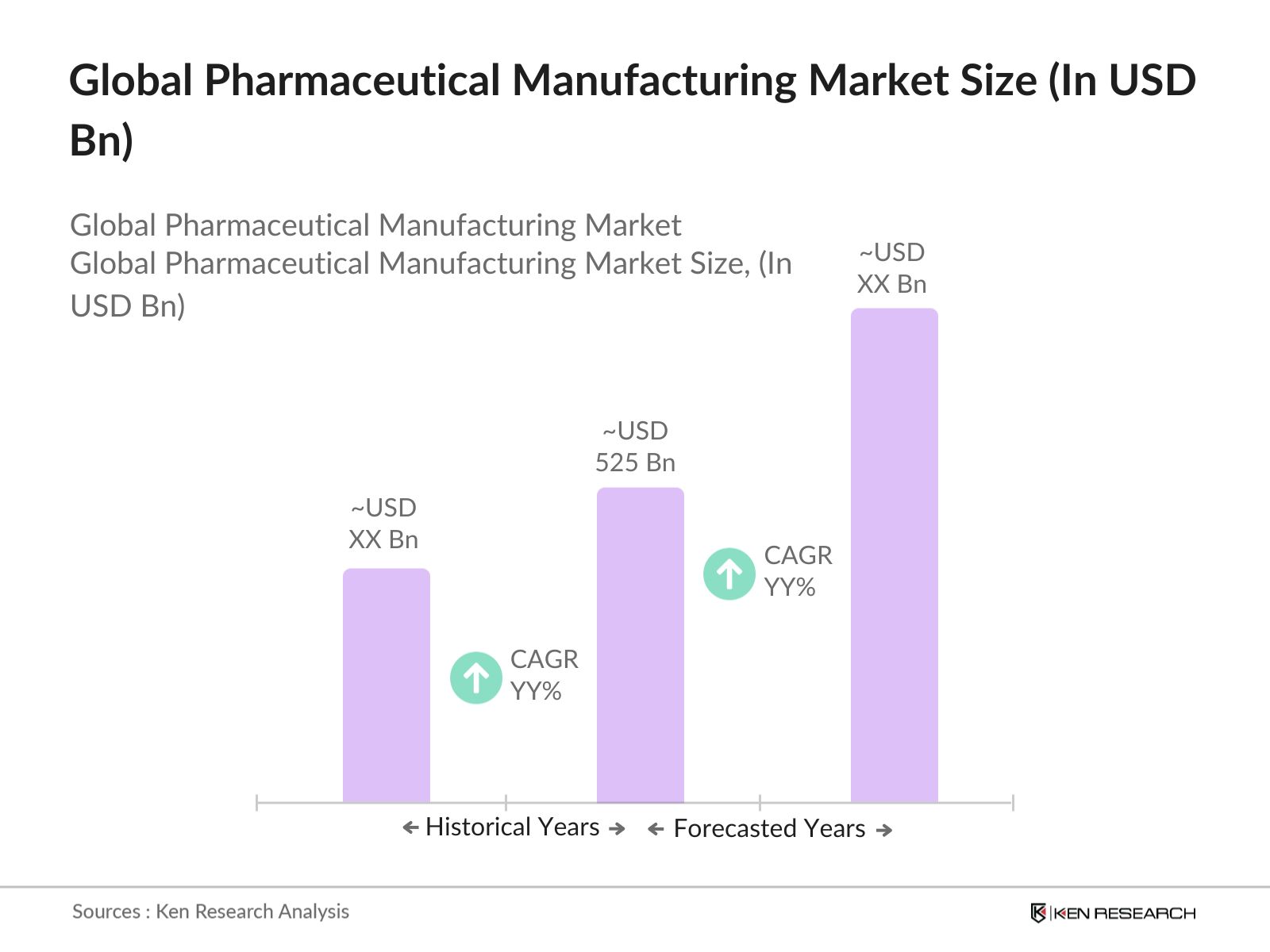
The global pharmaceutical manufacturing industry is expected to witness growth, driven by increasing demand for biologics, innovations in personalized medicine, and continued R&D investment.
|
Product Type |
Small Molecule Drugs |
|
Application |
Oncology |
|
Manufacturing Process |
API Manufacturing |
|
Technology |
Bioprocessing Technology |
|
Region |
North America |
1.1. Definition and Scope
1.2. Market Taxonomy
1.3. Manufacturing Process Overview
1.4. Market Growth Rate
2.1. Historical Market Size
2.2. Year-on-Year Growth Analysis
2.3. Key Market Developments and Milestones
3.1. Growth Drivers
3.1.1. R&D Expenditure
3.1.2. Technological Advancements (e.g., Biologics Manufacturing, AI in Drug Production)
3.1.3. Regulatory Support
3.1.4. Expansion of Contract Manufacturing Organizations (CMOs)
3.2. Market Challenges
3.2.1. High Cost of Equipment and Infrastructure
3.2.2. Stringent Regulatory Compliance
3.2.3. Supply Chain Vulnerabilities
3.3. Opportunities
3.3.1. Expansion into Emerging Markets
3.3.2. Adoption of Personalized Medicine
3.3.3. Innovation in API Synthesis and Formulations
3.4. Trends
3.4.1. Biopharmaceutical Manufacturing
3.4.2. Automation and Robotics Integration
3.4.3. Digitalization and Industry 4.0
3.5. Government Regulations
3.5.1. FDA and EMA Guidelines
3.5.2. Good Manufacturing Practice (GMP) Compliance
3.5.3. Quality-by-Design (QbD) Framework
3.5.4. Global Harmonization of Standards
3.6. SWOT Analysis
3.7. Supply Chain Ecosystem
3.8. Porters Five Forces
3.9. Competition Ecosystem
4.1. By Product Type (In Value %)
4.1.1. Small Molecule Drugs
4.1.2. Biologics
4.1.3. Over-the-Counter (OTC) Drugs
4.2. By Application (In Value %)
4.2.1. Oncology
4.2.2. Cardiovascular
4.2.3. Neurology
4.2.4. Infectious Diseases
4.3. By Manufacturing Process (In Value %)
4.3.1. Active Pharmaceutical Ingredient (API) Manufacturing
4.3.2. Drug Product Manufacturing
4.3.3. Formulation Development
4.4. By Technology (In Value %)
4.4.1. Bioprocessing Technology
4.4.2. Single-Use Manufacturing
4.4.3. Continuous Manufacturing
4.4.4. Additive Manufacturing (3D Printing)
4.5. By Region (In Value %)
4.5.1. North America
4.5.2. Europe
4.5.3. Asia-Pacific
4.5.4. Latin America
4.5.5. Middle East & Africa
5.1 Detailed Profiles of Major Companies
5.1.1. Pfizer Inc.
5.1.2. Novartis AG
5.1.3. Johnson & Johnson
5.1.4. Merck & Co., Inc.
5.1.5. Roche Holding AG
5.1.6. Sanofi S.A.
5.1.7. GlaxoSmithKline plc
5.1.8. Bristol-Myers Squibb
5.1.9. AbbVie Inc.
5.1.10. Eli Lilly and Company
5.1.11. Amgen Inc.
5.1.12. AstraZeneca
5.1.13. Boehringer Ingelheim
5.1.14. Takeda Pharmaceutical Company
5.1.15. Bayer AG
5.2 Cross Comparison Parameters (Revenue, Global Presence, Manufacturing Facilities, R&D Investment, Patent Portfolio, Number of Products, Therapeutic Areas Covered, Regulatory Approvals)
5.3. Market Share Analysis
5.4. Strategic Initiatives
5.5. Mergers and Acquisitions
5.6. Investment Analysis
5.7. Private Equity and Venture Capital Investments
5.8. Government Grants
6.1. Good Manufacturing Practice (GMP) Standards
6.2. Regulatory Compliance and Certification
6.3. Certification Processes
7.1. Future Market Size Projections
7.2. Key Factors Driving Future Market Growth
8.1. By Product Type (In Value %)
8.2. By Application (In Value %)
8.3. By Manufacturing Process (In Value %)
8.4. By Technology (In Value %)
8.5. By Region (In Value %)
9.1. TAM/SAM/SOM Analysis
9.2. Customer Cohort Analysis
9.3. Marketing Initiatives
9.4. White Space Opportunity Analysis
Disclaimer Contact UsThis stage begins with mapping the entire pharmaceutical manufacturing ecosystem, identifying all relevant stakeholders. We employ a blend of desk research and database sourcing to recognize influential market drivers and barriers that shape the industry.
Historical market data is collected to analyze trends and patterns within the pharmaceutical manufacturing sector. This includes revenue generation, product category analysis, and regional penetration, ensuring accuracy through validation against industry standards.
Market hypotheses are formulated and then validated via expert consultations, providing insights from senior professionals within the industry. These expert insights refine the analysis and confirm the projected market trajectories.
The synthesis phase compiles data from various sources, including pharmaceutical manufacturing firms and industry experts. This step integrates insights to ensure a comprehensive and verified market analysis output, offering an authoritative perspective on the markets current and future potential.
The global pharmaceutical manufacturing market is valued at USD 525 billion, supported by ongoing investments in R&D, robust demand for generics, and the growth of biologics manufacturing.
Challenges in the global pharmaceutical manufacturing market include high regulatory compliance costs, supply chain complexity, and the need for continuous technological upgrades in manufacturing processes.
Key players include Pfizer, Novartis, Johnson & Johnson, Roche, and Merck & Co., Inc., each excelling through expansive global reach, innovative R&D, and diversified product lines.
Growth in the global pharmaceutical manufacturing market is driven by increasing demand for specialty drugs, advancements in continuous manufacturing technology, and supportive government regulations for drug innovation.

What makes us stand out is that our consultants follows Robust, Refine and Result (RRR) methodology. i.e. Robust for clear definitions, approaches and sanity checking, Refine for differentiating respondents facts and opinions and Result for presenting data with story

We have set a benchmark in the industry by offering our clients with syndicated and customized market research reports featuring coverage of entire market as well as meticulous research and analyst insights.

While we don't replace traditional research, we flip the method upside down. Our dual approach of Top Bottom & Bottom Top ensures quality deliverable by not just verifying company fundamentals but also looking at the sector and macroeconomic factors.

With one step in the future, our research team constantly tries to show you the bigger picture. We help with some of the tough questions you may encounter along the way: How is the industry positioned? Best marketing channel? KPI's of competitors? By aligning every element, we help maximize success.

Our report gives you instant access to the answers and sources that other companies might choose to hide. We elaborate each steps of research methodology we have used and showcase you the sample size to earn your trust.

If you need any support, we are here! We pride ourselves on universe strength, data quality, and quick, friendly, and professional service.