
Global Plant Protein Market Outlook 2030
Region:Global
Author(s):Shivani Mehra
Product Code:KROD11391
Region:Global
Author(s):Shivani Mehra
Product Code:KROD11391
December 2024
82
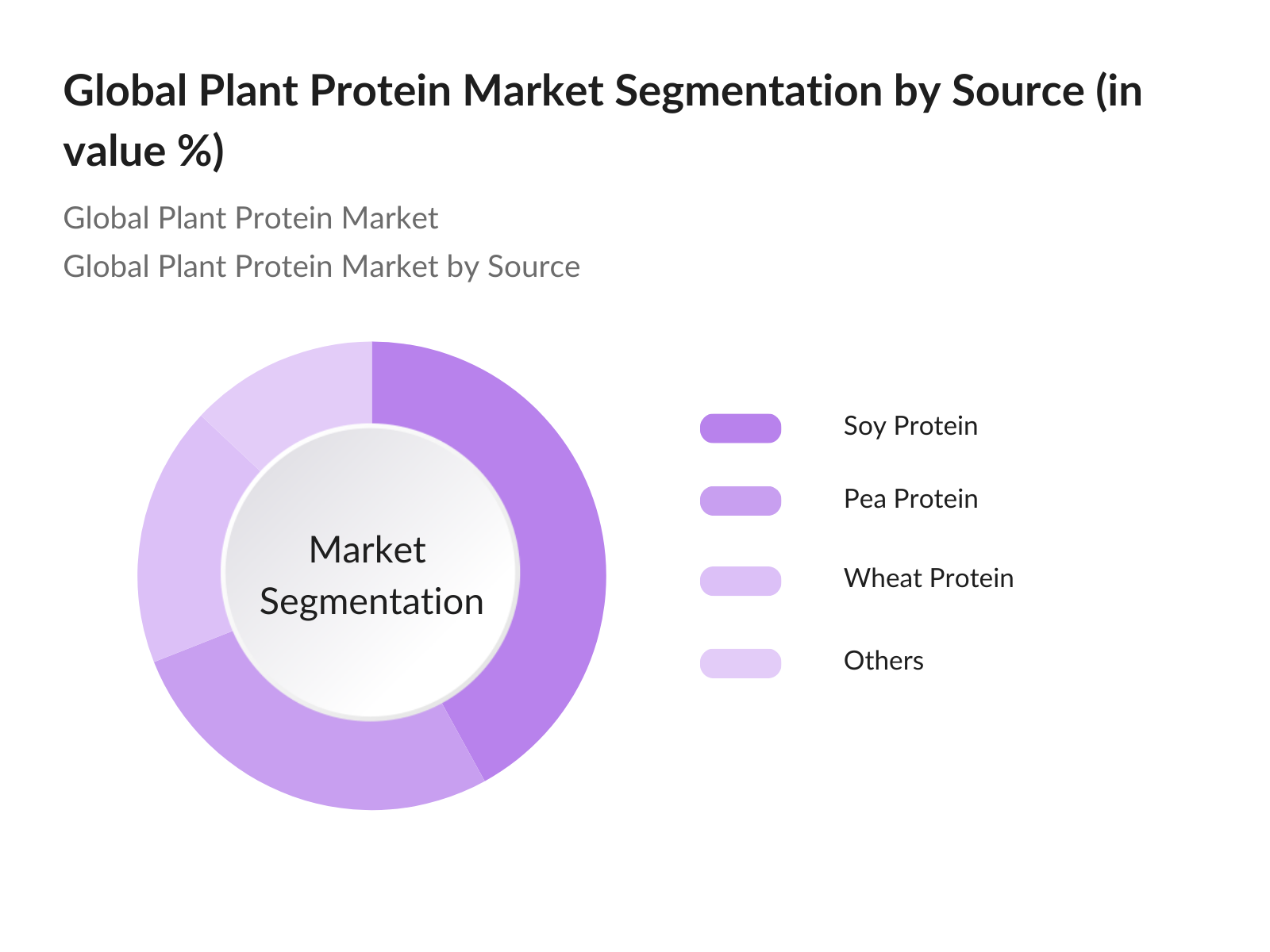
By Source: The plant protein market is segmented by source into soy protein, pea protein, wheat protein, and others. Soy protein dominates the market due to its widespread use in food products like meat substitutes and dairy alternatives. This dominance is attributed to its high protein content, cost-effectiveness, and long-established applications in the food industry. Additionally, soy protein isolates are commonly used in nutrition supplements, making it the most versatile source of plant protein.
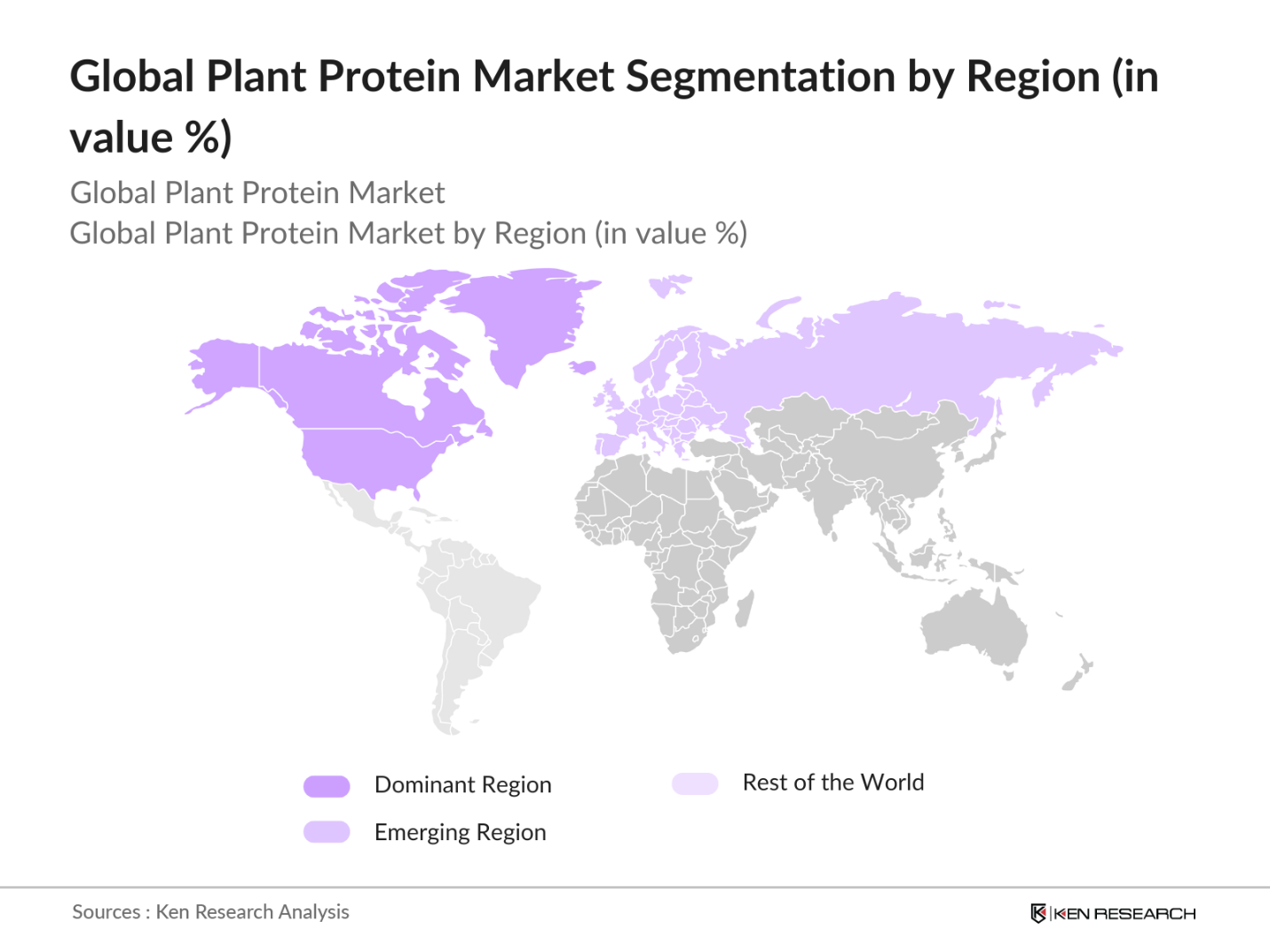
By Region: The plant protein market is segmented into North America, Europe, Asia-Pacific, Latin America, and the Middle East & Africa. North America dominates the global plant protein market due to strong demand for meat and dairy substitutes. In Asia-Pacific, the market is growing at a robust pace, driven by rising consumer awareness and demand for healthy food alternatives in urban centers.
 Global Plant Protein Market Competitive Landscape
The global plant protein market is characterized by several key players who dominate the industry due to their strong distribution networks, diverse product offerings, and constant innovation. These players focus on partnerships and new product developments to strengthen their market position. The competition is driven by both established giants and emerging local players. Companies like Cargill and ADM have invested heavily in research and development to maintain a competitive edge in plant-based protein production.
|
Company |
Establishment Year |
Headquarters |
Revenue (USD) |
Product Portfolio |
Geographical Presence |
R&D Investments |
Sustainability Efforts |
Partnerships |
Certifications |
|
Cargill |
1865 |
U.S. |
165 billion |
||||||
|
Archer Daniels Midland |
1902 |
U.S. |
85 billion |
||||||
|
Kerry Group |
1972 |
Ireland |
7 billion |
||||||
|
DuPont |
1802 |
U.S. |
21 billion |
||||||
|
Roquette |
1933 |
France |
4 billion |
Market Growth Drivers
Market Challenges:
Over the next five years, the global plant protein market is expected to experience significant growth, driven by consumer demand for sustainable and healthy food products. Rising veganism, advancements in food technology, and growing awareness of the environmental impact of animal agriculture are key factors that will fuel the market's growth. Innovations in plant-based protein products and increasing investments in research and development are also expected to shape the market's future.
Market Opportunities:
|
By Source |
Soy Protein Pea Protein Wheat Protein Others |
|
By Form |
Isolates Concentrates Textured Proteins |
|
By Application |
Food & Beverages Nutritional Supplements Animal Feed |
|
By End-User |
Powders Bars Tablets |
|
By Region |
North America Europe Asia-Pacific Latin America Middle East & Africa |
1.1 Definition and Scope
1.2 Market Taxonomy
1.3 Market Growth Rate
1.4 Market Segmentation Overview
2.1 Historical Market Size (Revenue, Volume)
2.2 Year-on-Year Growth Analysis
2.3 Key Market Developments and Milestones
3.1 Growth Drivers (e.g., Increasing Veganism, Health Consciousness)
3.2 Market Challenges (e.g., High Production Costs, Allergen Sensitivities)
3.3 Opportunities (e.g., Emerging Markets in Asia-Pacific, Technological Innovations)
3.4 Trends (e.g., Clean Label, Protein Fortification, Sustainability)
3.5 Regulatory Environment (e.g., Labeling Regulations, Organic Certifications)
3.6 Supply Chain Overview
3.7 SWOT Analysis (Strengths, Weaknesses, Opportunities, Threats)
3.8 Porters Five Forces Analysis
3.9 Competitive Landscape (15 Key Competitors)
4.1 By Source (Revenue Share, Volume Share)
4.1.1 Soy Protein
4.1.2 Pea Protein
4.1.3 Wheat Protein
4.1.4 Others (e.g., Canola, Rice)
4.2 By Form (Revenue Share, Volume Share)
4.2.1 Isolates
4.2.2 Concentrates
4.2.3 Textured Proteins
4.3 By Application (Revenue Share, Volume Share)
4.3.1 Food & Beverages (Meat Alternatives, Dairy Substitutes)
4.3.2 Nutritional Supplements
4.3.3 Animal Feed
4.4 By Type (Powders, Bars, Tablets)
4.5 By Distribution Channel (Online, Specialty Stores, Supermarkets)
5.1 Detailed Profiles of Major Companies
5.1.1 Cargill
5.1.2 Archer Daniels Midland (ADM)
5.1.3 Kerry Group
5.1.4 DuPont
5.1.5 Roquette
5.1.6 Glanbia
5.1.7 Conagra Brands
5.1.8 Axiom Foods
5.1.9 Ingredion
5.1.10 Glico Nutrition
5.1.11 Tate & Lyle
5.1.12 Emsland Group
5.1.13 A&B Ingredients
5.1.14 Sotexpro
5.1.15 Growing Naturals
5.2 Cross Comparison Parameters (Revenue, Market Share, Product Portfolio, R&D Investments, Geographical Presence, Supply Chain Capabilities, Sustainability Efforts, Strategic Partnerships)
6.1 Projected Market Growth
6.2 Key Factors Driving Future Growth
7.1 TAM/SAM/SOM Analysis (Total Available Market, Serviceable Available Market)
7.2 Key Marketing Strategies
7.3 White Space Opportunities
7.4 Product Innovation Recommendations
In the first step, key variables like consumer trends, plant protein sources, and technological advancements are identified. The data is gathered through a combination of desk research and proprietary databases to ensure an accurate understanding of the plant protein market.
This phase involves gathering historical data related to the market size, penetration, and growth patterns. Statistical models are used to predict future market trends, ensuring the reliability of our market size estimates.
To ensure data accuracy, market hypotheses are validated through expert interviews with stakeholders from leading companies in the plant protein industry. These consultations provide insights into product innovation and competitive positioning.
Finally, the data is synthesized into actionable insights. The research output includes detailed segment analysis, competitive positioning, and market growth projections, which are validated through our bottom-up approach.
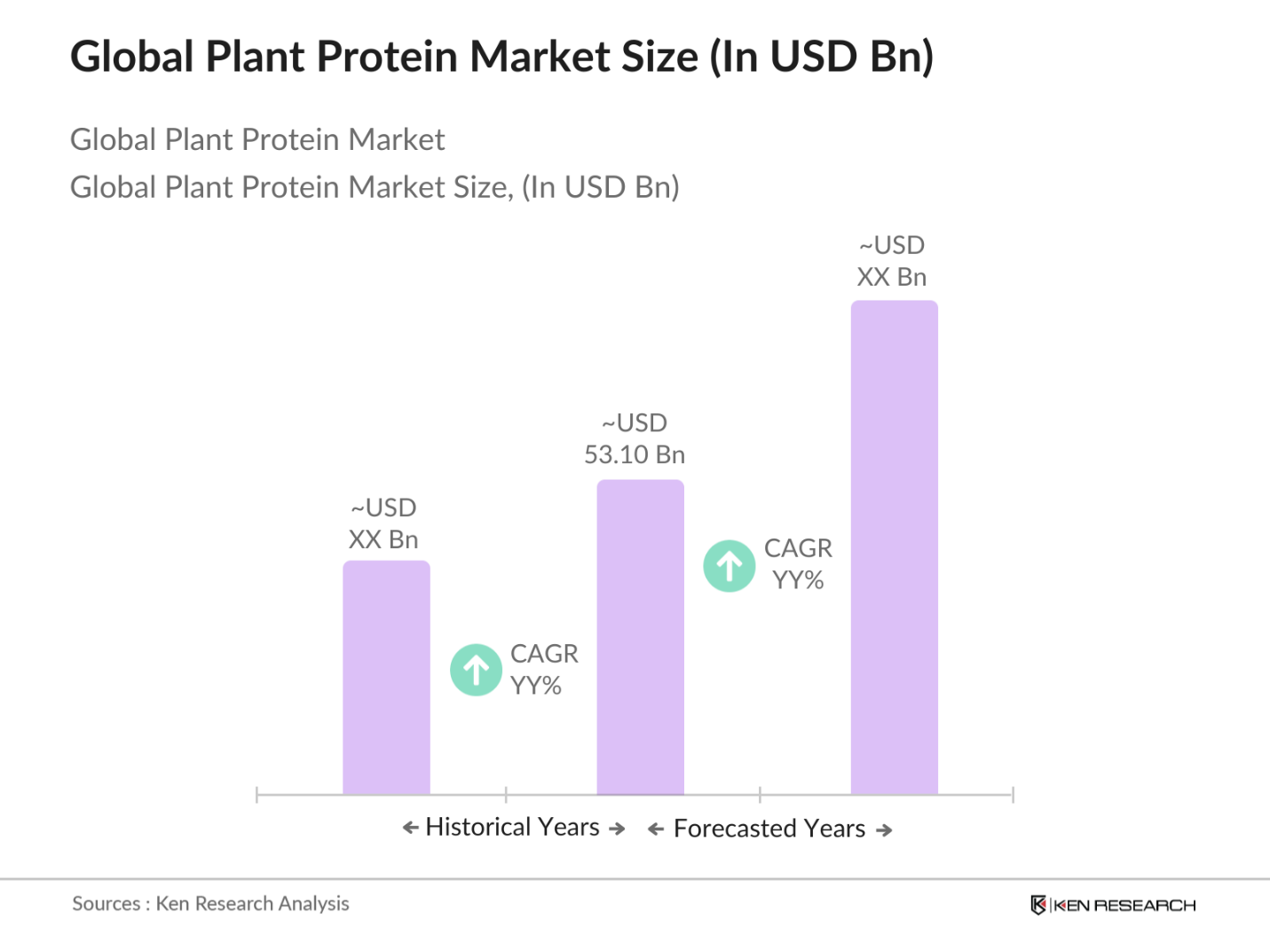
The global plant protein market is valued at USD 10.3 billion, driven by consumer demand for healthy and sustainable food products, along with advancements in plant protein technology.
Challenges include the high cost of production, consumer allergies to certain plant-based proteins like soy, and the technical difficulties in achieving texture and flavor consistency similar to animal proteins.
Key players in the market include Cargill, ADM, Kerry Group, DuPont, and Roquette, known for their strong global presence and innovative product offerings.
Growth drivers include increasing consumer preference for plant-based foods, rising veganism, and environmental concerns related to animal agriculture, pushing the demand for plant-based alternatives.

What makes us stand out is that our consultants follows Robust, Refine and Result (RRR) methodology. i.e. Robust for clear definitions, approaches and sanity checking, Refine for differentiating respondents facts and opinions and Result for presenting data with story

We have set a benchmark in the industry by offering our clients with syndicated and customized market research reports featuring coverage of entire market as well as meticulous research and analyst insights.

While we don't replace traditional research, we flip the method upside down. Our dual approach of Top Bottom & Bottom Top ensures quality deliverable by not just verifying company fundamentals but also looking at the sector and macroeconomic factors.

With one step in the future, our research team constantly tries to show you the bigger picture. We help with some of the tough questions you may encounter along the way: How is the industry positioned? Best marketing channel? KPI's of competitors? By aligning every element, we help maximize success.

Our report gives you instant access to the answers and sources that other companies might choose to hide. We elaborate each steps of research methodology we have used and showcase you the sample size to earn your trust.

If you need any support, we are here! We pride ourselves on universe strength, data quality, and quick, friendly, and professional service.