
Global Platinum Market Outlook to 2030
Region:Global
Author(s):Abhinav kumar
Product Code:KROD7451
Region:Global
Author(s):Abhinav kumar
Product Code:KROD7451
December 2024
88
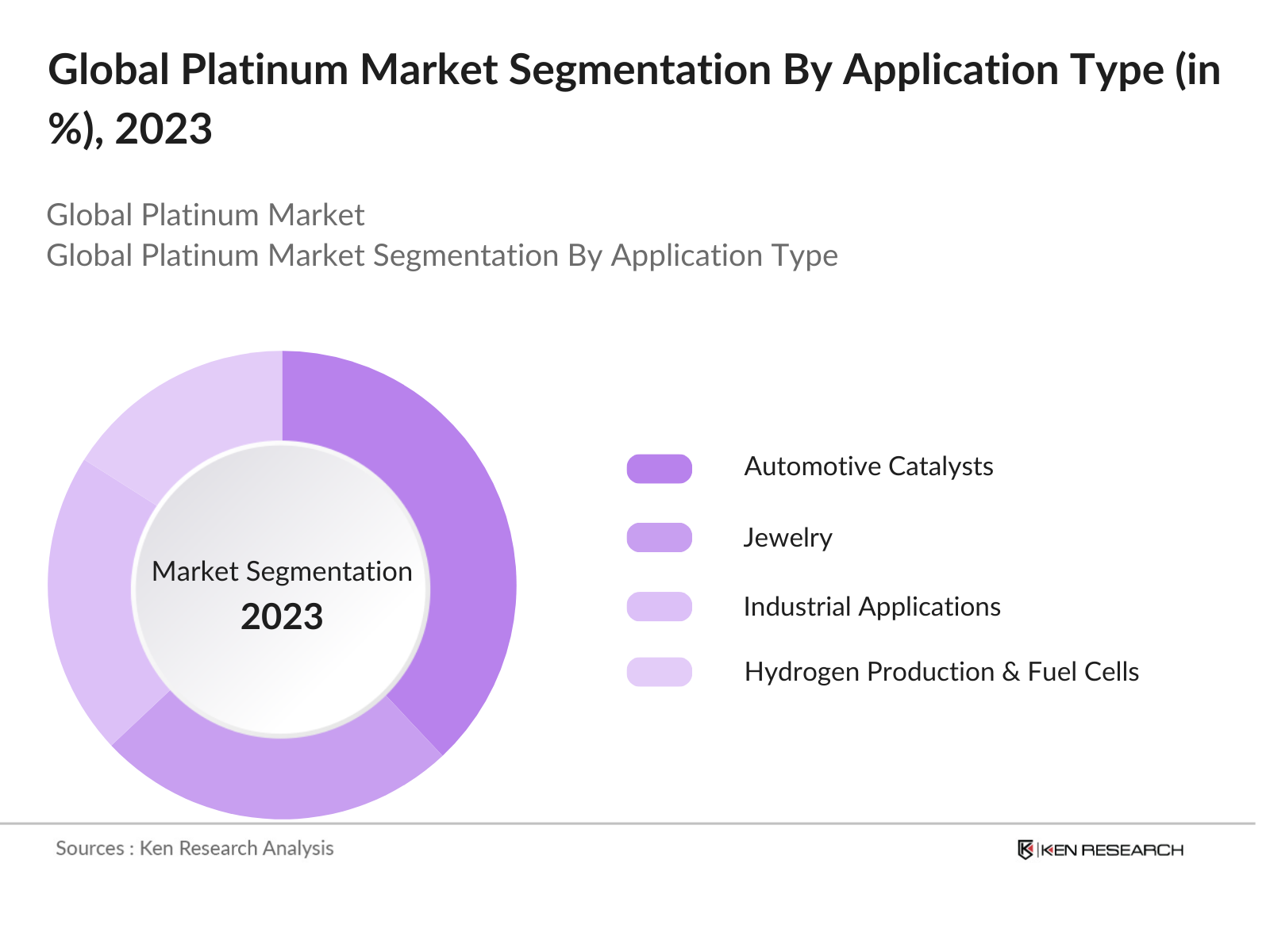
By Application: The global platinum market is segmented by application into automotive catalysts, jewelry, hydrogen production and fuel cells, industrial applications, and investment. Automotive catalysts, which utilize platinum in catalytic converters to reduce vehicle emissions, hold the largest share. This is due to increasing emission regulations worldwide, particularly in regions like Europe and North America, where stringent environmental regulations are pushing automakers to use more platinum in reducing vehicle emissions. In emerging economies like China, the rising adoption of electric and hybrid vehicles further accelerates the demand for platinum.
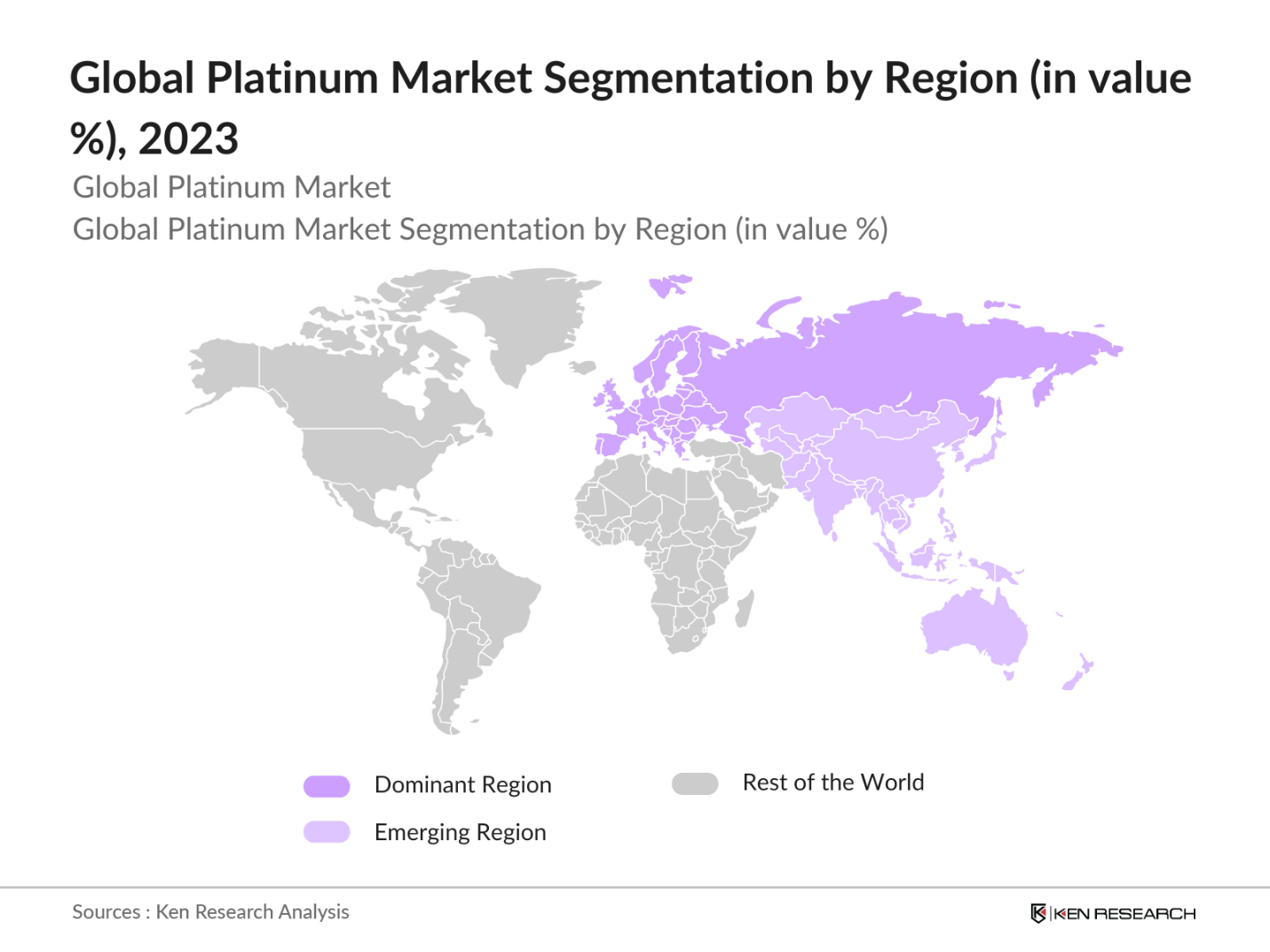
By Region:
The global platinum market is segmented regionally into North America, Europe, Asia-Pacific, the Middle East & Africa, and Latin America. Europe holds the dominant position due to its leading role in automotive manufacturing, particularly in countries like Germany and France. The implementation of strict emission standards has led to an increase in the use of platinum in the automotive sector. In Asia-Pacific, China and Japan also represent significant markets, with a growing focus on hydrogen fuel cells and industrial applications driving demand.
By Source: The platinum market is also segmented by source into primary mining and recycling. Primary mining leads the market, as the majority of platinum is sourced from deep mining operations, particularly in South Africa. The dominance of primary mining is due to its role in supplying raw platinum for various industrial applications. However, the recycling sector is growing, driven by environmental concerns and the high cost of extracting new platinum. Recycling plays a crucial role in sustaining the jewelry and automotive sectors, where platinum can be efficiently reclaimed.
The global platinum market is consolidated, with a few key players dominating the space. South African-based companies like Anglo American Platinum and Impala Platinum are global leaders due to their extensive mining operations. Russian firms such as Norilsk Nickel also hold a significant market share, leveraging their palladium operations to drive platinum production. The competitive landscape is shaped by long-term contracts, technological innovation in mining, and corporate investments in clean energy technologies, such as hydrogen fuel cells.
|
Company |
Establishment Year |
Headquarters |
Platinum Production |
Mine Reserves |
Revenue |
Refining Capacity |
Sustainability Initiatives |
Technological Investment |
Geographical Presence |
|
Anglo American Platinum |
1995 |
Johannesburg, South Africa |
_ |
_ |
_ |
_ |
_ |
_ |
_ |
|
Impala Platinum |
1924 |
Johannesburg, South Africa |
_ |
_ |
_ |
_ |
_ |
_ |
_ |
|
Norilsk Nickel |
1935 |
Moscow, Russia |
_ |
_ |
_ |
_ |
_ |
_ |
_ |
|
Sibanye Stillwater |
2013 |
Johannesburg, South Africa |
_ |
_ |
_ |
_ |
_ |
_ |
_ |
|
Northam Platinum |
1986 |
Johannesburg, South Africa |
_ |
_ |
_ |
_ |
_ |
_ |
_ |
Over the next five years, the global platinum market is poised for significant growth, driven by the increasing adoption of hydrogen fuel cells and stringent global emission regulations in the automotive industry. As the world pivots toward cleaner energy sources, platinums role in green hydrogen production and fuel cell technology is expected to expand substantially. Furthermore, rising demand for platinum in jewelry and industrial applications is projected to sustain long-term growth. With technological advancements in platinum recycling, the market will see improved efficiency and sustainability, particularly in developed economies.
|
By Application |
Automotive Catalysts Jewelry, Hydrogen Production & Fuel Cells Industrial Applications Investment |
|
By Source |
Primary Mining Recycling |
|
By End-Use Industry |
Automotive Chemical & Petrochemical Glass Manufacturing Medical & Electronics |
|
By Region |
North America Europe Asia-Pacific Middle East & Africa Latin America |
|
By Form |
Platinum Bars Platinum Coins Platinum Sponge Platinum Powders |
1.1. Definition and Scope
1.2. Market Taxonomy
1.3. Market Growth Rate
1.4. Market Segmentation Overview
2.1. Historical Market Size
2.2. Year-On-Year Growth Analysis
2.3. Key Market Developments and Milestones
3.1. Growth Drivers
3.1.1. Rising Demand in Automotive Catalysts
3.1.2. Industrial Application Growth
3.1.3. Increased Use in Jewelry
3.1.4. Growing Investment in Hydrogen Energy
3.2. Market Challenges
3.2.1. Price Volatility
3.2.2. Supply Chain Disruptions
3.2.3. Competition from Substitute Materials
3.2.4. Sustainability and Recycling Issues
3.3. Opportunities
3.3.1. Emerging Markets
3.3.2. Technological Advancements
3.3.3. Growth in Hydrogen Economy
3.3.4. Digital Transformation in Mining
3.4. Trends
3.4.1. Shifting Preference to Green Hydrogen
3.4.2. Growing Role in Automotive Electrification
3.4.3. Increased Focus on Sustainable Mining
3.4.4. Adoption of Blockchain for Metal Tracking
3.5. Government Regulation
3.5.1. Emission Regulations
3.5.2. Mining Regulations
3.5.3. Taxation Policies
3.5.4. Environmental Standards
3.6. SWOT Analysis
3.7. Stakeholder Ecosystem
3.8. Porters Five Forces
3.9. Competition Ecosystem
4.1. By Application (In Value %)
4.1.1. Automotive Catalysts
4.1.2. Jewelry
4.1.3. Hydrogen Production and Fuel Cells
4.1.4. Industrial Applications
4.1.5. Investment (ETF, Physical Bullion)
4.2. By Source (In Value %)
4.2.1. Primary Mining
4.2.2. Recycling
4.3. By End-Use Industry (In Value %)
4.3.1. Automotive
4.3.2. Chemical & Petrochemical
4.3.3. Glass Manufacturing
4.3.4. Medical & Electronics
4.4. By Region (In Value %)
4.4.1. North America
4.4.2. Europe
4.4.3. Asia-Pacific
4.4.4. Middle East & Africa
4.4.5. Latin America
4.5. By Form (In Value %)
4.5.1. Platinum Bars
4.5.2. Platinum Coins
4.5.3. Platinum Sponge
4.5.4. Platinum Powders
5.1 Detailed Profiles of Major Companies
5.1.1. Anglo American Platinum Ltd.
5.1.2. Impala Platinum Holdings Ltd.
5.1.3. Sibanye Stillwater Ltd.
5.1.4. Norilsk Nickel
5.1.5. Northam Platinum
5.1.6. Lonmin Plc
5.1.7. Vale S.A.
5.1.8. JSC MMC Norilsk Nickel
5.1.9. Aquarius Platinum Ltd.
5.1.10. Glencore Plc
5.1.11. Platinum Group Metals Ltd.
5.1.12. Royal Bafokeng Platinum
5.1.13. Eastern Platinum Ltd.
5.1.14. Zimplats Holdings Ltd.
5.1.15. Atlatsa Resources Corporation
5.2 Cross Comparison Parameters (Reserves, Refining Capacity, Mine Production, Sustainability Score, Technological Capabilities, Geographic Presence, Workforce Size, Financial Performance)
5.3 Market Share Analysis
5.4 Strategic Initiatives
5.5 Mergers And Acquisitions
5.6 Investment Analysis
5.7 Venture Capital Funding
5.8 Government Grants
5.9 Private Equity Investments
6.1 Mining Regulations and Permits
6.2 Trade Tariffs and Import-Export Duties
6.3 Environmental Compliance
6.4 Recycling Mandates and Standards
7.1 Future Market Size Projections
7.2 Key Factors Driving Future Market Growth
8.1 By Application (In Value %)
8.2 By Source (In Value %)
8.3 By End-Use Industry (In Value %)
8.4 By Region (In Value %)
8.5 By Form (In Value %)
9.1 TAM/SAM/SOM Analysis
9.2 Customer Cohort Analysis
9.3 Marketing Initiatives
9.4 White Space Opportunity Analysis
In this phase, we begin by constructing an ecosystem map that includes all relevant stakeholders in the global platinum market, such as mining companies, industrial end-users, and investors. The identification of these stakeholders is driven by extensive desk research, leveraging both proprietary databases and public sources to pinpoint key variables that influence market dynamics.
This stage involves compiling and analyzing historical market data, focusing on metrics such as mine production, recycling rates, and consumption by industry. Additionally, an assessment of industrial application growth and platinum pricing trends will be conducted to ensure reliable and accurate forecasts.
Market hypotheses are validated through interviews with industry experts, including mining professionals, automotive manufacturers, and hydrogen fuel cell specialists. These interviews offer firsthand operational insights, helping us refine our market data.
In the final phase, we engage directly with platinum manufacturers to acquire detailed insights into market segmentation, sales performance, and technological innovations. This data is synthesized to provide a validated and comprehensive analysis of the global platinum market.
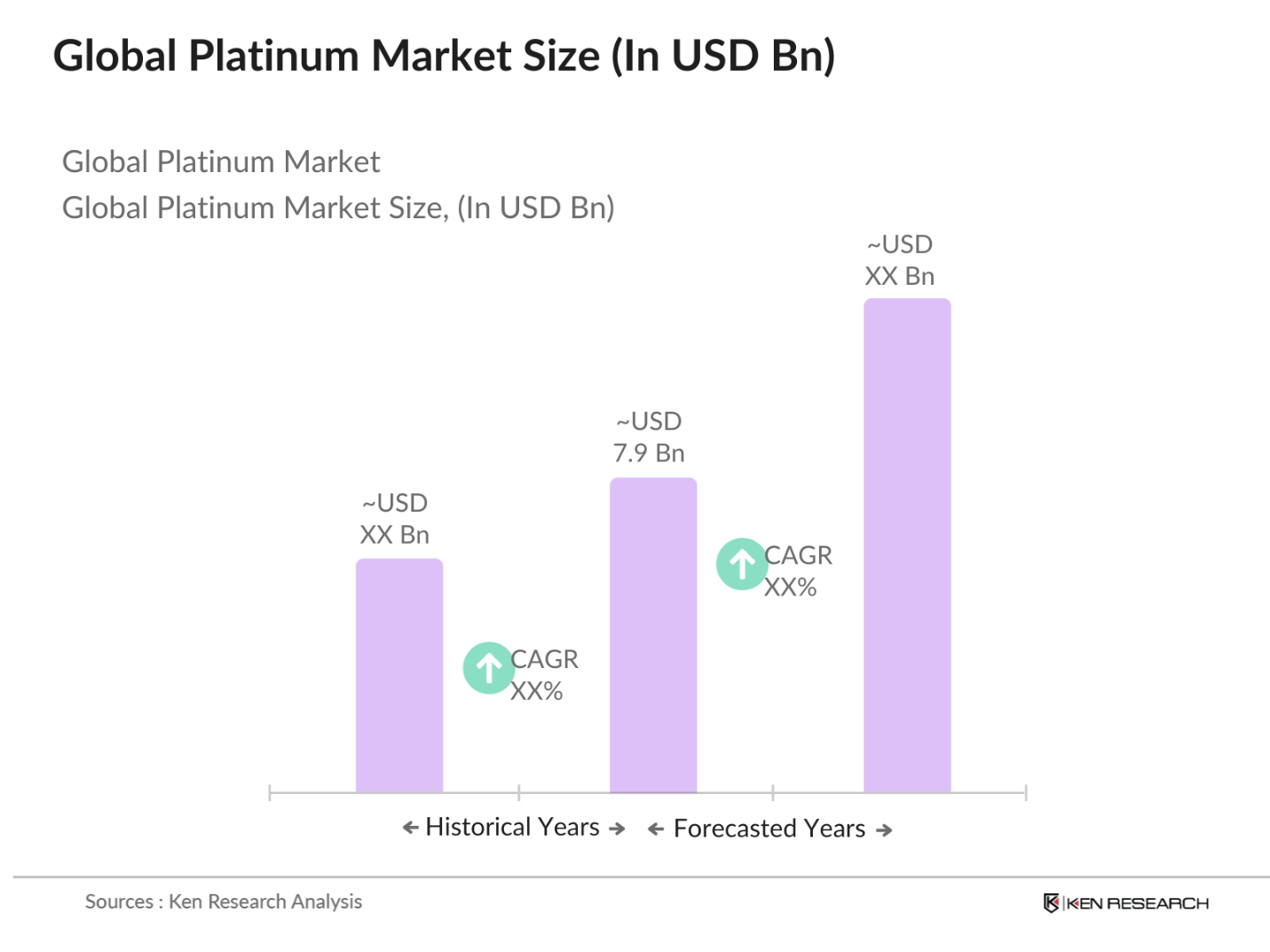
The global platinum market is valued at approximately USD 7.9 billion, driven by its use in automotive catalysts, industrial applications, and emerging clean energy technologies like hydrogen fuel cells.
Challenges include price volatility due to fluctuations in mining output and geopolitical risks in major platinum-producing countries like South Africa and Russia. Competition from palladium and other substitute metals also presents a challenge.
Key players in the market include Anglo American Platinum, Impala Platinum, Norilsk Nickel, Sibanye Stillwater, and Northam Platinum, which dominate due to their extensive mining operations and technological advancements in platinum extraction.
The market is propelled by growing demand in the automotive sector, stricter emission regulations, and the increasing use of platinum in hydrogen fuel cells and industrial applications such as petrochemicals and glass manufacturing.

What makes us stand out is that our consultants follows Robust, Refine and Result (RRR) methodology. i.e. Robust for clear definitions, approaches and sanity checking, Refine for differentiating respondents facts and opinions and Result for presenting data with story

We have set a benchmark in the industry by offering our clients with syndicated and customized market research reports featuring coverage of entire market as well as meticulous research and analyst insights.

While we don't replace traditional research, we flip the method upside down. Our dual approach of Top Bottom & Bottom Top ensures quality deliverable by not just verifying company fundamentals but also looking at the sector and macroeconomic factors.

With one step in the future, our research team constantly tries to show you the bigger picture. We help with some of the tough questions you may encounter along the way: How is the industry positioned? Best marketing channel? KPI's of competitors? By aligning every element, we help maximize success.

Our report gives you instant access to the answers and sources that other companies might choose to hide. We elaborate each steps of research methodology we have used and showcase you the sample size to earn your trust.

If you need any support, we are here! We pride ourselves on universe strength, data quality, and quick, friendly, and professional service.