
Global P.O.D Market Outlook to 2030
Region:Global
Author(s):Sanjna
Product Code:KROD10622
Region:Global
Author(s):Sanjna
Product Code:KROD10622
November 2024
97

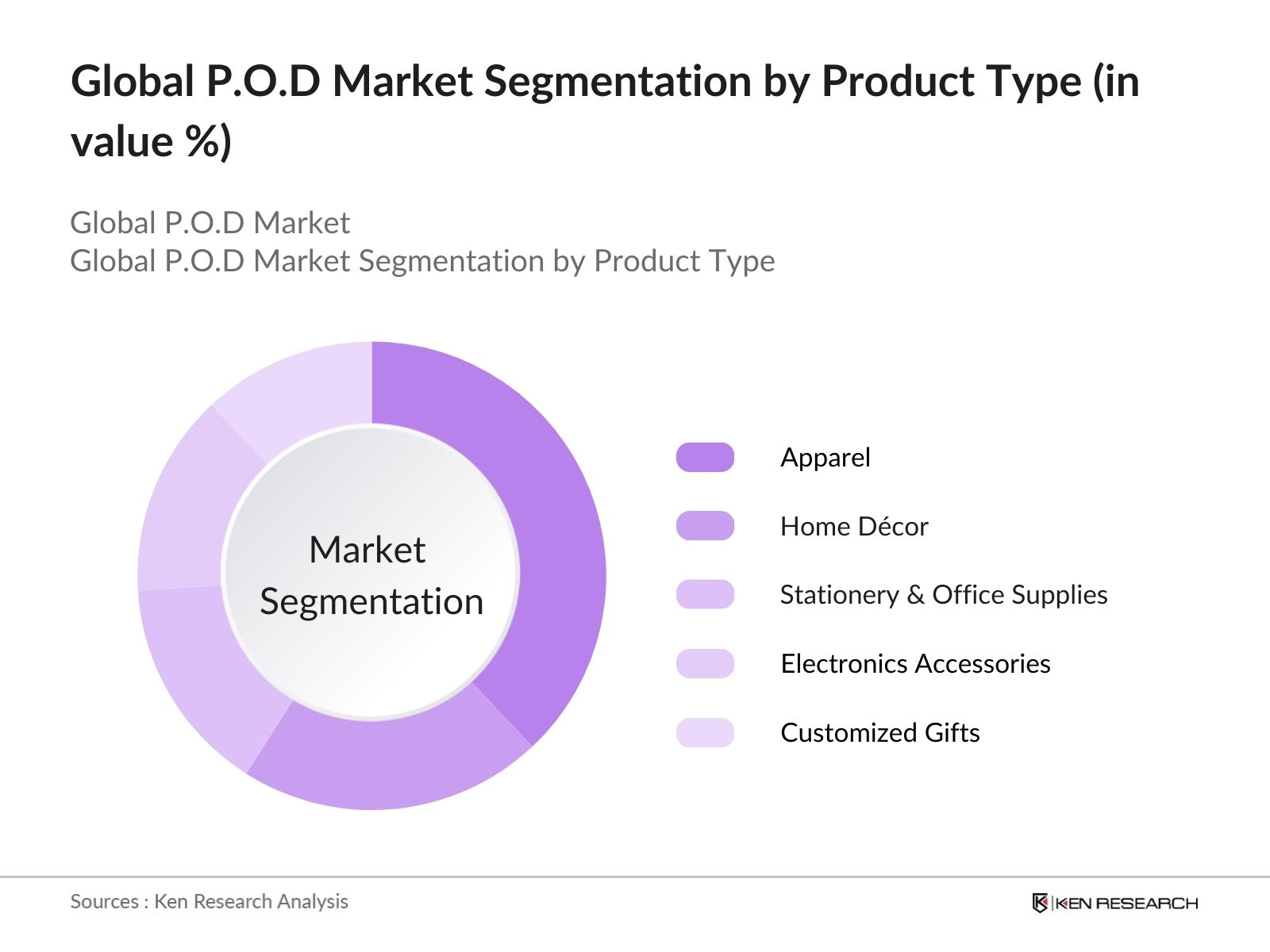
By Product Type: The global P.O.D market is segmented by product type into apparel, home dcor, stationery & office supplies, electronics accessories, and customized gifts. Apparel, including t-shirts, hoodies, and other personalized clothing items, holds the dominant market share in 2023. The preference for customized clothing and the ability to print unique designs that reflect personal style are major factors behind this segments dominance. Leading brands and small businesses alike leverage P.O.D platforms to offer personalized and trendy apparel, catering to individual consumer preferences.
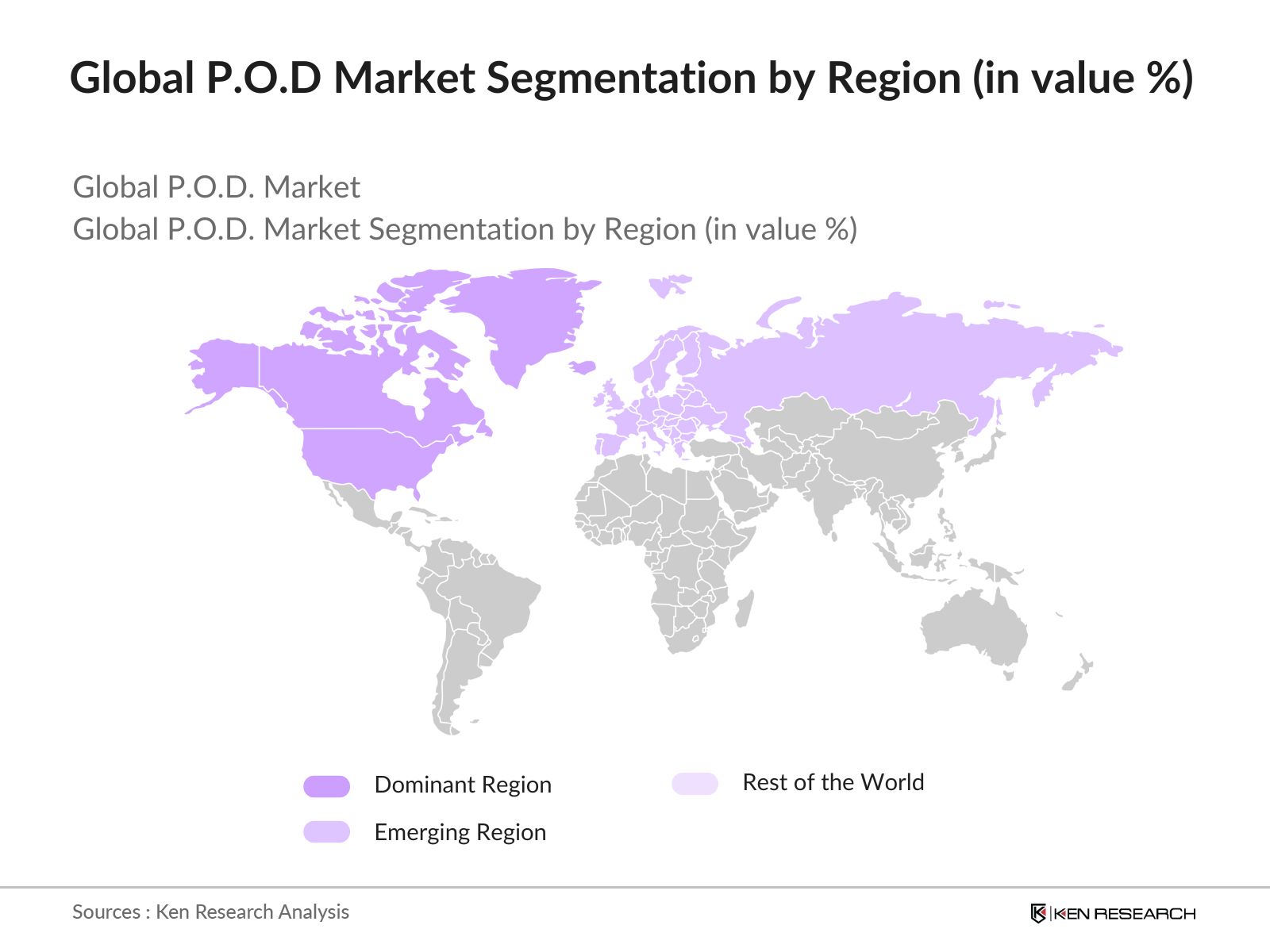
 By Region: The global P.O.D market is regionally segmented into North America, Europe, Asia Pacific, Latin America, and Middle East & Africa. North America holds the dominant share of the market, driven by a strong e-commerce infrastructure, early adoption of digital printing technology, and a high demand for personalized products. The region's preference for customization in apparel and gifts, along with rising consumer interest in sustainable products, continues to push its market leadership.
By Business Model: The P.O.D market is segmented by business models, including the fully integrated model, marketplace model, and hybrid model. The marketplace model dominates the market due to its ability to connect small-scale sellers with large customer bases without significant upfront costs. This model allows sellers to design products while the platform handles production, shipping, and customer service, making it the most accessible for new entrepreneurs.
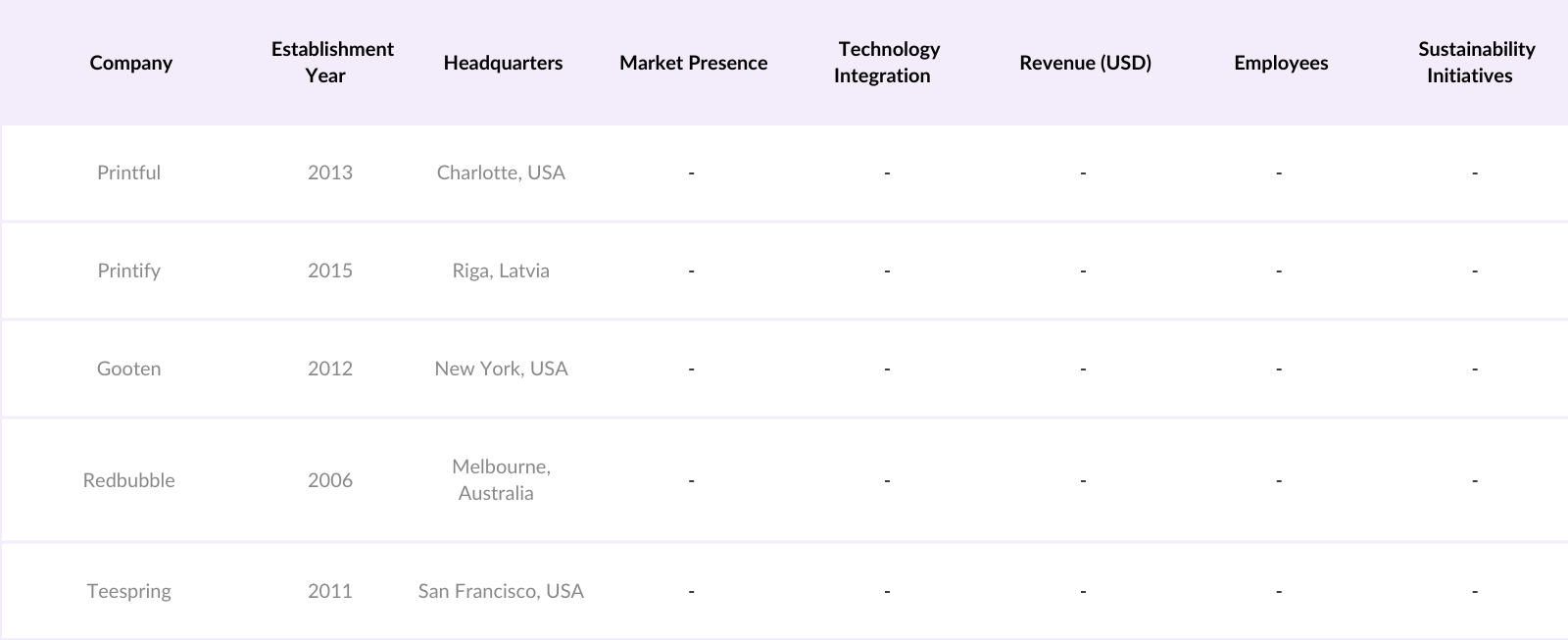
The global Print-On-Demand market is highly competitive, with major players focusing on technological advancements, supply chain efficiency, and expanding product offerings. The competitive landscape is dominated by both established global companies and emerging P.O.D providers. Major players include Printful, Printify, and Gooten, which have built extensive printing and fulfillment networks across regions to serve various businesses.
Growth Drivers
Challenges
The global Print-On-Demand market is expected to grow significantly over the next five years, driven by continuous advancements in printing technologies, rising demand for personalized products, and the expansion of e-commerce platforms. As consumers increasingly seek unique, sustainable, and eco-friendly products, P.O.D companies are likely to innovate further in terms of product offerings and fulfillment options. Businesses are also anticipated to explore collaborations with fashion and retail industries to provide customized merchandise and expand into untapped regions.
Market Opportunities
|
Segments |
Sub-Segments |
|
Product Type |
Apparel |
|
Home Dcor |
|
|
Stationery & Office Supplies |
|
|
Electronics Accessories |
|
|
Customized Gifts |
|
|
Business Model |
Fully Integrated Model |
|
Marketplace Model |
|
|
Hybrid Model |
|
|
Technology |
Digital Printing |
|
Screen Printing |
|
|
Dye Sublimation |
|
|
3D Printing |
|
|
End-User |
Commercial |
|
Individual/Consumer |
|
|
Corporate Gifting |
|
|
Promotional Merchandise |
|
|
Region |
North America |
|
Europe |
|
|
Asia Pacific |
|
|
Latin America |
|
|
Middle East & Africa |
1.1. Definition and Scope
1.2. Market Taxonomy
1.3. Market Growth Rate
1.4. Market Segmentation Overview
2.1. Historical Market Size
2.2. Year-On-Year Growth Analysis
2.3. Key Market Developments and Milestones
3.1. Growth Drivers (Market-Specific Drivers: Customization, E-Commerce Penetration, and Demand for Sustainability)
3.1.1. Increase in Personalized Products
3.1.2. Growth of E-commerce Platforms
3.1.3. Demand for Eco-friendly Printing Solutions
3.1.4. Reduced Inventory and Waste
3.2. Market Challenges (High Cost of Customization, Slow Adoption of Technology in Emerging Markets)
3.2.1. High Setup Costs for Small-Scale Businesses
3.2.2. Limited Printing Technology Capabilities
3.2.3. Complexity in Logistics and Fulfillment
3.2.4. Intellectual Property Issues
3.3. Opportunities (Market-Specific Opportunities: Expansion into Untapped E-Commerce Regions, Integration with AR/VR Technologies)
3.3.1. Integration with Digital Platforms
3.3.2. Expansion into Emerging Economies
3.3.3. Partnerships with Fashion and Retail Brands
3.3.4. Growth of On-Demand Apparel
3.4. Trends (Market-Specific Trends: Subscription-Based P.O.D Services, Sustainability Trends)
3.4.1. Rise of Subscription Models
3.4.2. Use of Sustainable Materials
3.4.3. Increasing Influence of Social Media Marketing
3.4.4. AR/VR Adoption in P.O.D Market
3.5. Government Regulations (Compliance with Environmental and Trade Regulations in Print-On-Demand Sector)
3.5.1. Environmental Compliance Regulations
3.5.2. Trade Regulations and Cross-Border E-commerce Policies
3.5.3. Copyright and IP Laws in P.O.D
4.1. By Product Type (In Value %)
4.1.1. Apparel
4.1.2. Home Dcor
4.1.3. Stationery & Office Supplies
4.1.4. Electronics Accessories
4.1.5. Customized Gifts
4.2. By Business Model (In Value %)
4.2.1. Fully Integrated Model
4.2.2. Marketplace Model
4.2.3. Hybrid Model
4.3. By Technology (In Value %)
4.3.1. Digital Printing
4.3.2. Screen Printing
4.3.3. Dye Sublimation
4.3.4. 3D Printing
4.4. By End-User (In Value %)
4.4.1. Commercial
4.4.2. Individual/Consumer
4.4.3. Corporate Gifting
4.4.4. Promotional Merchandise
4.5. By Region (In Value %)
4.5.1. North America
4.5.2. Europe
4.5.3. Asia Pacific
4.5.4. Latin America
4.5.5. Middle East & Africa
5.1. Detailed Profiles of Major Companies
5.1.1. Printful
5.1.2. Printify
5.1.3. Gooten
5.1.4. Teespring
5.1.5. Redbubble
5.1.6. Zazzle
5.1.7. CustomCat
5.1.8. Lulu Direct
5.1.9. SPOD (Spreadshirt Print-On-Demand)
5.1.10. Merch by Amazon
5.2. Cross Comparison Parameters (Product Range, Customization Capabilities, Fulfillment Time, Global Reach, Technology Integration, Partnerships, User Interface, API Availability)
5.3. Market Share Analysis
5.4. Strategic Initiatives
5.5. Mergers and Acquisitions
5.6. Investment Analysis
5.7. Venture Capital Funding
5.8. Government Grants
5.9. Private Equity Investments
6.1. Environmental Standards for Printing
6.2. Trade Compliance for E-Commerce Goods
6.3. IP and Copyright Regulations in P.O.D Market
7.1. Future Market Size Projections
7.2. Key Factors Driving Future Market Growth
8.1. By Product Type (In Value %)
8.2. By Business Model (In Value %)
8.3. By Technology (In Value %)
8.4. By End-User (In Value %)
8.5. By Region (In Value %)
9.1. TAM/SAM/SOM Analysis
9.2. Customer Cohort Analysis
9.3. Marketing Initiatives
9.4. White Space Opportunity Analysis
The first step in the research involved mapping out the Print-On-Demand ecosystem, identifying key stakeholders such as e-commerce platforms, printing technology providers, and regulatory bodies. Extensive secondary research from proprietary databases and government reports was used to determine crucial variables affecting market dynamics.
The second phase consisted of collecting and analyzing historical data, focusing on the penetration of P.O.D platforms, technological adoption rates, and consumer preferences. We evaluated the financial health of key market players and analyzed revenue generation trends to ensure the accuracy of our findings.
During this phase, market assumptions were validated through expert consultations with industry professionals. These consultations, carried out via structured interviews, provided insights into operational challenges and strategic initiatives, which helped refine our analysis of the P.O.D market.
In the final step, data collected from both secondary and primary sources were synthesized into comprehensive market insights. This output was corroborated by further interactions with P.O.D service providers and stakeholders, ensuring that all conclusions drawn were accurate and representative of market conditions.
The global Print-On-Demand market is valued at USD 7.5 billion, driven by the growing demand for personalized products and advancements in digital printing technologies.
Key challenges in global Print-On-Demand market include high initial setup costs for small businesses, logistical complexities in fulfillment, and the need for continuous technological upgrades to meet consumer expectations.
The major players in the global Print-On-Demand market include Printful, Printify, Gooten, Redbubble, and Teespring. These companies dominate the market through their extensive networks and cutting-edge fulfillment technologies.
The global Print-On-Demand market is driven by the increasing demand for personalized products, the rise of e-commerce platforms, and the growing emphasis on sustainability in production processes.

What makes us stand out is that our consultants follows Robust, Refine and Result (RRR) methodology. i.e. Robust for clear definitions, approaches and sanity checking, Refine for differentiating respondents facts and opinions and Result for presenting data with story

We have set a benchmark in the industry by offering our clients with syndicated and customized market research reports featuring coverage of entire market as well as meticulous research and analyst insights.

While we don't replace traditional research, we flip the method upside down. Our dual approach of Top Bottom & Bottom Top ensures quality deliverable by not just verifying company fundamentals but also looking at the sector and macroeconomic factors.

With one step in the future, our research team constantly tries to show you the bigger picture. We help with some of the tough questions you may encounter along the way: How is the industry positioned? Best marketing channel? KPI's of competitors? By aligning every element, we help maximize success.

Our report gives you instant access to the answers and sources that other companies might choose to hide. We elaborate each steps of research methodology we have used and showcase you the sample size to earn your trust.

If you need any support, we are here! We pride ourselves on universe strength, data quality, and quick, friendly, and professional service.