
Global Point of Sale (POS) Market Outlook to 2030
Region:Global
Author(s):Shivani Mehra
Product Code:KROD9895
Region:Global
Author(s):Shivani Mehra
Product Code:KROD9895
December 2024
89
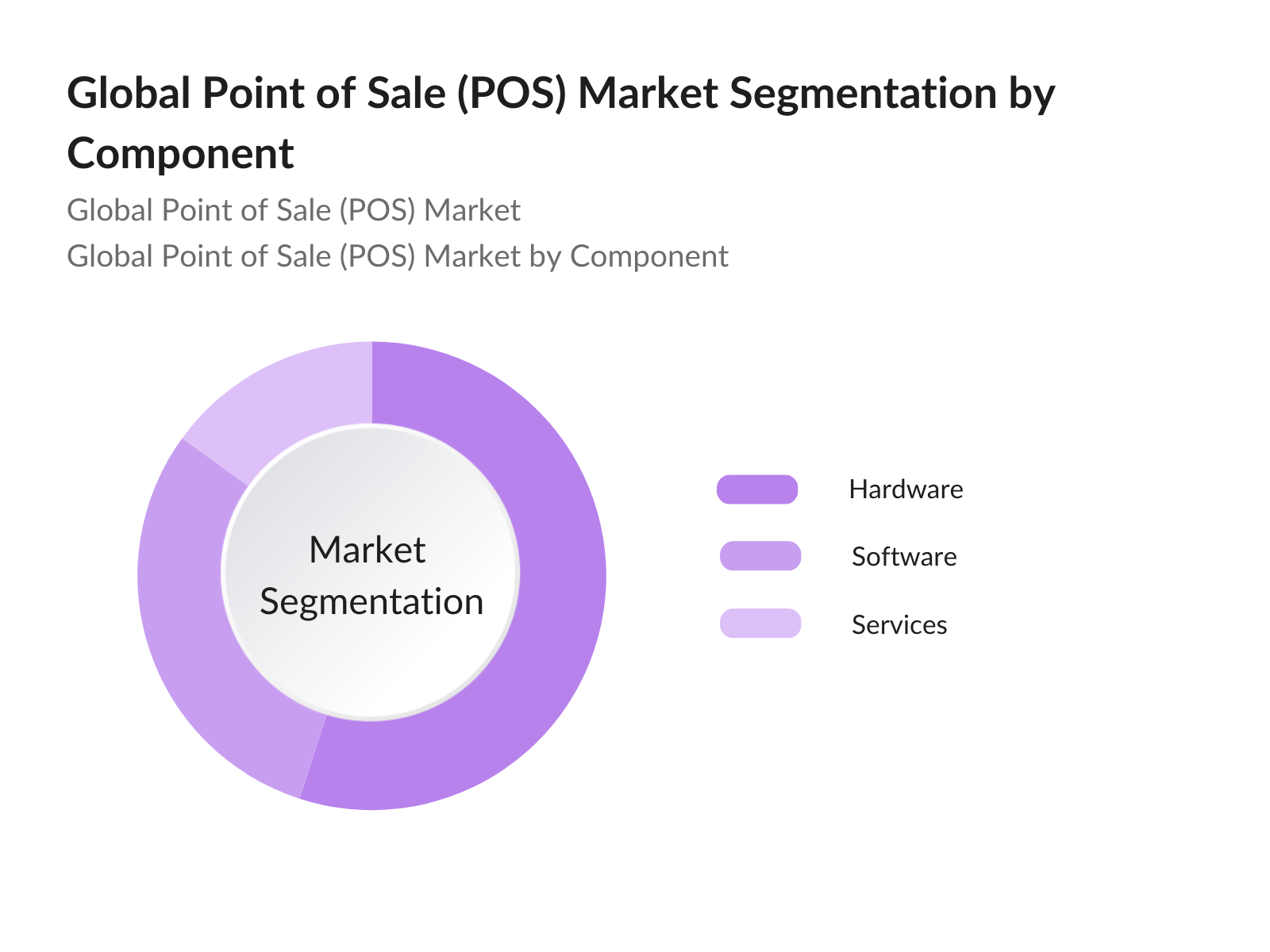
By Component: The POS market is segmented by components into hardware, software, and services. Hardware, comprising POS terminals and mobile POS devices, has a dominant market share due to their pivotal role in facilitating seamless transactions in retail and hospitality sectors. High demand for hardware persists due to the necessity for durable and efficient payment processing terminals in high-traffic locations.
By Region: The POS market is segmented regionally into North America, Europe, Asia-Pacific, Middle East & Africa, and Latin America. North America commands the largest market share, driven by its mature retail environment, high consumer inclination towards digital payments, and the presence of prominent POS solution providers.

The global POS market is characterized by significant competition, with key players focusing on innovation, strategic partnerships, and regional expansion to maintain market positioning.
|
Company |
Establishment Year |
Headquarters |
Product Portfolio |
R&D Investments |
Regional Presence |
Market Share |
Key Innovations |
Strategic Partnerships |
Customer Satisfaction |
|
NCR Corporation |
1884 |
Atlanta, USA |
|||||||
|
Square, Inc. |
2009 |
San Francisco, USA |
|||||||
|
Toshiba Corporation |
1939 |
Tokyo, Japan |
|||||||
|
Ingenico Group |
1980 |
Paris, France |
|||||||
|
VeriFone Systems, Inc. |
1981 |
San Jose, USA |
Market Growth Drivers
Market Challenges:
Over the next five years, the global POS market is anticipated to experience robust growth, propelled by increasing digital payment adoption, advancements in contactless and cloud-based technologies, and rising demand for integrated POS solutions across diverse industries. The market is also expected to benefit from government initiatives aimed at enhancing financial inclusion and promoting digital economies.
Market Opportunities:
|
By Product Type |
Hardware POS Terminals Mobile POS POS Accessories Software On-Premise POS Cloud-Based POS Hybrid POS Services Installation Maintenance Managed Services |
|
By Deployment Mode |
On-Premise Cloud-Based Hybrid |
|
By Application |
Convenience Stores Supermarkets Specialty Stores Hospitality Restaurants Hotels Cafes Healthcare Transportation and Logistics |
|
By End-User |
Small and Medium Enterprises (SMEs) Large Enterprises Individual and Self-Owned Businesses |
|
By Region |
North America Europe Asia-Pacific Middle East & Africa Latin America |
1.1. Definition and Scope
1.2. Market Taxonomy
1.3. Market Growth Rate
1.4. Market Segmentation Overview
2.1. Historical Market Size
2.2. Year-On-Year Growth Analysis
2.3. Key Market Developments and Milestones
3.1. Growth Drivers
Increased Adoption of Contactless Payments
Rising Demand for Streamlined Payment Processing
Technological Advancements (AI and ML Integration)
Expanding Retail and eCommerce Sectors
3.2. Market Challenges
Security and Data Privacy Concerns
High Cost of Implementation
Limited Connectivity in Developing Regions
3.3. Opportunities
Expansion of Mobile POS (mPOS) Solutions
Integration with Omnichannel Retail
Development of AI-Enhanced Customer Analytics
3.4. Trends
Growth of Cloud-Based POS Systems
Rising Preference for Self-Checkout POS
Integration with CRM and Inventory Management
3.5. Government Regulations and Compliance
PCI DSS Compliance
GDPR and Data Security Regulations
National POS System Standards and Certifications
3.6. SWOT Analysis
3.7. Stakeholder Ecosystem
3.8. Porters Five Forces Analysis
3.9. Competitive Ecosystem Analysis
4.1. By Component
Hardware (POS Terminals, Mobile POS, POS Accessories)
Software (On-Premise POS, Cloud-Based POS, Hybrid POS)
Services (Installation, Maintenance, Managed Services)
4.2. By Deployment Mode
On-Premise
Cloud-Based
Hybrid
4.3. By Application
Retail (Convenience Stores, Supermarkets, Specialty Stores)
Hospitality (Restaurants, Hotels, Cafes)
Healthcare
Transportation and Logistics
4.4. By End User
Small and Medium Enterprises (SMEs)
Large Enterprises
Individual and Self-Owned Businesses
4.5. By Region
North America
Europe
Asia-Pacific
Middle East & Africa
Latin America
5.1. Detailed Profiles of Major Companies
NCR Corporation
Square, Inc.
Toshiba Corporation
Ingenico Group
VeriFone Systems, Inc.
Shopify Inc.
PAX Technology Limited
Lightspeed POS Inc.
Clover Network, Inc.
Revel Systems
HP Inc.
Diebold Nixdorf, Inc.
Oracle Corporation
Fujitsu Limited
Vend Limited
5.2. Cross-Comparison Parameters
Product Portfolio
Revenue and Market Share
R&D Investments
Geographic Presence
Strategic Initiatives
Digital Transformation Efforts
Customer Satisfaction Ratings
Market Entry Strategy
5.3. Market Share Analysis
5.4. Strategic Initiatives
Partnerships and Alliances
Product Launches
Mergers and Acquisitions
5.5. Investment Analysis
Venture Capital Funding
Private Equity Investments
5.6. Government Grants and Subsidies
6.1. Payment Card Industry (PCI) Compliance
6.2. Security and Fraud Prevention Standards
6.3. Consumer Data Protection Laws
6.4. Regional Regulatory Landscape
7.1. Future Market Size Projections
7.2. Key Factors Driving Future Market Growth
8.1. By Component (In Value %)
8.2. By Deployment Mode (In Value %)
8.3. By Application (In Value %)
8.4. By End User (In Value %)
8.5. By Region (In Value %)
9.1. TAM/SAM/SOM Analysis
9.2. White Space Opportunity Identification
9.3. Marketing and Positioning Recommendations
9.4. Digital Transformation Insights
Disclaimer Contact UsThe initial phase involves constructing a comprehensive stakeholder ecosystem within the global POS market. This includes desk research using proprietary databases and secondary sources to identify the critical factors influencing the markets dynamics.
We analyze historical data on the POS market, focusing on transaction trends, POS hardware and software penetration, and the associated revenue. This phase also includes a review of payment technology innovations and the impacts on market development.
Market hypotheses are validated through consultations with industry experts, including telephonic interviews with executives from major POS solution providers. These insights aid in fine-tuning and corroborating the data collected.
The final phase integrates insights gathered from direct engagements with POS solution providers to confirm the accuracy of our data, ensuring a validated and thorough analysis of the global POS market.
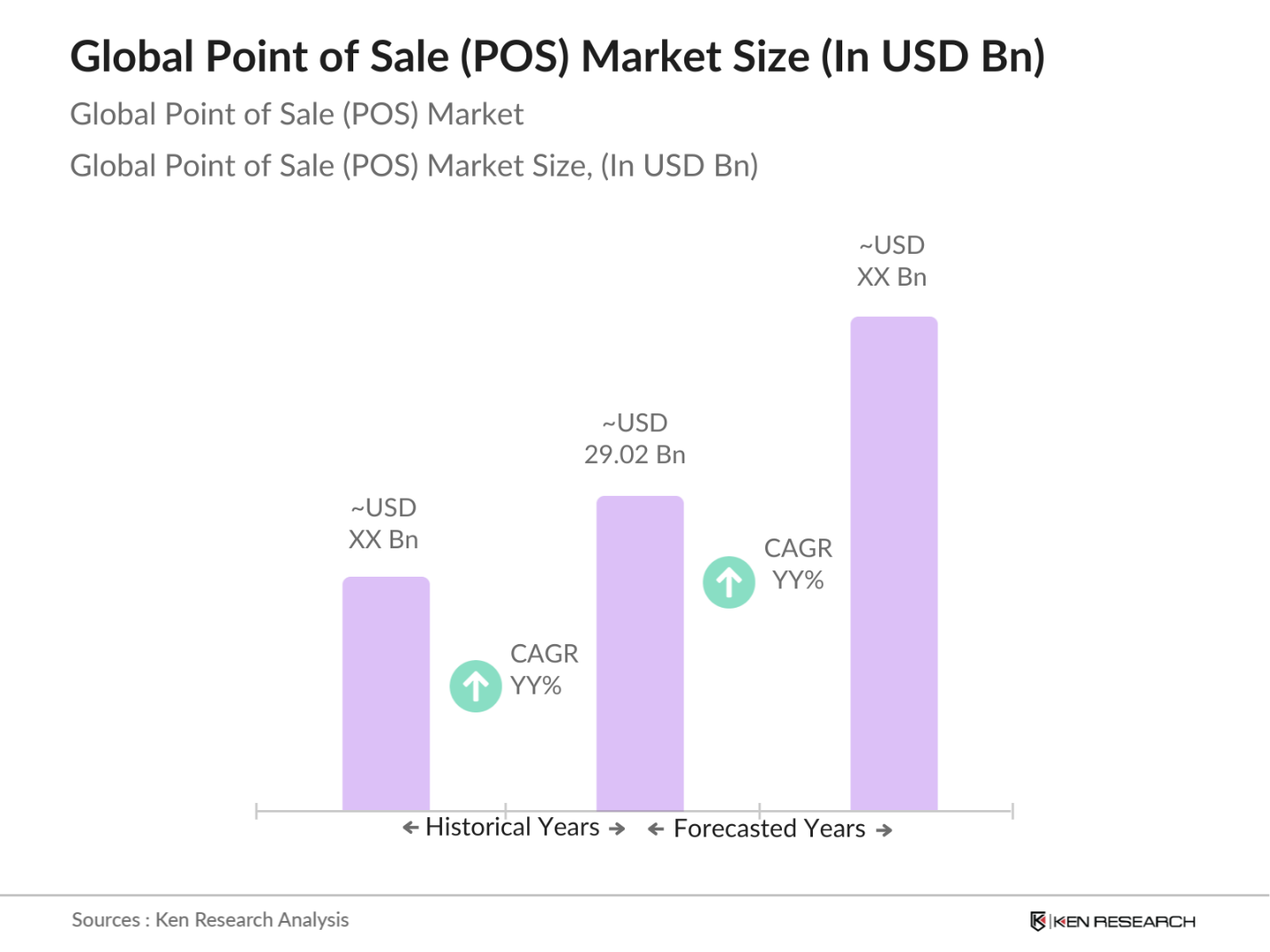
The global POS market is valued at USD 29.02 billion, supported by the growing adoption of digital payments and technological advancements in payment solutions.
Challenges include high implementation costs, data security concerns, and the limited connectivity in developing regions, impacting the scalability of POS solutions.
Key players include NCR Corporation, Square, Inc., Toshiba Corporation, Ingenico Group, and VeriFone Systems, Inc., leveraging advanced technologies to secure market positions.
The market is driven by the expansion of the retail and eCommerce sectors, increased demand for seamless transaction solutions, and the shift towards contactless payments.

What makes us stand out is that our consultants follows Robust, Refine and Result (RRR) methodology. i.e. Robust for clear definitions, approaches and sanity checking, Refine for differentiating respondents facts and opinions and Result for presenting data with story

We have set a benchmark in the industry by offering our clients with syndicated and customized market research reports featuring coverage of entire market as well as meticulous research and analyst insights.

While we don't replace traditional research, we flip the method upside down. Our dual approach of Top Bottom & Bottom Top ensures quality deliverable by not just verifying company fundamentals but also looking at the sector and macroeconomic factors.

With one step in the future, our research team constantly tries to show you the bigger picture. We help with some of the tough questions you may encounter along the way: How is the industry positioned? Best marketing channel? KPI's of competitors? By aligning every element, we help maximize success.

Our report gives you instant access to the answers and sources that other companies might choose to hide. We elaborate each steps of research methodology we have used and showcase you the sample size to earn your trust.

If you need any support, we are here! We pride ourselves on universe strength, data quality, and quick, friendly, and professional service.