
Global Polyethylene Furanoate (PEF) Market Outlook 2030
Region:Global
Author(s):Shivani Mehra
Product Code:KROD4486
December 2024
92
About the Report
Global Polyethylene Furanoate (PEF) Market Overview
- The Global Polyethylene Furanoate (PEF) market is valued at USD 19 million, based on a five-year historical analysis. This market is primarily driven by the growing demand for sustainable packaging solutions, with industries like food and beverage, textiles, and automotive leading the adoption. PEF's eco-friendly properties as a bio-based polymer make it an attractive alternative to traditional plastics, especially as regulatory and consumer pressures to reduce plastic waste increase.
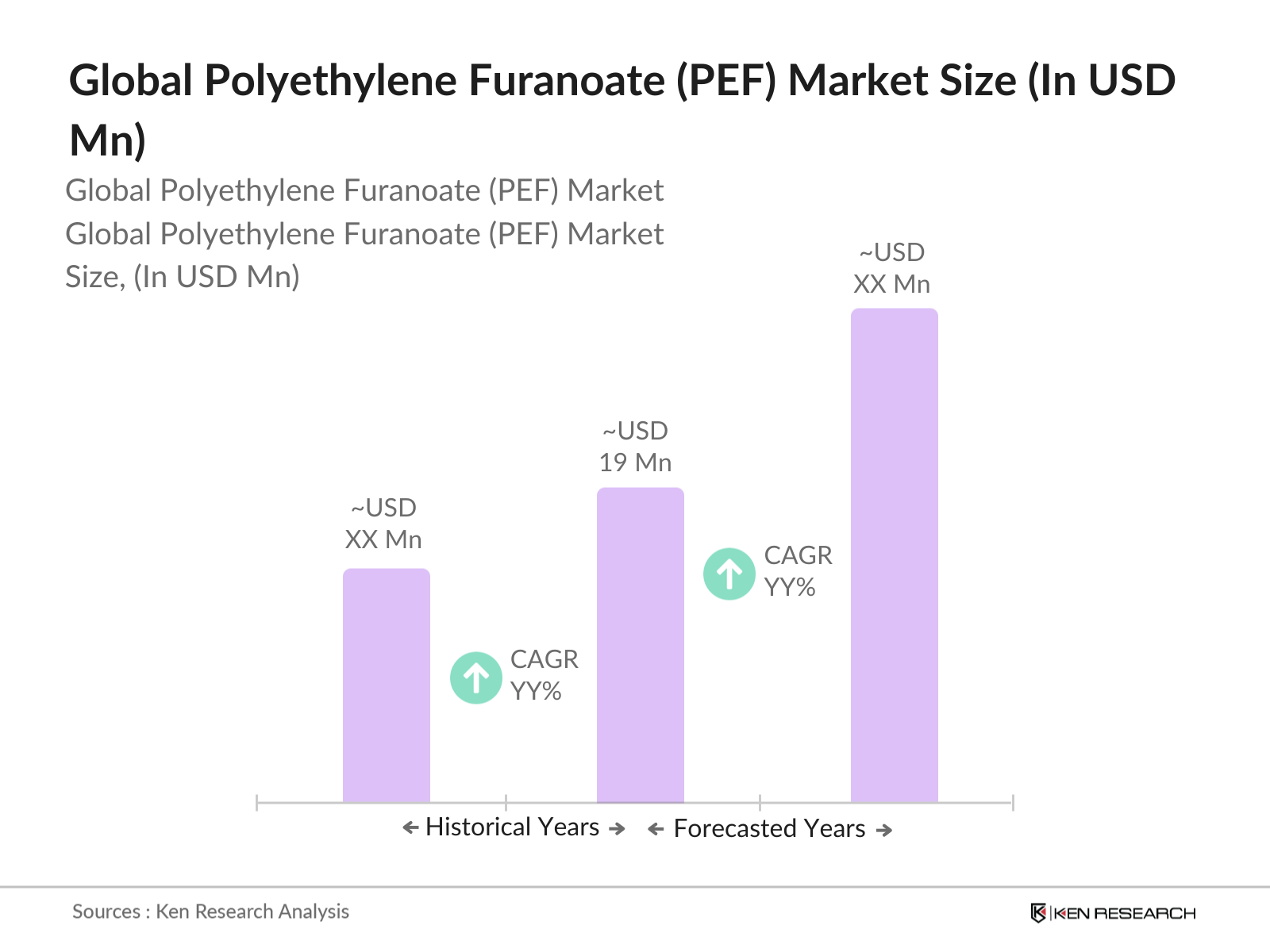
- Countries such as the Netherlands, Germany, and the United States are leading the Global PEF market. The dominance of the Netherlands is due to the presence of major innovators like Avantium, which has significantly advanced PEF production technology. Germanys leadership is linked to its established automotive and packaging sectors, which prioritize sustainable materials, while the United States benefits from strong demand in beverage packaging and extensive research and development initiatives in bio-based polymers.
- Governments worldwide have taken active roles in promoting bioplastics, with PEF emerging as a significant contender in the market. In 2023, the United States introduced a $200 million initiative to reduce plastic pollution by promoting bio-based alternatives. These government-backed initiatives not only stimulate PEF production but also pave the way for large-scale adoption of bio-based materials across multiple industries.
Global Polyethylene Furanoate (PEF) Market Segmentation
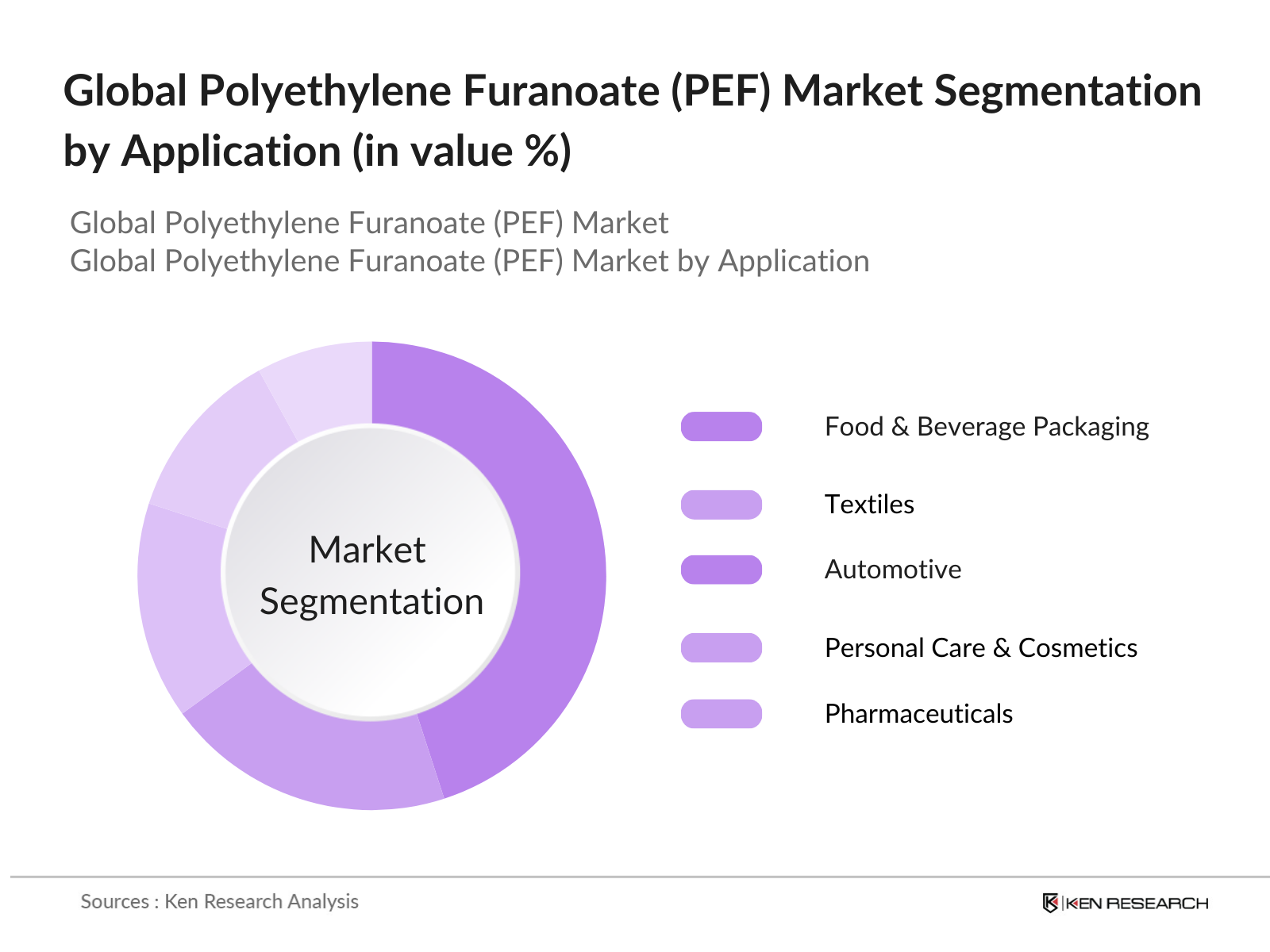
By Application: The Global PEF market is segmented by application into food & beverage packaging, textiles, automotive, personal care & cosmetics, and pharmaceuticals. Food & beverage packaging has emerged as the dominant application, thanks to PEFs excellent barrier properties against oxygen and carbon dioxide, which prolong the shelf life of packaged goods. Additionally, increasing awareness about plastic pollution has pushed global food companies to opt for bio-based alternatives, boosting the demand for PEF in this segment.
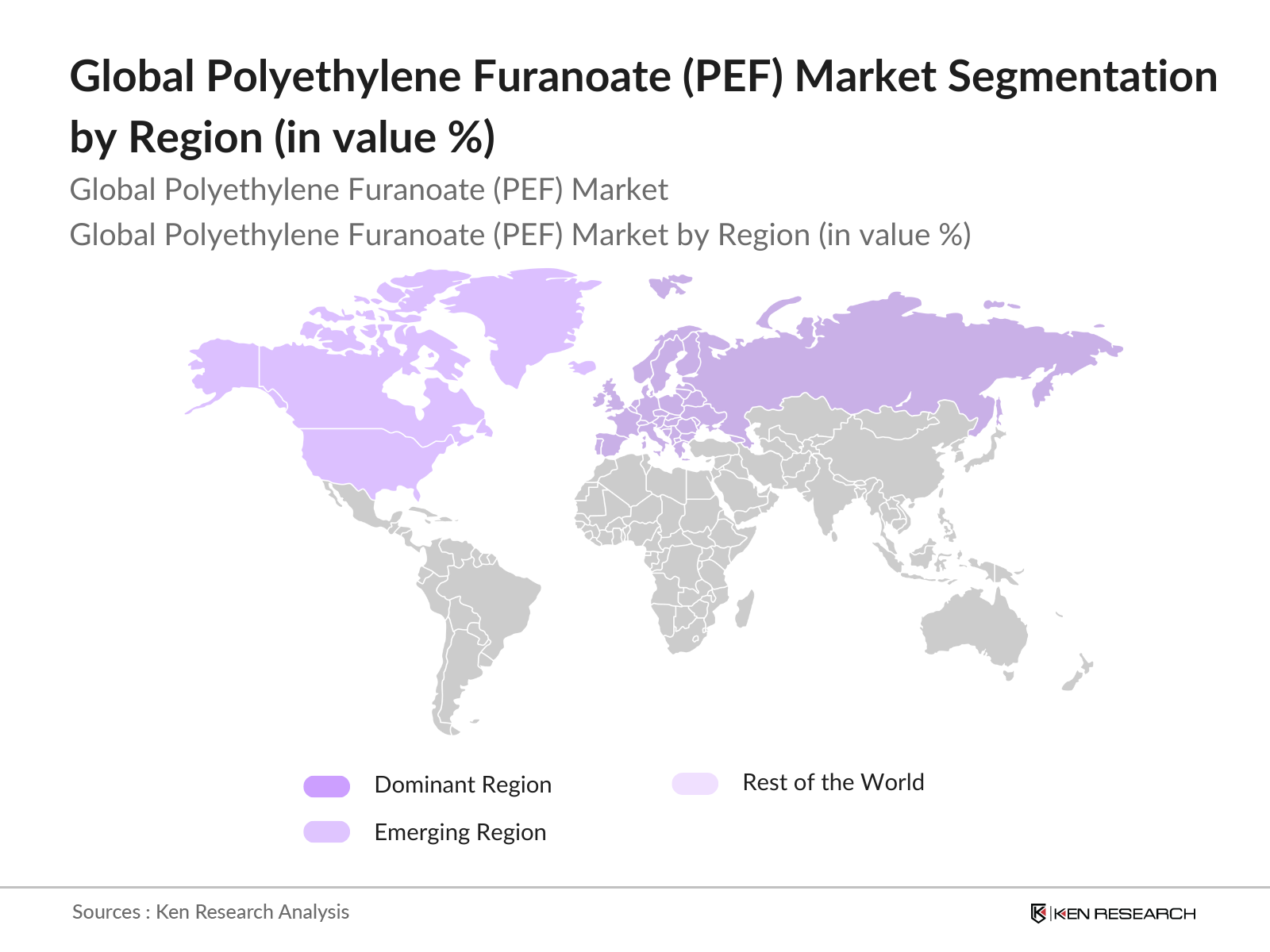
 By Region: The Global PEF market is segmented by region into North America, Europe, Asia Pacific, Middle East & Africa, and Latin America. Europe has emerged as the dominant region, largely due to stringent environmental regulations that promote the adoption of bio-based alternatives in industries such as packaging and automotive. The EU Plastics Strategy has been a key driver, accelerating demand for PEF as companies work toward meeting sustainability goals. Additionally, Europes advanced R&D infrastructure has enabled the rapid commercialization of bio-based polymers like PEF across various industries.
 Global Polyethylene Furanoate (PEF) Market Competitive Landscape
The Global PEF market is characterized by the presence of both established global players and emerging innovators. Leading companies like Avantium, Toyobo, and BASF SE dominate the market with their extensive research capabilities and strong partnerships with packaging giants. These companies focus on expanding their PEF production capacity and advancing polymerization technology, which further solidifies their market presence. The competitive landscape is also influenced by the significant investment in R&D to lower production costs and enhance the performance of PEF.
|
Company |
Establishment Year |
Headquarters |
Market-Specific Parameters |
|
Avantium |
2000 |
Netherlands |
|
|
BASF SE |
1865 |
Germany |
|
|
Toyobo Co., Ltd. |
1882 |
Japan |
|
|
The Coca-Cola Company |
1892 |
United States |
|
|
Danone |
1919 |
France |
Global Polyethylene Furanoate (PEF) Market Analysis
Market Growth Drivers
- Increased Adoption in the Packaging Industry: The global polyethylene furanoate (PEF) market has seen a significant surge in its adoption within the packaging sector. Companies across Europe and North America have transitioned to bio-based polymers to align with sustainability goals. PEF, being derived from renewable feedstocks like sugarcane, has found favor in replacing petroleum-based PET in packaging, especially in beverage bottles. companies in the European Union, under the EU Green Deal, increased their bio-based packaging initiatives, resulting in a projected rise in demand for PEF-based products due to stricter regulations favoring eco-friendly materials.
- Environmental Policies Favoring Bio-Plastics: Governments across the globe have enforced policies to reduce reliance on fossil fuel-based plastics. The EU has adopted a directive targeting a significant reduction of plastic waste annually, pushing for a higher adoption rate of bio-plastics like PEF. Similarly, Japans Ministry of Economy, Trade, and Industry has mandated that all plastic packaging must contain renewable content by 2025. These initiatives have boosted investment in PEF, with bioplastics consumption projected to increase significantly in sectors like food and beverages.
- Investment in R&D for Bioplastics Innovation: Research and development (R&D) investments in bioplastics, particularly in Europe, reached $1.2 billion in 2023, driven by the shift towards a sustainable circular economy. PEF is among the top candidates in the bio-plastics category due to its superior barrier properties and lower carbon footprint. The European Unions Horizon Europe program allocated 400 million towards the development of bio-based alternatives to petroleum-based plastics. These investments have led to advances in PEF production technologies, making it more viable for widespread industrial use.
Market Challenges
- Complex Manufacturing Process: The production of polyethylene furanoate remains highly complex and costly. For instance, the conversion of fructose to 2,5-furandicarboxylic acid (FDCA), a key component of PEF, requires advanced catalytic processes, making large-scale production challenging. The cost of raw materials such as sugarcane and corn for bio-based polymer production remains volatile. The European Bioeconomy Strategy of 2022 aimed to scale up production, yet the availability of feedstock and advanced manufacturing plants remains limited, impacting the PEF industry.
- Competition from PET and Other Polymers: Polyethylene terephthalate (PET) continues to dominate the packaging market due to its lower production costs and wide availability. PET production accounted for approximately 75 million metric tons globally in 2023, while PEF production remains much lower due to high costs and limited large-scale facilities. Despite the environmental benefits, the higher cost of PEF compared to PET has slowed its adoption rate. Competing bio-based polymers such as polylactic acid (PLA) also pose a challenge due to their more established supply chains.
Global Polyethylene Furanoate (PEF) Market Future Outlook
Over the next five years, the Global PEF market is poised to experience substantial growth due to increasing global environmental concerns and a shift towards sustainable packaging solutions. The automotive industrys focus on reducing vehicle weight and emissions, coupled with technological advancements in PEF production, will fuel market expansion. Additionally, strong government support for bio-based materials in packaging and regulatory frameworks that push for reduced plastic waste are expected to create significant growth opportunities for market participants.
Market Opportunities:
- Demand for Transparent and Rigid Packaging: There has been a noticeable shift towards transparent and rigid packaging, particularly in the beverage sector. PEFs superior oxygen barrier properties make it an ideal candidate for transparent packaging, with beverage companies transitioning to PEF-based bottles. In 2023, over 30,000 metric tons of PEF were used in transparent bottle production globally. PEF's rigidity also allows for maintaining the structural integrity of packaging, which is particularly essential for beverages and food products.
- Growth in the FMCG Sector Driving PEF Adoption: The fast-moving consumer goods (FMCG) sector has significantly contributed to the rise in PEF adoption. By 2024, the global FMCG industry is expected to witness a shift toward more sustainable packaging solutions, driven by consumer demand for eco-friendly products. The shift has been particularly prominent in European and North American markets, where governments are enforcing strict regulations against single-use plastics, accelerating PEFs penetration into the FMCG packaging ecosystem.
Scope of the Report
|
By Application |
Food & Beverage Packaging Textile Fiber Automotive Personal Care & Cosmetics Pharmaceuticals |
|
By Manufacturing Process |
Direct Polymerization Chemical Recycling Extrusion and Injection Molding |
|
By End-Use Industry |
Packaging Automotive Electronics Consumer Goods Textiles |
|
By Feedstock Type |
Sugar-based Feedstock Corn-based Feedstock Other Biomass-derived Feedstocks |
|
By Region |
North America Europe Asia Pacific Middle East & Africa Latin America |
Products
Key Target Audience
Food & Beverage Packaging Companies
Automotive Manufacturers
Textile Companies
Personal Care & Cosmetics Brands
Pharmaceutical Companies
Government and Regulatory Bodies (EU Commission, US FDA)
Investment and Venture Capitalist Firms
Bioplastic Manufacturers
Companies
Players Mention in the Report
Avantium
BASF SE
Toyobo Co., Ltd.
Danone
The Coca-Cola Company
Dupont
Mitsubishi Chemical Corporation
Alpla
Stora Enso
ADM
NatureWorks LLC
Corbion N.V.
Futerro
Indorama Ventures Public Company Limited
Tetra Pak
Table of Contents
01. Global Polyethylene Furanoate Market Overview
1.1. Definition and Scope
1.2. Market Taxonomy
1.3. Market Growth Rate
1.4. Market Segmentation Overview
02. Global Polyethylene Furanoate Market Size (In USD Bn)
2.1. Historical Market Size
2.2. Year-On-Year Growth Analysis
2.3. Key Market Developments and Milestones
03. Global Polyethylene Furanoate Market Analysis
3.1. Growth Drivers (Bio-based polymers, Sustainability initiatives, Consumer demand for eco-friendly packaging, Government regulations)
3.1.1. Increased Adoption in the Packaging Industry
3.1.2. Environmental Policies Favoring Bio-Plastics
3.1.3. Investment in R&D for Bioplastics Innovation
3.1.4. Circular Economy Push from Major Corporations
3.2. Market Challenges (High production costs, Limited industrial-scale production, Feedstock availability)
3.2.1. Complex Manufacturing Process
3.2.2. Competition from PET and Other Polymers
3.2.3. Lack of Standardization in Global Regulations
3.3. Opportunities (Development of hybrid polymers, Expansion in emerging markets, Increased recycling capabilities)
3.3.1. Technological Advancements in Polymerization
3.3.2. Collaborations with Sustainable Packaging Companies
3.3.3. Diversification into the Automotive and Textile Sectors
3.4. Trends (Shift towards bio-based plastics, Lightweight packaging materials, Increased use in beverage packaging)
3.4.1. Circular Economy & Closed-Loop Recycling
3.4.2. Demand for Transparent and Rigid Packaging
3.4.3. Growth in the FMCG Sector Driving PEF Adoption
3.5. Government Regulations (Bans on single-use plastics, Tax benefits for sustainable materials, Industry-specific regulations)
3.5.1. EU Plastics Strategy
3.5.2. Global Commitments to Sustainable Packaging
3.5.3. Certifications for Bio-based Content
3.5.4. Role of Governments in Bioplastics Promotion
3.6. SWOT Analysis (Strengths, Weaknesses, Opportunities, Threats)
3.7. Stakeholder Ecosystem (Suppliers, Manufacturers, Distributors, End-users)
3.8. Porters Five Forces (Supplier Power, Buyer Power, Threat of Substitutes, Threat of New Entrants, Competitive Rivalry)
3.9. Competition Ecosystem (In-depth Competitive Analysis)
04. Global Polyethylene Furanoate Market Segmentation
4.1. By Application (In Value %)
4.1.1. Food & Beverage Packaging
4.1.2. Textile Fiber
4.1.3. Automotive
4.1.4. Personal Care & Cosmetics
4.1.5. Pharmaceuticals
4.2. By Manufacturing Process (In Value %)
4.2.1. Direct Polymerization
4.2.2. Chemical Recycling
4.2.3. Extrusion and Injection Molding
4.3. By End-Use Industry (In Value %)
4.3.1. Packaging
4.3.2. Automotive
4.3.3. Electronics
4.3.4. Consumer Goods
4.3.5. Textiles
4.4. By Feedstock Type (In Value %)
4.4.1. Sugar-based Feedstock
4.4.2. Corn-based Feedstock
4.4.3. Other Biomass-derived Feedstocks
4.5. By Region (In Value %)
4.5.1. North America
4.5.2. Europe
4.5.3. Asia Pacific
4.5.4. Middle East & Africa
4.5.5. Latin America
05. Global Polyethylene Furanoate Market Competitive Analysis
5.1. Detailed Profiles of Major Companies
5.1.1. Avantium
5.1.2. Toyobo Co., Ltd.
5.1.3. Danone
5.1.4. The Coca-Cola Company
5.1.5. BASF SE
5.1.6. Corbion N.V.
5.1.7. Dupont
5.1.8. Tetra Pak
5.1.9. ADM
5.1.10. NatureWorks LLC
5.1.11. Mitsubishi Chemical Corporation
5.1.12. Alpla
5.1.13. Stora Enso
5.1.14. Indorama Ventures Public Company Limited
5.1.15. Futerro
5.2. Cross Comparison Parameters (Revenue, Headquarters, Product Portfolio, Bio-based Content Percentage, Sustainability Initiatives, No. of Employees, Certifications, Strategic Partnerships)
5.3. Market Share Analysis
5.4. Strategic Initiatives
5.5. Mergers And Acquisitions
5.6. Investment Analysis
5.7. Venture Capital Funding
5.8. Government Grants
5.9. Private Equity Investments
06. Global Polyethylene Furanoate Market Regulatory Framework
6.1. Environmental Standards
6.2. Compliance Requirements
6.3. Certification Processes
07. Global Polyethylene Furanoate Future Market Size (In USD Bn)
7.1. Future Market Size Projections
7.2. Key Factors Driving Future Market Growth
08. Global Polyethylene Furanoate Future Market Segmentation
8.1. By Application (In Value %)
8.2. By Manufacturing Process (In Value %)
8.3. By End-Use Industry (In Value %)
8.4. By Feedstock Type (In Value %)
8.5. By Region (In Value %)
09. Global Polyethylene Furanoate Market Analysts Recommendations
9.1. TAM/SAM/SOM Analysis
9.2. Customer Cohort Analysis
9.3. Marketing Initiatives
9.4. White Space Opportunity Analysis
Disclaimer Contact UsResearch Methodology
Step 1: Identification of Key Variables
The initial phase involves mapping the ecosystem of the Global PEF Market by identifying key stakeholders such as manufacturers, suppliers, and end-users. A combination of secondary sources, including industry reports and databases, is used to gather extensive market information and define critical variables like demand drivers, technological advancements, and regulatory policies.
Step 2: Market Analysis and Construction
In this phase, historical data is compiled to analyze market penetration and performance across various segments. This includes revenue generation, consumer demand, and technological innovation. The data is then analyzed to identify patterns and predict potential challenges.
Step 3: Hypothesis Validation and Expert Consultation
Our hypotheses on market growth and challenges are validated through expert consultations using computer-assisted telephone interviews (CATI) with professionals from key companies in the PEF industry. These insights help refine market estimates and forecast developments accurately.
Step 4: Research Synthesis and Final Output
The final stage of the research includes direct engagement with PEF manufacturers to validate findings and enhance the accuracy of market data. This step ensures a comprehensive, validated analysis of the Global PEF Market that integrates expert insights with bottom-up and top-down research approaches.
Frequently Asked Questions
01. How big is the Global PEF Market?
The Global Polyethylene Furanoate market is valued at USD 19million, primarily driven by the increasing demand for sustainable packaging solutions across key industries like food and beverage, textiles, and automotive.
02. What are the challenges in the Global PEF Market?
The key challenges include high production costs due to the complex manufacturing process, limited industrial-scale production capacity, and competition from conventional plastics like PET, which are cheaper and more readily available.
03. Who are the major players in the Global PEF Market?
Major players include Avantium, BASF SE, Toyobo Co., Ltd., Danone, and The Coca-Cola Company, who lead the market with their investments in bio-based polymer technology and global partnerships in sustainable packaging.
04. What are the growth drivers of the Global PEF Market?
The growth of the PEF market is propelled by increasing consumer awareness about environmental sustainability, stringent government regulations to reduce plastic waste, and technological advancements in bio-based polymer production.
Why Buy From Us?

What makes us stand out is that our consultants follows Robust, Refine and Result (RRR) methodology. i.e. Robust for clear definitions, approaches and sanity checking, Refine for differentiating respondents facts and opinions and Result for presenting data with story

We have set a benchmark in the industry by offering our clients with syndicated and customized market research reports featuring coverage of entire market as well as meticulous research and analyst insights.

While we don't replace traditional research, we flip the method upside down. Our dual approach of Top Bottom & Bottom Top ensures quality deliverable by not just verifying company fundamentals but also looking at the sector and macroeconomic factors.

With one step in the future, our research team constantly tries to show you the bigger picture. We help with some of the tough questions you may encounter along the way: How is the industry positioned? Best marketing channel? KPI's of competitors? By aligning every element, we help maximize success.

Our report gives you instant access to the answers and sources that other companies might choose to hide. We elaborate each steps of research methodology we have used and showcase you the sample size to earn your trust.

If you need any support, we are here! We pride ourselves on universe strength, data quality, and quick, friendly, and professional service.