
Global Posture Correction Market Outlook to 2030
Region:Global
Author(s):Paribhasha Tiwari
Product Code:KROD7701
December 2024
83
About the Report
Global Posture Correction Market Overview
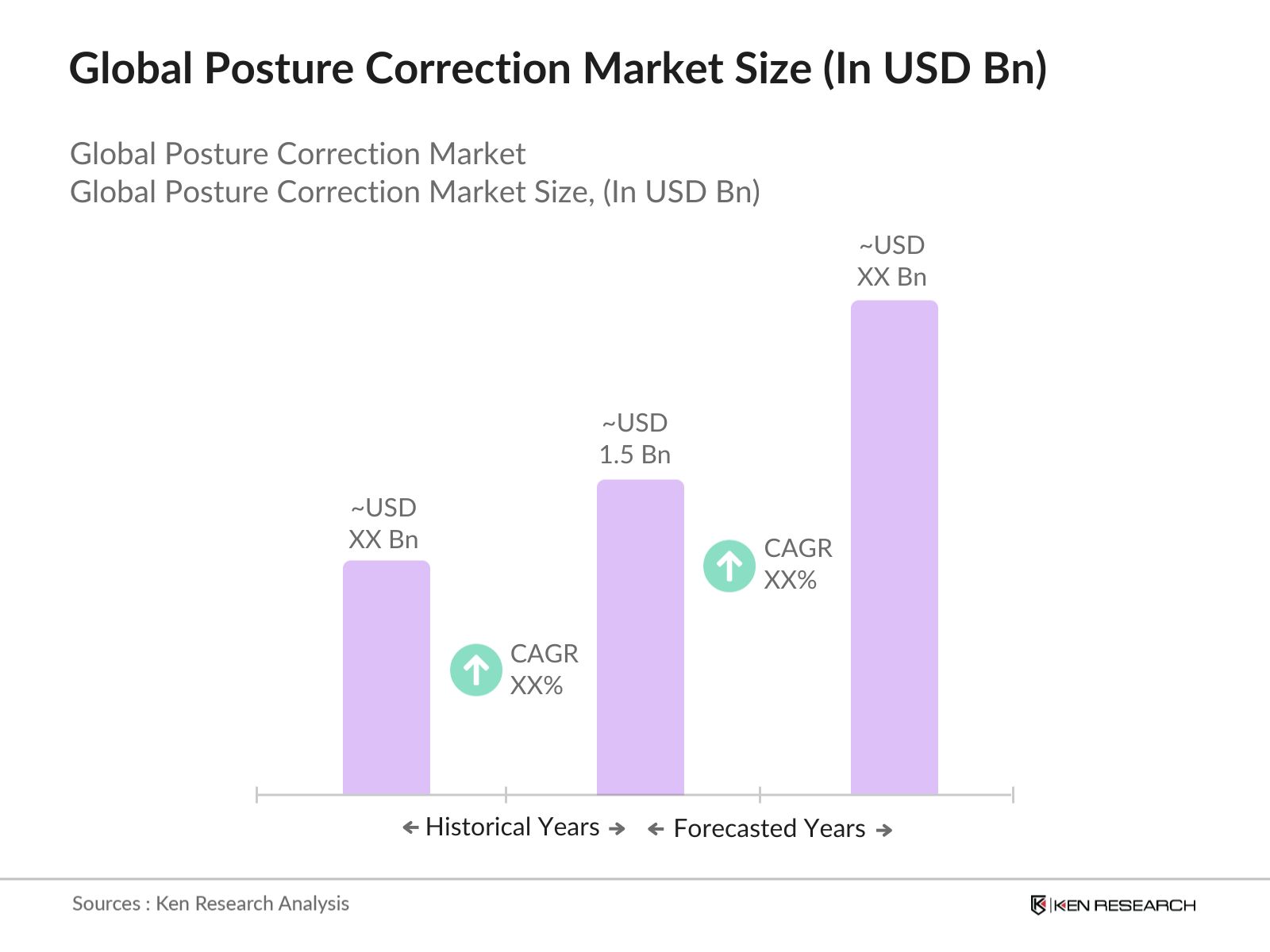
- The Global Posture Correction Market is valued at USD 1.5 billion, driven by increasing awareness of spinal health and the rise in work-from-home setups post-pandemic. With sedentary lifestyles becoming the norm, many individuals are adopting posture correction products to avoid long-term musculoskeletal issues. The surge in the use of wearable posture trainers and ergonomic solutions has also contributed significantly to market expansion. The growth is fueled by technological advancements, especially in wearable devices that track posture in real time, offering consumers an immediate correction option.
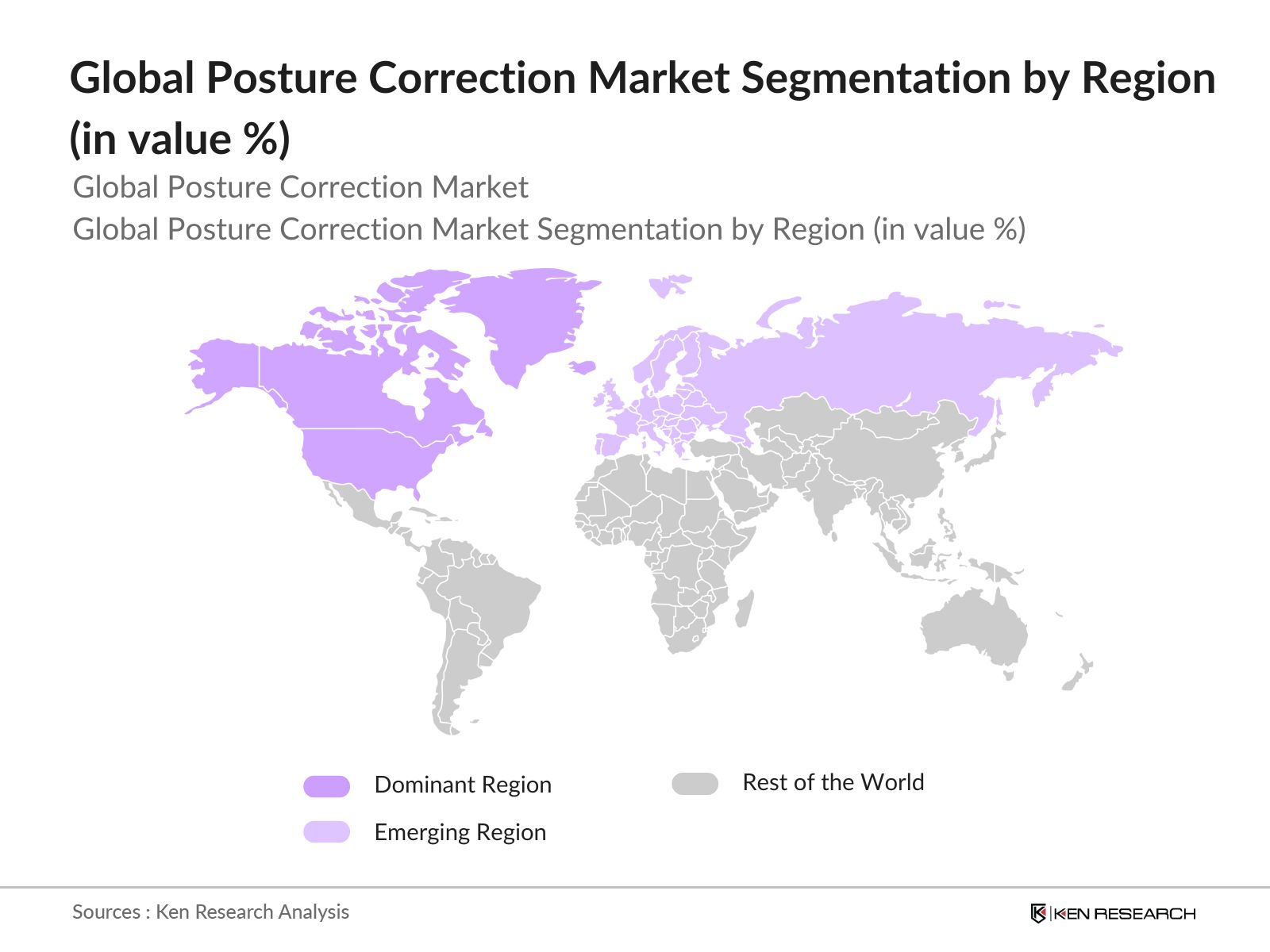
- North America and Europe dominate the posture correction market due to their advanced healthcare infrastructure, higher disposable incomes, and awareness of ergonomic health solutions. In North America, the presence of key players and extensive product availability through both online and offline channels have led to significant adoption. Meanwhile, European countries like Germany and the UK see substantial demand from corporate wellness programs, as businesses prioritize employee health, particularly in sedentary work environments.
- Governments in developed countries are increasingly focusing on occupational health and safety regulations, mandating ergonomic solutions in workplaces. As of 2024, countries like the US, Canada, and the UK have stringent guidelines for employers to ensure proper ergonomics, including posture correction tools, for their employees. This regulatory push is expected to enhance the adoption of such devices across corporate environments.
Global Posture Correction Market Segmentation
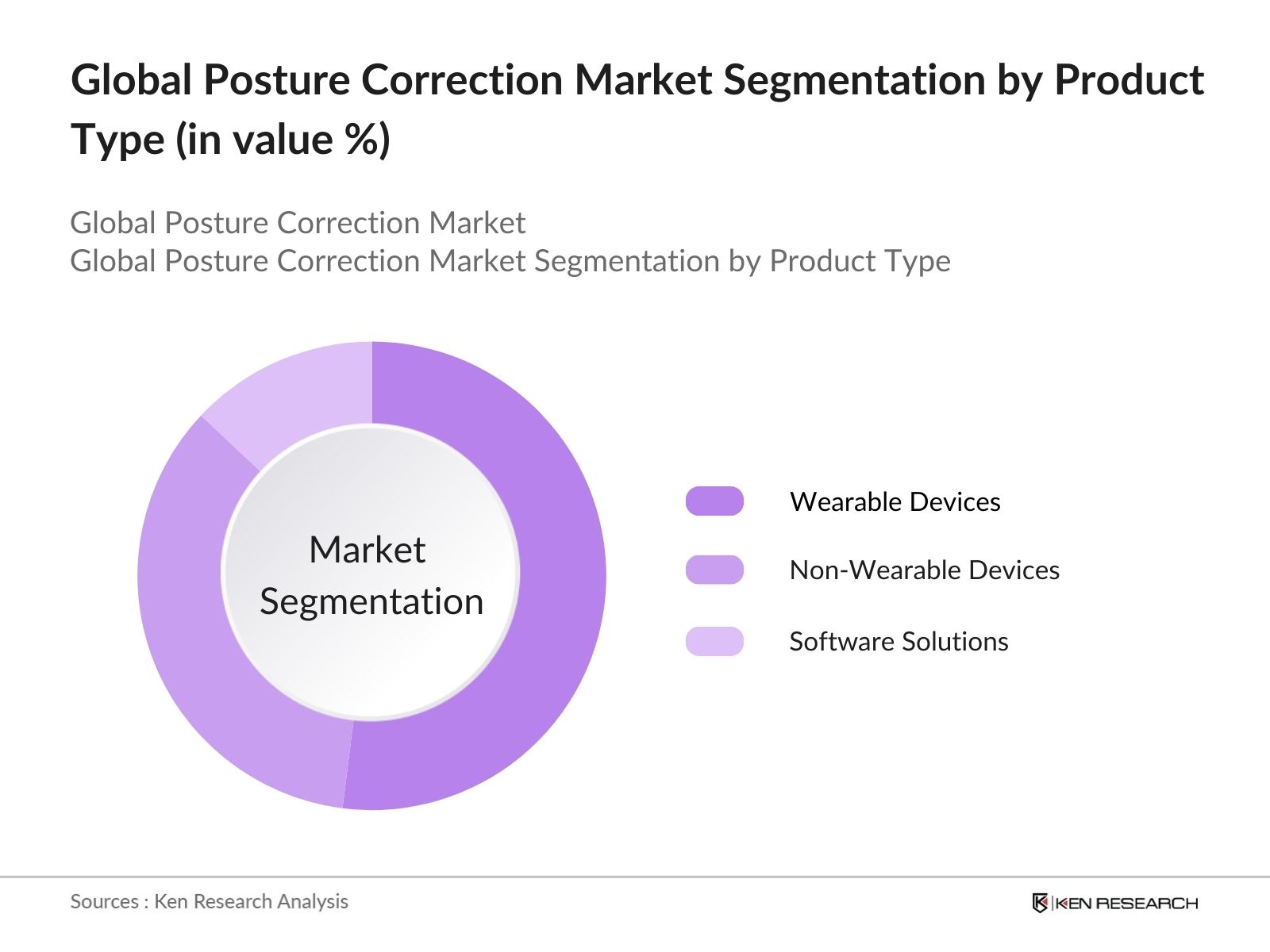
- By Product Type: The Global Posture Correction Market is segmented by product type into wearable devices, non-wearable devices, and software solutions. Wearable devices like posture trainers and back braces hold the dominant market share, attributed to their ease of use and real-time feedback. Consumers prefer wearable solutions because they can be used anywhere, offering convenience and flexibility, which makes them highly attractive in both personal and professional settings.
- By Region: Geographically, the market is segmented into North America, Europe, Asia-Pacific, and Latin America. North America holds the largest market share, primarily driven by high consumer spending on health and wellness products and strong online retail infrastructure. In Asia-Pacific, growing urbanization and increasing awareness of posture correction in countries like China and India are contributing to steady growth.
- By Application: In terms of application, the posture correction market is segmented into spinal health, fitness and sports, postural education and therapy, and chronic pain management. Spinal health applications are leading the market, primarily due to increased awareness of the long-term risks of poor posture, such as scoliosis and herniated discs. Healthcare professionals are increasingly recommending posture correction devices as part of preventative care, driving the adoption in this segment.
Global Posture Correction Market Competitive Landscape
The posture correction market is competitive with a blend of multinational corporations and innovative start-ups. The competition is primarily driven by technological innovations, product diversification, and strategic partnerships.
|
Company |
Year Established |
Headquarters |
Key Products |
Revenue |
R&D Investment |
Global Reach |
Number of Patents |
|---|---|---|---|---|---|---|---|
|
Upright Technologies |
2015 |
Israel |
- | - | - | - | - |
|
BackJoy Orthotics, LLC |
2005 |
USA |
- | - | - | - | - |
|
Lumo Bodytech, Inc. |
2011 |
USA |
- | - | - | - | - |
|
FlexGuard Support |
2017 |
USA |
- | - | - | - | - |
|
Intelliskin |
2010 |
USA |
- | - | - | - | - |
Global Posture Correction Market Analysis
Market Growth Drivers
- Increased Awareness of Health and Posture Issues: Growing awareness around the health risks associated with poor posture, such as back pain and spinal misalignment, has driven the demand for posture correction devices. As of 2024, the global number of individuals seeking healthcare solutions for musculoskeletal disorders has risen significantly, with an estimated 1.71 billion people suffering from musculoskeletal conditions, according to data from the World Health Organization. The surge in demand for posture correction tools is further supported by this rise, as individuals look for preventive and corrective solutions to posture-related issues.
- Rise in Sedentary Lifestyles (Work-from-Home Impact, Digital Dependency): The increase in work-from-home arrangements and long hours spent in front of digital devices has exacerbated posture problems globally. By 2024, over 1 billion individuals worldwide are estimated to be working remotely or in hybrid models, according to labor reports. This shift has heightened the need for posture correction solutions, as prolonged sitting and incorrect posture are major contributors to back, neck, and shoulder problems.
- Technological Innovations in Posture Correction Devices: Advancements in wearable technology have significantly influenced the posture correction market. With smart posture devices now integrated with Bluetooth, AI, and mobile apps, consumers have access to real-time posture tracking. As of 2024, more than 500 million wearable devices with posture-tracking capabilities are in use globally, driven by tech-savvy consumers who are eager for health-monitoring gadgets. These advancements help individuals monitor and adjust their posture, reducing the likelihood of long-term damage.
Market Challenges
- High Cost of Advanced Correction Devices (Affordability Challenges): Advanced posture correction devices, especially those integrated with smart technology, tend to be expensive, creating affordability challenges for a large portion of the population. As of 2024, the average price of these high-end products remains between $100 and $200, restricting their reach to middle- and upper-income groups. This high cost limits adoption in low-income regions where back and posture-related problems are equally prevalent but financial constraints are stronger.
- Lack of Awareness in Developing Regions: Awareness about posture health and available correction devices remains relatively low in many developing regions, including parts of Latin America, Africa, and South Asia. In 2024, only an estimated 20 million units of posture correction devices have been sold in these markets, indicating a vast potential for growth but a lack of knowledge about the benefits of such products. Government initiatives and public health campaigns have yet to adequately address these issues in many emerging markets.
Global Posture Correction Market Future Outlook
The future of the Global Posture Correction Market looks promising, driven by increased consumer health consciousness and advancements in wearable technologies. Over the next five years, the market is expected to grow significantly as digital health solutions become more integrated into daily life. The rising use of AI and machine learning for real-time posture monitoring will further drive innovation in the market. Moreover, increasing collaborations between posture correction device manufacturers and healthcare professionals will offer personalized solutions that address individual needs.
Market Opportunities
- Increasing Investments in Digital Health Solutions (Wearable Integration): With rising investments in digital health solutions, posture correction products that integrate with health-monitoring systems are experiencing higher demand. By 2024, digital health investments are expected to cross the $250 billion mark globally, and a significant portion of this will be directed toward devices that track physical health, including posture correction solutions. This growing trend opens up lucrative opportunities for companies focusing on integrated solutions that combine posture health with overall wellness.
- Expansion in Emerging Markets (APAC, Latin America): As awareness about posture health spreads to emerging markets, particularly in APAC and Latin America, the demand for posture correction products is expected to surge. As of 2024, over 150 million people in these regions are considered potential users of such devices. Companies that are able to tap into this market through affordable and accessible products stand to benefit significantly from the growing middle-class population in these regions.
Scope of the Report
|
By Product Type |
Wearable Devices Non-Wearable Devices Software Solutions |
|
By Application |
Spinal Health Postural Education Fitness Chronic Pain |
|
By Age Group |
Adults Geriatrics Adolescents |
|
By End-User |
Individuals Hospitals Corporates Fitness Centers |
|
By Distribution Channel |
Online Offline |
Products
Key Target Audience
Posture Correction Device Manufacturers
Wearable Technology Companies
Health and Wellness Retailers
Hospitals and Rehabilitation Centers
Physiotherapists and Chiropractors
Investors and Venture Capitalist Firms
Government and Regulatory Bodies (FDA, CE, Occupational Safety and Health Administration)
Corporate Wellness Program Providers
Companies
Players Mentioned in the Report:
Upright Technologies
BackJoy Orthotics, LLC
Lumo Bodytech, Inc.
FlexGuard Support
Intelliskin
HaloWear Inc.
PostureTek
ViboCare
CorrectToGo
Spinali Design
Table of Contents
1. Global Posture Correction Market Overview
1.1. Definition and Scope
1.2. Market Taxonomy
1.3. Key Market Growth Drivers
1.4. Market Segmentation Overview (By Product, By Application, By Age Group, By End-User, By Distribution Channel)
2. Global Posture Correction Market Size (In USD Bn)
2.1. Historical Market Size
2.2. Year-On-Year Growth Analysis
2.3. Key Market Developments and Milestones
2.4. Major Market Trends Impacting Size
3. Global Posture Correction Market Analysis
3.1. Growth Drivers
3.1.1. Increased Awareness of Health and Posture Issues
3.1.2. Rise in Sedentary Lifestyles (Work-from-Home Impact, Digital Dependency)
3.1.3. Technological Innovations in Posture Correction Devices
3.1.4. Growing Adoption of Wearable Technology for Posture Tracking
3.2. Market Challenges
3.2.1. High Cost of Advanced Correction Devices (Affordability Challenges)
3.2.2. Lack of Awareness in Developing Regions
3.2.3. Product Standardization and Safety Concerns
3.2.4. Inconsistent Product Effectiveness (Customer Satisfaction)
3.3. Opportunities
3.3.1. Increasing Investments in Digital Health Solutions (Wearable Integration)
3.3.2. Expansion in Emerging Markets (APAC, Latin America)
3.3.3. Growth in Online Retailing and E-Commerce Channels
3.3.4. Rising Focus on Ergonomic Solutions in Corporate Workplaces
3.4. Trends
3.4.1. Wearable Posture Correction Devices Gaining Popularity
3.4.2. AI and Machine Learning-Enabled Smart Posture Devices
3.4.3. Customizable and Personalized Solutions (Data-Driven Insights)
3.4.4. Growing Collaboration with Health Professionals (Chiropractors, Physiotherapists)
3.5. Government Regulations
3.5.1. Product Safety and Compliance Standards (FDA, CE Certification)
3.5.2. Occupational Health and Safety Regulations (Ergonomics)
3.5.3. Health Insurance Coverage for Posture Correction Devices (Policy Changes)
3.5.4. Public Awareness Campaigns Supported by Government Initiatives
4. Global Posture Correction Market Segmentation
4.1. By Product Type (In Value %)
4.1.1. Wearable Devices (Posture Trainers, Belts)
4.1.2. Non-Wearable Devices (Chairs, Cushions, Orthotics)
4.1.3. Software Solutions (Posture Apps, Monitoring Tools)
4.2. By Application (In Value %)
4.2.1. Spinal Health
4.2.2. Postural Education and Therapy
4.2.3. Fitness and Sports
4.2.4. Chronic Pain Management
4.3. By Age Group (In Value %)
4.3.1. Adults (18-40)
4.3.2. Geriatrics (40+)
4.3.3. Adolescents (Under 18)
4.4. By End-User (In Value %)
4.4.1. Individual Consumers
4.4.2. Hospitals and Clinics
4.4.3. Corporate Wellness Programs
4.4.4. Sports and Fitness Centers
4.5. By Distribution Channel (In Value %)
4.5.1. Online (E-Commerce Platforms, Direct to Consumer)
4.5.2. Offline (Retail Stores, Clinics, Fitness Centers)
5. Global Posture Correction Market Competitive Analysis
5.1. Detailed Profiles of Major Companies
5.1.1. Upright Technologies Ltd.
5.1.2. BackJoy Orthotics, LLC
5.1.3. Lumo Bodytech, Inc.
5.1.4. ViboCare
5.1.5. BodyHelix
5.1.6. CorrectToGo
5.1.7. PostureTek
5.1.8. HaloWear Inc.
5.1.9. Intelliskin
5.1.10. Aztec Devices
5.1.11. The Body Posture Company
5.1.12. AlignMed
5.1.13. Ergodyne
5.1.14. FlexGuard Support
5.1.15. Spinali Design
5.2. Cross Comparison Parameters (Revenue, Product Portfolio, Global Presence, Distribution Network, R&D Investments, Employee Strength, Market Share, Product Innovation)
5.3. Market Share Analysis
5.4. Strategic Initiatives (Product Launches, Collaborations)
5.5. Mergers and Acquisitions
5.6. Investment Analysis (Venture Capital, Private Equity)
5.7. Partnership and Expansion Strategies
5.8. Research and Development Focus Areas
6. Global Posture Correction Market Regulatory Framework
6.1. Medical Device Classification and Certifications
6.2. Compliance with International Ergonomics Standards
6.3. Occupational Health and Safety Act (OHSA) Guidelines
6.4. Import and Export Regulations for Medical Devices
7. Global Posture Correction Market Analysts Recommendations
7.1. TAM/SAM/SOM Analysis
7.2. White Space Opportunity Mapping
7.3. Customer Segment Prioritization
7.4. Market Entry Strategy for Emerging Players
8. Global Posture Correction Future Market Size (In USD Bn)
8.1. Key Factors Driving Future Growth
8.2. Competitive Landscape Impact on Market Size
8.3. Emerging Technologies and Their Influence on Market Growth
Research Methodology
Step 1: Identification of Key Variables
The initial phase involves creating an ecosystem map of all stakeholders in the Global Posture Correction Market. Extensive desk research using secondary and proprietary databases is conducted to gather comprehensive market data, focusing on product innovations, consumer trends, and regulatory dynamics.
Step 2: Market Analysis and Construction
In this phase, historical data for the Global Posture Correction Market is compiled and analyzed, including product penetration rates, sales channel effectiveness, and market revenue. Service quality statistics are assessed to ensure accurate revenue estimations.
Step 3: Hypothesis Validation and Expert Consultation
Hypotheses regarding the market's growth potential and challenges are developed and validated through consultations with industry experts. These consultations are conducted via computer-assisted interviews with key stakeholders to gather insights on market operations and financial performance.
Step 4: Research Synthesis and Final Output
The final phase synthesizes the research findings and outputs, incorporating detailed insights on consumer preferences, product performance, and distribution strategies. This ensures that the final market analysis is both comprehensive and validated.
Frequently Asked Questions
01. How big is the Global Posture Correction Market?
The Global Posture Correction Market is valued at USD 1.5 billion, driven by increasing awareness around spinal health and advancements in wearable technologies.
02. What are the challenges in the Global Posture Correction Market?
Key challenges in the Global Posture Correction Market include the high cost of advanced devices, lack of awareness in developing regions, and inconsistent product effectiveness leading to customer dissatisfaction.
03. Who are the major players in the Global Posture Correction Market?
Major players iin the Global Posture Correction Market include Upright Technologies, BackJoy Orthotics, Lumo Bodytech, and Intelliskin, all of which focus heavily on wearable technologies integrated with mobile apps for real-time posture correction.
04. What are the growth drivers of the Global Posture Correction Market?
Growth drivers in the Global Posture Correction Market include the rise of sedentary lifestyles due to work-from-home setups, advancements in posture correction devices, and increasing awareness of spinal health.
Why Buy From Us?

What makes us stand out is that our consultants follows Robust, Refine and Result (RRR) methodology. i.e. Robust for clear definitions, approaches and sanity checking, Refine for differentiating respondents facts and opinions and Result for presenting data with story

We have set a benchmark in the industry by offering our clients with syndicated and customized market research reports featuring coverage of entire market as well as meticulous research and analyst insights.

While we don't replace traditional research, we flip the method upside down. Our dual approach of Top Bottom & Bottom Top ensures quality deliverable by not just verifying company fundamentals but also looking at the sector and macroeconomic factors.

With one step in the future, our research team constantly tries to show you the bigger picture. We help with some of the tough questions you may encounter along the way: How is the industry positioned? Best marketing channel? KPI's of competitors? By aligning every element, we help maximize success.

Our report gives you instant access to the answers and sources that other companies might choose to hide. We elaborate each steps of research methodology we have used and showcase you the sample size to earn your trust.

If you need any support, we are here! We pride ourselves on universe strength, data quality, and quick, friendly, and professional service.