















Global Prescription Drugs Market Outlook to 2030
Region:Global
Author(s):Mukul Soni
Product Code:KROD324
December 2024
94
About the Report
Global Prescription Drugs Market Overview
- The global prescription drugs market, based on a five-year historical analysis, is valued at USD 1160 billion, reflecting growth driven by technological advancements in drug development, an aging global population, and increased demand for treatments targeting chronic and lifestyle-related conditions. Government healthcare spending and expanding insurance coverage also contribute significantly, facilitating higher access to essential medications.
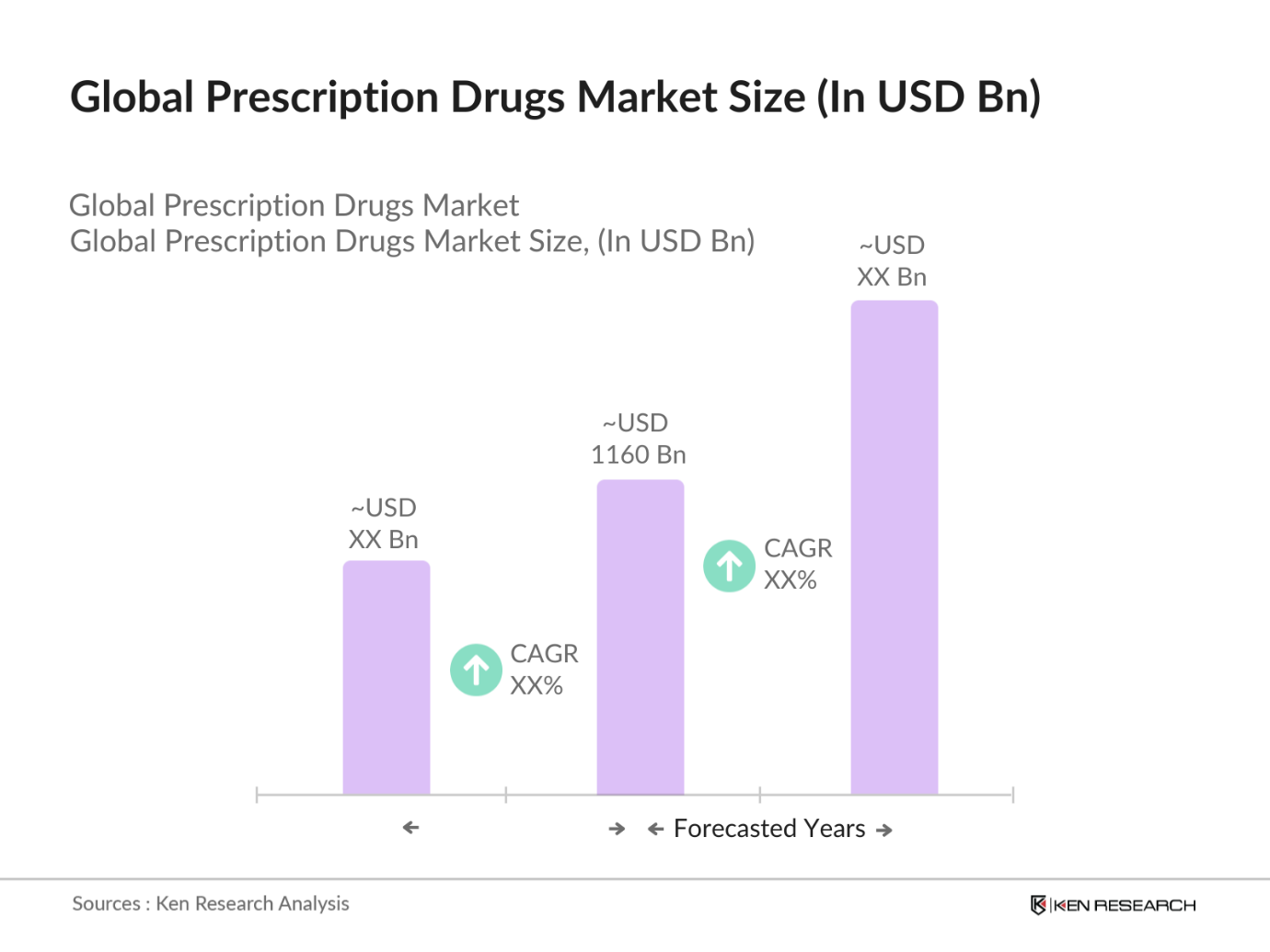
- North America and Europe are dominant in the prescription drugs market due to advanced healthcare infrastructure, high R&D investments by pharmaceutical companies, and supportive regulatory environments. The presence of major global pharmaceutical companies and significant health insurance coverage further solidifies their leadership in this market.
- Drug approval standards in major markets, including the U.S., EU, and Japan, have become more stringent, with 90% of applications requiring additional trials or data in 2024 to ensure safety and efficacy. The FDA and EMA mandate rigorous safety checks, resulting in longer approval times for new drugs. This regulatory landscape increases development costs but also raises the bar for patient safety. Such compliance measures impact the prescription drug market, as companies must navigate intricate regulatory processes to bring new treatments to market
Global Prescription Drugs Market Segmentation
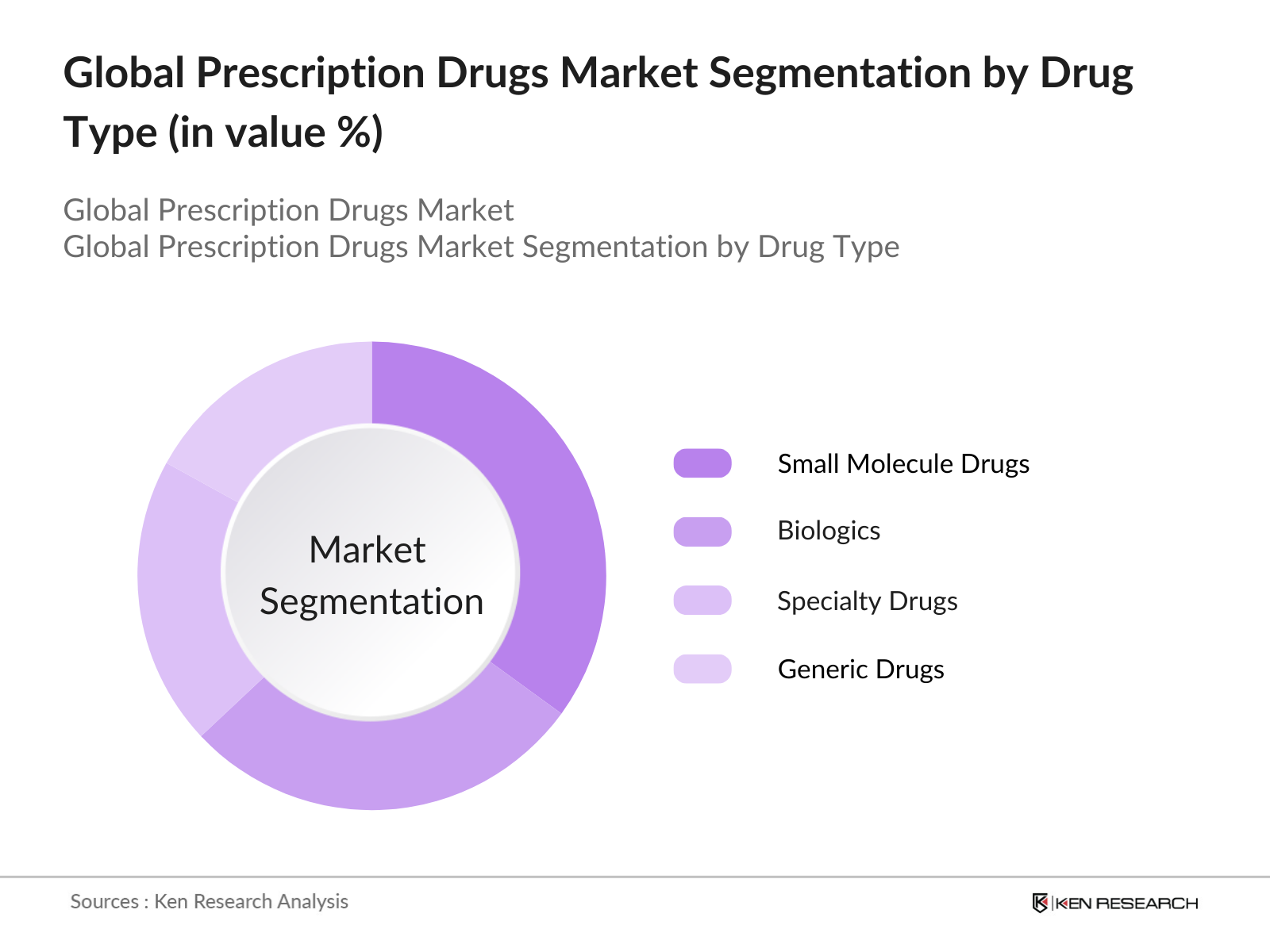
By Drug Type: The market is segmented by drug type into small molecule drugs, biologics, specialty drugs, and generic drugs. Small molecule drugs maintain a dominant share due to their widespread application in various therapeutic areas and cost-effectiveness in production and distribution, driving their prevalence in this category.
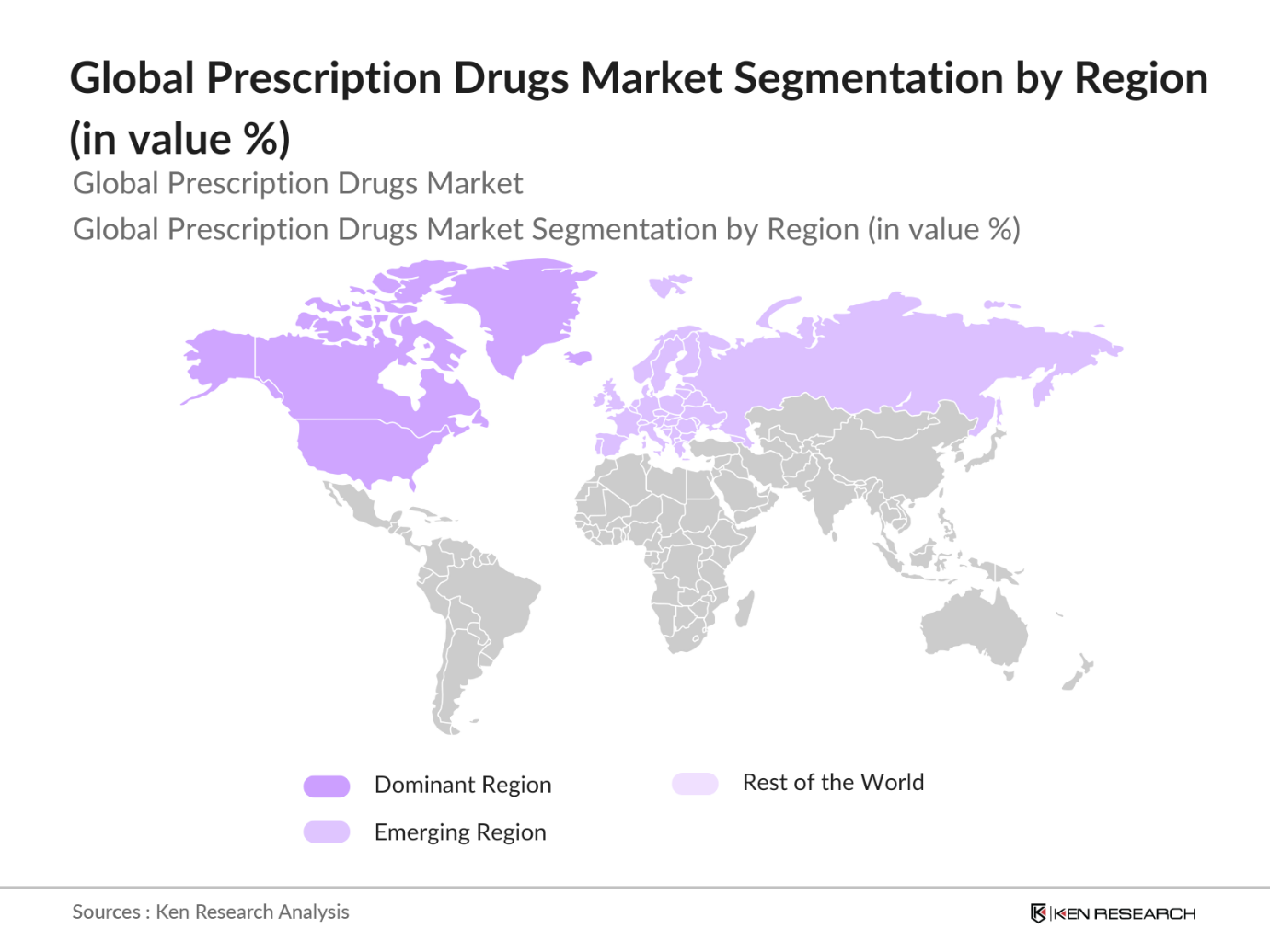
By Region: The market is divided into North America, Europe, Asia Pacific, Latin America, and the Middle East & Africa. North America holds a prominent position due to high healthcare spending, advanced medical research, and favorable policies supporting drug innovation and accessibility.
By Therapeutic Area: Prescription drugs are categorized by therapeutic area into oncology, cardiovascular diseases, central nervous system disorders, infectious diseases, and endocrinology. Oncology drugs have a dominant share under this segmentation due to the rising global cancer incidence, advanced therapies, and significant investment in cancer drug development and clinical trials, making this a primary segment in the market.
Global Prescription Drugs Market Competitive Landscape
The global prescription drugs market is concentrated among a few major players, including industry leaders with a substantial market presence. This consolidation underscores the influence of well-established pharmaceutical giants known for extensive R&D, robust distribution networks, and strategic collaborations.

Global Prescription Drugs Industry Analysis
Growth Drivers
- Aging Population: The global population over 65 years is estimated at 760 million in 2024, driving demand for prescription drugs, particularly in chronic disease management. The United Nations reports that aging demographics directly correlate with increased healthcare spending, as elderly individuals often face age-related health issues like cardiovascular diseases and arthritis. This increase in the elderly population impacts healthcare infrastructure globally, leading to a higher dependency on pharmaceuticals. The WHO highlights a surge in prescriptions for age-related diseases, supported by health systems investment to address elderly care needs in both developed and emerging markets.
- Rising Chronic Disease Incidence: The global prevalence of chronic diseases such as diabetes, heart disease, and cancer is reaching unprecedented levels, affecting over 1 billion people by 2024, according to WHO. This increase places an immense demand on prescription drugs to manage these conditions effectively. For instance, diabetes affects over 500 million individuals globally, with high prescription volumes for medications like insulin and metformin. Chronic diseases are responsible for over 70% of healthcare expenditure worldwide, and national health agencies are supporting policies that encourage the development and accessibility of drugs targeting these conditions.
- Advancements in Drug Development: Significant advancements in pharmaceutical technology have led to the approval of over 55 novel drugs by 2024, according to data from global regulatory agencies. Innovations such as mRNA vaccines and gene therapies are redefining treatment paradigms, with the FDA approving 22 gene therapy drugs alone in the past two years. These advancements are boosting the prescription drug market by expanding treatment options and effectiveness, particularly for complex conditions like genetic disorders. Increased government funding for biotech and pharmaceutical R&D is supporting further growth in this sector.
Market Restraints
- Regulatory Hurdles: Prescription drugs face stringent regulatory requirements, with the FDA rejecting approximately 15% of new drug applications annually due to compliance issues. Navigating regulatory frameworks in multiple regions increases development timelines and costs, with Europe and the United States implementing extensive clinical trial requirements. WHO reports that regulatory compliance costs average over $3 billion globally each year, creating a substantial barrier for pharmaceutical companies. These regulations aim to ensure safety and efficacy but also add complexity to market entry and drug approval processes.
- High R&D Costs: The cost of developing a new drug has risen to over $2.6 billion as of 2024, driven by extensive research and prolonged clinical trials, as noted by the World Bank. High R&D expenses are a barrier, especially for smaller companies unable to absorb these costs without external investment. Only one in ten drugs entering Phase I trials makes it to market, highlighting the financial risks associated with drug development. Additionally, pharmaceutical firms in the U.S. and Europe collectively spend over $180 billion annually on R&D, underscoring the industry's heavy investment requirements.
Global Prescription Drugs Market Future Outlook
Over the next several years, the global prescription drugs market is expected to experience notable growth, driven by continuous innovation in pharmaceuticals, a rise in healthcare spending, and the demand for new therapies to treat complex diseases. Increasing access to healthcare, along with a surge in investment in biologics and specialty drugs, will further propel market expansion and diversification of treatment options globally.
Market Opportunities
- Emerging Markets (Geographic Expansion): Emerging markets such as India, Brazil, and Southeast Asia represent a growing opportunity, with pharmaceutical spending in these regions projected to exceed $300 billion by 2024. This demand is driven by expanding healthcare infrastructure, increased chronic disease incidence, and rising incomes. Governments in these countries are investing in healthcare reforms, thus expanding access to prescription drugs for their populations. Notably, India's National Health Mission has boosted access to medications, particularly in rural areas, highlighting an ongoing expansion of pharmaceutical market reach in developing regions.
- Medicine (Precision Healthcare): With over 800 precision medicines in clinical trials as of 2024, personalized medicine is increasingly reshaping prescription drug approaches. Personalized treatments for cancer, rare diseases, and genetic disorders allow for highly targeted therapies, which can improve patient outcomes. According to the FDA, approximately 35% of new drug approvals are for targeted therapies, addressing specific genetic or molecular markers. The market potential is high, as precision medicine often leads to improved efficacy and minimized side effects, creating demand for tailored drugs in developed and emerging markets alike.
Scope of the Report
|
Drug Type |
Small Molecule Drugs |
|
Therapeutic Area |
Oncology |
|
Distribution Channel |
Retail Pharmacies |
|
Formulation |
Tablets |
|
Region |
North America |
Products
Key Target Audience
Pharmaceutical Manufacturers
Healthcare Providers
Investor and Venture Capitalist Firms
Government and Regulatory Bodies (e.g., FDA, EMA)
Health Insurance Companies
Hospital Administrators
Research and Development Laboratories
Public Health Organizations
Companies
Players Mentioned in the Report:
Pfizer Inc.
Merck & Co., Inc.
Novartis AG
Roche Holding AG
Johnson & Johnson
Sanofi
AstraZeneca
GlaxoSmithKline plc
Eli Lilly and Company
AbbVie Inc.
Bristol-Myers Squibb
Amgen Inc.
Gilead Sciences
Takeda Pharmaceutical Company Limited
Boehringer Ingelheim
Table of Contents
1. Global Prescription Drugs Market Overview
1.1 Definition and Scope
1.2 Market Taxonomy
1.3 Market Dynamics Overview (Trends, Growth Drivers, Challenges)
1.4 Market Segmentation Overview
2. Global Prescription Drugs Market Size (In USD Mn)
2.1 Historical Market Size
2.2 Year-On-Year Growth Analysis
2.3 Key Market Developments and Milestones
3. Global Prescription Drugs Market Analysis
3.1 Growth Drivers
3.1.1 Aging Population (Demographics)
3.1.2 Rising Chronic Disease Incidence (Healthcare Demand)
3.1.3 Advancements in Drug Development (Innovation)
3.1.4 Expanding Insurance Coverage (Access)
3.2 Market Challenges
3.2.1 Regulatory Hurdles (Compliance)
3.2.2 High R&D Costs (Financial Pressure)
3.2.3 Patent Expirations (Competitive Pressure)
3.3 Opportunities
3.3.1 Emerging Markets (Geographic Expansion)
3.3.2 Personalized Medicine (Precision Healthcare)
3.3.3 Mergers and Collaborations (Strategic Alliances)
3.4 Trends
3.4.1 Biologics and Biosimilars (Product Differentiation)
3.4.2 Digital Health Integration (Technology Adoption)
3.4.3 Increased Use of Specialty Drugs (Therapeutic Focus)
3.5 Government Regulation
3.5.1 Drug Approval Standards (Regulatory Compliance)
3.5.2 Price Controls and Reimbursements (Policy Framework)
3.5.3 International Trade Agreements (Global Trade Policies)
3.6 SWOT Analysis
3.7 Stakeholder Ecosystem (Manufacturers, Distributors, Healthcare Providers)
3.8 Porters Five Forces Analysis (Competitive Structure)
3.9 Competition Ecosystem
4. Global Prescription Drugs Market Segmentation
4.1 By Drug Type (In Value %)
4.1.1 Small Molecule Drugs
4.1.2 Biologics
4.1.3 Specialty Drugs
4.1.4 Generic Drugs
4.2 By Therapeutic Area (In Value %)
4.2.1 Oncology
4.2.2 Cardiovascular Diseases
4.2.3 Central Nervous System Disorders
4.2.4 Infectious Diseases
4.2.5 Endocrinology
4.3 By Distribution Channel (In Value %)
4.3.1 Retail Pharmacies
4.3.2 Hospital Pharmacies
4.3.3 Online Pharmacies
4.4 By Formulation (In Value %)
4.4.1 Tablets
4.4.2 Capsules
4.4.3 Injections
4.4.4 Topicals
4.5 By Region (In Value %)
4.5.1 North America
4.5.2 Europe
4.5.3 Asia Pacific
4.5.4 Latin America
4.5.5 Middle East & Africa
5. Global Prescription Drugs Market Competitive Analysis
5.1 Detailed Profiles of Major Companies
5.1.1 Pfizer Inc.
5.1.2 Merck & Co., Inc.
5.1.3 Novartis AG
5.1.4 Roche Holding AG
5.1.5 Johnson & Johnson
5.1.6 Sanofi
5.1.7 AstraZeneca
5.1.8 GlaxoSmithKline plc
5.1.9 Eli Lilly and Company
5.1.10 AbbVie Inc.
5.1.11 Bristol-Myers Squibb
5.1.12 Amgen Inc.
5.1.13 Gilead Sciences
5.1.14 Takeda Pharmaceutical Company Limited
5.1.15 Boehringer Ingelheim
5.2 Cross Comparison Parameters (Revenue, R&D Investment, Product Portfolio, Market Presence, Patent Portfolio, Partnerships, M&A Activity, Growth Strategy)
5.3 Market Share Analysis
5.4 Strategic Initiatives
5.5 Mergers and Acquisitions
5.6 Investment Analysis
5.7 Venture Capital Funding
5.8 Government Grants
5.9 Private Equity Investments
6. Global Prescription Drugs Market Regulatory Framework
6.1 Drug Approval Standards
6.2 Pricing Regulations
6.3 Compliance Requirements
6.4 Patent Legislation
6.5 Certification Processes
7. Global Prescription Drugs Market Future Market Size (In USD Mn)
7.1 Future Market Size Projections
7.2 Key Factors Driving Future Market Growth
8. Global Prescription Drugs Market Analysts Recommendations
8.1 TAM/SAM/SOM Analysis
8.2 Customer Cohort Analysis
8.3 Marketing Initiatives
8.4 White Space Opportunity Analysis
Research Methodology
Step 1: Identification of Key Variables
This phase identifies all critical variables influencing the prescription drugs market, including regulatory changes, therapeutic advancements, and demographic trends. Secondary research and proprietary databases are leveraged to map these factors.
Step 2: Market Analysis and Construction
This step involves analyzing historical data and assessing market penetration and revenue generation across therapeutic segments. Data on drug approvals and therapeutic efficacy are evaluated to build a robust understanding of market dynamics.
Step 3: Hypothesis Validation and Expert Consultation
Hypotheses on market growth and segmentation are validated through interviews with industry experts and key stakeholders, ensuring an accurate representation of market trends and challenges.
Step 4: Research Synthesis and Final Output
In this phase, data collected from primary and secondary sources are synthesized to provide a validated and comprehensive market analysis, ensuring accuracy and reliability in the final report.
Frequently Asked Questions
01 How big is the Global Prescription Drugs Market?
The global prescription drugs market is valued at USD 1160 billion, influenced by the growing demand for chronic disease treatments and advancements in drug development.
02 What are the major challenges in the Global Prescription Drugs Market?
Key challenges include regulatory hurdles, high R&D costs, and the expiration of critical drug patents, which impact market profitability and competitive dynamics.
03 Who are the major players in the Global Prescription Drugs Market?
Major players include Pfizer, Merck, Novartis, Roche, and Johnson & Johnson, recognized for their extensive R&D capabilities and robust product portfolios.
04 What are the growth drivers of the Global Prescription Drugs Market?
The market is driven by technological advancements in drug development, an aging global population, and expanding access to healthcare through insurance coverage and government spending.
Why Buy From Us?

What makes us stand out is that our consultants follows Robust, Refine and Result (RRR) methodology. i.e. Robust for clear definitions, approaches and sanity checking, Refine for differentiating respondents facts and opinions and Result for presenting data with story

We have set a benchmark in the industry by offering our clients with syndicated and customized market research reports featuring coverage of entire market as well as meticulous research and analyst insights.

While we don't replace traditional research, we flip the method upside down. Our dual approach of Top Bottom & Bottom Top ensures quality deliverable by not just verifying company fundamentals but also looking at the sector and macroeconomic factors.

With one step in the future, our research team constantly tries to show you the bigger picture. We help with some of the tough questions you may encounter along the way: How is the industry positioned? Best marketing channel? KPI's of competitors? By aligning every element, we help maximize success.

Our report gives you instant access to the answers and sources that other companies might choose to hide. We elaborate each steps of research methodology we have used and showcase you the sample size to earn your trust.

If you need any support, we are here! We pride ourselves on universe strength, data quality, and quick, friendly, and professional service.