
Global Probiotic for Kids Market Outlook to 2030
Region:Global
Author(s):Abhinav kumar
Product Code:KROD7717
December 2024
86
About the Report
Global Probiotic for Kids Market Overview
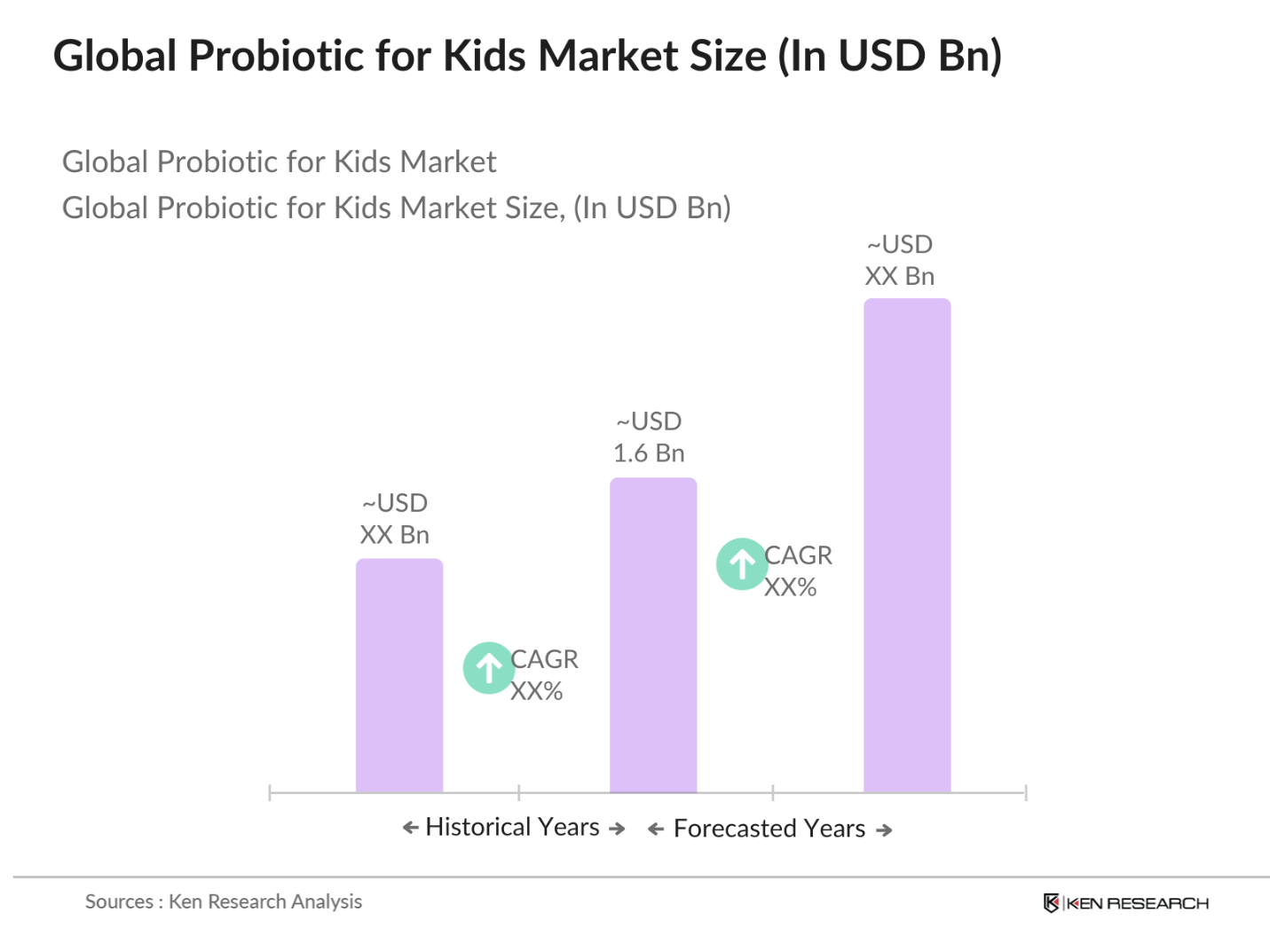
- The global probiotic for kids market is valued at USD 1.6 billion, according to data from credible sources such as Statista and MarketWatch. This market is primarily driven by the rising parental awareness of gut health and the increasing demand for preventive healthcare measures in pediatrics. Parents are focusing on strengthening children's immune systems, addressing digestive health concerns, and providing probiotics as a safe and effective solution to improve overall well-being. Increasing research on the benefits of probiotics in pediatrics is further driving the market.
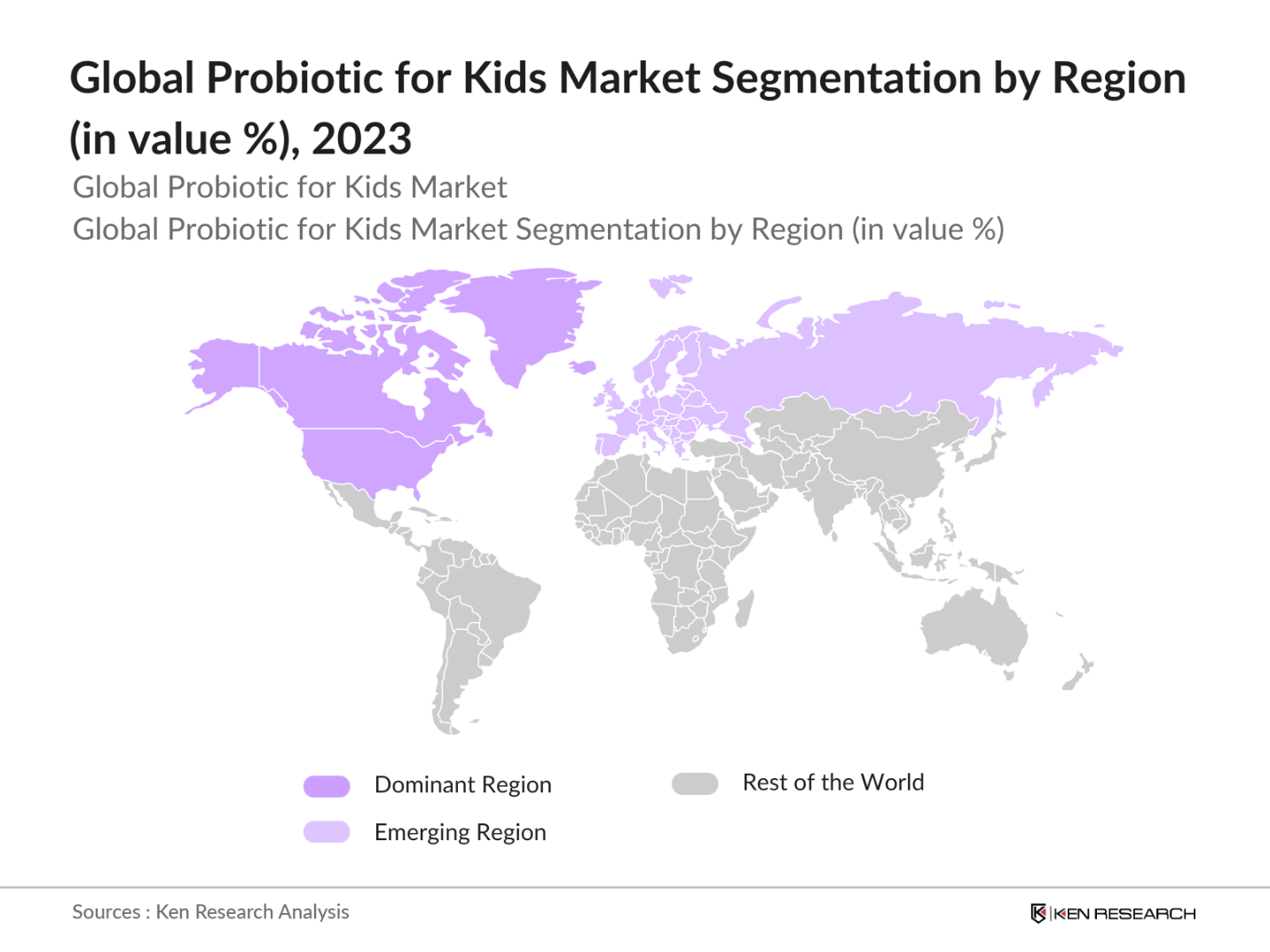
- In terms of geographical dominance, North America and Europe are leading the market. The dominance is due to the widespread awareness of probiotics, strong healthcare infrastructure, and high disposable income, which allows parents to invest in premium healthcare products for their children. Moreover, countries like the United States and Germany have a well-established regulatory framework for probiotics, supporting market expansion. Emerging markets such as China and India are also witnessing rapid growth due to increasing healthcare awareness and urbanization.
- The EFSA has set stringent guidelines for probiotic health claims and product labeling, particularly for pediatric products. In 2024, regulations such as Regulation (EC) No 1924/2006 require that all health claims on probiotics for children be scientifically backed, ensuring product safety and efficacy. These regulations have led to more transparent labeling practices and greater consumer trust in probiotic products, facilitating market growth in the European Union.
Global Probiotic for Kids Market Segmentation
By Product Type: The global probiotic for kids market is segmented by product type into Lactobacillus-based probiotics, Bifidobacterium-based probiotics, and Yeast-based probiotics. Currently, Lactobacillus-based probiotics hold the dominant market share, attributed to their extensive clinical studies supporting benefits for digestive health and immune support. These probiotics are well-established and widely accepted, and they are also included in many pediatric supplements. Additionally, Lactobacillus strains are considered safer for children due to their non-pathogenic nature and ability to maintain gut flora.

By Region: Geographically, the market is segmented into North America, Europe, Asia Pacific, Latin America, and Middle East & Africa. North America holds the largest market share due to the strong presence of key players, high health awareness among parents, and significant investments in research and development. Additionally, stringent regulations ensure product safety and efficacy, which has helped build consumer trust.
By Delivery Form: The delivery form segmentation includes Liquid, Gummies, Powders, and Capsules. Gummies have seen the highest adoption rate and dominate this segment due to their appealing taste and ease of consumption for children. Parents prefer this format as it encourages regular intake without resistance from the kids. Moreover, companies have been focusing on improving the nutritional content while maintaining the taste, which has been critical in attracting young consumers.
Global Probiotic for Kids Market Competitive Landscape
The global probiotic for kids market is competitive, with a mixture of well-established global players and emerging regional firms. The market is dominated by major players such as Nestl S.A., Danone S.A., and Chr. Hansen Holding A/S. These companies leverage their strong R&D capabilities and extensive distribution networks to maintain market dominance. New entrants are finding it challenging to compete against such established players due to high product development costs and stringent regulatory requirements.
|
Company |
Established |
Headquarters |
Revenue (USD) |
Product Range |
Global Reach |
Key Strains |
Innovation Initiatives |
Market Strategy |
Research Collaborations |
|
Nestl S.A. |
1867 |
Switzerland |
_ |
_ |
_ |
_ |
_ |
_ |
_ |
|
Danone S.A. |
1919 |
France |
_ |
_ |
_ |
_ |
_ |
_ |
_ |
|
Chr. Hansen Holding A/S |
1874 |
Denmark |
_ |
_ |
_ |
_ |
_ |
_ |
_ |
|
BioGaia AB |
1990 |
Sweden |
_ |
_ |
_ |
_ |
_ |
_ |
_ |
|
DSM Nutritional Products |
1902 |
Netherlands |
_ |
_ |
_ |
_ |
_ |
_ |
_ |
Global Probiotic for Kids Industry Analysis
Growth Drivers
- Rising Awareness of Gut Health in Children: The rising awareness of gut health among parents has significantly boosted the pediatric probiotics market. By 2024, a global increase in pediatric digestive issues such as colic, constipation, and irritable bowel syndrome has driven the demand for probiotics. Government health bodies, including the European Food Safety Authority (EFSA), emphasize the importance of gut microbiota for children's immune function. In Europe, over 60% of parents now consider gut health supplements for their children, as per data from public health institutions, aligning with a rise in pediatric digestive healthcare awareness globally.
- Increasing Demand for Preventative Healthcare: Preventative healthcare in children has become a priority for many governments due to rising pediatric healthcare costs and concerns over antibiotic resistance. In 2024, public health programs in countries such as the U.S. and Australia have begun incorporating probiotics in pediatric preventive healthcare protocols. For instance, the U.S. Department of Health has noted a 15% reduction in pediatric gastrointestinal infections in areas with high probiotic use, promoting the growing acceptance of probiotics for long-term health benefits in children.
- Expanding Research on Probiotics Effectiveness in Pediatrics: Research on probiotics for childrens health has expanded significantly, particularly in the U.S., Japan, and Europe. As of 2024, clinical trials funded by government bodies such as the National Institutes of Health (NIH) show that certain probiotic strains, such as Lactobacillus rhamnosus and Bifidobacterium infantis, support digestive health and reduce allergic reactions in children. Japan, which allocates substantial funding for pediatric probiotic research, has reported positive outcomes from its government-backed clinical trials, improving the understanding of probiotics pediatric applications.
Market Challenges
- Lack of Awareness in Developing Economies: Despite growing awareness globally, probiotic use for pediatric health remains underutilized in developing regions such as Sub-Saharan Africa and parts of Southeast Asia. Governments in these areas, focusing on more pressing health issues, have not yet prioritized gut health education. According to a 2024 World Bank report, healthcare programs in developing countries spend less than 1% of their budgets on preventive pediatric gut health initiatives, leading to significantly lower awareness and adoption of probiotics for children.
- Stringent Regulatory Approvals: Stringent regulations in some markets, particularly Asia and Latin America, pose a challenge for manufacturers of pediatric probiotics. For instance, in 2024, probiotics remain classified as pharmaceutical products in China, requiring extensive clinical trials and approvals that slow market entry. This contrasts with the regulatory environment in the U.S. and EU, where probiotics enjoy relatively lenient classification as dietary supplements. Such stringent regulatory landscapes can delay product launches by up to three years in these regions.
Global Probiotic for Kids Market Future Outlook
The global probiotic for kids market is expected to grow substantially over the coming years. Factors such as increasing awareness of pediatric gut health, advancements in probiotic formulations, and growing healthcare expenditure will drive this growth. As research continues to uncover new health benefits of probiotics for children, particularly in enhancing immune function and cognitive health, the market will see further innovations in delivery formats and product formulations. In addition, the rising adoption of probiotics in emerging markets due to increasing urbanization and healthcare improvements will contribute to future growth.
Opportunities
- Development of Novel Probiotic Strains: The development of novel probiotic strains offers immense opportunities in pediatric healthcare. Government-funded research institutions in the EU and Japan are exploring new strains like Lactobacillus reuteri, which has shown promising results in treating colic in infants. As of 2024, the Japanese government has committed $50 million toward pediatric probiotic research, highlighting the emphasis on developing more effective strains for children's health. Such investments provide significant opportunities for growth and innovation in the market. Source: Japan Ministry of Health
- Emerging Markets in Asia and Latin America: Asia and Latin America present key growth markets for pediatric probiotics due to improving healthcare infrastructure and rising disposable incomes. In 2024, China and Brazil have both reported increased probiotic imports, with government healthcare initiatives emphasizing preventive healthcare. Government statistics in Brazil show a 20% increase in probiotic product consumption between 2022 and 2024, with pediatric probiotics gaining popularity due to national health campaigns promoting gut health for children.
Scope of the Report
|
Product Type |
Lactobacillus-Based Probiotics Bifidobacterium-Based Probiotics Yeast-Based Probiotics |
|
Delivery Form |
Liquid Gummies Powders Capsules |
|
Application |
Digestive Health Immune Support Oral Health General Wellness |
|
Age Group |
Infants (0-2 years) Toddlers (2-5 years) Children (5-12 years) |
|
Region |
North America Europe Asia Pacific Latin America Middle East & Africa |
Products
Key Target Audience Organizations and Entities Who Can Benefit by Subscribing This Report:
Probiotic Manufacturing Companies
Pediatric Healthcare Industries
Retail Chains and Pharmacies
Online Retailers and E-commerce Companies
Government and Regulatory Bodies (EFSA, U.S. FDA)
Healthcare Investors and Venture Capitalist Firms
Health and Nutrition Industries
Private Label Probiotic Companies
Companies
Players Mentioned in the Report
Nestl S.A.
Danone S.A.
Chr. Hansen Holding A/S
BioGaia AB
DSM Nutritional Products
Lifeway Foods, Inc.
Culturelle (i-Health, Inc.)
Garden of Life
UAS Labs (Kerry Group)
The Clorox Company
Table of Contents
1. Global Probiotic for Kids Market Overview
1.1 Definition and Scope
1.2 Market Taxonomy
1.3 Market Growth Rate
1.4 Market Segmentation Overview
2. Global Probiotic for Kids Market Size (In USD Bn)
2.1 Historical Market Size
2.2 Year-On-Year Growth Analysis
2.3 Key Market Developments and Milestones
3. Global Probiotic for Kids Market Analysis
3.1 Growth Drivers
3.1.1 Rising Awareness of Gut Health in Children
3.1.2 Increasing Demand for Preventative Healthcare
3.1.3 Expanding Research on Probiotics Effectiveness in Pediatrics
3.1.4 Regulatory Support for Nutritional Supplements
3.2 Market Challenges
3.2.1 Lack of Awareness in Developing Economies
3.2.2 Stringent Regulatory Approvals
3.2.3 Product Stability Concerns
3.2.4 High Product Development Costs
3.3 Opportunities
3.3.1 Development of Novel Probiotic Strains
3.3.2 Emerging Markets in Asia and Latin America
3.3.3 Collaboration with Pediatricians and Healthcare Providers
3.4 Trends
3.4.1 Increasing Use of Multi-Strain Probiotic Formulas
3.4.2 Innovative Delivery Forms: Gummies, Powders, and Sachets
3.4.3 Rise in Online Sales and Direct-to-Consumer Channels
3.5 Government Regulation (Health claims, product labeling, and approvals for kids probiotics)
3.5.1 European Food Safety Authority (EFSA) Guidelines
3.5.2 U.S. FDA and DSHEA Regulations
3.5.3 Codex Alimentarius for Probiotics in Infant Nutrition
3.6 SWOT Analysis
3.7 Stake Ecosystem (Retailers, e-commerce platforms, healthcare professionals)
3.8 Porters Five Forces (Bargaining power of suppliers, threat of substitutes, etc.)
3.9 Competition Ecosystem (Ingredient suppliers, manufacturers, distributors, and retail players)
4. Global Probiotic for Kids Market Segmentation
4.1 By Product Type (In Value %)
4.1.1 Lactobacillus-Based Probiotics
4.1.2 Bifidobacterium-Based Probiotics
4.1.3 Yeast-Based Probiotics
4.2 By Delivery Form (In Value %)
4.2.1 Liquid
4.2.2 Gummies
4.2.3 Powders
4.2.4 Capsules
4.3 By Application (In Value %)
4.3.1 Digestive Health
4.3.2 Immune Support
4.3.3 Oral Health
4.3.4 General Wellness
4.4 By Age Group (In Value %)
4.4.1 Infants (0-2 years)
4.4.2 Toddlers (2-5 years)
4.4.3 Children (5-12 years)
4.5 By Region (In Value %)
4.5.1 North America
4.5.2 Europe
4.5.3 Asia Pacific
4.5.4 Latin America
4.5.5 Middle East & Africa
5. Global Probiotic for Kids Market Competitive Analysis
5.1 Detailed Profiles of Major Companies
5.1.1 Nestl S.A.
5.1.2 Danone S.A.
5.1.3 Yakult Honsha Co., Ltd.
5.1.4 Chr. Hansen Holding A/S
5.1.5 BioGaia AB
5.1.6 DSM Nutritional Products
5.1.7 Probi AB
5.1.8 Lifeway Foods, Inc.
5.1.9 Culturelle (i-Health, Inc.)
5.1.10 Garden of Life
5.1.11 UAS Labs (Kerry Group)
5.1.12 The Clorox Company
5.1.13 Renew Life (The Clorox Company)
5.1.14 Jarrow Formulas, Inc.
5.1.15 NOW Foods
5.2 Cross Comparison Parameters (Revenue, No. of Employees, Headquarters, Product Portfolio, Market Penetration, Brand Reach, Innovation Capacity, Manufacturing Capability)
5.3 Market Share Analysis (Brand competition, geographic dominance, etc.)
5.4 Strategic Initiatives (Collaborations, joint ventures, etc.)
5.5 Mergers and Acquisitions
5.6 Investment Analysis (Private equity, venture capital)
5.7 Venture Capital Funding
5.8 Government Grants
5.9 Private Equity Investments
6. Global Probiotic for Kids Market Regulatory Framework
6.1 Health Claim Approval Processes
6.2 Compliance with International Standards
6.3 Certification Processes for Pediatric Supplements
7. Global Probiotic for Kids Future Market Size (In USD Bn)
7.1 Future Market Size Projections
7.2 Key Factors Driving Future Market Growth (expanding healthcare policies, innovative pediatric formulations)
8. Global Probiotic for Kids Future Market Segmentation
8.1 By Product Type (In Value %)
8.2 By Delivery Form (In Value %)
8.3 By Application (In Value %)
8.4 By Age Group (In Value %)
8.5 By Region (In Value %)
9. Global Probiotic for Kids Market Analysts Recommendations
9.1 TAM/SAM/SOM Analysis
9.2 Customer Cohort Analysis (Consumer preferences by geography, age, and healthcare needs)
9.3 Marketing Initiatives (Best practices for product positioning and digital outreach)
9.4 White Space Opportunity Analysis (Unexplored demographic segments, new product developments)
Research Methodology
Step 1: Identification of Key Variables
The initial phase focuses on understanding the core variables within the probiotic for kids market. Desk research, along with proprietary databases, is employed to gather data on stakeholders, product trends, and regulatory influences shaping the market.
Step 2: Market Analysis and Construction
In this phase, historical data on market size, product development, and geographic expansion is collected. Key financial metrics, consumer preferences, and service quality statistics are evaluated to create accurate revenue estimates.
Step 3: Hypothesis Validation and Expert Consultation
Key market hypotheses are validated through consultations with industry experts via interviews and surveys. These insights help refine market forecasts and provide a deeper understanding of operational challenges and opportunities.
Step 4: Research Synthesis and Final Output
The final phase involves synthesizing data from manufacturers, distributors, and healthcare providers. This ensures that the market report presents a holistic and validated analysis, covering all major facets of the global probiotic for kids market.
Frequently Asked Questions
01. How big is the global probiotic for kids market?
The global probiotic for kids market is valued at USD 1.6 billion, driven by increased awareness of pediatric gut health and growing consumer demand for preventive healthcare solutions.
02. What are the challenges in the global probiotic for kids market?
Challenges include regulatory hurdles, lack of awareness in developing regions, and high costs associated with product development and clinical testing.
03. Who are the major players in the global probiotic for kids market?
Major players in the market include Nestl S.A., Danone S.A., Chr. Hansen Holding A/S, BioGaia AB, and DSM Nutritional Products.
04. What are the growth drivers of the global probiotic for kids market?
The market is driven by rising parental awareness of probiotics' health benefits, advancements in probiotic formulations, and growing healthcare expenditure globally.
Why Buy From Us?

What makes us stand out is that our consultants follows Robust, Refine and Result (RRR) methodology. i.e. Robust for clear definitions, approaches and sanity checking, Refine for differentiating respondents facts and opinions and Result for presenting data with story

We have set a benchmark in the industry by offering our clients with syndicated and customized market research reports featuring coverage of entire market as well as meticulous research and analyst insights.

While we don't replace traditional research, we flip the method upside down. Our dual approach of Top Bottom & Bottom Top ensures quality deliverable by not just verifying company fundamentals but also looking at the sector and macroeconomic factors.

With one step in the future, our research team constantly tries to show you the bigger picture. We help with some of the tough questions you may encounter along the way: How is the industry positioned? Best marketing channel? KPI's of competitors? By aligning every element, we help maximize success.

Our report gives you instant access to the answers and sources that other companies might choose to hide. We elaborate each steps of research methodology we have used and showcase you the sample size to earn your trust.

If you need any support, we are here! We pride ourselves on universe strength, data quality, and quick, friendly, and professional service.