















Global Process Analytical Technology Market Outlook to 2030
Region:Global
Author(s):Mukul Soni
Product Code:KROD1582
December 2024
89
About the Report
Global Process Analytical Technology Market Overview
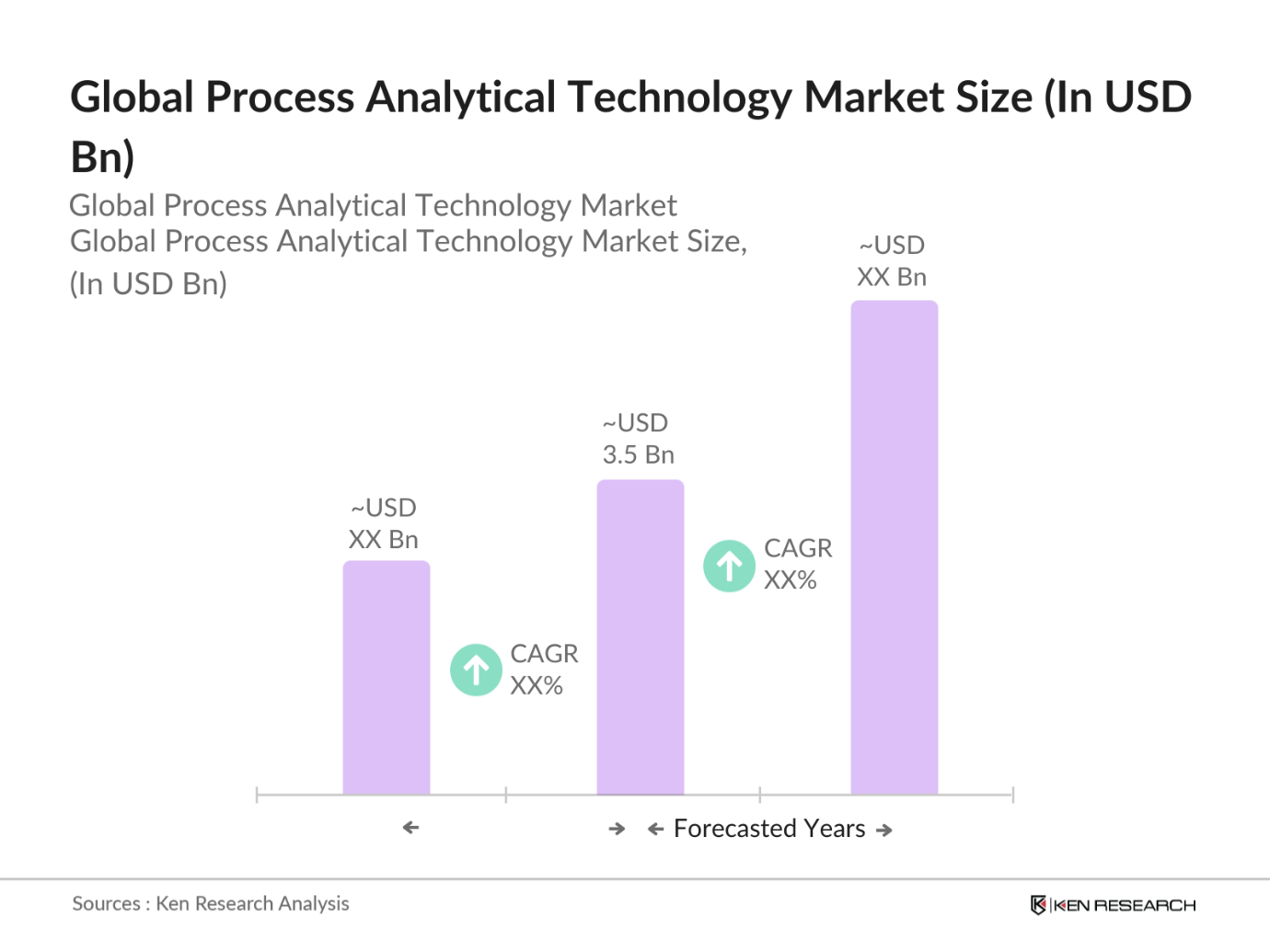
- The Global Process Analytical Technology (PAT) Market has witnessed significant growth, reaching a valuation of USD 3.5 billion in 2023. This expansion is driven by the increasing demand for real-time quality monitoring in pharmaceutical manufacturing and stringent regulatory requirements, which have pushed companies to adopt advanced analytical tools for process optimization.
- Prominent players in the global PAT market include Thermo Fisher Scientific, Siemens AG, Agilent Technologies, ABB Ltd., and PerkinElmer, Inc. These companies are at the forefront of developing and deploying PAT solutions across pharmaceutical and biopharmaceutical sectors. Thermo Fisher Scientific, for instance, leads with its comprehensive suite of PAT instruments and software.
- The North American region, particularly the United States, dominates the global PAT market. The presence of major pharmaceutical companies, a well-established healthcare infrastructure, and strong regulatory frameworks drive the adoption of PAT in the region. Additionally, significant investments in research and development activities by pharmaceutical companies in the U.S. contribute to the region's dominance in the market. This trend is expected to continue, with North America maintaining its leading position through 2024.
- In January 2024, Thermo Fisher Scientific launched its latest PAT software, integrated with AI and machine learning capabilities, enabling real-time data analysis and predictive maintenance in pharmaceutical manufacturing. This advancement is expected to set new standards for process efficiency and quality control in the industry.
Global Process Analytical Technology Market Segmentation
The global Process Analytical Technology Market is divided into the following segments:
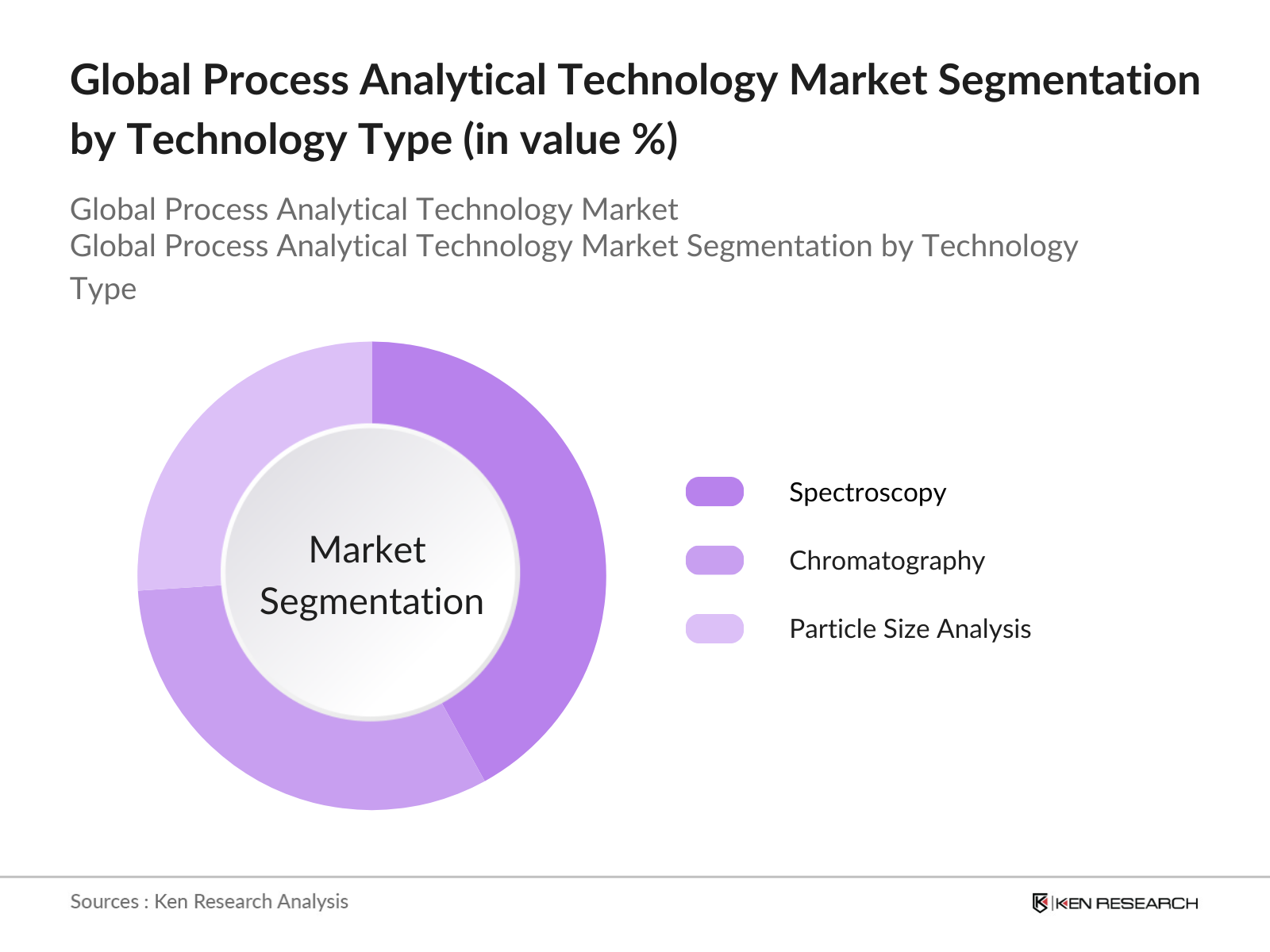
By Technology Type: The global PAT market is segmented by technology type into spectroscopy, chromatography, and particle size analysis. In 2023, spectroscopy dominated this segment due to its extensive application in monitoring critical quality attributes in real-time during pharmaceutical production. The ability of spectroscopy to provide non-destructive analysis contributes to its widespread use.
By Region: The global PAT market is segmented by region into North America, Europe, Asia-Pacific, Latin America, and the Middle East & Africa (MEA). In 2023, North America led the market due to its significant investments in pharmaceutical R&D and the presence of major PAT technology providers, particularly in the U.S., which is a hub for pharmaceutical innovation and regulation.
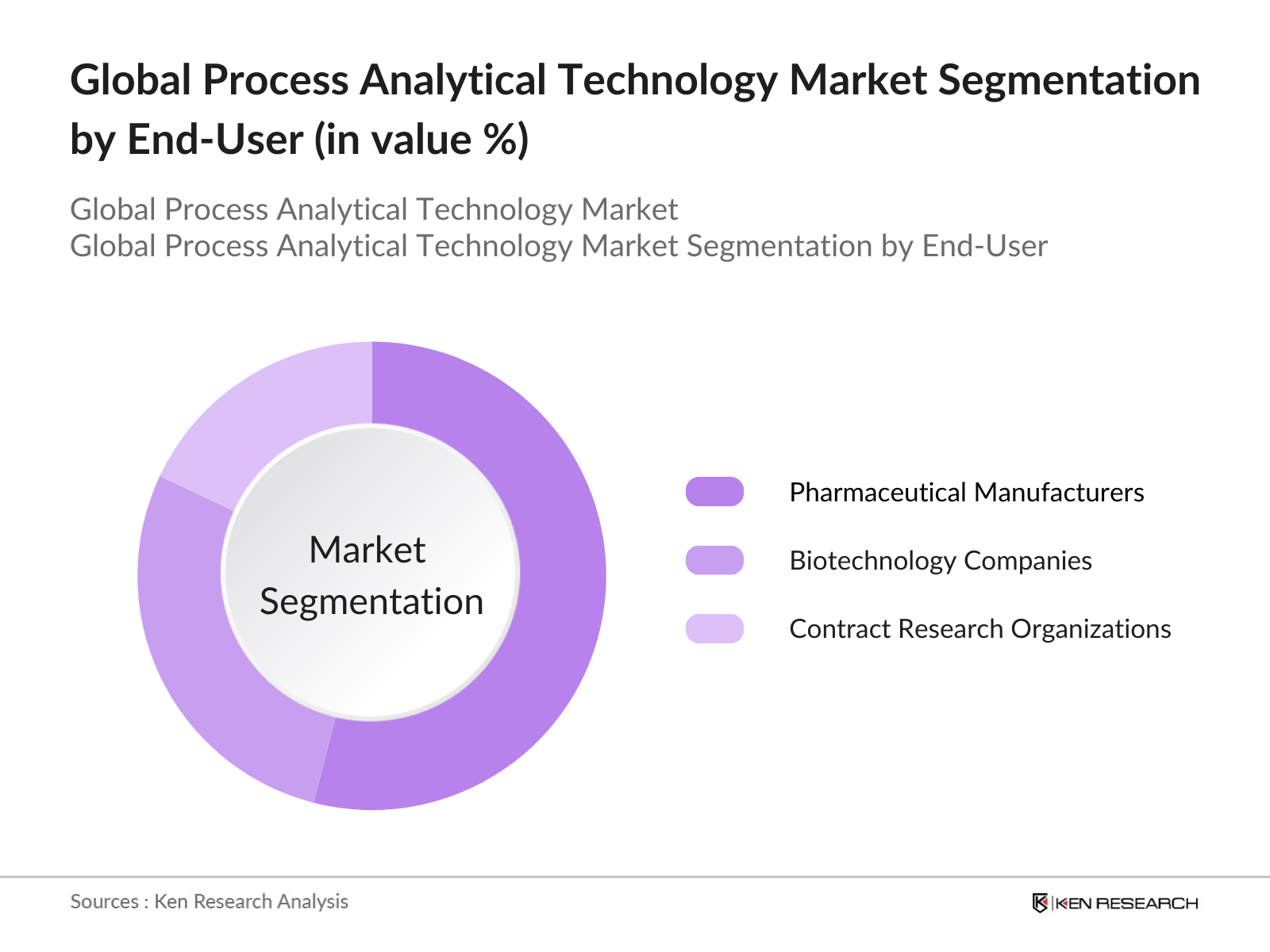
By End-User: The market is segmented by end-user into pharmaceutical manufacturers, biotechnology companies, and contract research organizations (CROs). In 2023, pharmaceutical manufacturers held a dominant market share, driven by the need for stringent quality control and compliance with regulatory standards, making PAT an integral part of their manufacturing processes.
Global Process Analytical Technology Market Competitive Landscape
|
Company Name |
Establishment Year |
Headquarters |
|
Thermo Fisher Scientific |
1956 |
Waltham, USA |
|
Siemens AG |
1847 |
Munich, Germany |
|
Agilent Technologies, Inc. |
1999 |
Santa Clara, USA |
|
ABB Ltd. |
1988 |
Zurich, Switzerland |
|
PerkinElmer, Inc. |
1937 |
Waltham, USA |
- Agilent Technologies, Inc.: In 2023, Agilent expanded its partnership with leading biopharmaceutical companies to integrate its PAT solutions into new biologics manufacturing facilities. This move aims to enhance real-time monitoring and control, ensuring consistent quality across production lines.
- PerkinElmer, Inc.: In 2023, PerkinElmer launched a new series of PAT instruments tailored for small and mid-sized pharmaceutical manufacturers, offering cost-effective solutions for real-time process monitoring. This product line is expected to increase PAT adoption among smaller industry players.
Global Process Analytical Technology Industry Analysis
Global Process Analytical Technology Market Growth Drivers
- Increased Focus on Quality Assurance: The global pharmaceutical industrys emphasis on quality assurance has driven the adoption of PAT. With the rising demand for precision medicine and biologics, real-time monitoring of critical process parameters is essential to ensure product consistency and compliance with regulatory standards. In 2023, over 75% of global pharmaceutical companies had integrated PAT into their production lines.
- Advancements in Analytical Technologies: Continuous advancements in PAT tools and software, such as the integration of AI and machine learning, have enhanced the capabilities of real-time data analysis. These technologies enable more accurate prediction and control of manufacturing processes, reducing variability and enhancing efficiency. By 2024, AI-powered PAT systems are expected to become standard in the industry.
- Regulatory Mandates: Stringent regulations from bodies like the U.S. FDA and EMA require pharmaceutical manufacturers to adopt PAT for process optimization and quality control. These regulations are designed to minimize the risk of contamination and ensure consistent product quality, which is critical in sectors like biopharmaceuticals. In 2023, regulatory-driven PAT implementations accounted for a significant portion of the markets growth.
Global Process Analytical Technology Market Challenges
- Complexity of Integration with Existing Systems: Integrating PAT with existing manufacturing processes and systems can be complex and time-consuming. In 2023, it was reported that over 40% of pharmaceutical companies faced difficulties in integrating PAT into their current manufacturing execution systems (MES). This challenge is compounded by the need for extensive validation and testing to ensure that the PAT system is fully operational and compliant with regulatory standards.
- Lack of Skilled Workforce The successful implementation of PAT requires a highly skilled workforce capable of operating and maintaining advanced analytical instruments and interpreting complex data. In 2023, a survey conducted by the European Medicines Agency revealed that nearly 30% of pharmaceutical companies cited a lack of skilled personnel as a major barrier to PAT adoption. The shortage of professionals with expertise in process analytics and quality control has slowed the implementation of PAT, particularly in emerging markets where access to specialized training programs is limited
Global Process Analytical Technology Market Government Initiatives
- U.S. FDA Process Analytical Technology Guidance (2023): In 2023, the U.S. FDA issued updated guidelines for the implementation of PAT in pharmaceutical manufacturing. These guidelines emphasize the importance of real-time monitoring and control in ensuring product quality and compliance with Good Manufacturing Practices (GMP). The FDAs initiative has been a significant driver of PAT adoption in the U.S.
- European Medicines Agency PAT Framework (2023): The European Medicines Agency (EMA) introduced a comprehensive framework in 2023 to support the adoption of PAT in the pharmaceutical industry. This framework provides clear guidelines on the use of PAT for process optimization and quality control, encouraging companies across Europe to implement these technologies.
Global Process Analytical Technology Market Future Outlook
The Global Process Analytical Technology market is poised for robust growth through 2028, driven by the increasing adoption of advanced analytical tools in pharmaceutical manufacturing and stringent regulatory requirements. The integration of AI and machine learning into PAT systems is expected to revolutionize process monitoring and control, enhancing efficiency and reducing costs.
Future Trends
- AI Integration in PAT Systems: The future of PAT will be shaped by the integration of Artificial Intelligence (AI) and machine learning. These technologies will enable more sophisticated data analysis, predictive maintenance, and process optimization, allowing pharmaceutical companies to achieve higher levels of efficiency and product quality.
- Expansion in Emerging Markets: As emerging markets like India and China continue to develop their pharmaceutical industries, the adoption of PAT is expected to increase. These regions are likely to become significant players in the global PAT market, driven by government initiatives and investments in advanced manufacturing technologies.
Scope of the Report
|
North America Europe Asia Pacific Latin America Middle East Africa |
|
|
By Technology Type |
Spectroscopy Chromatography Particle Size Analysis |
|
By End-User |
Pharmaceutical Manufacturers Biotechnology Companies Contract Research Organizations |
|
By Measurement |
On-line In-line At-line |
|
By Product and Service |
Analyzers Probes Sensors |
Products
Key Target Audience Organizations and Entities Who Can Benefit by Subscribing This Report:
Pharmaceutical Manufacturers
Biotechnology Companies
Contract Research Organizations (CROs)
Analytical Instrumentation Providers
Process Engineers and Quality Control Managers
Government and Regulatory Bodies (e.g., U.S. FDA, EMA)
Research and Development Laboratories
Venture Capital and Investment Firms
Time Period Captured in the Report:
Historical Period: 2018-2023
Base Year: 2023
Forecast Period: 2023-2028
Companies
Players Mentioned in the Report:
Thermo Fisher Scientific
Siemens AG
Agilent Technologies, Inc.
ABB Ltd.
PerkinElmer, Inc.
Waters Corporation
Bruker Corporation
Emerson Electric Co.
Shimadzu Corporation
Yokogawa Electric Corporation
Mettler Toledo International Inc.
GE Healthcare
FOSS Analytical
Malvern Panalytical Ltd.
Sartorius AG
Table of Contents
01 Global Process Analytical Technology Market Overview
1.1. Definition and Scope
1.2. Market Taxonomy
1.3. Market Growth Rate
1.4. Market Segmentation Overview
02 Global Process Analytical Technology Market Size (in USD Bn), 2018-2023
- 2.1. Historical Market Size
- 2.2. Year-on-Year Growth Analysis
- 2.3. Key Market Developments and Milestones
03 Global Process Analytical Technology Market Analysis
3.1. Growth Drivers
3.1.1. Increased Focus on Quality Assurance
3.1.2. Advancements in Analytical Technologies
3.1.3. Regulatory Mandates
3.2. Restraints
3.2.1. High Implementation Costs
3.2.2. Integration Complexities
3.2.3. Shortage of Skilled Workforce
3.3. Opportunities
3.3.1. Expansion in Emerging Markets
3.3.2. Development of Next-Generation PAT Tools
3.3.3. Increasing Use of AI and Machine Learning
3.4. Trends
3.4.1. AI Integration in PAT Systems
3.4.2. Adoption of PAT in Biopharmaceutical Manufacturing
3.4.3. Rise of Continuous Manufacturing
3.5. Government Initiatives
3.5.1. U.S. FDA Process Analytical Technology Guidance (2023)
3.5.2. European Medicines Agency PAT Framework (2023)
3.5.3. Indias Pharmaceutical Technology Advancement Program (2024)
3.6. SWOT Analysis
3.7. Stake Ecosystem
3.8. Competition Ecosystem
04 Global Process Analytical Technology Market Segmentation, 2023
4.1. By Region (in Value %)
4.1.1. North America
4.1.2. Europe
4.1.3. Asia Pacific
4.1.4. Latin America
4.1.5. Middle East
4.1.6. Africa
4.2. By Technology Type (in Value %)
4.2.1. Spectroscopy
4.2.2. Chromatography
4.2.3. Particle Size Analysis
4.3. By End-User (in Value %)
4.3.1. Pharmaceutical Manufacturers
4.3.2. Biotechnology Companies
4.3.3. Contract Research Organizations (CROs)
4.4. By Measurement (in Value %)
4.4.1. On-line
4.4.2. In-line
4.4.3. At-line
4.5. By Product and Service (in Value %)
4.5.1. Analyzers
4.5.2. Probes
4.5.3. Sensors
05 Global Process Analytical Technology Market Cross Comparison
5.1. Detailed Profiles of Major Companies
5.1.1. Thermo Fisher Scientific
5.1.2. Siemens AG
5.1.3. Agilent Technologies, Inc.
5.1.4. ABB Ltd.
5.1.5. PerkinElmer, Inc.
5.1.6. Waters Corporation
5.1.7. Bruker Corporation
5.1.8. Emerson Electric Co.
5.1.9. Shimadzu Corporation
5.1.10. Yokogawa Electric Corporation
5.2. Cross Comparison Parameters (No. of Employees, Headquarters, Inception Year, Revenue)
06 Global Process Analytical Technology Market Competitive Landscape
6.1. Market Share Analysis
6.2. Strategic Initiatives
6.3. Mergers and Acquisitions
6.4. Investment Analysis
6.4.1. Venture Capital Funding
6.4.2. Government Grants
6.4.3. Private Equity Investments
07 Global Process Analytical Technology Market Regulatory Framework
7.1. Environmental Standards
7.2. Compliance Requirements
7.3. Certification Processes
08 Global Process Analytical Technology Market Future Market Size (in USD Bn), 2023-2028
8.1. Future Market Size Projections
8.2. Key Factors Driving Future Market Growth
09 Global Process Analytical Technology Market Future Market Segmentation, 2028
9.1. By Region (in Value %)
9.2. By Technology Type (in Value %)
9.3. By End-User (in Value %)
9.4. By Measurement (in Value %)
9.5. By Product and Service (in Value %)
10 Global Process Analytical Technology Market Analysts Recommendations
10.1. TAM/SAM/SOM Analysis
10.2. Customer Cohort Analysis
10.3. Marketing Initiatives
10.4. White Space Opportunity Analysis
Disclaimer Contact UsResearch Methodology
Step: 1 Identifying Key Variables
Ecosystem creation for all major entities involved in the Global Process Analytical Technology (PAT) Market. This includes referring to multiple secondary and proprietary databases to perform desk research and collate industry-level information. Key variables such as technology adoption rates, regulatory influences, and market dynamics were identified to structure the research framework.
Step: 2 Market Building
Collating statistics on the PAT market over the years, with a focus on the penetration of PAT technologies in pharmaceutical and biotechnology industries. The market building process also involved analyzing the adoption rate of PAT tools, segmentation by technology type, end-user, and region, and calculating revenue generated from PAT implementations. This step ensured the accuracy of the data points related to market size, growth trends, and competitive landscape.
Step: 3 Validating and Finalizing
Building market hypotheses and conducting Computer-Assisted Telephone Interviews (CATIs) with industry experts, including process engineers, quality control managers, and regulatory affairs specialists. These interviews were crucial for validating the data collected from secondary sources and for obtaining operational and financial insights directly from market participants. The feedback from these experts helped refine the market estimates and projections.
Step: 4 Research Output
Our team approached multiple PAT technology providers, pharmaceutical manufacturers, and industry stakeholders to understand the nature of product segments, sales, and customer preferences. This bottom-up approach helped validate the statistics derived from secondary research. The final research output was compiled into a comprehensive report, structured to provide actionable insights for stakeholders in the Global Process Analytical Technology Market.
Frequently Asked Questions
01 How big is the Global Process Analytical Technology Market?
The Global Process Analytical Technology (PAT) Market has experienced substantial growth, achieving a valuation of USD 3.5 billion in 2023. This growth is fueled by the rising demand for real-time quality monitoring in pharmaceutical manufacturing, coupled with stringent regulatory requirements that have compelled companies to adopt advanced analytical tools for process optimization.
02 What are the challenges in the Global Process Analytical Technology Market?
Challenges in the Global Process Analytical Technology Market include high initial implementation costs, complexity in integrating PAT systems with existing manufacturing processes, and a shortage of skilled workforce. These factors can limit the adoption of PAT, particularly in small and medium-sized enterprises.
03 Who are the major players in the Global Process Analytical Technology Market?
Key players in the Global Process Analytical Technology Market include Thermo Fisher Scientific, Siemens AG, Agilent Technologies, ABB Ltd., and PerkinElmer, Inc. These companies lead the market through their advanced PAT solutions and strong industry presence.
04 What are the growth drivers of the Global Process Analytical Technology Market?
The Global Process Analytical Technology Market is driven by stringent regulatory requirements, increasing adoption of PAT in biopharmaceutical manufacturing, and continuous advancements in analytical tools and software. These factors are enhancing process efficiency and product quality in pharmaceutical production.
Why Buy From Us?

What makes us stand out is that our consultants follows Robust, Refine and Result (RRR) methodology. i.e. Robust for clear definitions, approaches and sanity checking, Refine for differentiating respondents facts and opinions and Result for presenting data with story

We have set a benchmark in the industry by offering our clients with syndicated and customized market research reports featuring coverage of entire market as well as meticulous research and analyst insights.

While we don't replace traditional research, we flip the method upside down. Our dual approach of Top Bottom & Bottom Top ensures quality deliverable by not just verifying company fundamentals but also looking at the sector and macroeconomic factors.

With one step in the future, our research team constantly tries to show you the bigger picture. We help with some of the tough questions you may encounter along the way: How is the industry positioned? Best marketing channel? KPI's of competitors? By aligning every element, we help maximize success.

Our report gives you instant access to the answers and sources that other companies might choose to hide. We elaborate each steps of research methodology we have used and showcase you the sample size to earn your trust.

If you need any support, we are here! We pride ourselves on universe strength, data quality, and quick, friendly, and professional service.