















Global Prostate Health Market Outlook to 2030
Region:Global
Author(s):Yogita Sahu
Product Code:KROD1013
October 2024
92
About the Report
Global Prostate Health Market Overview
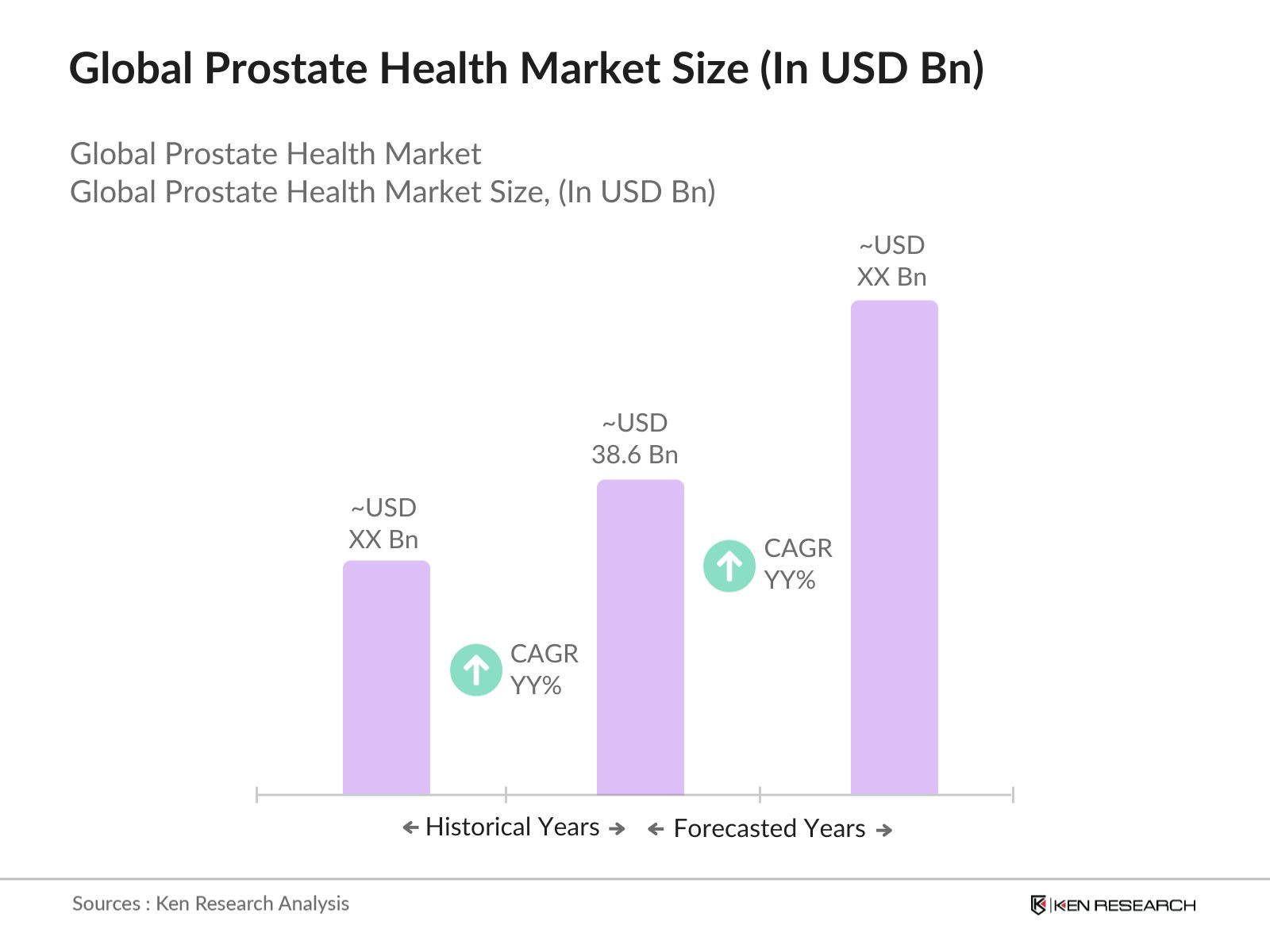
- The Global Prostate Health Market was valued at USD 38.6 billion in 2023. The market growth is primarily driven by the rising prevalence of prostate diseases, such as benign prostatic hyperplasia (BPH) and prostate cancer, which are increasingly common among aging populations globally. The advancements in diagnostic techniques, coupled with heightened awareness and screening programs, have significantly contributed to the markets expansion.
- Key players in the market are Pfizer Inc., Eli Lilly and Company, Astellas Pharma Inc., GlaxoSmithKline plc, and AbbVie Inc. These companies are involved in the development and marketing of drugs, devices, and therapies aimed at managing prostate health, particularly in treating conditions such as BPH and prostate cancer.
- In August 2022, Pfizer Inc. announced the FDA approval of Orgovyx (relugolix) for the treatment of advanced prostate cancer.This milestone represents a significant advancement in prostate cancer therapy, providing patients with a new oral treatment option that can help manage the disease and improve quality of life.
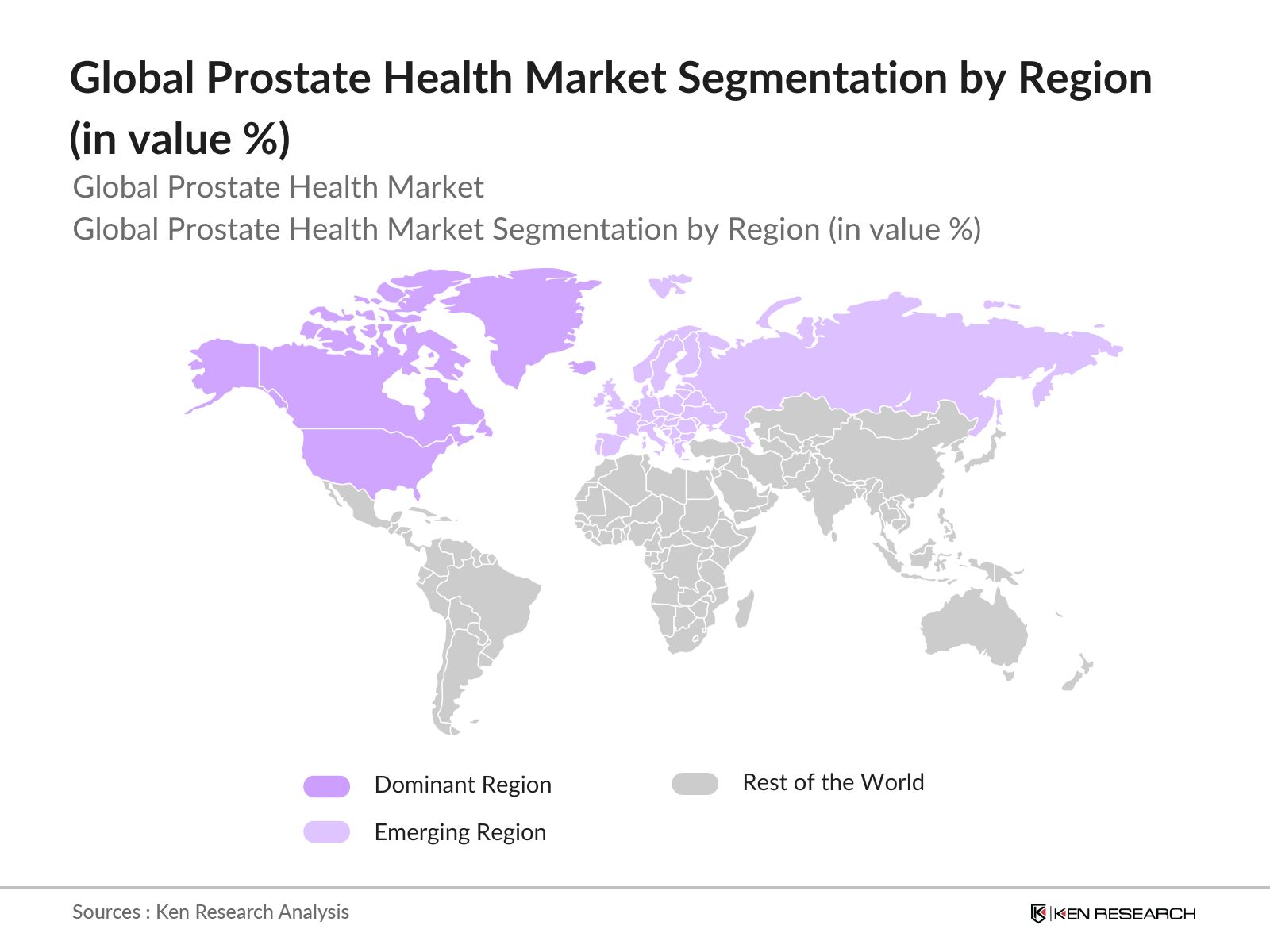
- North America, particularly the United States, dominates the Global Prostate Health Market, with the high prevalence of prostate-related diseases, well-established healthcare infrastructure, and significant investment in research and development. The presence of key players and the early adoption of innovative treatments further strengthen the regions leading position.
Global Prostate Health Market Segmentation
The market is segmented into various factors like treatment, disease, and region.
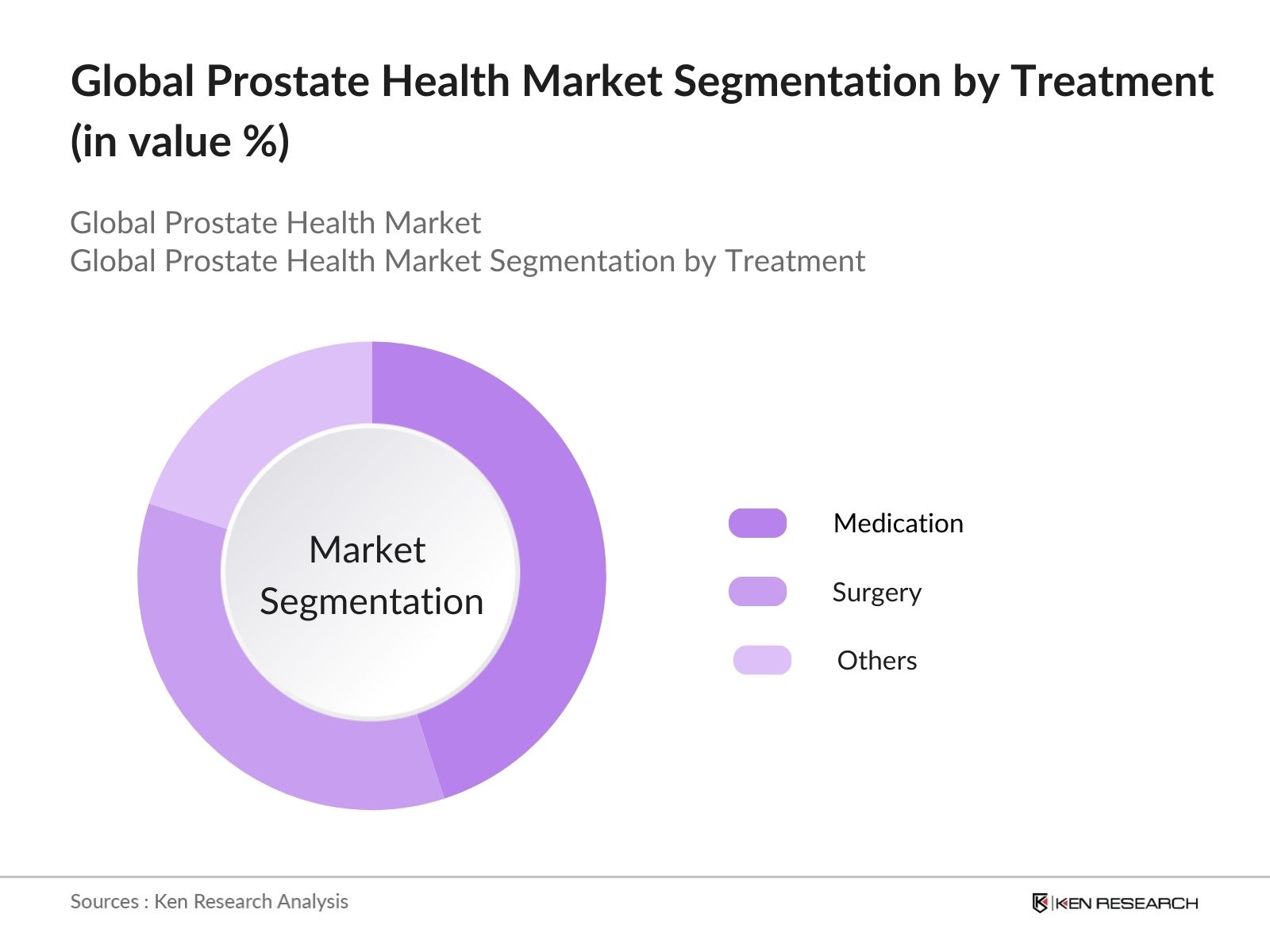
By Treatment: The market is segmented by treatment type into medication, surgery, and others. In 2023, medication held a dominant market share due to the widespread use of alpha-blockers and 5-alpha-reductase inhibitors, which are the first-line treatment for conditions such as BPH.
By Disease: The market is segmented by disease type into benign prostatic hyperplasia (BPH), prostate cancer, and prostatitis. In 2023, benign prostatic hyperplasia (BPH) had the largest market share, with the demand for effective treatment options. The development of new pharmacological therapies, along with the availability of minimally invasive surgical procedures, has further strengthened the dominance of this segment.
By Region: The market is segmented by region into North America, Europe, Asia-Pacific (APAC), Middle East & Africa (MEA), and Latin America. In 2023, North America dominated the market with the rising incidence of prostate diseases, combined with increasing healthcare expenditures and growing awareness, is driving the demand for prostate health solutions in the region.
Global Prostate Health Market Competitive Landscape
|
Company |
Establishment Year |
Headquarters |
|
Pfizer Inc. |
1849 |
New York, USA |
|
Eli Lilly and Company |
1876 |
Indianapolis, USA |
|
Astellas Pharma Inc. |
2005 |
Tokyo, Japan |
|
GlaxoSmithKline plc |
2000 |
Brentford, UK |
|
AbbVie Inc. |
2013 |
North Chicago, USA |
- Eli Lilly and Company: Eli Lilly is expanding into nuclear isotope production to enhance cancer treatments, particularly for prostate cancer. This strategic move aims to support the development of radiopharmaceuticals, potentially improving outcomes for patients. The initiative reflects a growing trend in integrating advanced technologies into cancer care.
- Astellas Pharma Inc.: Astellas' Xtandi (enzalutamide) has received European Commission approval for treating additional recurrent early prostate cancer settings. This decision is based on data from the ARCHES trial, which demonstrated a significant reduction in the risk of radiography, enhancing treatment options for patients.
Global Prostate Health Market Analysis
Market Growth drivers
- Increasing Incidence of Prostate Disorders: The global incidence of prostate disorders, particularly prostate cancer and benign prostatic hyperplasia (BPH), is on the rise, significantly driving the demand for prostate health management solutions. In 2023, the World Health Organization (WHO) reported over 1.4 million new cases of prostate cancer worldwide, with a substantial proportion occurring in developed regions such as North America and Europe.
- Advancements in Diagnostic Technologies: Recent advancements in diagnostic technologies have significantly improved the early detection and management of prostate disorders, contributing to the growth of the prostate health market. In 2024, the introduction of next-generation sequencing (NGS) and liquid biopsy techniques enabled more precise and less invasive detection of prostate cancer. These technologies have been rapidly adopted in leading healthcare markets, including the United States.
- Rising Healthcare Expenditure: In 2024, global healthcare spending reached USD 9 trillion, driven by significant investments in public health infrastructure and the expansion of healthcare services in emerging economies. This increase in spending has facilitated the wider availability of prostate health services, including diagnostics, treatment, and ongoing care, particularly in countries like China and India, where government initiatives have prioritized the early detection and treatment of prostate disorders.
Market Challenges
- Limited Access to Healthcare in Developing Regions: Access to healthcare services remains limited in many developing regions, which poses a challenge to the growth of the prostate health market. This lack of access is exacerbated by inadequate healthcare infrastructure, shortages of medical professionals, and low levels of awareness about prostate health.
- Lack of Awareness and Stigma: A lack of awareness and stigma associated with prostate disorders, particularly in certain cultural contexts, remains a significant challenge in the market. Furthermore, cultural stigmas around discussing men's health issues, particularly those related to the prostate, can prevent individuals from seeking timely medical advice and treatment.
Government Initiatives
- European Union's Prostate Cancer Initiative: The European Union's Prostate Cancer Initiative, known as PRAISE-U, aims to reduce prostate cancer mortality through smart early detection. Launched in April 2023, this three-year project involves 25 institutions across 12 countries, focusing on developing tailored screening algorithms to avoid overdiagnosis while improving early detection rates.
- India's Prostate Cancer Screening Initiative: India's Prostate Cancer Screening Initiative aims to enhance awareness and early detection of prostate cancer among men, particularly those over 50. The initiative focuses on promoting PSA testing and education about prostate health, addressing the rising incidence of prostate cancer in the country, which is the third most common cancer among Indian men.
Global Prostate Health Market Future Outlook
The future trends in the Global prostate health industry include the growth in precision medicine for prostate cancer, the expansion of telemedicine services for prostate health, the adoption of artificial intelligence in diagnostics, and the expansion of prostate health services in emerging markets.
Future Market Trends
- Growth in Precision Medicine for Prostate Cancer: The future of the prostate health market will be significantly shaped by the continued growth of precision medicine, which involves tailoring treatments based on individual genetic profiles. By 2028, it is estimated that precision medicine will account for 35% of prostate cancer treatments globally, driven by advances in genetic testing and biomarker analysis.
- Expansion of Telemedicine Services for Prostate Health: Telemedicine is expected to play an increasingly important role in prostate health management over the next five years. By 2028, the global telemedicine market for prostate health is projected to grow significantly, with an estimated 15 million virtual consultations conducted annually. This growth will be driven by the need for accessible and convenient healthcare services, particularly in regions with limited access to specialist care.
Scope of the Report
|
By Treatment |
Medication Surgery Others (Radiation, Minimally Invasive) |
|
By Disease |
Benign Prostatic Hyperplasia (BPH) Prostate Cancer Prostatitis |
|
By Region |
North America Europe APAC MEA Latin America |
Products
Key Target Audience Organizations and Entities Who Can Benefit by Subscribing This Report:
Biotech Companies
Government Health Agencies (e.g., U.S. Department of Health and Human Services)
Healthcare Investors and Private Equity Firms
Healthcare Technology Companies
Venture Capitals
Banking and Financial Institutes
Companies
Players Mentioned in the Report:
Pfizer Inc.
Eli Lilly and Company
Astellas Pharma Inc.
GlaxoSmithKline plc
AbbVie Inc.
Johnson & Johnson
Bayer AG
Sanofi S.A.
AstraZeneca plc
Merck & Co., Inc.
Novartis AG
F. Hoffmann-La Roche Ltd
Takeda Pharmaceutical Company Limited
Bristol-Myers Squibb Company
Ipsen S.A.
Table of Contents
1. Global Prostate Health Market Overview
1.1. Definition and Scope
1.2. Market Taxonomy
1.3. Market Growth Rate
1.4. Market Segmentation Overview
2. Global Prostate Health Market Size (in USD Bn), 2018-2023
2.1. Historical Market Size
2.2. Year-on-Year Growth Analysis
2.3. Key Market Developments and Milestones
3. Global Prostate Health Market Analysis
3.1. Growth Drivers
3.1.1. Increasing Incidence of Prostate Disorders
3.1.2. Advancements in Diagnostic Technologies
3.1.3. Rising Healthcare Expenditure
3.1.4. Government Initiatives and Public Health Campaigns
3.2. Restraints
3.2.1. High Cost of Advanced Treatments
3.2.2. Limited Access to Healthcare in Developing Regions
3.2.3. Regulatory Hurdles and Approval Delays
3.3. Opportunities
3.3.1. Growth in Precision Medicine
3.3.2. Expansion of Telemedicine Services
3.3.3. Technological Innovations in Diagnostics
3.4. Trends
3.4.1. Adoption of Artificial Intelligence in Diagnostics
3.4.2. Expansion into Emerging Markets
3.4.3. Integration of Prostate Health Management with Digital Health Platforms
3.5. Government Regulation
3.5.1. National Prostate Health Programs
3.5.2. Screening Guidelines and Protocols
3.5.3. Funding for Prostate Cancer Research
3.5.4. Public-Private Partnerships in Prostate Health
3.6. SWOT Analysis
3.7. Stake Ecosystem
3.8. Competition Ecosystem
4. Global Prostate Health Market Segmentation, 2023
4.1. By Treatment Type (in Value %)
4.1.1. Medication
4.1.2. Surgery
4.1.3. Others (Radiation Therapy, Minimally Invasive Treatments)
4.2. By Disease Type (in Value %)
4.2.1. Benign Prostatic Hyperplasia (BPH)
4.2.2. Prostate Cancer
4.2.3. Prostatitis
4.3. By Region (in Value %)
4.3.1. North America
4.3.2. Europe
4.3.3. Asia-Pacific (APAC)
4.3.4. Middle East & Africa (MEA)
4.3.5. Latin America
5. Global Prostate Health Market Cross Comparison
5.1. Detailed Profiles of Major Companies
5.1.1. Pfizer Inc.
5.1.2. Eli Lilly and Company
5.1.3. Astellas Pharma Inc.
5.1.4. GlaxoSmithKline plc
5.1.5. AbbVie Inc.
5.1.6. Johnson & Johnson
5.1.7. Bayer AG
5.1.8. Sanofi S.A.
5.1.9. AstraZeneca plc
5.1.10. Merck & Co., Inc.
5.1.11. Novartis AG
5.1.12. F. Hoffmann-La Roche Ltd
5.1.13. Takeda Pharmaceutical Company Limited
5.1.14. Bristol-Myers Squibb Company
5.1.15. Ipsen S.A.
5.2. Cross Comparison Parameters (No. of Employees, Headquarters, Inception Year, Revenue)
6. Global Prostate Health Market Competitive Landscape
6.1. Market Share Analysis
6.2. Strategic Initiatives
6.3. Mergers and Acquisitions
6.4. Investment Analysis
6.4.1. Venture Capital Funding
6.4.2. Government Grants
6.4.3. Private Equity Investments
7. Global Prostate Health Market Regulatory Framework
7.1. Healthcare Standards
7.2. Compliance Requirements
7.3. Certification Processes
8. Global Prostate Health Market Future Size (in USD Bn), 2023-2028
8.1. Future Market Size Projections
8.2. Key Factors Driving Future Market Growth
9. Global Prostate Health Market Future Segmentation, 2028
9.1. By Treatment Type (in Value %)
9.2. By Disease Type (in Value %)
9.3. By Region (in Value %)
10. Global Prostate Health Market Analysts Recommendations
10.1. TAM/SAM/SOM Analysis
10.2. Customer Cohort Analysis
10.3. Marketing Initiatives
10.4. White Space Opportunity Analysis
Disclaimer Contact UsResearch Methodology
Step:1 Identifying Key Variables:
Ecosystem creation for all the major entities and referring to multiple secondary and proprietary databases to perform desk research around the market to collate industry level information.
Step:2 Market Building:
Collating statistics on the Global Prostate Health industry over the years, penetration of marketplaces and service providers ratio to compute revenue generated for Global Prostate Health industry. We will also review service quality statistics to understand revenue generated which can ensure accuracy behind the data points shared.
Step:3 Validating and Finalizing:
Building market hypothesis and conducting CATIs with industry experts belonging to different companies to validate statistics and seek operational and financial information from company representatives.
Step:4 Research output:
Our team will approach multiple biotech companies and understand nature of product segments and sales, consumer preference and other parameters, which will support us validate statistics derived through bottom to top approach from such biotech companies.
Frequently Asked Questions
01 How big is the Global Prostate Health market?
The Global Prostate Health Market was valued at USD 38.6 billion in 2023. The market growth is primarily driven by the rising prevalence of prostate diseases, such as benign prostatic hyperplasia (BPH) and prostate cancer, which are increasingly common among aging populations globally.
02 What are the challenges in the Global Prostate Health market?
The major challenges in the Global Prostate Health market such as the high cost of advanced treatments, limited access to healthcare in developing regions, regulatory hurdles, and a lack of awareness and stigma associated with prostate disorders.
03 Who are the major players in the Global Prostate Health market?
Key players in the Global Prostate Health market include Pfizer Inc., Eli Lilly and Company, Astellas Pharma Inc., GlaxoSmithKline plc, and AbbVie Inc.
04 What are the main growth drivers of the Global Prostate Health market?
The main growth drivers in the Global Prostate Health market are primarily driven by the increasing prevalence of prostate disorders, advancements in diagnostic technologies, rising healthcare expenditure, and government initiatives promoting early screening and treatment.
Why Buy From Us?

What makes us stand out is that our consultants follows Robust, Refine and Result (RRR) methodology. i.e. Robust for clear definitions, approaches and sanity checking, Refine for differentiating respondents facts and opinions and Result for presenting data with story

We have set a benchmark in the industry by offering our clients with syndicated and customized market research reports featuring coverage of entire market as well as meticulous research and analyst insights.

While we don't replace traditional research, we flip the method upside down. Our dual approach of Top Bottom & Bottom Top ensures quality deliverable by not just verifying company fundamentals but also looking at the sector and macroeconomic factors.

With one step in the future, our research team constantly tries to show you the bigger picture. We help with some of the tough questions you may encounter along the way: How is the industry positioned? Best marketing channel? KPI's of competitors? By aligning every element, we help maximize success.

Our report gives you instant access to the answers and sources that other companies might choose to hide. We elaborate each steps of research methodology we have used and showcase you the sample size to earn your trust.

If you need any support, we are here! We pride ourselves on universe strength, data quality, and quick, friendly, and professional service.