















Global Protein Ingredients Market Outlook 2030
Region:Global
Author(s):Shivani Mehra
Product Code:KROD8420
December 2024
93
About the Report
Global Protein Ingredients Market Overview
- The global protein ingredients market is valued at USD 61.0 billion, driven by increasing consumer demand for high-quality, nutrient-dense foods, particularly in the food and beverage industry. As consumers become more health-conscious, the demand for protein-rich products such as plant-based and animal-based proteins has surged. The market is also propelled by technological advancements in protein extraction, especially in the plant-based protein sector, where innovations have made it possible to isolate proteins from sources like peas, soy, and hemp more efficiently.
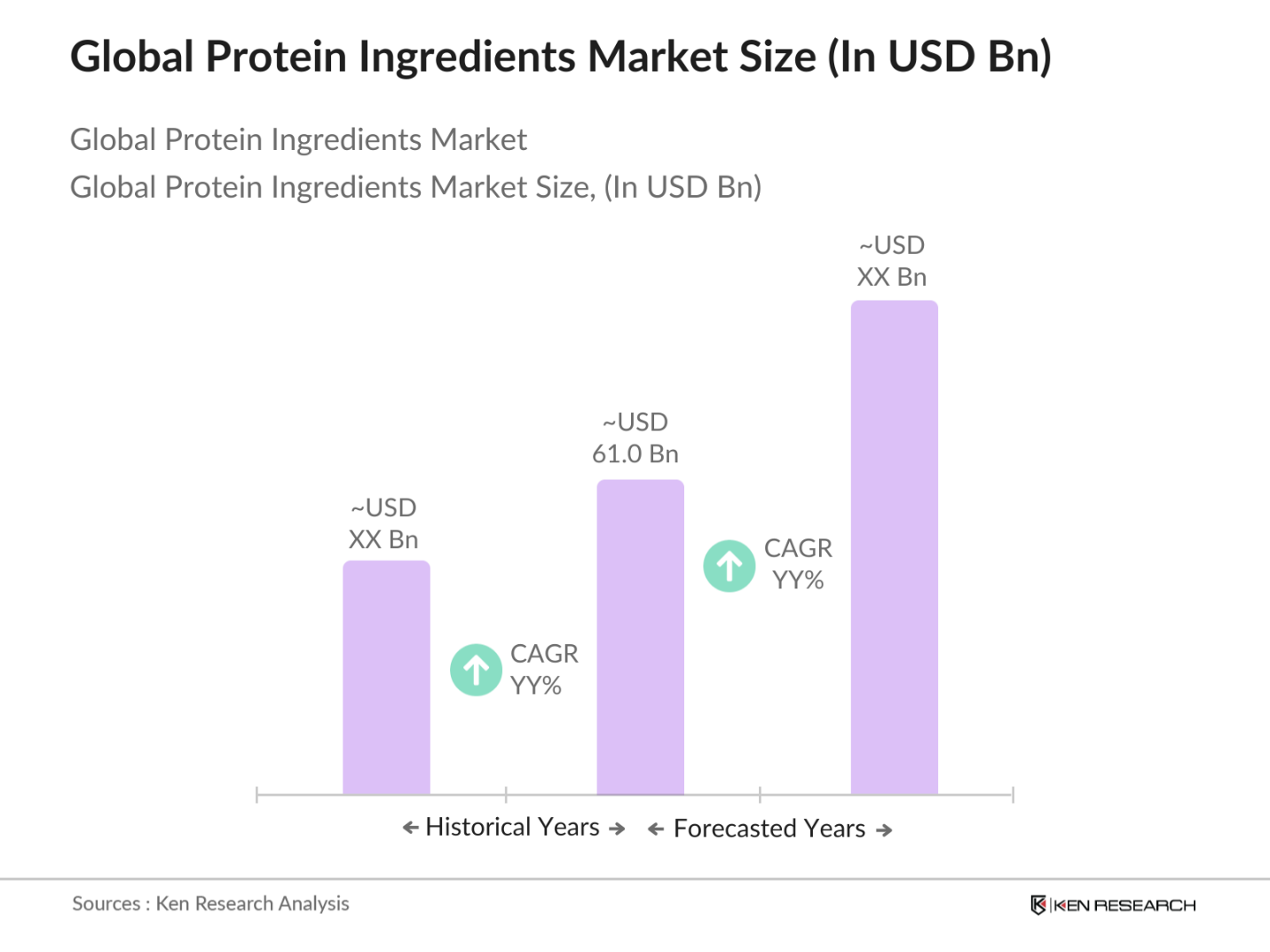
- Countries such as the United States and China dominate the protein ingredients market due to their advanced food processing industries, high consumer demand for protein-enriched foods, and strong investments in protein innovation. The U.S. has a robust protein supplements market driven by health and fitness trends, while Chinas dominance is largely attributed to its growing population and increasing consumer expenditure on health and wellness products.
- The U.S. government has been actively supporting the advancement of display technologies, including volumetric displays, through various funding programs. In 2023, the National Science Foundation (NSF) allocated $40 million to research initiatives focused on 3D imaging and display technologies, aiming to enhance applications in fields like medical imaging and defense. This funding is crucial for boosting innovation in volumetric display systems, especially for sectors like healthcare and aerospace, where real-time 3D visualizations are vital.
Global Protein Ingredients Market Segmentation
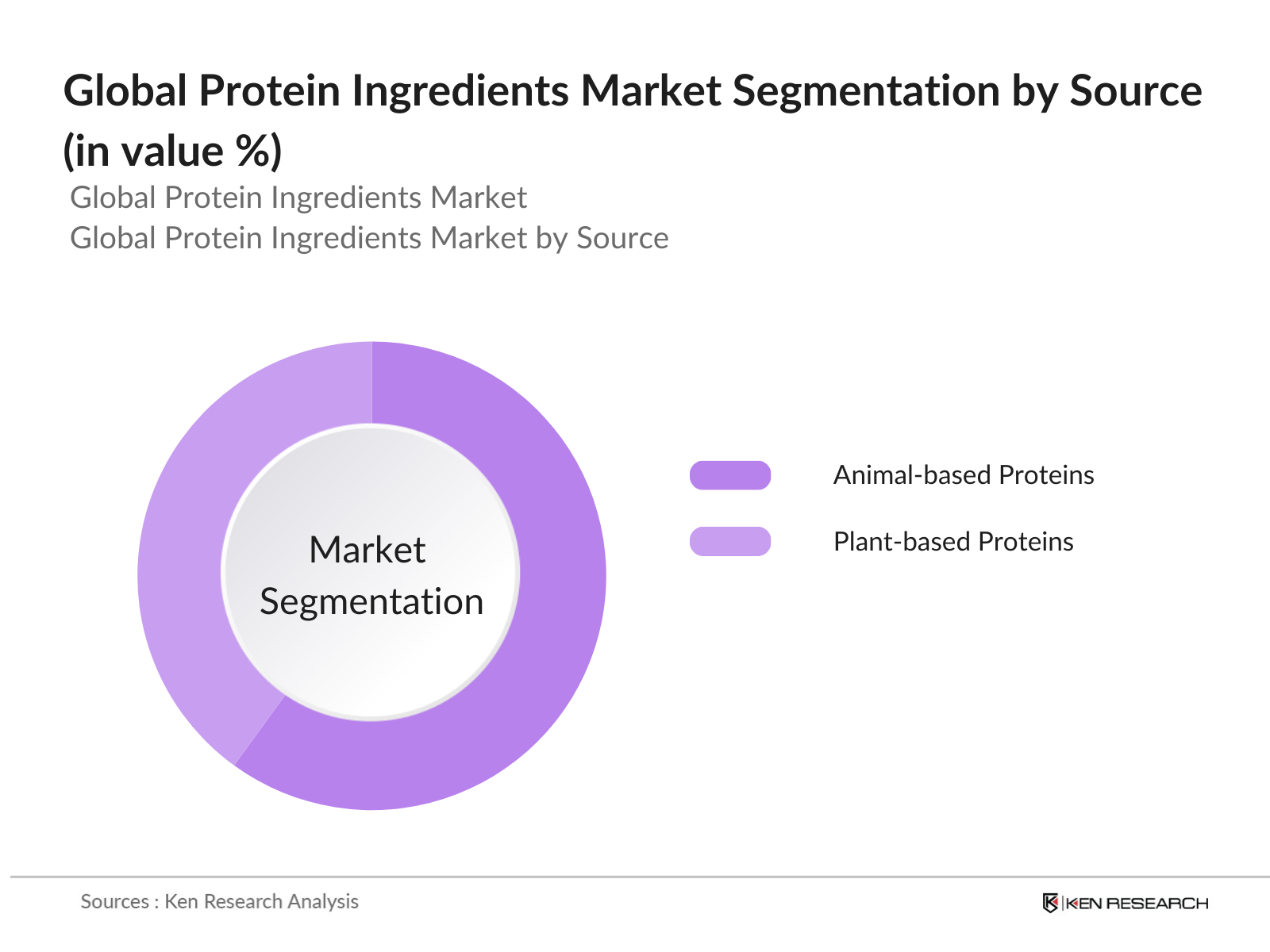
By Source: The protein ingredients market is segmented by source into animal-based proteins and plant-based proteins. Animal-based proteins, including whey, casein, and collagen, have dominated the market due to their long-standing presence in sports nutrition and food applications. The dominance of this segment is driven by the high bioavailability of these proteins and their widespread use in supplements and functional foods.
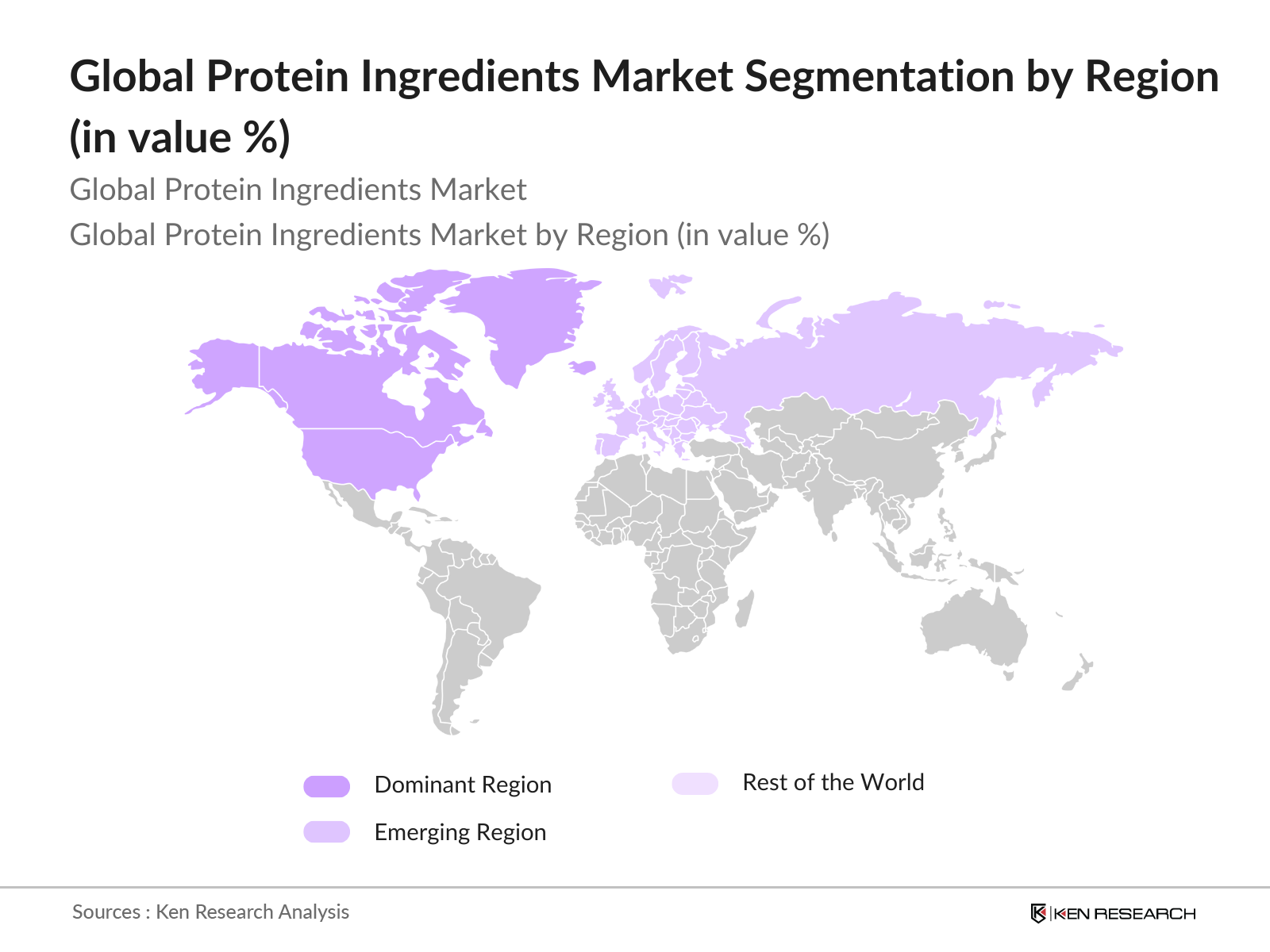
By Region: The market is segmented regionally into North America, Europe, Asia Pacific, Latin America, and the Middle East & Africa. North America, led by the United States, holds the largest share of the protein ingredients market. The region's dominance is driven by the strong presence of protein supplements, sports nutrition products, and functional foods, coupled with high consumer awareness of the health benefits of protein consumption.
Global Protein Ingredients Market Competitive Landscape
The global protein ingredients market is characterized by the presence of both large multinational companies and smaller, specialized firms. Key players in the market are focusing on expanding their product portfolios, enhancing their protein extraction technologies, and forming strategic partnerships to strengthen their market position.
|
Company |
Establishment Year |
Headquarters |
Product Range |
Revenue |
R&D Investment |
Patents |
Global Presence |
Strategic Initiatives |
|
Archer Daniels Midland (ADM) |
1902 |
Chicago, USA |
||||||
|
Cargill |
1865 |
Minneapolis, USA |
||||||
|
Kerry Group |
1972 |
Tralee, Ireland |
||||||
|
Axiom Foods |
2005 |
Los Angeles, USA |
||||||
|
Burcon NutraScience |
1999 |
Vancouver, Canada |
Global Protein Ingredients Market Analysis
Market Growth Drivers
- Increasing Demand for Plant-based Proteins: The shift toward plant-based diets has surged in recent years, with consumer interest growing due to health, environmental, and ethical concerns. In 2024, the global food market is seeing an expansion in plant-based protein applications, particularly in Europe and North America. The Food and Agriculture Organization (FAO) notes that global consumption of plant-based proteins is expected to hit 20 million metric tons in 2024. Government programs in countries like Canada, which invested $100 million in plant-based protein production in 2022, further drive this market expansion.
- Rising Health Awareness: Increased health awareness, particularly concerning chronic diseases, is pushing more consumers toward protein-rich diets. According to the World Health Organization (WHO), cardiovascular diseases account for 17.9 million deaths globally each year, driving the demand for healthier dietary options. The Protein Market is benefiting from this shift, with protein-rich foods being promoted by health organizations. In 2023, the global sports nutrition sector alone is estimated to require around 3 million metric tons of protein ingredients, fueled by the rise in health-conscious consumers.
- Innovations in Protein Extraction Technologies: The advancement of protein extraction technologies is fostering the production of high-quality protein ingredients at a commercial scale. In 2023, the European Union allocated over $80 million for research into efficient and sustainable protein extraction processes from alternative sources like algae and insects. These innovations have resulted in higher protein yields and improved functionality, benefiting industries like food and beverages.
Market Challenges:
- High Costs of Protein Extraction: The extraction of high-quality protein from raw materials such as soy, peas, and hemp can be cost-intensive. In 2023, the estimated cost of protein extraction technologies has been reported at $450,000 per production line in major processing plants across the U.S., driven by energy consumption and raw material costs. This has become a barrier to scaling production in certain markets, especially in smaller economies where subsidies are limited.
- Regulatory Challenges in Protein Labeling: Protein labeling regulations vary significantly across regions, adding complexity for global protein ingredient producers. In 2023, the European Food Safety Authority (EFSA) implemented stringent guidelines on allergen declarations, impacting soy and pea protein products. These regulations can incur compliance costs for manufacturers, especially those exporting to multiple countries, and limit market entry. The U.S. FDA, on the other hand, is revising its protein labeling standards to better align with consumer health data, creating another hurdle for manufacturers.
Global Protein Ingredients Market Future Outlook
Over the next five years, the protein ingredients market is expected to experience robust growth, driven by several key factors, including the increasing demand for sustainable and plant-based proteins, rising health awareness among consumers, and advancements in protein extraction technologies. The growing use of proteins in non-food applications such as pharmaceuticals, cosmetics, and animal feed is also likely to contribute to market expansion.
Market Opportunities:
- Focus on Sustainability in Protein Production: Sustainability has become a critical focus in protein production, especially with rising environmental concerns. The World Bank highlights that sustainable farming practices, such as reducing water usage and minimizing carbon emissions, are now integral to protein production. In 2023, the sustainable protein market is valued at $30 billion globally, with companies adopting eco-friendly methods for sourcing and processing protein ingredients.
- Adoption of Clean Label Ingredients: Consumers are increasingly seeking clean-label protein ingredients, free from artificial additives or chemicals. In 2023, the clean-label market accounted for approximately $48 billion in global food sales, according to the U.S. Department of Agriculture (USDA). This shift toward natural, minimally processed proteins, such as those derived from organic sources, is pushing manufacturers to adapt their production methods and meet consumer preferences for transparency and purity.
Scope of the Report
|
By Source |
Animal-based Proteins Plant-based Proteins |
|
By Application |
Food & Beverages Pharmaceuticals Cosmetics Animal Feed Sports Nutrition |
|
By Functionality |
Emulsification Gelling Foaming Water-binding Nutritional Benefits |
|
By Form |
Isolates Concentrates Hydrolysates |
|
By Region |
North America Europe Asia Pacific Latin America Middle East & Africa |
Products
Key Target Audience
Food & Beverage Manufacturers
Pharmaceutical Companies
Cosmetics and Personal Care Manufacturers
Animal Feed Producers
Sports Nutrition Brands
Government and Regulatory Bodies (FDA, EFSA)
Investment and Venture Capitalist Firms
Protein Ingredient Suppliers
Companies
Player Mention in the Report
Archer Daniels Midland (ADM)
Cargill
Kerry Group
DuPont de Nemours, Inc.
Glanbia PLC
Royal DSM
Ingredion Incorporated
Roquette Frres
Fonterra Co-operative Group
Axiom Foods
Burcon NutraScience Corporation
NOW Foods
Tate & Lyle PLC
FrieslandCampina
Cosucra Groupe Warcoing
Table of Contents
01. Global Protein Ingredients Market Overview
1.1. Definition and Scope
1.2. Market Taxonomy
1.3. Market Growth Rate
1.4. Market Segmentation Overview
02. Global Protein Ingredients Market Size (In USD Bn)
2.1. Historical Market Size
2.2. Year-On-Year Growth Analysis
2.3. Key Market Developments and Milestones
03. Global Protein Ingredients Market Analysis
3.1. Growth Drivers
3.1.1. Increasing Demand for Plant-based Proteins
3.1.2. Rising Health Awareness
3.1.3. Innovations in Protein Extraction Technologies
3.1.4. Growth of Sports Nutrition Segment
3.2. Market Challenges
3.2.1. High Costs of Protein Extraction
3.2.2. Regulatory Challenges in Protein Labeling
3.2.3. Fluctuations in Raw Material Prices
3.3. Opportunities
3.3.1. Growth in Emerging Economies
3.3.2. Expansion of Protein Applications (Cosmetics, Food, Pharmaceuticals)
3.3.3. Collaborations in Protein Research
3.4. Trends
3.4.1. Increase in Demand for Protein Fortified Foods
3.4.2. Adoption of Clean Label Ingredients
3.4.3. Focus on Sustainability in Protein Production
3.5. Government Regulations
3.5.1. Protein Content Labeling Standards
3.5.2. Dietary Protein Guidelines
3.5.3. Subsidies for Plant-based Proteins
3.6. SWOT Analysis
3.7. Value Chain Analysis
3.8. Porters Five Forces
3.9. Competitive Landscape Analysis
04. Global Protein Ingredients Market Segmentation
4.1. By Source (In Value %)
4.1.1. Animal-based Proteins (Whey, Casein, Egg, Gelatin)
4.1.2. Plant-based Proteins (Soy, Pea, Rice, Hemp, Algae)
4.2. By Application (In Value %)
4.2.1. Food and Beverages
4.2.2. Pharmaceuticals
4.2.3. Cosmetics and Personal Care
4.2.4. Animal Feed
4.2.5. Sports Nutrition
4.3. By Form (In Value %)
4.3.1. Isolates
4.3.2. Concentrates
4.3.3. Hydrolysates
4.4. By Functionality (In Value %)
4.4.1. Emulsification
4.4.2. Gelling
4.4.3. Foaming
4.4.4. Water-binding
4.4.5. Nutritional Benefits
4.5. By Region (In Value %)
4.5.1. North America
4.5.2. Europe
4.5.3. Asia Pacific
4.5.4. Latin America
4.5.5. Middle East & Africa
05. Global Protein Ingredients Market Competitive Analysis
5.1. Detailed Profiles of Major Companies
5.1.1. Archer Daniels Midland (ADM)
5.1.2. Cargill, Incorporated
5.1.3. Kerry Group
5.1.4. DuPont de Nemours, Inc.
5.1.5. Glanbia PLC
5.1.6. Royal DSM
5.1.7. Ingredion Incorporated
5.1.8. Roquette Frres
5.1.9. Fonterra Co-operative Group
5.1.10. Axiom Foods
5.1.11. Burcon NutraScience Corporation
5.1.12. NOW Foods
5.1.13. Tate & Lyle PLC
5.1.14. FrieslandCampina
5.1.15. Cosucra Groupe Warcoing
5.2. Cross Comparison Parameters (Number of Employees, Headquarters, Revenue, Product Portfolio, Market Presence, R&D Expenditure, Growth Strategy, Patents Held)
5.3. Market Share Analysis
5.4. Strategic Initiatives
5.5. Mergers and Acquisitions
5.6. Investment Analysis
5.7. Venture Capital Funding
5.8. Private Equity Investments
06. Global Protein Ingredients Market Regulatory Framework
6.1. Compliance with Food and Drug Regulations
6.2. Protein Quality Standards
6.3. Labeling and Certification Requirements
07. Global Protein Ingredients Future Market Size (In USD Bn)
7.1. Future Market Size Projections
7.2. Key Factors Driving Future Market Growth
08. Global Protein Ingredients Future Market Segmentation
8.1. By Source (In Value %)
8.2. By Application (In Value %)
8.3. By Form (In Value %)
8.4. By Functionality (In Value %)
8.5. By Region (In Value %)
09. Global Protein Ingredients Market Analysts Recommendations
9.1. TAM/SAM/SOM Analysis
9.2. Customer Cohort Analysis
9.3. Market Expansion Opportunities
9.4. White Space Opportunity Analysis
Disclaimer Contact UsResearch Methodology
Step 1: Identification of Key Variables
The first step involves the identification of key variables that influence the protein ingredients market. This is achieved through a comprehensive mapping of stakeholders, utilizing both proprietary and secondary data sources to gain a thorough understanding of the market ecosystem.
Step 2: Market Analysis and Construction
This phase entails an in-depth analysis of historical market data, evaluating trends in protein consumption across various applications. The data collected is used to construct accurate market projections and assess the market's potential growth in different regions.
Step 3: Hypothesis Validation and Expert Consultation
Our research hypotheses are validated through consultations with industry experts. These experts provide insights into operational challenges, consumer preferences, and future trends in the protein ingredients market, helping to refine our data.
Step 4: Research Synthesis and Final Output
In the final phase, we synthesize the research findings into actionable insights. This involves cross-referencing data from multiple sources to ensure accuracy and reliability. The result is a comprehensive and validated analysis of the global protein ingredients market.
Frequently Asked Questions
01. How big is the Global Protein Ingredients Market?
The global protein ingredients market is valued at USD 61.0 billion, driven by rising health consciousness and the growing demand for protein-enriched foods, especially in North America and Europe.
02. What are the challenges in the Global Protein Ingredients Market?
Key challenges include fluctuating raw material prices, stringent regulations on protein labeling, and the high costs associated with protein extraction technologies, particularly in the plant-based protein sector.
03. Who are the major players in the Global Protein Ingredients Market?
Major players include Archer Daniels Midland (ADM), Cargill, Kerry Group, DuPont de Nemours, and Glanbia PLC, all of which dominate through extensive product portfolios, global presence, and strong R&D investments.
04. What are the growth drivers of the Global Protein Ingredients Market?
The market is driven by increasing demand for plant-based proteins, technological advancements in protein extraction, and the rising use of proteins in food, pharmaceuticals, and cosmetics.
Why Buy From Us?

What makes us stand out is that our consultants follows Robust, Refine and Result (RRR) methodology. i.e. Robust for clear definitions, approaches and sanity checking, Refine for differentiating respondents facts and opinions and Result for presenting data with story

We have set a benchmark in the industry by offering our clients with syndicated and customized market research reports featuring coverage of entire market as well as meticulous research and analyst insights.

While we don't replace traditional research, we flip the method upside down. Our dual approach of Top Bottom & Bottom Top ensures quality deliverable by not just verifying company fundamentals but also looking at the sector and macroeconomic factors.

With one step in the future, our research team constantly tries to show you the bigger picture. We help with some of the tough questions you may encounter along the way: How is the industry positioned? Best marketing channel? KPI's of competitors? By aligning every element, we help maximize success.

Our report gives you instant access to the answers and sources that other companies might choose to hide. We elaborate each steps of research methodology we have used and showcase you the sample size to earn your trust.

If you need any support, we are here! We pride ourselves on universe strength, data quality, and quick, friendly, and professional service.