
Global Proteomics Market Outlook to 2030
Region:Global
Author(s):Shambhavi
Product Code:KROD3624
Region:Global
Author(s):Shambhavi
Product Code:KROD3624
December 2024
83
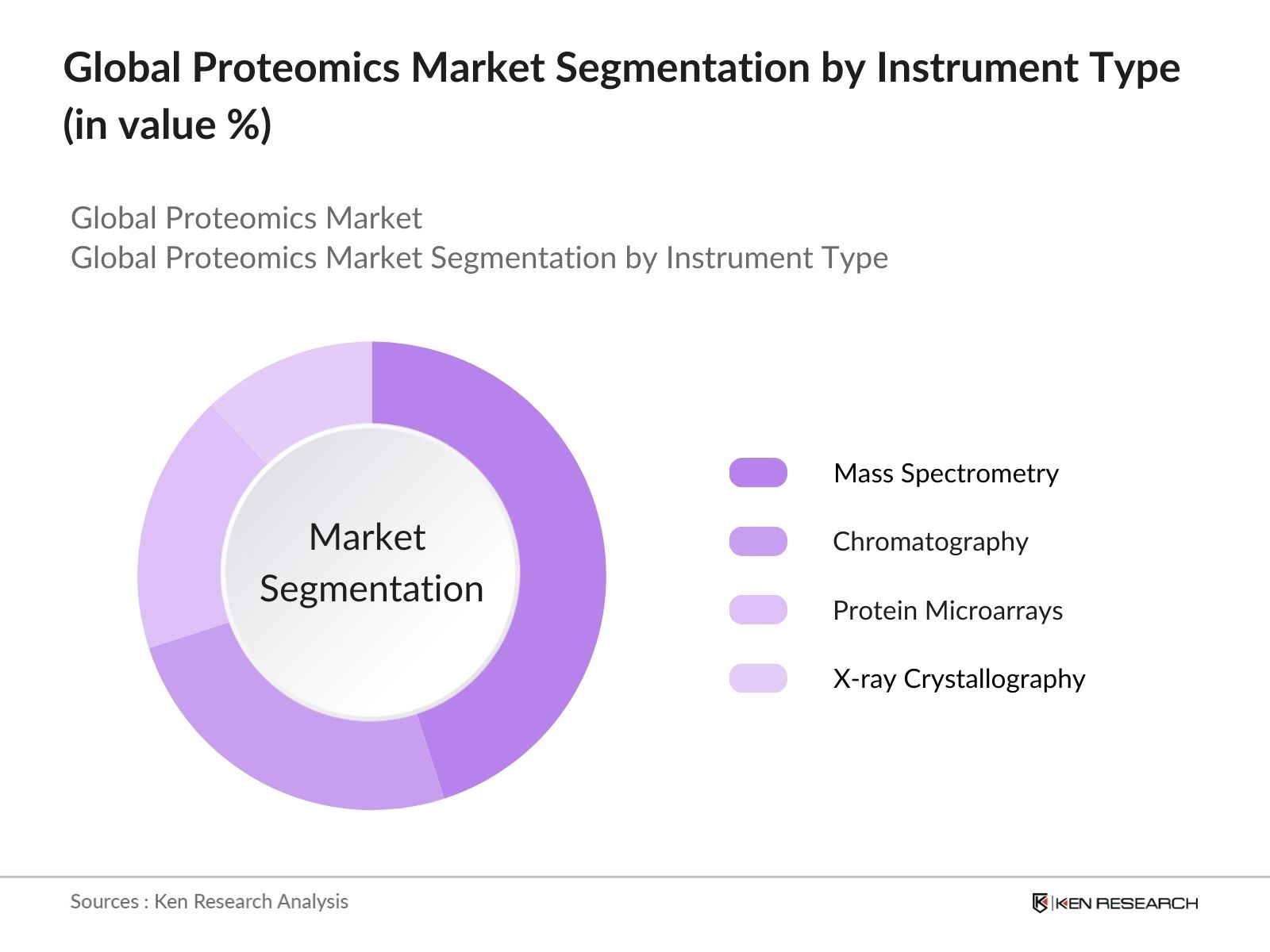
By Instrument Type: The Global Proteomics Market is segmented by instrument type into mass spectrometry, chromatography, protein microarrays, and X-ray crystallography. Among these, mass spectrometry holds the dominant market share. The mass spectrometry segment has gained widespread adoption due to its ability to accurately identify and quantify complex protein structures. Additionally, improvements in resolution and sensitivity of mass spectrometers have increased their applicability in proteomics research, making it the preferred tool for many researchers and pharmaceutical companies globally.
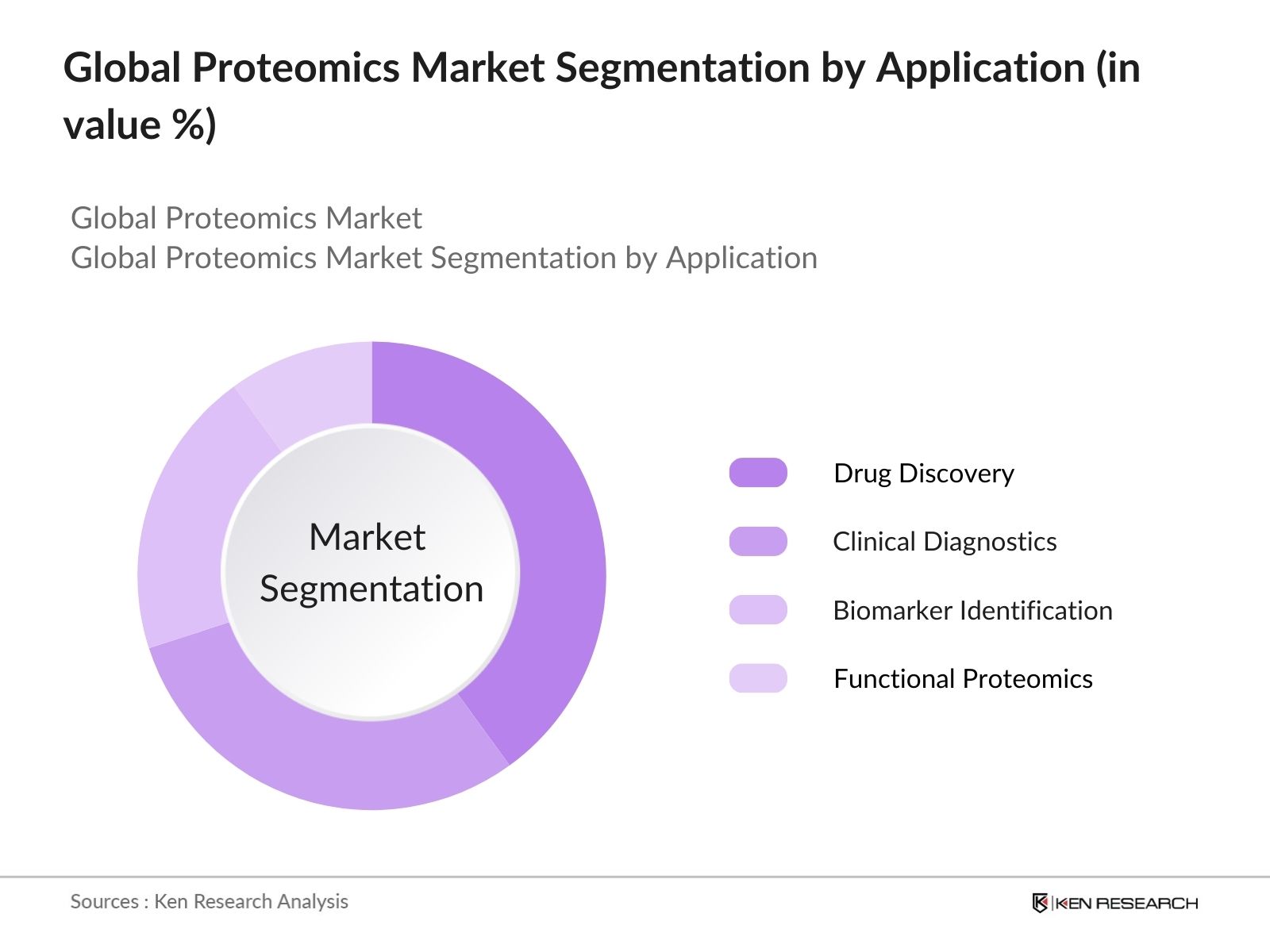
By Application: The proteomics market is segmented by application into clinical diagnostics, drug discovery, biomarker identification, and functional proteomics. Drug discovery is currently the largest application segment, driven by the increasing focus on targeted therapies and personalized medicine. Proteomics plays a critical role in identifying new drug targets, understanding disease mechanisms, and evaluating drug efficacy, making it a crucial tool for pharmaceutical companies striving to bring novel therapies to the market.
By Region: The Global Proteomics Market is segmented into North America, Europe, Asia-Pacific, Latin America, and the Middle East & Africa. North America holds a dominant market share, driven by high R&D investments, a well-established biotechnology sector, and advanced healthcare infrastructure. Europe follows, with significant government funding and strong academic research. The Asia-Pacific region is experiencing rapid growth, fueled by increasing government investments in healthcare and biotechnology, particularly in countries like China and India. Latin America and the Middle East & Africa regions are emerging markets, with expanding healthcare infrastructure and growing demand for advanced proteomics technologies.
The Global Proteomics Market is highly competitive, with several key players driving innovation and market expansion. The competitive landscape is shaped by technological advancements, strategic collaborations, mergers and acquisitions, and significant R&D investments. Major players in the market are continually expanding their product portfolios and strengthening their global presence to maintain competitive advantages. Companies like Thermo Fisher Scientific and Agilent Technologies have achieved dominance due to their cutting-edge mass spectrometry technologies and broad proteomics product offerings.
|
Company |
Established |
Headquarters |
Revenue (USD Bn) |
Global Presence |
Key Products |
R&D Investment (USD Bn) |
Technological Innovations |
Patents Filed |
|
Thermo Fisher Scientific |
1956 |
USA |
- |
- |
- |
- |
- |
- |
|
Agilent Technologies |
1999 |
USA |
- |
- |
- |
- |
- |
- |
|
Bruker Corporation |
1960 |
Germany |
- |
- |
- |
- |
- |
- |
|
Waters Corporation |
1958 |
USA |
- |
- |
- |
- |
- |
- |
|
Bio-Rad Laboratories |
1952 |
USA |
- |
- |
- |
- |
- |
- |
The global proteomics market is set to experience substantial growth over the next five years, driven by continuous advancements in technologies such as mass spectrometry, growing investments in biotechnology and pharmaceutical research, and the increasing importance of precision medicine. Government initiatives aimed at bolstering life sciences research and the integration of AI and machine learning into proteomics data analysis are expected to further accelerate the market. As proteomics continues to play a pivotal role in drug discovery, diagnostics, and personalized medicine, the market is poised for significant innovation and expansion.
|
Segment |
Sub-Segment |
|
By Instrument Type |
Mass Spectrometry, Chromatography, Protein Microarrays, X-ray Crystallography |
|
By Application |
Clinical Diagnostics, Drug Discovery, Biomarker Identification, Functional Proteomics |
|
By Service Type |
Core Proteomics Services, Bioinformatics Solutions, Data Management Services |
|
By End-User |
Academic & Research Institutes, Pharmaceutical & Biotechnology Companies, CROs, Hospitals & Clinics |
|
By Region |
North America, Europe, Asia-Pacific, Latin America, Middle East & Africa |
1.1. Definition and Scope
1.2. Market Taxonomy
1.3. Market Growth Rate
1.4. Market Segmentation Overview
2.1. Historical Market Size
2.2. Year-On-Year Growth Analysis
2.3. Key Market Developments and Milestones
3.1. Growth Drivers
3.1.1. Advances in Mass Spectrometry
3.1.2. Rising Demand for Personalized Medicine
3.1.3. Increasing R&D Investments
3.1.4. Growing Biotechnology and Pharmaceutical Industries
3.2. Market Challenges
3.2.1. High Cost of Instruments (e.g., Mass Spectrometry Systems, Protein Microarrays)
3.2.2. Complex Data Analysis and Interpretation
3.2.3. Limited Availability of Skilled Technicians
3.3. Opportunities
3.3.1. Emergence of AI & Machine Learning in Proteomics
3.3.2. Development of Targeted Proteomics in Drug Discovery
3.3.3. Expansion into Emerging Markets (e.g., China, India, Southeast Asia)
3.4. Trends
3.4.1. Increased Use of Label-free Quantitative Proteomics
3.4.2. Integration of Proteomics with Genomics & Metabolomics
3.4.3. Adoption of Cloud-based Data Management Systems
3.5. Government Regulation
3.5.1. FDA Approvals of Proteomic-Based Diagnostics
3.5.2. International Proteomics Standardization Efforts
3.5.3. Funding Support from Government Research Programs
3.6. SWOT Analysis
3.7. Stakeholder Ecosystem
3.8. Porters Five Forces
3.9. Competition Ecosystem
4.1. By Instrument Type (In Value %)
4.1.1. Mass Spectrometry
4.1.2. Chromatography
4.1.3. Protein Microarrays
4.1.4. X-ray Crystallography
4.2. By Application (In Value %)
4.2.1. Clinical Diagnostics
4.2.2. Drug Discovery
4.2.3. Biomarker Identification
4.2.4. Functional Proteomics
4.3. By Service Type (In Value %)
4.3.1. Core Proteomics Services
4.3.2. Bioinformatics Solutions
4.3.3. Data Management Services
4.4. By End-User (In Value %)
4.4.1. Academic & Research Institutes
4.4.2. Pharmaceutical & Biotechnology Companies
4.4.3. Contract Research Organizations (CROs)
4.4.4. Hospitals & Clinics
4.5. By Region (In Value %)
4.5.1. North America
4.5.2. Europe
4.5.3. Asia-Pacific
4.5.4. Latin America
4.5.5. Middle East & Africa
5.1 Detailed Profiles of Major Companies
5.1.1. Thermo Fisher Scientific
5.1.2. Agilent Technologies
5.1.3. Bruker Corporation
5.1.4. Danaher Corporation
5.1.5. Waters Corporation
5.1.6. GE Healthcare
5.1.7. Bio-Rad Laboratories
5.1.8. PerkinElmer, Inc.
5.1.9. Merck KGaA
5.1.10. Illumina, Inc.
5.1.11. Caprion Proteomics
5.1.12. Creative Proteomics
5.1.13. Promega Corporation
5.1.14. GenScript Biotech Corporation
5.1.15. Biognosys AG
5.2 Cross Comparison Parameters (Revenue, Global Presence, Technology Portfolio, Market Share, Patents)
5.3 Market Share Analysis
5.4 Strategic Initiatives
5.5 Mergers and Acquisitions
5.6 Investment Analysis
5.7 Venture Capital Funding
5.8 Government Grants
5.9 Private Equity Investments
6.1 Proteomic Data Compliance Standards
6.2 FDA and EMA Regulations for Proteomic-Based Diagnostics
6.3 HIPAA and Data Privacy in Proteomics Research
7.1. Future Market Size Projections
7.2. Key Factors Driving Future Market Growth
8.1. By Instrument Type (In Value %)
8.2. By Application (In Value %)
8.3. By Service Type (In Value %)
8.4. By End-User (In Value %)
8.5. By Region (In Value %)
9.1. TAM/SAM/SOM Analysis
9.2. Customer Cohort Analysis
9.3. White Space Opportunity Analysis
9.4. Strategic Go-to-Market Recommendations
The initial stage involved mapping the ecosystem of the Global Proteomics Market, identifying all major stakeholders such as pharmaceutical companies, research institutes, and instrument manufacturers. This step relied on desk research and proprietary databases to define the variables influencing market trends, such as R&D investments and technological advancements.
In this phase, historical data on the proteomics market was analyzed to understand market penetration and revenue generation. A bottom-up approach was used to verify these estimates by consulting with proteomics service providers and analyzing their financial data.
Market hypotheses were developed based on the gathered data and then validated through expert interviews. Leading professionals from the proteomics industry were consulted to provide insight into the operational and technological dynamics driving market growth.
The final step included synthesizing data from both primary and secondary research to produce an accurate market report. Key insights were drawn from direct engagements with proteomics equipment manufacturers and service providers to validate findings.
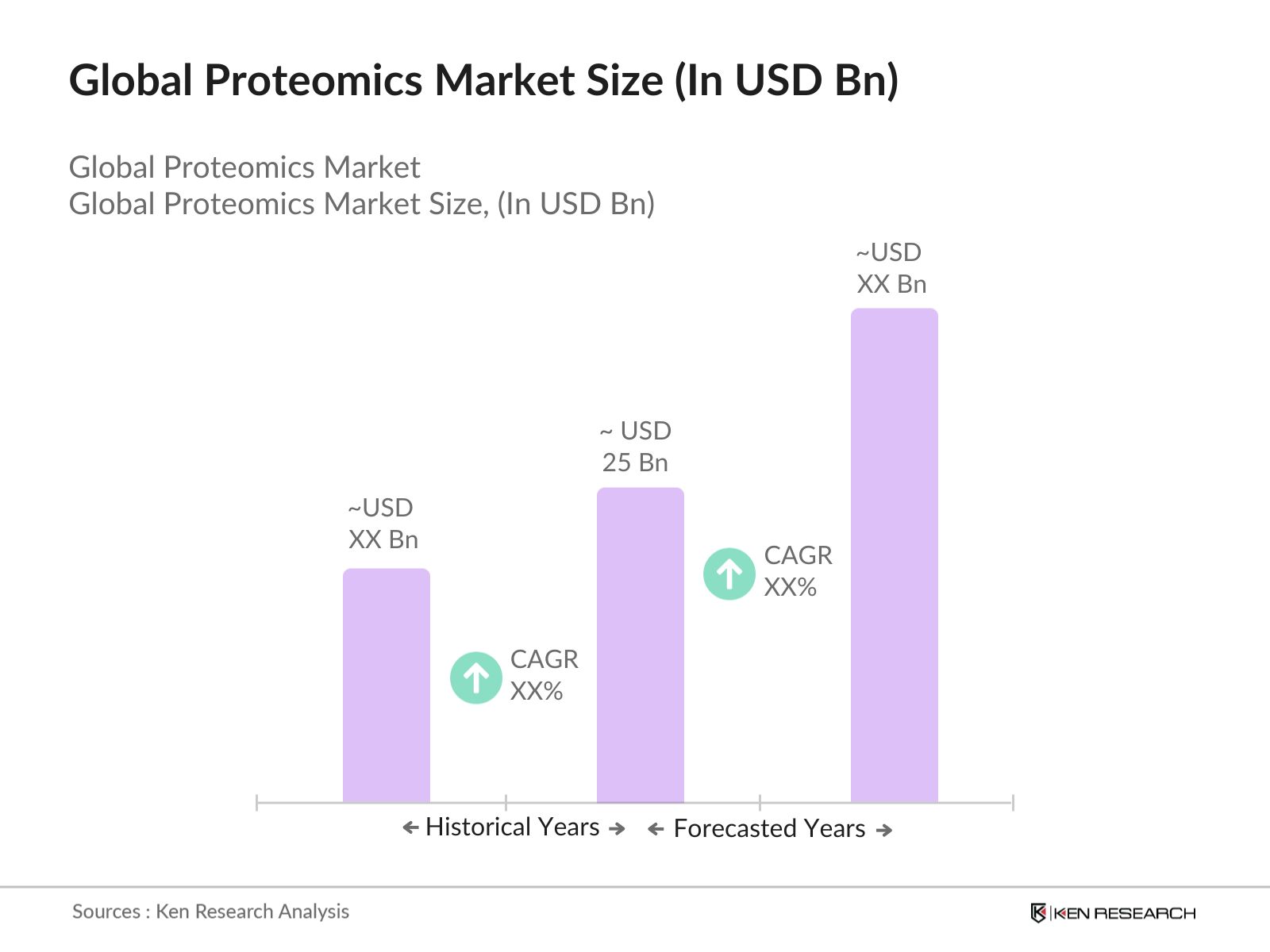
The global proteomics market is valued at USD 25 billion, driven by advancements in proteomic technologies and growing investments in biotechnology and pharmaceutical research.
Key challenges in the proteomics market include the high cost of instruments, the complexity of data analysis, and a shortage of skilled professionals capable of interpreting proteomic data.
Major players include Thermo Fisher Scientific, Agilent Technologies, Bruker Corporation, Waters Corporation, and Bio-Rad Laboratories. These companies dominate due to their innovative technologies and global presence.
The market is driven by the increasing demand for personalized medicine, advancements in mass spectrometry, and significant R&D investments by biotechnology and pharmaceutical companies.
North America, particularly the United States, dominates the proteomics market due to its robust healthcare infrastructure, high R&D expenditure, and the presence of key research institutions.

What makes us stand out is that our consultants follows Robust, Refine and Result (RRR) methodology. i.e. Robust for clear definitions, approaches and sanity checking, Refine for differentiating respondents facts and opinions and Result for presenting data with story

We have set a benchmark in the industry by offering our clients with syndicated and customized market research reports featuring coverage of entire market as well as meticulous research and analyst insights.

While we don't replace traditional research, we flip the method upside down. Our dual approach of Top Bottom & Bottom Top ensures quality deliverable by not just verifying company fundamentals but also looking at the sector and macroeconomic factors.

With one step in the future, our research team constantly tries to show you the bigger picture. We help with some of the tough questions you may encounter along the way: How is the industry positioned? Best marketing channel? KPI's of competitors? By aligning every element, we help maximize success.

Our report gives you instant access to the answers and sources that other companies might choose to hide. We elaborate each steps of research methodology we have used and showcase you the sample size to earn your trust.

If you need any support, we are here! We pride ourselves on universe strength, data quality, and quick, friendly, and professional service.