
Global Quinoa Seeds Market Outlook to 2030
Region:Global
Author(s):Naman Rohilla
Product Code:KROD8439
Region:Global
Author(s):Naman Rohilla
Product Code:KROD8439
December 2024
95
The quinoa seeds market is consolidated, with key players focusing on sustainable sourcing, product innovation, and expanding quinoa-based product offerings to cater to health-conscious consumers. Major competitors engage in strategic mergers and acquisitions to enhance their product portfolio and market reach.
Over the next five years, the global quinoa seeds market is anticipated to experience steady growth driven by heightened awareness of its health benefits, increased production efficiencies, and new product developments in the quinoa-based processed foods segment. Quinoas appeal as a nutrient-rich and gluten-free food source makes it an increasingly popular choice across various food and beverage applications, and this growth trajectory is supported by initiatives to expand quinoa farming in regions like Asia and Africa, where new production hubs are emerging.
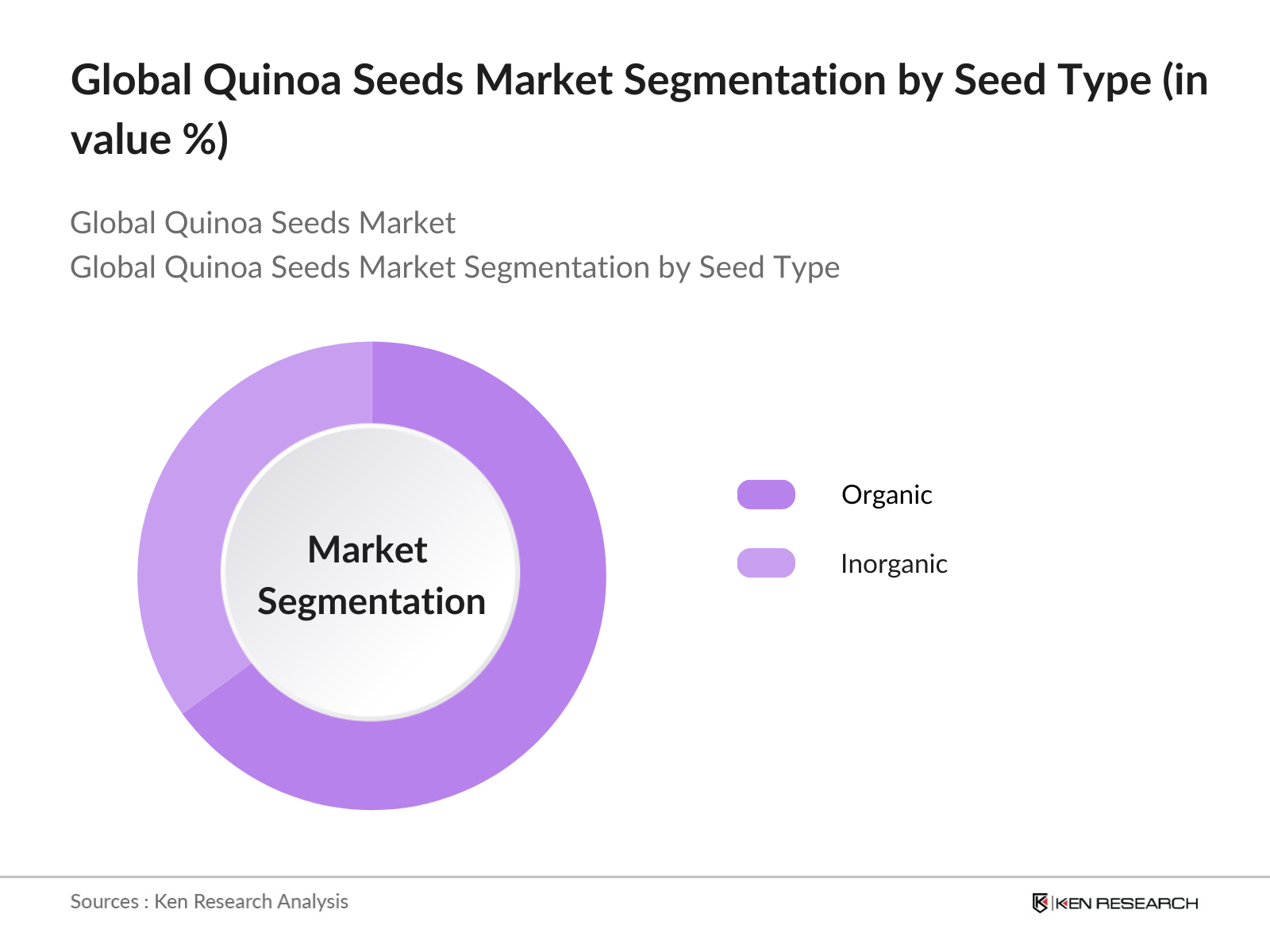
By Seed Type | Organic Inorganic |
By Type | White Quinoa Red Quinoa Black Quinoa Mixed Varieties |
By Application | Direct Consumption Processed Products (Flour, Crisps, Flakes) Pet & Animal Feed |
By Distribution Channel | Online Retail Offline Retail (Supermarkets, Specialty Stores) Food Service Providers |
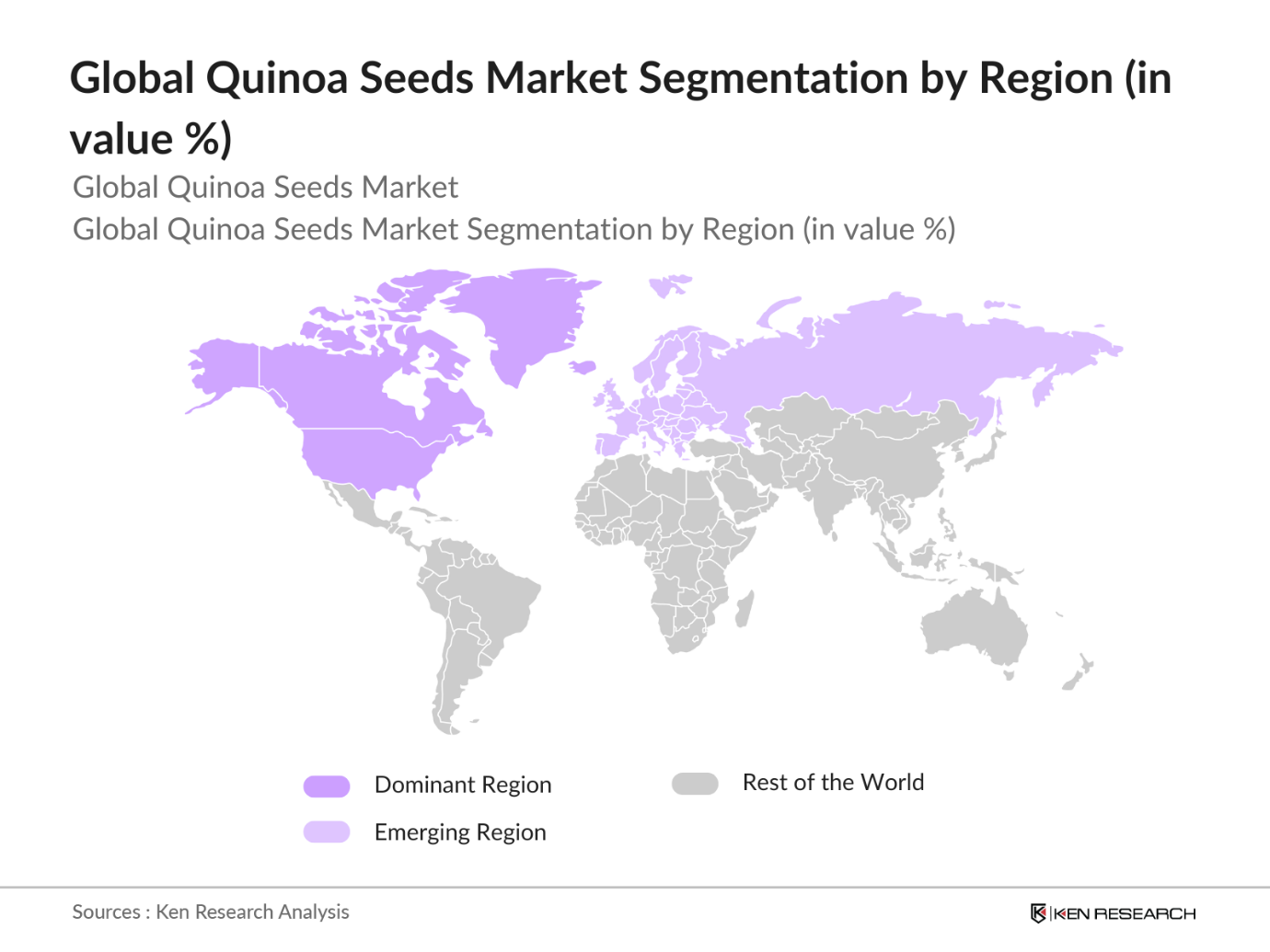
By Region | North America Europe Asia-Pacific (APAC) Latin America Middle East & Africa (MEA) |
1.1 Definition and Scope
1.2 Market Taxonomy
1.3 Market Structure and Dynamics
1.4 Market Segmentation Overview
2.1 Current Market Size and Volume
2.2 Year-on-Year Growth Analysis
2.3 Key Developments and Market Milestones
3.1 Growth Drivers
3.1.1 Health Benefits Awareness (e.g., gluten-free, high protein)
3.1.2 Rising Vegan and Plant-Based Diet Trends
3.1.3 Support for Organic Farming and Sustainable Practices
3.2 Market Challenges
3.2.1 Supply Chain Limitations
3.2.2 Price Sensitivity in Developing Markets
3.2.3 Seasonal and Climatic Variability in Production Regions
3.3 Opportunities
3.3.1 Expansion into Emerging Markets (e.g., APAC, MENA)
3.3.2 New Product Development (flour, crisps, beverages)
3.3.3 Partnership Opportunities for Specialty Product Lines
3.4 Trends
3.4.1 High Growth in Organic Quinoa Segment
3.4.2 Rising Demand for Processed Quinoa-Based Products
3.4.3 Increasing Use of E-commerce for Distribution
3.5 Government Regulations
3.5.1 Organic Certification Standards
3.5.2 Import-Export Compliance Requirements
3.5.3 Subsidies for Sustainable Farming Practices
3.6 SWOT Analysis
3.7 Stakeholder Ecosystem
3.8 Porters Five Forces Analysis
4.1 By Seed Type (Revenue %)
4.1.1 Organic
4.1.2 Inorganic
4.2 By Type (Revenue %)
4.2.1 White Quinoa
4.2.2 Red Quinoa
4.2.3 Black Quinoa
4.2.4 Mixed Varieties
4.3 By Application (Revenue %)
4.3.1 Direct Consumption
4.3.2 Processed Products (Flour, Crisps, Flakes)
4.3.3 Pet & Animal Feed
4.4 By Distribution Channel (Revenue %)
4.4.1 Online Retail
4.4.2 Offline Retail (Supermarkets, Specialty Stores)
4.4.3 Food Service Providers
4.5 By Region (Revenue %)
4.5.1 North America
4.5.2 Europe
4.5.3 Asia-Pacific (APAC)
4.5.4 Latin America
4.5.5 Middle East & Africa (MEA)
5.1 Detailed Profiles of Major Companies
5.1.1 Alter Eco
5.1.2 Andean Naturals Inc.
5.1.3 Arrowhead Mills Inc.
5.1.4 Comrural XXI S.R.L.
5.1.5 Highland Farm Foods
5.1.6 Irupana Andean Organic Food S.A
5.1.7 Quinoa Corporation
5.1.8 Quinoa Foods Company SRL
5.1.9 Quinoabol SRL
5.1.10 The British Quinoa Company Ltd.
5.1.11 Above Food Inc.
5.1.12 Ancient Harvest
5.1.13 Industrial Technological Complex Yanapasiani SRL
5.1.14 Big Oz
5.1.15 Andean Valley
5.2 Cross-Comparison Parameters (Market Presence, Product Innovation, Revenue, Operational Scale, Distribution Network, Sustainability Initiatives, Consumer Base, Certifications)
5.3 Market Share Analysis
5.4 Strategic Initiatives and Collaborations
5.5 Mergers and Acquisitions
5.6 Investment Analysis
5.7 Venture Capital and Private Equity Funding
5.8 Government and Private Sector Support Programs
6.1 Compliance Standards and Certifications (e.g., USDA Organic)
6.2 Import-Export Policies and Tariffs
6.3 Environmental and Sustainability Policies
7.1 Market Size Forecast and Drivers of Growth
7.2 Emerging Trends and Market Evolution
8.1 By Seed Type
8.2 By Type
8.3 By Application
8.4 By Distribution Channel
8.5 By Region
9.1 Total Addressable Market (TAM), Serviceable Available Market (SAM), and Serviceable Obtainable Market (SOM) Analysis
9.2 Marketing Strategies for Penetration and Expansion
9.3 White Space and Market Entry Opportunities
DisclaimerContact UsKey market variables for the quinoa seeds industry, such as supply chain trends, production costs, and sustainability factors, are identified through an extensive mapping of the stakeholder ecosystem. This involves desk research from primary and secondary databases to ensure comprehensive industry-level insights.
Historical data on market penetration, product distribution, and consumer adoption are compiled and analyzed. Revenue and sales volume data are rigorously validated to build a reliable market model that reflects current demand trends and segmentation.
Market hypotheses are developed and tested through expert interviews and consultations with stakeholders in the quinoa seeds supply chain, providing firsthand insights into challenges, opportunities, and market drivers.
The final stage involves synthesizing findings from field research and expert interviews to ensure a holistic and accurate analysis of the quinoa seeds market. This approach is backed by a bottom-up methodology that captures both macro- and micro-level trends.
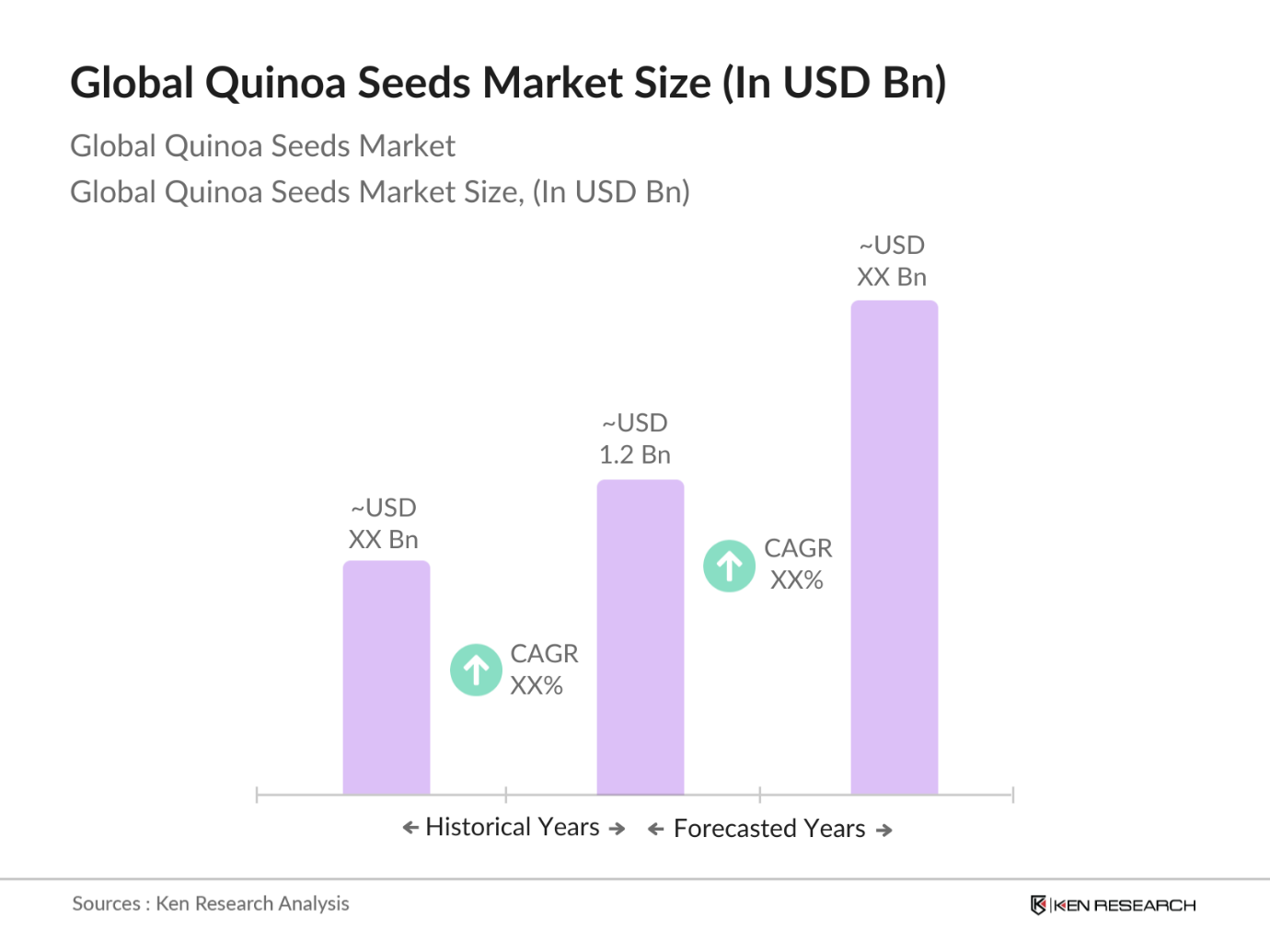
The global quinoa seeds market is valued at USD 1.2 billion, propelled by rising health consciousness and demand for gluten-free, high-protein grains.
Challenges include supply chain constraints, price volatility, and production limitations due to climate conditions, especially in major growing regions like South America.
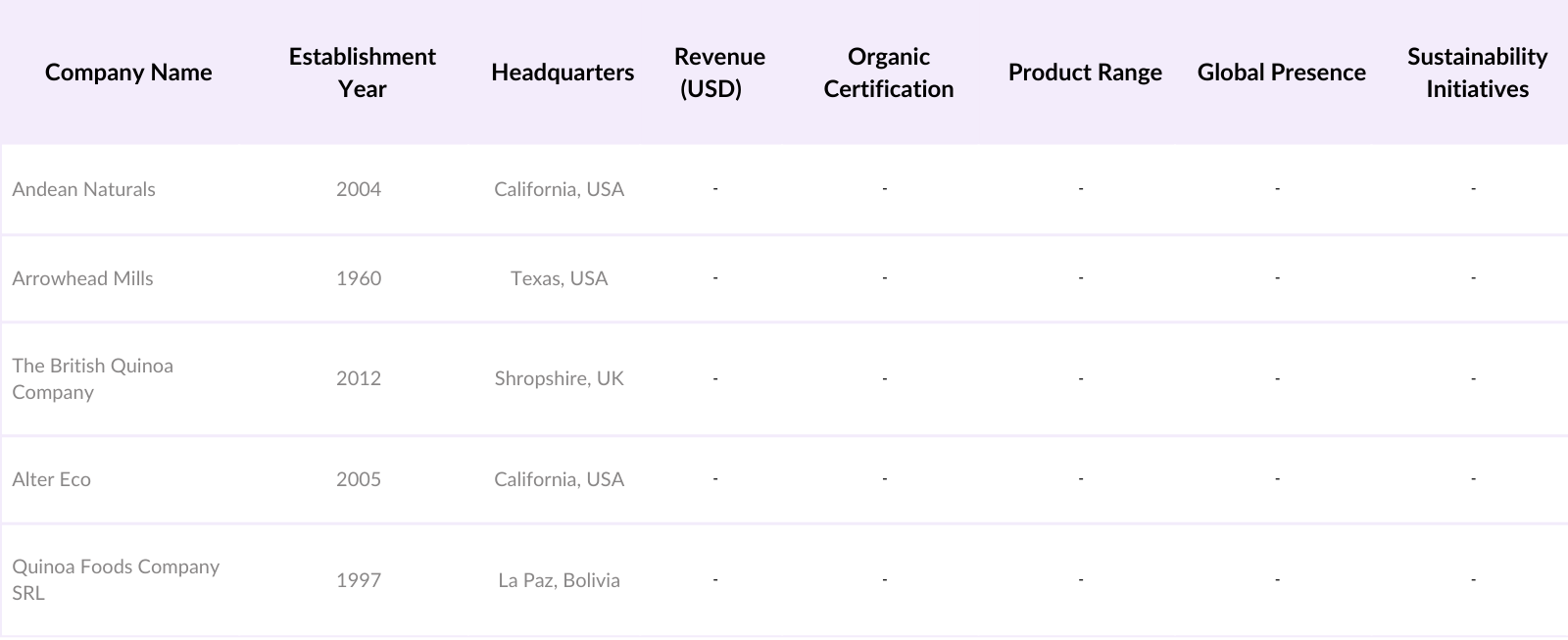
Prominent players include Andean Naturals, Alter Eco, Arrowhead Mills, The British Quinoa Company, and Highland Farm, all noted for their sustainable practices and extensive distribution networks.
Key drivers are the increased adoption of plant-based diets, quinoas high nutritional value, and growing popularity as a health food ingredient.

What makes us stand out is that our consultants follows Robust, Refine and Result (RRR) methodology. i.e. Robust for clear definitions, approaches and sanity checking, Refine for differentiating respondents facts and opinions and Result for presenting data with story

We have set a benchmark in the industry by offering our clients with syndicated and customized market research reports featuring coverage of entire market as well as meticulous research and analyst insights.

While we don't replace traditional research, we flip the method upside down. Our dual approach of Top Bottom & Bottom Top ensures quality deliverable by not just verifying company fundamentals but also looking at the sector and macroeconomic factors.

With one step in the future, our research team constantly tries to show you the bigger picture. We help with some of the tough questions you may encounter along the way: How is the industry positioned? Best marketing channel? KPI's of competitors? By aligning every element, we help maximize success.

Our report gives you instant access to the answers and sources that other companies might choose to hide. We elaborate each steps of research methodology we have used and showcase you the sample size to earn your trust.

If you need any support, we are here! We pride ourselves on universe strength, data quality, and quick, friendly, and professional service.