Global Radio Market Outlook to 2030
Region:Global
Author(s):Rebecca
Product Code:KROD-032
Region:Global
Author(s):Rebecca
Product Code:KROD-032
June 2025
80
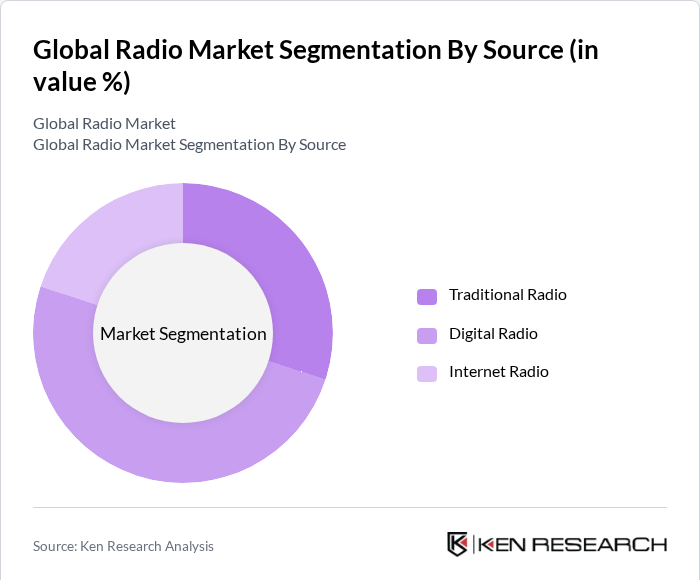
By Source: The Global Radio Market can be segmented into traditional radio, digital radio, and internet radio. Among these, digital radio is dominating the market due to its ability to provide higher audio quality, a wider range of channels, and interactive features that enhance user engagement. The shift in consumer behavior towards on-demand content and the proliferation of smart devices have further fueled the growth of digital radio. As listeners increasingly seek personalized audio experiences, digital platforms are becoming the preferred choice, leading to a significant increase in advertising revenues and listener engagement.
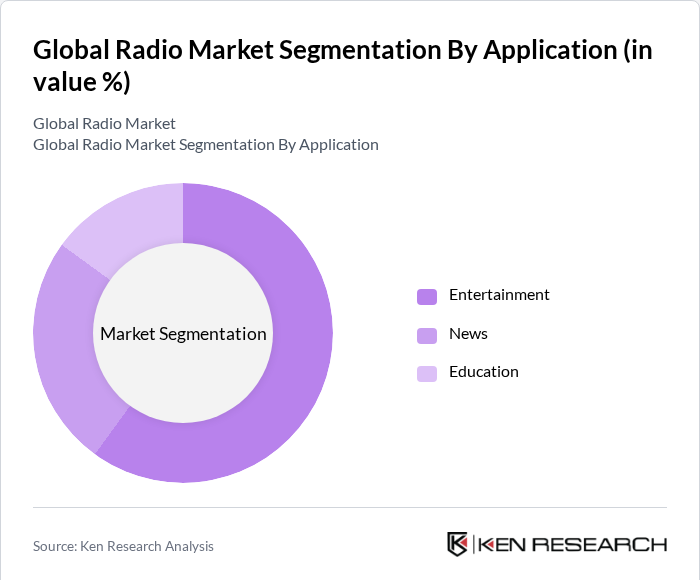
By Application: The market can also be segmented by application into entertainment, news, and education. The entertainment segment is leading the market, driven by the growing demand for music and talk shows. This segment benefits from the increasing number of radio stations and platforms that cater to diverse musical tastes and genres. Additionally, the rise of podcasting and audio streaming services has contributed to the popularity of entertainment-focused radio content, attracting a younger demographic that prefers engaging audio experiences over traditional media.
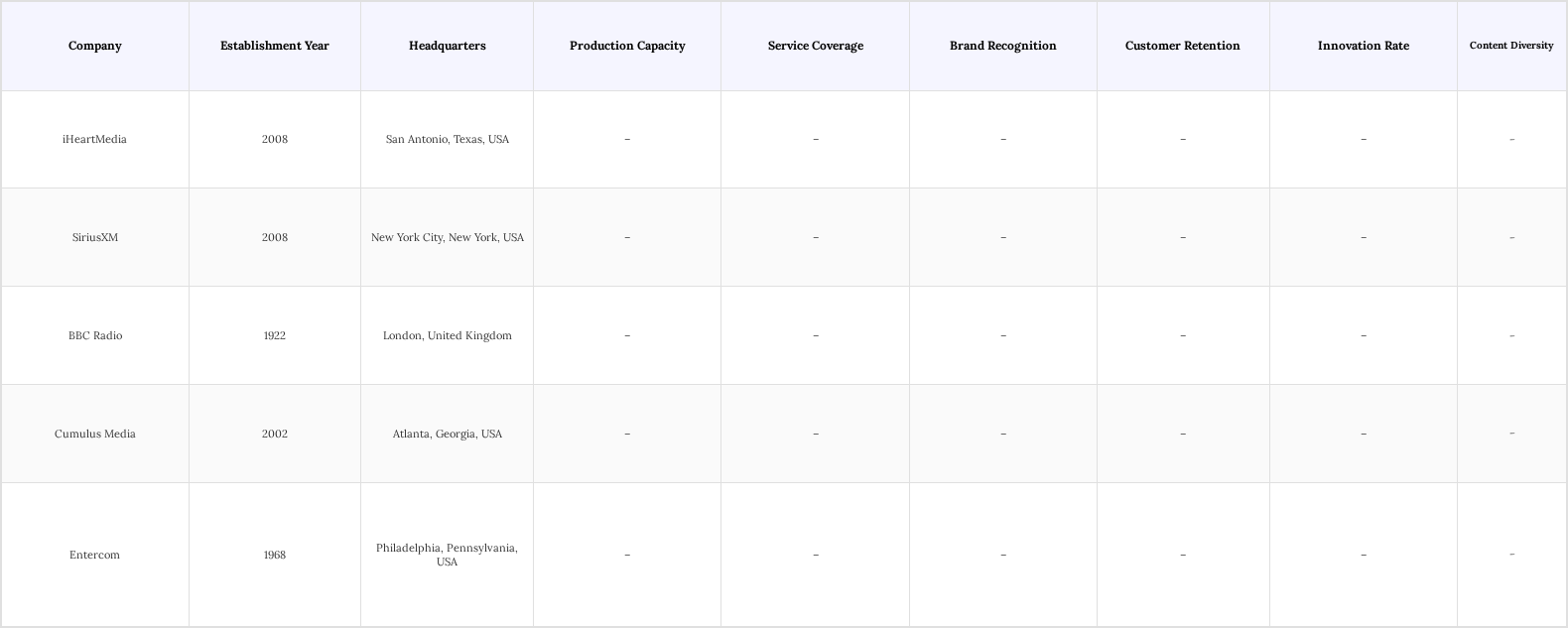
The Global Radio Market is characterized by a competitive landscape with several key players, including iHeartMedia, SiriusXM, BBC Radio, Cumulus Media, and Entercom. These companies are engaged in various strategies to enhance their market presence, including technological advancements, content diversification, and strategic partnerships. The market is moderately concentrated, with a mix of large corporations and smaller, niche players that cater to specific audience segments.
The future of the radio market appears promising, driven by technological advancements and evolving consumer preferences. As digital content continues to dominate, broadcasters are likely to invest in innovative technologies such as AI-driven content personalization and enhanced streaming capabilities. Additionally, the integration of interactive features in radio programming is expected to engage audiences more effectively. With the ongoing expansion of internet access, particularly in emerging markets, the radio industry is poised for significant growth, adapting to meet the demands of a digitally-savvy audience.
| By Source |
Traditional Radio Digital Radio Internet Radio |
| By Application |
Entertainment News Education |
| By Region |
North America Europe Asia-Pacific Latin America Middle East & Africa |
| By End User |
Commercial Public Private |
| By Technology |
AM FM DAB HD Radio |
1.1. Definition and Scope
1.2. Market Taxonomy
1.3. Market Growth Rate
1.4. Market Segmentation Overview
2.1. Historical Market Size
2.2. Year-On-Year Growth Analysis
2.3. Key Market Developments and Milestones
3.1. Growth Drivers
3.1.1. Increasing Demand for Digital Content
3.1.2. Expansion of Internet Connectivity
3.1.3. Rise in Mobile Radio Consumption
3.2. Market Challenges
3.2.1. Competition from Streaming Services
3.2.2. Regulatory Compliance Issues
3.2.3. Declining Traditional Advertising Revenue
3.3. Opportunities
3.3.1. Growth in Podcasting and On-Demand Content
3.3.2. Technological Advancements in Broadcasting
3.3.3. Expansion into Emerging Markets
3.4. Trends
3.4.1. Integration of AI in Content Creation
3.4.2. Personalization of Listening Experiences
3.4.3. Increased Focus on Sustainability in Broadcasting
3.5. Government Regulation
3.5.1. Licensing Requirements for Broadcasters
3.5.2. Content Regulation and Standards
3.5.3. Spectrum Allocation Policies
3.5.4. Advertising Regulations and Compliance
3.6. SWOT Analysis
3.7. Stake Ecosystem
3.8. Porter’s Five Forces
3.9. Competition Ecosystem
4.1. By Source
4.1.1. Traditional Radio
4.1.2. Digital Radio
4.1.3. Internet Radio
4.2. By Application
4.2.1. Entertainment
4.2.2. News
4.2.3. Education
4.3. By Region
4.3.1. North America
4.3.2. Europe
4.3.3. Asia-Pacific
4.3.4. Latin America
4.3.5. Middle East & Africa
4.4. By End User
4.4.1. Commercial
4.4.2. Public
4.4.3. Private
4.5. By Technology
4.5.1. AM
4.5.2. FM
4.5.3. DAB
4.5.4. HD Radio
5.1. Detailed Profiles of Major Companies
5.1.1. iHeartMedia
5.1.2. SiriusXM
5.1.3. BBC Radio
5.1.4. Cumulus Media
5.1.5. Entercom
5.1.6. WaveCast Media
5.1.7. GlobalSound Networks
5.1.8. RadioSphere Group
5.1.9. TuneWave Broadcasting
5.1.10. EchoWave Communications
5.2. Cross Comparison Parameters
5.2.1. Market Share
5.2.2. Revenue Growth Rate
5.2.3. Customer Base Size
5.2.4. Geographic Reach
5.2.5. Product Diversification
5.2.6. Technological Innovation
5.2.7. Brand Recognition
5.2.8. Advertising Revenue
6.1. Environmental Standards
6.2. Compliance Requirements
6.3. Certification Processes
7.1. Future Market Size Projections
7.2. Key Factors Driving Future Market Growth
8.1. By Source
8.1.1. Traditional Radio
8.1.2. Digital Radio
8.1.3. Internet Radio
8.2. By Application
8.2.1. Entertainment
8.2.2. News
8.2.3. Education
8.3. By Region
8.3.1. North America
8.3.2. Europe
8.3.3. Asia-Pacific
8.3.4. Latin America
8.3.5. Middle East & Africa
8.4. By End User
8.4.1. Commercial
8.4.2. Public
8.4.3. Private
8.5. By Technology
8.5.1. AM
8.5.2. FM
8.5.3. DAB
8.5.4. HD Radio
9.1. TAM/SAM/SOM Analysis
9.2. Customer Cohort Analysis
9.3. Marketing Initiatives
9.4. White Space Opportunity Analysis
The initial phase involves mapping out the key components and stakeholders within the Global Radio Market. This step relies on thorough desk research, utilizing secondary data sources and proprietary databases to gather essential industry insights. The primary goal is to pinpoint and define the critical variables that drive market behavior and trends.
In this phase, we will gather and analyze historical data relevant to the Global Radio Market. This includes evaluating market penetration rates, the relationship between service providers and marketplaces, and the resulting revenue streams. Additionally, we will assess service quality metrics to ensure the accuracy and reliability of our revenue projections.
Market hypotheses will be formulated and validated through structured interviews with industry experts from various sectors. These consultations will provide firsthand operational and financial insights, which are crucial for refining and confirming the market data. Engaging with practitioners will enhance the credibility of our findings.
The final phase entails direct engagement with key manufacturers to gather in-depth insights into product categories, sales performance, and consumer preferences. This interaction will help validate and enrich the data obtained from previous analyses, ensuring a comprehensive and accurate overview of the Global Radio Market.
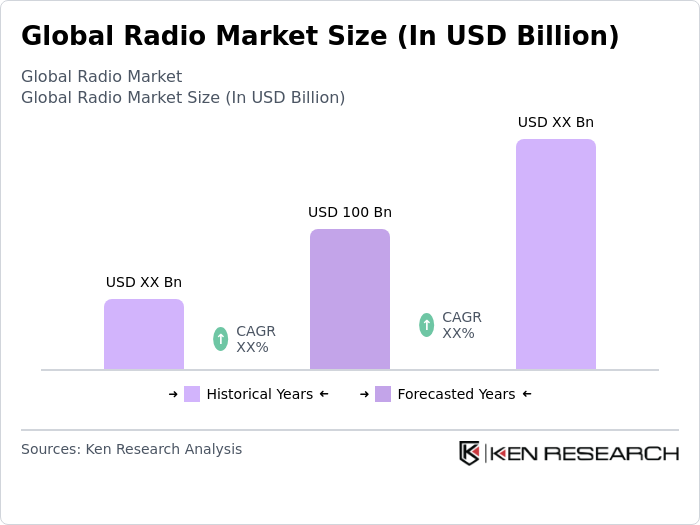
The Global Radio Market is valued at USD 100 billion, driven by factors such as increasing demand, technological advancements, and supportive government initiatives.
Key challenges in the Global Radio Market include intense competition, regulatory complexities, and infrastructure limitations affecting market dynamics.
Major players in the Global Radio Market include iHeartMedia, SiriusXM, BBC Radio, Cumulus Media, Entercom, among others.
The primary growth drivers for the Global Radio Market are increasing consumer demand, favorable policies, innovation, and substantial investment inflows.

What makes us stand out is that our consultants follows Robust, Refine and Result (RRR) methodology. i.e. Robust for clear definitions, approaches and sanity checking, Refine for differentiating respondents facts and opinions and Result for presenting data with story

We have set a benchmark in the industry by offering our clients with syndicated and customized market research reports featuring coverage of entire market as well as meticulous research and analyst insights.

While we don't replace traditional research, we flip the method upside down. Our dual approach of Top Bottom & Bottom Top ensures quality deliverable by not just verifying company fundamentals but also looking at the sector and macroeconomic factors.

With one step in the future, our research team constantly tries to show you the bigger picture. We help with some of the tough questions you may encounter along the way: How is the industry positioned? Best marketing channel? KPI's of competitors? By aligning every element, we help maximize success.

Our report gives you instant access to the answers and sources that other companies might choose to hide. We elaborate each steps of research methodology we have used and showcase you the sample size to earn your trust.

If you need any support, we are here! We pride ourselves on universe strength, data quality, and quick, friendly, and professional service.