
Global Radome Market Outlook to 2030
Region:Global
Author(s):Vijay Kumar
Product Code:KROD4912
Region:Global
Author(s):Vijay Kumar
Product Code:KROD4912
December 2024
81
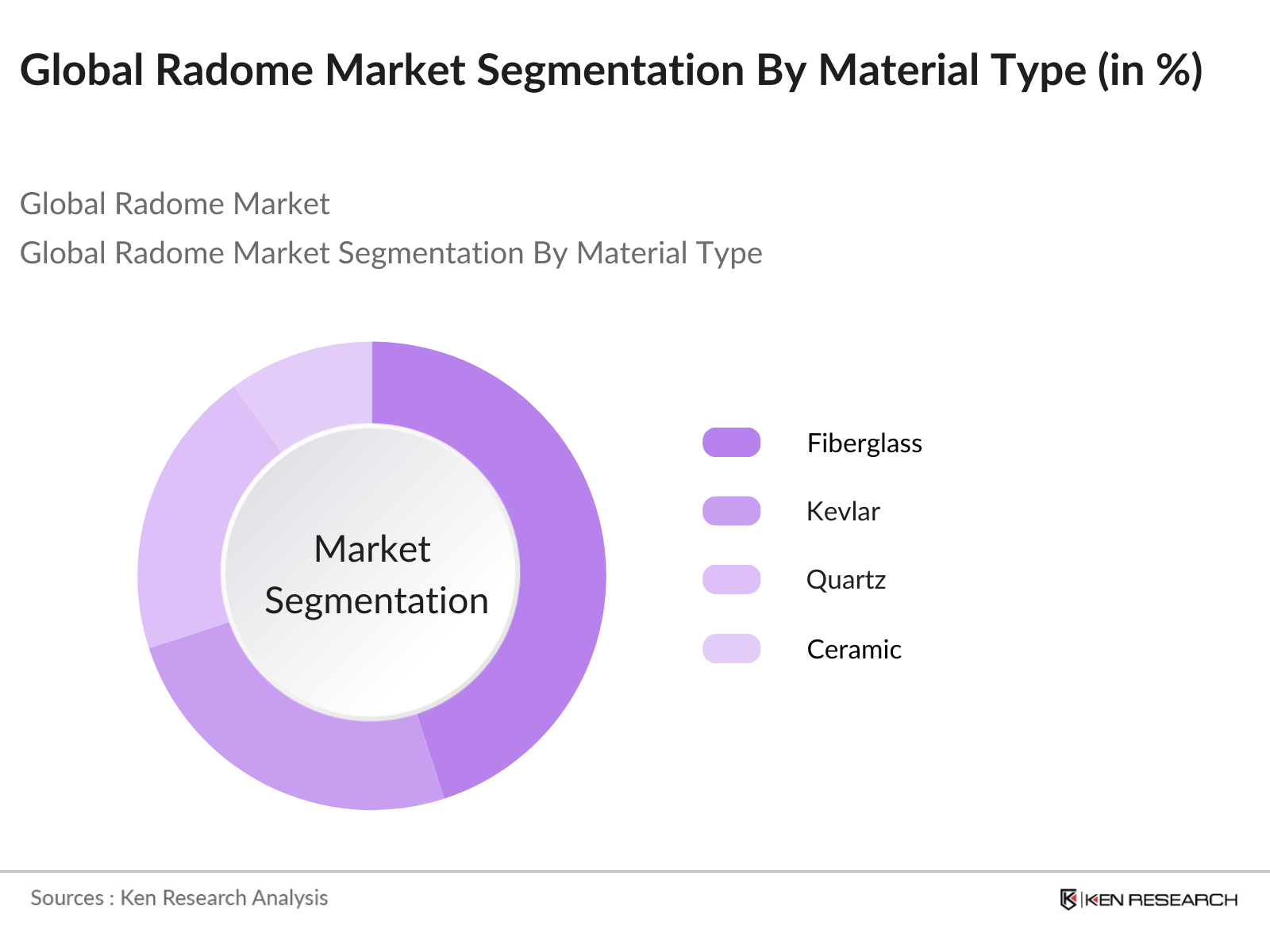
By Material Type: The market is segmented by material type into fiberglass, kevlar, quartz, ceramic, and other composites. Among these, fiberglass holds the dominant market share in 2023 due to its lightweight nature, cost-effectiveness, and widespread use in both military and commercial aircraft radomes. Its ability to withstand high temperatures and electromagnetic interference makes it ideal for aviation applications.
By Application: The market is segmented by application into ground-based radomes, airborne radomes, and maritime radomes. In 2023, airborne radomes dominate the market, driven by the increasing production of commercial and military aircraft, along with the adoption of SATCOM (Satellite Communication) radomes for in-flight connectivity. The growing demand for advanced stealth aircraft has also propelled the usage of radomes in airborne applications.
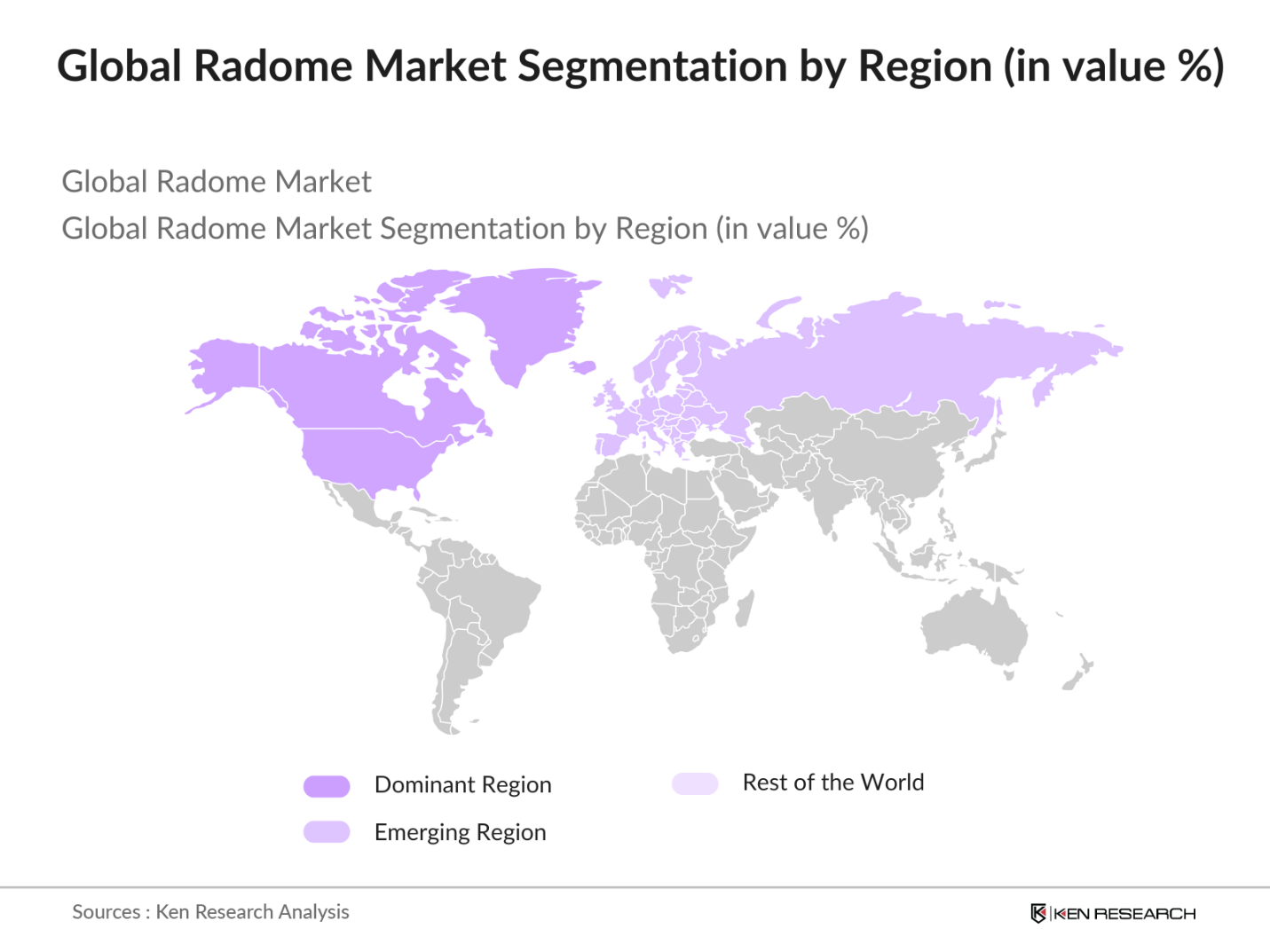
By Region: The market is segmented by region into North America, Europe, Asia-Pacific, Middle East & Africa, and Latin America. North America leads the market due to significant defense investments and the presence of large aerospace manufacturers such as Boeing and Lockheed Martin. Europe follows as the second-largest region, with key contributors like Airbus and BAE Systems. Asia-Pacific is witnessing substantial growth, primarily driven by increasing defense spending in China and India.
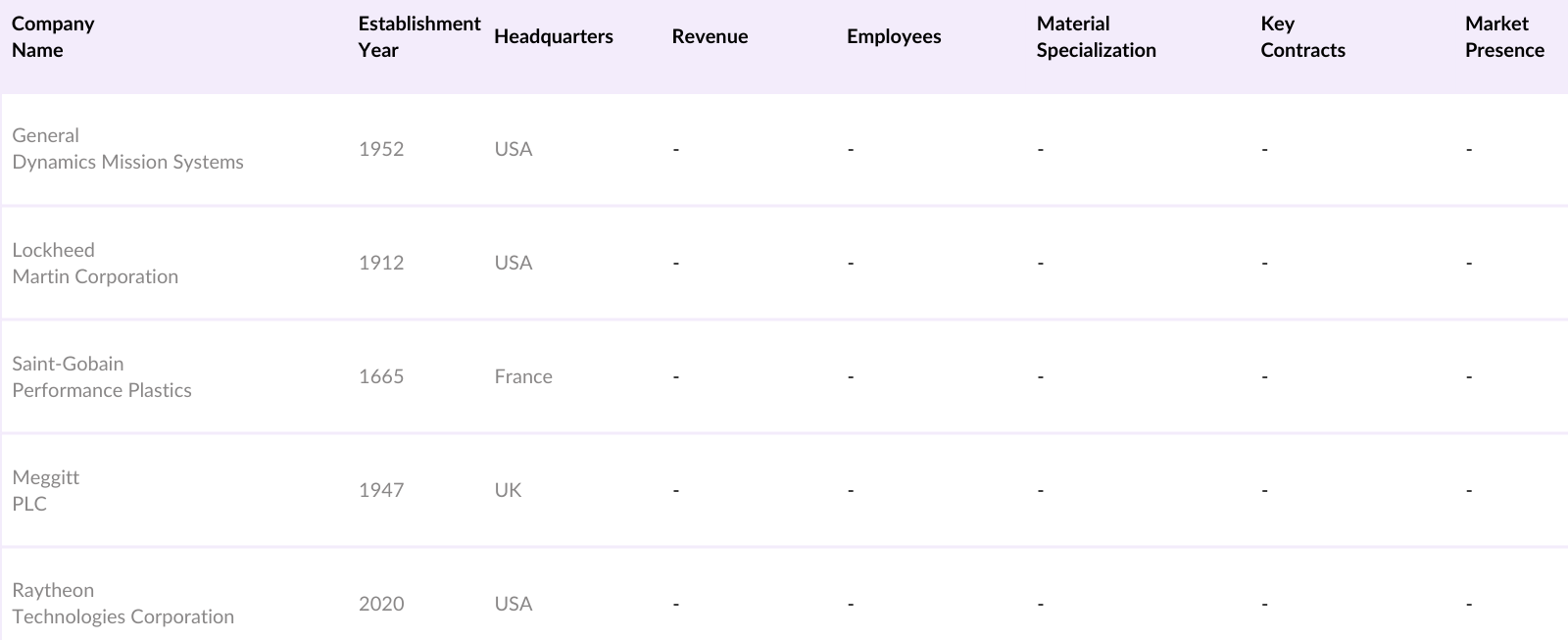
The global radome market is dominated by a few major players, many of whom specialize in aerospace and defense technologies. The competitive landscape is shaped by innovations in materials and radome designs, as well as strategic partnerships and government contracts.
Over the next five years, the global radome market is expected to experience significant growth driven by advancements in stealth technology, rising defense budgets, and increasing demand for SATCOM solutions. Governments across North America, Europe, and Asia are investing heavily in aerospace and defense infrastructure, which is likely to propel the demand for radomes.
|
Material Type |
Fiberglass Kevlar Quartz Ceramic Other Composites |
|
Application |
Ground-Based Radomes Airborne Radomes Maritime Radomes |
|
Shape |
Spherical Planar Sandwich |
|
End-User Industry |
Aerospace & Defense Telecommunications Automotive Meteorology |
|
Region |
North America Europe Asia-Pacific Middle East & Africa Latin America |
1.1. Definition and Scope
1.2. Market Taxonomy
1.3. Market Growth Rate
1.4. Market Segmentation Overview
2.1. Historical Market Size
2.2. Year-On-Year Growth Analysis
2.3. Key Market Developments and Milestones
3.1. Growth Drivers
3.1.1. Increased Demand for Aircraft Modernization (Military, Commercial)
3.1.2. Rising Commercial Aviation Sector
3.1.3. Military Aircraft Upgrade Programs
3.1.4. Increased Adoption in 5G and SATCOM (Satellite Communication)
3.2. Market Challenges
3.2.1. High Manufacturing Costs
3.2.2. Technological Complexity
3.2.3. Stringent Certification Regulations
3.3. Opportunities
3.3.1. Emerging Markets in Asia-Pacific
3.3.2. Advancements in Radome Materials (Ceramic, Quartz)
3.3.3. Integration with UAVs (Unmanned Aerial Vehicles)
3.4. Trends
3.4.1. Development of Advanced Stealth Radomes
3.4.2. Increased Use of Composite Materials (Fiber-Reinforced Polymers)
3.4.3. Lightweight Radome Solutions for Commercial Aircraft
3.5. Government Regulations
3.5.1. Defense Standards for Radome Materials (NATO, FAA Regulations)
3.5.2. Certification Requirements for Civil Aircraft Radomes
3.5.3. Spectrum Allocation for SATCOM and 5G Applications
3.6. SWOT Analysis
3.7. Stakeholder Ecosystem
3.8. Porters Five Forces Analysis
3.9. Competitive Landscape
4.1. By Material Type (In Value %)
4.1.1. Fiberglass
4.1.2. Kevlar
4.1.3. Quartz
4.1.4. Ceramic
4.1.5. Other Composites
4.2. By Application (In Value %)
4.2.1. Ground-Based Radomes
4.2.2. Airborne Radomes
4.2.3. Maritime Radomes
4.3. By Shape (In Value %)
4.3.1. Spherical
4.3.2. Planar
4.3.3. Sandwich
4.4. By End-User Industry (In Value %)
4.4.1. Aerospace & Defense
4.4.2. Telecommunications (SATCOM, 5G)
4.4.3. Automotive
4.4.4. Meteorology
4.5. By Region (In Value %)
4.5.1. North America
4.5.2. Europe
4.5.3. Asia-Pacific
4.5.4. Middle East & Africa
4.5.5. Latin America
5.1. Detailed Profiles of Major Companies
5.1.1. General Dynamics Mission Systems
5.1.2. Lockheed Martin Corporation
5.1.3. Saint-Gobain Performance Plastics
5.1.4. Meggitt PLC
5.1.5. Raytheon Technologies Corporation
5.1.6. L-3 Harris Technologies
5.1.7. The NORDAM Group
5.1.8. Cobham PLC
5.1.9. Jenoptik AG
5.1.10. Airbus S.A.S.
5.1.11. CPI International
5.1.12. Ball Aerospace
5.1.13. BAE Systems PLC
5.1.14. Kaman Corporation
5.1.15. Airtech International
5.2. Cross Comparison Parameters (Employees, Headquarters, Revenue, Market Presence, Radome Specialization, Recent Contracts, Regional Operations, Material Innovation)
5.3. Market Share Analysis
5.4. Strategic Initiatives
5.5. Mergers & Acquisitions
5.6. Investment Analysis
5.7. Venture Capital Funding
5.8. Government Grants
5.9. Private Equity Investments
6.1. Aviation and Defense Material Standards
6.2. Compliance Requirements for Telecommunication Radomes
6.3. Certification and Quality Assurance Processes
7.1. Future Market Size Projections
7.2. Key Factors Driving Future Market Growth
8.1. By Material Type (In Value %)
8.2. By Application (In Value %)
8.3. By Shape (In Value %)
8.4. By End-User Industry (In Value %)
8.5. By Region (In Value %)
9.1. TAM/SAM/SOM Analysis
9.2. Customer Cohort Analysis
9.3. Strategic Marketing Initiatives
9.4. White Space Opportunity Analysis
The research process begins with mapping out the key stakeholders within the global radome market. Extensive secondary research is conducted using industry databases and proprietary resources to identify the main variables affecting market trends and dynamics.
In this stage, historical data is gathered and analyzed to assess the market size and growth patterns. The key metrics, such as market penetration rates and technological adoption levels, are evaluated to ensure precise revenue estimations.
Market hypotheses are developed and validated through expert interviews using Computer-Assisted Telephone Interviews (CATIs). Industry experts from leading aerospace and defense companies provide insights into market trends and challenges.
Finally, the gathered data is synthesized into actionable insights, with validation conducted through direct engagement with industry stakeholders. This ensures the final report provides a comprehensive and accurate overview of the global radome market.
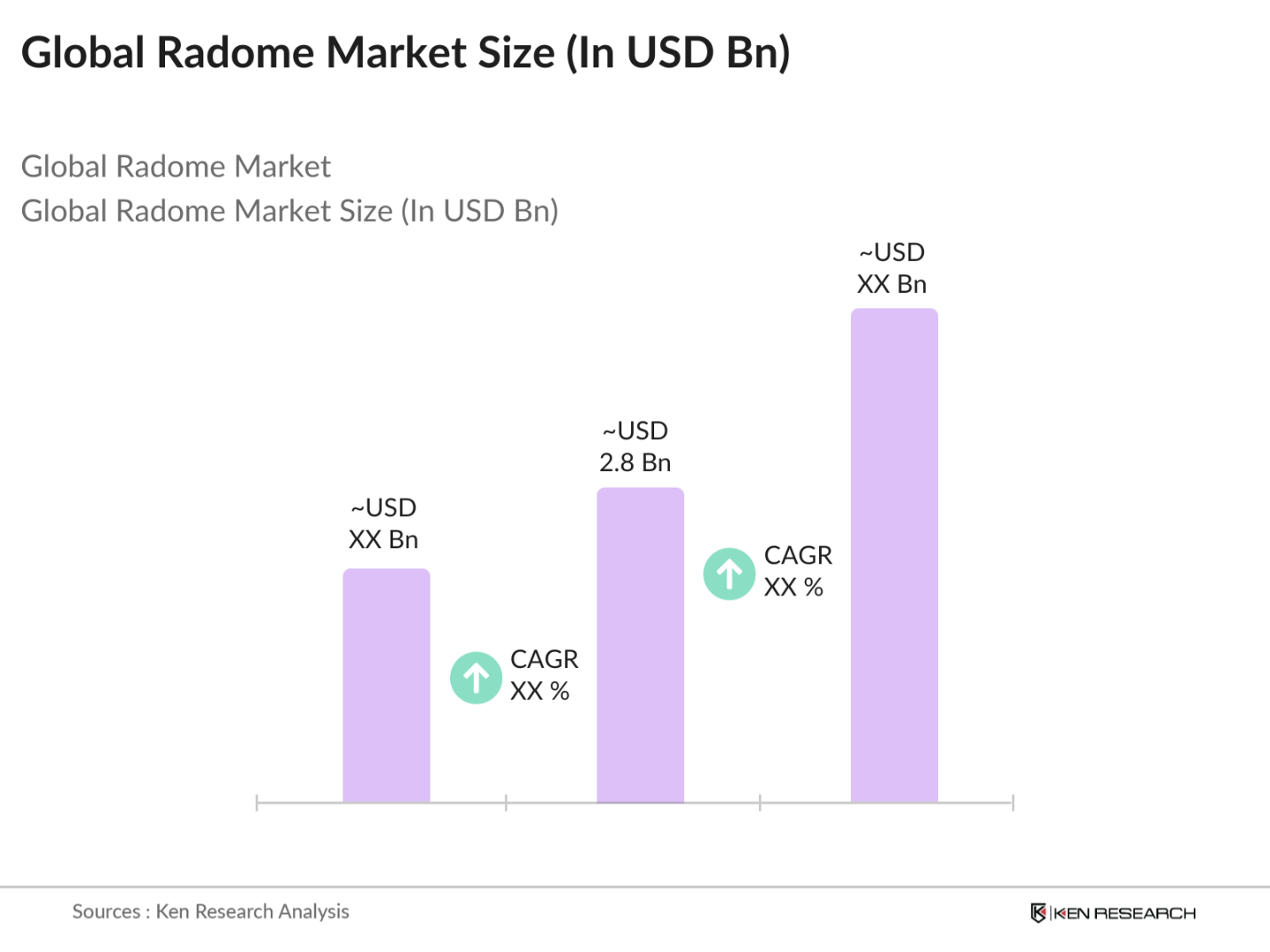
The global radome market is valued at USD 2.8 billion, based on a five-year historical analysis. This market is primarily driven by the growing demand for advanced communication systems in aerospace and defense, as well as the adoption of lightweight materials in aircraft construction.
The primary challenges include high manufacturing costs, regulatory hurdles, and the complexity of integrating radomes into advanced stealth aircraft.
Major players include General Dynamics, Lockheed Martin, Saint-Gobain, Meggitt, and Raytheon Technologies. These companies lead due to their extensive expertise in aerospace and defense radome solutions.
Key drivers include the rising demand for SATCOM radomes, increased defense budgets, and the development of lightweight, durable materials for radome construction.

What makes us stand out is that our consultants follows Robust, Refine and Result (RRR) methodology. i.e. Robust for clear definitions, approaches and sanity checking, Refine for differentiating respondents facts and opinions and Result for presenting data with story

We have set a benchmark in the industry by offering our clients with syndicated and customized market research reports featuring coverage of entire market as well as meticulous research and analyst insights.

While we don't replace traditional research, we flip the method upside down. Our dual approach of Top Bottom & Bottom Top ensures quality deliverable by not just verifying company fundamentals but also looking at the sector and macroeconomic factors.

With one step in the future, our research team constantly tries to show you the bigger picture. We help with some of the tough questions you may encounter along the way: How is the industry positioned? Best marketing channel? KPI's of competitors? By aligning every element, we help maximize success.

Our report gives you instant access to the answers and sources that other companies might choose to hide. We elaborate each steps of research methodology we have used and showcase you the sample size to earn your trust.

If you need any support, we are here! We pride ourselves on universe strength, data quality, and quick, friendly, and professional service.