Global Residential Real Estate Market In Vietnam

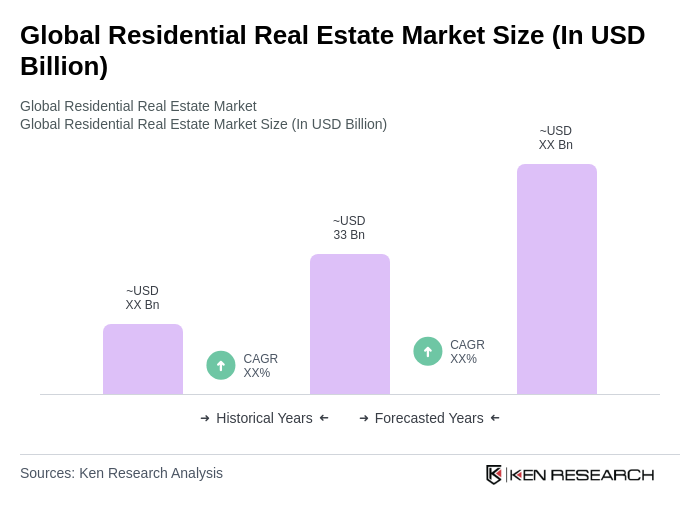
Vietnam residential real estate market, worth USD 33 Bn, is set for growth to USD 57 Bn, fueled by rapid urbanization, middle-class expansion, and investments in key cities like Ho Chi Minh and Hanoi.

Region:Asia

Author(s):Geetanshi

Product Code:KRAA0110

Pages:96

Published On:August 2025
About the Report

Base Year 2024

Global Residential Real Estate Market Overview

  • The Vietnam residential real estate market is valued at approximately USD 33 billion, based on a five-year historical analysis. This growth is primarily driven by rapid urbanization, increasing disposable incomes, a growing middle class seeking home ownership, and robust infrastructural development. The demand for residential properties has surged, particularly in urban areas, as more individuals and families look to invest in real estate as a stable asset. Additionally, government social-housing programs and preferential mortgages are accelerating demand in the affordable segment .
  • Key cities dominating the market include Ho Chi Minh City and Hanoi, which are the economic and political hubs of Vietnam, respectively. These cities attract significant domestic and foreign investment due to their robust infrastructure, job opportunities, and vibrant lifestyle offerings. Additionally, emerging cities like Da Nang and Hai Phong are gaining traction as attractive alternatives for real estate investment, supported by expanding infrastructure and increasing investor interest .
  • In 2023, the Vietnamese government implemented new housing policies aimed at increasing the supply of affordable housing. These regulations mandate that a portion of new residential developments be allocated for social housing, ensuring that low- and middle-income families have access to affordable living options. This initiative is part of a broader strategy to address housing shortages, promote inclusive urban development, and support the mid-market and affordable segments .
Global Residential Real Estate Market In Vietnam Size

Global Residential Real Estate Market Segmentation

By Property Type:The property type segmentation includes Apartments/Condominiums, Villas, Townhouses, Landed Houses (Single-Family Homes), Social Housing, Luxury Residences (Penthouses, Estates), and Others. Apartments/Condominiums are currently dominating the market, accounting for the majority of sales volume due to their affordability, convenience, and suitability for urban density. The trend toward vertical living is driven by younger generations seeking modern amenities and proximity to workplaces, with apartments and condominiums representing about two-thirds of total sales .
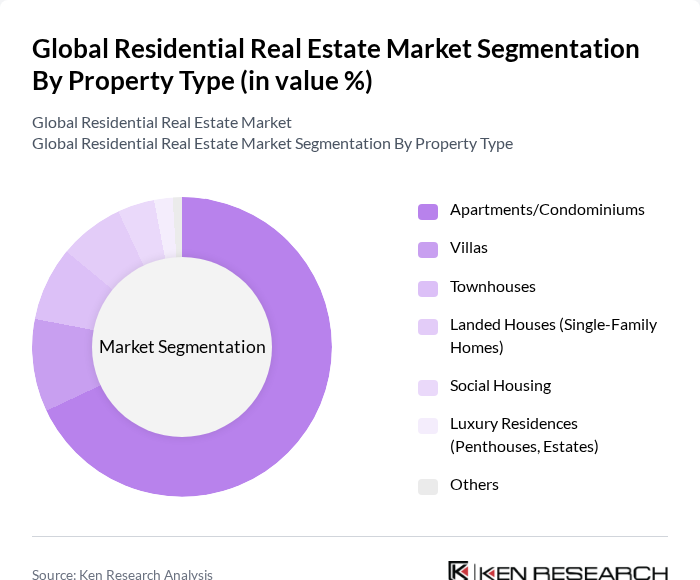
Global Residential Real Estate Market segmentation by Property Type.

By Buyer Demographics:The buyer demographics segmentation includes First-Time Homebuyers, Domestic Investors, Foreign Investors/Overseas Vietnamese, Retirees, Families, and Others. First-Time Homebuyers are currently the leading demographic, driven by favorable financing options, government incentives, and a growing young population seeking home ownership. This segment is characterized by younger individuals and couples prioritizing affordability and location, with domestic investors and overseas Vietnamese also playing a significant role in market activity .
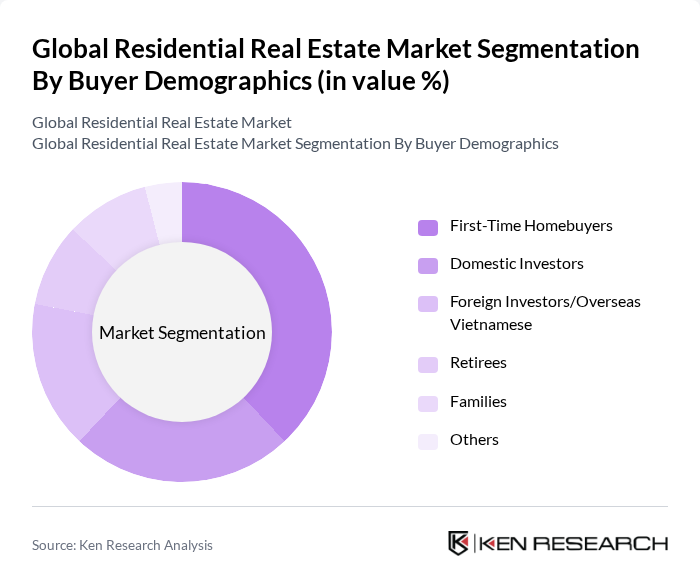
Global Residential Real Estate Market segmentation by Buyer Demographics.

Global Residential Real Estate Market Competitive Landscape

The Global Residential Real Estate Market is characterized by a dynamic mix of regional and international players. Leading participants such as Vinhomes (Vingroup), Novaland Group, Phu My Hung Development Corporation, Dat Xanh Group, FLC Group, Him Lam Land, Kinh Bac City Development Holding Corporation (KBC), Nam Long Investment Corporation, Sun Group, Tan Hoang Minh Group, Becamex IDC, An Gia Investment, Ecopark Corporation, Hung Thinh Land, Masterise Homes contribute to innovation, geographic expansion, and service delivery in this space.

Company

Establishment Year

Headquarters

Group Size (Large, Medium, or Small as per industry convention)

Annual Revenue (USD million)

Number of Units Delivered Annually

Market Share (%)

Geographic Coverage (Cities/Provinces)

Average Selling Price per sqm (USD)

Vinhomes (Vingroup)

2008

Hanoi, Vietnam

Novaland Group

1992

Ho Chi Minh City, Vietnam

Phu My Hung Development Corporation

1993

Ho Chi Minh City, Vietnam

Dat Xanh Group

2003

Ho Chi Minh City, Vietnam

FLC Group

2008

Hanoi, Vietnam

Global Residential Real Estate Market Industry Analysis

Growth Drivers

  • Urbanization and Population Growth:Urbanization in None is accelerating, with the urban population projected to reach 38% by in future, up from 35% in 2020. This shift translates to an additional 5 million people moving to urban areas, driving demand for housing. The World Bank estimates that urban areas will require 1.5 million new housing units annually to accommodate this growth, creating significant opportunities for residential real estate developers and investors.
  • Rising Middle-Class Income:The middle-class population in None is expected to grow by 20 million by in future, with average household incomes increasing by 15% over the same period. This rise in disposable income enhances purchasing power, leading to greater demand for residential properties. According to the IMF, this demographic shift will result in a surge in homeownership rates, further stimulating the real estate market and encouraging new developments.
  • Increased Foreign Investment:Foreign direct investment (FDI) in None's residential real estate sector is projected to reach $3 billion in future, a 25% increase from 2023. This influx is driven by favorable investment policies and a stable economic environment. The government’s initiatives to attract foreign capital, including tax incentives and streamlined processes, are expected to bolster the market, enhancing property values and development opportunities across urban centers.

Market Challenges

  • Regulatory Hurdles:The residential real estate market in None faces significant regulatory challenges, with over 50 different zoning laws impacting property development. These regulations can delay projects by an average of 12 months, increasing costs for developers. The World Bank's Doing Business report highlights that navigating these regulations is a major barrier for both local and foreign investors, potentially stifling market growth and innovation.
  • Economic Fluctuations:Economic instability poses a challenge to None's residential real estate market, with GDP growth projected to slow to 5.8% in future from 6.8% in 2023. This slowdown can lead to reduced consumer confidence and lower investment in housing. Additionally, inflation rates are expected to rise to 6%, further straining household budgets and limiting the ability of potential buyers to enter the market, thereby affecting overall demand.

Global Residential Real Estate Market Future Outlook

The future of None's residential real estate market appears promising, driven by ongoing urbanization and a growing middle class. As the demand for housing continues to rise, developers are likely to focus on innovative solutions, including eco-friendly and smart home technologies. Additionally, the expansion of rental markets and mixed-use developments will cater to diverse consumer preferences, ensuring that the market remains dynamic and responsive to changing demographics and economic conditions.

Market Opportunities

  • Smart Home Technology Integration:The integration of smart home technologies is expected to create a $1 billion market opportunity in None by in future. As consumers increasingly prioritize convenience and energy efficiency, developers who incorporate these technologies into new builds will attract tech-savvy buyers, enhancing property appeal and value.
  • Sustainable Development Initiatives:Sustainable development initiatives are gaining traction, with an estimated $500 million allocated for green building projects in None by in future. This focus on sustainability not only meets consumer demand for eco-friendly homes but also aligns with government policies aimed at reducing carbon footprints, presenting a lucrative opportunity for developers committed to environmentally responsible practices.

Scope of the Report

SegmentSub-Segments
By Property Type

Apartments/Condominiums

Villas

Townhouses

Landed Houses (Single-Family Homes)

Social Housing

Luxury Residences (Penthouses, Estates)

Others

By Buyer Demographics

First-Time Homebuyers

Domestic Investors

Foreign Investors/Overseas Vietnamese

Retirees

Families

Others

By Financing Method

Bank Mortgages

Developer Financing

Cash Purchases

Government-Subsidized Loans

Others

By Location

Ho Chi Minh City

Hanoi

Danang

Hai Phong

Secondary Cities & Provinces

Others

By Price Range

Affordable Housing

Mid-Range Properties

Premium/Luxury Properties

Others

By Property Age

New Developments

Recently Renovated

Existing/Older Properties

Others

By Investment Purpose

Owner-Occupied (Primary Residence)

Buy-to-Let (Rental Income)

Vacation/Second Homes

Capital Appreciation/Speculation

Others

Key Target Audience

Investors and Venture Capitalist Firms

Government and Regulatory Bodies (e.g., Ministry of Construction, Vietnam National Administration of Tourism)

Real Estate Developers

Property Management Companies

Construction Firms

Financial Institutions (e.g., Banks, Mortgage Lenders)

Real Estate Investment Trusts (REITs)

Local and International Real Estate Agencies

Players Mentioned in the Report:

Vinhomes (Vingroup)

Novaland Group

Phu My Hung Development Corporation

Dat Xanh Group

FLC Group

Him Lam Land

Kinh Bac City Development Holding Corporation (KBC)

Nam Long Investment Corporation

Sun Group

Tan Hoang Minh Group

Becamex IDC

An Gia Investment

Ecopark Corporation

Hung Thinh Land

Masterise Homes

Table of Contents

Market Assessment Phase

1. Executive Summary and Approach


2. Global Residential Real Estate Market Overview

2.1 Key Insights and Strategic Recommendations

2.2 Global Residential Real Estate Market Overview

2.3 Definition and Scope

2.4 Evolution of Market Ecosystem

2.5 Timeline of Key Regulatory Milestones

2.6 Value Chain & Stakeholder Mapping

2.7 Business Cycle Analysis

2.8 Policy & Incentive Landscape


3. Global Residential Real Estate Market Analysis

3.1 Growth Drivers

3.1.1 Urbanization and Population Growth
3.1.2 Rising Middle-Class Income
3.1.3 Increased Foreign Investment
3.1.4 Government Infrastructure Development

3.2 Market Challenges

3.2.1 Regulatory Hurdles
3.2.2 Economic Fluctuations
3.2.3 Limited Access to Financing
3.2.4 High Competition

3.3 Market Opportunities

3.3.1 Smart Home Technology Integration
3.3.2 Sustainable Development Initiatives
3.3.3 Expansion of Rental Markets
3.3.4 Development of Mixed-Use Properties

3.4 Market Trends

3.4.1 Increased Demand for Eco-Friendly Homes
3.4.2 Growth of Co-Living Spaces
3.4.3 Digital Transformation in Real Estate Transactions
3.4.4 Shift Towards Suburban Living

3.5 Government Regulation

3.5.1 Foreign Ownership Laws
3.5.2 Tax Incentives for Homebuyers
3.5.3 Zoning Regulations
3.5.4 Environmental Compliance Standards

4. SWOT Analysis


5. Stakeholder Analysis


6. Porter's Five Forces Analysis


7. Global Residential Real Estate Market Market Size, 2019-2024

7.1 By Value

7.2 By Volume

7.3 By Average Selling Price


8. Global Residential Real Estate Market Segmentation

8.1 By Property Type

8.1.1 Apartments/Condominiums
8.1.2 Villas
8.1.3 Townhouses
8.1.4 Landed Houses (Single-Family Homes)
8.1.5 Social Housing
8.1.6 Luxury Residences (Penthouses, Estates)
8.1.7 Others

8.2 By Buyer Demographics

8.2.1 First-Time Homebuyers
8.2.2 Domestic Investors
8.2.3 Foreign Investors/Overseas Vietnamese
8.2.4 Retirees
8.2.5 Families
8.2.6 Others

8.3 By Financing Method

8.3.1 Bank Mortgages
8.3.2 Developer Financing
8.3.3 Cash Purchases
8.3.4 Government-Subsidized Loans
8.3.5 Others

8.4 By Location

8.4.1 Ho Chi Minh City
8.4.2 Hanoi
8.4.3 Danang
8.4.4 Hai Phong
8.4.5 Secondary Cities & Provinces
8.4.6 Others

8.5 By Price Range

8.5.1 Affordable Housing
8.5.2 Mid-Range Properties
8.5.3 Premium/Luxury Properties
8.5.4 Others

8.6 By Property Age

8.6.1 New Developments
8.6.2 Recently Renovated
8.6.3 Existing/Older Properties
8.6.4 Others

8.7 By Investment Purpose

8.7.1 Owner-Occupied (Primary Residence)
8.7.2 Buy-to-Let (Rental Income)
8.7.3 Vacation/Second Homes
8.7.4 Capital Appreciation/Speculation
8.7.5 Others

9. Global Residential Real Estate Market Competitive Analysis

9.1 Market Share of Key Players(Micro, Small, Medium, Large Enterprises)

9.2 Cross Comparison of Key Players

9.2.1 Company Name
9.2.2 Group Size (Large, Medium, or Small as per industry convention)
9.2.3 Annual Revenue (USD million)
9.2.4 Number of Units Delivered Annually
9.2.5 Market Share (%)
9.2.6 Geographic Coverage (Cities/Provinces)
9.2.7 Average Selling Price per sqm (USD)
9.2.8 Project Pipeline (Units/Projects Under Development)
9.2.9 Return on Equity (ROE, %)
9.2.10 Occupancy Rate (%)
9.2.11 Sales Conversion Rate (%)
9.2.12 Customer Satisfaction Index
9.2.13 Lead Generation Efficiency
9.2.14 Average Days on Market

9.3 SWOT Analysis of Top Players

9.4 Pricing Analysis(By Class and Payload)

9.5 Detailed Profile of Major Companies

9.5.1 Vinhomes (Vingroup)
9.5.2 Novaland Group
9.5.3 Phu My Hung Development Corporation
9.5.4 Dat Xanh Group
9.5.5 FLC Group
9.5.6 Him Lam Land
9.5.7 Kinh Bac City Development Holding Corporation (KBC)
9.5.8 Nam Long Investment Corporation
9.5.9 Sun Group
9.5.10 Tan Hoang Minh Group
9.5.11 Becamex IDC
9.5.12 An Gia Investment
9.5.13 Ecopark Corporation
9.5.14 Hung Thinh Land
9.5.15 Masterise Homes

10. Global Residential Real Estate Market End-User Analysis

10.1 Procurement Behavior of Key Ministries

10.1.1 Decision-Making Processes
10.1.2 Budget Allocation Trends
10.1.3 Preferred Procurement Channels
10.1.4 Evaluation Criteria

10.2 Corporate Spend on Infrastructure & Energy

10.2.1 Investment Priorities
10.2.2 Budget Trends
10.2.3 Key Stakeholders
10.2.4 Procurement Strategies

10.3 Pain Point Analysis by End-User Category

10.3.1 Affordability Issues
10.3.2 Access to Financing
10.3.3 Regulatory Compliance Challenges
10.3.4 Market Transparency Concerns

10.4 User Readiness for Adoption

10.4.1 Awareness Levels
10.4.2 Technology Adoption Rates
10.4.3 Training and Support Needs
10.4.4 Feedback Mechanisms

10.5 Post-Deployment ROI and Use Case Expansion

10.5.1 Performance Metrics
10.5.2 User Satisfaction Levels
10.5.3 Expansion Opportunities
10.5.4 Long-Term Value Assessment

11. Global Residential Real Estate Market Future Size, 2025-2030

11.1 By Value

11.2 By Volume

11.3 By Average Selling Price


Go-To-Market Strategy Phase

1. Whitespace Analysis + Business Model Canvas

1.1 Market Gaps Identification

1.2 Value Proposition Development

1.3 Revenue Streams Analysis

1.4 Cost Structure Evaluation

1.5 Key Partnerships Exploration

1.6 Customer Segmentation

1.7 Channels and Customer Relationships


2. Marketing and Positioning Recommendations

2.1 Branding Strategies

2.2 Product USPs

2.3 Target Market Positioning

2.4 Communication Strategies

2.5 Digital Marketing Approaches


3. Distribution Plan

3.1 Urban Retail Strategies

3.2 Rural NGO Tie-Ups

3.3 Online vs Offline Distribution

3.4 Logistics and Supply Chain Management


4. Channel & Pricing Gaps

4.1 Underserved Routes

4.2 Pricing Bands Analysis

4.3 Competitor Pricing Strategies

4.4 Customer Willingness to Pay


5. Unmet Demand & Latent Needs

5.1 Category Gaps

5.2 Consumer Segments Analysis

5.3 Emerging Trends Identification


6. Customer Relationship

6.1 Loyalty Programs

6.2 After-Sales Service

6.3 Customer Feedback Mechanisms


7. Value Proposition

7.1 Sustainability Initiatives

7.2 Integrated Supply Chains

7.3 Unique Selling Points


8. Key Activities

8.1 Regulatory Compliance

8.2 Branding Efforts

8.3 Distribution Setup


9. Entry Strategy Evaluation

9.1 Domestic Market Entry Strategy

9.1.1 Product Mix Considerations
9.1.2 Pricing Band Strategies
9.1.3 Packaging Options

9.2 Export Entry Strategy

9.2.1 Target Countries
9.2.2 Compliance Roadmap

10. Entry Mode Assessment

10.1 Joint Ventures

10.2 Greenfield Investments

10.3 Mergers & Acquisitions

10.4 Distributor Model


11. Capital and Timeline Estimation

11.1 Capital Requirements

11.2 Timelines for Implementation


12. Control vs Risk Trade-Off

12.1 Ownership vs Partnerships


13. Profitability Outlook

13.1 Breakeven Analysis

13.2 Long-Term Sustainability


14. Potential Partner List

14.1 Distributors

14.2 Joint Ventures

14.3 Acquisition Targets


15. Execution Roadmap

15.1 Phased Plan for Market Entry

15.1.1 Market Setup
15.1.2 Market Entry
15.1.3 Growth Acceleration
15.1.4 Scale & Stabilize

15.2 Key Activities and Milestones

15.2.1 Milestone Planning
15.2.2 Activity Tracking

Research Methodology

ApproachModellingSample

Phase 1: Approach1

Desk Research

  • Analysis of global real estate market reports from industry associations and research firms
  • Review of government publications and housing market statistics from national statistical agencies
  • Examination of real estate transaction data and trends from online property platforms

Primary Research

  • Interviews with real estate agents and brokers specializing in residential properties
  • Surveys conducted with homeowners and potential buyers to gauge market sentiment
  • Focus groups with real estate developers to understand market dynamics and challenges

Validation & Triangulation

  • Cross-validation of findings through multiple data sources, including market reports and expert opinions
  • Triangulation of quantitative data with qualitative insights from industry experts
  • Sanity checks through peer reviews and expert panel discussions

Phase 2: Market Size Estimation1

Top-down Assessment

  • Estimation of total residential real estate value based on national GDP and housing investment ratios
  • Segmentation of the market by geographic regions and property types (e.g., single-family homes, condos)
  • Incorporation of macroeconomic indicators such as interest rates and employment rates affecting housing demand

Bottom-up Modeling

  • Collection of sales data from leading real estate agencies and property listings
  • Estimation of average property prices and transaction volumes across different regions
  • Analysis of construction activity and new housing starts as indicators of market growth

Forecasting & Scenario Analysis

  • Development of predictive models using historical data and economic forecasts
  • Scenario analysis based on varying interest rates, demographic shifts, and urbanization trends
  • Creation of baseline, optimistic, and pessimistic forecasts for the next 5-10 years

Phase 3: CATI Sample Composition1

Scope Item/SegmentSample SizeTarget Respondent Profiles
Residential Property Buyers100First-time Homebuyers, Investors
Real Estate Agents60Residential Brokers, Real Estate Consultants
Homeowners80Current Homeowners, Landlords
Real Estate Developers40Project Managers, Development Executives
Market Analysts40Economists, Industry Analysts

Frequently Asked Questions

What is the current value of the global residential real estate market?

The global residential real estate market is valued at approximately USD 33 billion, driven by factors such as urbanization, rising disposable incomes, and government initiatives aimed at increasing affordable housing supply.

Which cities are the main hubs for residential real estate in Vietnam?

What factors are driving growth in the residential real estate market?

What challenges does the residential real estate market face?

Other Regional/Country Reports

Indonesia Global Residential Real Estate Market

Malaysia Global Residential Real Estate Market

KSA Global Residential Real Estate Market

APAC Global Residential Real Estate Market

SEA Global Residential Real Estate Market

Vietnam Global Residential Real Estate Market

Why Buy From Us?

Refine Robust Result (RRR) Framework

What makes us stand out is that our consultants follow Robust, Refine and Result (RRR) methodology. Robust for clear definitions, approaches and sanity checking, Refine for differentiating respondents' facts and opinions, and Result for presenting data with story.

Our Reach Is Unmatched

We have set a benchmark in the industry by offering our clients with syndicated and customized market research reports featuring coverage of entire market as well as meticulous research and analyst insights.

Shifting the Research Paradigm

While we don't replace traditional research, we flip the method upside down. Our dual approach of Top Bottom & Bottom Top ensures quality deliverable by not just verifying company fundamentals but also looking at the sector and macroeconomic factors.

More Insights-Better Decisions

With one step in the future, our research team constantly tries to show you the bigger picture. We help with some of the tough questions you may encounter along the way: How is the industry positioned? Best marketing channel? KPI's of competitors? By aligning every element, we help maximize success.

Transparency and Trust

Our report gives you instant access to the answers and sources that other companies might choose to hide. We elaborate each steps of research methodology we have used and showcase you the sample size to earn your trust.

Round the Clock Support

If you need any support, we are here! We pride ourselves on universe strength, data quality, and quick, friendly, and professional service.

Why Clients Choose Us?

400000+
Reports in repository
150+
Consulting projects a year
100+
Analysts
8000+
Client Queries in 2022








