















Global Retail Cloud Market Outlook 2030
Region:Global
Author(s):Shivani Mehra
Product Code:KROD8434
December 2024
82
About the Report
Global Retail Cloud Market Overview
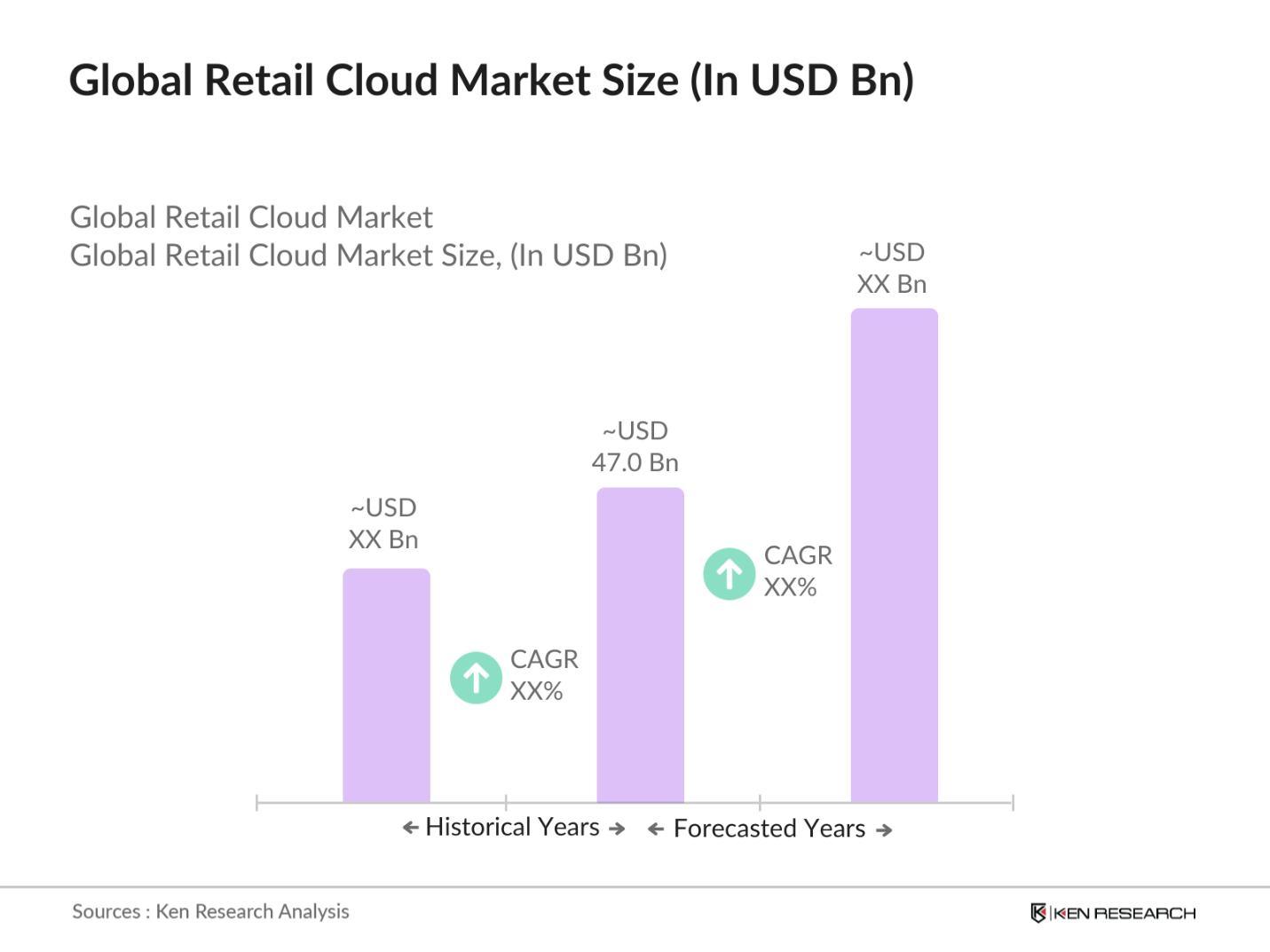
- The global retail cloud market is valued at USD 47.0 billion, driven by the increasing adoption of digital retail technologies. Major retail businesses are moving to cloud-based infrastructure to enhance operational efficiency, reduce IT infrastructure costs, and offer personalized customer experiences through advanced analytics and AI. The surge in e-commerce, especially following the pandemic, has propelled cloud adoption, with retailers seeking scalable solutions to manage large data sets, improving supply chain management and customer relationship management (CRM) systems.
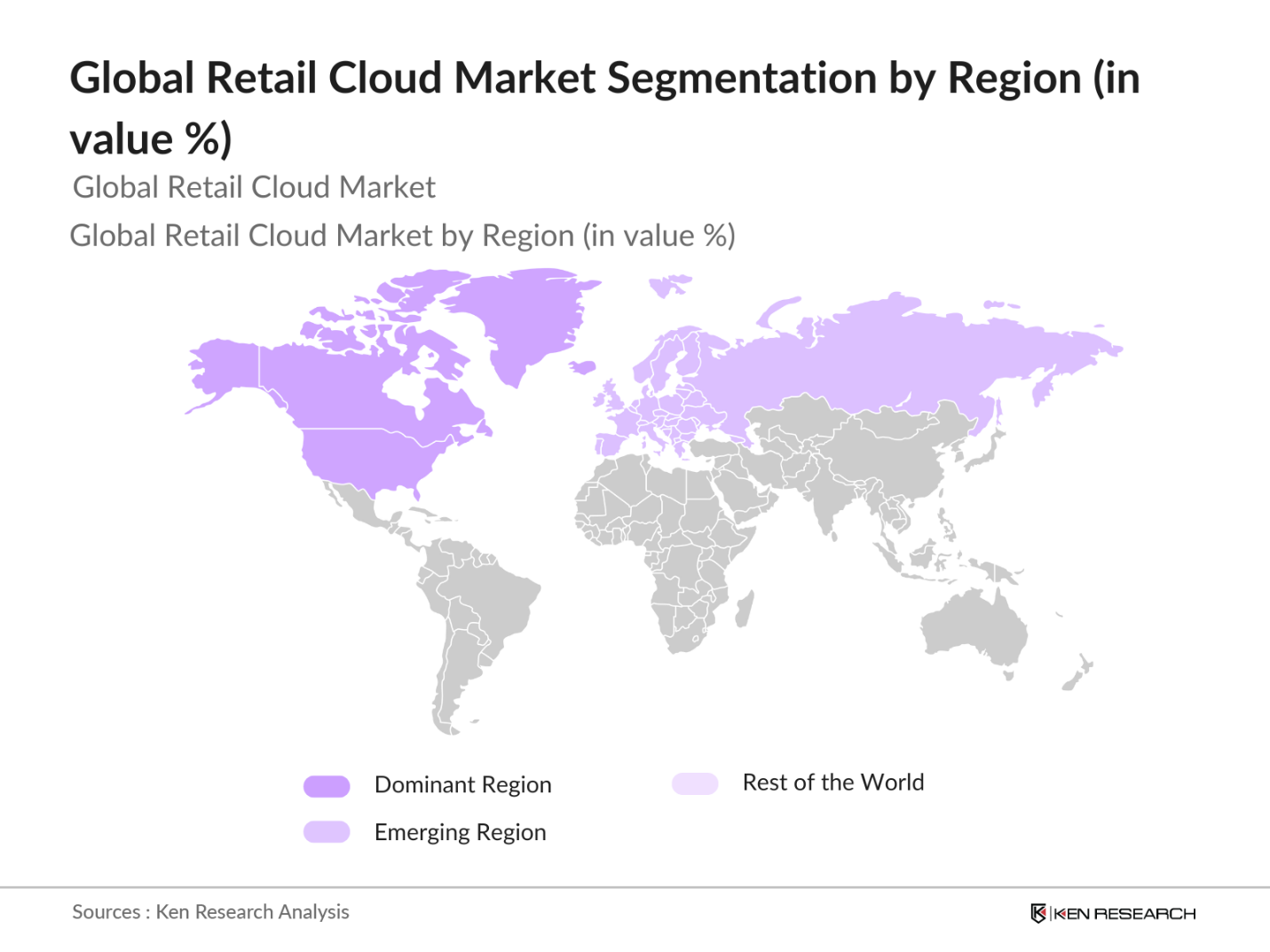
- North America leads the global retail cloud market, with the United States being a dominant player due to its early adoption of cloud technologies and the presence of major cloud providers like Amazon Web Services (AWS), Microsoft Azure, and Google Cloud. The region's advanced IT infrastructure, high internet penetration, and digital-first strategies adopted by retail giants contribute significantly to market dominance. Additionally, the Asia-Pacific region, led by China and India, is witnessing rapid growth due to the increasing digitization of retail operations and the rising number of SMEs adopting cloud solutions.
- The Digital Silk Road, part of Chinas Belt and Road Initiative (BRI), promotes cloud adoption among local and international retailers. Since 2022, the initiative has focused on enhancing digital infrastructure across Central Asia, Southeast Asia, and Africa. As a result, Chinese retail giants such as Alibaba have expanded their cloud offerings across these regions, empowering local businesses with advanced cloud computing capabilities. The initiative has also spurred cloud investments in logistics and cross-border retail trade, fostering growth in international retail markets.
Global Retail Cloud Market Segmentation
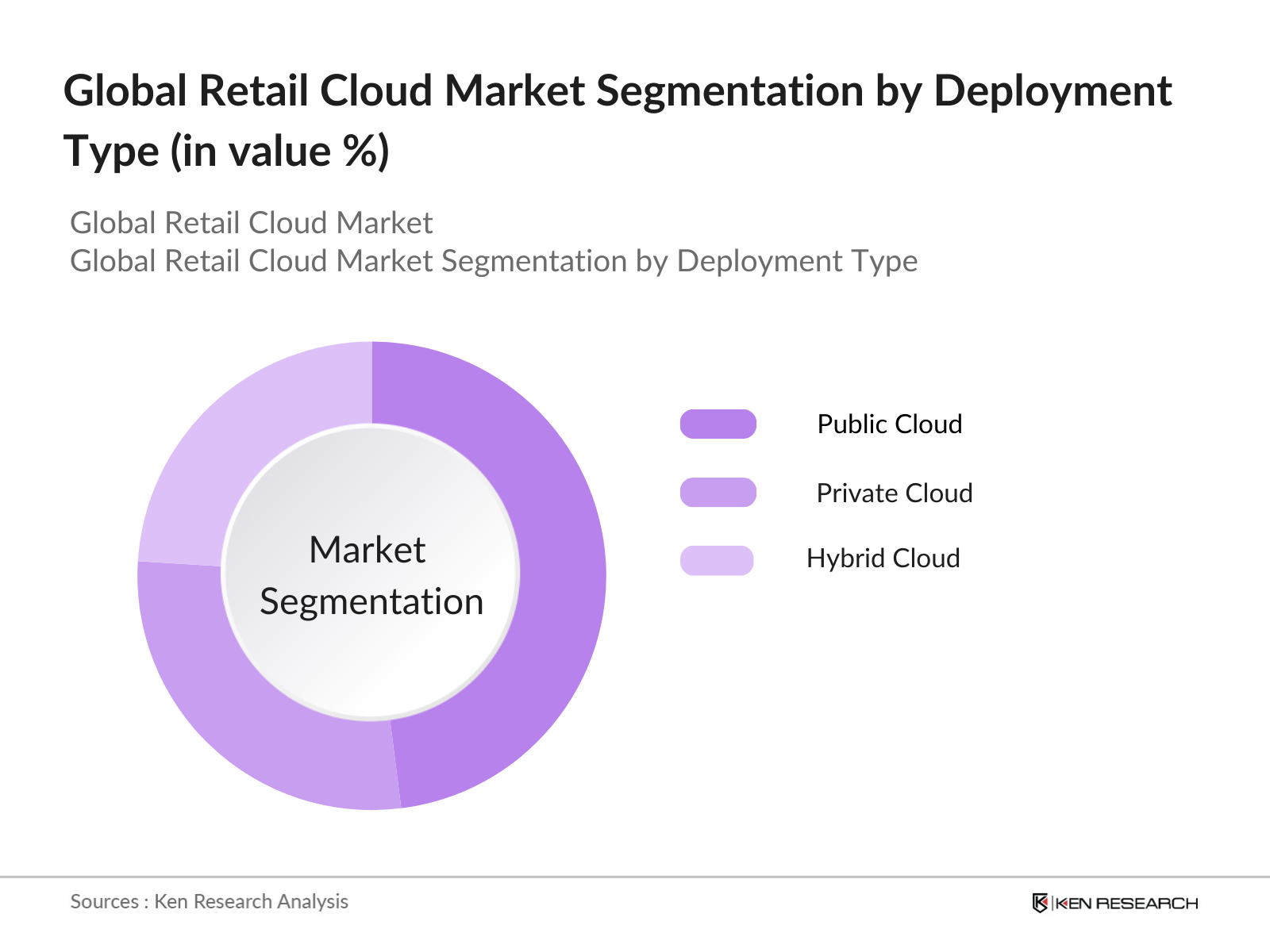
By Deployment Type: The global retail cloud market is segmented by deployment type into Public Cloud, Private Cloud, and Hybrid Cloud. Public Cloud dominates this segment, largely due to its cost-effectiveness and scalability, which appeals to a wide range of retailers, particularly small and medium enterprises (SMEs). The flexibility to pay-as-you-go allows businesses to scale up operations during peak shopping seasons without heavy upfront investments in infrastructure. Hybrid Cloud is also seeing growing adoption due to its ability to offer a combination of public cloud benefits while maintaining sensitive data on private cloud servers.
By Region: The market is regionally segmented into North America, Europe, Asia-Pacific, Middle East & Africa, and Latin America. North America continues to dominate the retail cloud market due to the strong presence of key cloud providers and early cloud adoption in retail operations. Asia-Pacific is emerging as a significant market due to the rapid growth of e-commerce and retail businesses in countries like China and India, where digital transformation is a key focus for businesses seeking to enhance customer experience and streamline operations.
Global Retail Cloud Market Competitive Landscape
The global retail cloud market is dominated by key global players who have established a strong market presence. These companies are not only leading in technological innovation but also driving the adoption of cloud services among retail giants and SMEs alike. The market's competitive landscape is defined by the presence of established players who continue to offer a broad range of cloud solutions tailored to the needs of the retail sector.
|
Company Name |
Establishment Year |
Headquarters |
Revenue |
Number of Data Centers |
Global Market Share |
Cloud Solutions Portfolio |
Customer Base |
Partnerships and Collaborations |
R&D Investment |
|
Amazon Web Services (AWS) |
2006 |
Seattle, USA |
- |
- |
- |
- |
- |
- |
- |
|
Microsoft Azure |
2010 |
Redmond, USA |
- |
- |
- |
- |
- |
- |
- |
|
Google Cloud |
2008 |
Mountain View, USA |
- |
- |
- |
- |
- |
- |
- |
|
Alibaba Cloud |
2009 |
Hangzhou, China |
- |
- |
- |
- |
- |
- |
- |
|
Salesforce |
1999 |
San Francisco, USA |
- |
- |
- |
- |
- |
- |
- |
Global Retail Cloud Market Analysis
Global Retail Cloud Market Growth Drivers
- Increased Adoption of E-commerce: The adoption of e-commerce continues to drive cloud investments in retail. As of 2023, global retail e-commerce sales were estimated to have reached around $6.3 trillion, with cloud technologies playing a crucial role in managing this growth. Cloud solutions offer flexibility and scalability to retailers, enabling efficient handling of large datasets, traffic spikes, and inventory management. This demand is further supported by global internet penetration, which reached 5.2 billion users in 2023, facilitating the rise of e-commerce across regions. The United States, the European Union, and China have all reported significant increases in cloud adoption due to rising e-commerce activities.
- Digitization of Retail Supply Chain: In 2024, global supply chain disruptions emphasized the need for digitization. Cloud solutions helped retailers to streamline operations, making them more resilient. For instance, 76% of U.S. retailers have implemented cloud-based solutions to enhance supply chain visibility, including real-time inventory tracking, reducing logistics costs. This trend is driven by the globalization of supply chains, with cloud-based analytics being crucial for cross-border operations. Additionally, countries like China have encouraged cloud investments as part of their Digital Silk Road initiative, aiming to improve international logistics networks.
- Government Initiatives and Cloud Policies: Government policies globally have been pivotal in promoting cloud adoption in retail. For example, in 2023, the European Union's GAIA-X initiative set forth a plan to standardize cloud infrastructure across Europe, improving data sharing for retail businesses. In India, the Digital India program, which promotes cloud adoption among SMEs, saw over 3.5 million retailers adopt cloud services to digitize their operations. These policies facilitate smoother, secure, and cost-effective cloud migration in retail, propelling growth across multiple economies.
Global Retail Cloud Market Challenges
- Data Security and Privacy Concerns: Despite the cloud's advantages, data security remains a major challenge for retailers. In 2023, global data breaches reached a cost of over $4.45 million per incident, and retail was among the top three industries targeted. The complexity of protecting vast amounts of consumer data, especially under stringent regulations like GDPR in Europe and the California Consumer Privacy Act (CCPA) in the U.S., makes securing cloud infrastructures vital yet challenging. As more retailers adopt cloud solutions, ensuring compliance with these data protection standards remains a significant challenge.
- High Cost of Cloud Migration: Cloud migration, especially for legacy retail systems, involves substantial costs. In 2023, the cost of cloud migration for a mid-sized retailer in the U.S. was estimated to range from $500,000 to $2 million, depending on the complexity of their operations. These costs include infrastructure setup, employee training, and downtime losses. Although long-term cloud benefits are recognized, initial investment remains a barrier, particularly for smaller retail chains in developing economies.
Global Retail Cloud Market Future Outlook
Over the next five years, the global retail cloud market is expected to witness significant growth, driven by the increasing demand for personalized customer experiences, the rise of AI and machine learning in retail, and the need for scalable cloud solutions. Retailers are increasingly turning to cloud services to optimize their operations, from inventory management to customer engagement, as they look to compete in an increasingly digital marketplace. Additionally, advancements in cloud technology and the growing importance of data-driven decision-making will continue to propel market growth.
Market Opportunities
- Hybrid Cloud Solutions in Retail: Hybrid cloud models, which combine on-premises and cloud solutions, are gaining traction in the retail sector. In 2023, of retailers globally had adopted hybrid cloud environments to benefit from the flexibility of public clouds while maintaining control over sensitive customer data with private cloud infrastructures. Retailers like Target and Carrefour are leveraging hybrid cloud solutions to manage different aspects of their supply chains and customer relations, benefiting from both cost efficiency and data security.
- Increasing Use of Analytics-as-a-Service (AaaS): Analytics-as-a-Service (AaaS) is transforming retail operations. In 2023, approximately 48% of major retailers worldwide employed cloud-based analytics to gain real-time insights into customer behavior, inventory management, and sales trends. This data-driven approach allowed for better decision-making and improved operational efficiency. With governments promoting data-driven economies, such as in Singapores Smart Nation initiative, retailers increasingly utilize cloud-powered analytics to stay competitive.
Scope of the Report
|
By Deployment Type |
Public Cloud Private Cloud Hybrid Cloud |
|
By Service Type |
IaaS PaaS SaaS |
|
By End-user Type |
Large Enterprises SMEs Startups |
|
By Retail Segment |
Apparel and Fashion Consumer Electronics Grocery and Food Retail Health and Wellness |
|
By Region |
North America Europe Asia-Pacific Middle East and Africa Latin America |
Products
Key Target Audience
Retailers (Large Enterprises, SMEs)
E-commerce Platforms
Cloud Service Providers
Investment and Venture Capital Firms
Government and Regulatory Bodies (Federal Trade Commission, European Data Protection Board)
IT and Tech Solution Providers
Retail Technology Innovators
AI and Analytics Solution Providers
Companies
Players Mention in the Report
Amazon Web Services (AWS)
Microsoft Azure
Google Cloud
Alibaba Cloud
Salesforce
Oracle Cloud
IBM Cloud
SAP SE
Adobe Systems
Infor
VMware
Tencent Cloud
Rackspace Technology
ServiceNow
Workday
Table of Contents
01. Global Retail Cloud Market Overview
1.1. Definition and Scope
1.2. Market Valuation and Historical Analysis
1.3. Key Market Developments and Milestones
02. Global Retail Cloud Market Size (In USD Billion)
2.1. Historical Market Size
2.2. Year-On-Year Growth Analysis
2.3. Major Trends Impacting Market Growth
03. Global Retail Cloud Market Analysis
3.1. Growth Drivers
3.1.1. Increased Adoption of E-commerce
3.1.2. Digitization of Retail Supply Chain
3.1.3. Government Initiatives and Cloud Policies
3.2. Market Challenges
3.2.1. Data Security and Privacy Concerns
3.2.2. High Cost of Cloud Migration
3.3. Market Opportunities
3.3.1. Hybrid Cloud Solutions in Retail
3.3.2. Increasing Use of Analytics-as-a-Service (AaaS)
3.4. Future Trends
3.4.1. Growth of AI and Machine Learning in Retail
3.4.2. Enhanced Customer Personalization
04. Global Retail Cloud Market Segmentation
4.1. By Deployment Type (In Value %)
4.1.1. Public Cloud
4.1.2. Private Cloud
4.1.3. Hybrid Cloud
4.2. By Service Type (In Value %)
4.2.1. IaaS
4.2.2. PaaS
4.2.3. SaaS
4.3. By End-user Type (In Value %)
4.3.1. Large Enterprises
4.3.2. SMEs
4.3.3. Startups
4.4. By Retail Segment (In Value %)
4.4.1. Apparel and Fashion
4.4.2. Consumer Electronics
4.4.3. Grocery and Food Retail
4.4.4. Health and Wellness
4.5. By Region (In Value %)
4.5.1. North America
4.5.2. Europe
4.5.3. Asia-Pacific
4.5.4. Middle East & Africa
4.5.5. Latin America
05. Global Retail Cloud Market Competitive Analysis
5.1. Detailed Profiles of Major Companies
5.1.1. Amazon Web Services (AWS)
5.1.2. Microsoft Azure
5.1.3. Google Cloud
5.1.4. Alibaba Cloud
5.1.5. Salesforce
5.1.6. Oracle Cloud
5.1.7. IBM Cloud
5.1.8. SAP SE
5.1.9. Adobe Systems
5.1.10. Infor
5.1.11. VMware
5.1.12. Tencent Cloud
5.1.13. Rackspace Technology
5.1.14. ServiceNow
5.1.15. Workday
5.2. Cross Comparison Parameters (Revenue, Number of Data Centers, Market Share)
5.3. Market Share Analysis
5.4. Strategic Initiatives
5.5. Mergers and Acquisitions
06. Global Retail Cloud Market Regulatory Framework
6.1. Compliance Standards and Data Protection Regulations
6.2. Industry-Specific Regulatory Requirements
07. Global Retail Cloud Market Future Outlook
7.1. Future Market Size Projections (In USD Billion)
7.2. Key Factors Driving Future Market Growth
08. Global Retail Cloud Market Future Segmentation
8.1. By Deployment Type (In Value %)
8.2. By Service Type (In Value %)
8.3. By End-user Type (In Value %)
8.4. By Retail Segment (In Value %)
8.5. By Region (In Value %)
09. Global Retail Cloud Market Analysts Recommendations
9.1. TAM/SAM/SOM Analysis
9.2. Market Entry Strategies
9.3. Key Marketing Initiatives
9.4. White Space Opportunity Analysis
Research Methodology
Step 1: Identification of Key Variables
In this step, we map the retail cloud ecosystem, involving stakeholders such as cloud service providers, retailers, and regulatory bodies. We conduct extensive secondary research using proprietary and public databases to identify key market variables, including deployment type, service type, and regional adoption rates.
Step 2: Market Analysis and Construction
We analyze historical data and trends within the global retail cloud market, focusing on revenue generation, cloud adoption by retailers, and growth in cloud service penetration. Data from retail technology providers is validated against market benchmarks to ensure accuracy.
Step 3: Hypothesis Validation and Expert Consultation
To refine our market estimates, we conduct interviews with cloud industry experts and retail technology consultants. These consultations provide insights into cloud service adoption patterns and challenges faced by retailers in transitioning to cloud infrastructure.
Step 4: Research Synthesis and Final Output
The final report is produced by integrating quantitative data from a bottom-up approach, combining insights from cloud providers and retailers, to present a comprehensive and validated analysis of the global retail cloud market.
Frequently Asked Questions
01. How big is the Global Retail Cloud Market?
The global retail cloud market was valued at USD 47.0 billion in 2023, driven by the increasing need for cloud-based solutions that enhance operational efficiency and improve customer experiences.
02. What are the challenges in the Global Retail Cloud Market?
Challenges include data security and privacy concerns, high initial costs for cloud migration, and limited internet infrastructure in some developing regions. These factors can hinder adoption rates in specific markets.
03. Who are the major players in the Global Retail Cloud Market?
Key players include Amazon Web Services (AWS), Microsoft Azure, Google Cloud, Alibaba Cloud, and Salesforce. These companies dominate the market due to their extensive cloud portfolios, strong customer relationships, and continued investment in cloud infrastructure.
04. What are the growth drivers of the Global Retail Cloud Market?
Growth is propelled by the rising adoption of AI and machine learning in retail, increasing digitization of supply chains, and the scalability offered by cloud solutions that allow retailers to optimize operations and improve customer engagement.
Why Buy From Us?

What makes us stand out is that our consultants follows Robust, Refine and Result (RRR) methodology. i.e. Robust for clear definitions, approaches and sanity checking, Refine for differentiating respondents facts and opinions and Result for presenting data with story

We have set a benchmark in the industry by offering our clients with syndicated and customized market research reports featuring coverage of entire market as well as meticulous research and analyst insights.

While we don't replace traditional research, we flip the method upside down. Our dual approach of Top Bottom & Bottom Top ensures quality deliverable by not just verifying company fundamentals but also looking at the sector and macroeconomic factors.

With one step in the future, our research team constantly tries to show you the bigger picture. We help with some of the tough questions you may encounter along the way: How is the industry positioned? Best marketing channel? KPI's of competitors? By aligning every element, we help maximize success.

Our report gives you instant access to the answers and sources that other companies might choose to hide. We elaborate each steps of research methodology we have used and showcase you the sample size to earn your trust.

If you need any support, we are here! We pride ourselves on universe strength, data quality, and quick, friendly, and professional service.