Ken Research Logo

Global Retail E-Commerce Market Outlook to 2030

Region:Global

Author(s):Mukul

Product Code:KROD10908

Published On

November 2024

Total pages

82

About the Report

Global Retail E-Commerce Market Overview

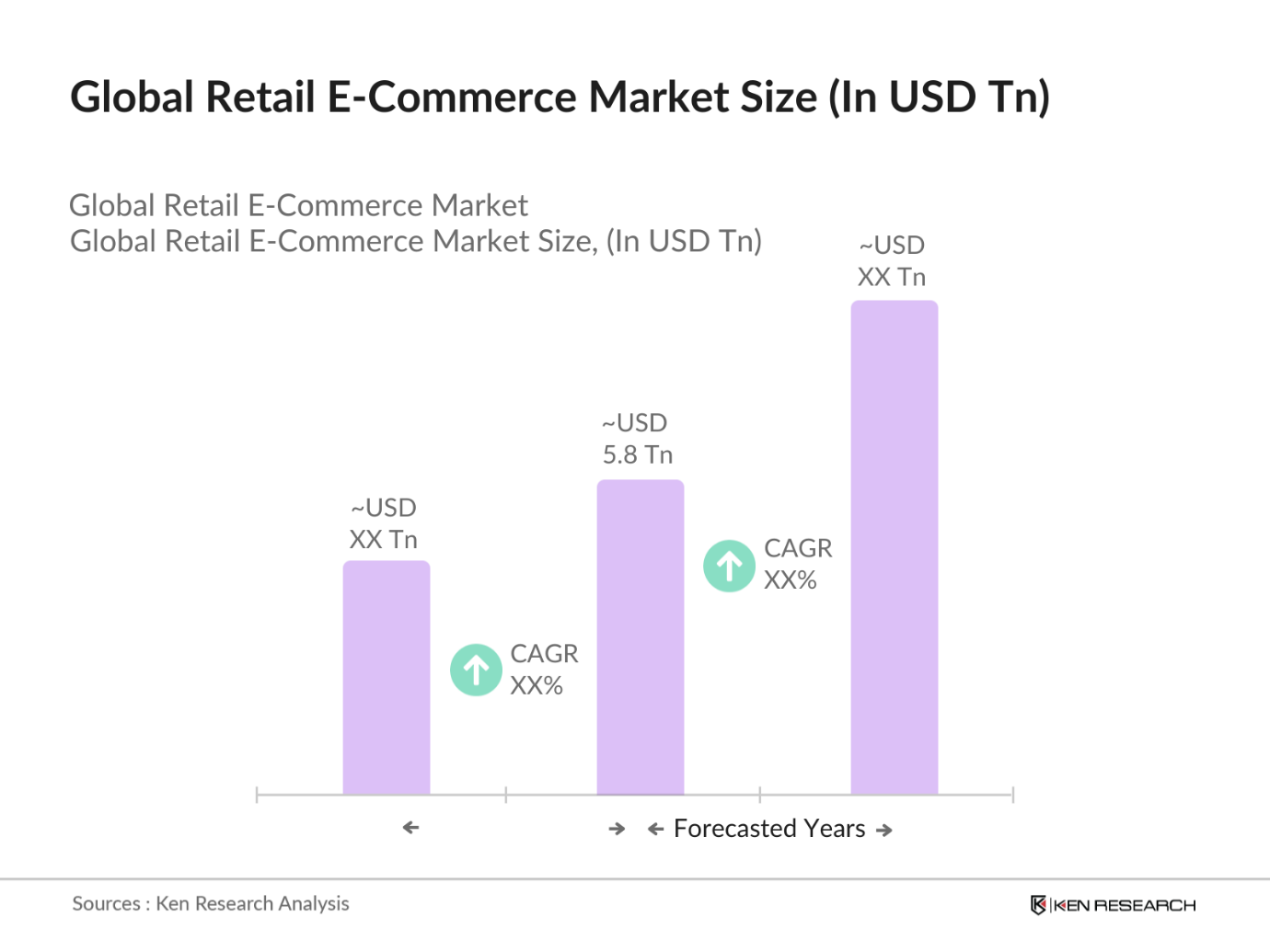
  • The Global Retail E-Commerce market is valued at USD 5.8 trillion based on a five-year historical analysis. The markets growth is primarily driven by increased internet penetration, the proliferation of mobile commerce (M-Commerce), and the rise of digital payment solutions. The convenience of online shopping, especially in regions with high internet usage, has contributed significantly to this valuation. Furthermore, the COVID-19 pandemic accelerated e-commerce adoption globally, fostering a shift from physical retail to online platforms across numerous industries.

Global Retail E-Commerce Market

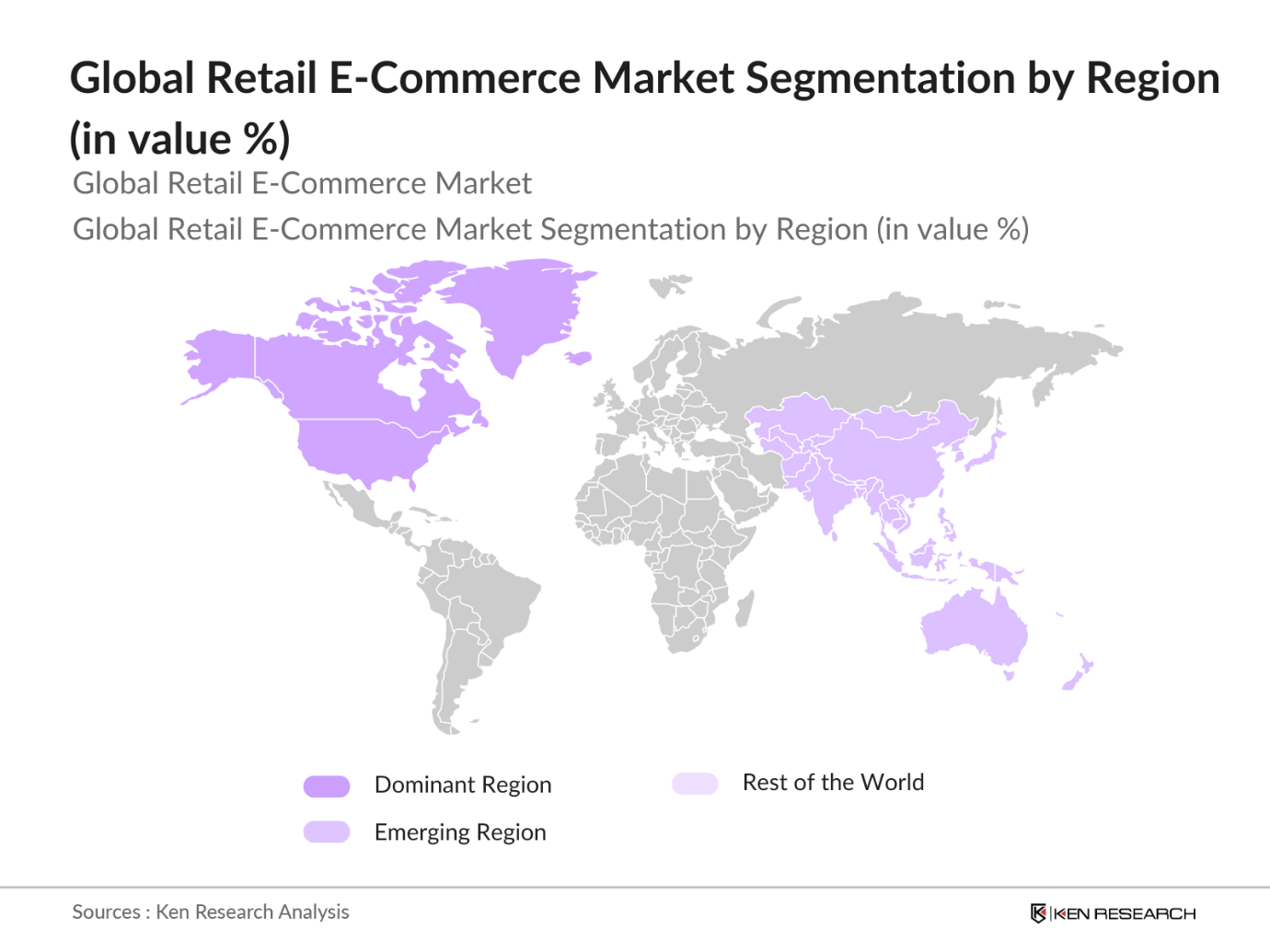
  • North America and Asia-Pacific dominate the global retail e-commerce market, with countries like the United States and China leading due to their high internet penetration rates, established logistics infrastructure, and tech-savvy populations. The dominance of these countries is further strengthened by the presence of global e-commerce giants such as Amazon and Alibaba, alongside an affluent middle-class consumer base. Moreover, the growth in these regions is propelled by a combination of robust digital infrastructure, high consumer spending, and a culture of embracing technological advancements.
  • Subscription-based models have gained traction across various retail sectors, offering consumers convenience and cost savings. In 2023, the IMF reported over 225 million global subscriptions for e-commerce services, particularly in beauty, fashion, and food delivery. Companies like Amazon and Dollar Shave Club have capitalized on this trend, building loyal customer bases. Subscription services provide retailers with a recurring revenue stream, while customers benefit from personalized offerings. This model continues to grow, driven by the increasing demand for convenience in shopping experiences.

Global Retail E-Commerce Market Segmentation

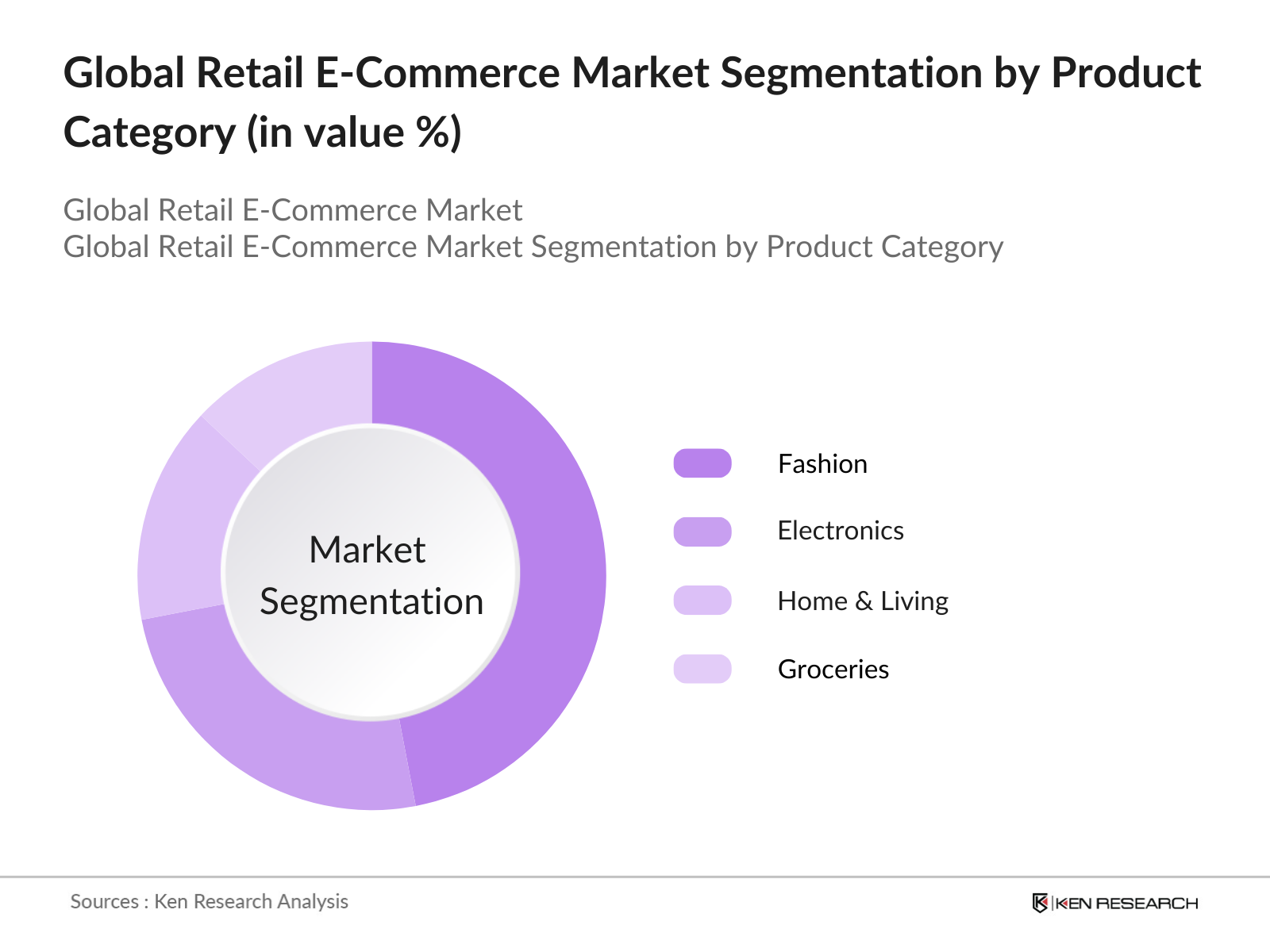
  • By Product Category: The Global Retail E-Commerce market is segmented by product category into fashion, electronics, home & living, groceries, and health & beauty. Fashion holds the largest share in this segment, owing to the extensive range of products available online and the increasing shift toward online shopping for clothing and accessories. Leading players such as ASOS and Zalando offer a variety of options, driving growth in this category. Additionally, the demand for fast fashion and easy returns policies further solidifies the dominance of this sub-segment.

Global Retail E-Commerce Market Segmentation

  • By Region: The Global Retail E-Commerce market is segmented by region into North America, Europe, Asia-Pacific, Latin America, and the Middle East & Africa. North America holds the largest share, followed closely by Asia-Pacific. The dominance of North America is attributed to high internet usage rates, widespread smartphone adoption, and the strong presence of e-commerce giants such as Amazon. Meanwhile, the Asia-Pacific region is experiencing rapid growth due to rising disposable incomes, a burgeoning middle class, and the expansion of cross-border e-commerce activities, especially in China and India.

Global Retail E-Commerce Market Segmentation

  • By Payment Method: In the Global Retail E-Commerce market, payment methods include credit/debit cards, digital wallets, bank transfers, and cash on delivery. Digital wallets dominate this segment due to their ease of use and security features. Platforms like PayPal, Apple Pay, and Google Pay have gained significant traction globally, allowing consumers to complete transactions with a simple tap. The growth of digital wallets is further driven by advancements in security protocols and their integration with online marketplaces.

Global Retail E-Commerce Market Competitive Landscape

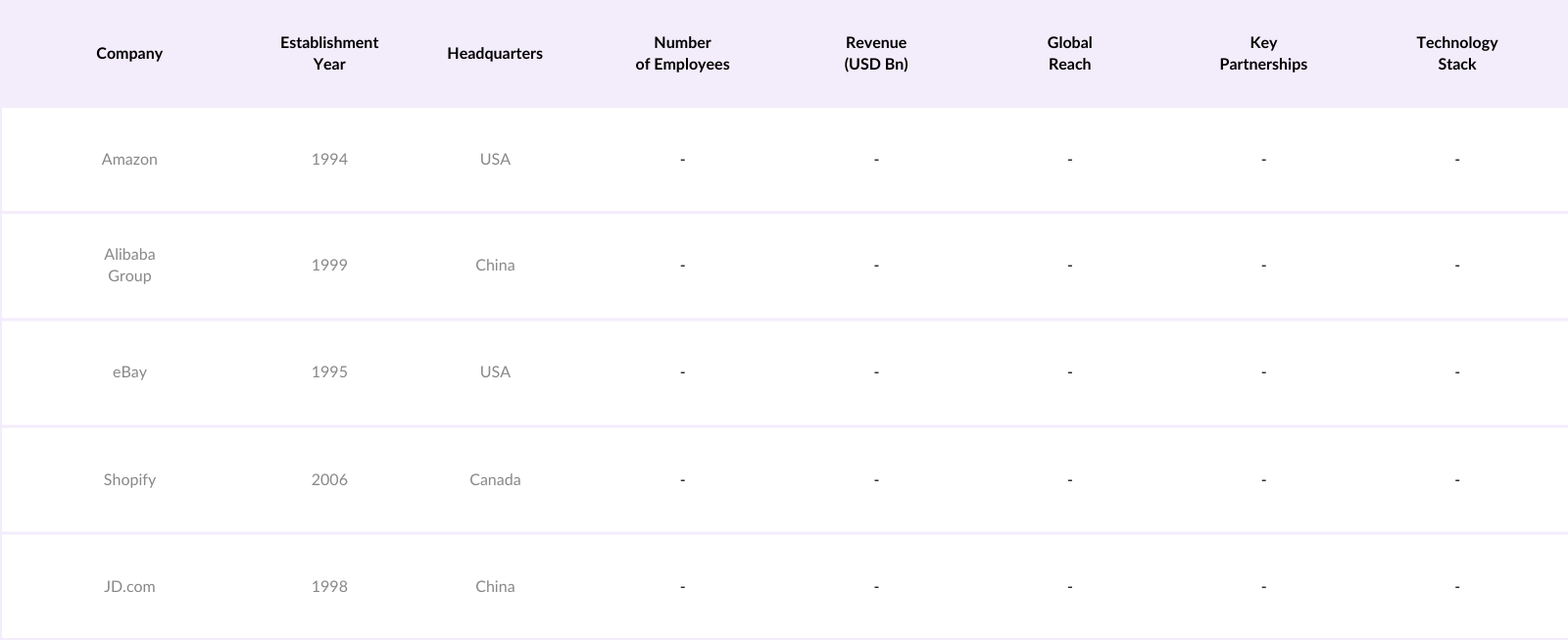
The Global Retail E-Commerce market is dominated by several major players, whose operations shape the competitive landscape of the industry. These companies have made significant investments in technology, logistics, and customer experience, which has helped them maintain leadership positions.
market overviews

Global Retail E-Commerce Industry Analysis

Growth Drivers

  • Rise of Mobile Commerce (M-Commerce): With the proliferation of smartphones, mobile commerce has become a major contributor to global retail e-commerce. As of 2024, there are over 6.92 billion smartphone users globally, significantly driving m-commerce growth. In the U.S. alone, over 80% of internet users shop online using mobile devices, with similar trends observed in emerging markets like India and Brazil. According to the World Bank, mobile internet subscriptions reached 100 per 100 people globally in 2023, creating a fertile environment for m-commerce to flourish. This technological shift supports seamless online shopping experiences, thus boosting the retail e-commerce sector.
  • Increasing Internet Penetration: In 2024, the global internet user base surpassed 5 billion, driven by expanding internet infrastructure across emerging markets such as Southeast Asia and Africa. According to the International Telecommunication Union (ITU), 2023 saw 94% of urban households globally with internet access, compared to only 80% in rural areas. The World Bank notes that improved access to affordable internet plans has enabled more people to participate in online shopping, driving the growth of retail e-commerce worldwide. This surge in connectivity offers significant opportunities for retailers to expand their digital presence.
  • Expanding Digital Payment Solutions: The adoption of digital payment solutions has rapidly grown, with 2023 seeing over 1.5 billion digital transactions processed globally per day, according to the IMF. Digital wallets, such as Apple Pay, Google Pay, and regional platforms like WeChat Pay in China, are simplifying e-commerce transactions. In India, the Unified Payments Interface (UPI) recorded 74 billion transactions in 2022, reflecting the shift towards cashless societies. This growth in digital payments has removed barriers for online shopping and contributed to the exponential rise in global e-commerce, making it easier for consumers to purchase goods online.

Market Restraints

  • Logistical Complexities: The rapid growth of retail e-commerce has brought logistical challenges, particularly in last-mile delivery. As of 2023, nearly 60 million parcels were delivered daily in the U.S., with the global e-commerce delivery volume surpassing 150 billion parcels annually, according to the Universal Postal Union. However, high delivery costs, delays, and complex customs processes, especially in cross-border e-commerce, have led to inefficiencies. In countries like India, poor infrastructure and inconsistent delivery services in rural areas pose significant challenges for e-commerce companies looking to expand.
  • Cybersecurity Threats: Cybersecurity remains a major concern for retail e-commerce, with global cybercrime losses reaching $7 trillion in 2022, according to the IMF. E-commerce platforms are vulnerable to data breaches, phishing attacks, and payment fraud, leading to financial losses and a decline in consumer trust. As the digital economy expands, the number of reported cyberattacks in the retail sector has surged by 50% year-over-year, highlighting the urgent need for robust cybersecurity measures. Governments and regulatory bodies, such as the EU's GDPR, have implemented stringent rules to combat these risks.

Global Retail E-Commerce Market Future Outlook

Over the next five years, the Global Retail E-Commerce market is expected to witness robust growth, driven by the continued expansion of M-Commerce, advancements in technology such as AI and AR, and the growing demand for seamless online shopping experiences. The market is also set to benefit from increasing cross-border e-commerce activities, as consumers in emerging markets gain greater access to international products.

Market Opportunities

  • Artificial Intelligence (AI) in Personalization: The integration of AI is transforming e-commerce by enabling hyper-personalized shopping experiences. According to the IMF, in 2023, over 40% of online retailers used AI-powered algorithms to offer personalized recommendations, improving customer engagement and driving sales. AI helps analyze large datasets, predicting customer preferences based on browsing history and purchase behavior. This technology not only enhances the customer experience but also optimizes inventory management and dynamic pricing. As AI becomes more sophisticated, it is expected to play an even greater role in reshaping global e-commerce.
  • Omnichannel Retailing: Retailers are increasingly adopting omnichannel strategies to seamlessly integrate their online and offline operations. In 2023, over 75% of leading global retailers offered omnichannel services, according to the World Bank, allowing customers to browse, purchase, and return products through various channels. Technologies like curbside pickup, real-time inventory management, and unified customer data have become critical for enhancing the shopping experience. By leveraging an omnichannel approach, retailers can meet evolving customer expectations, reduce friction, and improve overall business efficiency in the growing retail e-commerce market.

Scope of the Report

By Product Category

Fashion


Electronics


Home & Living


Groceries


Health & Beauty

By Payment Method

Credit/Debit Cards


Digital Wallets


Bank Transfers


Cash on Delivery

By Device Type

Mobile


Desktop


Tablet

By Business Model

B2C


B2B


C2C

By Region

North America


Europe


Asia-Pacific


Latin America


Middle East & Africa

Products

Key Target Audience

  • Retail Companies (Online and Omnichannel Retailers)

  • E-Commerce Platform Providers

  • Logistics and Supply Chain Companies

  • Payment Service Providers (e.g., PayPal, Stripe)

  • Technology Providers (e.g., AI and Cloud Service Providers)

  • Investor and Venture Capitalist Firms

  • Government and Regulatory Bodies (e.g., U.S. Federal Trade Commission, European Commission)

  • Large Consumer Goods Companies

Companies

Players Mentioned in the Report:

  • Amazon

  • Alibaba Group

  • eBay

  • Shopify

  • JD.com

  • Walmart

  • Rakuten

  • Zalando

  • MercadoLibre

  • Flipkart

  • ASOS

  • Wayfair

  • Otto Group

  • Newegg

  • Pinduoduo

Table of Contents

1. Global Retail E-Commerce Market Overview

1.1. Definition and Scope
1.2. Market Taxonomy
1.3. Market Growth Rate
1.4. Market Segmentation Overview

2. Global Retail E-Commerce Market Size (In USD Mn)

2.1. Historical Market Size
2.2. Year-on-Year Growth Analysis
2.3. Key Market Developments and Milestones

3. Global Retail E-Commerce Market Dynamics

3.1. Growth Drivers

Rise of Mobile Commerce (M-Commerce)

Increasing Internet Penetration

Expanding Digital Payment Solutions

Global Supply Chain Expansion

Growth of Cross-Border E-Commerce

3.2. Market Challenges


Logistical Complexities

Cybersecurity Threats

High Return Rates

Regulatory Compliance Issues

3.3. Opportunities

Artificial Intelligence (AI) in Personalization

Omnichannel Retailing

Integration of Augmented Reality (AR) for Product Visualization

Expansion in Emerging Markets

3.4. Trends

Subscription-Based E-Commerce Models

Voice-Activated Shopping

Rise of Direct-to-Consumer (D2C) Brands

Sustainable and Eco-Friendly Shopping Trends

3.5. Government Regulations

Data Privacy Laws (GDPR, CCPA)

Taxation on Cross-Border E-Commerce

Trade Agreements Impacting E-Commerce

3.6. SWOT Analysis (Strengths, Weaknesses, Opportunities, Threats)
3.7. Stakeholder Ecosystem (Key Players, Logistics Providers, Payment Gateways)
3.8. Porters Five Forces Analysis (Bargaining Power, Competitive Rivalry, etc.)
3.9. Competitive Landscape

4. Global Retail E-Commerce Market Segmentation

4.1. By Product Category (In Value %)

Fashion

Electronics

Home & Living

Groceries

Health & Beauty

4.2. By Payment Method (In Value %)

Credit/Debit Cards

Digital Wallets

Bank Transfers

Cash on Delivery

4.3. By Device Type (In Value %)

Mobile

Desktop

Tablet

4.4. By Business Model (In Value %)

Business-to-Consumer (B2C)

Business-to-Business (B2B)

Consumer-to-Consumer (C2C)

4.5. By Region (In Value %)

North America

Europe

Asia-Pacific

Latin America

Middle East & Africa

5. Global Retail E-Commerce Market Competitive Analysis

5.1. Detailed Profiles of Major Companies
5.1.1. Amazon
5.1.2. Alibaba Group
5.1.3. eBay
5.1.4. Shopify
5.1.5. Walmart
5.1.6. JD.com
5.1.7. Rakuten
5.1.8. Zalando
5.1.9. MercadoLibre
5.1.10. Flipkart
5.1.11. ASOS
5.1.12. Wayfair
5.1.13. Otto Group
5.1.14. Newegg
5.1.15. Pinduoduo

5.2. Cross Comparison Parameters

No. of Employees

Headquarters

Inception Year

Revenue

Market Share

Global Reach

Growth Strategies

Technology Adoption

5.3. Market Share Analysis
5.4. Strategic Initiatives
5.5. Mergers and Acquisitions
5.6. Investment Analysis (Venture Capital, Private Equity)

6. Global Retail E-Commerce Market Regulatory Framework

6.1. E-Commerce Tax Regulations
6.2. Data Protection and Privacy Regulations
6.3. Cross-Border Trade Compliance
6.4. Consumer Protection Laws

7. Global Retail E-Commerce Market Future Size (In USD Mn)

7.1. Future Market Size Projections
7.2. Key Drivers of Future Market Growth

8. Global Retail E-Commerce Future Market Segmentation

8.1. By Product Category (In Value %)
8.2. By Payment Method (In Value %)
8.3. By Device Type (In Value %)
8.4. By Business Model (In Value %)
8.5. By Region (In Value %)

9. Global Retail E-Commerce Market Analysts Recommendations

9.1. TAM/SAM/SOM Analysis (Total Addressable, Serviceable Addressable, and Serviceable Obtainable Markets)
9.2. Customer Cohort Analysis
9.3. Marketing Strategies and Initiatives
9.4. White Space Opportunity Analysis

Disclaimer Contact Us

Research Methodology

Step 1: Identification of Key Variables

The initial stage involves identifying critical variables affecting the Global Retail E-Commerce Market, including consumer behavior, technological adoption, and market structure. Data is gathered through secondary research from trusted sources such as industry reports and government databases.

Step 2: Market Analysis and Construction

This phase involves an in-depth analysis of historical data, covering e-commerce adoption rates, consumer spending trends, and industry growth. The analysis includes a detailed review of how these factors translate into revenue generation for e-commerce platforms.

Step 3: Hypothesis Validation and Expert Consultation

Industry experts from major e-commerce companies and supply chain firms are consulted to validate the data collected. These consultations provide insights into operational challenges, market trends, and technological adoption, ensuring the accuracy of market forecasts.

Step 4: Research Synthesis and Final Output

The final phase involves synthesizing all the research data and expert opinions into a comprehensive report. The findings are cross-checked using a bottom-up approach, focusing on consumer spending patterns, transaction volumes, and e-commerce growth trends globally.

Frequently Asked Questions

01. How big is the Global Retail E-Commerce Market?

The Global Retail E-Commerce market is valued at USD 5.8 trillion, driven by increased mobile commerce adoption, digital payment solutions, and the convenience of online shopping.

02. What are the challenges in the Global Retail E-Commerce Market?

The key challenges include logistical complexities, data privacy concerns, cybersecurity threats, and regulatory compliance across different regions.

03. Who are the major players in the Global Retail E-Commerce Market?

Major players in the market include Amazon, Alibaba Group, eBay, Shopify, and JD.com, who dominate due to their global reach, advanced technology, and efficient logistics networks.

04. What are the growth drivers of the Global Retail E-Commerce Market?

The market is propelled by increasing internet penetration, the rise of mobile commerce, advancements in digital payment solutions, and a growing preference for convenience in shopping.


Why Buy From Us?

RRR
Refine Robust Result (RRR) Framework

What makes us stand out is that our consultants follows Robust, Refine and Result (RRR) methodology. i.e. Robust for clear definitions, approaches and sanity checking, Refine for differentiating respondents facts and opinions and Result for presenting data with story

Our Reach Is Unmatched

We have set a benchmark in the industry by offering our clients with syndicated and customized market research reports featuring coverage of entire market as well as meticulous research and analyst insights.

Research
Shifting the Research Paradigm

While we don't replace traditional research, we flip the method upside down. Our dual approach of Top Bottom & Bottom Top ensures quality deliverable by not just verifying company fundamentals but also looking at the sector and macroeconomic factors.

Insite
More Insights-Better Decisions

With one step in the future, our research team constantly tries to show you the bigger picture. We help with some of the tough questions you may encounter along the way: How is the industry positioned? Best marketing channel? KPI's of competitors? By aligning every element, we help maximize success.

Trust
Transparency and Trust

Our report gives you instant access to the answers and sources that other companies might choose to hide. We elaborate each steps of research methodology we have used and showcase you the sample size to earn your trust.

support
Round the Clock Support

If you need any support, we are here! We pride ourselves on universe strength, data quality, and quick, friendly, and professional service.

Why Client Choose Us?

400000+ Reports in repository
150+ Consulting project a year
100+ Analysts
8000+ Client Queries in 2022