
Global Robot Operating System (ROS) Market Outlook to 2030
Region:Global
Author(s):Abhinav kumar
Product Code:KROD4921
Region:Global
Author(s):Abhinav kumar
Product Code:KROD4921
December 2024
86
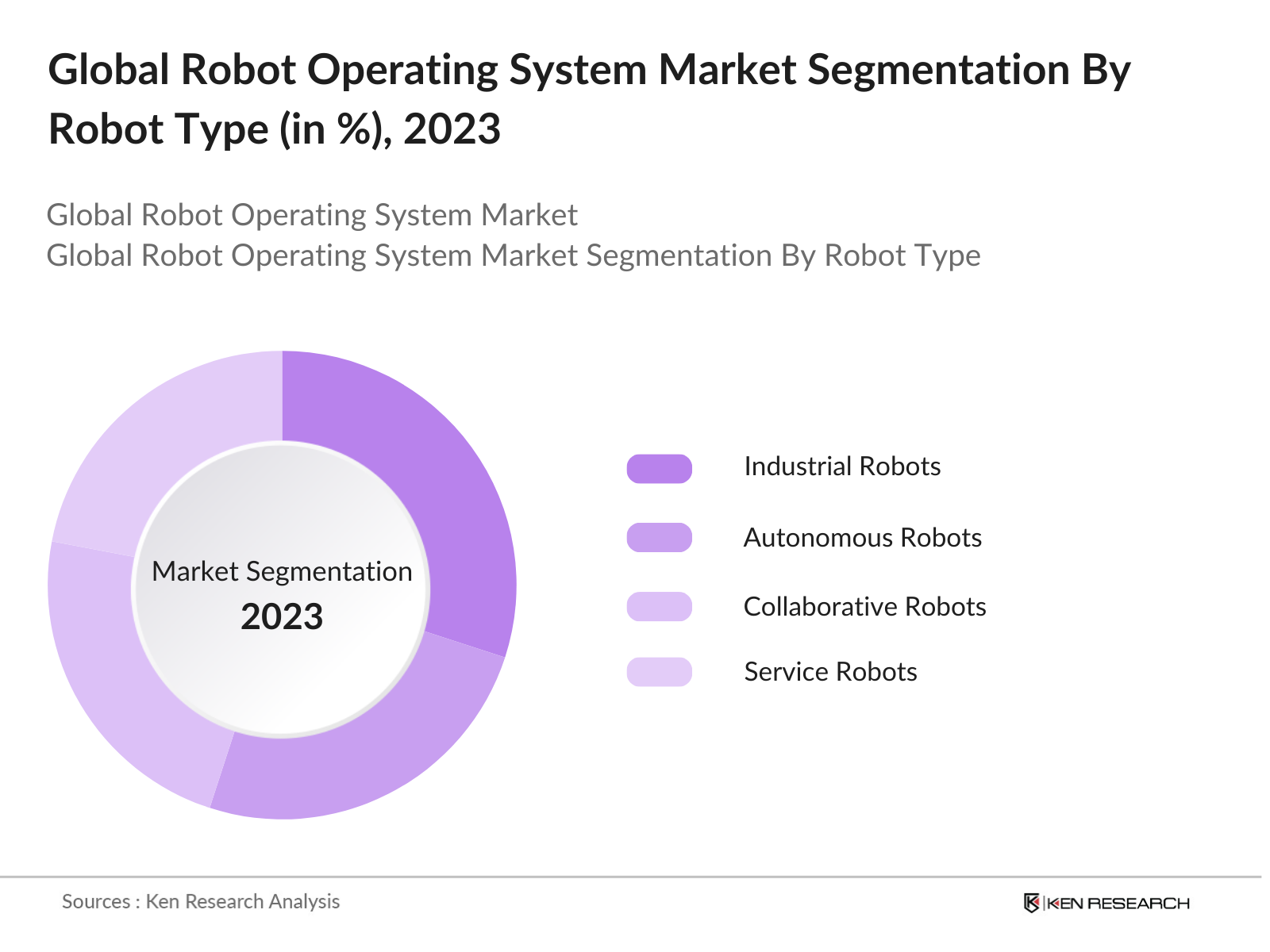
By Robot Type: The global ROS market is segmented by robot type into industrial robots, service robots, mobile robots, autonomous robots, and collaborative robots.
Collaborative robots, or "cobots," hold a dominant share in this segmentation due to their ability to work alongside humans in a variety of industries. The growing demand for flexible, efficient automation in the manufacturing and healthcare sectors, where human-robot collaboration is essential, has driven this segment's prominence. Cobots are being increasingly adopted in industries to enhance production efficiency while maintaining a safe working environment.
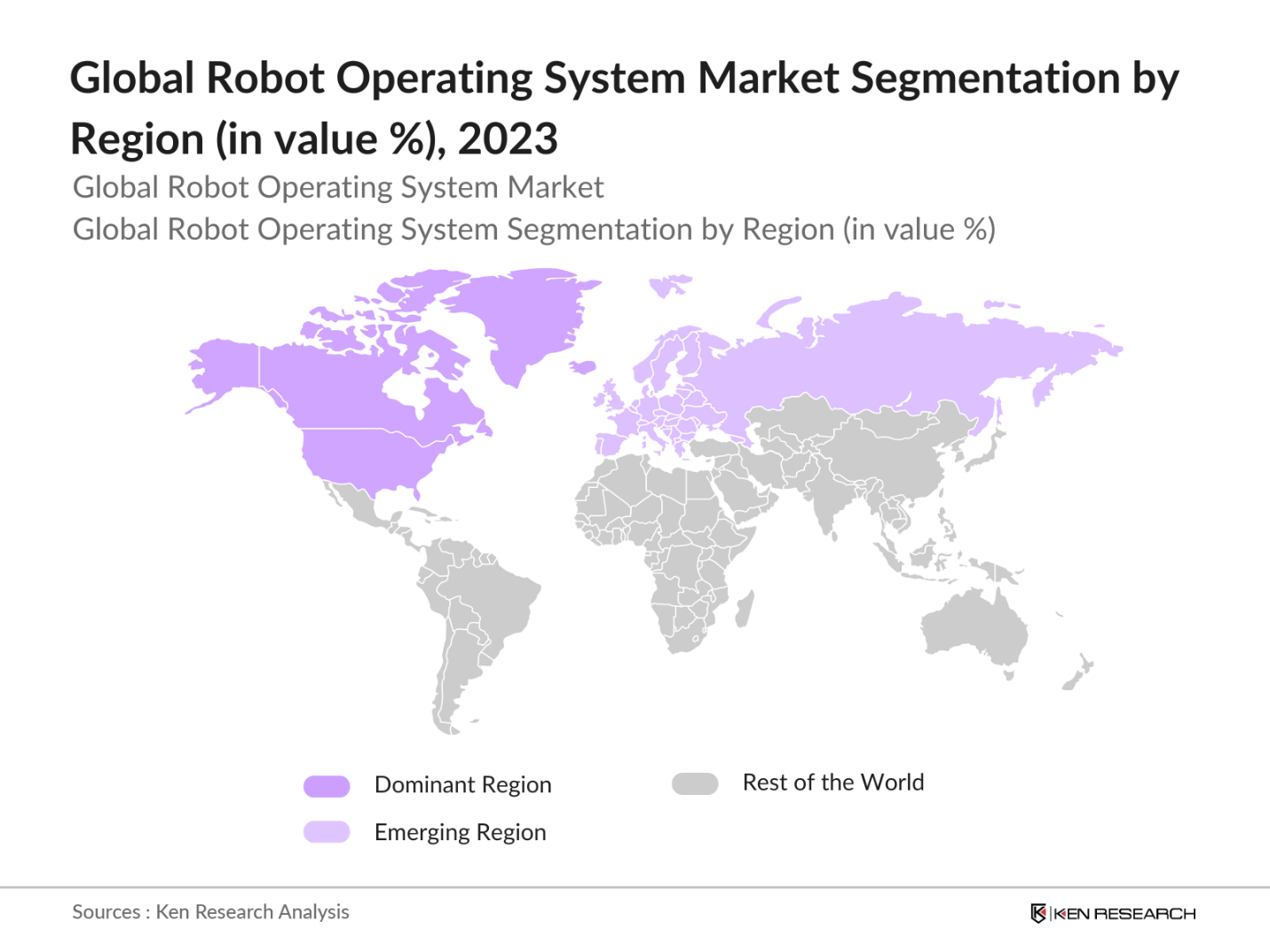
By Region: Regionally, the global ROS market is segmented into North America, Europe, Asia-Pacific, Latin America, and the Middle East & Africa.
North America dominates the market, driven by technological advancements, high investments in research and development, and the strong presence of key market players. The United States plays a leading role, with its established ecosystem for AI and robotics technologies. Asia-Pacific is the fastest-growing region due to the rise of industrial automation in countries like China, Japan, and South Korea, where industries are investing heavily in automation to enhance productivity.
By Industry Application:
The global ROS market is also segmented by industry application into manufacturing, healthcare, automotive, logistics, and agriculture.
The manufacturing industry dominates this segment due to the growing need for automation in production lines, quality control, and operational efficiency. The adoption of ROS in manufacturing is driven by its ability to streamline operations, reduce labor costs, and enhance productivity. Manufacturers are using ROS to automate repetitive tasks, allowing human workers to focus on more complex activities.
The global Robot Operating System (ROS) market is consolidated, with key players driving innovation through strategic partnerships, product developments, and acquisitions. The market is characterized by a strong presence of established companies as well as startups specializing in robotics. These companies focus on enhancing their product portfolios by integrating AI and machine learning technologies into their robotics solutions. Below are some of the major players dominating the ROS market. The ROS market features key players like ABB Ltd., FANUC Corporation, and Yaskawa Electric Corporation, who have consolidated their positions through continuous innovation and large-scale deployments of robotics in various industries. These companies leverage their expertise in automation and robotics to capture a significant market share.
|
Company |
Establishment Year |
Headquarters |
Revenue (USD) |
R&D Investment |
Global Presence |
Product Range |
Market Share (%) |
Employees |
Partnerships |
|
ABB Ltd. |
1988 |
Switzerland |
_ |
_ |
_ |
_ |
_ |
_ |
_ |
|
FANUC Corporation |
1972 |
Japan |
_ |
_ |
_ |
_ |
_ |
_ |
_ |
|
Yaskawa Electric Corp |
1915 |
Japan |
_ |
_ |
_ |
_ |
_ |
_ |
_ |
|
Universal Robots |
2005 |
Denmark |
_ |
_ |
_ |
_ |
_ |
_ |
_ |
|
Boston Dynamics |
1992 |
USA |
_ |
_ |
_ |
_ |
_ |
_ |
_ |
Over the next five years, the global Robot Operating System (ROS) market is expected to experience robust growth, driven by advancements in robotics technology, AI integration, and the increasing adoption of automation across various industries. The expansion of collaborative robotics and the rising demand for mobile robots in logistics and manufacturing sectors will contribute significantly to market growth. The growing focus on cloud-based robotics and the deployment of AI-driven robots for various industrial applications further strengthen the market outlook. The development of autonomous vehicles, coupled with the rising trend of Industry 4.0, will create additional opportunities for the ROS market. Furthermore, the healthcare sector will increasingly adopt ROS-based robots for surgical assistance, rehabilitation, and elderly care, adding a new dimension to the market.
|
Robot Type |
Industrial Robots Service Robots Mobile Robots Autonomous Robots Collaborative Robots |
|
Industry Application |
Manufacturing Healthcare Automotive Logistics Agriculture |
|
Technology |
Cloud Robotics Edge Computing AI and Machine Learning Integration 5G-Enabled Robotics Computer Vision |
|
Component |
Software Hardware |
|
Region |
North America Europe Asia-Pacific Latin America Middle East & Africa |
1.1. Definition and Scope
1.2. Market Taxonomy
1.3. Market Growth Rate
1.4. Market Segmentation Overview
2.1. Historical Market Size
2.2. Year-On-Year Growth Analysis
2.3. Key Market Developments and Milestones
3.1. Growth Drivers
3.1.1. Increasing Adoption of Automation
3.1.2. Technological Advancements in AI and Machine Learning
3.1.3. Expanding Industrial Applications
3.1.4. Growing Demand for Collaborative Robots
3.2. Market Challenges
3.2.1. High Initial Setup and Integration Costs
3.2.2. Security Concerns Related to Open-Source Platforms
3.2.3. Lack of Skilled Workforce
3.3. Opportunities
3.3.1. Expansion in Emerging Economies
3.3.2. Government Initiatives Supporting Robotics
3.3.3. Integration with Cloud and Edge Computing
3.4. Trends
3.4.1. Increased Integration of ROS in Healthcare Robotics
3.4.2. Adoption of ROS in Autonomous Vehicles
3.4.3. Open-Source Contributions and Ecosystem Development
3.5. Government Regulations
3.5.1. International Standards for Robotics and Automation
3.5.2. Robotics Safety Regulations
3.5.3. Policies Supporting AI and Robotics Innovation
3.6. SWOT Analysis
3.7. Stakeholder Ecosystem
3.8. Porters Five Forces Analysis
3.9. Competition Ecosystem
4.1. By Robot Type (In Value %)
4.1.1. Industrial Robots
4.1.2. Service Robots
4.1.3. Mobile Robots
4.1.4. Autonomous Robots
4.1.5. Collaborative Robots
4.2. By Industry Application (In Value %)
4.2.1. Manufacturing
4.2.2. Healthcare
4.2.3. Automotive
4.2.4. Logistics
4.2.5. Agriculture
4.3. By Technology (In Value %)
4.3.1. Cloud Robotics
4.3.2. Edge Computing
4.3.3. AI and Machine Learning Integration
4.3.4. 5G-Enabled Robotics
4.3.5. Computer Vision
4.4. By Component (In Value %)
4.4.1. Software
4.4.2. Hardware
4.5. By Region (In Value %)
4.5.1. North America
4.5.2. Europe
4.5.3. Asia-Pacific
4.5.4. Latin America
4.5.5. Middle East & Africa
5.1. Detailed Profiles of Major Companies
5.1.1. ABB Ltd.
5.1.2. FANUC Corporation
5.1.3. KUKA AG
5.1.4. Yaskawa Electric Corporation
5.1.5. Universal Robots
5.1.6. Rethink Robotics
5.1.7. Boston Dynamics
5.1.8. iRobot Corporation
5.1.9. Clearpath Robotics
5.1.10. Cyberdyne Inc.
5.1.11. Teradyne Inc.
5.1.12. Omron Adept Technologies
5.1.13. DJI Innovations
5.1.14. Microsoft Corporation
5.1.15. Amazon Robotics
5.2. Cross Comparison Parameters (Revenue, Market Share, Product Range, Global Presence, R&D Investment, Partnerships, Employees, Technology Integration)
5.3. Market Share Analysis
5.4. Strategic Initiatives
5.5. Mergers And Acquisitions
5.6. Investment Analysis
5.7. Venture Capital Funding
5.8. Government Grants
5.9. Private Equity Investments
6.1. International Robotics Standards
6.2. Compliance and Certification Requirements
6.3. Safety and Ethical Regulations
7.1. Future Market Size Projections
7.2. Key Factors Driving Future Market Growth
8.1. By Robot Type (In Value %)
8.2. By Industry Application (In Value %)
8.3. By Technology (In Value %)
8.4. By Component (In Value %)
8.5. By Region (In Value %)
9.1. TAM/SAM/SOM Analysis
9.2. Customer Cohort Analysis
9.3. Strategic Marketing Initiatives
9.4. White Space Opportunity Analysis
The initial phase involves mapping the ecosystem of the ROS market, identifying key variables such as technology adoption rates, industry penetration, and market dynamics. Secondary research from proprietary databases and credible sources was utilized to build the foundational data.
This phase compiles historical data to construct a comprehensive market analysis, including market segmentation and revenue projections. In-depth insights from industry reports and government publications were included to ensure accuracy.
Key hypotheses were formulated regarding market trends and growth drivers. These were validated through expert consultations, including interviews with industry professionals and company executives, to refine and corroborate the market data.
The final phase included synthesizing data from primary and secondary sources, combining market insights from key players, and verifying the information through direct consultations. The bottom-up approach was applied to finalize the data for accurate market estimation.
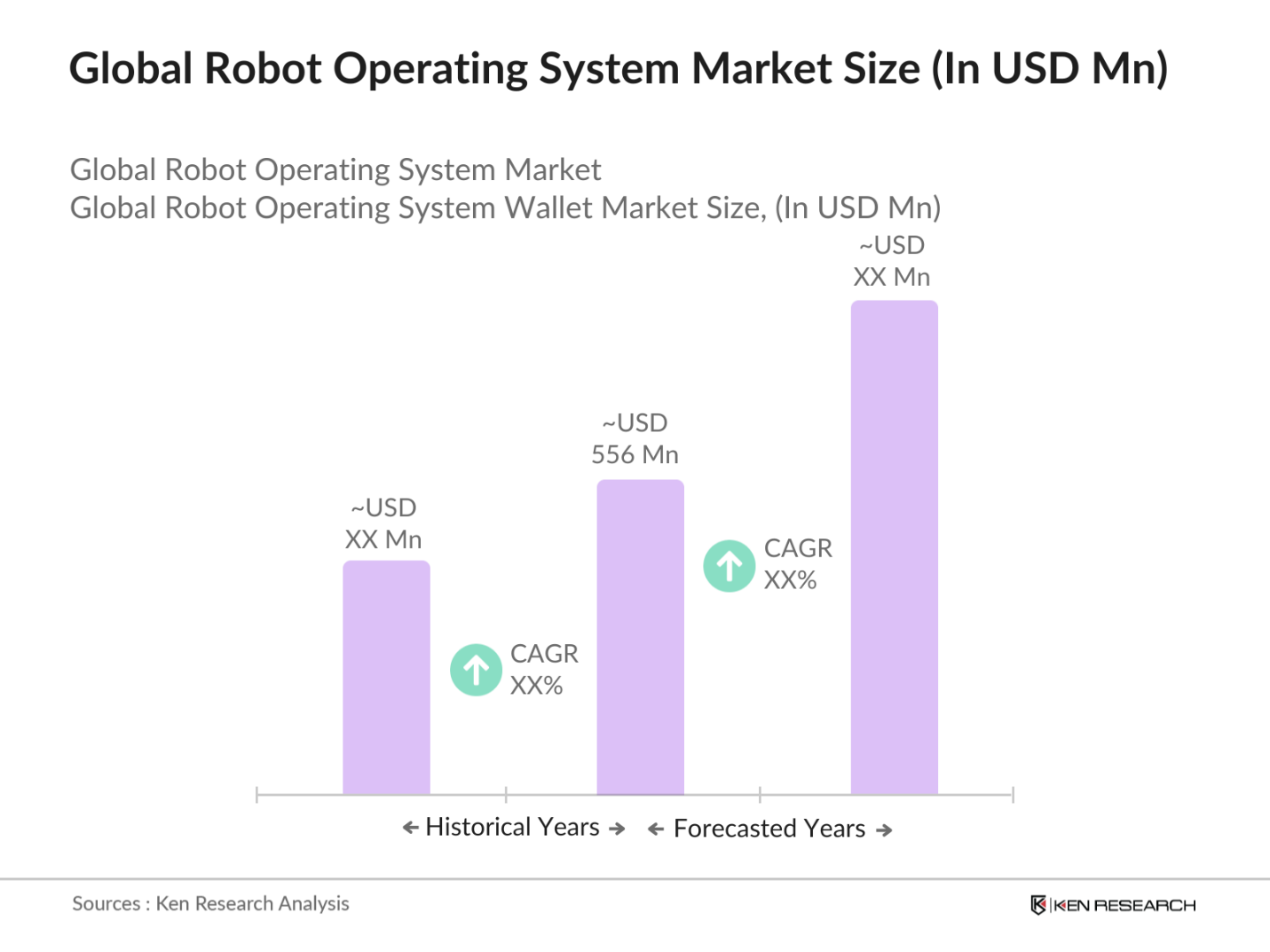
The global ROS market is valued at USD 556 million, driven by advancements in robotics, AI integration, and rising demand for automation across industries such as manufacturing and healthcare.
Key challenges include high integration costs, interoperability issues across different robotic platforms, and cybersecurity concerns, particularly due to the open-source nature of ROS.
Major players in the ROS market include ABB Ltd., FANUC Corporation, Yaskawa Electric Corporation, Boston Dynamics, and Universal Robots. These companies dominate due to their innovative solutions and strong R&D investments.
The growth of the ROS market is driven by the increasing adoption of collaborative robots, advancements in AI, and the expansion of automation in industries such as automotive, healthcare, and logistics.

What makes us stand out is that our consultants follows Robust, Refine and Result (RRR) methodology. i.e. Robust for clear definitions, approaches and sanity checking, Refine for differentiating respondents facts and opinions and Result for presenting data with story

We have set a benchmark in the industry by offering our clients with syndicated and customized market research reports featuring coverage of entire market as well as meticulous research and analyst insights.

While we don't replace traditional research, we flip the method upside down. Our dual approach of Top Bottom & Bottom Top ensures quality deliverable by not just verifying company fundamentals but also looking at the sector and macroeconomic factors.

With one step in the future, our research team constantly tries to show you the bigger picture. We help with some of the tough questions you may encounter along the way: How is the industry positioned? Best marketing channel? KPI's of competitors? By aligning every element, we help maximize success.

Our report gives you instant access to the answers and sources that other companies might choose to hide. We elaborate each steps of research methodology we have used and showcase you the sample size to earn your trust.

If you need any support, we are here! We pride ourselves on universe strength, data quality, and quick, friendly, and professional service.