















Global Rolling Stock Market Outlook to 2030
Region:Global
Author(s):Abhinav kumar
Product Code:KROD3862
December 2024
81
About the Report
Global Rolling Stock Market Overview
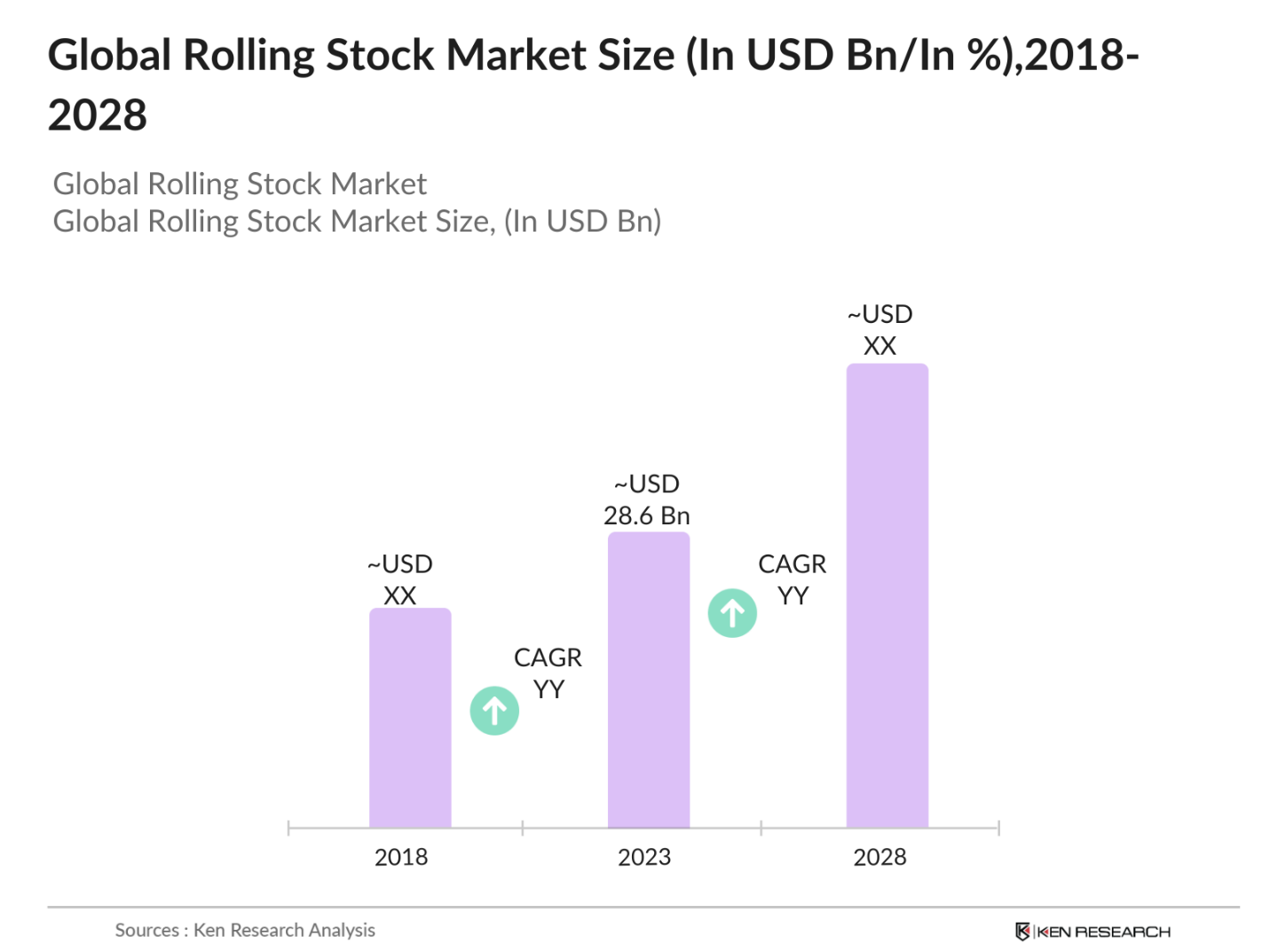
- The global rolling stock market is valued at USD 28 billion, driven by the growing demand for high-speed trains, metros, and freight transport solutions. This market's expansion is supported by rising infrastructure investments, urbanization, and increasing rail transport usage. Governments worldwide have initiated public-private partnerships to modernize railway networks and boost rolling stock production. Moreover, the ongoing adoption of hybrid and electric rolling stock aligns with global sustainability goals, further propelling the market's growth.
- Countries like China, Germany, and the United States dominate the rolling stock market due to their advanced railway infrastructure, strong manufacturing base, and significant government support. China's extensive high-speed rail network and its role as a leading rolling stock producer position it at the forefront of the market. Meanwhile, Germany's established engineering expertise and technological advancements in rail transport contribute to its dominance. The U.S., with its focus on freight transportation, further solidifies its leadership in the global market.
- In 2023, the European Union enacted new regulations under the General Product Safety Regulation (EU) 2023/988, which aims to improve product safety across multiple sectors, including rolling stock. This regulation primarily addresses general product safety. The regulation is set to take effect on December 13, 2024, and places the onus on manufacturers to ensure that their products are safe for consumers.
Global Rolling Stock Market Segmentation
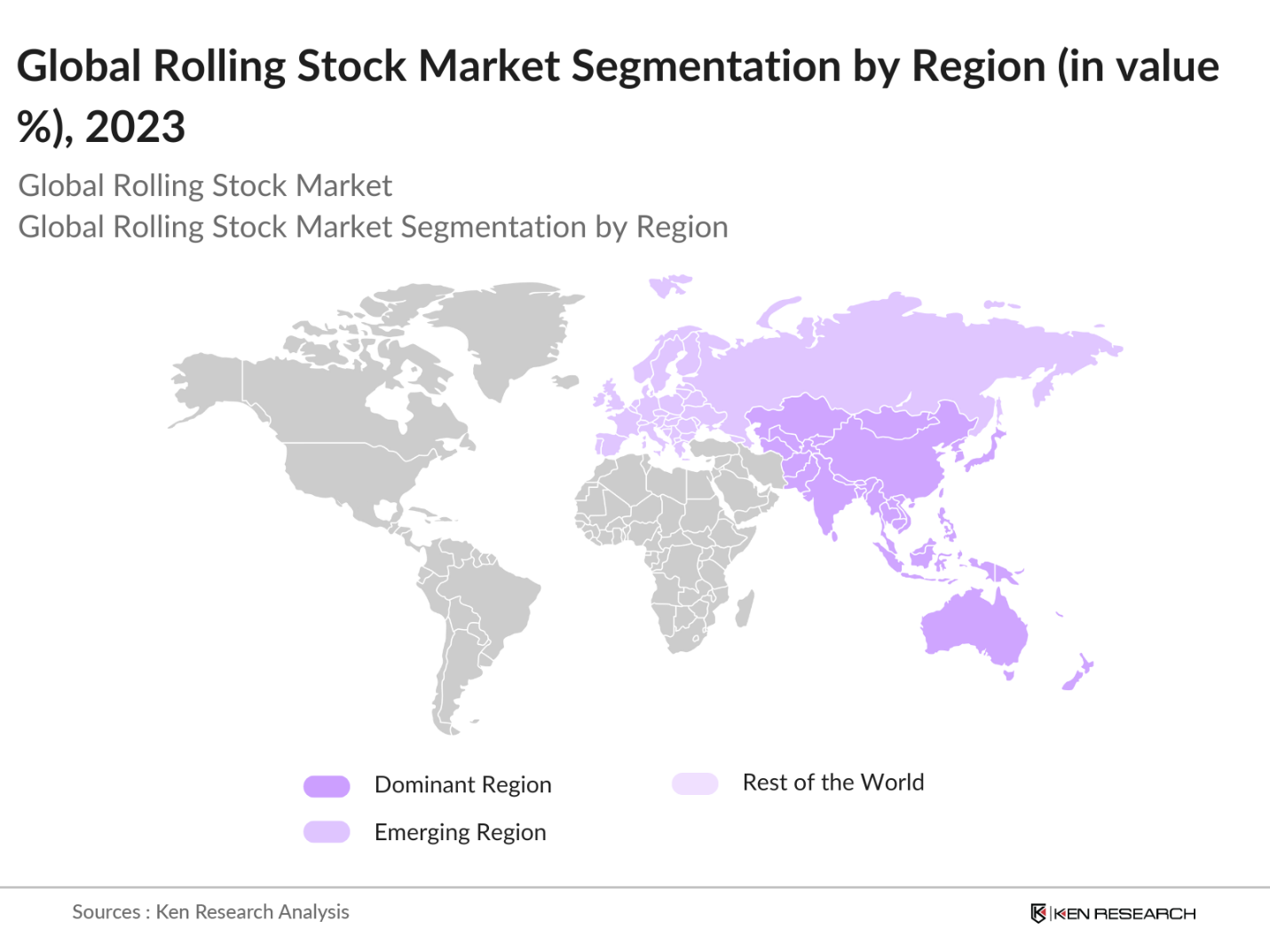
By Region: The global rolling stock market is segmented by region into North America, Europe, Asia Pacific, Latin America, and the Middle East & Africa. Asia Pacific holds the dominant market share due to the region's significant investments in railway infrastructure and growing demand for high-speed trains. China, India, and Japan are major contributors, with China's Belt and Road Initiative further enhancing its leadership. Moreover, Europe's focus on green transportation solutions has also positioned it as a major market player, especially in the adoption of electric trains.
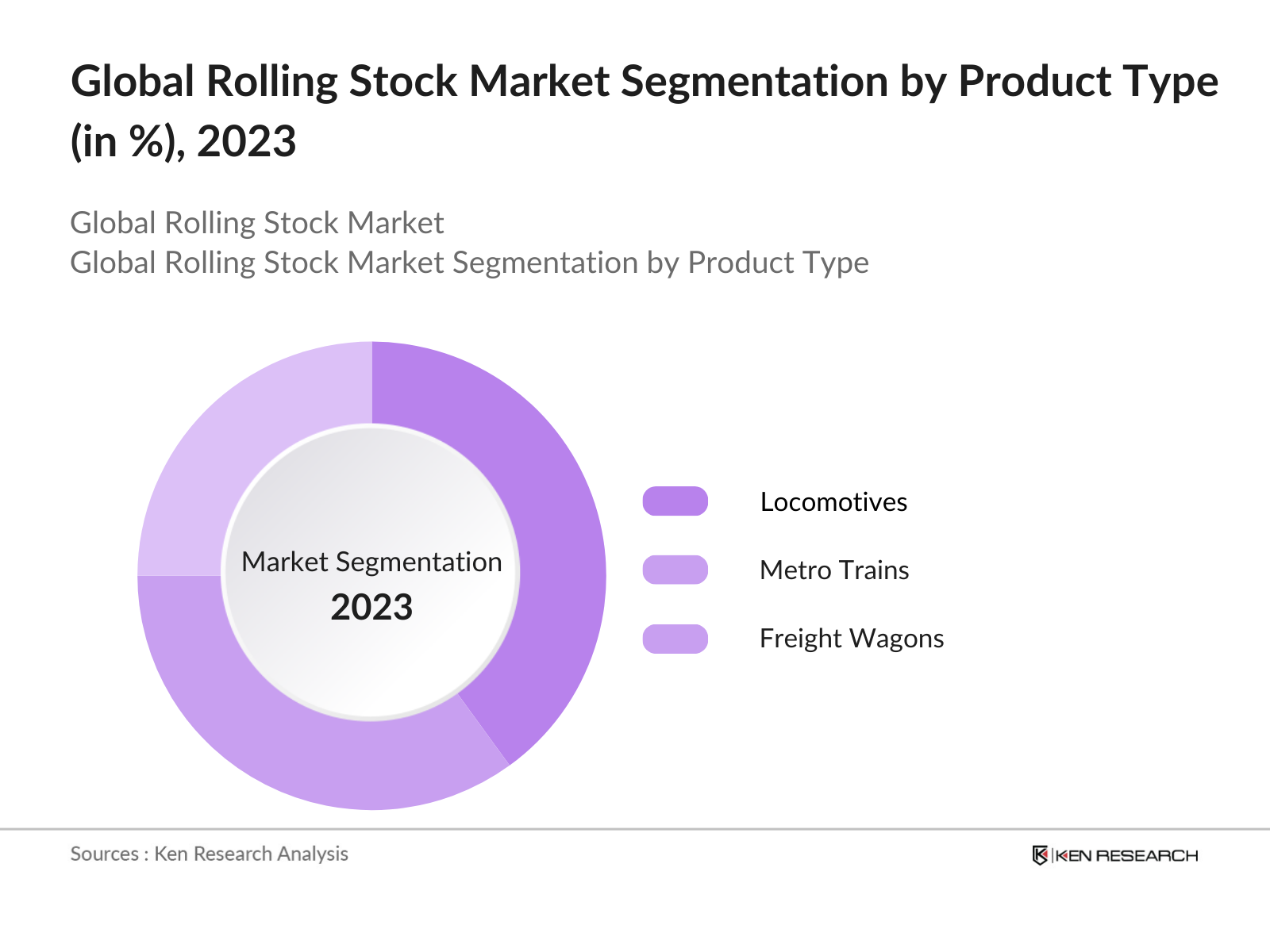
By Product Type: The global rolling stock market is segmented by product type into locomotives, metro trains, and freight wagons. Among these, locomotives hold the dominant market share due to their essential role in both passenger and freight transportation. Countries with extensive rail networks, such as China and India, heavily rely on locomotives to meet their growing transportation demands. Additionally, the modernization of old locomotives with more efficient, eco-friendly technologies has further solidified this segment's dominance in the market.
By Application: The market is segmented by application into passenger transport, freight transport, and maintenance and service operations. Passenger transport has emerged as the dominant sub-segment due to rapid urbanization and the increasing need for efficient mass transit solutions. Countries across Europe and Asia have heavily invested in metro and high-speed trains, which are used primarily for passenger transportation, thus giving this sub-segment a competitive edge in terms of market share.
Global Rolling Stock Market Competitive Landscape
The global rolling stock market is dominated by several key players, who have established themselves through technological innovation, extensive product portfolios, and strategic collaborations. Companies like CRRC Corporation, Siemens Mobility, and Bombardier Transportation have gained significant market traction by leveraging government partnerships and expanding their product offerings.
|
Company Name |
Establishment Year |
Headquarters |
Annual Revenue (USD Bn) |
Global Presence (No. of Countries) |
R&D Expenditure (USD Mn) |
Number of Employees |
Product Portfolio |
Partnerships & Collaborations |
|
CRRC Corporation |
2015 |
China |
15 |
- |
- |
- |
- |
- |
|
Siemens Mobility |
1847 |
Germany |
9 |
- |
- |
- |
- |
- |
|
Bombardier Transportation |
1942 |
Canada |
7 |
- |
- |
- |
- |
- |
|
Alstom |
1928 |
France |
8 |
- |
- |
- |
- |
- |
|
Kawasaki Heavy Industries |
1896 |
Japan |
10 |
- |
- |
- |
- |
- |
Global Rolling Stock Industry Analysis
Global Rolling Stock Market Growth Drivers
- Increasing Demand for High-Speed Trains: The demand for high-speed trains is experiencing a sharp increase due to global infrastructure investments. In 2022, China invested $105 billion into high-speed rail networks, boosting production of advanced rolling stock. Similarly, Europe allocated 26.2 billion to develop high-speed rail links as part of the Trans-European Transport Network (TEN-T) program. This development aligns with the growing need for faster and more efficient inter-city transport, with countries like Japan and France leading in high-speed train deployment. Public-private partnerships are accelerating technological advancements in these regions.
- Rise in Urbanization and Rail Transport Adoption: Global urbanization trends are driving rail transport adoption, particularly in Asia and Europe. According to the World Bank, 57% of the global population resided in urban areas by 2022, leading to increased rail transit use. Governments in emerging markets such as India allocated $30 billion toward urban rail infrastructure development between 2022-2024. Furthermore, European cities like Paris and Berlin are enhancing rail networks to manage urban mobility. These factors significantly increase the demand for rolling stock manufacturing.
- Government Support and Public-Private Partnerships: Governments globally are enhancing their rail networks with public-private partnerships (PPP) to expand and modernize rolling stock. For example, Indias rail modernization program, backed by a $100 billion PPP investment, aims to upgrade 58,000 kilometers of railways by 2025. The European Union, through its European Green Deal, allocated 1 trillion for sustainable transportation, with a significant portion directed toward rolling stock improvements. Government initiatives like these ensure increased production and demand for advanced rail systems.
Global Rolling Stock Market Challenges
- High Manufacturing and Maintenance Costs: Manufacturing and maintaining modern rolling stock require significant investments. In 2023, the average cost to produce a high-speed train unit ranged between $20 million and $35 million, depending on the region and specifications. Additionally, maintenance costs are high, with developed countries like Germany spending approximately 13 billion annually on rail maintenance. These high costs strain manufacturers and operators, particularly in emerging markets, limiting adoption rates despite growing demand.
- Stringent Government Regulations: Rolling stock manufacturers face strict compliance requirements. For example, the European Union's Railway Safety Directive mandates high safety and environmental standards, pushing production costs higher. In the United States, the Federal Railroad Administration (FRA) introduced stringent regulations for rolling stock related to safety and energy efficiency in 2023. These compliance costs, combined with evolving emission standards globally, create significant barriers for new entrants and increase production lead times for manufacturers.
Global Rolling Stock Market Future Outlook
The global rolling stock market is expected to continue growing steadily, driven by a combination of factors such as increasing government investments in rail infrastructure, the demand for eco-friendly transportation solutions, and technological advancements in autonomous and smart trains. The introduction of electric and hybrid rolling stock is expected to reshape the industry as global stakeholders increasingly prioritize sustainability. The Asia Pacific region, particularly China and India, is anticipated to play a crucial role in shaping the future of the market, supported by large-scale infrastructure projects and urbanization.
Market Opportunities
- Growing Demand for Eco-Friendly and Smart Rolling Stock: There is a growing demand for eco-friendly rolling stock, with governments setting targets to reduce emissions in the transport sector. According to the International Energy Agency (IEA), the global stock of electric trains increased to 285,000 units in 2023. Countries like France and the UK have invested heavily in hybrid and electric rolling stock, reducing carbon emissions by an estimated 1.2 million tons annually. This demand for sustainable transportation is driving new opportunities for rolling stock manufacturers.
- Expansion in Emerging Markets (Asia Pacific, Africa): Emerging markets are rapidly expanding their rail networks, presenting significant opportunities for rolling stock manufacturers. Asia Pacific, led by countries like India, Japan, and China, saw a 20% increase in rail investment between 2022 and 2023. Africa has also initiated projects worth $5 billion for rail expansions, particularly in Kenya and Nigeria. These expansions are fueled by urbanization and government funding, creating a substantial market for rolling stock, especially for low-cost, high-capacity models.
Scope of the Report
|
By Product Type |
Locomotives High-Speed Trains Metro Trains Freight Wagons |
|
By Application |
Passenger Transport Freight Transport Maintenance and Service Operations |
|
By Technology |
Electric Rolling Stock Diesel Rolling Stock Hybrid Rolling Stock |
|
By Component Type |
Engines Traction Motors Bogies Wheelsets |
|
By Region |
North America Europe Asia Pacific Latin America Middle East & Africa |
Products
Key Target Audience Organizations and Entities Who Can Benefit by Subscribing to This Report:
Rolling Stock Companies
Railway Infrastructure Companies
Government and Regulatory Bodies (International Railway Union, National Rail Authorities)
Private Equity and Venture Capital Firms
Railway Operators and Service Companies
Locomotive Component Industries
Public-Private Partnerships Companies
Companies
Players Mentioned in the Report:
CRRC Corporation
Siemens Mobility
Bombardier Transportation
Alstom
Kawasaki Heavy Industries
Stadler Rail AG
Hitachi Rail
Hyundai Rotem
Talgo
Transmashholding
Table of Contents
1. Global Rolling Stock Manufacturers Market Overview
1.1 Definition and Scope
1.2 Market Taxonomy
1.3 Market Growth Rate
1.4 Market Segmentation Overview
2. Global Rolling Stock Manufacturers Market Size (In USD Bn)
2.1 Historical Market Size
2.2 Year-on-Year Growth Analysis
2.3 Key Market Developments and Milestones
3. Global Rolling Stock Manufacturers Market Analysis
3.1 Growth Drivers (Technological Advancements, Infrastructure Investments)
3.1.1 Increasing Demand for High-Speed Trains
3.1.2 Rise in Urbanization and Rail Transport Adoption
3.1.3 Government Support and Public-Private Partnerships
3.2 Market Challenges (Regulatory Compliance, Technological Barriers)
3.2.1 High Manufacturing and Maintenance Costs
3.2.2 Stringent Government Regulations
3.2.3 Complex Supply Chain and Sourcing Issues
3.3 Opportunities (Emerging Economies, Sustainable Transportation)
3.3.1 Growing Demand for Eco-Friendly and Smart Rolling Stock
3.3.2 Expansion in Emerging Markets (Asia Pacific, Africa)
3.3.3 Investment in Digital and Autonomous Train Technologies
3.4 Trends (Innovation and Sustainability Focus)
3.4.1 Increasing Adoption of Hybrid and Electric Rolling Stock
3.4.2 Technological Integration in Smart Trains
3.4.3 Autonomous and Digital Railway Solutions
3.5 Government Regulations (Emission Standards, Safety Protocols)
3.5.1 Global Regulatory Standards for Rolling Stock Manufacturing
3.5.2 Railway Safety and Emission Reduction Initiatives
3.5.3 International Trade Policies and Export Regulations
3.6 SWOT Analysis
3.7 Stakeholder Ecosystem (Rolling Stock Manufacturers, Rail Operators, Government)
3.8 Porters Five Forces (Competitive Rivalry, Threat of New Entrants, Supplier Power)
3.9 Competitive Ecosystem
4. Global Rolling Stock Manufacturers Market Segmentation
4.1 By Product Type (In Value %)
4.1.1 Locomotives
4.1.2 High-Speed Trains
4.1.3 Metro Trains
4.1.4 Freight Wagons
4.2 By Application (In Value %)
4.2.1 Passenger Transport
4.2.2 Freight Transport
4.2.3 Maintenance and Service Operations
4.3 By Technology (In Value %)
4.3.1 Electric Rolling Stock
4.3.2 Diesel Rolling Stock
4.3.3 Hybrid Rolling Stock
4.4 By Component Type (In Value %)
4.4.1 Engines
4.4.2 Traction Motors
4.4.3 Bogies
4.4.4 Wheelsets
4.5 By Region (In Value %)
4.5.1 North America
4.5.2 Europe
4.5.3 Asia Pacific
4.5.4 Latin America
4.5.5 Middle East & Africa
5. Global Rolling Stock Manufacturers Market Competitive Analysis
5.1 Detailed Profiles of Major Companies
5.1.1 Alstom
5.1.2 Bombardier Transportation
5.1.3 Siemens Mobility
5.1.4 CRRC Corporation Limited
5.1.5 Kawasaki Heavy Industries
5.1.6 Hyundai Rotem
5.1.7 Stadler Rail AG
5.1.8 Hitachi Rail
5.1.9 Talgo
5.1.10 Transmashholding
5.1.11 General Electric Transportation
5.1.12 CAF (Construcciones y Auxiliar de Ferrocarriles)
5.1.13 Wabtec Corporation
5.1.14 Toshiba Infrastructure Systems & Solutions Corporation
5.1.15 Trinity Industries
5.2 Cross Comparison Parameters (Annual Revenue, Global Presence, Product Portfolio, Strategic Partnerships, No. of Employees, R&D Investments, Digital Innovation, Manufacturing Capacity)
5.3 Market Share Analysis
5.4 Strategic Initiatives
5.5 Mergers and Acquisitions
5.6 Investment Analysis
5.7 Private Equity and Venture Capital Involvement
5.8 Government Subsidies and Grants
6. Global Rolling Stock Manufacturers Market Regulatory Framework
6.1 International Safety and Emission Standards
6.2 Railway Certification Requirements
6.3 Environmental Impact Regulations
6.4 Railway Development Policies by Region
7. Global Rolling Stock Manufacturers Future Market Size (In USD Bn)
7.1 Future Market Size Projections
7.2 Key Factors Driving Future Market Growth
8. Global Rolling Stock Manufacturers Future Market Segmentation
8.1 By Product Type (In Value %)
8.2 By Application (In Value %)
8.3 By Technology (In Value %)
8.4 By Component Type (In Value %)
8.5 By Region (In Value %)
9. Global Rolling Stock Manufacturers Market Analysts Recommendations
9.1 TAM/SAM/SOM Analysis
9.2 Customer Cohort Analysis
9.3 Marketing Initiatives
9.4 White Space Opportunity Analysis
Disclaimer
Contact Us
Research Methodology
Step 1: Identification of Key Variables
This step involves identifying key stakeholders, including manufacturers, government bodies, and operators within the rolling stock industry. Extensive desk research was performed using proprietary databases and secondary sources to map the industry's critical influencing factors.
Step 2: Market Analysis and Construction
In this phase, historical data related to market size, production, and regional demand were analyzed. Key parameters such as market penetration and sales volume were measured to understand the rolling stock industry's growth trajectory over the years.
Step 3: Hypothesis Validation and Expert Consultation
Industry experts were consulted via in-depth interviews to validate market data and trends. This helped refine projections and corroborated data collected from secondary sources.
Step 4: Research Synthesis and Final Output
After gathering and analyzing market data, insights from rolling stock manufacturers and industry experts were synthesized to ensure comprehensive and reliable research findings, which form the basis of the final report.
Frequently Asked Questions
01. How big is the Global Rolling Stock Market?
The global rolling stock market is valued at USD 28 billion, driven by the rise in rail transport solutions and significant infrastructure investments worldwide.
02. What are the key challenges in the Global Rolling Stock Market?
Challenges include high manufacturing and maintenance costs, stringent government regulations, and a complex supply chain that affects production efficiency.
03. Who are the major players in the Global Rolling Stock Market?
Major players include CRRC Corporation, Siemens Mobility, Bombardier Transportation, Alstom, and Kawasaki Heavy Industries.
04. What are the growth drivers of the Global Rolling Stock Market?
Growth is driven by increasing demand for high-speed trains, government support for sustainable rail solutions, and the growing need for freight transportation.
05. What is the future outlook for the Global Rolling Stock Market?
The market is expected to grow steadily, with a focus on technological advancements, eco-friendly rolling stock, and large-scale infrastructure projects in emerging economies.
Why Buy From Us?

What makes us stand out is that our consultants follows Robust, Refine and Result (RRR) methodology. i.e. Robust for clear definitions, approaches and sanity checking, Refine for differentiating respondents facts and opinions and Result for presenting data with story

We have set a benchmark in the industry by offering our clients with syndicated and customized market research reports featuring coverage of entire market as well as meticulous research and analyst insights.

While we don't replace traditional research, we flip the method upside down. Our dual approach of Top Bottom & Bottom Top ensures quality deliverable by not just verifying company fundamentals but also looking at the sector and macroeconomic factors.

With one step in the future, our research team constantly tries to show you the bigger picture. We help with some of the tough questions you may encounter along the way: How is the industry positioned? Best marketing channel? KPI's of competitors? By aligning every element, we help maximize success.

Our report gives you instant access to the answers and sources that other companies might choose to hide. We elaborate each steps of research methodology we have used and showcase you the sample size to earn your trust.

If you need any support, we are here! We pride ourselves on universe strength, data quality, and quick, friendly, and professional service.