Ken Research Logo

Global Rubber Additives Market Outlook to 2030

Region:Global

Author(s):Sanjeev

Product Code:KROD1982

Published On

November 2024

Total pages

96

About the Report

Global Rubber Additives Market Overview

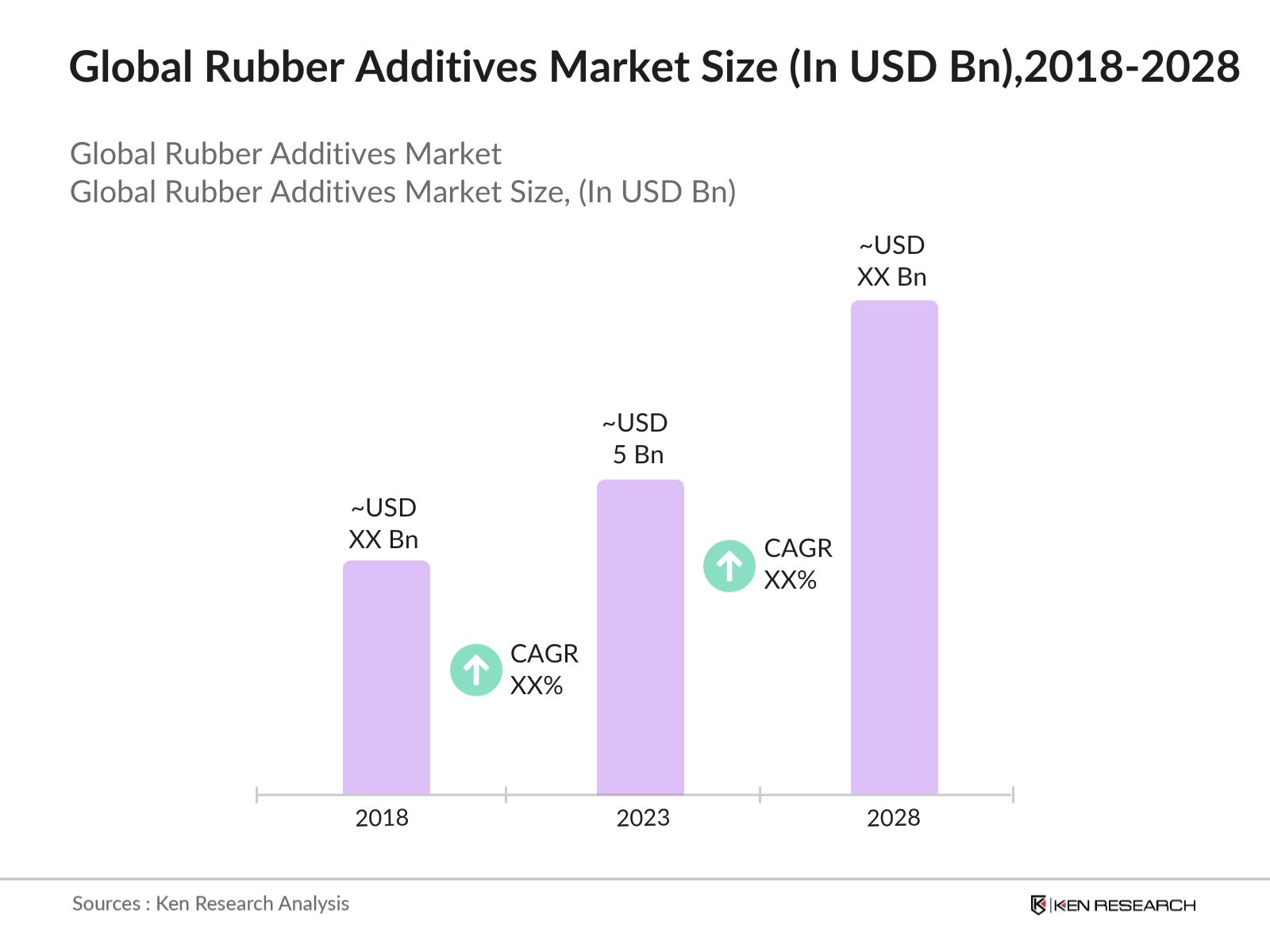
  • The Global Rubber Additives Market was valued at USD 5 billion in 2023, driven by increasing demand from key industries such as automotive, construction, and industrial sectors. The market is segmented into accelerators, antidegradants, and processing aids, with accelerators dominating due to their crucial role in the vulcanization process.
  • Major players in the Global rubber additives market include Lanxess AG, Eastman Chemical Company, Solvay S.A., NOCIL Limited, and Kumho Petrochemical. These companies lead the market with advanced product portfolios focused on sustainability and regulatory compliance. Eastman Chemical Company, in particular, stands out with its eco-friendly antidegradants launched in 2023.
  • In Asia-Pacific, China and India are key contributors due to the strong demand for rubber in their automotive industries. North America and Europe follow, focusing on the adoption of green additives in compliance with stringent environmental regulations.
  • In 2023, Solvay S.A. introduced a line of sustainable rubber accelerators targeting the European market, responding to the increasing demand for greener rubber manufacturing processes.

lobal Rubber Additives Market Size

Global Rubber Additives Market Segmentation

The Global Rubber Additives Market can be segmented by product type, end-use industry, and region:
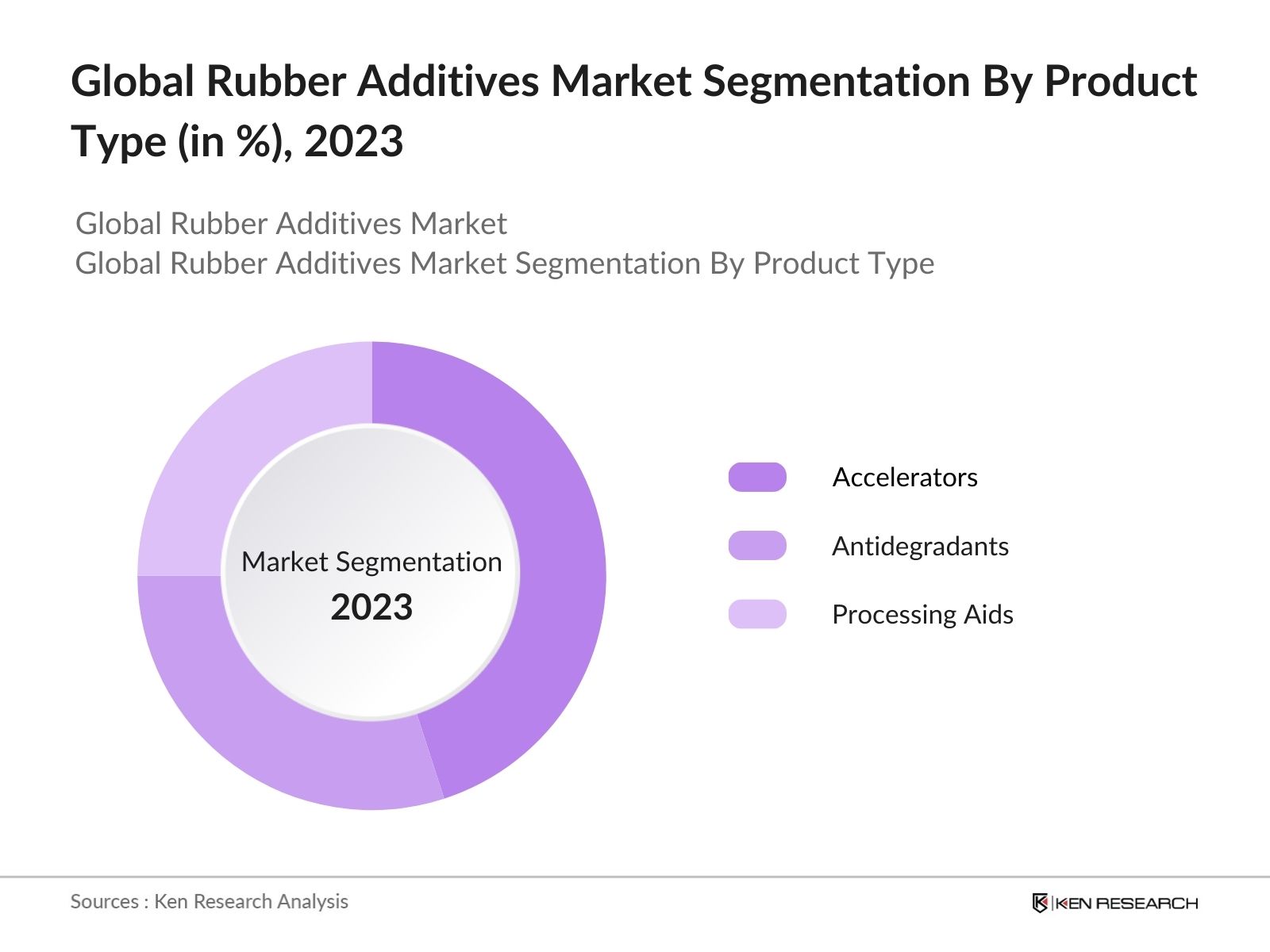
  • By Product Type: The market is segmented into accelerators, antidegradants, and processing aids. In 2023, accelerators were the dominant product type due to their essential role in the vulcanization process, which improves rubber elasticity and durability. Antidegradants are gaining traction for their ability to protect rubber from oxidation, heat, and ozone damage.

Global Rubber Additives Market Segmentation

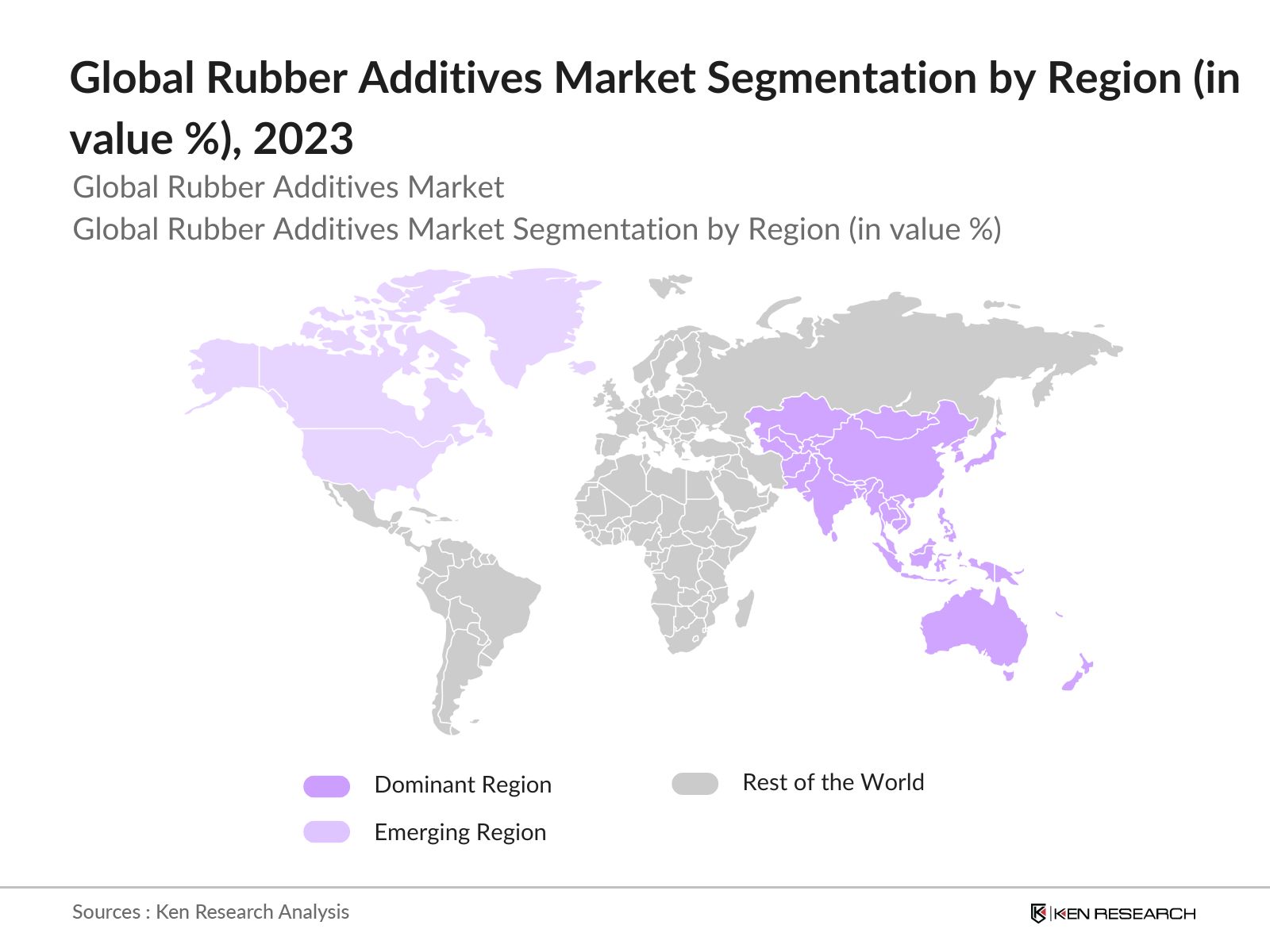
  • By Region: The market is segmented regionally into North America, Europe, Asia-Pacific, and Rest of the World. In 2023, Asia-Pacific led the market, driven by high demand from China and India. Europe and North America are key markets for sustainable additives, driven by regulatory requirements and a focus on reducing the environmental impact of rubber production.

Global Rubber Additives Market Segmentation

  • By End-Use Industry: The market is segmented into automotive, construction, and industrial sectors. The automotive sector accounted for the largest market share in 2023 due to the high consumption of rubber in tire manufacturing. The construction sector also saw significant growth, driven by infrastructure projects globally, while the industrial segment benefited from rising demand for durable rubber products.

Global Rubber Additives Market Competitive Landscape

Company

Establishment Year

Headquarters

Lanxess AG

2004

Cologne, Germany

Eastman Chemical Company

1920

Kingsport, USA

Solvay S.A.

1863

Brussels, Belgium

NOCIL Limited

1961

Mumbai, India

Kumho Petrochemical

1970

Seoul, South Korea

  • Lanxess AG: In 2023, Lanxess AG launched a new line of low-carbon footprint accelerators aimed at reducing emissions in rubber manufacturing. This launch strengthens the companys position as a leader in sustainable rubber additives, catering to the increasing demand from the automotive and construction sectors. The new product line aligns with global trends toward eco-friendly solutions and supports Lanxess's long-term sustainability goals.
  • Eastman Chemical Company: In 2023, Eastman Chemical expanded its portfolio by introducing a new range of processing aids designed to lower volatile organic compound (VOC) emissions during rubber manufacturing. This product innovation addresses the growing regulatory pressures for cleaner production methods and positions Eastman as a leader in environmentally conscious rubber additive solutions, meeting both industrial and sustainability needs.

Global Rubber Additives Market Analysis

Market Growth Drivers:

  • Increasing Demand in the Automotive Sector: In 2023, global automotive production reached 89 million units, with emerging markets such as China and India contributing significantly to this growth. The demand for rubber additives, particularly in tire manufacturing, has risen in parallel, with over 1.5 billion tires produced globally in 2023.
  • Environmental Regulations: Governments worldwide have tightened emissions regulations, particularly in Europe and North America. In 2023, the European Union set new standards aimed at reducing industrial carbon emissions by 55 million metric tons by 2030. This has led to increased development of eco-friendly rubber additives, with global spending on sustainable manufacturing solutions exceeding USD 150 billion.
  • Growth in Construction Activities: Rising infrastructure development, particularly in emerging economies, has fueled demand for rubber products in construction applications. In 2023, global construction spending reached USD 12 trillion, with a significant portion allocated to projects that require high-performance rubber materials, such as sealants and insulation. This has boosted demand for rubber additives that enhance material strength and longevity in harsh environments.

Market Challenges:

  • Rising Raw Material Costs: The rising costs of raw materials, particularly petroleum-based chemicals and specialty chemicals, are posing challenges to rubber additive manufacturers. In 2023, global oil prices fluctuated, leading to increased production costs, which in turn has driven up product prices. This could potentially impact manufacturers' margins and pricing strategies, particularly in the price-sensitive automotive and industrial sectors.
  • Regulatory Constraints: The market is subject to stringent environmental regulations regarding emissions, safety standards, and chemical usage. Compliance with these regulations is costly and time-consuming, particularly in regions such as Europe and North America. Smaller manufacturers, in particular, may struggle to meet these requirements, as extensive testing and certification are required to ensure products align with eco-friendly standards.

Government Initiatives

  • European Unions Circular Economy Action Plan: The European Union has set a budget of EUR 10 billion to support sustainable manufacturing practices under its Circular Economy Action Plan. This initiative, which aims to reduce waste and promote recycling in the rubber industry, expects to recycle over 5 million tons of rubber by 2030. The plan is backed by data from the European Commission, highlighting its goal to make industries more resource-efficient by 2025.
  • Japans Green Innovation Fund: In 2023, Japan committed JPY 2 trillion (approximately USD 18 billion) through its Green Innovation Fund, aimed at reducing greenhouse gas emissions and fostering the development of sustainable materials, including rubber additives. The initiative seeks to reduce Japans industrial emissions by 60 million metric tons by 2030, as per data from Japans Ministry of Economy, Trade, and Industry.

Global Rubber Additives Market Future Market Outlook

The Global Rubber Additives Market is expected to experience steady growth, driven by demand from the automotive sector, innovations in sustainable additives, and stringent regulatory frameworks aimed at reducing the environmental impact of rubber manufacturing.

Future Market Trends:

Adoption of Sustainable Rubber Additives: As industries worldwide focus on sustainability, the demand for eco-friendly and bio-based rubber additives is expected to rise. These additives reduce the environmental impact of rubber manufacturing by enhancing recyclability and reducing emissions, aligning with global green initiatives and consumer preference for sustainable products.

Integration of Smart Materials: The development of smart rubber materials with self-healing and enhanced performance properties is anticipated to grow. These materials, which can repair themselves after damage or adjust properties based on environmental conditions, are expected to gain traction in industries such as automotive and aerospace, where durability is critical.

Scope of the Report

By Region

North America

Europe

Asia Pacific

Latin America

Middle East & Africa

By Application

Tires

Non-Tire Automotive

Industrial Products

Consumer Products

By Product Type

Antioxidants

Accelerators

Processing Aids

Antidegradants

By End-User

Automotive

Industrial

Consumer Goods

Construction

Products

Key Target Audience Organizations and Entities Who Can Benefit by Subscribing to This Report:

  • Banks and Financial Institutions

  • Government and Regulatory Bodies (MIIT, METI, MoEFCC, BMU)

  • Rubber Additive Manufacturers

  • Automotive and Industrial Manufacturers

  • E-commerce Companies

  • Rubber Product Development Firms

  • Industrial Rubber Supply Chains

  • Environmental Organizations

  • Investment Firms and Venture Capitalist Firms


Time Period Captured in the Global Rubber Additives Market Report:

  • Historical Period: 2018-2023

  • Base Year: 2023

  • Forecast Period: 2023-2028

Companies

Players Mentioned in the Global Rubber Additives Market Report:

  • Lanxess AG

  • Eastman Chemical Company

  • Solvay S.A.

  • NOCIL Limited

  • Kumho Petrochemical

  • BASF SE

  • AkzoNobel N.V.

  • Behn Meyer Group

  • Shandong Yanggu Huatai Chemical Co. Ltd.

  • Sennics Co. Ltd.

  • Arkema Group

  • China Petroleum & Chemical Corporation (Sinopec)

  • Addivant USA LLC

  • Sumitomo Chemical Co., Ltd.

  • Emerald Performance Materials LLC

Table of Contents

1. Global Rubber Additives Market Overview

1.1. Definition and Scope

1.2. Market Taxonomy

1.3. Market Growth Rate

1.4. Market Segmentation Overview

2. Global Rubber Additives Market Size (in USD Bn), 2018-2023

2.1. Historical Market Size

2.2. Year-on-Year Growth Analysis

2.3. Key Market Developments and Milestones

3. Global Rubber Additives Market Analysis

3.1. Growth Drivers

3.1.1. Increasing Demand in the Automotive Sector

3.1.2. Environmental Regulations

3.1.3. Growth in Construction Activities

3.2. Restraints

3.2.1. Rising Raw Material Costs

3.2.2. Regulatory Constraints

3.3. Opportunities

3.3.1. Adoption of Sustainable Additives

3.3.2. Technological Advancements

3.3.3. Expansion into Emerging Markets

3.4. Trends

3.4.1. Increased Focus on Green Additives

3.4.2. Integration of Smart Materials

3.4.3. Use of Nanotechnology in Rubber Additives

3.5. Government Regulation

3.5.1. European Unions Circular Economy Action Plan

3.5.2. Japans Green Innovation Fund

3.6. SWOT Analysis

3.7. Stakeholder Ecosystem

3.8. Competitive Ecosystem

4. Global Rubber Additives Market Segmentation, 2023

4.1. By Product Type (in Value %)

4.1.1. Antioxidants

4.1.2. Accelerators

4.1.3. Processing Aids

4.1.4. Antidegradants

4.2. By Application (in Value %)

4.2.1. Tires

4.2.2. Non-Tire Automotive

4.2.3. Industrial Products

4.2.4. Consumer Products

4.3. By End-User (in Value %)

4.3.1. Automotive

4.3.2. Industrial

4.3.3. Consumer Goods

4.3.4. Construction

4.4. By Region (in Value %)

4.4.1. North America

4.4.2. Europe

4.4.3. Asia Pacific

4.4.4. Latin America

4.4.5. Middle East & Africa

5. Global Rubber Additives Market Cross Comparison

5.1. Detailed Profiles of Major Companies

5.1.1. Lanxess AG

5.1.2. Eastman Chemical Company

5.1.3. Solvay S.A.

5.1.4. NOCIL Limited

5.1.5. Kumho Petrochemical Co.

5.1.6. BASF SE

5.1.7. AkzoNobel N.V.

5.1.8. Behn Meyer Group

5.1.9. Shandong Yanggu Huatai Chemical Co., Ltd.

5.1.10. Sennics Co. Ltd.

5.1.11. Arkema Group

5.1.12. China Petroleum & Chemical Corporation (Sinopec)

5.1.13. Addivant USA LLC

5.1.14. Sumitomo Chemical Co., Ltd.

5.1.15. Emerald Performance Materials LLC

5.2. Cross Comparison Parameters (No. of Employees, Headquarters, Inception Year, Revenue)

6. Global Rubber Additives Market Competitive Landscape

6.1. Market Share Analysis

6.2. Strategic Initiatives

6.3. Mergers and Acquisitions

6.4. Investment Analysis

6.4.1. Venture Capital Funding

6.4.2. Government Grants

6.4.3. Private Equity Investments

7. Global Rubber Additives Market Regulatory Framework

7.1. Environmental Standards

7.2. Compliance Requirements

7.3. Certification Processes

8. Global Rubber Additives Market Future Market Size (in USD Bn), 2023-2028

8.1. Future Market Size Projections

8.2. Key Factors Driving Future Market Growth

9. Global Rubber Additives Market Future Market Segmentation, 2028

9.1. By Product Type (in Value %)

9.2. By Application (in Value %)

9.3. By Region (in Value %)

9.4. By End-User (in Value %)

10. Global Rubber Additives Market Analysts Recommendations

10.1. TAM/SAM/SOM Analysis

10.2. Customer Cohort Analysis

10.3. Marketing Initiatives

10.4. White Space Opportunity Analysis

11. Disclaimer

12. Contact Us

Research Methodology


Step 1: Identifying Key Variables

  • We begin by referencing multiple secondary and proprietary databases to conduct desk research. This includes gathering industry-level information on market drivers, challenges, key players, consumer behavior, and technological advancements in rubber additives. We also assess regulatory impacts and market dynamics specific to the global rubber additives market.

Step 2: Market Building

  • We collect historical data on market size, growth rates, product segmentation (antioxidants, accelerators, and processing aids), and the distribution of applications (tires, non-tire automotive, and industrial products). We also analyze market share and revenue generated by leading companies, emerging trends in rubber additives, and regional demand to ensure accuracy and reliability in the data presented.

Step 3: Validating and Finalizing

  • We perform Computer-Assisted Telephone Interviews (CATIs) with industry experts, including representatives from leading rubber additive manufacturers, distributors, and automotive tire companies. These interviews validate the statistics collected and provide insights into operational and financial aspects, such as production costs, supply chain management, and market trends.

Step 4: Research Output

  • Our team interacts with rubber additive manufacturers, industry experts, and market analysts to understand the dynamics of market segments, evolving consumer preferences, and regulatory changes. This process helps validate the derived statistics using a bottom-up approach, ensuring that the final data accurately reflects the actual market conditions.

Frequently Asked Questions

How large is the Global Rubber Additives Market?

In 2023, the Global Rubber Additives Market was valued at approximately USD 5 billion. The market's growth is driven by the increasing demand for high-performance tires, expanding automotive production, and technological advancements in rubber additive formulations.

What are the challenges in the Global Rubber Additives Market?

Challenges in the Global Rubber Additives Market include fluctuating raw material prices, stringent environmental regulations regarding the use of chemicals in manufacturing, and the need for sustainable and eco-friendly additive solutions. Additionally, intense competition among global players can impact profitability.

Who are the major players in the Global Rubber Additives Market?

Major players in the Global Rubber Additives Market include Lanxess AG, Solvay S.A., Eastman Chemical Company, Kumho Petrochemical Co., Ltd., and NOCIL Limited. These companies lead the market with extensive product portfolios, strong global presence, and continuous innovation in rubber additive technologies.

What are the growth drivers of the Global Rubber Additives Market?

Key growth drivers include the rising demand for fuel-efficient and durable tires in the automotive sector, technological advancements in additive formulations to enhance product performance, and the increasing adoption of rubber additives in industrial applications such as construction and consumer goods.

Why Buy From Us?

RRR
Refine Robust Result (RRR) Framework

What makes us stand out is that our consultants follows Robust, Refine and Result (RRR) methodology. i.e. Robust for clear definitions, approaches and sanity checking, Refine for differentiating respondents facts and opinions and Result for presenting data with story

Our Reach Is Unmatched

We have set a benchmark in the industry by offering our clients with syndicated and customized market research reports featuring coverage of entire market as well as meticulous research and analyst insights.

Research
Shifting the Research Paradigm

While we don't replace traditional research, we flip the method upside down. Our dual approach of Top Bottom & Bottom Top ensures quality deliverable by not just verifying company fundamentals but also looking at the sector and macroeconomic factors.

Insite
More Insights-Better Decisions

With one step in the future, our research team constantly tries to show you the bigger picture. We help with some of the tough questions you may encounter along the way: How is the industry positioned? Best marketing channel? KPI's of competitors? By aligning every element, we help maximize success.

Trust
Transparency and Trust

Our report gives you instant access to the answers and sources that other companies might choose to hide. We elaborate each steps of research methodology we have used and showcase you the sample size to earn your trust.

support
Round the Clock Support

If you need any support, we are here! We pride ourselves on universe strength, data quality, and quick, friendly, and professional service.

Why Client Choose Us?

400000+ Reports in repository
150+ Consulting project a year
100+ Analysts
8000+ Client Queries in 2022