















Global SCADA Market Outlook 2030
Region:Global
Author(s):Shivani Mehra
Product Code:KROD4098
December 2024
90
About the Report
Global SCADA Market Overview
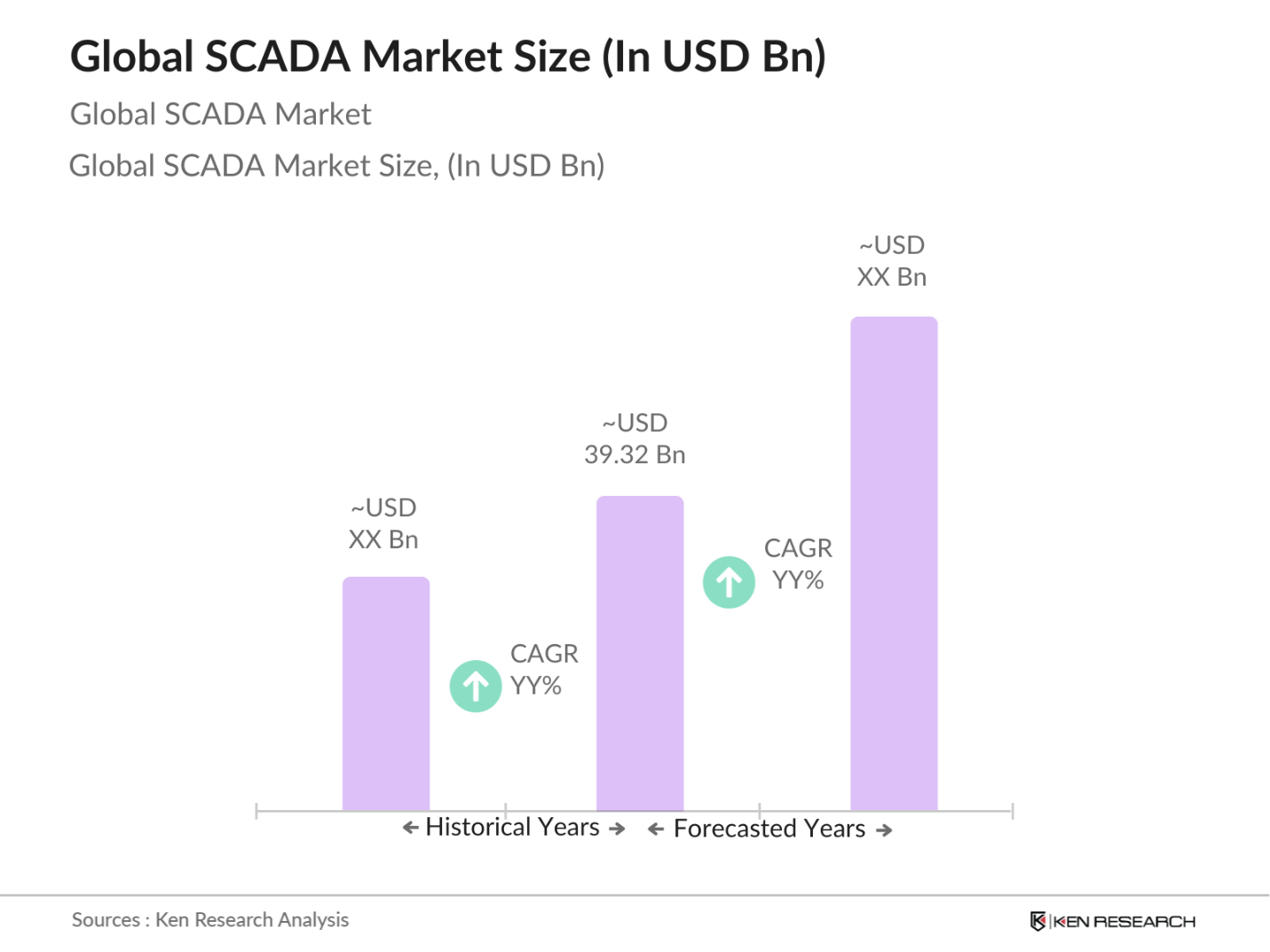
- The Global SCADA Market has experienced substantial growth as industries worldwide prioritize automation and real-time monitoring. This growth is driven by the need for efficient management of critical infrastructures in sectors like oil & gas, power, and water treatment. SCADA systems provide vital insights through data acquisition, allowing companies to reduce operational costs and improve efficiency. The market is estimated at around USD 39.32 billion, with demand driven by increased adoption of smart technologies across industrial sectors, particularly in developed regions.
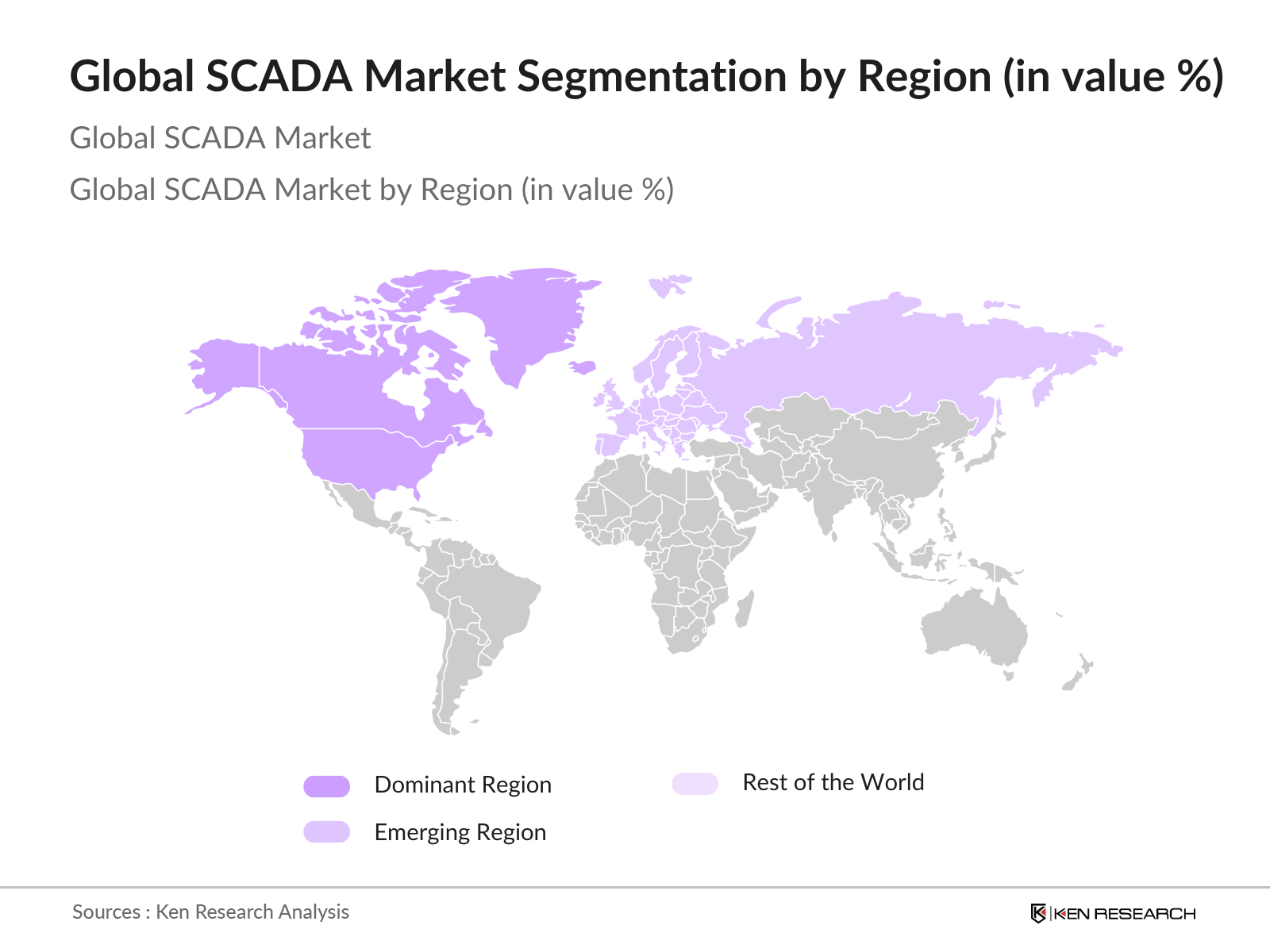
- North America leads the market, primarily due to high investment in industrial automation and the presence of several major SCADA providers. The region's extensive infrastructure in energy, manufacturing, and utilities supports a high demand for SCADA systems. Europe closely follows, with strong emphasis on smart grid solutions, while Asia-Pacific is rapidly emerging as a significant market due to industrialization in countries like China and India, which are heavily investing in SCADA for infrastructure management and utility efficiency.
- SCADA systems in the power and water sectors must comply with environmental regulations focused on sustainability and efficiency. These regulations require companies to monitor resource usage and minimize environmental impact, aligning with goals to reduce emissions and waste. SCADA enables compliance by providing data on resource consumption, emissions, and waste production, helping industries meet environmental standards and support sustainable practices.
Global SCADA Market Segmentation
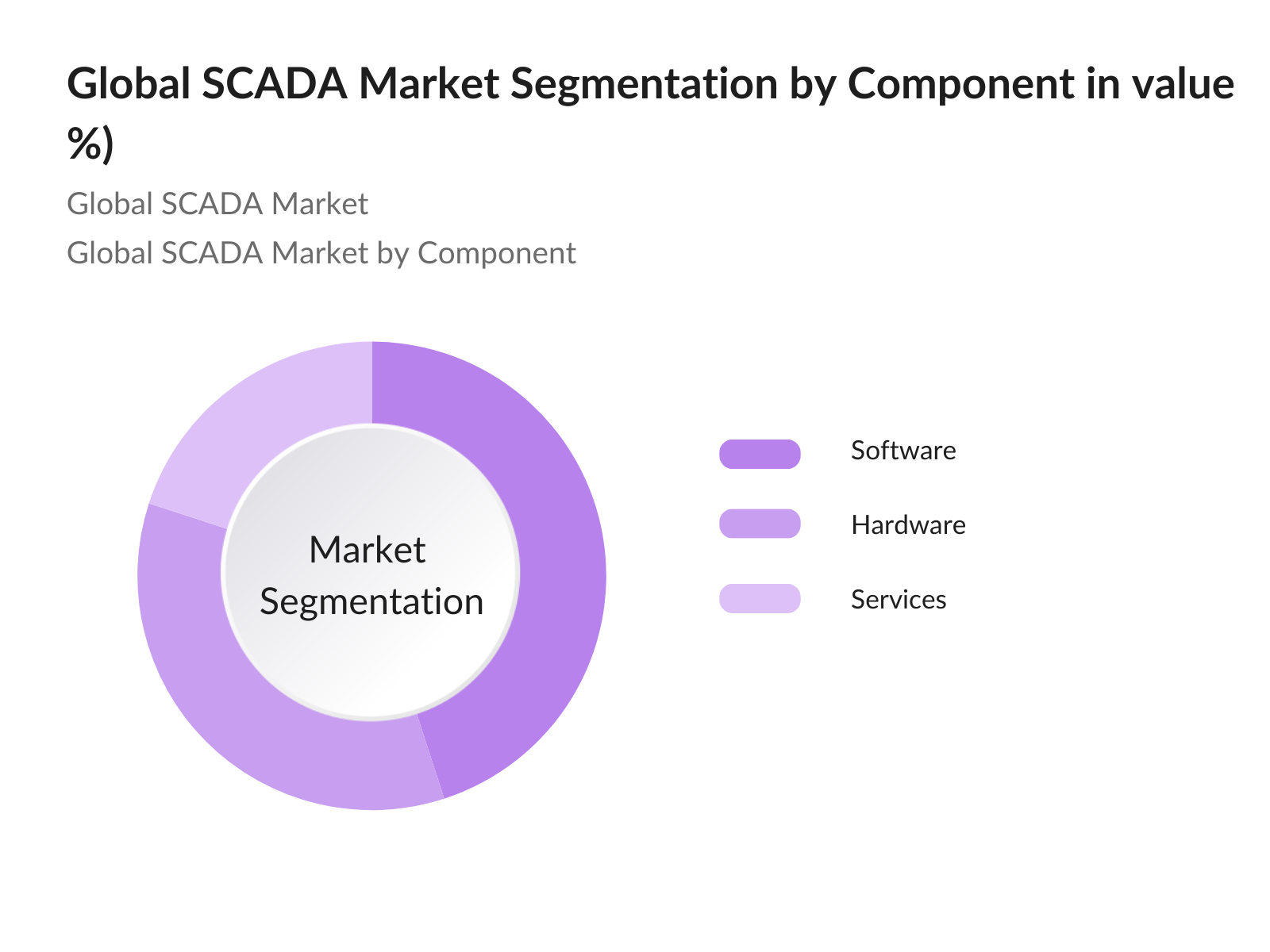
By Component:The SCADA market is segmented by component into hardware, software, and services. Software holds a dominant position due to its flexibility in monitoring and controlling industrial processes. The adoption of cloud-based SCADA software has further driven its demand, offering scalable and secure solutions. Services are also a significant segment, with consulting, installation, and maintenance services being critical to the systems success in various industries.
By Region:The SCADA market is segmented by region into North America, Europe, Asia-Pacific, Latin America, and the Middle East & Africa. North America leads the market, largely due to investments in automation and smart infrastructure in the U.S. and Canada. Europe follows with high SCADA adoption in renewable energy and utility sectors, driven by government initiatives for energy efficiency. Asia-Pacific is also showing significant growth potential as developing economies invest in SCADA for industrial expansion and infrastructure upgrades.
Global SCADA Market Competitive Landscape
The Global SCADA Market is competitive, with major players leveraging advanced technology and strategic partnerships to maintain market presence. Companies like Siemens, Schneider Electric, and Rockwell Automation are leading the market due to their robust R&D capabilities and diversified portfolios. The competitive landscape also highlights the increasing focus on cybersecurity as SCADA systems are integrated into critical infrastructure.
|
Company |
Establishment Year |
Headquarters |
Employees |
Revenue |
Key Verticals |
Regional Presence |
R&D Investments |
Cybersecurity Solutions |
|
Siemens AG |
1847 |
Munich, Germany |
||||||
|
Schneider Electric |
1836 |
Rueil-Malmaison, France |
||||||
|
Rockwell Automation, Inc. |
1903 |
Milwaukee, USA |
||||||
|
Honeywell International Inc. |
1906 |
Charlotte, USA |
||||||
|
ABB Ltd. |
1988 |
Zurich, Switzerland |
Global SCADA Market Analysis
Growth Drivers
- Growth in Industrial Automation and Smart Manufacturing: The surge in industrial automation and the adoption of smart manufacturing technologies are major drivers for the SCADA market. In 2023, it is estimated that over 30 million industrial robots are operational worldwide, with many integrated into SCADA systems to optimize manufacturing processes. Smart manufacturing facilities rely on SCADA for real-time data management, enhancing productivity and allowing precise control over operations, thus enabling companies to stay competitive in global markets.
- Rising Demand for Real-Time Data and Remote Monitoring: Real-time data and remote monitoring capabilities are crucial for industries operating in dispersed or remote locations. SCADA systems provide these functions, enabling companies to monitor and control processes from central locations. In sectors such as oil and gas, where remote operation is essential, SCADA adoption has accelerated, with thousands of monitoring points established globally in pipelines and refineries. This demand for real-time data is essential for minimizing downtime and ensuring optimal operational efficiency.
- Government Investment in Infrastructure and Cybersecurity: Government investments in infrastructure upgrades and cybersecurity initiatives are significantly boosting SCADA adoption. For example, countries like the U.S. and Germany have allocated billions towards modernizing critical infrastructure, incorporating SCADA systems to enhance operational resilience. Cybersecurity measures are also prioritized, especially in energy, water, and transportation sectors, where SCADA systems manage critical assets. This investment aligns with national security goals and industrial automation objectives, fostering SCADA market growth.
Market Challenges
- Vulnerability to Cyberattacks in Critical Infrastructures: SCADA systems, especially those in critical infrastructure sectors like energy and transportation, face significant cybersecurity threats. With cyberattacks on critical systems increasing, sectors managing sensitive data and operations face rising risks. In 2023, incidents targeting industrial control systems (ICS) spiked, prompting organizations to prioritize cybersecurity. These vulnerabilities present a major challenge for SCADA adoption as industries require robust cybersecurity solutions to safeguard operations.
- High Implementation and Maintenance Costs: The initial setup and ongoing maintenance of SCADA systems can be cost-prohibitive, particularly for small and mid-sized enterprises. A full SCADA installation can range from thousands to millions of dollars, depending on the industry and scope. Maintenance costs further add to the financial burden, making it challenging for companies with limited budgets. Additionally, costs for training personnel on SCADA systems add to the investment, often impacting market penetration in cost-sensitive sectors.
Market Opportunities:
- Increasing Adoption of Cloud-Based SCADA for Flexibility and Scalability: Cloud-based SCADA solutions are becoming popular due to their flexibility and scalability. Unlike traditional SCADA, cloud-based systems enable easy data storage, accessibility, and centralized control from any location. Industries with distributed assets, such as energy and utilities, benefit significantly from cloud SCADA, allowing managers to monitor assets across large geographic areas. This trend aligns with the increasing adoption of digital transformation strategies across industries.
- Shift Toward Edge Computing for Faster Data Processing: The shift toward edge computing in SCADA reflects the need for faster and more efficient data processing. Edge computing minimizes data transfer to central locations, which is critical in time-sensitive applications like manufacturing and energy management. By processing data locally, SCADA systems can quickly analyze and act on real-time information, improving operational agility and reducing network dependency. This trend enhances SCADAs responsiveness in industries requiring instant decision-making.
Global SCADA Market Outlook
The Global SCADA Market is set to experience robust growth by 2028, driven by advancements in industrial automation, increasing demand for real-time monitoring, and the adoption of digital transformation strategies. The market will see significant evolution with the integration of cloud-based technologies, edge computing, and enhanced cybersecurity measures to support critical infrastructure management.
Future Trends:
- Adoption of Cloud-Based SCADA Systems: The shift toward cloud-based SCADA solutions will accelerate, offering flexibility, scalability, and centralized control. By 2028, industries such as energy, utilities, and manufacturing will rely heavily on cloud SCADA to manage distributed assets efficiently, aligning with broader digital transformation efforts.
- Integration of Edge Computing for Real-Time Processing: Edge computing will play a critical role in enhancing SCADA's responsiveness and efficiency. By processing data locally at the source, edge-enabled SCADA systems will support time-sensitive applications in sectors like energy, transportation, and manufacturing.
Scope of the Report
|
Component |
Hardware Software Services |
|
End-User Industry |
Oil & Gas Water & Wastewater Power and Energy Manufacturing Telecommunications |
|
Deployment Model |
On-Premise Cloud-Based Hybrid |
|
Architecture |
Centralized Distributed Networked |
|
Region |
North America Europe Asia-Pacific Latin America Middle East & Africa |
Products
Key Target Audience
Industrial Automation and Control Systems Providers
Oil & Gas Companies
Utilities and Power Generation Companies
Water and Wastewater Management Companies
Investments and Venture Capitalist Firms
Government and Regulatory Bodies (e.g., National Institute of Standards and Technology - NIST)
Cybersecurity Solution Providers
Telecommunications Providers
Companies
Players Mention in the Report
Siemens AG
Schneider Electric
Rockwell Automation, Inc.
Honeywell International Inc.
ABB Ltd.
Emerson Electric Co.
General Electric
Yokogawa Electric Corporation
Mitsubishi Electric Corporation
OMRON Corporation
Hitachi Ltd.
Inductive Automation
IBM Corporation
Iconics, Inc.
AVEVA Group plc
Table of Contents
01. Global SCADA Market Overview
1.1 Definition and Scope
1.2 Market Taxonomy
1.3 Market Growth Rate
1.4 Market Segmentation Overview
02. Global SCADA Market Size (In USD Billion)
2.1 Historical Market Size
2.2 Year-On-Year Growth Analysis
2.3 Key Market Developments and Milestones
03. Global SCADA Market Analysis
3.1 Growth Drivers (Industrial Automation, Increased Demand for Real-Time Data, Enhanced Security Needs)
3.1.1 Growth in Industrial Automation and Smart Manufacturing
3.1.2 Rising Demand for Real-Time Data and Remote Monitoring
3.1.3 Government Investment in Infrastructure and Cybersecurity
3.1.4 Increased Efficiency and Cost Savings through SCADA Implementation
3.2 Market Challenges (Cybersecurity Threats, High Initial Costs, Integration Complexity)
3.2.1 Vulnerability to Cyberattacks in Critical Infrastructures
3.2.2 High Implementation and Maintenance Costs
3.2.3 Integration Challenges with Legacy Systems
3.3 Opportunities (AI and IoT Integration, Growing Adoption in Emerging Markets, Advancements in Edge Computing)
3.3.1 Integration with Artificial Intelligence and Machine Learning
3.3.2 Emerging Demand from Developing Economies
3.3.3 Application of Edge Computing in Decentralized SCADA Systems
3.4 Trends (Cloud-Based SCADA Solutions, Edge Computing, Predictive Analytics)
3.4.1 Increasing Adoption of Cloud-Based SCADA for Flexibility and Scalability
3.4.2 Shift Toward Edge Computing for Faster Data Processing
3.4.3 Growing Use of Predictive Analytics for Preventive Maintenance
3.5 Government Regulations (Cybersecurity Standards, Data Protection Laws, Environmental Compliance)
3.5.1 Cybersecurity Standards in Critical Infrastructures (e.g., NIST, IEC 62443)
3.5.2 Data Protection and Compliance Requirements
3.5.3 Environmental Compliance for SCADA in Power and Water Industries
3.6 SWOT Analysis
3.7 Stakeholder Ecosystem
3.8 Porters Five Forces Analysis
3.9 Competition Ecosystem
04. Global SCADA Market Segmentation
4.1 By Component (In Value %)
4.1.1 Hardware
4.1.2 Software
4.1.3 Services
4.2 By End-User Industry (In Value %)
4.2.1 Oil & Gas
4.2.2 Water & Wastewater
4.2.3 Power and Energy
4.2.4 Manufacturing
4.2.5 Telecommunications
4.3 By Deployment Model (In Value %)
4.3.1 On-Premise
4.3.2 Cloud-Based
4.3.3 Hybrid
4.4 By Architecture (In Value %)
4.4.1 Centralized
4.4.2 Distributed
4.4.3 Networked
4.5 By Region (In Value %)
4.5.1 North America
4.5.2 Europe
4.5.3 Asia-Pacific
4.5.4 Latin America
4.5.5 Middle East & Africa
05. Global SCADA Market Competitive Analysis
5.1 Detailed Profiles of Major Companies
5.1.1 Siemens AG
5.1.2 Schneider Electric
5.1.3 Rockwell Automation, Inc.
5.1.4 Honeywell International Inc.
5.1.5 ABB Ltd.
5.1.6 Emerson Electric Co.
5.1.7 General Electric
5.1.8 Yokogawa Electric Corporation
5.1.9 Mitsubishi Electric Corporation
5.1.10 OMRON Corporation
5.1.11 Hitachi Ltd.
5.1.12 Inductive Automation
5.1.13 IBM Corporation
5.1.14 Iconics, Inc.
5.1.15 AVEVA Group plc
5.2 Cross Comparison Parameters (Headquarters, Inception Year, Revenue, Key Verticals, Regional Presence, R&D Investments, Cybersecurity Solutions, Cloud SCADA Offerings)
5.3 Market Share Analysis
5.4 Strategic Initiatives
5.5 Mergers and Acquisitions
5.6 Investment Analysis
5.6.1 Venture Capital Funding
5.6.2 Private Equity Investments
5.6.3 Government Technology Grants
06. Global SCADA Market Regulatory Framework
6.1 Cybersecurity Standards and Protocols
6.2 Data Compliance Requirements
6.3 Industry-Specific Environmental Regulations
07. Global SCADA Market Future Size (In USD Billion)
7.1 Future Market Size Projections
7.2 Key Factors Driving Future Market Growth
08. Global SCADA Market Future Segmentation
8.1 By Component (In Value %)
8.2 By End-User Industry (In Value %)
8.3 By Deployment Model (In Value %)
8.4 By Architecture (In Value %)
8.5 By Region (In Value %)
09. Global SCADA Market Analysts Recommendations
9.1 TAM/SAM/SOM Analysis
9.2 Customer Cohort Analysis
9.3 Marketing Initiatives
9.4 White Space Opportunity Analysis
Disclaimer Contact UsResearch Methodology
Step 1: Identification of Key Variables
The research began by identifying key variables influencing the SCADA market, including end-user demands, regulatory standards, and technological advancements. Comprehensive desk research was conducted using proprietary databases and government publications to establish a clear understanding of these drivers.
Step 2: Market Analysis and Construction
Historical data was compiled and analyzed, covering key industry segments such as hardware, software, and services. This analysis provided insights into market dynamics and the importance of SCADA in optimizing industrial and critical infrastructure operations.
Step 3: Hypothesis Validation and Expert Consultation
Industry assumptions were validated through interviews with SCADA solution providers and technology experts. These consultations offered valuable insights into market growth potential, cybersecurity needs, and the future of automation in critical industries.
Step 4: Research Synthesis and Final Output
The final phase involved synthesizing quantitative and qualitative insights into a cohesive report, validated through expert consultations. The result is an accurate and comprehensive assessment of the SCADA market, detailing current trends and future outlook.
Frequently Asked Questions
1. How big is the Global SCADA Market?
The Global SCADA Market is valued at approximately USD 39.32 billion, driven by increasing demand for real-time data monitoring and control in critical infrastructure industries.
2. What are the challenges in the Global SCADA Market?
Challenges include high initial implementation costs, vulnerability to cybersecurity threats, and complexities in integrating SCADA with existing legacy systems.
3. Who are the major players in the Global SCADA Market?
Key players include Siemens AG, Schneider Electric, Rockwell Automation, Honeywell International, and ABB Ltd., all known for their extensive expertise in industrial automation.
4. What are the growth drivers of the Global SCADA Market?
Growth drivers include the rise of industrial automation, demand for real-time monitoring in infrastructure, government investments in cybersecurity, and technological advancements in AI and IoT.
Why Buy From Us?

What makes us stand out is that our consultants follows Robust, Refine and Result (RRR) methodology. i.e. Robust for clear definitions, approaches and sanity checking, Refine for differentiating respondents facts and opinions and Result for presenting data with story

We have set a benchmark in the industry by offering our clients with syndicated and customized market research reports featuring coverage of entire market as well as meticulous research and analyst insights.

While we don't replace traditional research, we flip the method upside down. Our dual approach of Top Bottom & Bottom Top ensures quality deliverable by not just verifying company fundamentals but also looking at the sector and macroeconomic factors.

With one step in the future, our research team constantly tries to show you the bigger picture. We help with some of the tough questions you may encounter along the way: How is the industry positioned? Best marketing channel? KPI's of competitors? By aligning every element, we help maximize success.

Our report gives you instant access to the answers and sources that other companies might choose to hide. We elaborate each steps of research methodology we have used and showcase you the sample size to earn your trust.

If you need any support, we are here! We pride ourselves on universe strength, data quality, and quick, friendly, and professional service.