















Global Seaweed Protein Market Outlook 2030
Region:Global
Author(s):Shivani Mehra
Product Code:KROD1473
December 2024
96
About the Report
Global Seaweed Protein Market Overview
- The global seaweed protein market is witnessing rapid expansion, driven by increasing demand for plant-based protein and sustainable food sources. The market size reached USD 672.13 million in 2023, with the growing adoption of seaweed protein across food, cosmetics, and pharmaceutical industries. The rise in consumer health consciousness, particularly with respect to cardiovascular health and blood pressure management, has bolstered demand for seaweed-based products, pushing the market further.
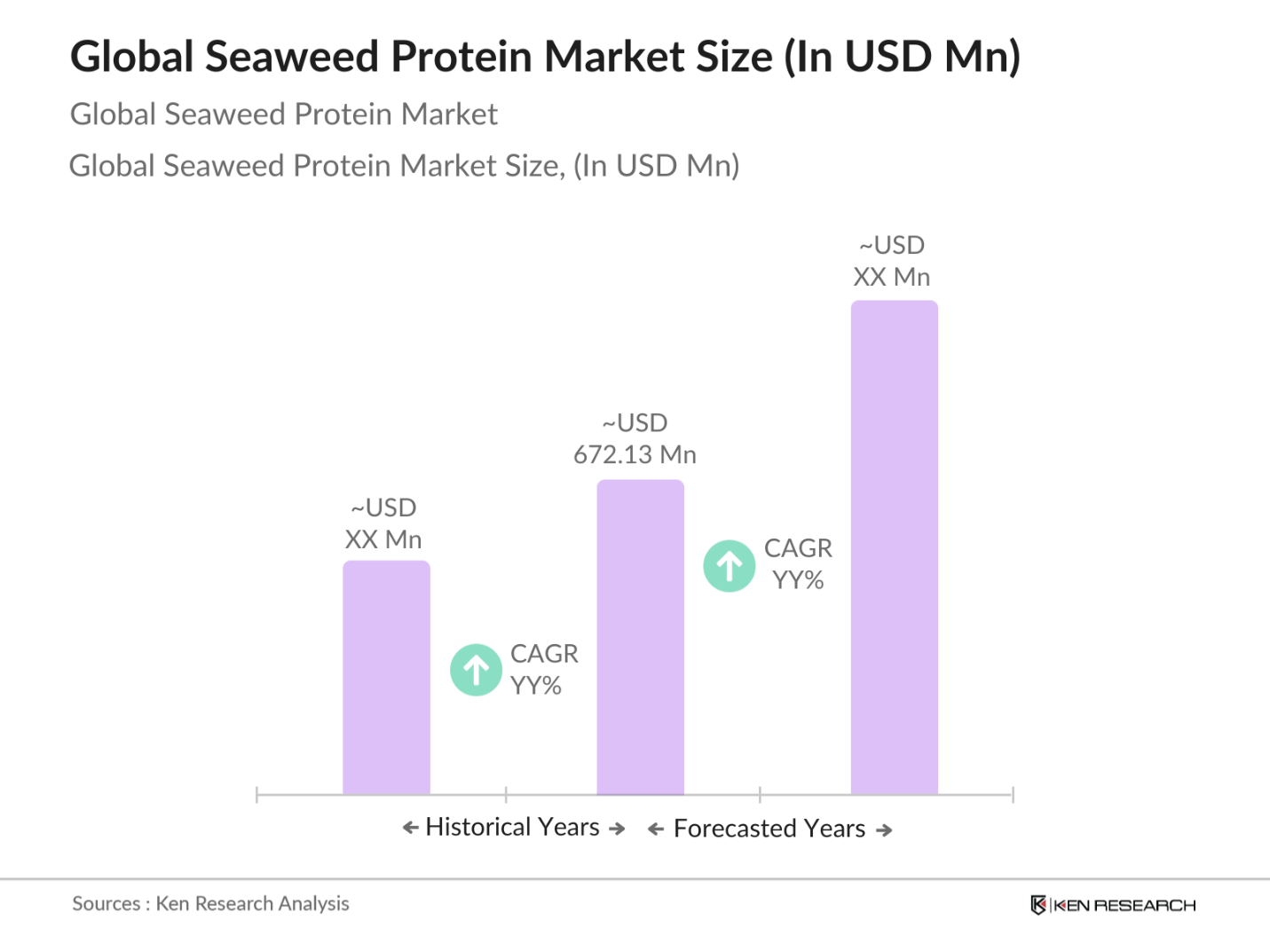
- Asia-Pacific dominates the seaweed protein market, particularly countries like Japan, China, and South Korea, where seaweed has been a dietary staple for centuries. This region's dominance stems from abundant seaweed farming, technological advancements in extraction methods, and high domestic consumption. Meanwhile, Europe and North America are emerging as lucrative markets due to increasing veganism, health trends, and the growing emphasis on sustainable protein.
- In 2023, South Koreas Ministry of Oceans and Fisheries launched a $100 million initiative aimed at enhancing the countrys seaweed farming and protein extraction capabilities. This program focuses on improving the yield of red and brown seaweed through advanced biotechnological methods, which are expected to reduce environmental impact and lower production costs. The initiative also provides financial support to small and medium-sized seaweed farms and promotes eco-friendly cultivation practices.
Global Seaweed Protein Market Segmentation
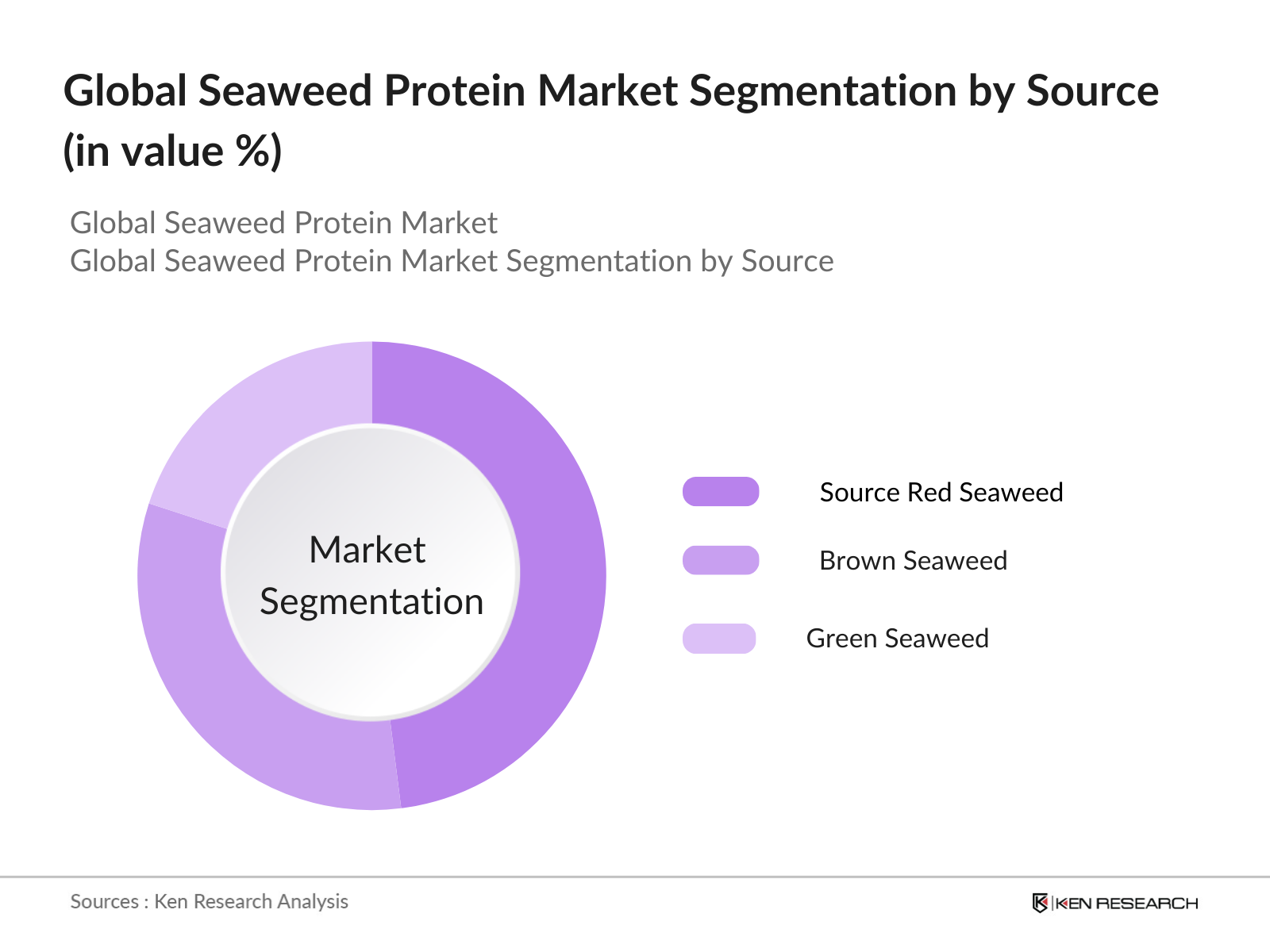
By Source: The global seaweed protein market is segmented by source into red seaweed, brown seaweed, and green seaweed. Red seaweed is the dominant sub-segment, particularly due to its rich protein content and its application in food products like nori and agar. Additionally, red seaweed varieties like Gracilaria spp. and Porphyra spp. have high yields, making them highly viable for commercial use. Their anti-inflammatory and antioxidant properties also make red seaweed a preferred choice in nutraceuticals and cosmetics
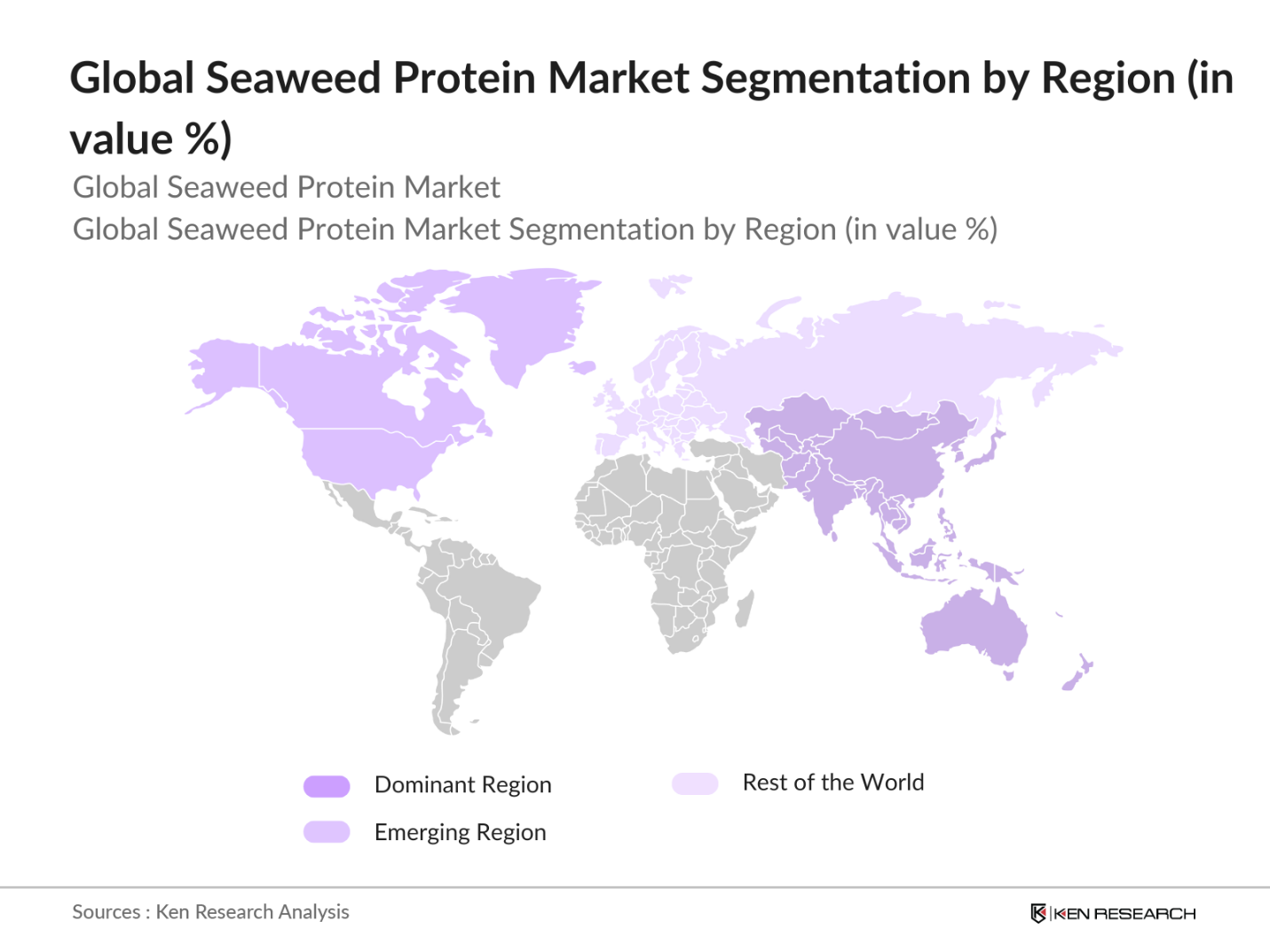
 By Region: The global seaweed protein market is segmented by region into Asia-Pacific, North America, Europe, and other regions. Asia-Pacific dominates the market, driven by extensive seaweed farming, particularly in countries like China, Japan, and South Korea. The region benefits from favorable climate conditions, low-cost labor, and government initiatives supporting sustainable seaweed farming. In addition, established supply chains and biotechnological advancements have further accelerated growth.
Global Seaweed Protein Market Competitive Landscape
The seaweed protein market is dominated by companies such as CP Kelco U.S., Inc., Algaia, Gelymar, Seasol, and Cargill, Incorporated. These companies have strong regional footprints, advanced research and development capabilities, and diverse product portfolios, making them the leaders in the market. These companies also engage in mergers and acquisitions to strengthen their market positions.
|
Company |
Establishment Year |
Headquarters |
Key Parameters |
|
CP Kelco U.S., Inc. |
1929 |
United States |
|
|
Algaia |
2016 |
France |
|
|
Gelymar |
1980 |
Chile |
|
|
Seasol |
1974 |
Australia |
|
|
Cargill, Incorporated |
1865 |
United States |
Global Seaweed Protein Market Analysis
Global Seaweed Protein Market Growth Drivers
- Increasing Health Consciousness: The global demand for healthier food options has been on the rise, with over of consumers in high-income countries, such as the U.S. and the U.K., reporting an increased focus on healthier diets in 2023, according to the World Health Organization (WHO). Seaweed protein has gained popularity as it is rich in essential amino acids, vitamins, and antioxidants. With more than 200 million metric tons of seaweed produced globally in 2022 (Food and Agriculture Organization), the accessibility to this protein source is supporting its adoption among health-conscious consumers across the globe.
- Shift to Plant-Based Diets: The shift towards plant-based diets has accelerated, particularly in Western countries, where plant-based food sales reached $8 billion in 2023, according to a report by the United Nations. This transition is attributed to rising concerns about environmental sustainability and the health benefits of plant-based foods. Seaweed protein, which offers a low environmental footprint compared to animal-based proteins, has seen growing adoption among vegans and vegetarians. The seaweed protein market is also being supported by government initiatives promoting sustainable agriculture practices.
- Demand for Sustainable Protein Sources: A global movement towards sustainable food sources is fueling demand for seaweed protein. Studies by the International Food Policy Research Institute show that seaweed farming has a significantly lower carbon footprint compared to livestock, with seaweed farms absorbing up to 173 million tons of carbon annually. Seaweeds ability to grow rapidly, its low resource needs, and its positive impact on marine ecosystems make it an attractive alternative for producing protein in an eco-friendly manner.
Global Seaweed Protein Market Challenges
- High Production Costs: Despite its advantages, the cost of cultivating and processing seaweed into protein remains high. Reports from the United Nations Development Programme highlight that processing technology for seaweed protein, particularly red seaweed, requires advanced extraction methods, driving up production costs. For instance, in 2022, the cost to extract seaweed protein averaged $500 per metric ton, which is higher than the extraction costs for other plant-based proteins. This limits the scalability of seaweed protein production and impacts its accessibility in price-sensitive markets.
- Regulatory Barriers: Strict regulations concerning the cultivation, extraction, and commercialization of seaweed protein have hindered market expansion. The Codex Alimentarius Commission, a joint FAO/WHO initiative, has imposed stringent safety guidelines on seaweed products, particularly in regions like the EU and North America. In 2023, countries like Japan and the U.S. introduced additional checks for seaweed imports due to contamination risks and nutrient safety limits, making it difficult for producers to meet compliance standards. These regulatory complexities slow down market penetration in regions with high demand for sustainable proteins.
Global Seaweed Protein Market Future Outlook
The seaweed protein market is expected to witness substantial growth over the next five years, driven by increasing consumer demand for plant-based proteins, government support for sustainable agriculture, and innovations in seaweed cultivation and extraction techniques. With rising global awareness regarding health and environmental sustainability, seaweed proteins are poised to become a key component in food, pharmaceuticals, and cosmetics. Additionally, technological advancements in extraction processes, such as ultrasound-assisted extraction, are expected to further boost market growth
Market Opportunities:
- Growing Popularity of Red Seaweed Protein: Red seaweed, known for its high protein content and nutritional benefits, is gaining popularity in the health and wellness industry. Red seaweed is abundant in Asia, with 1.2 million metric tons produced in Japan, China, and South Korea in 2022 (FAO). Red seaweed protein is increasingly used in supplements and functional foods, attracting consumers looking for nutrient-rich, plant-based alternatives. Its potential to aid in weight management and improve gut health has driven demand in the U.S. and Europe.
- Rise in Functional Foods: Seaweed protein is being integrated into functional foods, a category expected to reach over $250 billion in global sales by 2024 (Statista). The rise in demand for foods that offer health benefits, such as enhanced immunity or improved digestion, is fueling this trend. Seaweed protein's high concentration of bioactive compounds, such as polysaccharides and omega-3 fatty acids, makes it a popular choice for manufacturers developing fortified snacks, beverages, and supplements. This trend is particularly strong in developed markets like the U.S. and Japan.
Scope of the Report
|
By Source |
Red Seaweed Brown Seaweed Green Seaweed |
|
By Process |
Conventional, Enzymatic Hydrolysis Ultrasound-Assisted Microwave-Assisted |
|
By Application |
Food and Beverages Animal Feed Cosmetics Pharmaceuticals |
|
By End-User |
Consumer Goods Health & Wellness Industrial Products |
|
By Region |
North America Europe Asia-Pacific South America MEA |
Products
Key Target Audience
Food and Beverage Manufacturers
Nutraceutical Companies
Cosmetics and Personal Care Manufacturers
Animal Feed Producers
Pharmaceuticals Companies
Government and Regulatory Bodies (e.g., Food and Drug Administration, European Food Safety Authority)
Investors and Venture Capital Firms
Agriculture and Aquaculture Enterprises
Companies
Players Mention in the Report
CP Kelco U.S., Inc.
Algaia
Gelymar
Seasol
Cargill, Incorporated
Qingdao Gather Great Ocean Algae Industry Group
Qingdao Seawin Biotech Group Co. Ltd.
Maine Coast Sea Vegetables, Inc.
Cornish Seaweed Co. Ltd.
Ocean Harvest Technology
Acadian Seaplants Limited
DuPont
Marcel Trading Corp.
The Seaweed Co.
gimMe Health Foods Inc.
Table of Contents
1. Global Seaweed Protein Market Overview
1.1. Definition and Scope
1.2. Market Taxonomy
1.3. Market Growth Rate
1.4. Market Segmentation Overview
2. Global Seaweed Protein Market Size (in USD Mn)
2.1. Historical Market Size
2.2. Year-on-Year Growth Analysis
2.3. Key Market Developments and Milestones
3. Global Seaweed Protein Market Analysis
3.1. Growth Drivers (Increasing Health Consciousness, Shift to Plant-Based Diets, Demand for Sustainable Protein Sources)
3.2. Market Challenges (High Production Costs, Regulatory Barriers, Limited Consumer Awareness)
3.3. Opportunities (Innovation in Extraction Methods, Expansion of Vegan Product Range, Emerging Markets)
3.4. Trends (Growing Popularity of Red Seaweed Protein, Adoption of Advanced Extraction Technologies, Rise in Functional Foods)
3.5. Government Regulations (Global Food Safety Standards, Organic Certifications, Tariffs and Trade Routes)
3.6. SWOT Analysis
3.7. Porters Five Forces Analysis
3.8. Stakeholder Ecosystem
3.9. Value Chain Analysis
4. Global Seaweed Protein Market Segmentation
4.1. By Source (Red Seaweed, Brown Seaweed, Green Seaweed)
4.1.1. Red Seaweed (Eucheuma spp., Gracilaria spp., Porphyra spp.)
4.1.2. Brown Seaweed (Laminaria japonica, Sargassum fusiforme)
4.1.3. Green Seaweed (Ulva spp., Enteromorpha spp.)
4.2. By Process (Conventional, Enzymatic Hydrolysis, Ultrasound-Assisted Extraction, Microwave-Assisted Extraction)
4.3. By Application (Food and Beverages, Animal Feed & Additives, Cosmetics, Nutraceuticals, Pharmaceuticals)
4.4. By End-User (Consumer Goods, Industrial Products, Health and Wellness Sector)
4.5. By Region (North America, Europe, Asia-Pacific, South America, Middle East & Africa)
5. Global Seaweed Protein Market Competitive Analysis
5.1. Detailed Profiles of Major Companies
5.1.1. CP Kelco U.S., Inc.
5.1.2. Algaia
5.1.3. Gelymar
5.1.4. Seasol
5.1.5. Cargill, Incorporated
5.1.6. Qingdao Gather Great Ocean Algae Industry Group
5.1.7. Qingdao Seawin Biotech Group Co. Ltd.
5.1.8. Maine Coast Sea Vegetables, Inc.
5.1.9. Cornish Seaweed Co. Ltd.
5.1.10. Ocean Harvest Technology
5.1.11. Acadian Seaplants Limited
5.1.12. DuPont
5.1.13. Marcel Trading Corp.
5.1.14. The Seaweed Co.
5.1.15. gimMe Health Foods Inc.
6. Cross-Comparison Parameters (Revenue, Production Capacity, Market Presence, Research & Development Investments, Technological Innovation, Market Penetration, Partnerships, Product Launches)
7. Global Seaweed Protein Market Share Analysis
7.1. Company Market Share (In % by Revenue)
7.2. Regional Market Share (In % by Revenue)
8. Global Seaweed Protein Market Future Projections (In USD Mn)
8.1. Future Market Size Projections
8.2. Growth Drivers and Opportunities
9. Global Seaweed Protein Market Analyst Recommendations
9.1. TAM/SAM/SOM Analysis
9.2. Customer Cohort and Behavior Analysis
9.3. Strategic Market Entry and Expansion Recommendations
9.4. White Space Opportunities in Emerging Markets
Disclaimer Contact UsResearch Methodology
Step 1: Identification of Key Variables
The initial stage focuses on understanding the key dynamics of the seaweed protein market by mapping out the ecosystem of major stakeholders. Secondary research through industry reports and proprietary databases is essential to identify factors like consumer demand, regulatory impacts, and production challenges.
Step 2: Market Analysis and Construction
This phase involves a deep dive into historical market data, including market penetration rates, product consumption trends, and production statistics. Our analysts use this data to construct a comprehensive overview of current market dynamics, allowing for accurate market size and segmentation analysis.
Step 3: Hypothesis Validation and Expert Consultation
The next step is validating our findings through expert interviews. Industry insiders, including production heads and researchers, provide firsthand insights into operational and market-specific challenges, helping us refine our market forecasts.
Step 4: Research Synthesis and Final Output
The final step consolidates all gathered data into actionable insights. We synthesize the research findings, using both top-down and bottom-up approaches to ensure the report is comprehensive, accurate, and relevant to market stakeholders.
Frequently Asked Questions
01. How big is the global seaweed protein market?
The global seaweed protein market is valued at USD 672.13 million, driven by the rising demand for plant-based proteins and sustainable agricultural practices
02. What are the major challenges in the seaweed protein market?
The main challenges include high production costs, limited consumer awareness in some regions, and regulatory hurdles associated with large-scale seaweed farming
03. Who are the major players in the global seaweed protein market?
Key players include CP Kelco U.S., Inc., Algaia, Gelymar, Seasol, and Cargill, Inc., who dominate the market due to their strong research capabilities, extensive distribution networks, and focus on innovation
04. What is driving the growth of the seaweed protein market?
The market is primarily driven by increasing health consciousness, the shift toward plant-based diets, and advancements in seaweed extraction technologies
Why Buy From Us?

What makes us stand out is that our consultants follows Robust, Refine and Result (RRR) methodology. i.e. Robust for clear definitions, approaches and sanity checking, Refine for differentiating respondents facts and opinions and Result for presenting data with story

We have set a benchmark in the industry by offering our clients with syndicated and customized market research reports featuring coverage of entire market as well as meticulous research and analyst insights.

While we don't replace traditional research, we flip the method upside down. Our dual approach of Top Bottom & Bottom Top ensures quality deliverable by not just verifying company fundamentals but also looking at the sector and macroeconomic factors.

With one step in the future, our research team constantly tries to show you the bigger picture. We help with some of the tough questions you may encounter along the way: How is the industry positioned? Best marketing channel? KPI's of competitors? By aligning every element, we help maximize success.

Our report gives you instant access to the answers and sources that other companies might choose to hide. We elaborate each steps of research methodology we have used and showcase you the sample size to earn your trust.

If you need any support, we are here! We pride ourselves on universe strength, data quality, and quick, friendly, and professional service.