















Global Serine Amino Acid Market Outlook to 2030
Region:Global
Author(s):Mukul
Product Code:KROD9177
October 2024
96
About the Report
Global Serine Amino Acid Market Overview
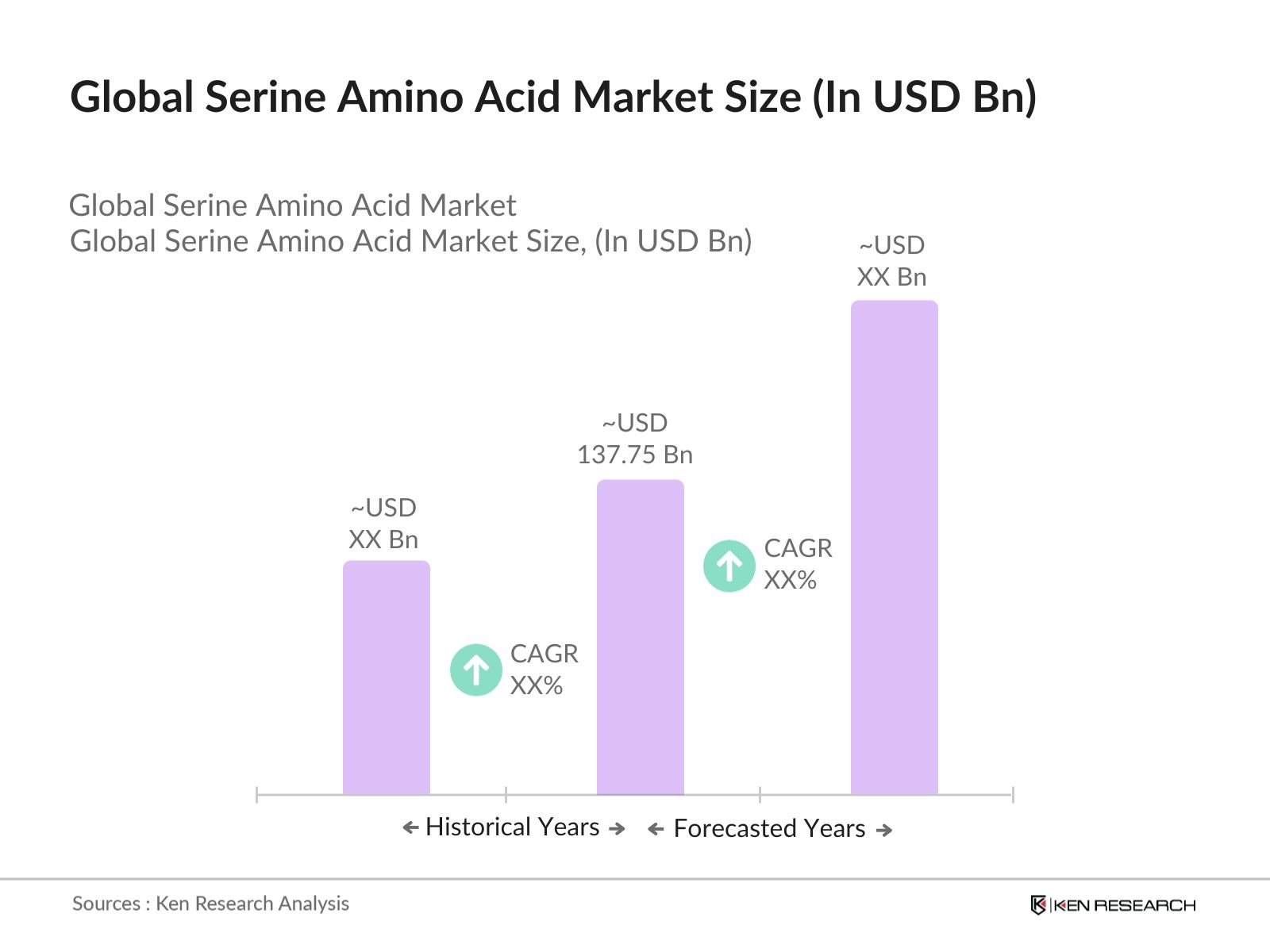
- The Global Serine Amino Acid Market is valued at USD 137.75 million, based on a five-year historical analysis. The market is driven by the rising demand for serine amino acids in pharmaceuticals and nutraceuticals, particularly due to the increased use in neurological treatments and dietary supplements. Additionally, the increased demand for serine in cosmetic products, such as anti-aging creams, further contributes to the growth of the market, with significant investments made by major companies in R&D for new applications of the amino acid.
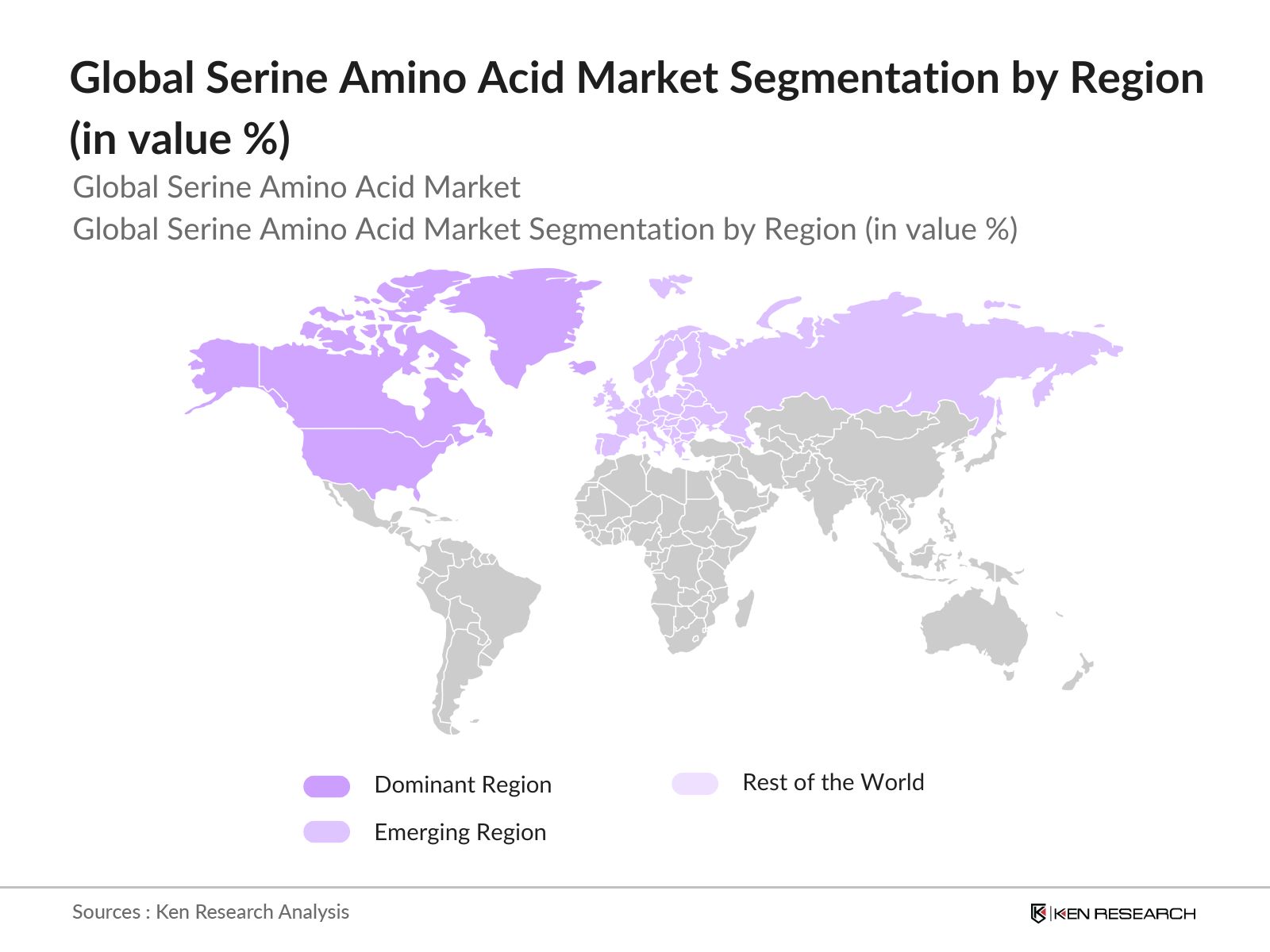
- Dominant regions in the serine amino acid market include North America and Europe, with the United States, Germany, and France leading due to the high concentration of pharmaceutical and biotechnology companies. The dominance of these regions is also attributed to their strong regulatory frameworks, technological advancements in production, and increased consumer awareness regarding the benefits of serine. The presence of established players with substantial investments in the development of high-purity serine has cemented their leading position in the market.
- Governments are increasingly supporting biotechnology research, which impacts the serine market. In 2023, the U.S. government allocated USD 12 billion to biotechnology initiatives focused on improving amino acid synthesis. China, on the other hand, announced a USD 15 billion investment plan in 2024 to bolster its biotechnology capabilities, particularly in amino acid production. These national policies are fostering innovation and expanding serine production capacity globally.
Global Serine Amino Acid Market Segmentation
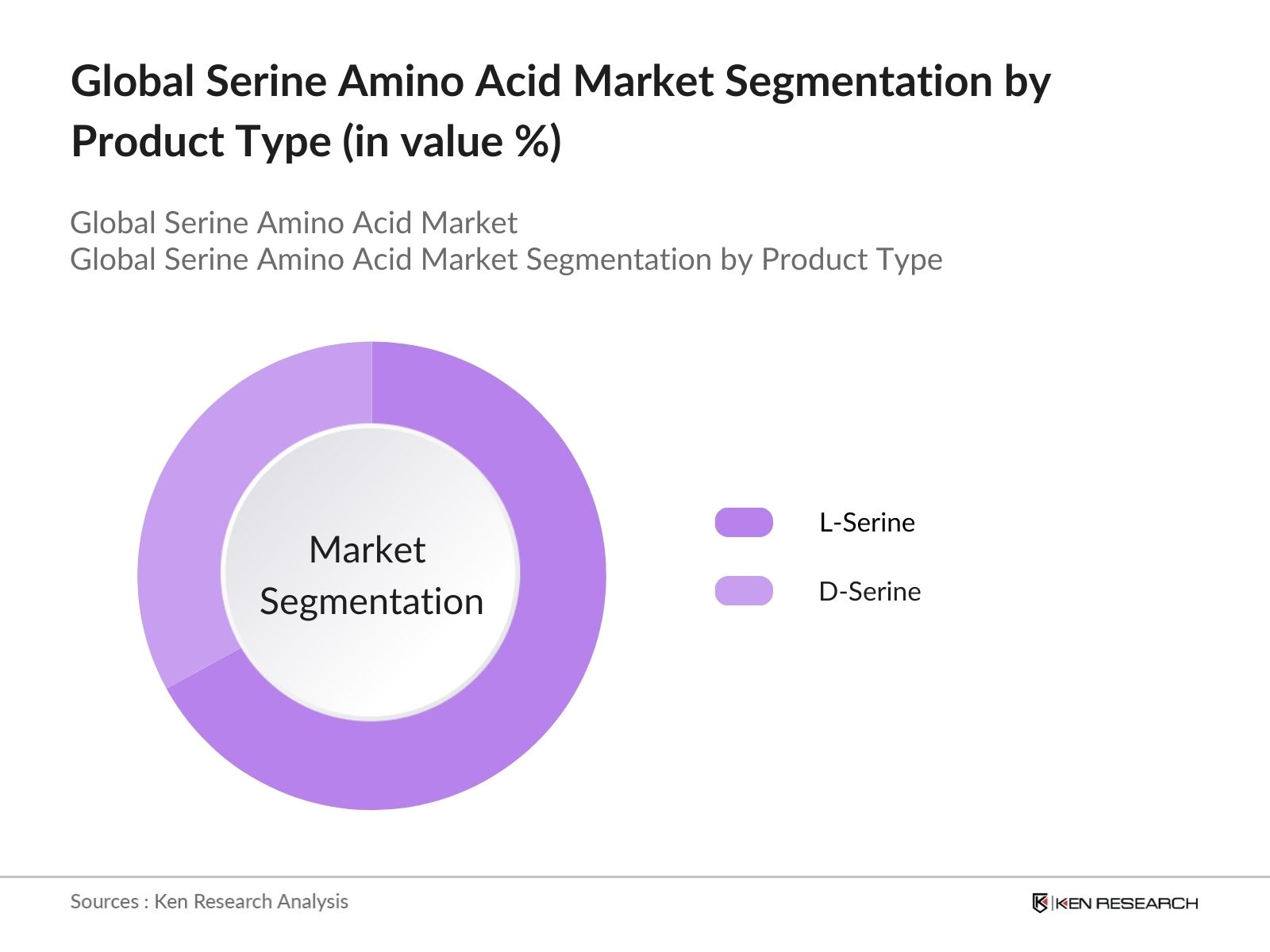
- By Product Type: The Global Serine Amino Acid Market is segmented by product type into L-Serine and D-Serine. Recently, L-Serine holds a dominant market share under this segmentation due to its widespread applications in the medical field, especially in the treatment of neurological diseases. L-Serine is essential in protein synthesis and is increasingly used in pharmaceutical products, especially for brain health supplements. Moreover, its usage in food and cosmetics, particularly in anti-aging formulations, adds to its market dominance.
- By Region: Regionally, the market is segmented into North America, Europe, Asia Pacific, Latin America, and Middle East & Africa. North America is leading the market, thanks to the strong presence of biopharmaceutical companies and a high focus on research and development. Moreover, government initiatives promoting amino acid production and consumption in the health sector further fuel market dominance in this region.
- By Grade: The market is segmented by grade into Food Grade, Pharmaceutical Grade, and Cosmetic Grade. Pharmaceutical Grade is currently the leading sub-segment, driven by its high demand in therapeutic applications, particularly for neurological conditions like Alzheimers and ALS. The increasing investments in biopharmaceuticals and the rising health awareness across the globe have further bolstered this grades dominance.
Global Serine Amino Acid Market Competitive Landscape
The Global Serine Amino Acid Market is characterized by the presence of key global players who lead through innovation and product development. The market is dominated by companies such as Ajinomoto and Evonik Industries, which have a strong focus on serines use in biopharmaceuticals. These companies maintain their market position through strategic collaborations and investment in research. The industry also witnesses participation from smaller but specialized firms focused on niche applications of serine in cosmetics and food.
|
Company Name |
Establishment Year |
Headquarters |
Product Portfolio |
Revenue (USD Bn) |
R&D Spending (USD Mn) |
Global Presence |
Sustainability Initiatives |
Key Clients |
|
Ajinomoto Co., Inc. |
1909 |
Tokyo, Japan |
||||||
|
Evonik Industries AG |
2007 |
Essen, Germany |
||||||
|
Cargill, Incorporated |
1865 |
Minnesota, USA |
||||||
|
Merck KGaA |
1668 |
Darmstadt, Germany |
||||||
|
Iris Biotech GmbH |
2001 |
Marktredwitz, Germany |
Global Serine Amino Acid Industry Analysis
Growth Drivers
- Rising Demand from Biopharmaceuticals: The global biopharmaceutical industry has shown remarkable growth, driven by the increasing focus on biologics and amino acids like serine that play a key role in protein synthesis. In 2023, the biopharmaceutical market was valued at over USD 250 billion globally, and the demand for serine in this sector has grown due to its use in the synthesis of cell culture media. Countries such as the U.S. and Germany are leading contributors, with biopharmaceutical exports amounting to USD 30 billion and USD 20 billion, respectively. Serines role in biopharmaceutical production is expected to continue driving its demand as the industry expands in 2024.
- Increasing Nutritional Supplement Adoption: Serine is a critical amino acid used in the production of nutritional supplements, particularly in the protein supplements and functional foods markets. With global sales of nutritional supplements surpassing USD 140 billion in 2022, the demand for essential amino acids, including serine, is projected to increase. The U.S. alone accounted for USD 35 billion in supplements sales, making it the leading market for nutritional products. Growing consumer awareness about health and wellness, alongside a rise in sports nutrition, continues to propel the adoption of serine in the supplement industry.
- Expanding Usage in Personal Care Products: The personal care industry increasingly utilizes serine for its hydrating and skin-conditioning properties. In 2023, the global personal care market reached USD 530 billion, with the demand for naturally derived ingredients growing rapidly Serine, used in products like moisturizers and anti-aging creams, has seen rising demand in markets such as South Korea and Japan, where the beauty industry thrives, with exports of personal care products totaling USD 12 billion and USD 9 billion, respectively. The trend towards clean and sustainable beauty products is further accelerating the adoption of amino acids.
Market Restraints
- Volatile Raw Material Prices: The serine amino acid market is highly sensitive to fluctuations in raw material prices, particularly with respect to feedstocks like sugar and starch. The average price of sugar, a key input in fermentation processes, rose to USD 450 per metric ton in 2023, up from USD 390 per metric ton in 2022. These price fluctuations are largely driven by supply chain disruptions, including poor crop yields in major sugar-producing countries like Brazil and India. Such volatility creates uncertainty for manufacturers, ultimately impacting the cost and availability of serine.
- Regulatory Barriers (FDA & EU Regulations): The production and use of serine in biopharmaceuticals, supplements, and personal care products are subject to stringent regulations imposed by agencies like the U.S. Food and Drug Administration (FDA) and the European Medicines Agency (EMA). In 2023, the FDA issued over 5,000 product recalls and warning letters related to non-compliance with safety and labeling standards. Meanwhile, in the EU, regulatory hurdles related to genetically modified organisms (GMOs) in amino acid production add additional layers of compliance, slowing down the approval process for serine-containing products.
Global Serine Amino Acid Market Future Outlook
Over the next five years, the Global Serine Amino Acid Market is expected to witness considerable growth, driven by the increasing application of serine in pharmaceuticals and dietary supplements. The market's expansion will be fueled by the rising demand for personalized nutrition, the integration of serine into novel biopharmaceutical products, and advancements in biotechnology. Moreover, the growing trend of using serine-based cosmetic ingredients for skin health and anti-aging formulations will further propel market growth.
Market Opportunities
- Expansion into Emerging Markets: Emerging markets in Southeast Asia and Africa represent untapped growth potential for serine-based products, particularly in the health and wellness sectors. In 2023, Southeast Asias supplement industry grew to USD 9 billion, driven by increasing disposable income and awareness of health benefits. Countries like Vietnam and Indonesia are witnessing rapid growth in demand for nutritional supplements, which is expected to drive the need for serine in these markets. With government initiatives supporting healthcare infrastructure improvements, the expansion of serine applications across these regions holds substantial promise.
- Rising Applications in Functional Foods: The global functional foods market, valued at over USD 275 billion in 2023, continues to grow, particularly in North America and Europe. Serine is widely used in functional foods for its role in improving brain function and aiding metabolism. The U.S. Department of Agriculture (USDA) reported an increase in demand for functional foods, with domestic production reaching 45 million tons in 2023. As consumers prioritize health and wellness, serines application in this growing segment is expected to present significant opportunities for manufacturers.
Scope of the Report
|
By Product Type |
L-Serine, D-Serine |
|
By Grade |
Food Grade, Pharmaceutical Grade, Cosmetic Grade |
|
By Application |
Pharmaceuticals, Nutraceuticals, Personal Care, Food & Beverages |
|
By Source |
Plant-Based, Microbial Fermentation |
|
By Region |
North America, Europe, Asia Pacific, Latin America, Middle East & Africa |
Products
Key Target Audience
Pharmaceutical manufacturers
Nutraceutical companies
Food & Beverage companies
Cosmetic and personal care manufacturers
Biotechnology firms
Government and regulatory bodies (FDA, EMA)
Investors and venture capitalists
Serine suppliers and distributors
Companies
Players Mentioned in the Report:
Ajinomoto Co., Inc.
Evonik Industries AG
KYOWA HAKKO BIO CO., LTD.
Cargill, Incorporated
Merck KGaA
Iris Biotech GmbH
Thermo Fisher Scientific Inc.
Sekisui Medical Co., Ltd.
Wacker Chemie AG
Sigma-Aldrich Corporation
Pepsico Inc.
BASF SE
Glycom A/S
Zibo Hualiyuan Amino Acid Co., Ltd.
Archer Daniels Midland Company
Table of Contents
1. Global Serine Amino Acid Market Overview
1.1 Definition and Scope
1.2 Market Taxonomy
1.3 Market Growth Rate
1.4 Market Segmentation Overview
2. Global Serine Amino Acid Market Size (in USD Mn)
2.1 Historical Market Size
2.2 Year-on-Year Growth Analysis
2.3 Key Market Developments and Milestones
3. Global Serine Amino Acid Market Analysis
3.1 Growth Drivers
3.1.1 Rising Demand from Biopharmaceuticals
3.1.2 Increasing Nutritional Supplement Adoption
3.1.3 Expanding Usage in Personal Care Products
3.1.4 Technological Advancements in Amino Acid Synthesis
3.2 Market Challenges
3.2.1 Volatile Raw Material Prices
3.2.2 Regulatory Barriers (FDA & EU Regulations)
3.2.3 Supply Chain Disruptions
3.3 Opportunities
3.3.1 Expansion into Emerging Markets
3.3.2 Rising Applications in Functional Foods
3.3.3 Integration with Plant-Based Nutrition
3.4 Trends
3.4.1 Increased Focus on Sustainable Sourcing
3.4.2 Growth in Personalized Nutrition Solutions
3.4.3 Rising Popularity of Fermentation-Based Serine Production
3.5 Government Regulation
3.5.1 Compliance with Safety Standards
3.5.2 Trade Restrictions and Tariff Impacts
3.5.3 National Biotechnology Policies
3.6 SWOT Analysis
3.7 Stakeholder Ecosystem
3.8 Porters Five Forces
3.9 Competition Ecosystem
4. Global Serine Amino Acid Market Segmentation
4.1 By Product Type (in Value %)
4.1.1 L-Serine
4.1.2 D-Serine
4.2 By Grade (in Value %)
4.2.1 Food Grade
4.2.2 Pharmaceutical Grade
4.2.3 Cosmetic Grade
4.3 By Application (in Value %)
4.3.1 Pharmaceuticals
4.3.2 Nutraceuticals
4.3.3 Personal Care
4.3.4 Food & Beverages
4.4 By Source (in Value %)
4.4.1 Plant-Based
4.4.2 Microbial Fermentation
4.5 By Region (in Value %)
4.5.1 North America
4.5.2 Europe
4.5.3 Asia Pacific
4.5.4 Latin America
4.5.5 Middle East & Africa
5. Global Serine Amino Acid Market Competitive Analysis
5.1 Detailed Profiles of Major Companies
5.1.1 Ajinomoto Co., Inc.
5.1.2 Evonik Industries AG
5.1.3 KYOWA HAKKO BIO CO., LTD.
5.1.4 Cargill, Incorporated
5.1.5 Archer Daniels Midland Company
5.1.6 Merck KGaA
5.1.7 Iris Biotech GmbH
5.1.8 Thermo Fisher Scientific Inc.
5.1.9 Sekisui Medical Co., Ltd.
5.1.10 Wacker Chemie AG
5.1.11 Sigma-Aldrich Corporation
5.1.12 Pepsico Inc.
5.1.13 BASF SE
5.1.14 Glycom A/S
5.1.15 Zibo Hualiyuan Amino Acid Co., Ltd.
5.2 Cross Comparison Parameters (No. of Employees, Headquarters, Inception Year, Product Portfolio, Revenue, Global Presence, Key Clients, Sustainability Initiatives)
5.3 Market Share Analysis
5.4 Strategic Initiatives
5.5 Mergers and Acquisitions
5.6 Investment Analysis
5.7 Venture Capital Funding
5.8 Government Grants
5.9 Private Equity Investments
6. Global Serine Amino Acid Market Regulatory Framework
6.1 Safety Standards Compliance
6.2 International Trade Regulations
6.3 Certification Processes
7. Global Serine Amino Acid Future Market Size (in USD Mn)
7.1 Future Market Size Projections
7.2 Key Factors Driving Future Market Growth
8. Global Serine Amino Acid Future Market Segmentation
8.1 By Product Type (in Value %)
8.2 By Application (in Value %)
8.3 By Source (in Value %)
8.4 By Region (in Value %)
9. Global Serine Amino Acid Market Analysts' Recommendations
9.1 TAM/SAM/SOM Analysis
9.2 White Space Opportunity Analysis
9.3 Marketing Initiatives
9.4 Innovation and R&D Focus
Research Methodology
Step 1: Identification of Key Variables
The initial phase involves creating a comprehensive ecosystem map encompassing all stakeholders in the Global Serine Amino Acid Market. This phase is guided by secondary research that leverages a variety of proprietary databases and publicly available sources, helping to identify critical variables influencing market trends.
Step 2: Market Analysis and Construction
This phase compiles historical market data on the Global Serine Amino Acid Market, evaluating product penetration, the ratio of suppliers to consumers, and overall revenue generation. Data on product quality and production methods is also analyzed to ensure reliability in estimates.
Step 3: Hypothesis Validation and Expert Consultation
In this phase, market hypotheses are developed based on the initial data and validated through expert consultations, conducted via telephone interviews with industry professionals. This step refines the collected data and provides critical market insights.
Step 4: Research Synthesis and Final Output
The final stage involves engaging directly with serine producers and users to gain in-depth insights on product preferences, sales performance, and market drivers. The findings are synthesized to produce an accurate and verified analysis of the Global Serine Amino Acid Market.
Frequently Asked Questions
01. How big is the Global Serine Amino Acid Market?
The Global Serine Amino Acid Market is valued at USD 137.75 million, driven by increasing applications in pharmaceuticals, nutraceuticals, and cosmetics.
02. What are the challenges in the Global Serine Amino Acid Market?
Challenges include fluctuations in raw material prices, regulatory barriers in international markets, and supply chain disruptions that affect production timelines and costs.
03. Who are the major players in the Global Serine Amino Acid Market?
Key players in the market include Ajinomoto Co., Evonik Industries, KYOWA HAKKO BIO, Cargill, and Merck KGaA, known for their strong R&D investments and diversified product portfolios.
04. What are the growth drivers of the Global Serine Amino Acid Market?
Growth drivers include rising demand for serine in biopharmaceuticals, the expansion of its applications in dietary supplements, and its increasing use in personal care and cosmetics.
Why Buy From Us?

What makes us stand out is that our consultants follows Robust, Refine and Result (RRR) methodology. i.e. Robust for clear definitions, approaches and sanity checking, Refine for differentiating respondents facts and opinions and Result for presenting data with story

We have set a benchmark in the industry by offering our clients with syndicated and customized market research reports featuring coverage of entire market as well as meticulous research and analyst insights.

While we don't replace traditional research, we flip the method upside down. Our dual approach of Top Bottom & Bottom Top ensures quality deliverable by not just verifying company fundamentals but also looking at the sector and macroeconomic factors.

With one step in the future, our research team constantly tries to show you the bigger picture. We help with some of the tough questions you may encounter along the way: How is the industry positioned? Best marketing channel? KPI's of competitors? By aligning every element, we help maximize success.

Our report gives you instant access to the answers and sources that other companies might choose to hide. We elaborate each steps of research methodology we have used and showcase you the sample size to earn your trust.

If you need any support, we are here! We pride ourselves on universe strength, data quality, and quick, friendly, and professional service.