Region:Global
Author(s):Geetanshi
Product Code:KRAA0154
Pages:91
Published On:August 2025
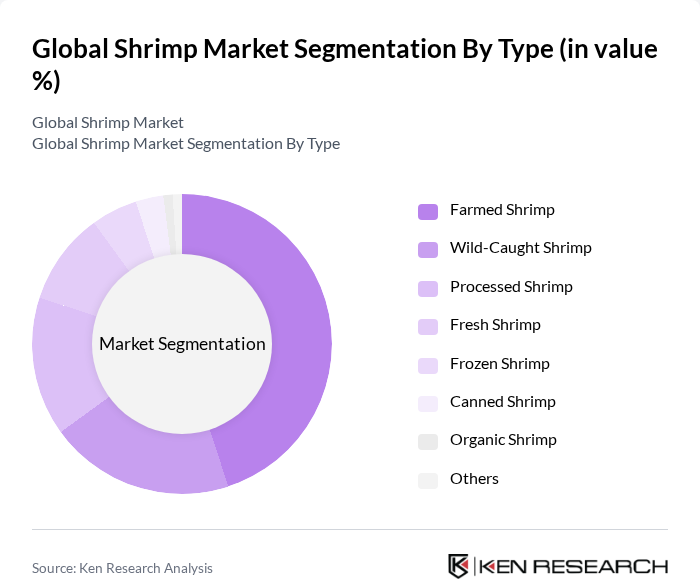
By Type:The shrimp market is segmented into various types, including farmed shrimp, wild-caught shrimp, processed shrimp, fresh shrimp, frozen shrimp, canned shrimp, organic shrimp, and others.Farmed shrimpis the leading subsegment due to its ability to efficiently meet growing global demand. The increasing preference for farmed shrimp is driven by its consistent availability, cost-effectiveness, and quality, making it a staple in both retail and food service sectors. Innovations in aquaculture technology and sustainable farming practices have further strengthened the dominance of farmed shrimp .
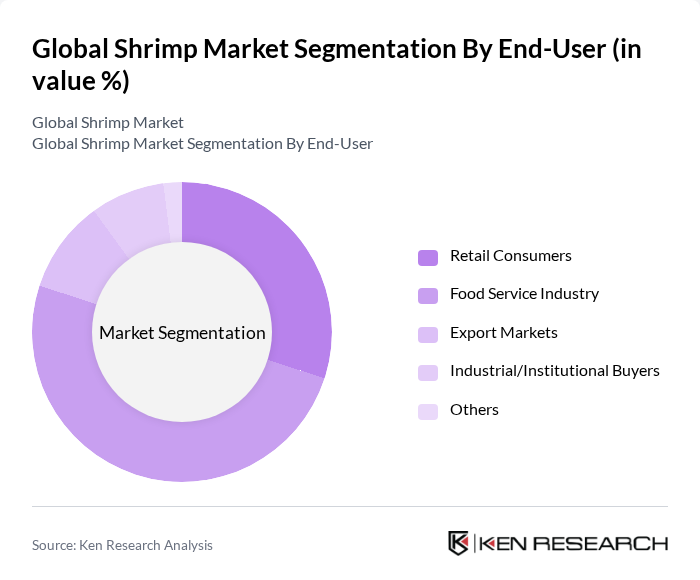
By End-User:The shrimp market is also segmented by end-user, including retail consumers, the food service industry, export markets, industrial/institutional buyers, and others. Thefood service industryis the dominant segment, driven by rising shrimp consumption in restaurants and catering services. The trend toward dining out and the growing popularity of seafood dishes have significantly boosted demand in this sector. Expansion of food service platforms and increased consumer preference for protein-rich diets continue to support this trend .
The Global Shrimp Market is characterized by a dynamic mix of regional and international players. Leading participants such as Thai Union Group, Charoen Pokphand Foods, Minh Phu Seafood Corporation, Mazzetta Company, Seajoy Seafood, Pacific Seafood, Clearwater Seafoods, Surapon Foods, Royal Greenland, Aqua Star, Trident Seafoods, High Liner Foods, Dongwon Industries, Devi Seafoods, and Omarsa S.A. contribute to innovation, geographic expansion, and service delivery in this space.
The future of the shrimp market is poised for transformation, driven by technological innovations and a shift towards sustainability. As consumers increasingly demand transparency in sourcing, the industry is likely to adopt advanced traceability systems. Additionally, the rise of e-commerce platforms will facilitate broader distribution channels, enhancing market access. These trends indicate a dynamic landscape where adaptability and innovation will be crucial for stakeholders to thrive in the evolving shrimp market.
| Segment | Sub-Segments |
|---|---|
| By Type | Farmed Shrimp Wild-Caught Shrimp Processed Shrimp Fresh Shrimp Frozen Shrimp Canned Shrimp Organic Shrimp Others |
| By End-User | Retail Consumers Food Service Industry Export Markets Industrial/Institutional Buyers Others |
| By Region | North America Europe Asia-Pacific Latin America Middle East & Africa |
| By Processing Method | Raw Shrimp Cooked Shrimp Breaded Shrimp Value-Added/Prepared Shrimp Others |
| By Distribution Channel | Supermarkets/Hypermarkets Online Retail Specialty Stores Foodservice Distributors Others |
| By Packaging Type | Vacuum Packaging Modified Atmosphere Packaging Canned Packaging Others |
| By Product Form | Whole Shrimp Shrimp Tails Shrimp Meat Peeled & Deveined Shrimp Others |
| Scope Item/Segment | Sample Size | Target Respondent Profiles |
|---|---|---|
| Farm Operators | 100 | Aquaculture Managers, Farm Owners |
| Seafood Distributors | 60 | Distribution Managers, Sales Executives |
| Processing Plant Managers | 50 | Operations Managers, Quality Control Supervisors |
| Retail Buyers | 40 | Category Managers, Procurement Specialists |
| Industry Experts | 40 | Market Analysts, Research Scholars |
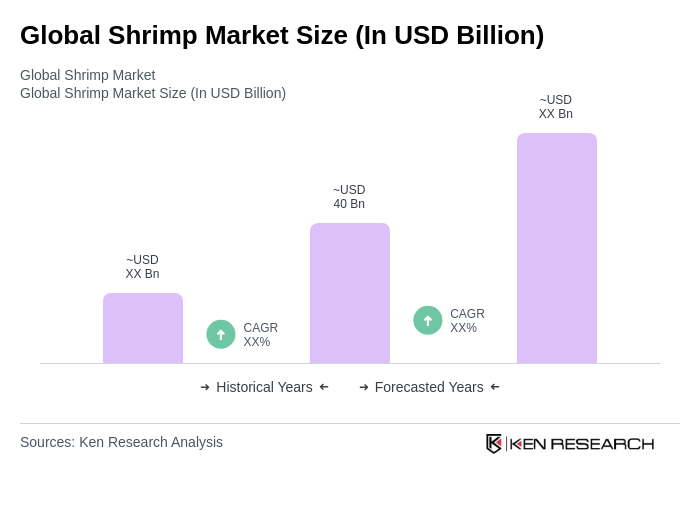
The Global Shrimp Market is valued at approximately USD 40 billion, reflecting significant growth driven by increasing consumer demand for seafood, health consciousness, and shrimp's versatility in global cuisines.

What makes us stand out is that our consultants follow Robust, Refine and Result (RRR) methodology. Robust for clear definitions, approaches and sanity checking, Refine for differentiating respondents' facts and opinions, and Result for presenting data with story.

We have set a benchmark in the industry by offering our clients with syndicated and customized market research reports featuring coverage of entire market as well as meticulous research and analyst insights.

While we don't replace traditional research, we flip the method upside down. Our dual approach of Top Bottom & Bottom Top ensures quality deliverable by not just verifying company fundamentals but also looking at the sector and macroeconomic factors.

With one step in the future, our research team constantly tries to show you the bigger picture. We help with some of the tough questions you may encounter along the way: How is the industry positioned? Best marketing channel? KPI's of competitors? By aligning every element, we help maximize success.

Our report gives you instant access to the answers and sources that other companies might choose to hide. We elaborate each steps of research methodology we have used and showcase you the sample size to earn your trust.

If you need any support, we are here! We pride ourselves on universe strength, data quality, and quick, friendly, and professional service.













