
Global Skincare Products Market Outlook to 2030
Region:Global
Author(s):Lakshyata and Nishika
Product Code:KENGR052
Region:Global
Author(s):Lakshyata and Nishika
Product Code:KENGR052
September 2024
85
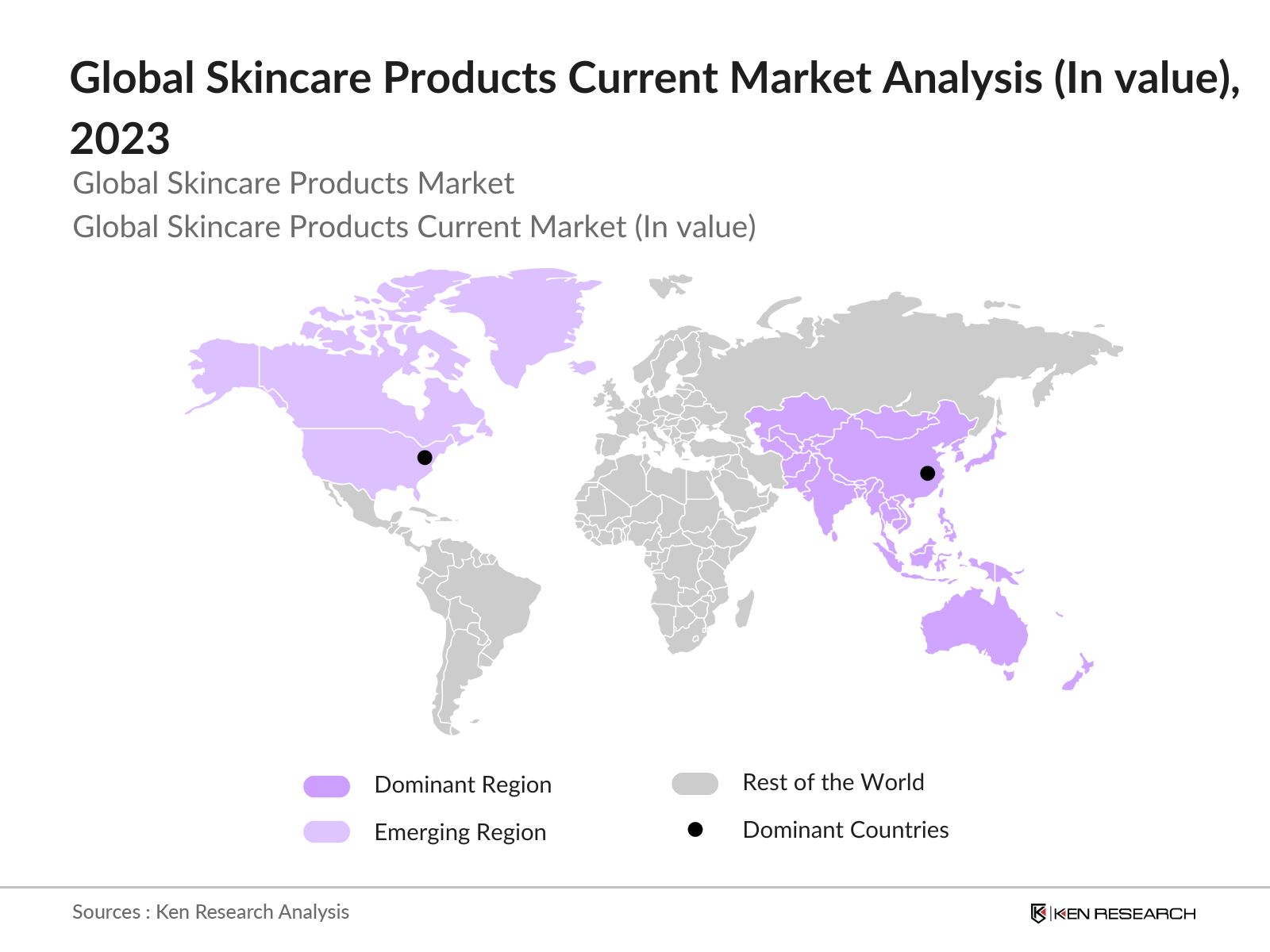
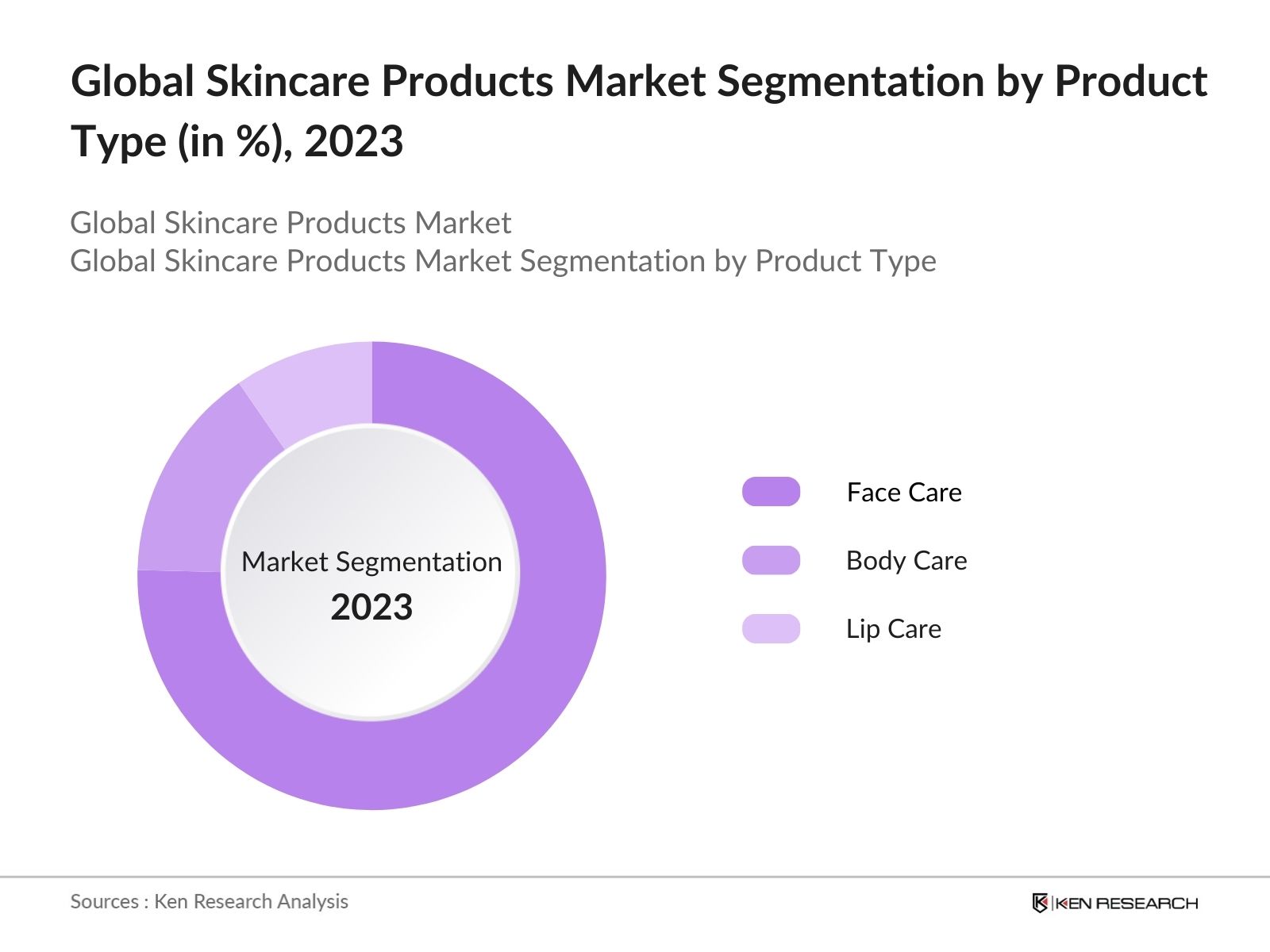
By Product Type: The global skincare market is segmented by product type into facial care, body care, and sun care. In 2023, face care products held the largest market share due to the high demand for anti-aging creams, moisturizers, and serums. The dominance of this segment is driven by the increasing consumer focus on facial skincare routines, particularly in urban areas where pollution and stress significantly impact skin health.
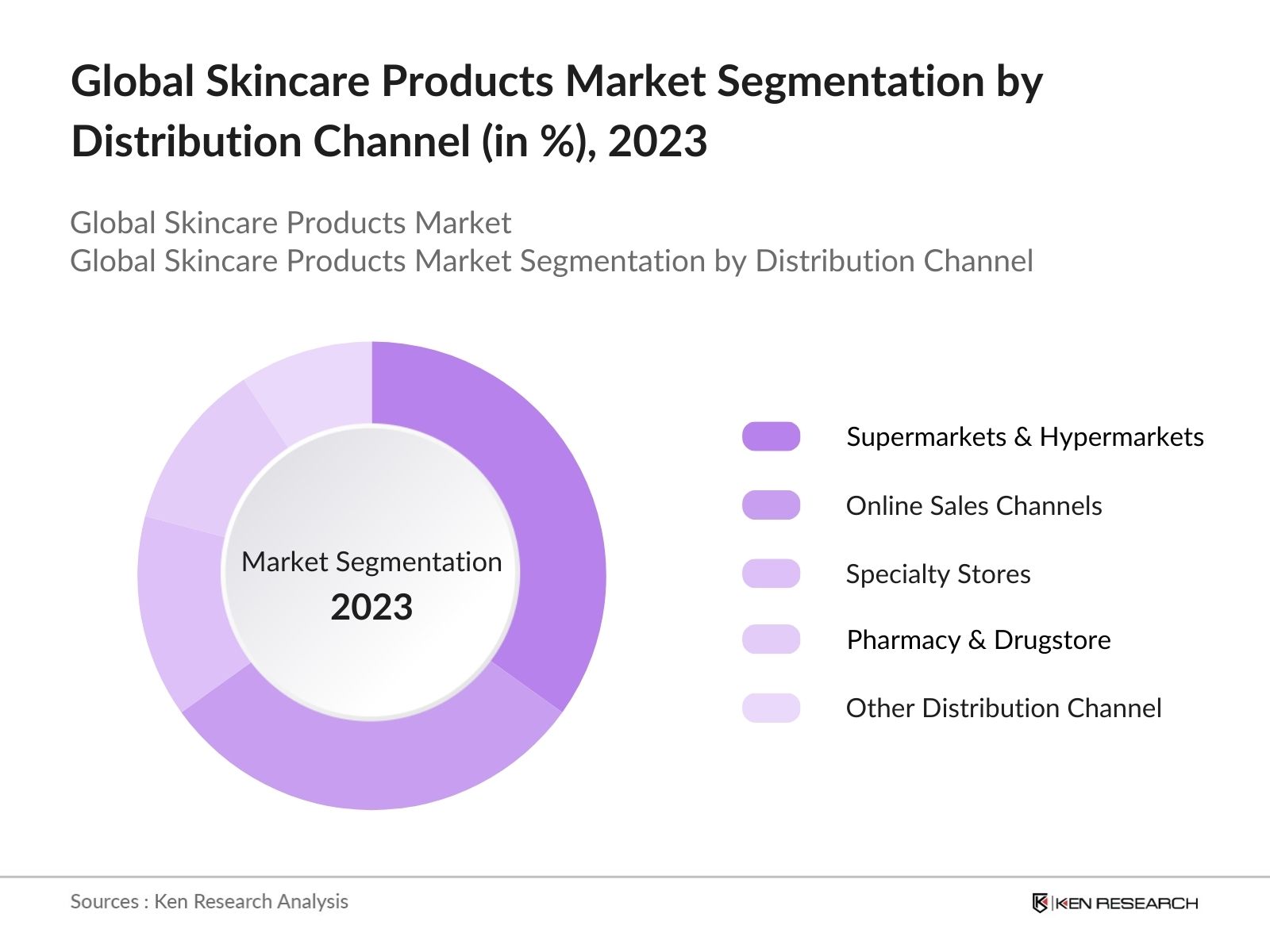
By Distribution Channel: The market is also segmented by distribution channel into Online Stores, Supermarkets & Hypermarkets, Specialty Stores, Pharmacy & Drugstores and Other Distribution Channel. Online stores dominated the market in 2023. The rise of e-commerce platforms because of the convenience of online shopping, coupled with personalized recommendations and subscription services, has contributed to the growth of this segment.
|
Name of Company |
Headquarter |
Establishment Year/Vintage |
|
L'Oréal S.A. |
Clichy, France |
1909 |
|
Unilever PLC |
London, United Kingdom |
1930 |
|
The Estée Lauder Companies Inc. |
New York, USA |
1946 |
|
Procter & Gamble Company |
Cincinnati, USA |
1837 |
|
Shiseido Co., Ltd. |
Ginza, Tokyo |
1872 |
|
LVMH (Fresh) |
Paris, France |
1987 |
|
maxingvest AG (Beiersdorf AG) |
Hamburg, Germany |
1882 |
|
Chanel |
London, England |
1910 |
|
Natura & Co |
São Paulo, Brazil |
1967 |
Global Skincare Products Market Growth Drivers
Global Skincare Products Market Challenges
Global Skincare Products Market Government Initiatives
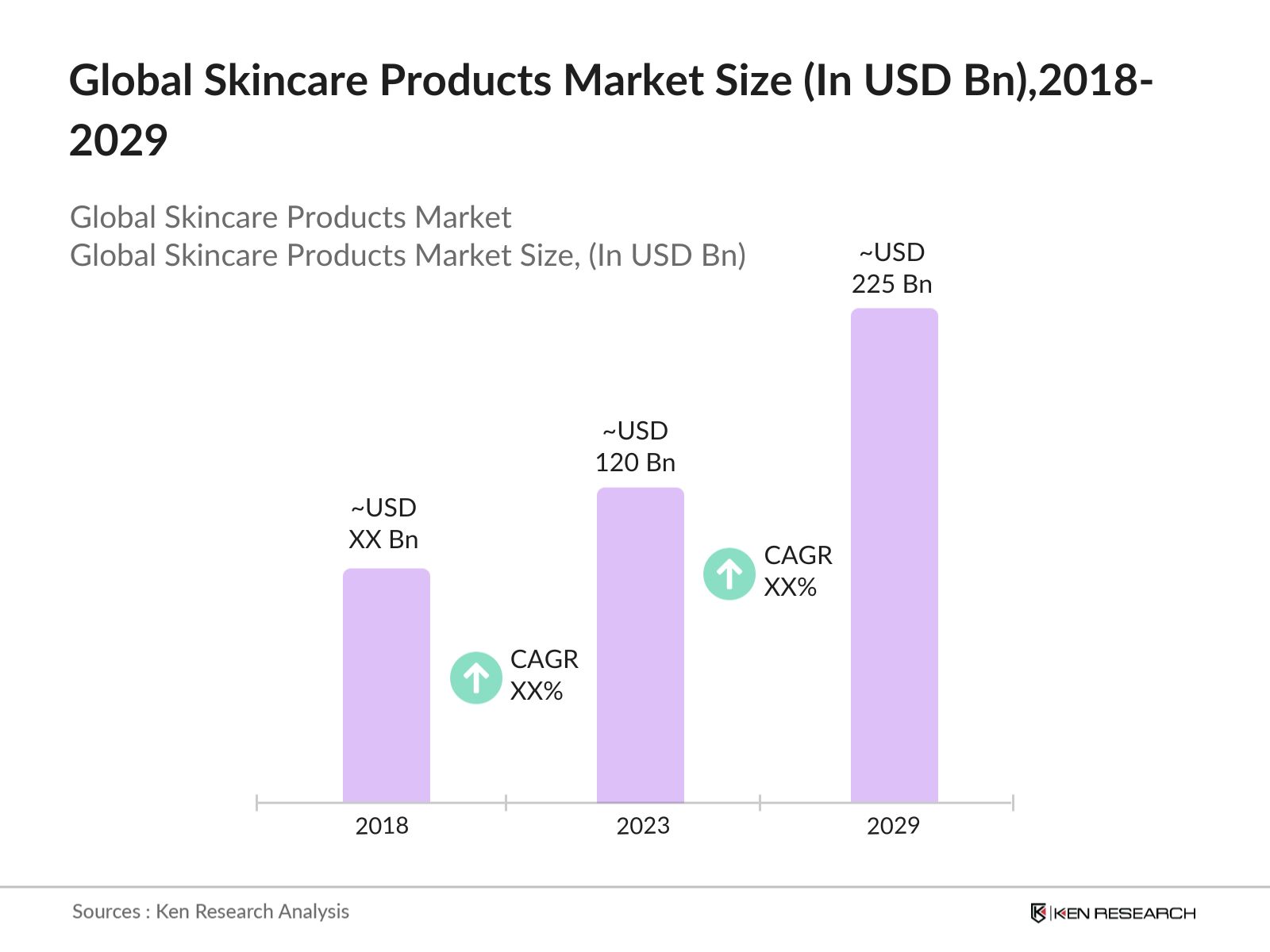
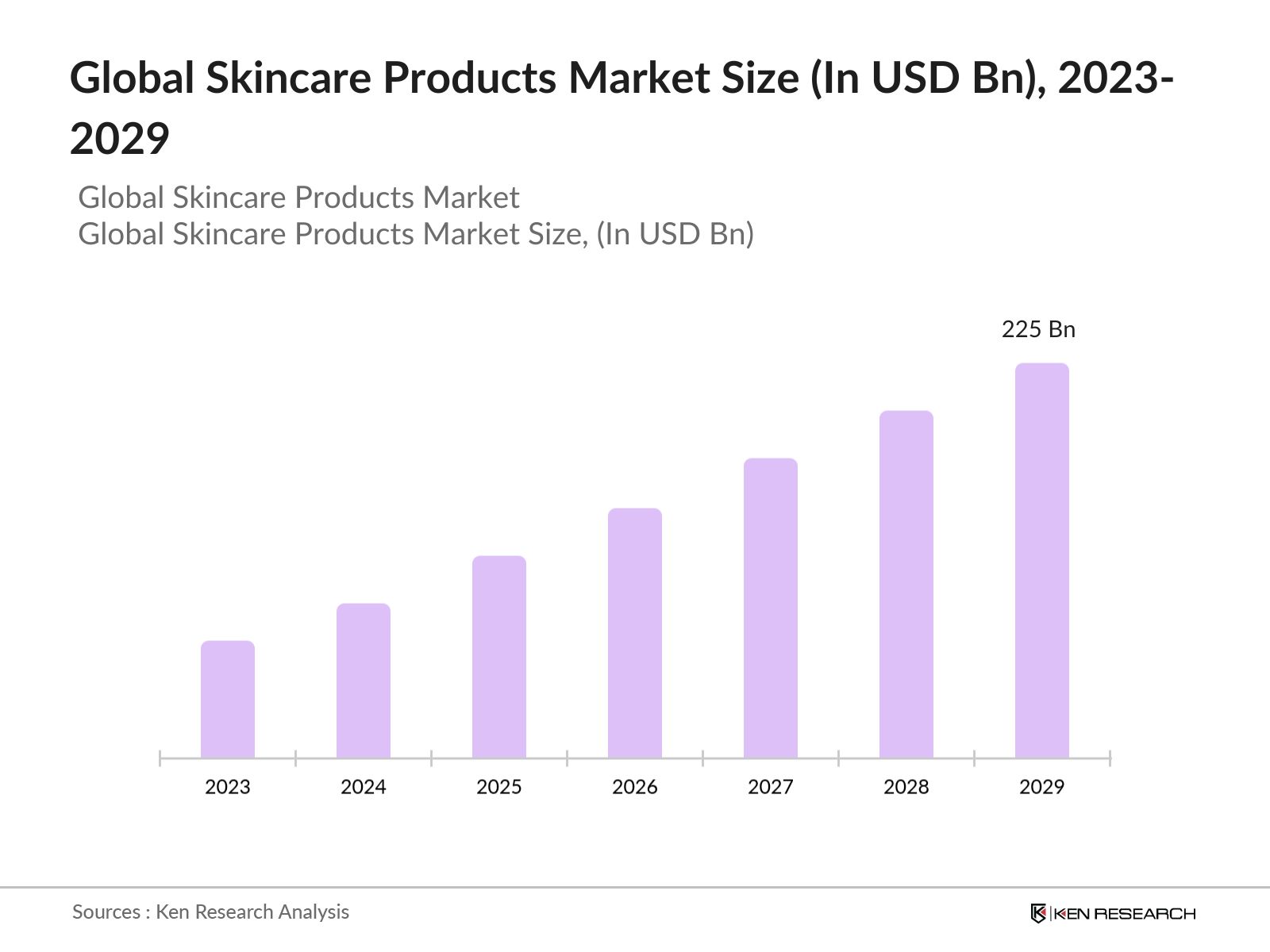
By 2029, the global skincare market is projected to grow exponentially and reach a market size of USD 225 billion, driven by continued consumer interest in health and wellness, advancements in skincare technology, and the rising popularity of clean and organic beauty products. The market is expected to witness further innovation, with companies focusing on personalized skincare solutions powered by AI and biotechnology.
Future Trends
|
By Region |
North America APAC Europe Latin America MEA |
|
By Product Type |
Facial Care Body Care Sun Care |
|
By Distribution Channel |
Online Stores Supermarkets Hypermarkets Specialty Stores Pharmacy & Drugstores Other Distribution Channel |
|
By End User |
Women Men Unisex |
|
By Category |
Mass Premium |
1.1 Global Skincare Market Overview
1.2 Key Market Trends and Insights
2.1 Overview of Global Economic Environment
2.2 Overview of Global Skincare Industry
2.3 Global Skincare Products Revenue (Face Care, Body Care, Lip Care, etc.)
2.4 Global Skincare Product Distribution Channels
3.1 Ecosystem: Major Players
3.1.1 Global Skincare Products Market Manufacturers
3.1.2 Global Skincare Products Market Distributors
3.1.3 Global Skincare Products Market Regulatory Bodies & Associations
3.2 Value Chain
3.2.1 Value Chain of Skincare Products Market
3.2.2 Distribution Model of Skincare Products to End Users
3.3 Case Study: Skincare Innovations 3.4 Market Taxonomy
5.1 By Region (North America, Europe, APAC, Latin America, and MEA) in value %, 2018-2023
5.2 By Product Type (Face Care, Body Care, Lip Care) in value %, 2018-2023
5.3 By Category (Mass, Premium) in value %, 2018-2023
5.4 By End User (Women, Men, Unisex) in value %, 2018-2023
6.1 Market Share Analysis
6.2 Market Heat Map Analysis
6.3 Market Cross Comparison
6.4 Competition Overview: Market Share of Major Players Globally
6.5 Comparison Matrix
6.6 Investment Landscape
7.1 Growth Drivers
7.2 Challenges
7.3 Market Trends
7.4 Case Studies
7.5 Strategic Initiatives by Key Players
9.1 By Region (North America, Europe, APAC, Latin America, and MEA) in value %, 2023-2029
9.2 By Product Type (Face Care, Body Care, Lip Care) in value %, 2023-2029
9.3 By Category (Mass, Premium) in value %, 2023-2029
9.4 By End User (Women, Men, Unisex) in value %, 2023-2029
11.1 Market Definitions and Assumptions
11.2 Abbreviations
11.3 Market Sizing Approach
11.4 Consolidated Research Approach
11.5 Understanding Market Potential Through In-Depth Industry Interviews
11.6 Primary Research Approach
11.7 Limitations and Conclusion
The research team framed a hypothesis about the market through an analysis of existing industry factors obtained from company reports, magazines, journals, online articles, ministries, government associations and data from EMIS, WHO, among others.
The market size was estimated based on the biopharmaceutical revenue of the major countries constituting a region and hence calculating regional revenue. The regional revenue of the 5 regions ((North America, APAC, Europe, LATAM, MEA) was then summed to arrive at the market size of the Global Biopharmaceutical Market.
The research team then conducted CATIs with several industry veterans including decision makers from Abbvie, Amgen, Pfizer and others in the ecosystem to get their insights on market and justify the hypothesis framed by the team.
The final analysis was then interpreted in the research report by our expert team.
The Global skincare products Market, valued at USD 120 Bn in 2023, is driven by the increasing demand for organic products, rising consumer awareness about skincare routines, and advancements in skincare technology.
Challenges in the global skincare product market include stringent regulatory requirements, high competition leading to market saturation, supply chain disruptions, and the growing problem of counterfeit products that can harm consumer trust and brand reputation.
Key players in the global skincare product market include L'Oréal S.A., Unilever PLC, The Estée Lauder Companies Inc., Procter & Gamble Company, and Shiseido Co., Ltd. These companies maintain dominance through extensive product portfolios, strong brand recognition, and continuous innovation.
The market in the global skincare product market is propelled by the increasing consumer demand for organic and natural products, the introduction of innovative skincare solutions, rising awareness about the harmful effects of synthetic chemicals, and the expansion of e-commerce channels that provide easier access to products globally.

What makes us stand out is that our consultants follows Robust, Refine and Result (RRR) methodology. i.e. Robust for clear definitions, approaches and sanity checking, Refine for differentiating respondents facts and opinions and Result for presenting data with story

We have set a benchmark in the industry by offering our clients with syndicated and customized market research reports featuring coverage of entire market as well as meticulous research and analyst insights.

While we don't replace traditional research, we flip the method upside down. Our dual approach of Top Bottom & Bottom Top ensures quality deliverable by not just verifying company fundamentals but also looking at the sector and macroeconomic factors.

With one step in the future, our research team constantly tries to show you the bigger picture. We help with some of the tough questions you may encounter along the way: How is the industry positioned? Best marketing channel? KPI's of competitors? By aligning every element, we help maximize success.

Our report gives you instant access to the answers and sources that other companies might choose to hide. We elaborate each steps of research methodology we have used and showcase you the sample size to earn your trust.

If you need any support, we are here! We pride ourselves on universe strength, data quality, and quick, friendly, and professional service.