Ken Research Logo

Global Sleep Aids Market Outlook to 2030

Region:Global

Author(s):Naman Rohilla

Product Code:KROD10766

Published On

December 2024

Total pages

85

About the Report

Global Sleep Aids Market Overview

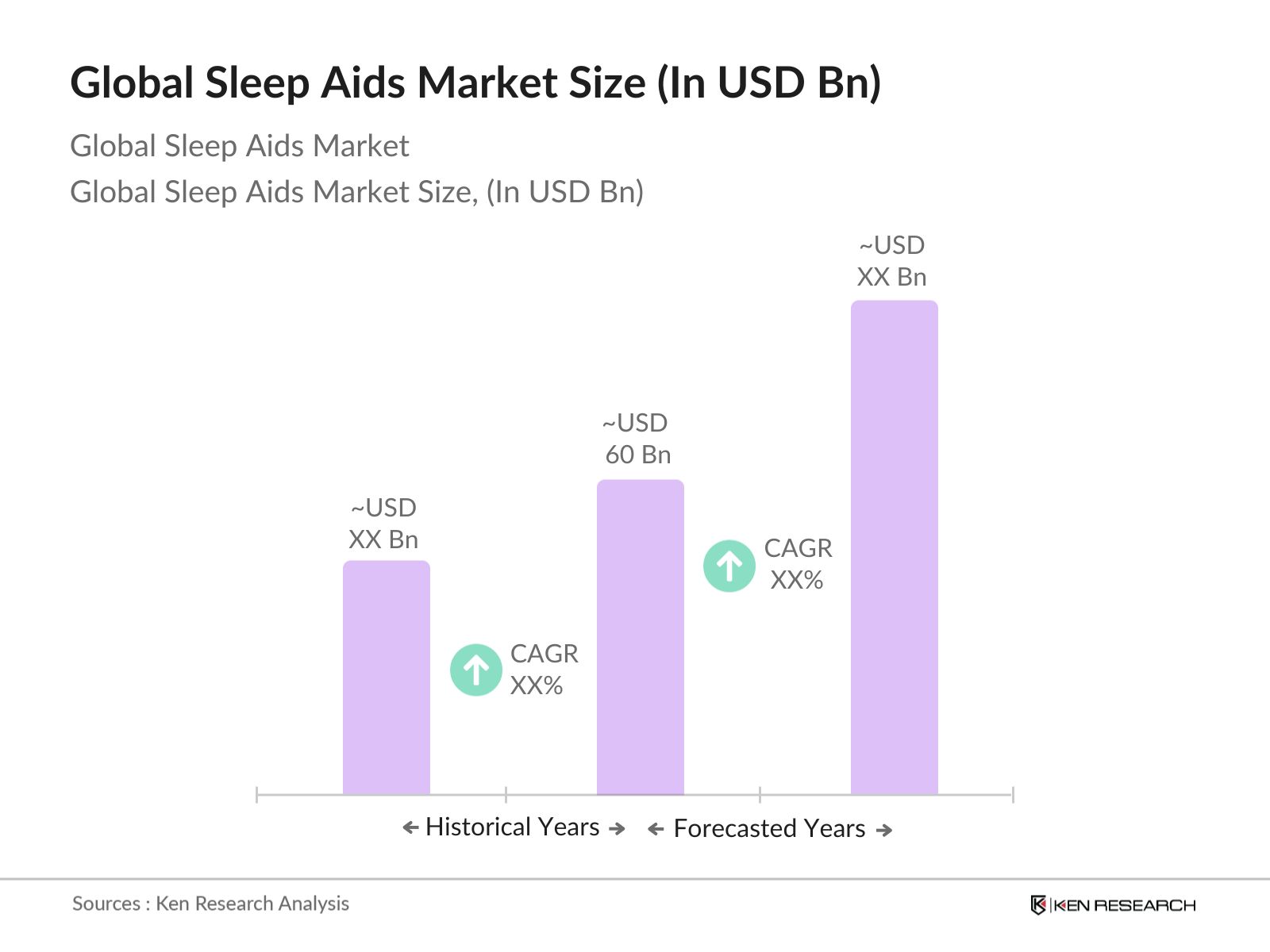
  • The global sleep aids market is experiencing growth, driven by the increasing prevalence of sleep disorders and a heightened awareness of sleep health. The market was valued at USD 60 billion, reflecting a steady rise from previous years. This growth is attributed to factors such as the rising incidence of insomnia and sleep apnea, advancements in sleep aid technologies, and a growing geriatric population.

market overviews

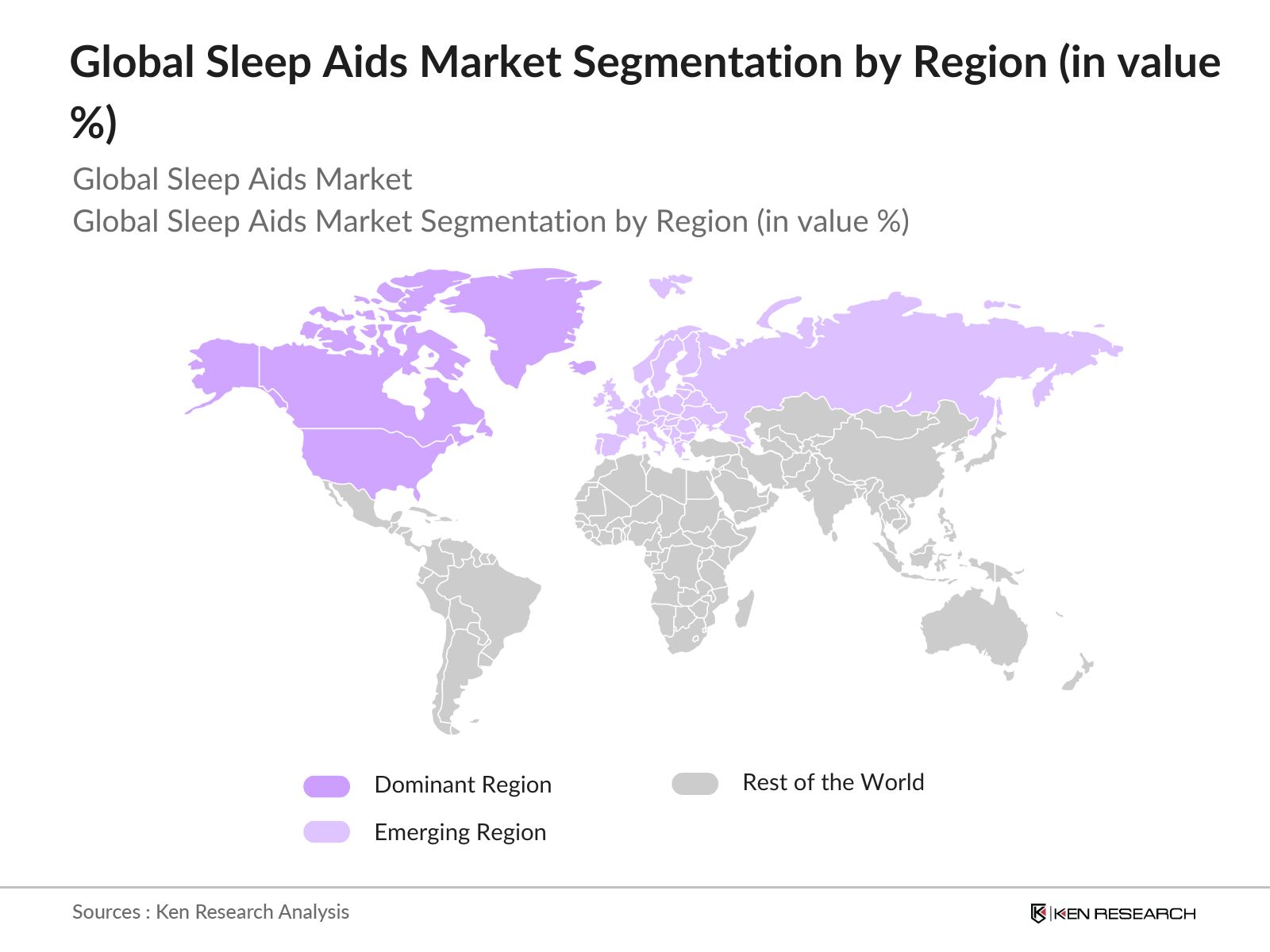
  • North America stands as the dominant region in the sleep aids market, primarily due to its advanced healthcare infrastructure, high awareness levels regarding sleep disorders, and substantial investments in sleep health research. The presence of major market players and a proactive approach to sleep health further solidify its leading position.
  • The regulatory landscape for sleep aids is shaped by the FDA, which sets stringent guidelines for the approval of sleep medications and devices. In 2022, the FDA approved 10 new sleep medications, highlighting its role in ensuring safety and efficacy in this market. The agency's guidelines also provide a framework for manufacturers to follow, encouraging innovation while ensuring consumer protection. As regulatory processes evolve, adherence to FDA standards will remain crucial for companies to successfully launch and market sleep aids.

Market Segmentation

  • By Product Type: The sleep aids market is segmented into mattresses & pillows, medications, sleep apnea devices, sleep laboratories, and home sleep tests. Among these, medications hold a dominant market share, driven by the widespread prevalence of insomnia and the availability of both prescription and over-the-counter sleep aids. The convenience and immediate relief offered by medications contribute to their leading position in the market.
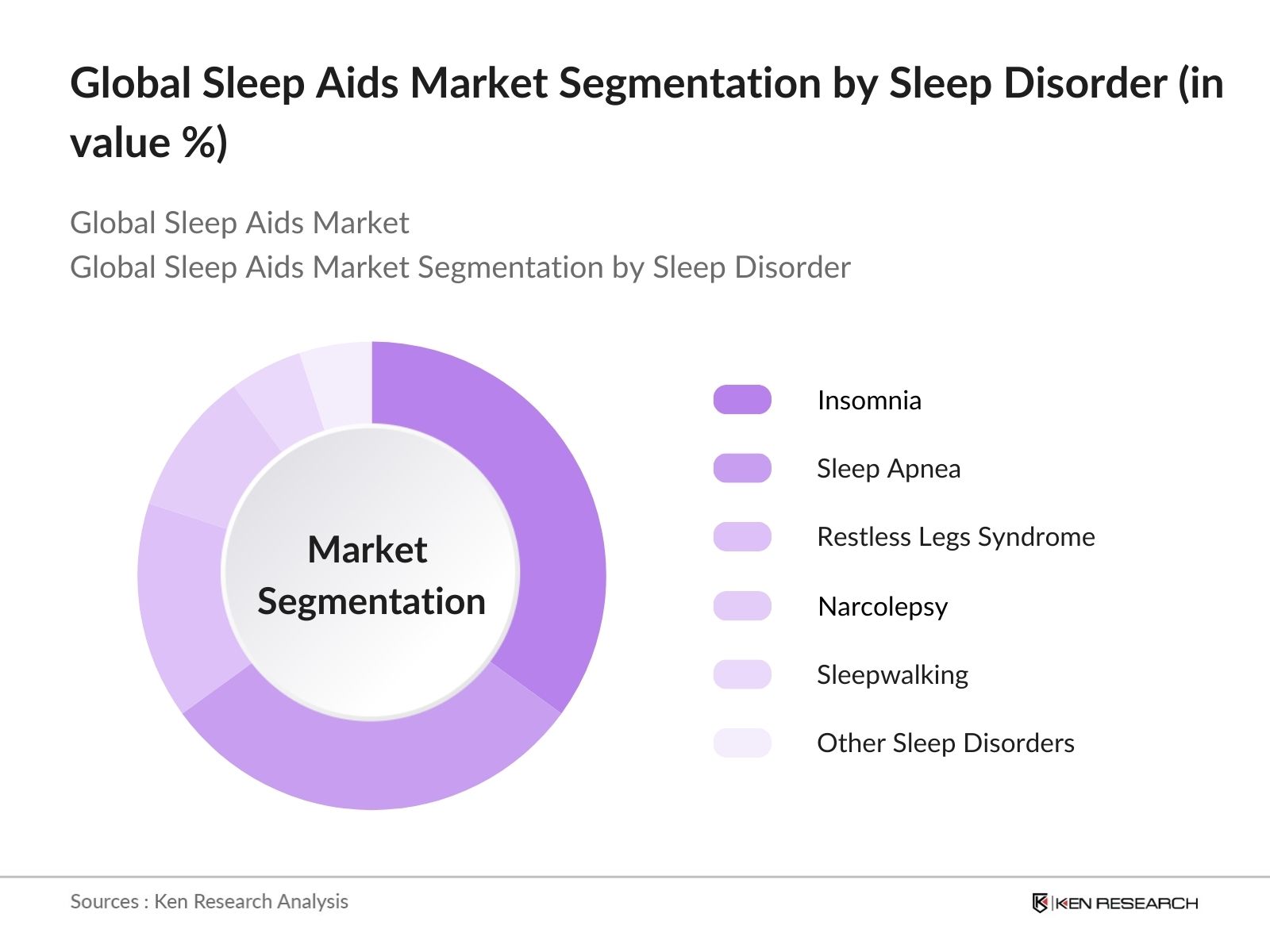
  • By Sleep Disorder: The market is categorized based on sleep disorders, including insomnia, sleep apnea, restless legs syndrome, narcolepsy, sleepwalking, and other sleep disorders. Insomnia emerges as the most prevalent segment, accounting for a significant portion of the market. This dominance is due to the high incidence of insomnia globally, influenced by factors such as stress, lifestyle changes, and mental health issues.

market overviews

  • By Region: Geographically, the market is divided into North America, Europe, Asia-Pacific, Latin America, and the Middle East & Africa. North America leads the market, attributed to its advanced healthcare systems, high awareness of sleep disorders, and significant investments in sleep health. The region's proactive approach to addressing sleep health issues and the presence of key market players further reinforce its dominance.

market overviews

Global Sleep Aids Market Competitive Landscape

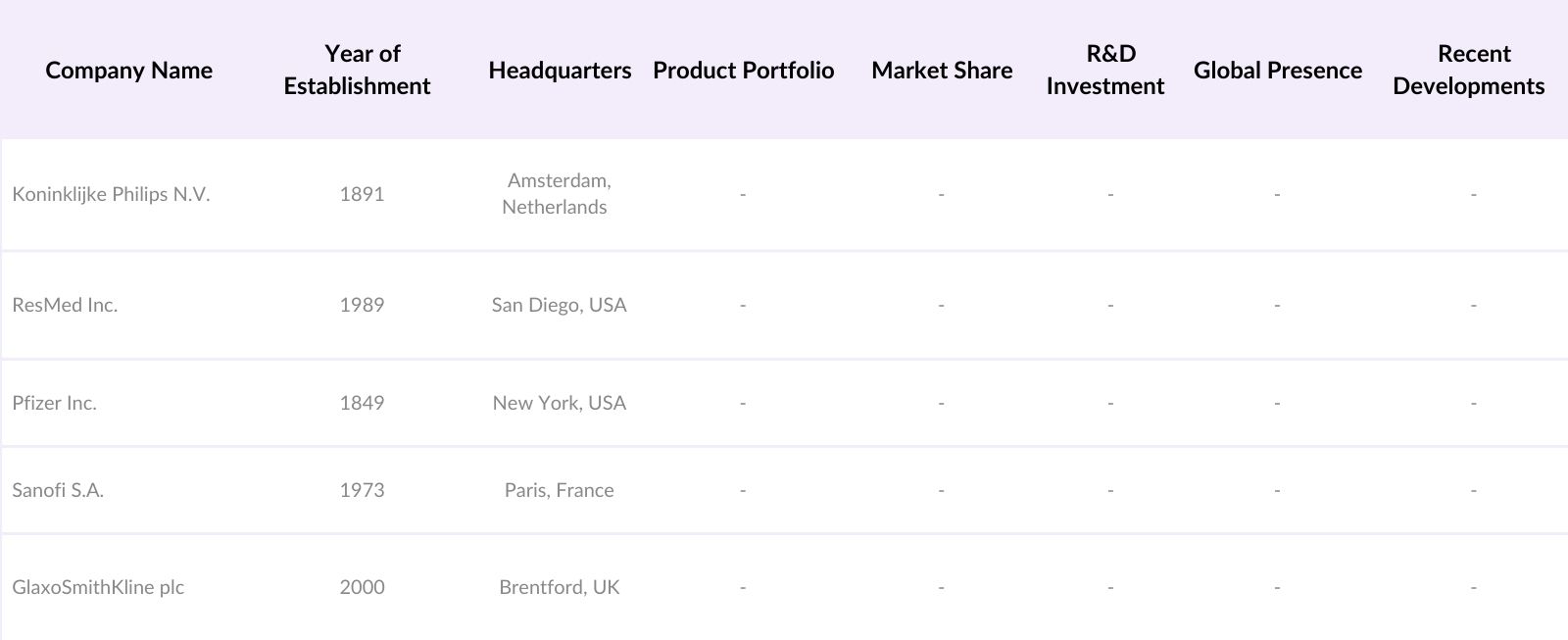
The global sleep aids market is characterized by the presence of several key players who contribute to its competitive dynamics. These companies are engaged in continuous research and development, product innovation, and strategic collaborations to maintain and enhance their market positions.
market overviews

Global Sleep Aids Market Analysis

Market Growth Drivers

  • Increasing Prevalence of Sleep Disorders: The prevalence of sleep disorders is increasing, with the World Health Organization (WHO) estimating that 30% of the global population suffers from insomnia and related conditions. In 2023, the global number of individuals experiencing sleep apnea is projected to reach over 936 million, with a substantial portion remaining undiagnosed. Additionally, according to the National Institutes of Health, 50-70 million adults in the U.S. have sleep disorders, highlighting the widespread nature of this issue. This rising prevalence is a major driver for the global sleep aids market as demand for effective treatments grows.
  • Rising Geriatric Population: The geriatric population is projected to grow exponentially, with the United Nations estimating that the number of people aged 65 and older will increase from 703 million in 2019 to 1.5 billion by 2050. Older adults are particularly susceptible to sleep disorders due to factors such as chronic illnesses and medication side effects. As of 2023, in the U.S. alone, 77 million adults are aged 50 or older, with a notable portion experiencing sleep disturbances, thereby driving the demand for sleep aids. This demographic trend presents a substantial opportunity for market expansion in sleep aids.
  • Growing Awareness About Sleep Health: Awareness regarding the importance of sleep health is on the rise, significantly impacting consumer behaviour. The American Sleep Association notes that nearly 70% of adults recognize the detrimental effects of poor sleep on overall health, including increased risk of chronic diseases such as obesity and diabetes. In 2022, nearly 70% of individuals actively sought information on sleep hygiene, indicating a growing consumer interest in maintaining healthy sleep patterns. This heightened awareness is expected to lead to increased adoption of sleep aids and therapies, propelling market growth.

Market Challenges

  • Side Effects Associated with Sleep Medications: Despite the rising demand for sleep aids, concerns about the side effects associated with prescription sleep medications pose significant challenges. According to the Food and Drug Administration (FDA), common side effects include dizziness, daytime drowsiness, and potential dependence on medications, impacting patient adherence to treatment. In 2022, it was reported that nearly 10% of patients using prescription sleep medications experienced adverse effects that led to discontinuation. This hesitance can limit market growth as consumers often prefer non-pharmacological options.
  • High Cost of Sleep Aid Devices: The financial burden of sleep aid devices can be prohibitive for many consumers. For example, the cost of a high-quality CPAP machine for sleep apnea can range from $800 to $3,000, which is a significant investment for individuals without insurance coverage. As of 2022, data indicates that 25% of Americans report being unable to afford necessary sleep treatment, which restricts market penetration. This high cost is a barrier for many potential users, presenting a challenge to the overall growth of the sleep aids market.

Global Sleep Aids Market Future Outlook

Over the next five years, the global sleep aids market is expected to witness substantial growth, driven by continuous advancements in sleep aid technologies, increasing consumer awareness about sleep health, and the rising prevalence of sleep disorders. The integration of digital health solutions and wearable devices is anticipated to further propel market expansion. Additionally, emerging markets in developing countries present significant opportunities for market players to expand their presence and tap into new customer bases.

Market Opportunities

  • Emerging Markets in Developing Countries: Emerging markets present growth opportunities for the sleep aids industry. According to the World Bank, the population in developing countries is expected to reach 8 billion by 2025, with a substantial portion facing sleep-related issues due to urbanization and lifestyle changes. For instance, in India, about 30% of the population is affected by sleep disorders, creating a demand for effective sleep solutions. The increasing middle-class population in these regions is also expected to drive consumption of sleep aids, leading to market expansion.
  • Integration of Wearable Technology: The integration of wearable technology into sleep monitoring presents new opportunities in the market. In 2022, approximately 33% of adults in the U.S. owned a wearable device, and this figure is projected to increase. These devices not only monitor sleep patterns but also provide personalized insights, allowing users to optimize their sleep health. The demand for such technologies is anticipated to grow, as more consumers seek data-driven solutions to improve their sleep quality, thus creating a favourable market environment for sleep aids.

Scope of the Report

Segment

Sub-Segments

By Product Type

Mattresses & Pillows
Medications
Prescription-Based Drugs
Over-the-Counter (OTC) Drugs
Sleep Apnea Devices
CPAP Devices
Adaptive Servo-Ventilators (ASVs)
Oral Appliances
Sleep Laboratories
Home Sleep Tests

By Sleep Disorder

Insomnia
Sleep Apnea
Restless Legs Syndrome
Narcolepsy
Sleepwalking
Other Sleep Disorders

By Distribution Channel

Hospital Pharmacies
Retail Pharmacies
Online Pharmacies
Sleep Clinics
E-commerce Platforms

By End-User

Home Care Settings
Hospitals
Sleep Laboratories
Specialty Clinics

By Region

North America
Europe
Asia-Pacific
Latin America
Middle East & Africa

Products

Key Target Audience

  • Sleep Aid Manufacturers

  • Healthcare Providers

  • Pharmaceutical Companies

  • Medical Device Manufacturers

  • Retail Pharmacies

  • Online Pharmacies

  • Government and Regulatory Bodies (e.g., FDA, EMA)

  • Investors and Venture Capitalist Firms

Companies

Players Mentioned in the Report

  • Koninklijke Philips N.V.

  • ResMed Inc.

  • Pfizer Inc.

  • Sanofi S.A.

  • GlaxoSmithKline plc

  • Merck & Co., Inc.

  • Cadwell Industries, Inc.

  • Natus Medical Incorporated

  • Drive DeVilbiss Healthcare

  • Fisher & Paykel Healthcare Corporation Limited

Table of Contents

1. Global Sleep Aids Market Overview

1.1. Definition and Scope

1.2. Market Taxonomy

1.3. Market Growth Rate

1.4. Market Segmentation Overview

2. Global Sleep Aids Market Size (In USD Billion)

2.1. Historical Market Size

2.2. Year-On-Year Growth Analysis

2.3. Key Market Developments and Milestones

3. Global Sleep Aids Market Analysis

3.1. Growth Drivers

3.1.1. Increasing Prevalence of Sleep Disorders

3.1.2. Rising Geriatric Population

3.1.3. Technological Advancements in Sleep Aid Devices

3.1.4. Growing Awareness About Sleep Health

3.2. Market Challenges

3.2.1. Side Effects Associated with Sleep Medications

3.2.2. High Cost of Sleep Aid Devices

3.2.3. Availability of Alternative Therapies

3.3. Opportunities

3.3.1. Emerging Markets in Developing Countries

3.3.2. Integration of Wearable Technology

3.3.3. Expansion of Online Retail Channels

3.4. Trends

3.4.1. Shift Towards Natural and Herbal Sleep Aids

3.4.2. Adoption of Home Sleep Testing

3.4.3. Personalized Sleep Solutions

3.5. Regulatory Landscape

3.5.1. FDA Approvals and Guidelines

3.5.2. European CE Marking

3.5.3. Asia-Pacific Regulatory Frameworks

3.6. SWOT Analysis

3.7. Stakeholder Ecosystem

3.8. Porters Five Forces Analysis

3.9. Competitive Landscape

4. Global Sleep Aids Market Segmentation

4.1. By Product Type (In Value %)

4.1.1. Mattresses & Pillows

4.1.2. Medications

4.1.2.1. Prescription-Based Drugs

4.1.2.2. Over-the-Counter (OTC) Drugs

4.1.3. Sleep Apnea Devices

4.1.3.1. Continuous Positive Airway Pressure (CPAP) Devices

4.1.3.2. Adaptive Servo-Ventilators (ASVs)

4.1.3.3. Oral Appliances

4.1.4. Sleep Laboratories

4.1.5. Home Sleep Tests

4.2. By Sleep Disorder (In Value %)

4.2.1. Insomnia

4.2.2. Sleep Apnea

4.2.3. Restless Legs Syndrome

4.2.4. Narcolepsy

4.2.5. Sleepwalking

4.2.6. Other Sleep Disorders

4.3. By Distribution Channel (In Value %)

4.3.1. Hospital Pharmacies

4.3.2. Retail Pharmacies

4.3.3. Online Pharmacies

4.3.4. Sleep Clinics

4.3.5. E-commerce Platforms

4.4. By End-User (In Value %)

4.4.1. Home Care Settings

4.4.2. Hospitals

4.4.3. Sleep Laboratories

4.4.4. Specialty Clinics

4.5. By Region (In Value %)

4.5.1. North America

4.5.2. Europe

4.5.3. Asia-Pacific

4.5.4. Latin America

4.5.5. Middle East & Africa

5. Global Sleep Aids Market Competitive Analysis

5.1. Detailed Profiles of Major Companies

5.1.1. Koninklijke Philips N.V.

5.1.2. ResMed Inc.

5.1.3. Pfizer Inc.

5.1.4. Sanofi S.A.

5.1.5. Merck & Co., Inc.

5.1.6. GlaxoSmithKline plc

5.1.7. Cadwell Industries, Inc.

5.1.8. Natus Medical Incorporated

5.1.9. Drive DeVilbiss Healthcare

5.1.10. Fisher & Paykel Healthcare Corporation Limited

5.1.11. SleepMed Inc.

5.1.12. Apnea Sciences Corporation

5.1.13. Compumedics Limited

5.1.14. Cleveland Medical Devices Inc.

5.1.15. Nihon Kohden Corporation

5.2. Cross Comparison Parameters (Revenue, Market Share, Product Portfolio, Geographic Presence, R&D Investment, Strategic Initiatives, Employee Strength, Year of Establishment)

5.3. Market Share Analysis

5.4. Strategic Initiatives

5.5. Mergers and Acquisitions

5.6. Investment Analysis

5.6.1. Venture Capital Funding

5.6.2. Government Grants

5.6.3. Private Equity Investments

6. Global Sleep Aids Market Regulatory Framework

6.1. International Standards and Certifications

6.2. Compliance Requirements

6.3. Certification Processes

7. Global Sleep Aids Market Future Projections (In USD Billion)

7.1. Future Market Size Projections

7.2. Key Factors Driving Future Market Growth

8. Global Sleep Aids Market Future Segmentation

8.1. By Product Type (In Value %)

8.2. By Sleep Disorder (In Value %)

8.3. By Distribution Channel (In Value %)

8.4. By End-User (In Value %)

8.5. By Region (In Value %)

9. Global Sleep Aids Market Analysts Recommendations

9.1. Total Addressable Market (TAM), Serviceable Available Market (SAM), and Serviceable Obtainable Market (SOM) Analysis

9.2. Customer Cohort Analysis

9.3. Marketing Initiatives and Recommendations

9.4. White Space Opportunity Analysis

9.5. Strategic Investment Recommendations

9.6. Pricing Strategy and Product Positioning

9.7. Recommendations for Market Entry and Expansion

Disclaimer Contact Us

Research Methodology

Step 1: Identification of Key Variables

The initial phase involves constructing an ecosystem map encompassing all major stakeholders within the global sleep aids market. This step is underpinned by extensive desk research, utilizing a combination of secondary and proprietary databases to gather comprehensive industry-level information. The primary objective is to identify and define the critical variables that influence market dynamics.

Step 2: Market Analysis and Construction

In this phase, we compile and analyze historical data pertaining to the global sleep aids market. This includes assessing market penetration, the ratio of marketplaces to service providers, and the resultant revenue generation. Furthermore, an evaluation of service quality statistics is conducted to ensure the reliability and accuracy of the revenue estimates.

Step 3: Hypothesis Validation and Expert Consultation

Market hypotheses are developed and subsequently validated through computer-assisted telephone interviews (CATIs) with industry experts representing a diverse array of companies. These consultations provide valuable operational and financial insights directly from industry practitioners, which are instrumental in refining and corroborating the market data.

Step 4: Research Synthesis and Final Output

The final phase involves direct engagement with multiple sleep aid manufacturers to acquire detailed insights into product segments, sales performance, consumer preferences, and other pertinent factors. This interaction serves to verify and complement the statistics derived from the bottom-up approach, thereby ensuring a comprehensive, accurate, and validated analysis.

Frequently Asked Questions

1. How big is the Global Sleep Aids Market?

The global sleep aids market is valued at USD 60 billion, driven by increasing sleep disorders, advancements in technology, and heightened awareness of sleep health.

2. What are the main drivers of the Global Sleep Aids Market?

Key drivers include the rising prevalence of sleep disorders like insomnia, the growing geriatric population, and advancements in sleep aid technologies, such as wearable sleep trackers and CPAP devices.

3. Who are the major players in the Global Sleep Aids Market?

Major players include Koninklijke Philips N.V., ResMed Inc., Pfizer Inc., Sanofi S.A., and GlaxoSmithKline plc, who lead due to their strong R&D investments and product innovations.

4. What are the challenges in the Global Sleep Aids Market?

The market faces challenges like the high cost of advanced devices, potential side effects of sleep medications, and the availability of alternative therapies.

Why Buy From Us?

RRR
Refine Robust Result (RRR) Framework

What makes us stand out is that our consultants follows Robust, Refine and Result (RRR) methodology. i.e. Robust for clear definitions, approaches and sanity checking, Refine for differentiating respondents facts and opinions and Result for presenting data with story

Our Reach Is Unmatched

We have set a benchmark in the industry by offering our clients with syndicated and customized market research reports featuring coverage of entire market as well as meticulous research and analyst insights.

Research
Shifting the Research Paradigm

While we don't replace traditional research, we flip the method upside down. Our dual approach of Top Bottom & Bottom Top ensures quality deliverable by not just verifying company fundamentals but also looking at the sector and macroeconomic factors.

Insite
More Insights-Better Decisions

With one step in the future, our research team constantly tries to show you the bigger picture. We help with some of the tough questions you may encounter along the way: How is the industry positioned? Best marketing channel? KPI's of competitors? By aligning every element, we help maximize success.

Trust
Transparency and Trust

Our report gives you instant access to the answers and sources that other companies might choose to hide. We elaborate each steps of research methodology we have used and showcase you the sample size to earn your trust.

support
Round the Clock Support

If you need any support, we are here! We pride ourselves on universe strength, data quality, and quick, friendly, and professional service.

Why Client Choose Us?

400000+ Reports in repository
150+ Consulting project a year
100+ Analysts
8000+ Client Queries in 2022