
Global Small Unmanned Aerial Vehicle (UAV) Market Outlook to 2030
Region:Global
Author(s):Vijay Kumar
Product Code:KROD1402
November 2024
90
About the Report
Global Small Unmanned Aerial Vehicle (UAV) Market Overview
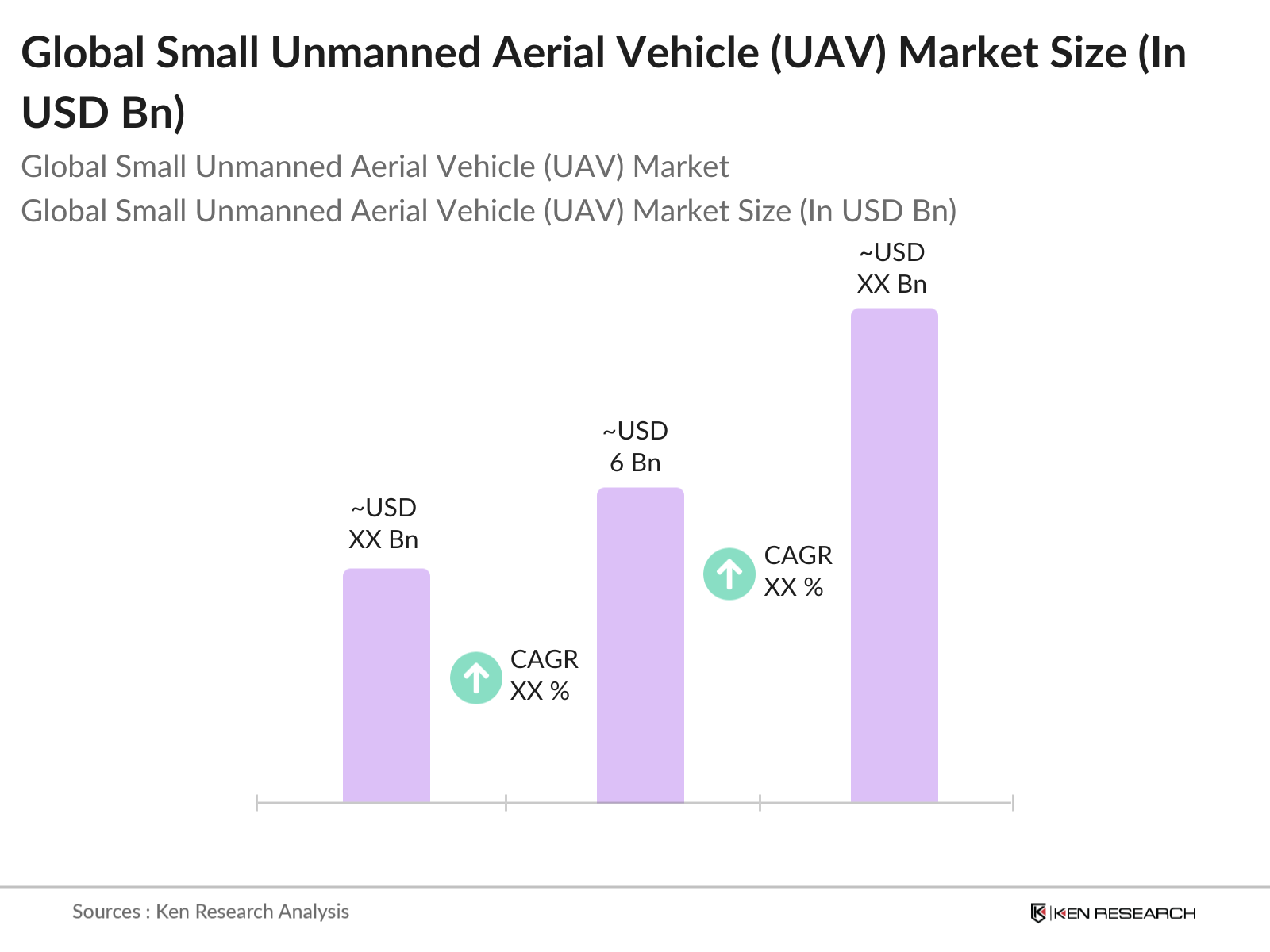
- The global small UAV market is valued at USD 6 billion, based on a five-year historical analysis. This market is primarily driven by the increasing adoption of small UAVs in various sectors, including defense, agriculture, and logistics. Factors such as technological advancements, enhanced payload capacities, and favorable regulatory environments contribute significantly to this growth. The versatility and cost-effectiveness of these UAVs are making them indispensable tools for tasks like aerial surveillance, mapping, and delivery services.
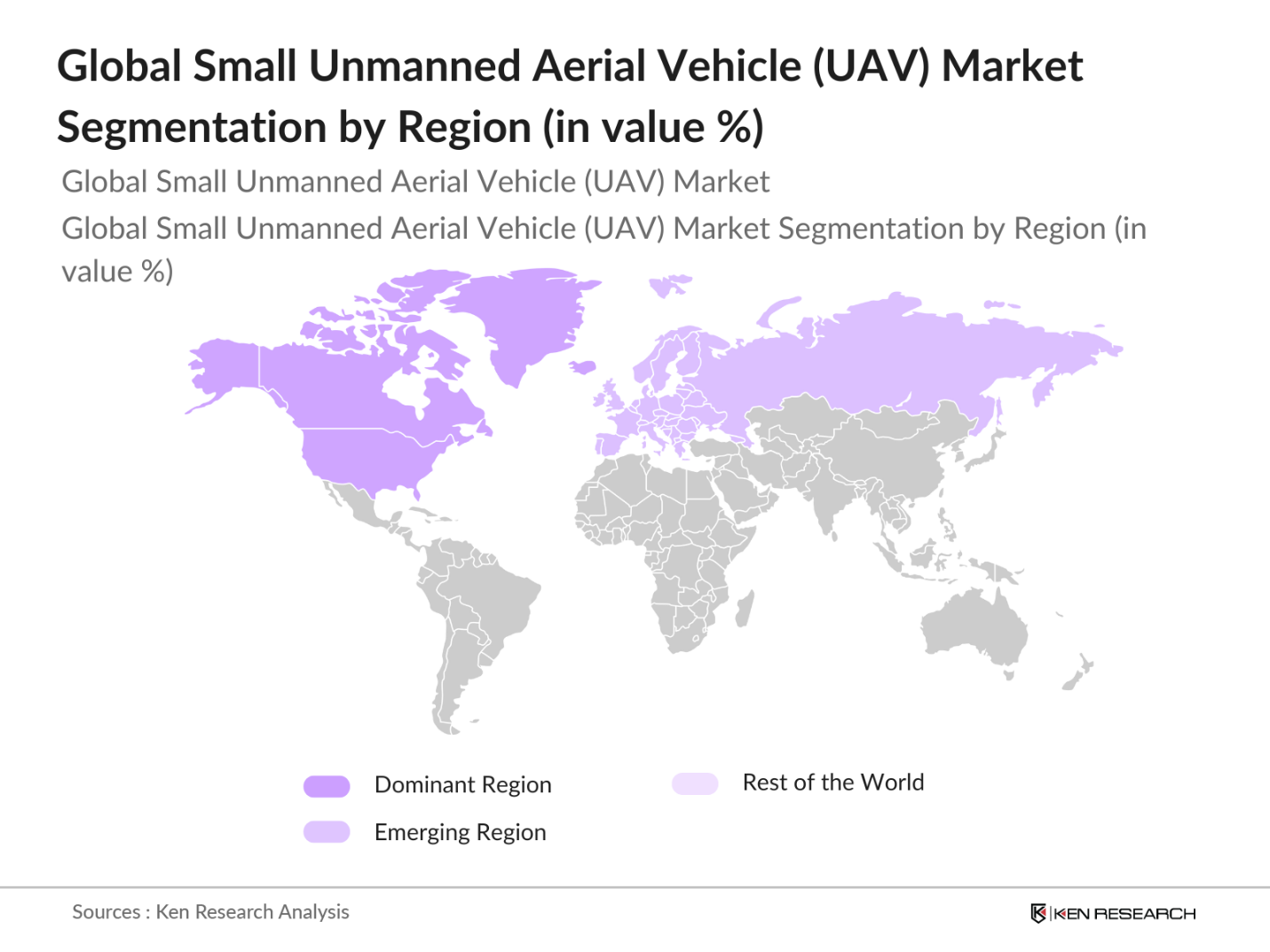
- North America stands as the dominant region in the small UAV market, largely due to substantial investments in defense and commercial drone applications. The United States, in particular, has been at the forefront, leveraging advanced technology and supportive regulatory frameworks to foster innovation and deployment of small UAVs across multiple industries.
- Airspace integration policies in several countries now accommodate UAV traffic through dedicated corridors, facilitating smoother commercial UAV operations. In 2024, Frances Directorate General for Civil Aviation launched drone corridors in select regions, allowing UAVs dedicated airspace to minimize risks of mid-air interference with manned aircraft.
Global Small Unmanned Aerial Vehicle (UAV) Market Segmentation
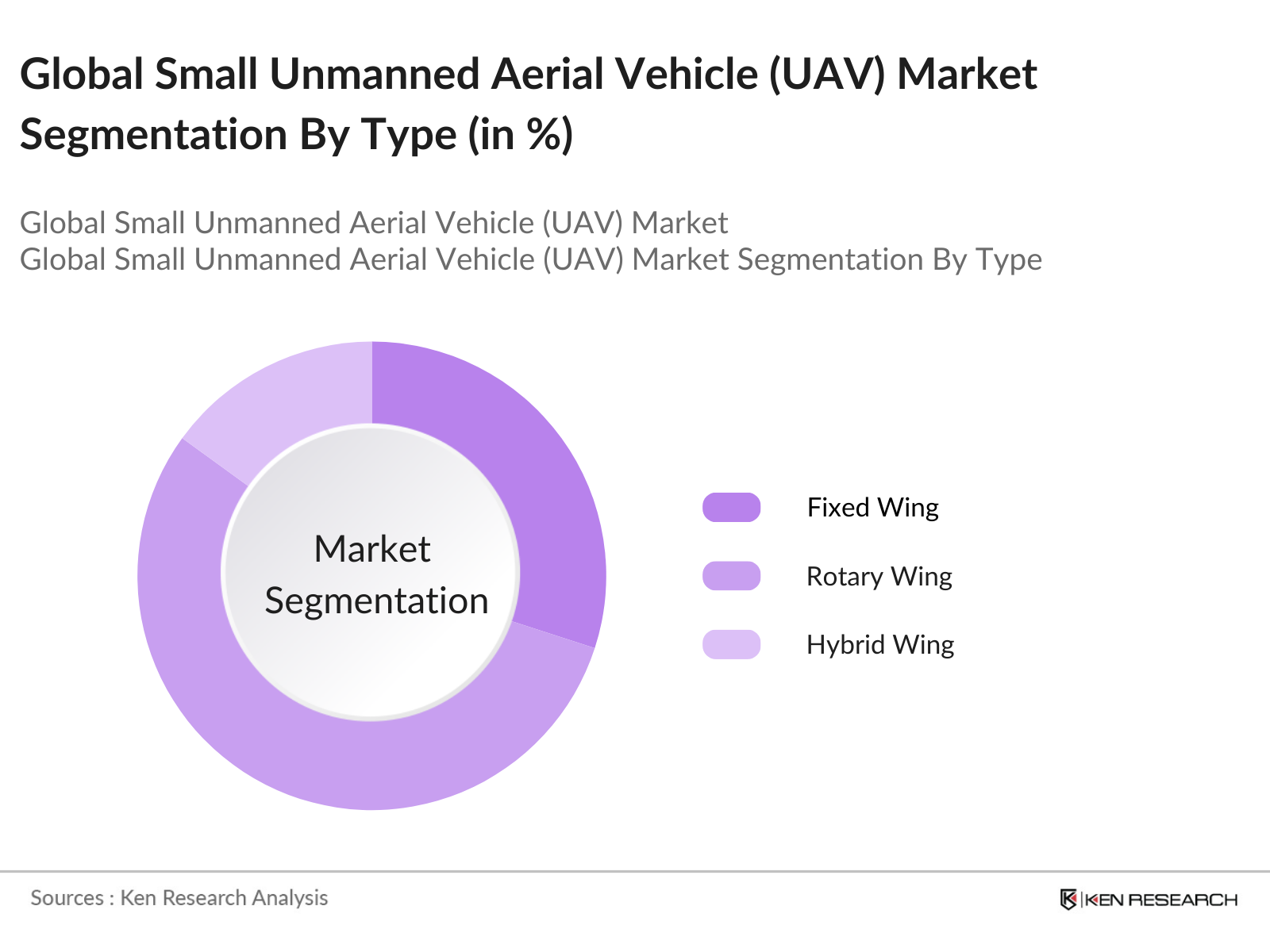
By Type: The market is segmented by type into Fixed Wing, Rotary Wing, and Hybrid Wing. Among these, Rotary Wing UAVs hold a dominant market share due to their ability to hover and perform vertical take-offs and landings, making them ideal for applications such as aerial photography, surveillance, and inspection tasks. Their versatility and ease of maneuverability contribute significantly to their widespread adoption across various industries.
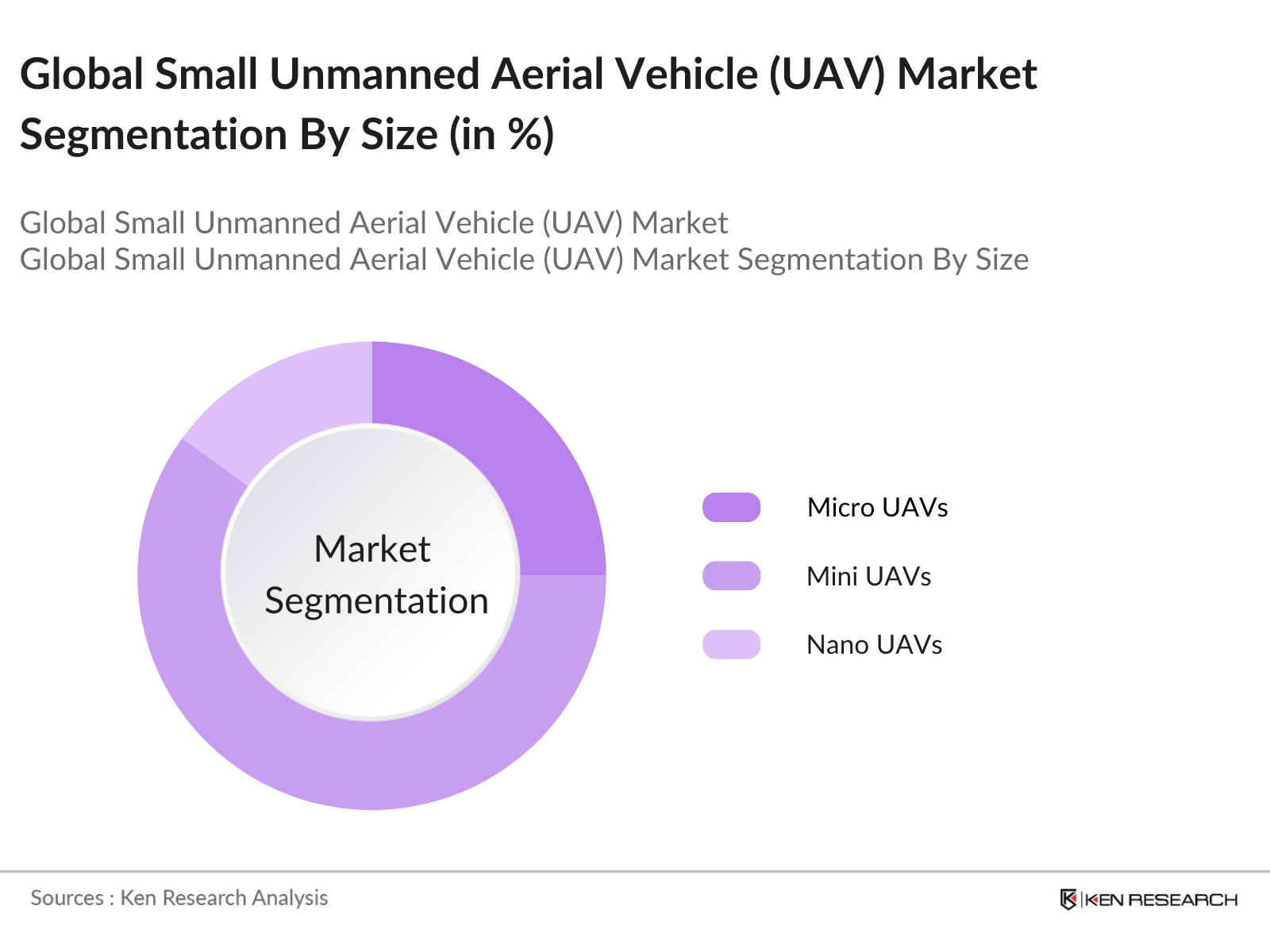
By Size: In terms of size, the market is categorized into Micro UAVs, Mini UAVs, and Nano UAVs. Mini UAVs dominate the market share, primarily due to their optimal balance between payload capacity and operational range. They are extensively used in military reconnaissance, environmental monitoring, and agricultural applications, offering a practical solution for tasks requiring moderate endurance and payload capabilities.
By Region: Geographically, the small UAV market is divided into North America, Europe, Asia-Pacific, Latin America, and the Middle East & Africa. North America leads the market, driven by technological advancements and significant investments in drone technology. The presence of key manufacturers and favorable regulatory environments further bolster the region's dominance in the small UAV sector.
Global Small Unmanned Aerial Vehicle (UAV) Market Competitive Landscape
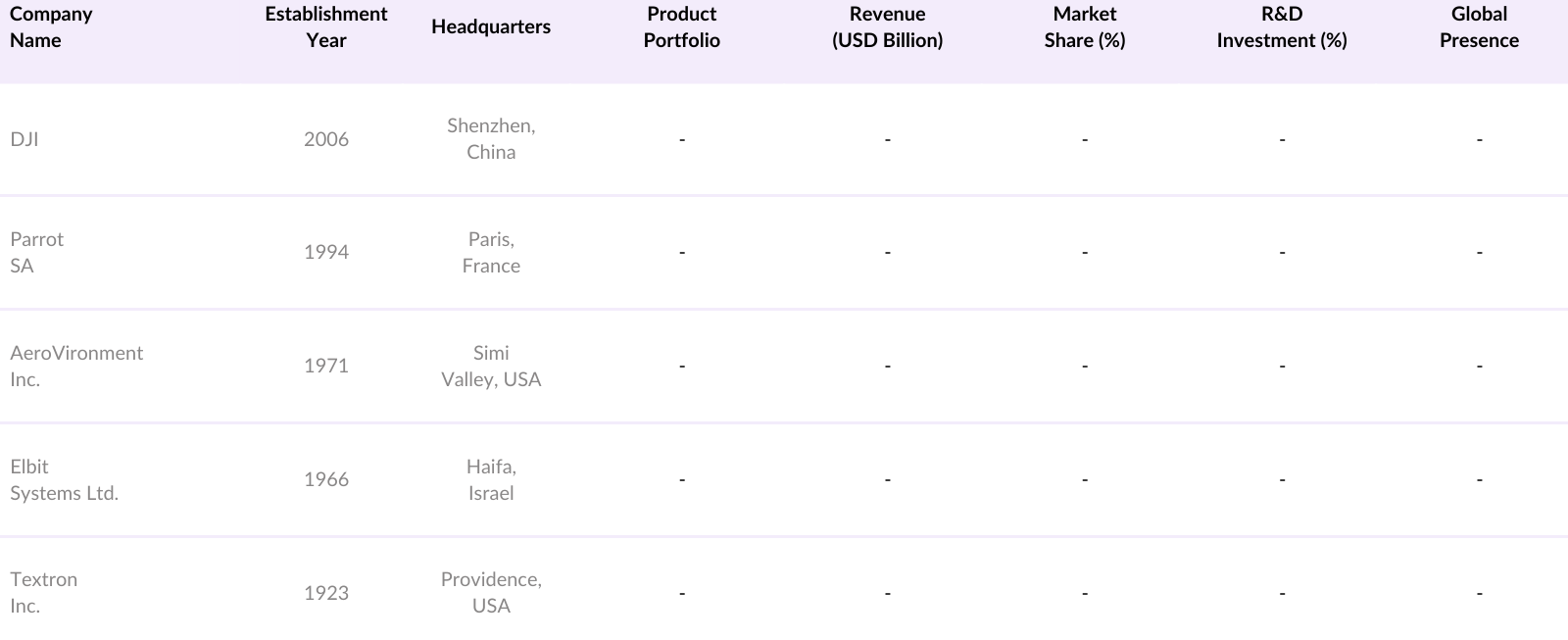
The small UAV market is characterized by the presence of several key players who contribute to its dynamic landscape. These companies are engaged in continuous innovation and strategic partnerships to enhance their market position.
Global Small Unmanned Aerial Vehicle (UAV) Industry Analysis
Growth Drivers
- Technological Advancements: Advances in UAV technology are rapidly enhancing their capabilities in real-time imaging, collision avoidance, and beyond-visual-line-of-sight (BVLOS) flight. According to recent data, over 10,000 patents related to UAV technology have been filed globally since 2020, signaling intense research and development efforts. Notably, the European Union and North America saw significant government-backed initiatives supporting UAV tech development. For example, the EU's Horizon 2020 project allocated over 500 million toward UAV-related innovations, enabling breakthroughs in lightweight materials and AI integration.
- Increasing Commercial Applications: Small UAVs are diversifying into commercial sectors beyond traditional roles, especially in sectors like agriculture, delivery services, and infrastructure inspection. The U.S. Department of Agriculture reports that over 250,000 UAVs were deployed in precision agriculture, improving crop yields by optimizing pesticide use and water distribution in 2024. Additionally, major logistics companies, including national postal services, are conducting pilot programs with UAVs for last-mile delivery solutions, reflecting their growing commercial viability.
- Rising Defense Expenditure: Global defense spending has surged, with countries such as the U.S., China, and India significantly increasing budgets for UAVs due to their efficiency in surveillance and border security. In 2024, the U.S. Department of Defense allocated $5 billion specifically to UAV programs, including initiatives to develop swarming drones and enhance ISR (Intelligence, Surveillance, and Reconnaissance) capabilities. Similarly, Indias Ministry of Defense has raised its UAV budget by 15%, aimed at enhancing border patrol and strategic assets.
Market Challenges
- Regulatory Constraints: Stringent regulations regarding airspace usage continue to limit UAV adoption, especially in densely populated and restricted zones. In 2024, 25% of countries, including India and Brazil, mandated comprehensive permits even for non-commercial UAV use, impacting commercial operations. The International Civil Aviation Organization (ICAO) highlighted concerns over UAV integration in shared airspace, stressing the need for updated global frameworks.
- Security and Privacy Concerns: UAVs raise significant security and privacy issues, especially in urban and densely populated areas. In 2024, the European Commission reported that over 1,200 incidents of UAV-related privacy invasions were logged across EU nations. Security agencies in the U.S. are also heightening efforts to monitor UAV activity near critical infrastructure, leading to the deployment of over 500 UAV detection systems.
Global Small Unmanned Aerial Vehicle (UAV) Market Future Outlook
Over the next five years, the global small UAV market is expected to witness substantial growth, driven by continuous technological advancements, expanding commercial applications, and supportive regulatory frameworks. The integration of artificial intelligence and machine learning into UAV systems is anticipated to enhance their capabilities, opening new avenues in sectors such as logistics, agriculture, and environmental monitoring. Additionally, increasing investments in research and development are likely to result in more efficient and versatile UAV solutions, further propelling market expansion.
Market Opportunities
- Emerging Markets: Emerging markets in Asia and Latin America are showing increased interest in small UAVs, especially in agriculture, mapping, and emergency response. In 2024, Brazil's agricultural sector, for instance, adopted UAV technology for crop monitoring across 500,000 hectares, driven by government incentives. Similar programs are taking root in African nations like Kenya and Nigeria, aiming to leverage UAVs for precision agriculture and conservation efforts.
- Integration with AI and IoT: The integration of AI and IoT in UAVs enables smarter, autonomous operations that enhance efficiency in sectors like logistics, mining, and surveillance. In 2024, over 200,000 UAVs equipped with IoT capabilities were deployed in smart city projects across North America and Europe, improving traffic monitoring and energy management. AI integration has also seen increased application in UAV-based disaster response, with AI-based navigation enhancing UAVs' capability to assess damage in hazardous areas
Scope of the Report
|
Type |
Fixed Wing |
|
Size |
Micro UAVs |
|
Application |
Military and Defense |
|
Power Source |
Battery Powered |
|
Region |
North America |
Products
Key Target Audience
Defense and Security Agencies (e.g., U.S. Department of Defense)
Agricultural Enterprises
Environmental Monitoring Organizations
Logistics and Delivery Companies
Media and Entertainment Companies
Infrastructure Inspection Firms
Investments and Venture Capitalist Firms
Government and Regulatory Bodies (e.g., Federal Aviation Administration)
Companies
Players Mentioned in the Report
DJI
Parrot SA
AeroVironment Inc.
Elbit Systems Ltd.
Textron Inc.
Lockheed Martin Corporation
Boeing
Northrop Grumman Corporation
Israel Aerospace Industries Ltd.
FLIR Systems Inc.
Table of Contents
1. Global Small UAV Market Overview
1.1. Definition and Scope
1.2. Market Taxonomy
1.3. Market Growth Rate
1.4. Market Segmentation Overview
2. Global Small UAV Market Size (In USD Billion)
2.1. Historical Market Size
2.2. Year-On-Year Growth Analysis
2.3. Key Market Developments and Milestones
3. Global Small UAV Market Analysis
3.1. Growth Drivers
3.1.1. Technological Advancements
3.1.2. Increasing Commercial Applications
3.1.3. Rising Defense Expenditure
3.1.4. Regulatory Support
3.2. Market Challenges
3.2.1. Regulatory Constraints
3.2.2. Security and Privacy Concerns
3.2.3. Limited Battery Life
3.3. Opportunities
3.3.1. Emerging Markets
3.3.2. Integration with AI and IoT
3.3.3. Expansion in Agricultural Sector
3.4. Trends
3.4.1. Miniaturization of UAVs
3.4.2. Increased Use in Logistics
3.4.3. Development of Hybrid UAVs
3.5. Government Regulations
3.5.1. Airspace Integration Policies
3.5.2. Certification Requirements
3.5.3. Import and Export Controls
3.6. SWOT Analysis
3.7. Stakeholder Ecosystem
3.8. Porters Five Forces Analysis
3.9. Competitive Landscape
4. Global Small UAV Market Segmentation
4.1. By Type (In Value %)
4.1.1. Fixed Wing
4.1.2. Rotary Wing
4.1.3. Hybrid Wing
4.2. By Size (In Value %)
4.2.1. Micro UAVs
4.2.2. Mini UAVs
4.2.3. Nano UAVs
4.3. By Application (In Value %)
4.3.1. Military and Defense
4.3.2. Civil and Commercial
4.3.3. Government and Law Enforcement
4.4. By Power Source (In Value %)
4.4.1. Battery Powered
4.4.2. Fuel Powered
4.4.3. Hybrid Powered
4.5. By Region (In Value %)
4.5.1. North America
4.5.2. Europe
4.5.3. Asia-Pacific
4.5.4. Latin America
4.5.5. Middle East and Africa
5. Global Small UAV Market Competitive Analysis
5.1. Detailed Profiles of Major Companies
5.1.1. DJI
5.1.2. Parrot SA
5.1.3. AeroVironment Inc.
5.1.4. Elbit Systems Ltd.
5.1.5. Textron Inc.
5.1.6. Lockheed Martin Corporation
5.1.7. Boeing
5.1.8. Northrop Grumman Corporation
5.1.9. Israel Aerospace Industries Ltd.
5.1.10. FLIR Systems Inc.
5.1.11. Thales Group
5.1.12. Saab AB
5.1.13. BAE Systems plc
5.1.14. General Atomics Aeronautical Systems
5.1.15. Leonardo S.p.A.
5.2. Cross Comparison Parameters (Revenue, Market Share, Product Portfolio, Geographic Presence, R&D Investment, Strategic Initiatives, Number of Employees, Year Established)
5.3. Market Share Analysis
5.4. Strategic Initiatives
5.5. Mergers and Acquisitions
5.6. Investment Analysis
5.6.1. Venture Capital Funding
5.6.2. Government Grants
5.6.3. Private Equity Investments
6. Global Small UAV Market Regulatory Framework
6.1. International Standards
6.2. Regional Regulations
6.3. Compliance Requirements
6.4. Certification Processes
7. Global Small UAV Future Market Size (In USD Billion)
7.1. Future Market Size Projections
7.2. Key Factors Driving Future Market Growth
8. Global Small UAV Future Market Segmentation
8.1. By Type (In Value %)
8.2. By Size (In Value %)
8.3. By Application (In Value %)
8.4. By Power Source (In Value %)
8.5. By Region (In Value %)
9. Global Small UAV Market Analysts Recommendations
9.1. Total Addressable Market (TAM) Analysis
9.2. Serviceable Available Market (SAM) Analysis
9.3. Serviceable Obtainable Market (SOM) Analysis
9.4. Customer Cohort Analysis
9.5. Marketing Initiatives
9.6. White Space Opportunity Analysis
Disclaimer Contact UsResearch Methodology
Step 1: Identification of Key Variables
The initial phase involves constructing an ecosystem map encompassing all major stakeholders within the global small UAV market. This step is underpinned by extensive desk research, utilizing a combination of secondary and proprietary databases to gather comprehensive industry-level information. The primary objective is to identify and define the critical variables that influence market dynamics.
Step 2: Market Analysis and Construction
In this phase, we compile and analyze historical data pertaining to the global small UAV market. This includes assessing market penetration, the ratio of marketplaces to service providers, and the resultant revenue generation. Furthermore, an evaluation of service quality statistics will be conducted to ensure the reliability and accuracy of the revenue estimates.
Step 3: Hypothesis Validation and Expert Consultation
Market hypotheses will be developed and subsequently validated through computer-assisted telephone interviews (CATI) with industry experts representing a diverse array of companies. These consultations provide valuable operational and financial insights directly from industry practitioners, instrumental in refining and corroborating the market data.
Step 4: Research Synthesis and Final Output
The final phase involves direct engagement with multiple UAV manufacturers to acquire detailed insights into product segments, sales performance, consumer preferences, and other pertinent factors. This interaction serves to verify and complement the statistics derived from the bottom-up approach, ensuring a comprehensive, accurate, and validated analysis of the global small UAV market.
Frequently Asked Questions
1. How big is the global small UAV market?
The global small UAV market is valued at USD 6 billion, based on a five-year historical analysis. This market is primarily driven by the increasing adoption of small UAVs in various sectors, including defense, agriculture, and logistics.
2. What are the challenges in the global small UAV market?
Key challenges include stringent regulatory requirements, security concerns, and technological limitations like limited battery life, impacting the operational effectiveness of small UAVs.
3. Who are the major players in the global small UAV market?
Major players in the market include DJI, AeroVironment Inc., Parrot SA, Elbit Systems Ltd., and Textron Inc., who dominate due to their advanced technology and extensive product portfolios.
4. What are the growth drivers of the global small UAV market?
Growth drivers include the increasing adoption of UAVs for surveillance, mapping, and delivery, coupled with advancements in AI and regulatory support for commercial applications.
Why Buy From Us?

What makes us stand out is that our consultants follows Robust, Refine and Result (RRR) methodology. i.e. Robust for clear definitions, approaches and sanity checking, Refine for differentiating respondents facts and opinions and Result for presenting data with story

We have set a benchmark in the industry by offering our clients with syndicated and customized market research reports featuring coverage of entire market as well as meticulous research and analyst insights.

While we don't replace traditional research, we flip the method upside down. Our dual approach of Top Bottom & Bottom Top ensures quality deliverable by not just verifying company fundamentals but also looking at the sector and macroeconomic factors.

With one step in the future, our research team constantly tries to show you the bigger picture. We help with some of the tough questions you may encounter along the way: How is the industry positioned? Best marketing channel? KPI's of competitors? By aligning every element, we help maximize success.

Our report gives you instant access to the answers and sources that other companies might choose to hide. We elaborate each steps of research methodology we have used and showcase you the sample size to earn your trust.

If you need any support, we are here! We pride ourselves on universe strength, data quality, and quick, friendly, and professional service.