















Global Small Wind Market Outlook to 2030
Region:Global
Author(s):Naman Rohilla
Product Code:KROD8523
December 2024
88
About the Report
Global Small Wind Market Overview
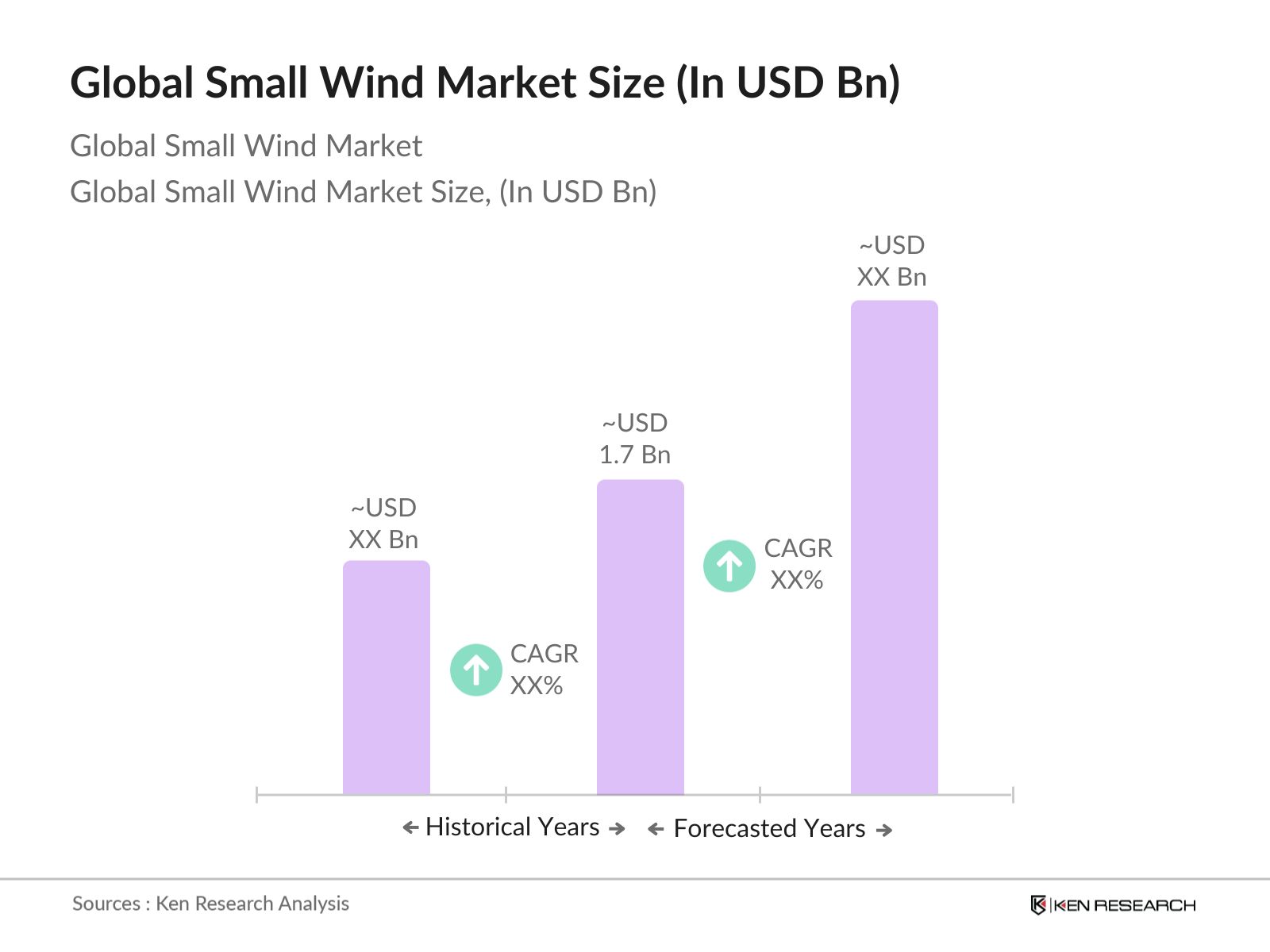
- The Global Small Wind Market is valued at USD 1.7 billion, reflecting a steady expansion over the past five years. This growth is driven by increasing rural electrification needs, a substantial demand for off-grid power solutions, and supportive government policies that promote renewable energy integration. Technological advancements, specifically in low-wind-speed turbines, have reduced costs and improved accessibility for smaller-scale energy projects, adding to the markets momentum.
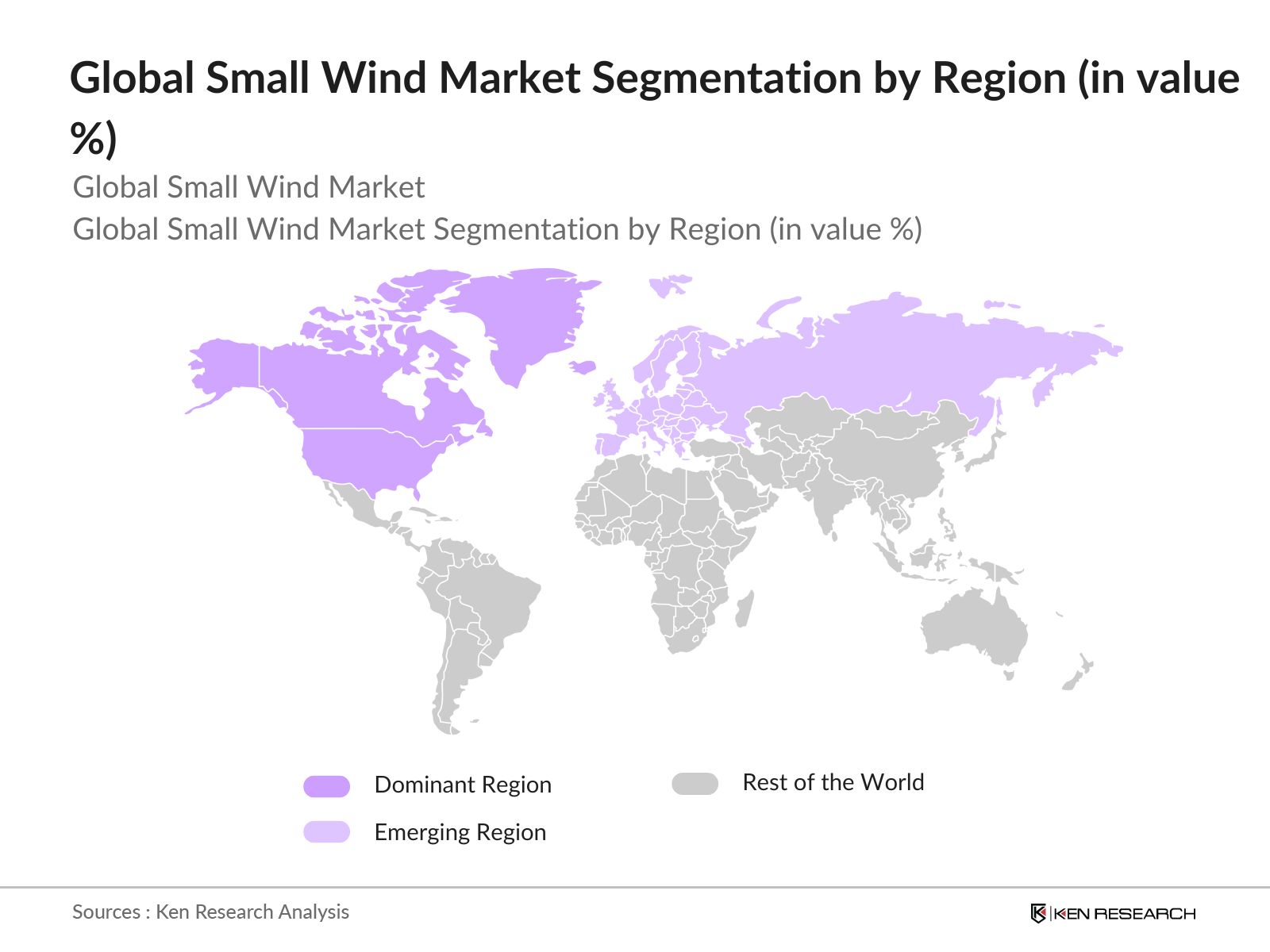
- The market is primarily dominated by regions like North America and Europe. North America leads due to supportive policies and a robust demand for clean energy solutions across both rural and urban areas. Europes dominance is attributed to stringent environmental regulations and proactive subsidies to achieve renewable energy targets, especially in countries such as Germany and Denmark, which emphasize rural grid independence and sustainability.
- Certification programs ensure that small wind systems meet reliability standards, particularly important in the U.S. where the Small Wind Certification Council tests and certifies turbines. In 2024, 85% of installed turbines in the U.S. received SWCC certification, enhancing consumer confidence and promoting adoption. These standards are critical for the integration of small wind in distributed energy systems across rural and urban settings source.
Global Small Wind Market Segmentation
- By Product Type: The Global Small Wind Market is segmented by product type into horizontal axis wind turbines and vertical axis wind turbines. Recently, horizontal axis wind turbines hold a dominant market share in this segment. The primary reasons are their higher efficiency in capturing wind energy, established technological maturity, and widespread use in small-scale projects across rural and urban landscapes, where they provide reliable, efficient power solutions.
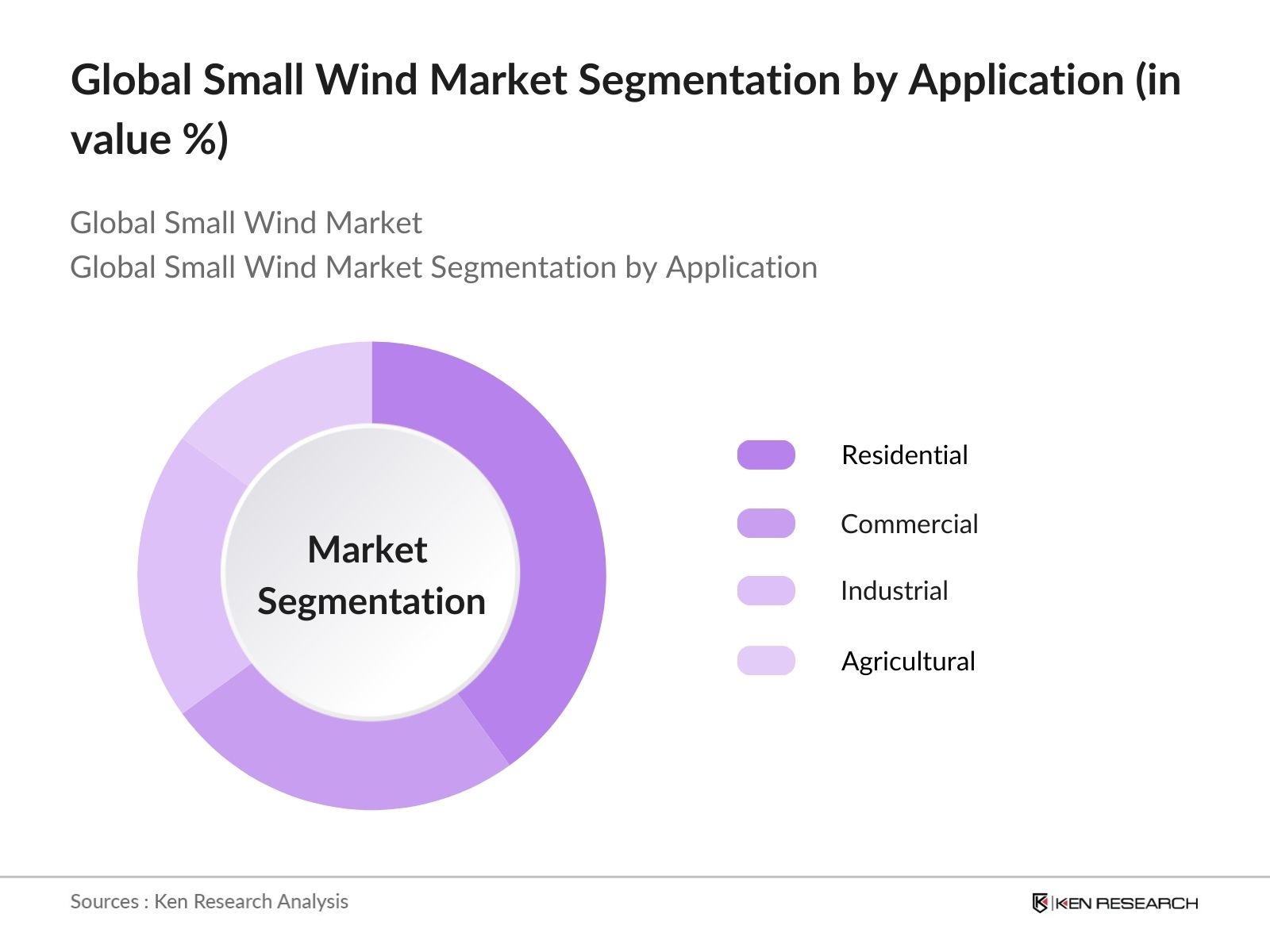
- By Application: The market is segmented by application into residential, commercial, industrial, and agricultural. The residential segment has the largest market share, largely due to increasing awareness of renewable energy among homeowners and the desire for energy independence. Small wind installations in residential areas are gaining popularity for their ability to offset energy costs while promoting environmental sustainability.
- By Region: The market is segmented by region into North America, Europe, Asia-Pacific, Latin America, and Middle East & Africa. North America leads the regional segment due to favorable regulatory frameworks, high awareness of renewable energy, and consistent investments in small wind projects. The well-established infrastructure for renewable energy further supports the regions market leadership.
Global Small Wind Market Competitive Landscape
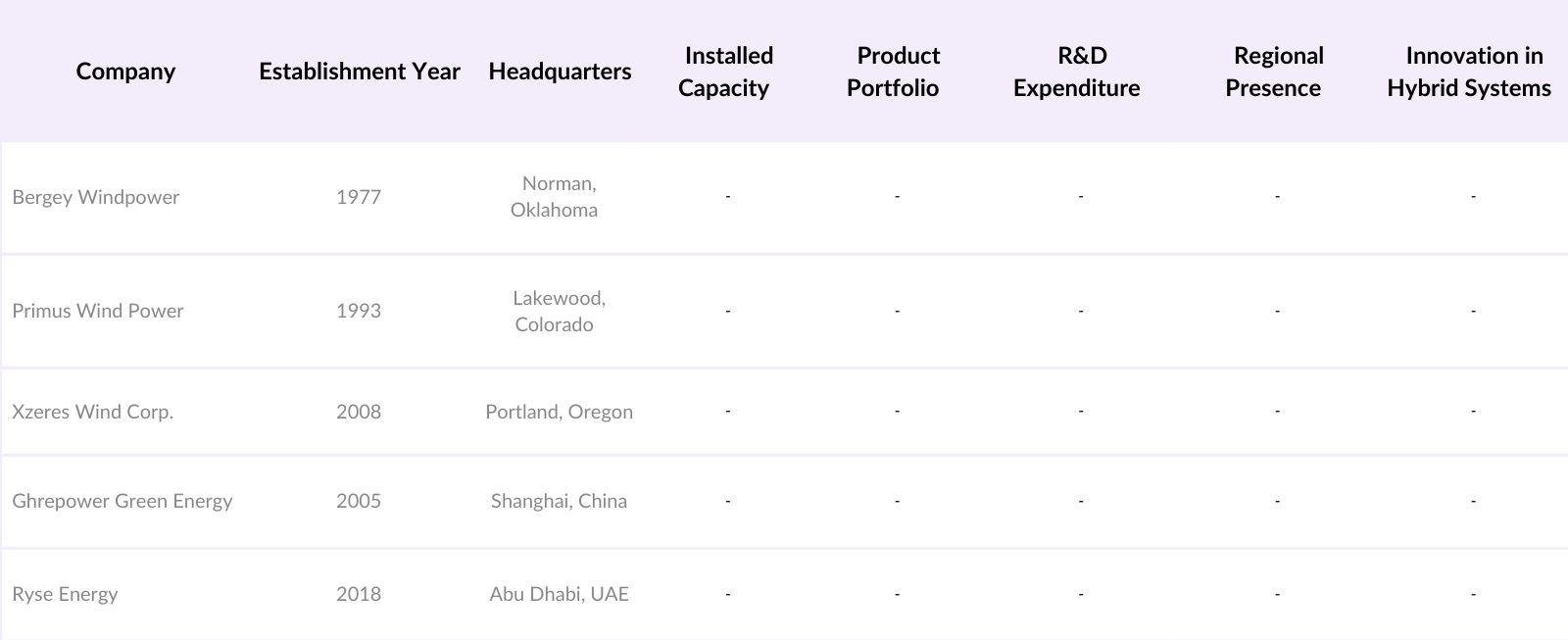
The Global Small Wind Market is driven by the presence of both established and emerging companies, such as Bergey Windpower, Primus Wind Power, and Xzeres Wind Corp. These players leverage technological expertise and regional strengths to maintain market positions, with notable investments in low-wind-speed innovations and rural electrification initiatives.
Global Small Wind Market Analysis
Market Growth Drivers
- Rural Electrification Initiatives: In 2024, over 789 million people still lack access to electricity globally, a gap particularly evident in rural regions of Africa and South Asia. The World Bank estimates that off-grid solutions, including small wind systems, are critical for achieving universal energy access by 2030. Current rural electrification programs, supported by $2 billion in annual funding from agencies like the World Bank, emphasize distributed energy systems. These efforts bolster the demand for small wind installations in rural zones where centralized grid extension remains financially and logistically impractical.
- Off-Grid Demand: Off-grid energy systems, particularly in remote or island nations, account for 14% of global energy expansion needs in 2024. According to the International Renewable Energy Agency, over 50 million people reside in areas where small wind installations can supplement or replace diesel generators, lowering fuel dependency. Driven by national targets for renewable integration, off-grid wind projects are being incentivized through $1.8 billion in government subsidies across key emerging markets source.
- Renewable Energy Policies: Renewable energy policies, particularly in developed countries, allocate substantial resources toward small wind energy support. For instance, the U.S. Department of Energys Rural Energy for America Program provides loans totaling $230 million in 2024 for small wind and solar projects. In Germany, nearly 20,000 installations of small wind turbines have been supported through government incentives for green energy production, a move that aligns with EUs Renewable Energy Directive targets source.
Market Challenges
- High Initial Investment Costs: The initial installation costs for small wind systems range from $3,000 to $8,000 per kW, as noted by the International Energy Agency. This financial barrier limits adoption among small businesses and rural households, where credit access remains limited. In regions with weak financial markets, local banks provide only 20% of required funding, often deterring investment, especially when compared to less capital-intensive solar installations source.
- Limited Awareness: A lack of awareness hinders the adoption of small wind systems, particularly in regions where renewable energy remains unfamiliar. In 2024, surveys by the Ministry of New and Renewable Energy in India revealed that only 25% of rural respondents were aware of small wind technologies, a figure reflecting limited educational outreach. The result is underutilized resources despite the countrys favorable wind conditions, signaling a need for educational programs to drive adoption.
Global Small Wind Market Future Outlook
Over the next five years, the Global Small Wind Market is anticipated to experience steady growth, driven by technological advancements in energy storage and grid management, increasing investments in rural electrification, and government incentives to support small-scale renewable projects. Innovations in hybrid systems and improved cost efficiencies in turbine manufacturing are likely to further the markets reach, particularly in developing regions.
Market Opportunities
- Innovation in Hybrid Systems: Hybrid energy systems combining wind with solar or battery storage show strong market potential. Data from the International Energy Agency indicates that in 2024, hybrid systems account for 5 GW of small wind capacity, particularly valuable in regions with intermittent wind resources. These systems offer a reliable alternative for powering remote sites, aligning with national targets for hybrid microgrids. Government subsidies for hybrid installations further highlight the role of small wind in off-grid resilience.
- Expansion in Emerging Markets: In emerging economies like Kenya and Vietnam, demand for small wind solutions is increasing to meet energy demands in off-grid areas. In Kenya, where nearly 75% of the population lacks reliable access, the governments Energy Access Scale-Up Program directs $150 million annually toward decentralized power projects, including small wind systems. This commitment highlights the growth potential in emerging markets where decentralized energy systems are essential for infrastructure development.
Scope of the Report
Product Type | Horizontal Axis Wind Turbines Vertical Axis Wind Turbines |
Application | Residential Commercial Industrial Agricultural |
Installation Type | On-grid Systems Off-grid Systems |
Power Rating | Up to 1 kW 1-10 kW 10-100 kW |
Region | North America Europe Asia-Pacific Latin America Middle East & Africa |
Products
Key Target Audience
Investors and Venture Capitalist Firms
Government and Regulatory Bodies (U.S. Department of Energy, European Renewable Energy Council)
Renewable Energy Providers
Banks and Financial Institutions
Off-grid Solution Providers
Small-Scale Energy Project Developers
Environmental Advocacy Groups
Smart Grid Companies
Rural Electrification Agencies
Companies
Players Mentioned in the Report
Bergey Windpower
Northern Power Systems
Primus Wind Power
Xzeres Wind Corp.
Ryse Energy
Ghrepower Green Energy Co., Ltd.
Shanghai Ghrepower Green Energy Co., Ltd.
HY Energy
WindEnergy Solutions
Eocycle
Table of Contents
1. Global Small Wind Market Overview
1.1. Definition and Scope
1.2. Market Taxonomy
1.3. Market Growth Rate
1.4. Market Segmentation Overview
2. Global Small Wind Market Size (USD Billion)
2.1. Historical Market Size
2.2. Year-On-Year Growth Analysis
2.3. Key Market Developments and Milestones
3. Global Small Wind Market Analysis
3.1. Growth Drivers
3.1.1. Rural Electrification Initiatives
3.1.2. Off-grid Demand
3.1.3. Renewable Energy Policies
3.1.4. Decreasing Technology Costs
3.2. Market Challenges
3.2.1. High Initial Investment Costs
3.2.2. Limited Awareness
3.2.3. Grid Integration Challenges
3.3. Opportunities
3.3.1. Innovation in Hybrid Systems
3.3.2. Expansion in Emerging Markets
3.3.3. Technological Advancements in Turbine Efficiency
3.4. Trends
3.4.1. Growth in Distributed Energy Systems
3.4.2. Increased Adoption in Commercial Sector
3.4.3. Demand for Low Wind Speed Technologies
3.5. Regulatory Landscape
3.5.1. Small Wind Certification Programs
3.5.2. Incentive and Tax Benefits
3.5.3. Compliance with Environmental Standards
3.6. SWOT Analysis
3.7. Value Chain Analysis
3.8. Porters Five Forces
3.9. Competition Ecosystem
4. Global Small Wind Market Segmentation
4.1. By Product Type (In Value %)
4.1.1. Horizontal Axis Wind Turbines
4.1.2. Vertical Axis Wind Turbines
4.2. By Application (In Value %)
4.2.1. Residential
4.2.2. Commercial
4.2.3. Industrial
4.2.4. Agricultural
4.3. By Installation Type (In Value %)
4.3.1. On-grid Systems
4.3.2. Off-grid Systems
4.4. By Power Rating (In Value %)
4.4.1. Up to 1 kW
4.4.2. 1-10 kW
4.4.3. 10-100 kW
4.5. By Region (In Value %)
4.5.1. North America
4.5.2. Europe
4.5.3. Asia-Pacific
4.5.4. Latin America
4.5.5. Middle East & Africa
5. Global Small Wind Market Competitive Analysis
5.1 Detailed Profiles of Major Companies
5.1.1. Bergey Windpower Co.
5.1.2. Northern Power Systems
5.1.3. Primus Wind Power
5.1.4. Xzeres Wind Corp.
5.1.5. Ryse Energy
5.1.6. Ghrepower Green Energy Co., Ltd.
5.1.7. Shanghai Ghrepower Green Energy Co., Ltd.
5.1.8. HY Energy
5.1.9. WindEnergy Solutions
5.1.10. Eocycle
5.1.11. Aeolos Wind Energy Ltd.
5.1.12. Evance Wind Turbines Ltd.
5.1.13. Guangzhou HY Energy Technology Limited Corp.
5.1.14. Kliux Energies
5.1.15. Britwind Ltd.
5.2 Cross Comparison Parameters (Annual Revenue, Market Share, Installed Capacity, Product Innovations, R&D Investment, Regional Presence, Certifications, Sustainability Initiatives)
5.3. Market Share Analysis
5.4. Strategic Initiatives
5.5. Mergers and Acquisitions
5.6. Investment Analysis
5.7. Venture Capital Funding
5.8. Government Grants
5.9. Private Equity Investments
6. Global Small Wind Market Regulatory Framework
6.1. Small Wind Turbine Standards
6.2. Grid Interconnection Requirements
6.3. Feed-in Tariffs and Subsidies
6.4. Environmental Compliance
7. Global Small Wind Market Future Market Size (USD Billion)
7.1. Future Market Size Projections
7.2. Key Factors Driving Future Market Growth
8. Global Small Wind Market Future Segmentation
8.1. By Product Type (In Value %)
8.2. By Application (In Value %)
8.3. By Installation Type (In Value %)
8.4. By Power Rating (In Value %)
8.5. By Region (In Value %)
9. Global Small Wind Market Analysts Recommendations
9.1. TAM/SAM/SOM Analysis
9.2. Customer Cohort Analysis
9.3. Market Entry Strategies
9.4. White Space Opportunity Analysis
DisclaimerContact UsResearch Methodology
Step 1: Identification of Key Variables
This phase involves constructing a comprehensive ecosystem map of key stakeholders in the Global Small Wind Market. Through extensive desk research and data collection from industry databases, we identify and define critical variables that shape market dynamics.
Step 2: Market Analysis and Construction
Historical data analysis covers installed capacity, technology adoption rates, and growth in small wind project implementation. Service quality and operational benchmarks are also analyzed to refine revenue estimates and performance metrics.
Step 3: Hypothesis Validation and Expert Consultation
Market assumptions are rigorously validated through structured interviews with experts across small wind turbine manufacturers and project developers, providing direct insights into operational challenges and market trends.
Step 4: Research Synthesis and Final Output
Detailed consultations with small wind companies and energy project managers validate final insights, ensuring a reliable analysis of the Global Small Wind Market's current status and growth potential.
Frequently Asked Questions
How big is the Global Small Wind Market?
The Global Small Wind Market is valued at USD 1.7 billion, driven by increased demand for off-grid solutions and renewable energy applications in both rural and urban settings.
What are the challenges in the Global Small Wind Market?
Challenges include high initial costs, limited awareness among end-users, and grid integration issues, particularly in areas with weak infrastructure.
Who are the major players in the Global Small Wind Market?
Key players include Bergey Windpower, Northern Power Systems, Primus Wind Power, and Xzeres Wind Corp., which maintain competitive advantages through technological innovation and regional market penetration.
What are the growth drivers of the Global Small Wind Market?
Market growth is driven by increased off-grid energy demand, government support for rural electrification, and advances in wind energy technology that improve efficiency and affordability.
Why Buy From Us?

What makes us stand out is that our consultants follows Robust, Refine and Result (RRR) methodology. i.e. Robust for clear definitions, approaches and sanity checking, Refine for differentiating respondents facts and opinions and Result for presenting data with story

We have set a benchmark in the industry by offering our clients with syndicated and customized market research reports featuring coverage of entire market as well as meticulous research and analyst insights.

While we don't replace traditional research, we flip the method upside down. Our dual approach of Top Bottom & Bottom Top ensures quality deliverable by not just verifying company fundamentals but also looking at the sector and macroeconomic factors.

With one step in the future, our research team constantly tries to show you the bigger picture. We help with some of the tough questions you may encounter along the way: How is the industry positioned? Best marketing channel? KPI's of competitors? By aligning every element, we help maximize success.

Our report gives you instant access to the answers and sources that other companies might choose to hide. We elaborate each steps of research methodology we have used and showcase you the sample size to earn your trust.

If you need any support, we are here! We pride ourselves on universe strength, data quality, and quick, friendly, and professional service.