















Global Smart Contact Lens Market Outlook to 2030
Region:Global
Author(s):Naman Rohilla
Product Code:KROD7221
December 2024
83
About the Report
Global Smart Contact Lens Market Overview
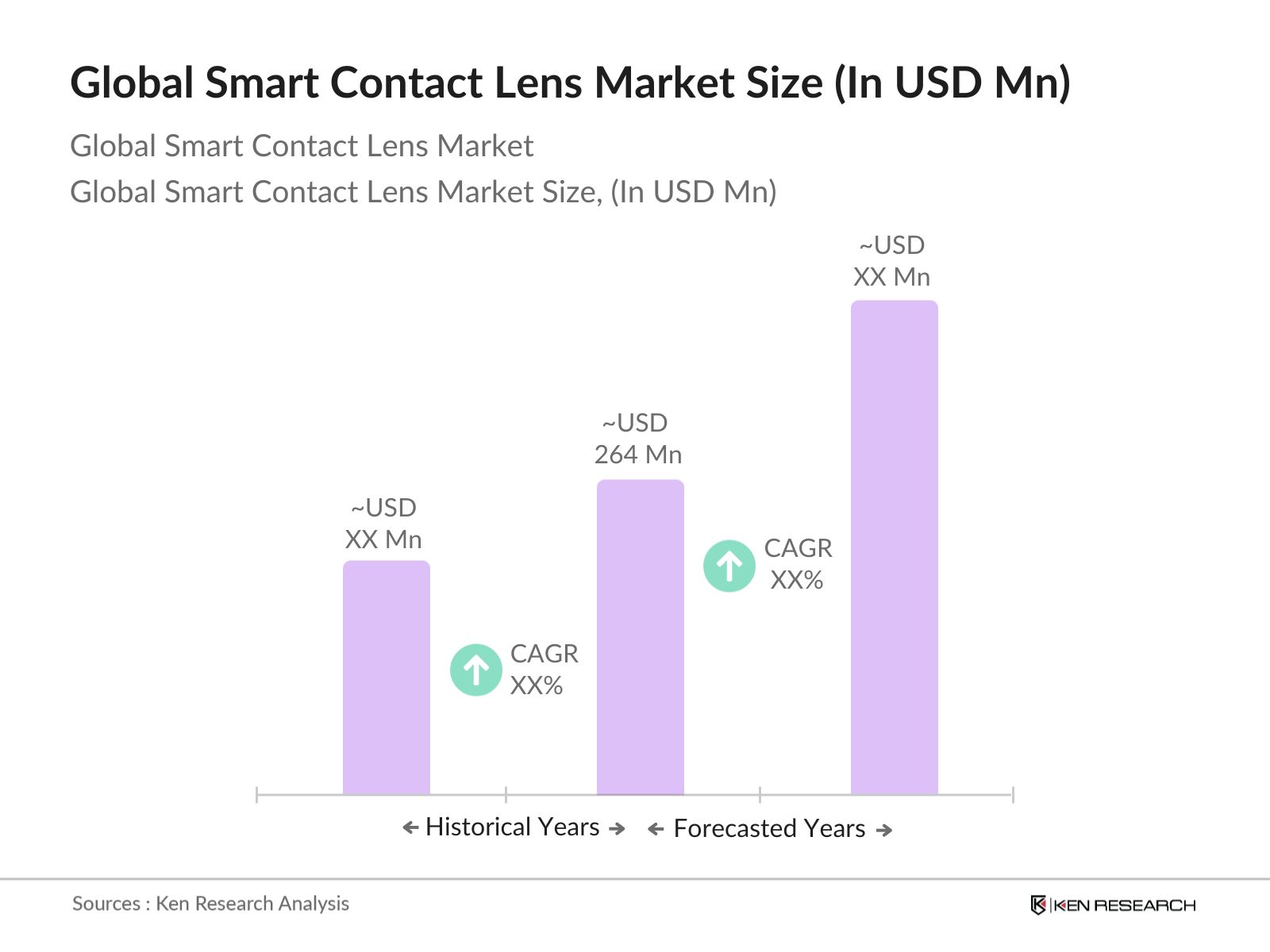
- The global smart contact lens market is valued at USD 264 million based on a five-year historical analysis. The market is driven by technological advancements in healthcare, particularly in glucose monitoring systems for diabetes patients, which has become one of the primary applications of smart contact lenses. Another significant driver is the integration of augmented reality (AR) technologies, enhancing the use of lenses beyond medical applications. This growth is further supported by rising consumer interest in wearable healthcare devices and continuous innovation in materials and lens design.
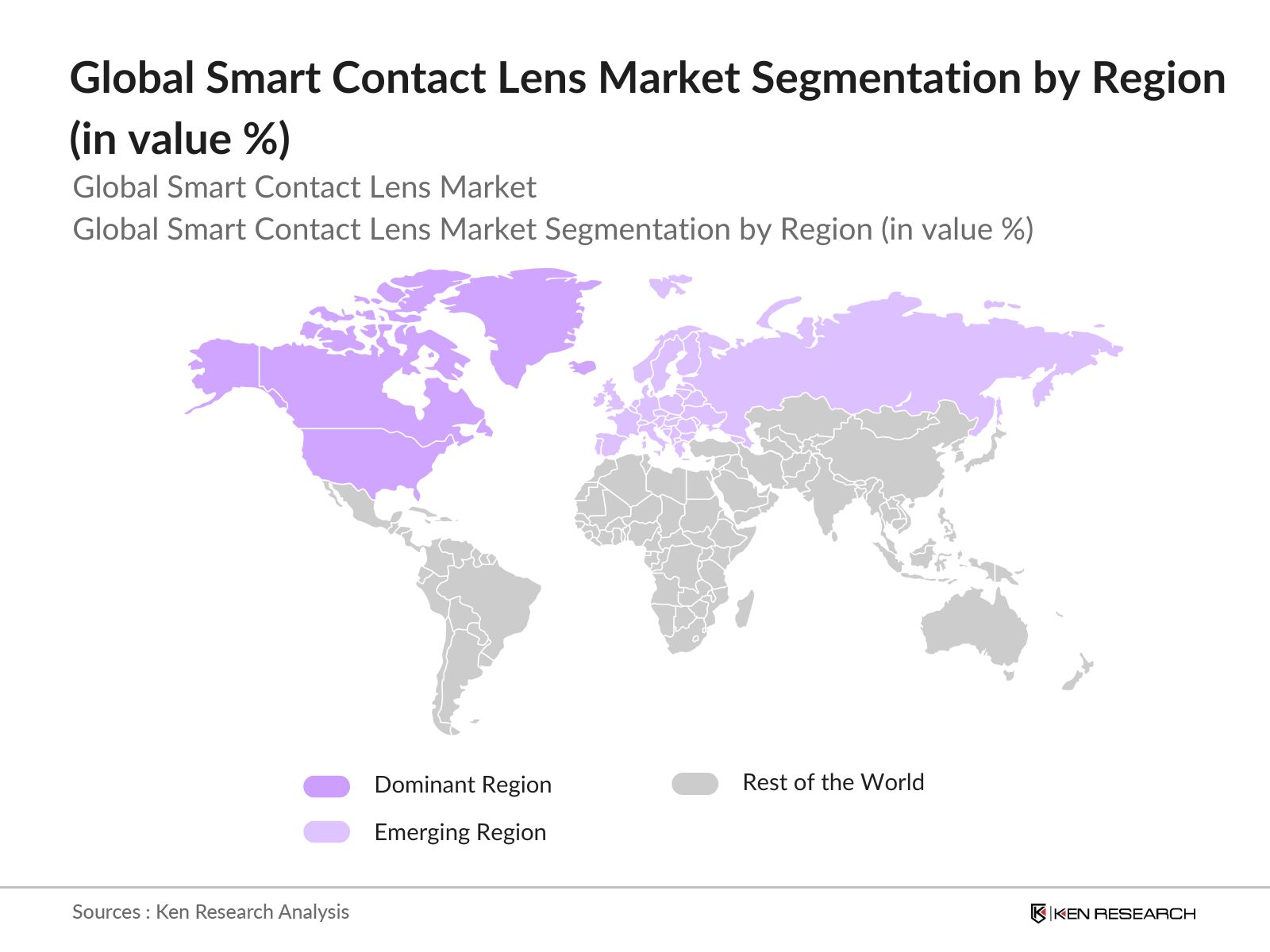
- The market is dominated by North America and Europe, primarily due to the presence of major technology and healthcare companies driving innovation. In North America, the United States stands out due to a combination of robust healthcare infrastructure and early adoption of new technologies. Europes dominance is attributed to regulatory support for innovative medical devices, and strong R&D investments in countries like Germany and the UK. Additionally, Asia-Pacific is emerging as a key player, with South Korea and Japan leading in AR and sensor technologies integration within the lens manufacturing process.
- The U.S. Food and Drug Administration (FDA) is responsible for the regulation of smart contact lenses, classifying them as Class II or Class III medical devices depending on their functionalities. According to the FDA's 2023 medical device report, it can take up to 18 months to obtain regulatory approval for new smart lenses, with costs exceeding USD 2 million. Compliance with FDA regulations ensures that these devices meet stringent safety and efficacy standards, but the approval process remains a major barrier for new market entrants.
Global Smart Contact Lens Market Segmentation
- By Lens Type: The smart contact lens market is segmented by lens type into soft lenses and rigid gas permeable (RGP) lenses. Soft lenses currently hold the dominant market share due to their comfort and ease of wear. This is particularly noteworthy in the healthcare segment, where patients prefer long-term use with minimal discomfort. Additionally, advancements in soft lens technology, such as the integration of micro-sensors for glucose monitoring, have increased their popularity over rigid lenses.
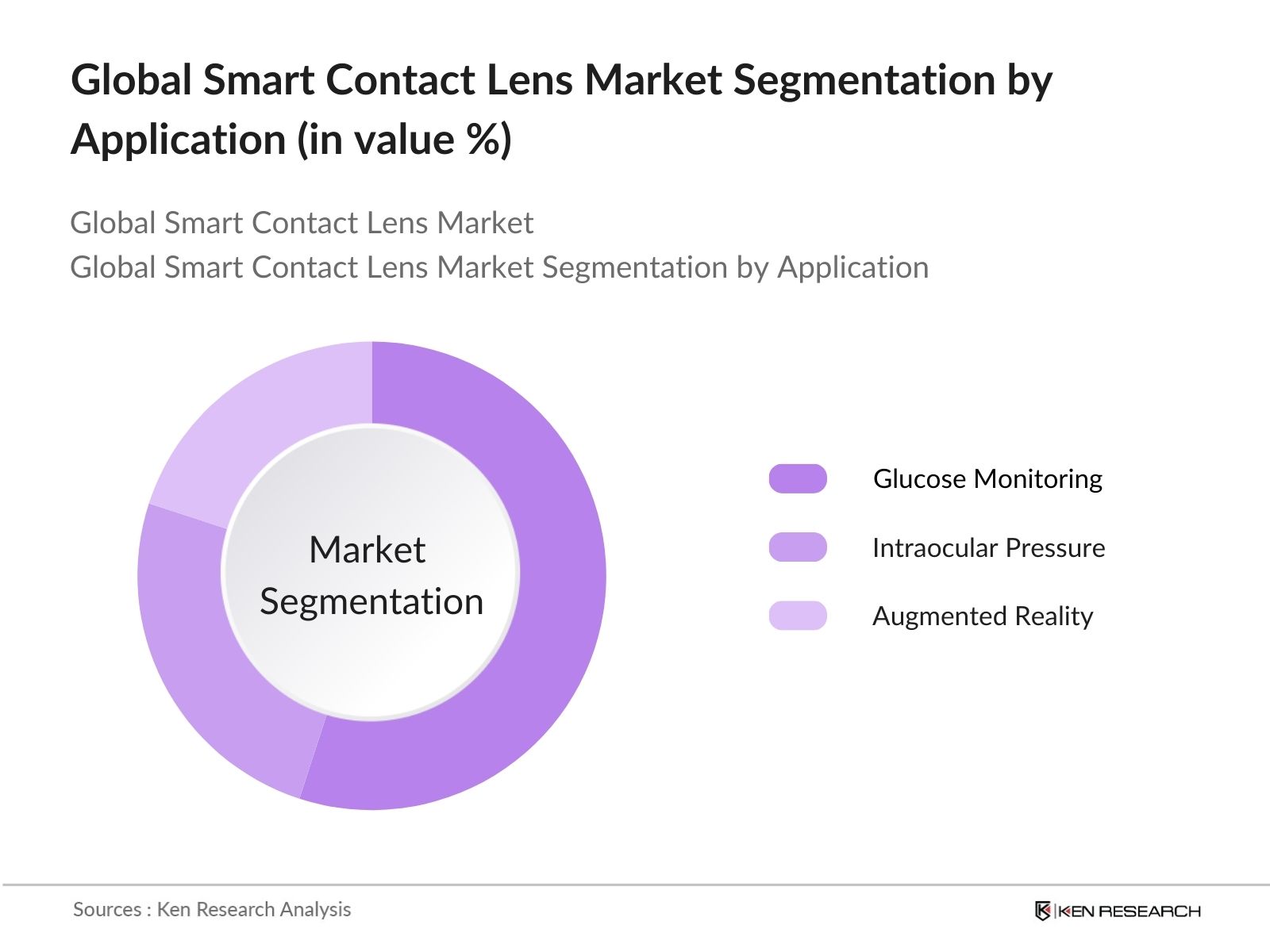
- By Application: Smart contact lenses are segmented by application into glucose monitoring, intraocular pressure (IOP) monitoring, and augmented reality (AR). Glucose monitoring is the largest segment due to the rising incidence of diabetes globally. These lenses offer a non-invasive solution for continuous glucose monitoring, providing patients with real-time health data. The convenience and accuracy of glucose-monitoring lenses have driven their widespread adoption, particularly in North America and Europe.
- By Region: The smart contact lens market is divided into North America, Europe, Asia-Pacific, Latin America, and the Middle East & Africa. North America leads the market due to early adoption of smart medical devices and a well-established healthcare infrastructure. Meanwhile, Asia-Pacific is seeing rapid growth, driven by technological advancements and increasing healthcare expenditure in countries like Japan and South Korea. Europe also plays a major role, particularly in the regulatory and R&D landscapes.
Global Smart Contact Lens Market Competitive Landscape
The global smart contact lens market is moderately consolidated with a few dominant players, particularly in the United States, South Korea, and Europe. The market's competitive landscape is shaped by ongoing innovations in healthcare, sensor technology, and partnerships between tech firms and medical device companies. Major players have invested in research and development to advance lens functionalities, including real-time health monitoring and AR applications.
|
Company |
Establishment Year |
Headquarters |
Product Range |
R&D Investments |
Innovations |
Strategic Partnerships |
Patent Holdings |
Market Presence |
|---|---|---|---|---|---|---|---|---|
|
Alphabet Inc. (Verily) |
1998 |
USA |
- |
- |
- |
- |
- |
- |
|
Sensimed AG |
2003 |
Switzerland |
- |
- |
- |
- |
- |
- |
|
Mojo Vision |
2015 |
USA |
- |
- |
- |
- |
- |
- |
|
Samsung Electronics |
1969 |
South Korea |
- |
- |
- |
- |
- |
- |
|
Johnson & Johnson Vision |
1886 |
USA |
- |
- |
- |
- |
- |
- |
Global Smart Contact Lens Market Analysis
Global Smart Contact Lens Market Growth Drivers
- Increasing Prevalence of Chronic Eye Conditions: Chronic eye diseases such as diabetic retinopathy and glaucoma are on the rise, with the International Agency for the Prevention of Blindness (IAPB) reporting that over 295 million people globally are affected by moderate-to-severe visual impairment. This number is expected to increase, especially as the incidence of diabetes grows to more than 470 million cases worldwide, according to the International Diabetes Federation. Smart contact lenses offer a non-invasive solution for continuous eye condition monitoring, providing timely health insights and reducing the likelihood of complications from untreated conditions.
- Aging Population: The aging global population is a growth driver for the smart contact lens market. According to the United Nations, the number of individuals aged 65 and older is projected to reach nearly 1.4 billion by 2030. This age group is more susceptible to age-related eye disorders, such as macular degeneration and presbyopia. The increased demand for vision correction and monitoring solutions among the elderly presents a critical market opportunity. Smart contact lenses designed to monitor ocular health and provide vision assistance can greatly benefit this demographic, enhancing their quality of life.
- Rising Adoption of Wearable Health Devices: The adoption of wearable health devices has seen substantial growth, with more than 260 million wearables sold globally in 2022, according to data from the International Data Corporation (IDC). Smart contact lenses are part of this wearable health revolution, offering a seamless, unobtrusive option for health monitoring. These lenses can track real-time data such as intraocular pressure and glucose levels, catering to the growing consumer demand for personalized healthcare solutions. The ongoing integration of wearable technology into daily life underlines the expanding role of smart lenses in the healthcare ecosystem.
Global Smart Contact Lens Market Challenges
- High Production Costs: The high cost of producing smart contact lenses is a major challenge, with the average development and production cost of medical-grade wearable devices exceeding USD 10 million per product, according to a report by the World Bank. Manufacturing these lenses involves complex microfabrication techniques and the incorporation of advanced sensors and wireless technology, driving up costs. These high production costs often translate into high consumer prices, limiting the widespread adoption of smart lenses, particularly in price-sensitive markets.
- Regulatory Approvals: Securing regulatory approval for smart contact lenses is a lengthy and costly process. For example, in the U.S., the FDA requires multiple clinical trials and compliance with stringent medical device regulations, which can take several years and cost upwards of USD 2 million. The European market, governed by the Medical Device Regulation (MDR), faces similar challenges. Navigating these complex regulatory environments poses a barrier for manufacturers, slowing down the commercialization of smart contact lenses.
Global Smart Contact Lens Market Future Outlook
Over the next five years, the global smart contact lens market is expected to witness growth driven by continuous innovation in lens technology, increasing demand for wearable health solutions, and the growing prevalence of chronic diseases like diabetes. Additionally, the integration of augmented reality functionalities within lenses will expand their application across healthcare, gaming, and professional fields. Market players will likely focus on improving battery life, sensor accuracy, and user comfort, while also expanding into emerging markets, particularly in Asia-Pacific and Latin America.
Global Smart Contact Lens Market Opportunities
- Integration with Augmented Reality (AR): The integration of Augmented Reality (AR) into smart contact lenses presents immense growth opportunities. The global AR market is expected to reach over USD 40 billion in 2024, driven by applications in healthcare, gaming, and retail sectors. In healthcare, AR-enabled contact lenses could allow real-time patient data visualization and augmented imaging, transforming diagnostic and surgical procedures. With the AR industry already gaining momentum, smart contact lenses with AR capabilities are positioned to become a key driver of innovation in both medical and non-medical applications.
- Development of Multipurpose Contact Lenses: The development of multipurpose smart contact lenses offers a lucrative opportunity, especially for conditions like presbyopia and myopia. These lenses are being designed to correct vision while simultaneously providing health monitoring capabilities, reducing the need for multiple devices. According to the European Commission's Health and Digital Innovation report, over 1.5 billion people globally suffer from myopia, and the demand for devices that offer dual functionalities continues to grow. The increasing focus on innovation in multifunctional lenses is expected to capture a notable share of the healthcare wearables market.
Scope of the Report
|
Type of Lens |
Soft Lenses Rigid Gas Permeable (RGP) Lenses |
|
Application |
Glucose Monitoring Intraocular Pressure Monitoring Augmented Reality Applications |
|
Distribution Channel |
Hospitals & Clinics Online Sales Optical Stores |
|
Technology Type |
Sensors Embedded Lenses Energy-Harvesting Lenses Remote Monitoring Lenses |
|
Region |
North America Europe Asia-Pacific Latin America Middle East & Africa |
Products
Key Target Audience
Medical Device Manufacturers
Healthcare Providers
Technology Companies
Wearable Health Device Innovators
Investors and Venture Capitalist Firms
Government and Regulatory Bodies (FDA, CE Regulators)
R&D Institutes and Labs
Banks and Financial Institutions
Hospitals and Clinics
Companies
Players Mentioned in the Report
Alphabet Inc. (Verily Life Sciences)
Sensimed AG
Mojo Vision
Samsung Electronics Co., Ltd.
Johnson & Johnson Vision Care, Inc.
Bausch & Lomb
Sony Corporation
Innovega Inc.
Medella Health
RaayonNova LLC
Table of Contents
1. Global Smart Contact Lens Market Overview
1.1 Definition and Scope
1.2 Market Taxonomy
1.3 Market Growth Rate
1.4 Market Segmentation Overview
2. Global Smart Contact Lens Market Size (In USD Bn)
2.1 Historical Market Size
2.2 Year-On-Year Growth Analysis
2.3 Key Market Developments and Milestones
3. Global Smart Contact Lens Market Analysis
3.1 Growth Drivers
3.1.1 Advancements in Medical Technology
3.1.2 Increasing Prevalence of Chronic Eye Conditions
3.1.3 Aging Population (Global Factor)
3.1.4 Rising Adoption of Wearable Health Devices
3.2 Market Challenges
3.2.1 High Production Costs (Cost Parameter)
3.2.2 Regulatory Approvals
3.2.3 Data Privacy and Security Concerns
3.3 Opportunities
3.3.1 Integration with Augmented Reality (AR)
3.3.2 Development of Multipurpose Contact Lenses (Functionalities)
3.3.3 Expansion in Emerging Markets (Geographical Opportunities)
3.4 Trends
3.4.1 Increased Use of Sensors in Medical Devices
3.4.2 Development of Energy-Harvesting Contact Lenses
3.4.3 Collaborations between Technology and Healthcare Firms
3.5 Regulatory Environment
3.5.1 FDA Regulations (USA)
3.5.2 CE Marking (Europe)
3.5.3 Regional Medical Device Regulations
3.6 SWOT Analysis
3.7 Stakeholder Ecosystem
3.7.1 Key Healthcare Providers
3.7.2 Tech Companies Innovating in Healthcare
3.7.3 Suppliers of Smart Lens Materials
3.8 Porters Five Forces
3.9 Competition Ecosystem
4. Global Smart Contact Lens Market Segmentation
4.1 By Type of Lens (In Value %)
4.1.1 Soft Lenses
4.1.2 Rigid Gas Permeable (RGP) Lenses
4.2 By Application (In Value %)
4.2.1 Glucose Monitoring
4.2.2 Intraocular Pressure (IOP) Monitoring
4.2.3 Augmented Reality Applications
4.3 By Distribution Channel (In Value %)
4.3.1 Hospitals & Clinics
4.3.2 Online Sales
4.3.3 Optical Stores
4.4 By Technology Type (In Value %)
4.4.1 Sensors Embedded Lenses
4.4.2 Energy-Harvesting Lenses
4.4.3 Remote Monitoring Lenses
4.5 By Region (In Value %)
4.5.1 North America
4.5.2 Europe
4.5.3 Asia-Pacific
4.5.4 Latin America
4.5.5 Middle East & Africa
5. Global Smart Contact Lens Market Competitive Analysis
5.1 Detailed Profiles of Major Companies
5.1.1 Alphabet Inc. (Verily Life Sciences)
5.1.2 Sensimed AG
5.1.3 Samsung Electronics Co., Ltd.
5.1.4 Mojo Vision, Inc.
5.1.5 Innovega Inc.
5.1.6 Sony Corporation
5.1.7 Medella Health
5.1.8 Bausch & Lomb
5.1.9 Johnson & Johnson Vision Care, Inc.
5.1.10 Alcon Vision LLC
5.1.11 RaayonNova LLC
5.1.12 Eyenovia, Inc.
5.1.13 Truelens Technologies
5.1.14 Santen Pharmaceutical Co., Ltd.
5.1.15 Ocumetrics Technology Corporation
5.2 Cross Comparison Parameters (Headquarters, Product Portfolio, R&D Focus, Market Share, Strategic Collaborations, Innovations, Revenue, Patents)
5.3 Market Share Analysis
5.4 Strategic Initiatives
5.5 Mergers and Acquisitions
5.6 Investment Analysis
5.7 Venture Capital Funding
5.8 Government Grants
5.9 Private Equity Investments
6. Global Smart Contact Lens Market Regulatory Framework
6.1 Medical Device Regulations (By Region)
6.2 Intellectual Property Rights and Patents
6.3 Compliance Requirements for Smart Medical Devices
7. Global Smart Contact Lens Future Market Size (In USD Bn)
7.1 Future Market Size Projections
7.2 Key Factors Driving Future Market Growth
8. Global Smart Contact Lens Future Market Segmentation
8.1 By Type of Lens (In Value %)
8.2 By Application (In Value %)
8.3 By Distribution Channel (In Value %)
8.4 By Technology Type (In Value %)
8.5 By Region (In Value %)
9. Global Smart Contact Lens Market Analysts Recommendations
9.1 Total Addressable Market (TAM) Analysis
9.2 Serviceable Available Market (SAM)
9.3 Serviceable Obtainable Market (SOM)
9.4 Innovation and R&D Investment Opportunities
Research Methodology
Step 1: Identification of Key Variables
The first step involves mapping out the global smart contact lens market by identifying key stakeholders, including lens manufacturers, healthcare providers, and tech companies. This step is carried out using extensive secondary research from credible databases and reports to gather market-specific data, focusing on innovations, market size, and key variables.
Step 2: Market Analysis and Construction
This step includes gathering and analyzing historical data on market penetration, product performance, and revenue generation within the smart contact lens segment. The analysis is complemented by the assessment of market drivers such as healthcare demand and technological advancements.
Step 3: Hypothesis Validation and Expert Consultation
To validate market data, consultations with industry experts and representatives from smart contact lens manufacturers are conducted through interviews. These discussions offer valuable insights into industry operations and provide a clearer picture of market dynamics.
Step 4: Research Synthesis and Final Output
The final stage of research involves direct interactions with smart lens companies to gather data on product performance, technological advancements, and sales performance. This information is synthesized with the historical data to provide an accurate market forecast.
Frequently Asked Questions
01. How big is the global smart contact lens market?
The global smart contact lens market is valued at USD 264 million, driven by the demand for wearable healthcare technology and advancements in lens materials and functionality.
02. What are the challenges in the global smart contact lens market?
Challenges in the global smart contact lens market include high production costs, regulatory hurdles, and concerns over data privacy. Additionally, technical limitations such as battery life and sensor accuracy need further innovation.
03. Who are the major players in the global smart contact lens market?
Key players in the global smart contact lens market include Alphabet Inc. (Verily), Sensimed AG, Mojo Vision, Samsung Electronics, and Johnson & Johnson Vision. These companies lead the market due to their innovations and strong industry presence.
04. What drives the growth of the global smart contact lens market?
The global smart contact lens market is driven by increasing demand for wearable healthcare solutions, rising prevalence of diabetes, and technological advancements in AR and sensor integration.
Why Buy From Us?

What makes us stand out is that our consultants follows Robust, Refine and Result (RRR) methodology. i.e. Robust for clear definitions, approaches and sanity checking, Refine for differentiating respondents facts and opinions and Result for presenting data with story

We have set a benchmark in the industry by offering our clients with syndicated and customized market research reports featuring coverage of entire market as well as meticulous research and analyst insights.

While we don't replace traditional research, we flip the method upside down. Our dual approach of Top Bottom & Bottom Top ensures quality deliverable by not just verifying company fundamentals but also looking at the sector and macroeconomic factors.

With one step in the future, our research team constantly tries to show you the bigger picture. We help with some of the tough questions you may encounter along the way: How is the industry positioned? Best marketing channel? KPI's of competitors? By aligning every element, we help maximize success.

Our report gives you instant access to the answers and sources that other companies might choose to hide. We elaborate each steps of research methodology we have used and showcase you the sample size to earn your trust.

If you need any support, we are here! We pride ourselves on universe strength, data quality, and quick, friendly, and professional service.