
Global Smart Contract Market Outlook to 2030
Region:Global
Author(s):Naman Rohilla
Product Code:KROD5878
Region:Global
Author(s):Naman Rohilla
Product Code:KROD5878
December 2024
88
The global smart contract market is dominated by a few major players, such as IBM Corporation, Microsoft Corporation, Oracle Corporation, ConsenSys, and Chainlink Labs. These companies are at the forefront of technological innovation in blockchain, offering a wide range of solutions that integrate smart contracts across various industries. Their substantial investment in research and development and strategic partnerships has solidified their positions as market leaders. Newer players like Algorand and Polkadot are also gaining market traction, driven by their unique approaches to scalability and interoperability.
|
Company |
Establishment Year |
Headquarters |
Market Capitalization |
Blockchain Protocol |
Smart Contract Throughput |
Consensus Mechanism |
Ecosystem Size |
|
IBM Corporation |
1911 |
Armonk, USA |
- |
- |
- |
- |
- |
|
Microsoft Corporation |
1975 |
Redmond, USA |
- |
- |
- |
- |
- |
|
Oracle Corporation |
1977 |
Redwood City, USA |
- |
- |
- |
- |
- |
|
ConsenSys |
2014 |
Brooklyn, USA |
- |
- |
- |
- |
- |
|
Chainlink Labs |
2017 |
Cayman Islands |
- |
- |
- |
- |
- |
Over the next five years, the global smart contract market is expected to grow due to increased adoption of blockchain technology across various industries. The rise of decentralized finance (DeFi), coupled with advancements in blockchain scalability solutions such as layer-2 technologies, will play a pivotal role in expanding the market. Additionally, the use of smart contracts in enterprise-level applications is anticipated to grow as businesses seek to automate and streamline transactions, reducing costs and improving transparency.
|
Platform Type |
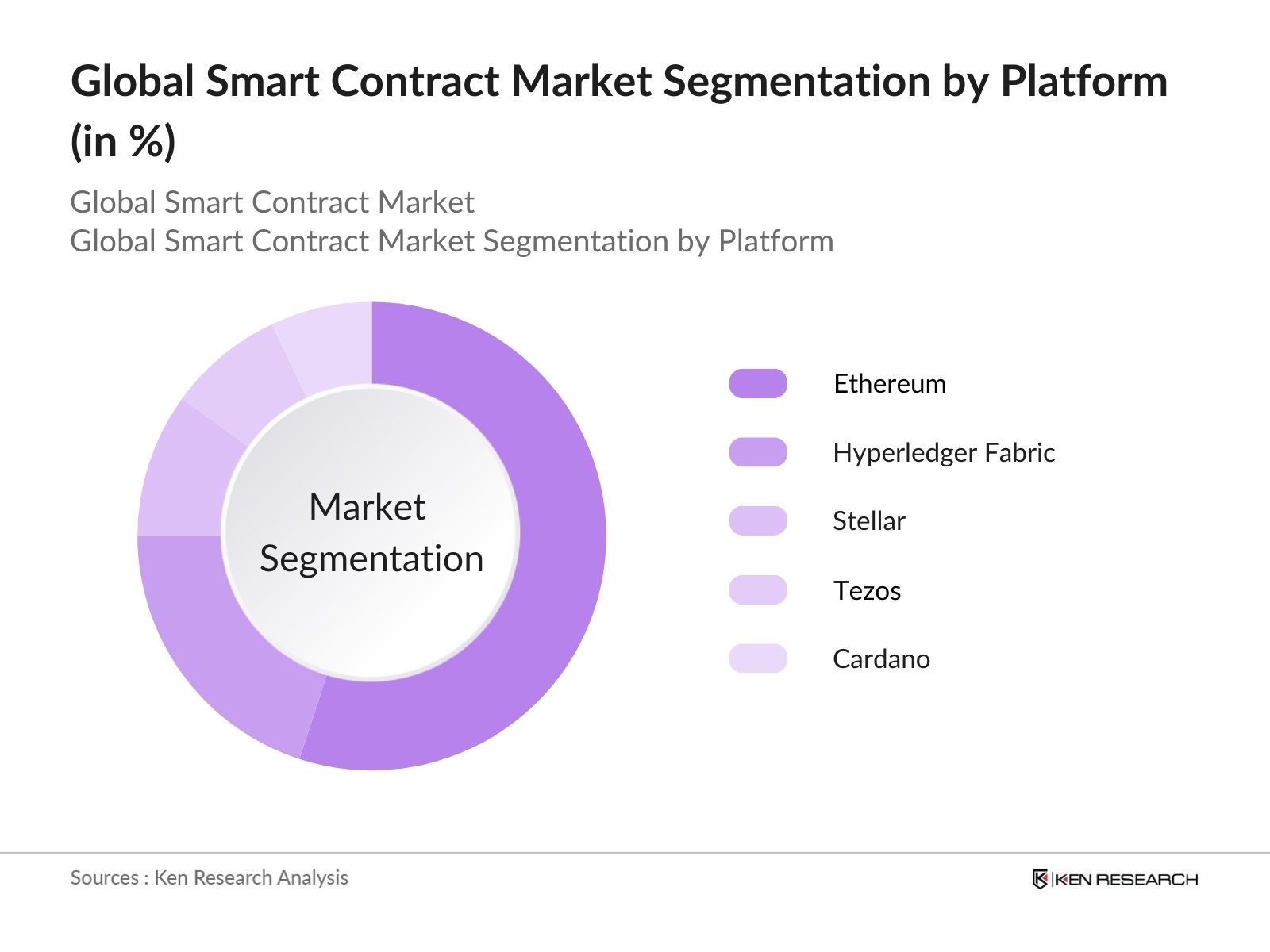
Ethereum Hyperledger Fabric Stellar Tezos Cardano |
|
Industry |
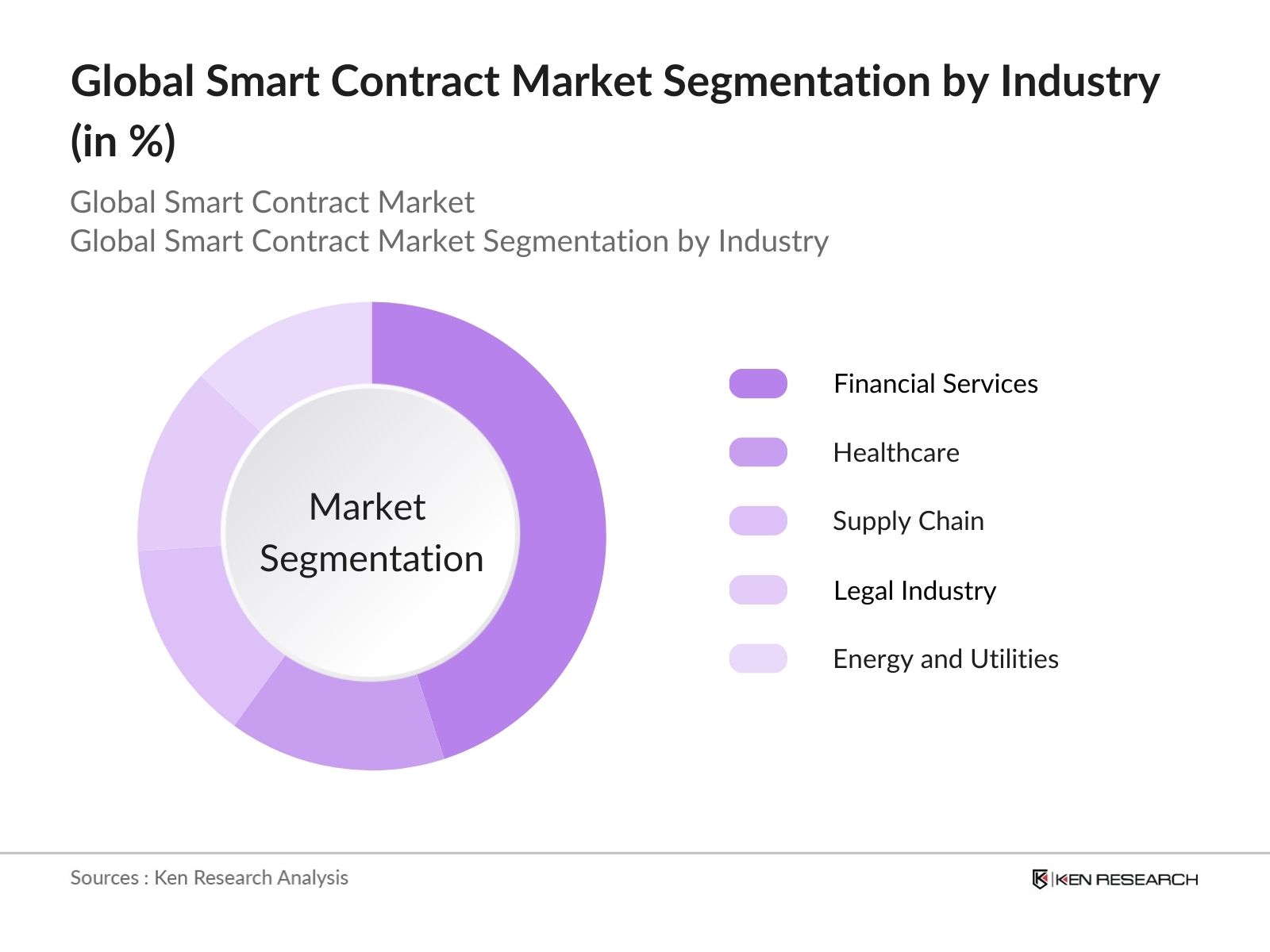
Financial Services Healthcare Supply Chain Legal Energy |
|
Application |
DeFi NFTs Supply Chain Management IP Protection Identity |
|
Contract Type |
Multi-Signature Self-Executing Conditional Legal Oracles |
|
Region |
North America Europe Asia Pacific Middle East & Africa Latin America |
1.1 Definition and Scope
1.2 Market Taxonomy
1.3 Market Growth Rate
1.4 Market Segmentation Overview
2.1 Historical Market Size
2.2 Year-On-Year Growth Analysis
2.3 Key Market Developments and Milestones
3.1 Growth Drivers (Blockchain adoption, Digital transformation, DeFi platforms, Enterprise integration)
3.1.1 Increasing Use of Blockchain Technology
3.1.2 Rising Adoption of Decentralized Finance (DeFi)
3.1.3 Enterprise-Level Smart Contract Applications
3.1.4 Growing Demand for Automation and Efficiency in Business Processes
3.2 Market Challenges (Scalability, Security concerns, Lack of interoperability, Regulatory constraints)
3.2.1 Security Risks and Vulnerabilities
3.2.2 Regulatory Uncertainty
3.2.3 Scalability Issues in Blockchain Networks
3.3 Opportunities (Development of layer-2 solutions, Cross-chain functionality, Smart contract standards)
3.3.1 Advancements in Smart Contract Platforms
3.3.2 Opportunities in Cross-Industry Use Cases
3.3.3 Expansion of DeFi Ecosystem
3.4 Trends (Enterprise blockchain use, Smart contract auditing, Tokenization of assets)
3.4.1 Enterprise-Level Blockchain Adoption
3.4.2 Integration with Internet of Things (IoT)
3.4.3 Tokenization of Real-World Assets
3.4.4 Rise of Smart Contract Auditing Services
3.5 Government Regulation (KYC/AML compliance, Regulatory sandboxes, Data privacy regulations)
3.5.1 Government Initiatives for Blockchain Adoption
3.5.2 KYC/AML Compliance and Smart Contract Verification
3.5.3 Data Privacy and Security Regulations for Blockchain Networks
3.6 SWOT Analysis (Strengths, Weaknesses, Opportunities, Threats)
3.7 Stakeholder Ecosystem (Blockchain developers, Enterprises, Regulators, Auditors)
3.8 Porters Five Forces (Bargaining power of suppliers, Threat of substitutes, Competitive rivalry)
3.9 Competition Ecosystem (Smart contract platforms, dApp developers, Blockchain consortia)
4.1 By Platform Type (In Value %)
4.1.1 Ethereum
4.1.2 Hyperledger Fabric
4.1.3 Stellar
4.1.4 Tezos
4.1.5 Cardano
4.2 By Industry (In Value %)
4.2.1 Financial Services
4.2.2 Healthcare
4.2.3 Supply Chain
4.2.4 Legal Industry
4.2.5 Energy and Utilities
4.3 By Application (In Value %)
4.3.1 DeFi (Decentralized Finance)
4.3.2 NFTs (Non-Fungible Tokens)
4.3.3 Supply Chain Management
4.3.4 Intellectual Property Protection
4.3.5 Digital Identity Verification
4.4 By Contract Type (In Value %)
4.4.1 Multi-Signature Contracts
4.4.2 Self-Executing Contracts
4.4.3 Conditional Contracts
4.4.4 Smart Legal Contracts
4.4.5 Data Feed-Based Contracts (Oracles)
4.5 By Region (In Value %)
4.5.1 North America
4.5.2 Europe
4.5.3 Asia Pacific
4.5.4 Middle East & Africa
4.5.5 Latin America
5.1 Detailed Profiles of Major Companies
5.1.1 IBM Corporation
5.1.2 Microsoft Corporation
5.1.3 Oracle Corporation
5.1.4 ConsenSys
5.1.5 Chainlink Labs
5.1.6 Algorand
5.1.7 EOSIO (Block.one)
5.1.8 Solana Labs
5.1.9 Polkadot (Web3 Foundation)
5.1.10 Hedera Hashgraph
5.1.11 Avalanche
5.1.12 R3 (Corda)
5.1.13 Tezos Foundation
5.1.14 Cardano Foundation
5.1.15 Stellar Development Foundation
5.2 Cross Comparison Parameters (Market Capitalization, Blockchain Protocol, Smart Contract Throughput, Consensus Mechanism, Ecosystem Size, Security Features, Developer Community Size, Transaction Fees)
5.3 Market Share Analysis
5.4 Strategic Initiatives
5.5 Mergers and Acquisitions
5.6 Investment Analysis
5.7 Venture Capital Funding
5.8 Government Grants
5.9 Private Equity Investments
6.1 Blockchain Regulation and Compliance
6.2 Legal Framework for Smart Contracts
6.3 Certification and Standardization
7.1 Future Market Size Projections
7.2 Key Factors Driving Future Market Growth
8.1 By Platform Type (In Value %)
8.2 By Industry (In Value %)
8.3 By Application (In Value %)
8.4 By Contract Type (In Value %)
8.5 By Region (In Value %)
9.1 TAM/SAM/SOM Analysis
9.2 Customer Cohort Analysis
9.3 Marketing Initiatives
9.4 White Space Opportunity Analysis
Disclaimer Contact UsThe initial step involves mapping the smart contract ecosystem, focusing on key players and industry stakeholders. Extensive desk research, utilizing proprietary databases and secondary sources, is conducted to identify the critical variables impacting market dynamics, such as the adoption rate of blockchain technologies, government regulations, and the development of new applications for smart contracts.
Historical data regarding the adoption of smart contracts across various industries is compiled and analyzed. The process involves assessing the penetration of decentralized applications (dApps) and the use of smart contracts within financial services, supply chain, and other sectors. The analysis also incorporates market share evaluations to ensure accurate revenue forecasts.
The market hypotheses are refined through consultations with blockchain experts, developers, and executives from leading smart contract platforms. These consultations offer crucial insights into real-world challenges and opportunities, enhancing the accuracy of the market forecast.
In the final phase, extensive primary research is conducted through interviews with blockchain developers and smart contract auditors. This is combined with quantitative data to deliver a comprehensive and verified market analysis. The final output is a validated, data-driven report on the global smart contract market.
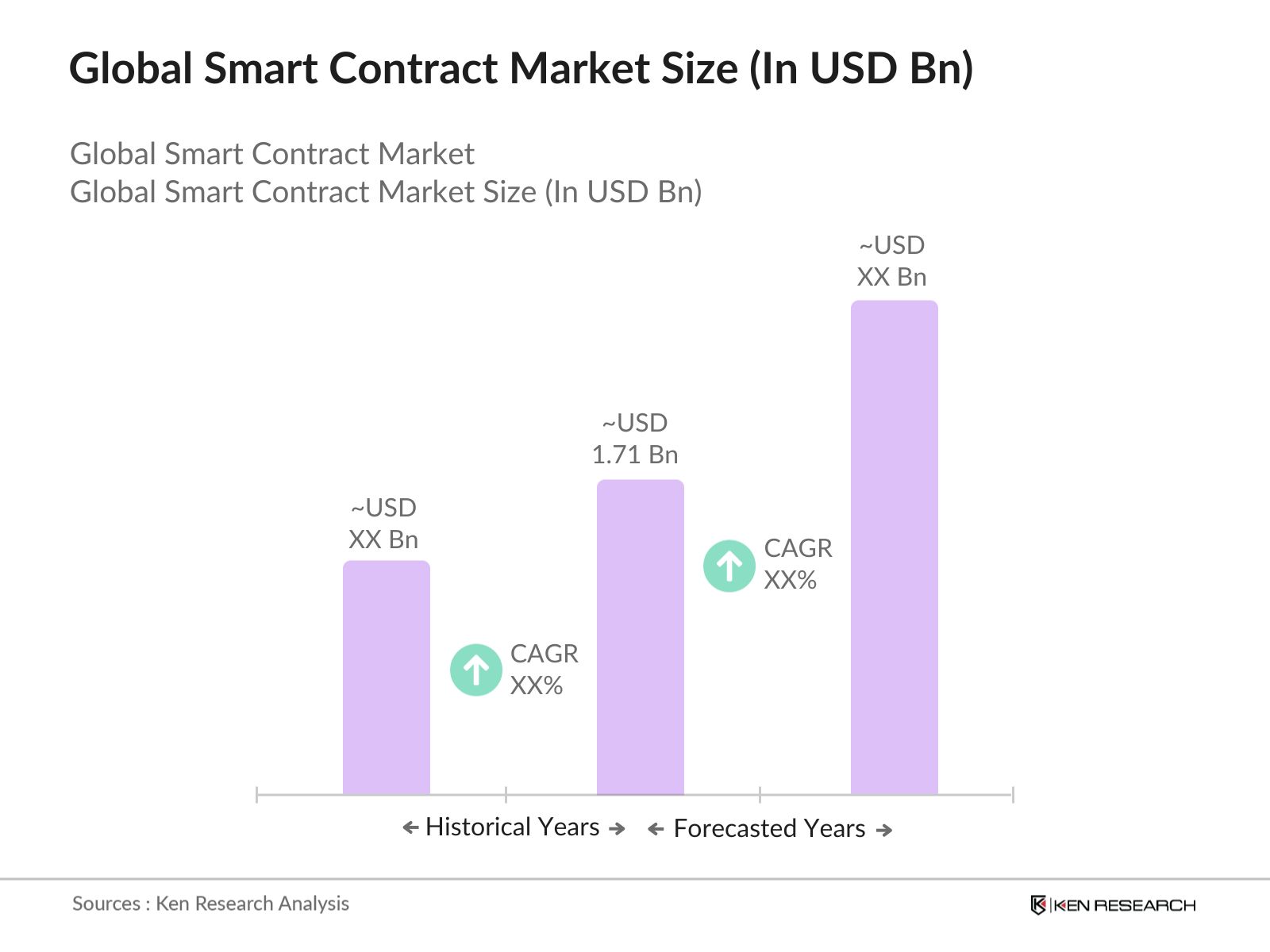
The global smart contract market is valued at USD 1.71 billion, driven by the growing adoption of blockchain technologies across financial services, supply chain, and healthcare sectors.
Key challenges in the global smart contract market include regulatory uncertainty, security vulnerabilities in blockchain platforms, and interoperability issues across different smart contract platforms.
Major players in the global smart contract market include IBM Corporation, Microsoft Corporation, Oracle Corporation, ConsenSys, and Chainlink Labs, with their dominance stemming from innovative solutions and extensive blockchain ecosystems.
The global smart contract market is driven by the increasing use of blockchain for decentralized finance (DeFi) applications, the automation of legal processes, and the rising demand for transparency in supply chain operations.

What makes us stand out is that our consultants follows Robust, Refine and Result (RRR) methodology. i.e. Robust for clear definitions, approaches and sanity checking, Refine for differentiating respondents facts and opinions and Result for presenting data with story

We have set a benchmark in the industry by offering our clients with syndicated and customized market research reports featuring coverage of entire market as well as meticulous research and analyst insights.

While we don't replace traditional research, we flip the method upside down. Our dual approach of Top Bottom & Bottom Top ensures quality deliverable by not just verifying company fundamentals but also looking at the sector and macroeconomic factors.

With one step in the future, our research team constantly tries to show you the bigger picture. We help with some of the tough questions you may encounter along the way: How is the industry positioned? Best marketing channel? KPI's of competitors? By aligning every element, we help maximize success.

Our report gives you instant access to the answers and sources that other companies might choose to hide. We elaborate each steps of research methodology we have used and showcase you the sample size to earn your trust.

If you need any support, we are here! We pride ourselves on universe strength, data quality, and quick, friendly, and professional service.