
Global Snacks Market Outlook to 2030
Region:Global
Author(s):Yogita Sahu
Product Code:KROD5227
Region:Global
Author(s):Yogita Sahu
Product Code:KROD5227
October 2024
86

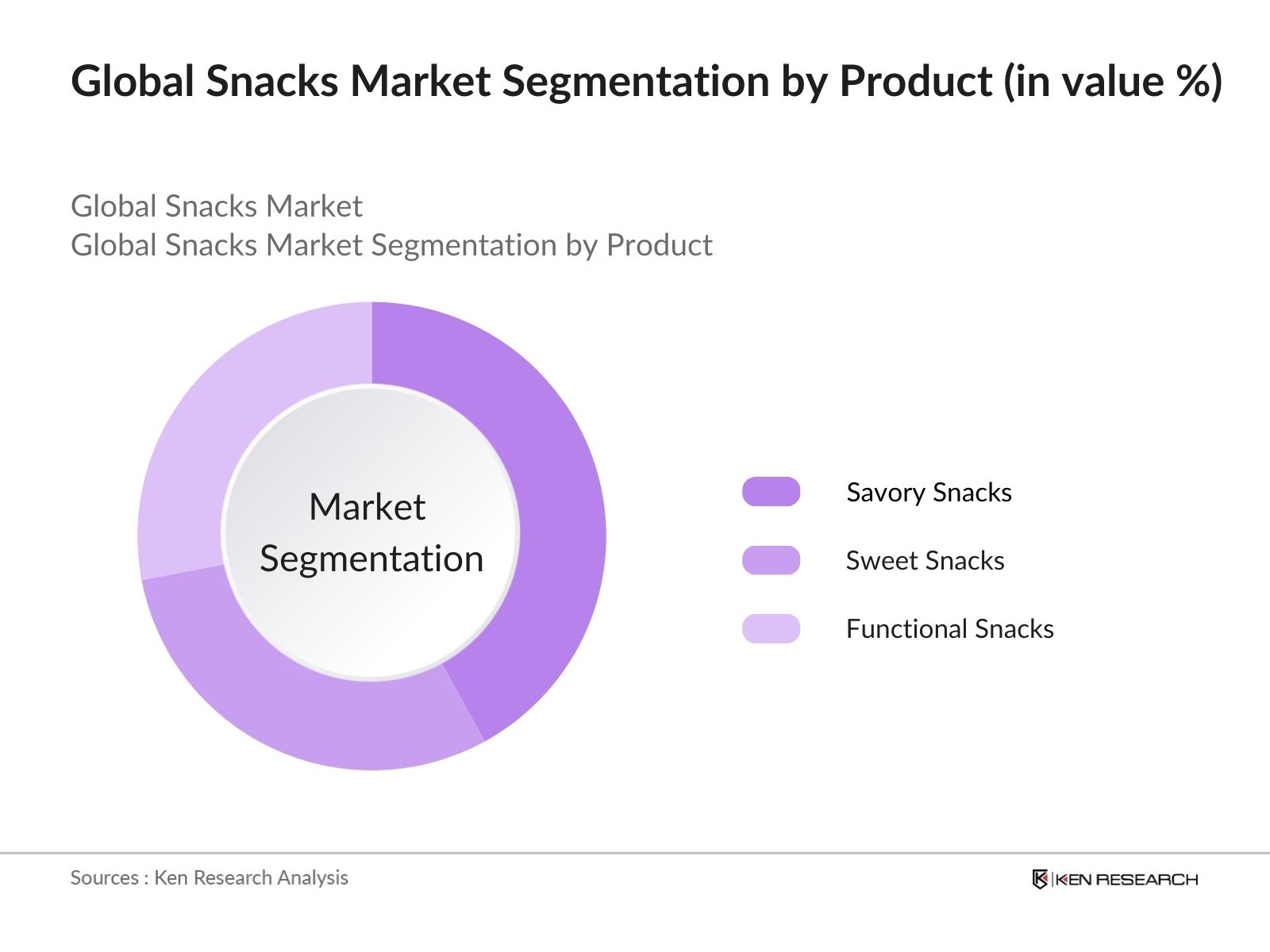
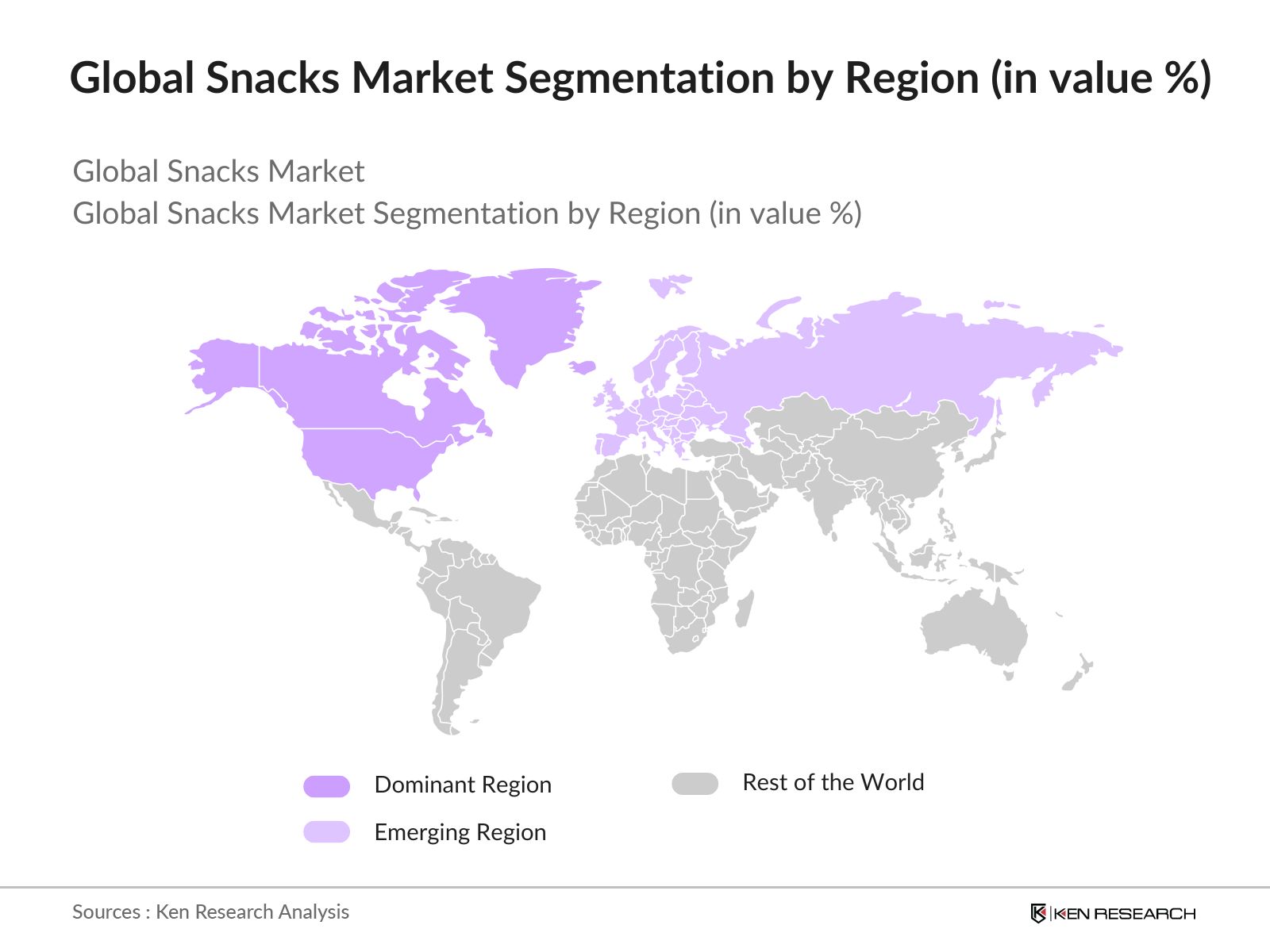
The market is dominated by key players, both global and regional, that hold significant market share due to their extensive distribution networks, product innovation, and strong brand presence. These companies consistently invest in product development, mergers, and acquisitions to maintain their competitive edge.
|
Company |
Established Year |
Headquarters |
Revenue (USD Bn) |
Global Footprint |
Key Products |
R&D Investment |
Sustainability Initiatives |
Number of Brands |
|
PepsiCo, Inc. |
1965 |
New York, USA |
||||||
|
Nestl S.A. |
1867 |
Vevey, Switzerland |
||||||
|
Mondelez International, Inc. |
2012 |
Illinois, USA |
||||||
|
The Kellogg Company |
1906 |
Michigan, USA |
||||||
|
General Mills, Inc. |
1866 |
Minnesota, USA |
Over the next five years, the global snacks industry is expected to grow due to rising consumer preferences for healthier snacks, expansion of e-commerce platforms, and increasing disposable incomes in emerging economies. Key growth drivers will include the growing popularity of plant-based and functional snacks, coupled with innovations in packaging and flavor profiles.
|
By Product Type |
Savory Snacks Sweet Snacks Functional Snacks Dairy Snacks Bakery Snacks |
|
By Distribution Channel |
Supermarkets & Hypermarkets Convenience Stores Online Retail Specialty Stores Vending Machines |
|
By Ingredient Type |
Plant-based Snacks Gluten-Free Snacks Organic & Natural Snacks Low-Sugar Snacks Protein-Enriched Snacks |
|
By Age Group |
Children Adults Seniors Millennials Gen Z |
|
By Region |
North America Europe Asia-Pacific Latin America Middle East & Africa |
1.1. Definition and Scope
1.2. Market Taxonomy
1.3. Market Growth Rate
1.4. Market Segmentation Overview
2.1. Historical Market Size
2.2. Year-On-Year Growth Analysis
2.3. Key Market Developments and Milestones
3.1. Growth Drivers
3.1.1. Rising demand for healthy snacks (Consumer Preference Shifts)
3.1.2. Convenience and on-the-go consumption (Lifestyle Trends)
3.1.3. Expansion of retail channels (E-commerce & Modern Retail)
3.1.4. Globalization of food culture (Cultural Influence)
3.2. Market Challenges
3.2.1. Fluctuating raw material prices (Supply Chain)
3.2.2. High competition from local brands (Competitive Landscape)
3.2.3. Rising awareness of health risks associated with processed foods (Consumer Health Awareness)
3.2.4. Regulatory hurdles (Food Safety Regulations)
3.3. Opportunities
3.3.1. Innovation in product offerings (Product Innovation)
3.3.2. Increasing demand for plant-based and organic snacks (Sustainability Trends)
3.3.3. Penetration into emerging markets (Emerging Economies)
3.3.4. Digital marketing and e-commerce expansion (Marketing & Distribution Channels)
3.4. Trends
3.4.1. Preference for clean label snacks (Ingredient Transparency)
3.4.2. Adoption of functional snacks (Health-Boosting Properties)
3.4.3. Sustainable packaging (Eco-Friendly Initiatives)
3.4.4. Personalization of snacks (Customization & Personal Preferences)
3.5. Government Regulations
3.5.1. Nutritional labeling standards (Labeling Regulations)
3.5.2. Import/export restrictions (International Trade)
3.5.3. Sustainable sourcing mandates (Environmental Policies)
3.5.4. Health and safety standards (Food Safety Regulations)
3.6. SWOT Analysis
3.7. Stake Ecosystem
3.8. Porters Five Forces Analysis
3.9. Competition Ecosystem
4.1. By Product Type (In Value %)
4.2. By Distribution Channel (In Value %)
4.3. By Ingredient Type (In Value %)
4.4. By Age Group (In Value %)
4.5. By Region (In Value %)
5.1. Detailed Profiles of Major Companies
5.2. Cross Comparison Parameters
5.3. Market Share Analysis
5.4. Strategic Initiatives
5.5. Mergers and Acquisitions
5.6. Investment Analysis
5.7. Venture Capital Funding
5.8. Private Equity Investments
6.1. Food Safety Standards (FDA, EFSA, FSSAI)
6.2. Nutritional Labeling (Global & Regional Requirements)
6.3. Sustainability Certifications (Fair Trade, Organic, Rainforest Alliance)
6.4. Compliance with Environmental Regulations (Waste Management, Carbon Footprint)
7.1. Future Market Size Projections
7.2. Key Factors Driving Future Market Growth
8.1. By Product Type (In Value %)
8.2. By Distribution Channel (In Value %)
8.3. By Ingredient Type (In Value %)
8.4. By Age Group (In Value %)
8.5. By Region (In Value %)
9.1. TAM/SAM/SOM Analysis
9.2. Customer Cohort Analysis
9.3. Marketing Initiatives
9.4. White Space Opportunity Analysis
The initial phase involves mapping out the entire ecosystem of the global snacks market, including manufacturers, distributors, retailers, and consumers. Comprehensive desk research is conducted using a combination of secondary data from proprietary databases and publicly available reports to identify market dynamics.
Historical data from the past five years is compiled and analyzed to estimate current market penetration rates, distribution channels, and revenue generation by product categories. This step ensures that data projections are built on a robust foundation of real market statistics.
Market hypotheses are developed based on initial data and then validated through interviews with industry experts. These experts provide valuable insights into emerging trends, regulatory hurdles, and strategic initiatives being undertaken by leading companies.
In the final stage, direct consultations with leading snack manufacturers and retailers are conducted. The information gathered is used to refine the projections and produce the final report, ensuring the most accurate depiction of the market landscape.
The global snacks market is valued at around USD 692 billion, driven by rising consumer demand for convenience foods and healthier snacking options.
Challenges include rising raw material costs, regulatory compliance, and increasing competition from both local and global players, which could impact market profitability.
Key players include PepsiCo, Nestl, Mondelez International, Kelloggs, and General Mills. These companies dominate due to their extensive distribution networks and strong product innovation.
The market is propelled by rising disposable incomes, growing demand for healthy snacks, and increasing consumer preferences for convenience foods. The expansion of e-commerce has also fueled market growth.
North America leads the market due to high per capita consumption and the presence of major global players, while Asia-Pacific is growing rapidly due to rising disposable incomes and urbanization.

What makes us stand out is that our consultants follows Robust, Refine and Result (RRR) methodology. i.e. Robust for clear definitions, approaches and sanity checking, Refine for differentiating respondents facts and opinions and Result for presenting data with story

We have set a benchmark in the industry by offering our clients with syndicated and customized market research reports featuring coverage of entire market as well as meticulous research and analyst insights.

While we don't replace traditional research, we flip the method upside down. Our dual approach of Top Bottom & Bottom Top ensures quality deliverable by not just verifying company fundamentals but also looking at the sector and macroeconomic factors.

With one step in the future, our research team constantly tries to show you the bigger picture. We help with some of the tough questions you may encounter along the way: How is the industry positioned? Best marketing channel? KPI's of competitors? By aligning every element, we help maximize success.

Our report gives you instant access to the answers and sources that other companies might choose to hide. We elaborate each steps of research methodology we have used and showcase you the sample size to earn your trust.

If you need any support, we are here! We pride ourselves on universe strength, data quality, and quick, friendly, and professional service.