
Global Snail Market Outlook to 2030
Region:Global
Author(s):Shambhavi
Product Code:KROD5014
Region:Global
Author(s):Shambhavi
Product Code:KROD5014
December 2024
91
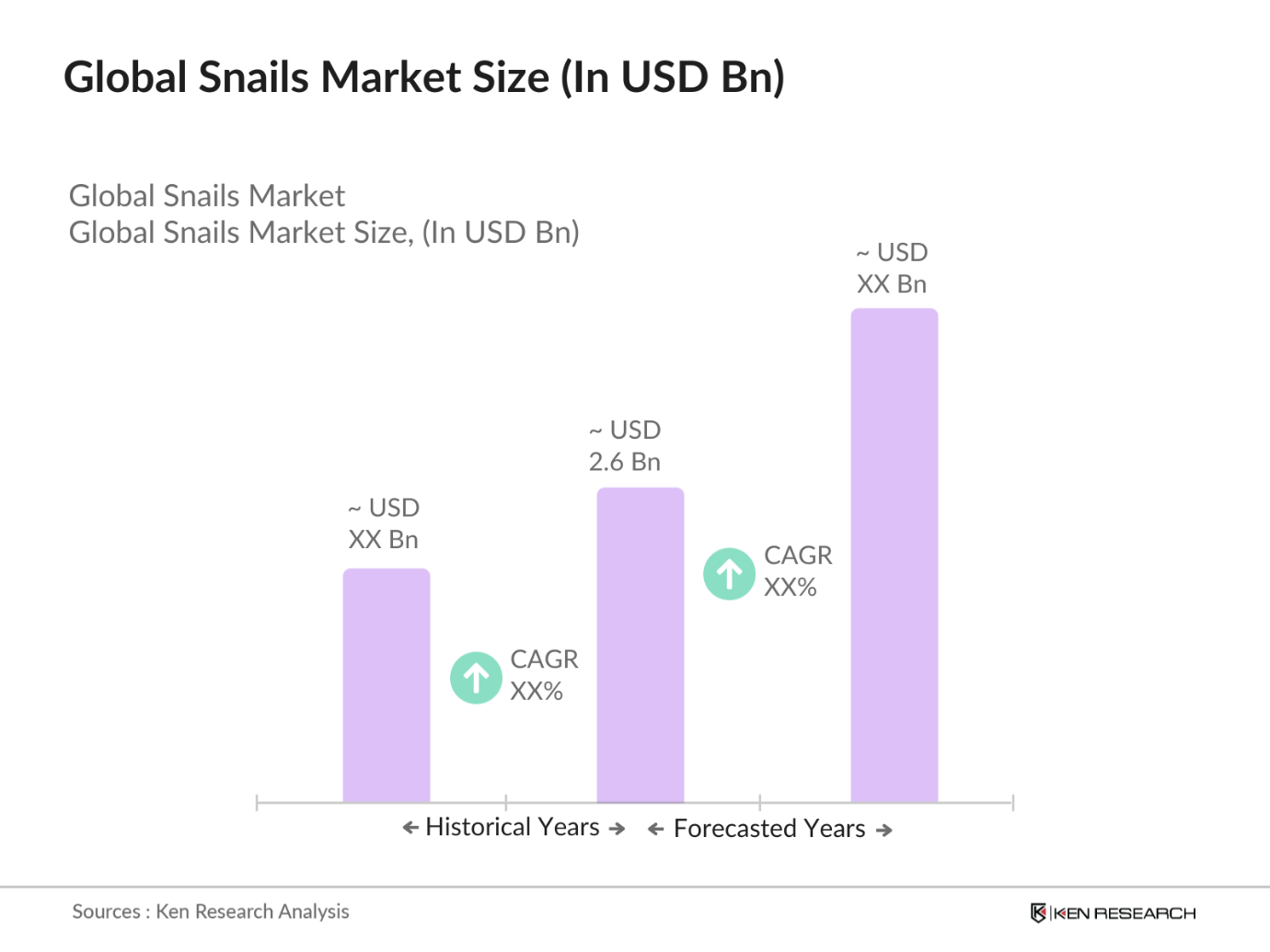
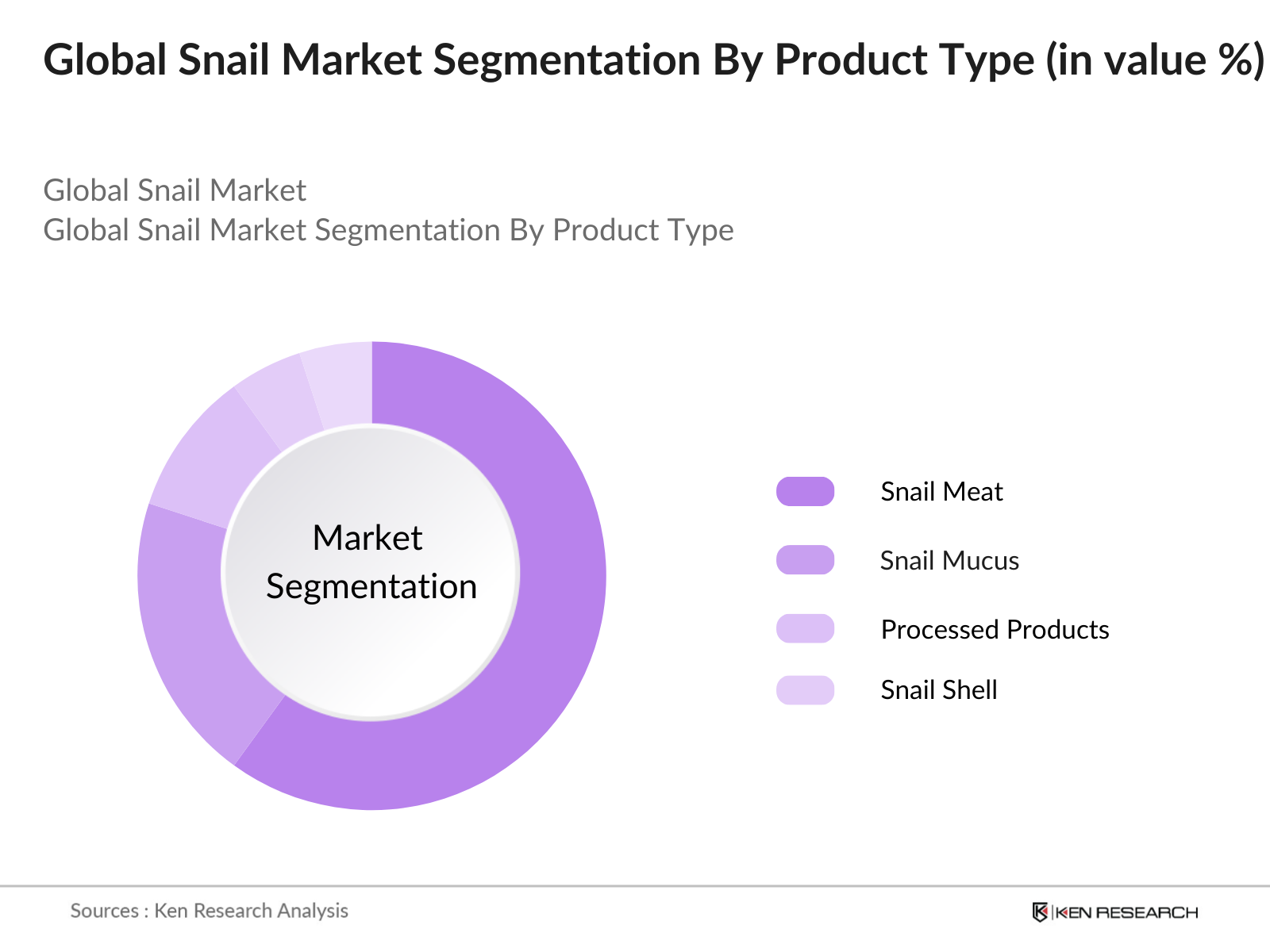
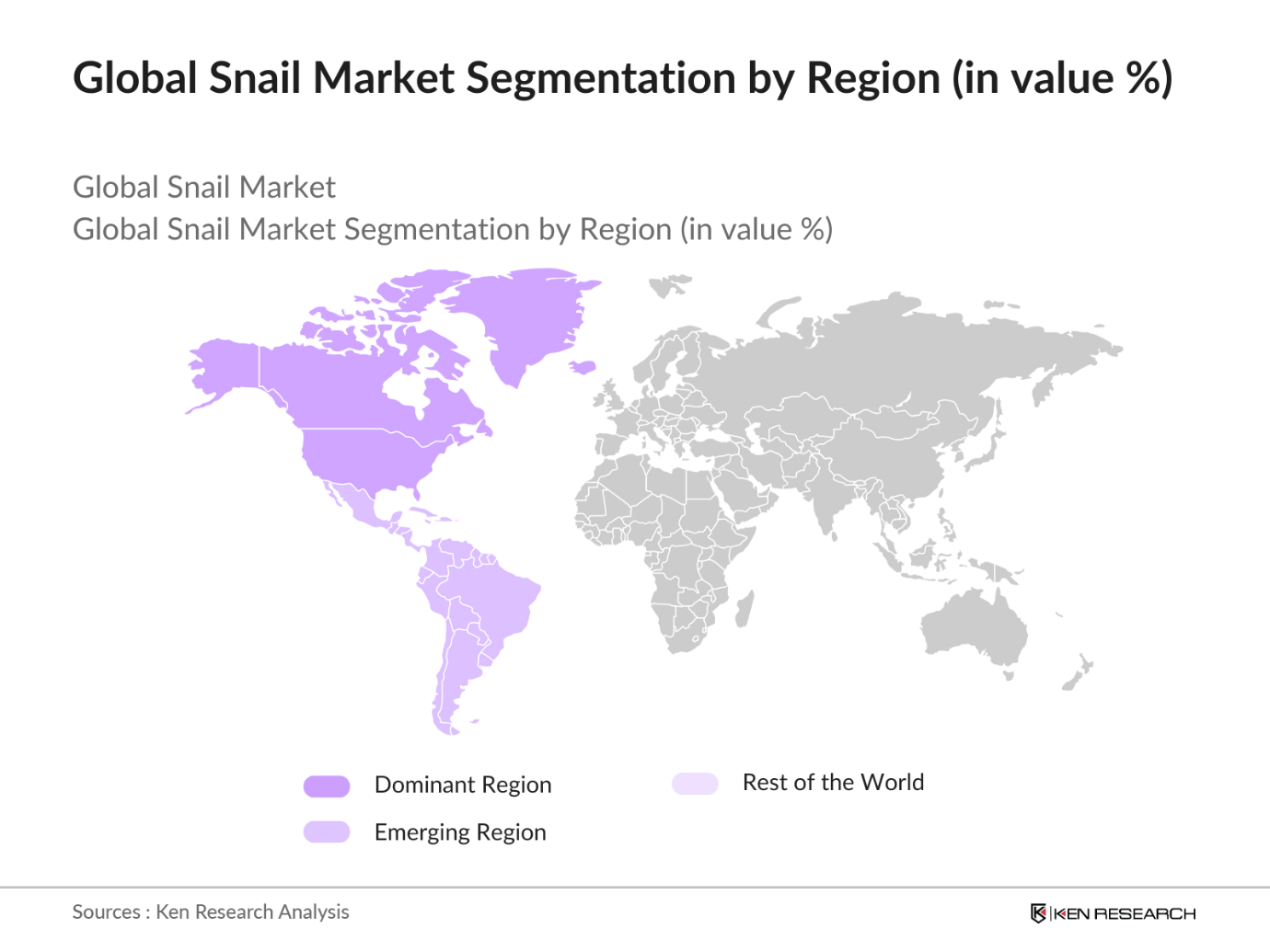
The global snail market is dominated by a combination of well-established and emerging players. Europe houses some of the largest producers, owing to the regions culinary traditions and established snail farming infrastructure. African countries like Nigeria are also growing in importance, with small and medium-sized enterprises playing a crucial role in the market.
The competitive landscape in the snail market showcases strong consolidation in key regions, driven by demand for both food and cosmetic snail-based products. Companies are investing in technological advancements to boost productivity and enhance product quality.
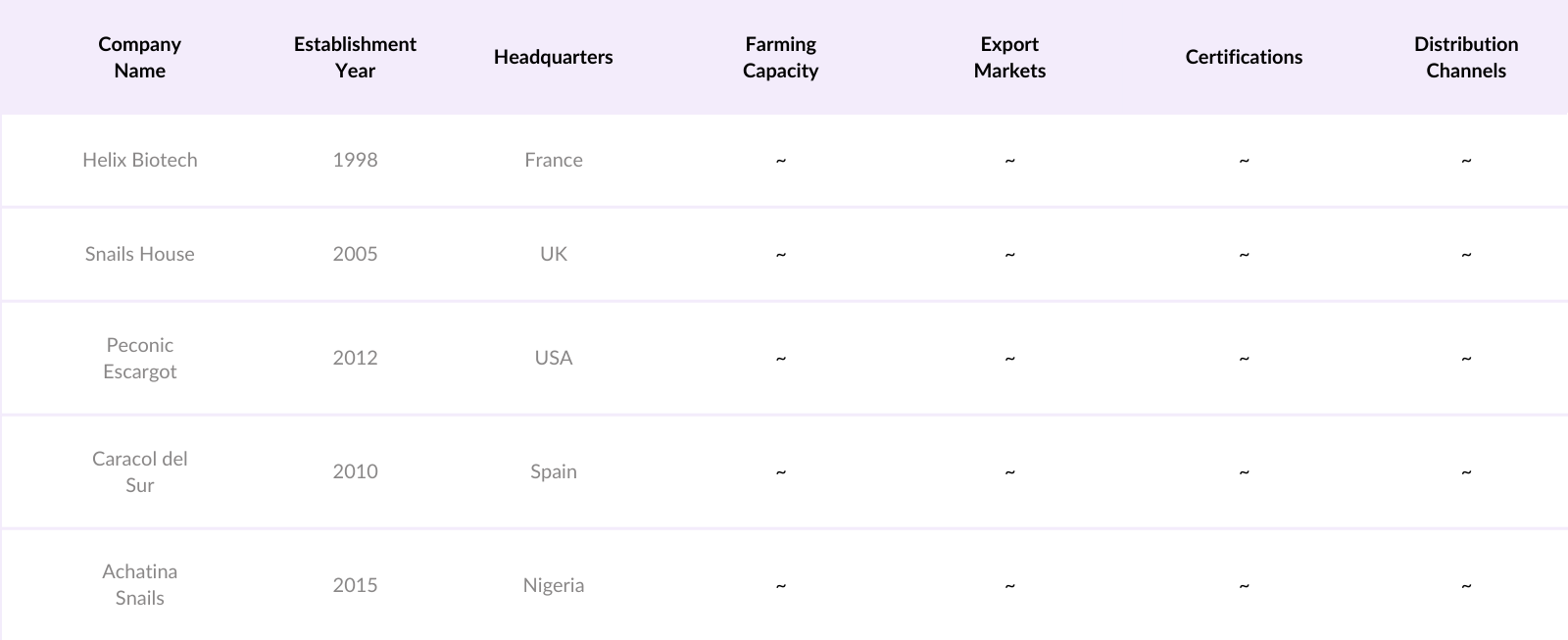
The global snail market is expected to grow significantly over the next five years, driven by rising consumer awareness about the health benefits of snail-based products and the growing demand for sustainable protein sources. Technological advancements in snail farming, particularly greenhouse techniques, are expected to enhance productivity and product quality, while the increasing popularity of snail-based cosmetics will further fuel market expansion. Additionally, government incentives in countries like Nigeria and the growing trend of sustainable farming are set to support market growth.
|
Segment |
Sub-Segments |
|
Snail Type |
Helix Aspersa, Achatina Fulica, Helix Pomatia, Other Local Species |
|
Product Type |
Snail Meat, Snail Mucus, Processed Products, Snail Shell Products |
|
Farming Method |
Indoor Snail Farming, Outdoor Snail Farming, Greenhouse Snail Farming |
|
Application |
Food Industry, Cosmetics Industry, Pharmaceutical Industry |
|
Region |
Europe, Asia Pacific, North America, Africa, Latin America |
1.1. Definition and Scope
1.2. Market Taxonomy
1.3. Snail Farming Practices (Market-specific parameter: farming techniques, snail breeds, regional practices)
1.4. Market Segmentation Overview
2.1. Historical Market Size (In Volume and Value)
2.2. Year-on-Year Growth Analysis (Market-specific parameter: Volume increase per region)
2.3. Key Market Developments and Milestones (Market-specific parameter: global and regional milestones)
3.1. Growth Drivers (Market-specific parameters: consumer awareness of health benefits, expansion of snail farming technology)
3.1.1. Demand for Sustainable Protein Sources
3.1.2. Nutritional Benefits of Snails
3.1.3. Expansion of Gourmet Food Industry
3.2. Market Challenges (Market-specific parameters: disease outbreaks, environmental impact, production costs)
3.2.1. Disease and Pest Control
3.2.2. Lack of Skilled Farmers and Infrastructure
3.2.3. Market Entry Barriers
3.3. Opportunities (Market-specific parameters: government incentives, export opportunities)
3.3.1. Expansion into Emerging Markets
3.3.2. Organic Farming Practices and Certifications
3.3.3. Collaboration Between Governments and Farmers
3.4. Trends (Market-specific parameters: innovation in snail farming technologies, new product launches)
3.4.1. Adoption of Advanced Snail Breeding Techniques
3.4.2. Increased Demand for Snail-Based Cosmetics
3.4.3. Rise of Snail Farming in Non-Traditional Regions
3.5. Government Regulations (Market-specific parameters: regional farming laws, export regulations)
3.5.1. Import/Export Restrictions on Snail Products
3.5.2. Food Safety Standards for Snail Consumption
3.5.3. Environmental Regulations Affecting Snail Farming
3.6. SWOT Analysis
3.7. Value Chain Analysis (Market-specific parameter: farm-to-table supply chain)
3.8. Porters Five Forces (Market-specific parameters: bargaining power of buyers, supplier dynamics)
3.9. Competition Ecosystem (Market-specific parameter: regional and global competitors)
4.1. By Snail Type (In Value %)
4.1.1. Helix Aspersa
4.1.2. Achatina Fulica
4.1.3. Helix Pomatia
4.1.4. Other Local Species
4.2. By Product Type (In Value %)
4.2.1. Snail Meat
4.2.2. Snail Mucus (for cosmetics and pharmaceuticals)
4.2.3. Processed Products (canned, dried, frozen)
4.2.4. Snail Shell Products
4.3. By Farming Method (In Value %)
4.3.1. Indoor Snail Farming
4.3.2. Outdoor Snail Farming
4.3.3. Greenhouse Snail Farming
4.4. By Application (In Value %)
4.4.1. Food Industry
4.4.2. Cosmetics Industry
4.4.3. Pharmaceutical Industry
4.5. By Region (In Value %)
4.5.1. Europe
4.5.2. Asia Pacific
4.5.3. North America
4.5.4. Africa
4.5.5. Latin America
5.1 Detailed Profiles of Major Companies
5.1.1. Helix Biotech
5.1.2. Snails House
5.1.3. Peconic Escargot
5.1.4. Caracol del Sur
5.1.5. Achatina Snails
5.1.6. Odysse Snail
5.1.7. Escargot Worldwide
5.1.8. Gros Gris Snail Farms
5.1.9. Cocoon Snail Farms
5.1.10. EcoSnails
5.1.11. Agri Snails
5.1.12. Ait Kaki Escargot
5.1.13. Snail Ireland
5.1.14. Gastropod Gourmet
5.1.15. Organic Snails Inc.
5.2 Cross Comparison Parameters (No. of Employees, Headquarters, Farming Capacity, Product Portfolio, Revenue, Export Markets, Certifications, Distribution Channels)
5.3. Market Share Analysis (Market-specific parameter: snail product segments)
5.4. Strategic Initiatives (Market-specific parameters: partnerships, research investments)
5.5. Mergers and Acquisitions (Market-specific parameter: global expansions)
5.6. Investment Analysis (Market-specific parameter: funding for snail farms)
5.7. Venture Capital Funding
5.8. Government Grants (Market-specific parameter: farming subsidies)
5.9. Private Equity Investments
6.1. Food Safety Standards for Snail Meat (Market-specific parameter: food grade certifications)
6.2. Compliance Requirements for Snail Cosmetics (Market-specific parameter: cosmetic safety regulations)
6.3. Export and Import Regulations for Snail Products (Market-specific parameters: export tariffs, international agreements)
6.4. Environmental Farming Standards
7.1. Future Market Size Projections
7.2. Key Factors Driving Future Market Growth
8.1. By Snail Type (In Value %)
8.2. By Product Type (In Value %)
8.3. By Farming Method (In Value %)
8.4. By Application (In Value %)
8.5. By Region (In Value %)
9.1. TAM/SAM/SOM Analysis
9.2. Customer Cohort Analysis
9.3. Marketing Initiatives
9.4. White Space Opportunity Analysis
In the initial phase, we mapped the global snail market ecosystem, identifying all relevant stakeholders including snail farmers, cosmetic companies, and food manufacturers. Secondary research was conducted using proprietary databases, industry reports, and government publications to identify critical market drivers, challenges, and opportunities.
We compiled historical data for the global snail market, analyzing trends related to snail farming techniques, production volumes, and consumption patterns. This step also involved segment-wise analysis of the snail products market to ensure the accuracy of the market share and growth estimations.
Hypotheses regarding the future growth of the snail market were tested and validated through interviews with industry experts, including snail farm owners and cosmetic manufacturers. These interviews provided valuable insights into emerging trends and technological advancements within the market.
The final phase involved synthesizing the collected data to prepare a comprehensive report, which was reviewed by snail industry professionals to ensure that the market analysis was robust and aligned with real-world conditions. This synthesis phase ensured that the report offered actionable insights for market stakeholders.
The global snail market is valued at USD 2.6 billion, driven by growing consumer interest in sustainable and healthy food sources as well as expanding demand for snail-based cosmetics and pharmaceutical products.
Key challenges include the high cost of snail farming infrastructure, lack of skilled labor in certain regions, and vulnerability to diseases that can impact snail populations and productivity.
Some of the key players include Helix Biotech, Snails House, Peconic Escargot, Caracol del Sur, and Achatina Snails, each of which has a strong market presence due to their production capacity and market reach.
The market is propelled by factors such as increased consumer awareness of the health benefits of snail meat, the rise of snail-based cosmetics, and growing demand for organic and sustainable farming practices.
Emerging trends include technological advancements in snail farming, the rise of snail-based skincare products, and increasing international trade in snail products, particularly from Africa to Europe.

What makes us stand out is that our consultants follows Robust, Refine and Result (RRR) methodology. i.e. Robust for clear definitions, approaches and sanity checking, Refine for differentiating respondents facts and opinions and Result for presenting data with story

We have set a benchmark in the industry by offering our clients with syndicated and customized market research reports featuring coverage of entire market as well as meticulous research and analyst insights.

While we don't replace traditional research, we flip the method upside down. Our dual approach of Top Bottom & Bottom Top ensures quality deliverable by not just verifying company fundamentals but also looking at the sector and macroeconomic factors.

With one step in the future, our research team constantly tries to show you the bigger picture. We help with some of the tough questions you may encounter along the way: How is the industry positioned? Best marketing channel? KPI's of competitors? By aligning every element, we help maximize success.

Our report gives you instant access to the answers and sources that other companies might choose to hide. We elaborate each steps of research methodology we have used and showcase you the sample size to earn your trust.

If you need any support, we are here! We pride ourselves on universe strength, data quality, and quick, friendly, and professional service.