
Global Social Commerce Market Outlook to 2030
Region:Global
Author(s):Mukul
Product Code:KROD5885
December 2024
83
About the Report
Global Social Commerce Market Overview
- The global social commerce market was valued at USD 957 billion based on a five-year historical analysis, driven by the increasing adoption of mobile commerce and the seamless integration of social platforms with e-commerce. Social media platforms such as Facebook, Instagram, and TikTok have transformed into direct sales channels, allowing businesses to target consumers more precisely. The rise of influencer marketing and interactive shopping experiences, such as live-stream shopping, has accelerated the markets expansion. Major developments in artificial intelligence (AI) and augmented reality (AR) have enhanced personalized shopping experiences, making them a key driver for market growth.
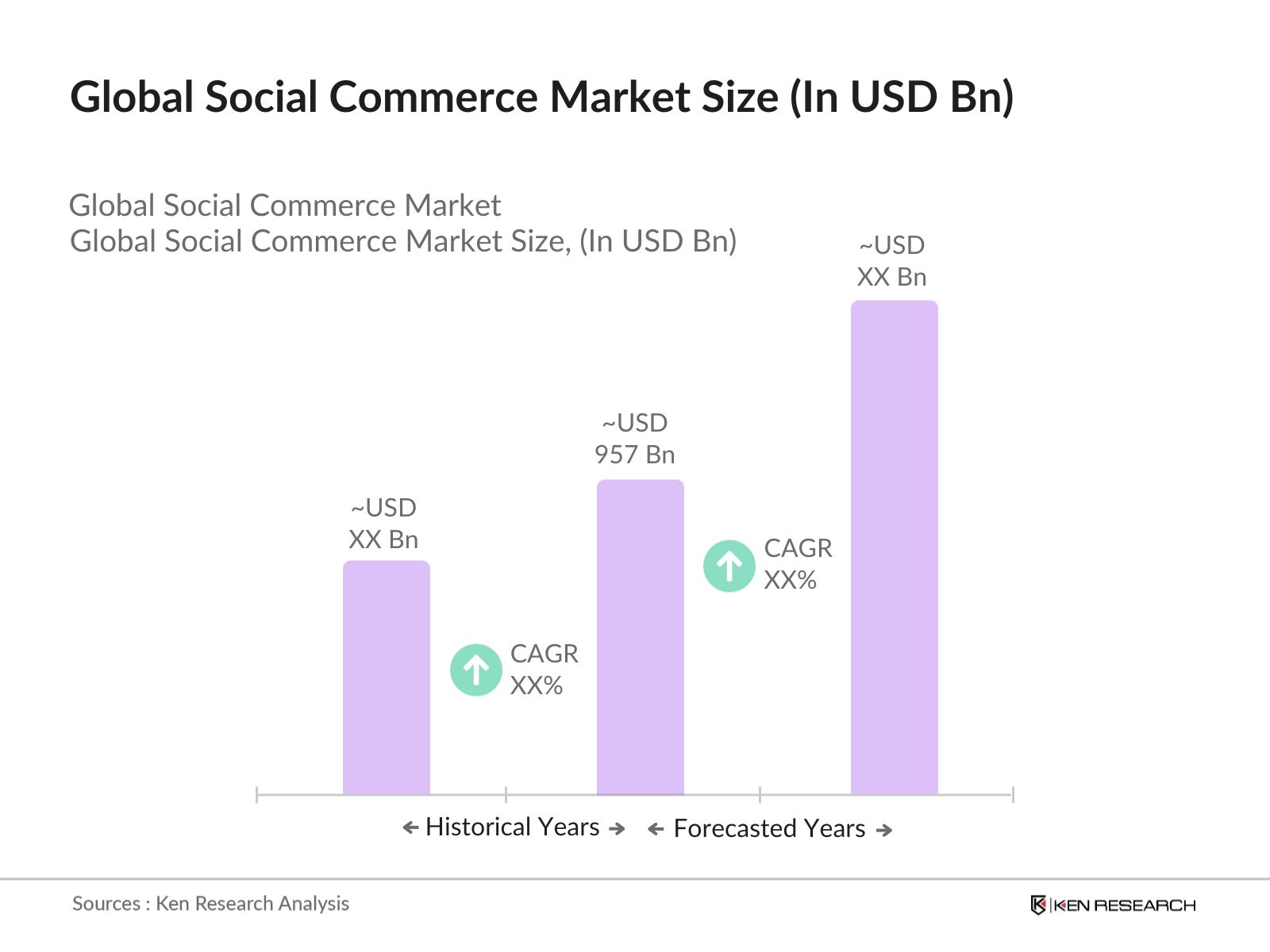
- The global social commerce market is dominated by countries like China and the United States, primarily due to their extensive digital infrastructure, massive user bases, and the presence of social media giants like WeChat and Facebook. China's dominance is reinforced by its advanced mobile payment systems and integrated shopping features on platforms like Xiaohongshu and Pinduoduo, while the U.S. benefits from the continued growth of e-commerce and innovation in social media platforms. These markets excel due to strong digital ecosystems and early adoption of social shopping features.
- Consumer protection laws are evolving to meet the demands of the social commerce landscape. As of 2024, over 25 countries, including the U.S., UK, and Australia, have updated their consumer protection regulations to cover social commerce transactions. The World Bank highlights that over 40% of global social commerce platforms are subject to consumer protection laws that address fraudulent activities and misleading promotions. These regulations ensure that consumers can trust the products they purchase via social platforms, fostering greater confidence in the social commerce ecosystem.
Global Social Commerce Market Segmentation
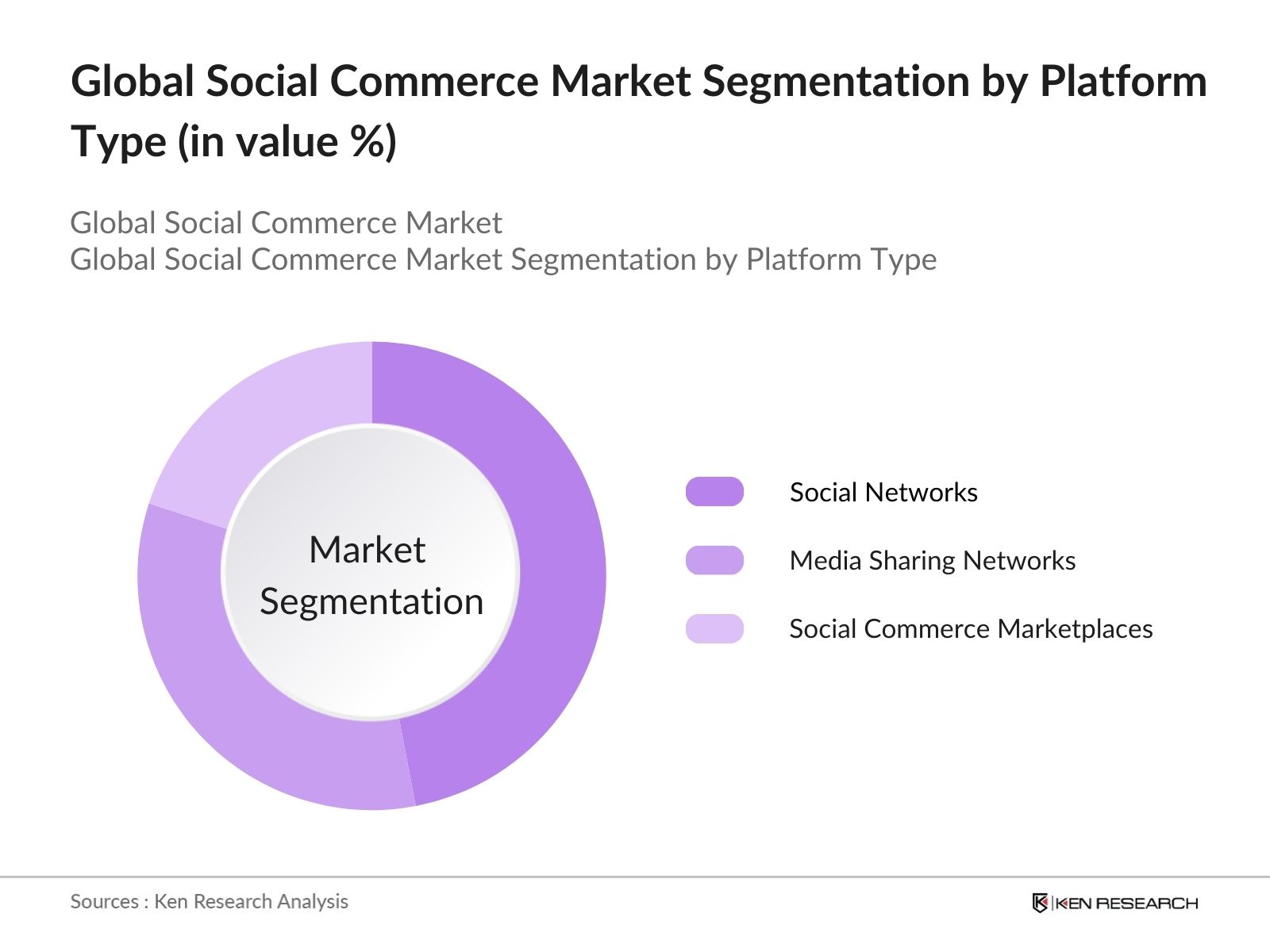
- By Platform Type: The global social commerce market is segmented by platform type into social networks, media sharing networks, and social commerce marketplaces. Recently, social networks have a dominant market share within this segmentation, driven by platforms such as Facebook, Instagram, and Pinterest, which offer robust social shopping capabilities through features like in-app purchases, shoppable posts, and integrated ad targeting. These platforms leverage extensive user data and influencer partnerships to create personalized shopping experiences, cementing their dominance in the segment.
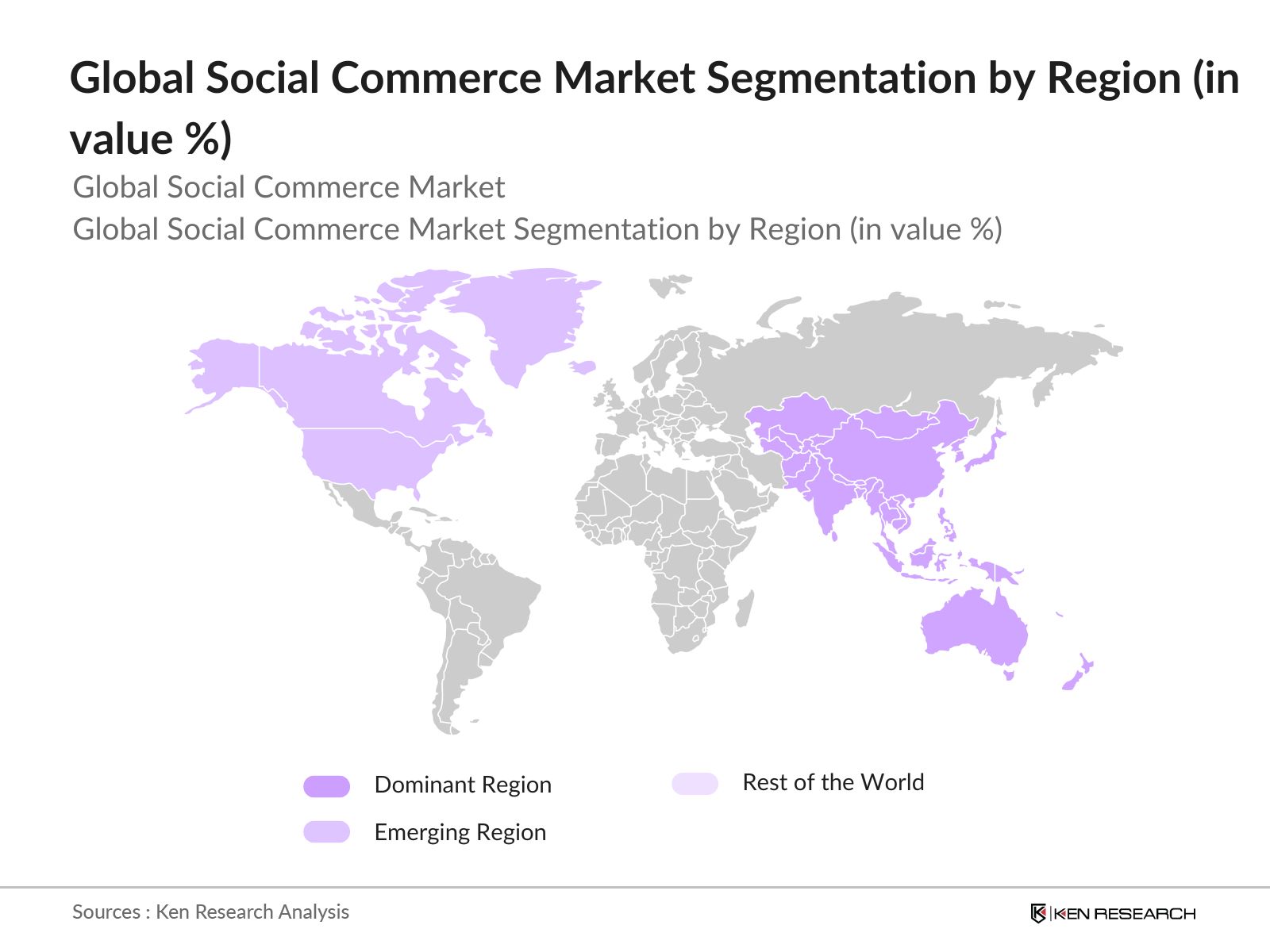
- By Region: The market is segmented by region into North America, Europe, Asia Pacific, Latin America, and Middle East & Africa. Asia Pacific holds the largest market share, driven by the dominance of China, which has rapidly integrated social commerce into everyday mobile activities. Mobile payments are a norm, and platforms like Pinduoduo, WeChat, and Xiaohongshu offer consumers both convenience and a highly social shopping experience. The region benefits from high smartphone penetration and tech-savvy consumers.
- By Business Model: The social commerce market is segmented by business model into Business to Consumer (B2C), Consumer to Consumer (C2C), and Business to Business (B2B). The B2C model dominates this market segment, largely due to the direct connection that brands establish with consumers on platforms like Instagram and TikTok. Large-scale brands like Nike and H&M use these platforms to launch targeted campaigns and leverage influencer partnerships, creating a seamless shopping experience from discovery to purchase.
Global Social Commerce Market Competitive Landscape
The global social commerce market is competitive, with key players ranging from social media giants to e-commerce platforms with integrated social shopping features. The market is dominated by a few major companies, such as Facebook, Instagram, and TikTok, which leverage their large user bases and advanced advertising tools to lead the market. Additionally, Chinese platforms like WeChat and Pinduoduo dominate their domestic markets, offering a seamless blend of social interaction and commerce.
|
Company |
Year of Establishment |
Headquarters |
Number of Users (millions) |
Market Segment |
Revenue (USD Bn) |
Influencer Partnerships |
Advertising Model |
Geographical Reach |
Key Features |
|
|
2004 |
Menlo Park, USA |
|||||||
|
|
2010 |
Menlo Park, USA |
|||||||
|
TikTok |
2016 |
Beijing, China |
|||||||
|
Pinduoduo |
2015 |
Shanghai, China |
|||||||
|
|
2011 |
Shenzhen, China |
Global Social Commerce Industry Analysis
Growth Drivers
- Rise in Social Media Usage: In 2024, the global social media landscape continues to expand with more than 4.9 billion users, representing over 62% of the global population. Countries like India, with over 850 million internet users, and the United States, with 330 million internet users, show strong growth in social media adoption. Social media platforms are increasingly becoming integral to daily life, driving social commerce adoption. According to World Bank data, global internet penetration reached 66% in 2024, creating more opportunities for social commerce to thrive in connected markets. Social media integration is reshaping the shopping experience globally.
- Increased Mobile Commerce Adoption: Mobile commerce is fueling the rise of social commerce, with over 6.8 billion smartphone users globally in 2024. A significant portion of e-commerce transactions are now initiated via mobile devices. In India, mobile internet users are expected to reach 900 million by the end of 2024, according to the International Telecommunications Union. Moreover, nearly 80% of U.S. consumers make purchases using their mobile devices, highlighting the seamless integration of social platforms with mobile commerce as a critical driver in this market. The growing reliance on smartphones for shopping bolsters the social commerce ecosystem.
- of Social Platforms with E-commerce: The integration of e-commerce features into social platforms is driving seamless shopping experiences for users. Platforms like Instagram, Facebook, and TikTok offer built-in purchasing options, with millions of businesses leveraging these tools to target customers directly. As of 2024, over 70% of small and medium-sized enterprises (SMEs) in developed economies have adopted social commerce to enhance their reach and sales. In China, social commerce platforms such as WeChat drive over 40% of online retail sales. These integrations increase business visibility and simplify the consumer journey, making social commerce a more attractive option for brands globally.
Market Restraints
- Security and Privacy Concerns: Security and privacy concerns pose significant challenges for social commerce, particularly in regions with stringent data protection laws. As of 2024, countries like the EU have implemented General Data Protection Regulation (GDPR) to ensure strict data privacy, while the U.S. is discussing more comprehensive privacy legislation. A report from the World Bank indicated that the cost of data breaches in 2024 has reached $4.5 trillion globally, reflecting the increasing risks posed to businesses operating in the digital space. Regulatory compliance and user concerns over privacy can hinder the adoption of social commerce platforms.
- Market Infrastructure: The fragmentation of market infrastructure remains a challenge for social commerce growth. Many regions, especially developing economies, suffer from poor integration of digital payment systems and logistical gaps. In 2024, less than 50% of internet users in Africa have access to stable payment gateways, creating difficulties for smooth transactions. Moreover, technology gaps in rural areas of countries like Brazil and India limit the reach of social commerce platforms, where only 65% of rural areas have access to consistent high-speed internet. This infrastructure divide can delay the full potential of social commerce in these regions.
Global Social Commerce Market Future Outlook
Over the next five years, the global social commerce market is expected to exhibit significant growth, driven by the integration of advanced technologies such as artificial intelligence (AI) and augmented reality (AR), as well as increasing consumer preference for convenient, personalized shopping experiences. Mobile commerce, in particular, is set to dominate, fueled by the expansion of smartphone use and social media platforms evolving shopping features. As influencer marketing continues to rise, businesses will increasingly invest in social media for direct-to-consumer sales.
Market Opportunities
- Technological Advancements: Technological advancements such as artificial intelligence (AI), augmented reality (AR), and chatbots are unlocking new opportunities in social commerce. In 2024, over 35% of businesses globally have adopted AI-driven tools to enhance customer engagement, as per OECD data. AI-powered product recommendations and AR-enabled virtual try-on features have revolutionized shopping experiences on platforms like Instagram and Snapchat. Furthermore, chatbots, which facilitate 24/7 customer interaction, are projected to handle over 25% of global retail sales inquiries by 2024, enhancing customer service and driving conversion rates in the social commerce sphere.
- Untapped Markets in Developing Economies: Developing economies present significant untapped potential for social commerce expansion. In 2024, nearly 3.5 billion people in regions like Africa, Southeast Asia, and Latin America remain underserved by traditional e-commerce platforms but are increasingly adopting social media. For example, Southeast Asia saw a 15% annual increase in social media users in 2024, with Indonesia and Vietnam leading growth. These markets offer fertile ground for social commerce players to establish a foothold, leveraging the increasing digitalization and growing internet penetration, which surpassed 45% in many developing regions by 2024.
Scope of the Report
|
By Platform Type |
Social Networks Media Sharing Networks Social Marketplaces |
|
By Business Model |
B2C C2C B2B |
|
By Product Category |
Fashion & Apparel Consumer Electronics Beauty & Personal Care Home Goods Others |
|
By Region |
North America Europe Asia Pacific Latin America Middle East Africa |
Products
Key Target Audience
Investors and Venture Capitalist Firms
Government and Regulatory Bodies (GDPR, FTC)
Retail and E-commerce Companies
Technology Providers (AI, AR)
Payment Solution Providers (e.g., PayPal, Stripe)
Marketing and Advertising Agencies
Influencer and Talent Management Agencies
Logistics and Delivery Companies
Companies
Players Mentioned in the Report:
Facebook (Meta Platforms, Inc.)
Instagram
TikTok (Bytedance)
Pinterest, Inc.
WeChat (Tencent)
Xiaohongshu (Little Red Book)
Pinduoduo
Amazon Live
Twitter
Shopify
eBay
JD.com
YouTube (Google LLC)
Snapchat
Alibaba Group
Table of Contents
1. Global Social Commerce Market Overview
1.1. Definition and Scope
1.2. Market Taxonomy
1.3. Market Growth Rate
1.4. Market Segmentation Overview
2. Global Social Commerce Market Size (In USD Bn)
2.1. Historical Market Size
2.2. Year-On-Year Growth Analysis
2.3. Key Market Developments and Milestones
3. Global Social Commerce Market Analysis
3.1. Growth Drivers
3.1.1. Rise in Social Media Usage
3.1.2. Increased Mobile Commerce Adoption
3.1.3. Integration of Social Platforms with E-commerce
3.1.4. Influencer Marketing Expansion
3.2. Market Challenges
3.2.1. Security and Privacy Concerns (Data Protection, Regulatory Compliance)
3.2.2. Fragmented Market Infrastructure (Platform Integration, Technology Gaps)
3.2.3. Logistics and Supply Chain Issues (Delivery Challenges, Cross-border Complexity)
3.3. Opportunities
3.3.1. Technological Advancements (AI, AR, Chatbots)
3.3.2. Untapped Markets in Developing Economies
3.3.3. Cross-border Social Commerce
3.4. Trends
3.4.1. Video Commerce Adoption (Live-stream Shopping)
3.4.2. Shoppable Content Growth (Interactive Posts, In-App Purchases)
3.4.3. Personalized Shopping Experiences
3.5. Government Regulation
3.5.1. Data Protection Laws
3.5.2. Advertising Standards
3.5.3. Cross-border E-commerce Regulations
3.5.4. Consumer Protection in Social Commerce
3.6. SWOT Analysis
3.7. Stakeholder Ecosystem
3.8. Porters Five Forces Analysis
3.9. Competition Ecosystem
4. Global Social Commerce Market Segmentation
4.1. By Platform Type (In Value %)
4.1.1. Social Networks (Facebook, Instagram, Pinterest)
4.1.2. Media Sharing Networks (YouTube, TikTok)
4.1.3. Social Commerce Marketplaces (Pinduoduo, Xiaohongshu)
4.2. By Business Model (In Value %)
4.2.1. Business to Consumer (B2C)
4.2.2. Consumer to Consumer (C2C)
4.2.3. Business to Business (B2B)
4.3. By Product Category (In Value %)
4.3.1. Fashion & Apparel
4.3.2. Consumer Electronics
4.3.3. Beauty & Personal Care
4.3.4. Home Goods
4.3.5. Others (Toys, Books, etc.)
4.4. By Region (In Value %)
4.4.1. North America
4.4.2. Europe
4.4.3. Asia Pacific
4.4.4. Latin America
4.4.5. Middle East & Africa
5. Global Social Commerce Market Competitive Analysis
5.1 Detailed Profiles of Major Companies
5.1.1. Facebook (Meta Platforms, Inc.)
5.1.2. Instagram
5.1.3. Pinterest, Inc.
5.1.4. TikTok (Bytedance)
5.1.5. WeChat (Tencent)
5.1.6. Xiaohongshu (Little Red Book)
5.1.7. YouTube (Google LLC)
5.1.8. Twitter
5.1.9. Snapchat
5.1.10. Pinduoduo
5.1.11. Amazon Live
5.1.12. Shopify
5.1.13. eBay
5.1.14. Alibaba Group
5.1.15. JD.com
5.2 Cross Comparison Parameters (Revenue, No. of Users, Active Sellers, Advertising Models, Platform Features, Engagement Metrics, International Presence, Influencer Partnerships)
5.3 Market Share Analysis
5.4 Strategic Initiatives
5.5 Mergers And Acquisitions
5.6 Investment Analysis
5.7 Venture Capital Funding
5.8 Government Grants
5.9 Private Equity Investments
6. Global Social Commerce Market Regulatory Framework
6.1. Compliance with Data Privacy Regulations (GDPR, CCPA)
6.2. Adherence to Social Media Advertising Rules
6.3. Certification Processes (e.g., e-commerce platform certifications)
7. Global Social Commerce Market Future Size (In USD Bn)
7.1. Future Market Size Projections
7.2. Key Factors Driving Future Market Growth
8. Global Social Commerce Future Market Segmentation
8.1. By Platform Type (In Value %)
8.2. By Business Model (In Value %)
8.3. By Product Category (In Value %)
8.4. By Region (In Value %)
9. Global Social Commerce Market Analysts Recommendations
9.1. TAM/SAM/SOM Analysis
9.2. Customer Segmentation Strategies
9.3. Marketing Initiatives and Tactics
9.4. White Space Opportunity Analysis
Disclaimer Contact Us
Research Methodology
Step 1: Identification of Key Variables
The initial stage involves mapping out the global social commerce ecosystem, identifying key variables such as social media adoption rates, consumer shopping preferences, and payment integration. Extensive desk research is conducted using proprietary databases and secondary sources to define the critical variables that drive market dynamics.
Step 2: Market Analysis and Construction
Historical data on social commerce adoption, revenue, and user engagement is gathered. This phase includes the analysis of platform-specific features, influencer marketing success, and shopping behavior trends. The assessment also includes data on logistics, payment processing, and customer service quality.
Step 3: Hypothesis Validation and Expert Consultation
Key market hypotheses are formulated and validated through interviews with industry experts. This includes social media influencers, platform developers, and marketing strategists. Their insights provide firsthand information on the effectiveness of new features like live-stream shopping and shoppable content.
Step 4: Research Synthesis and Final Output
In the final phase, data from platform owners, retailers, and technology providers is synthesized to create a comprehensive overview of the social commerce landscape. Market data is validated through a bottom-up approach to ensure accuracy, reliability, and relevance to business professionals.
Frequently Asked Questions
01. How big is the global social commerce market?
The global social commerce market was valued at USD 957 billion based on a five-year historical analysis, driven by increasing social media usage and the integration of shopping features across platforms like Facebook, Instagram, and TikTok.
02. What are the challenges in the global social commerce market?
Key challenges include concerns about data privacy, regulatory compliance, fragmented logistics, and the difficulty of establishing trust in cross-border transactions. The competition between platforms also adds complexity for new entrants.
03. Who are the major players in the global social commerce market?
Major players include Facebook, Instagram, TikTok, WeChat, and Pinduoduo. These platforms have successfully integrated e-commerce capabilities, making them key players in the social commerce ecosystem.
04. What are the growth drivers of the global social commerce market?
The market is driven by increased social media penetration, growing consumer trust in online transactions, and the rise of influencer marketing. Innovations in AI and AR have further enhanced the social shopping experience.
Why Buy From Us?

What makes us stand out is that our consultants follows Robust, Refine and Result (RRR) methodology. i.e. Robust for clear definitions, approaches and sanity checking, Refine for differentiating respondents facts and opinions and Result for presenting data with story

We have set a benchmark in the industry by offering our clients with syndicated and customized market research reports featuring coverage of entire market as well as meticulous research and analyst insights.

While we don't replace traditional research, we flip the method upside down. Our dual approach of Top Bottom & Bottom Top ensures quality deliverable by not just verifying company fundamentals but also looking at the sector and macroeconomic factors.

With one step in the future, our research team constantly tries to show you the bigger picture. We help with some of the tough questions you may encounter along the way: How is the industry positioned? Best marketing channel? KPI's of competitors? By aligning every element, we help maximize success.

Our report gives you instant access to the answers and sources that other companies might choose to hide. We elaborate each steps of research methodology we have used and showcase you the sample size to earn your trust.

If you need any support, we are here! We pride ourselves on universe strength, data quality, and quick, friendly, and professional service.