
Global Social Media Management Market Outlook 2030
Region:Global
Author(s):Shivani Mehra
Product Code:KROD4909
Region:Global
Author(s):Shivani Mehra
Product Code:KROD4909
December 2024
99
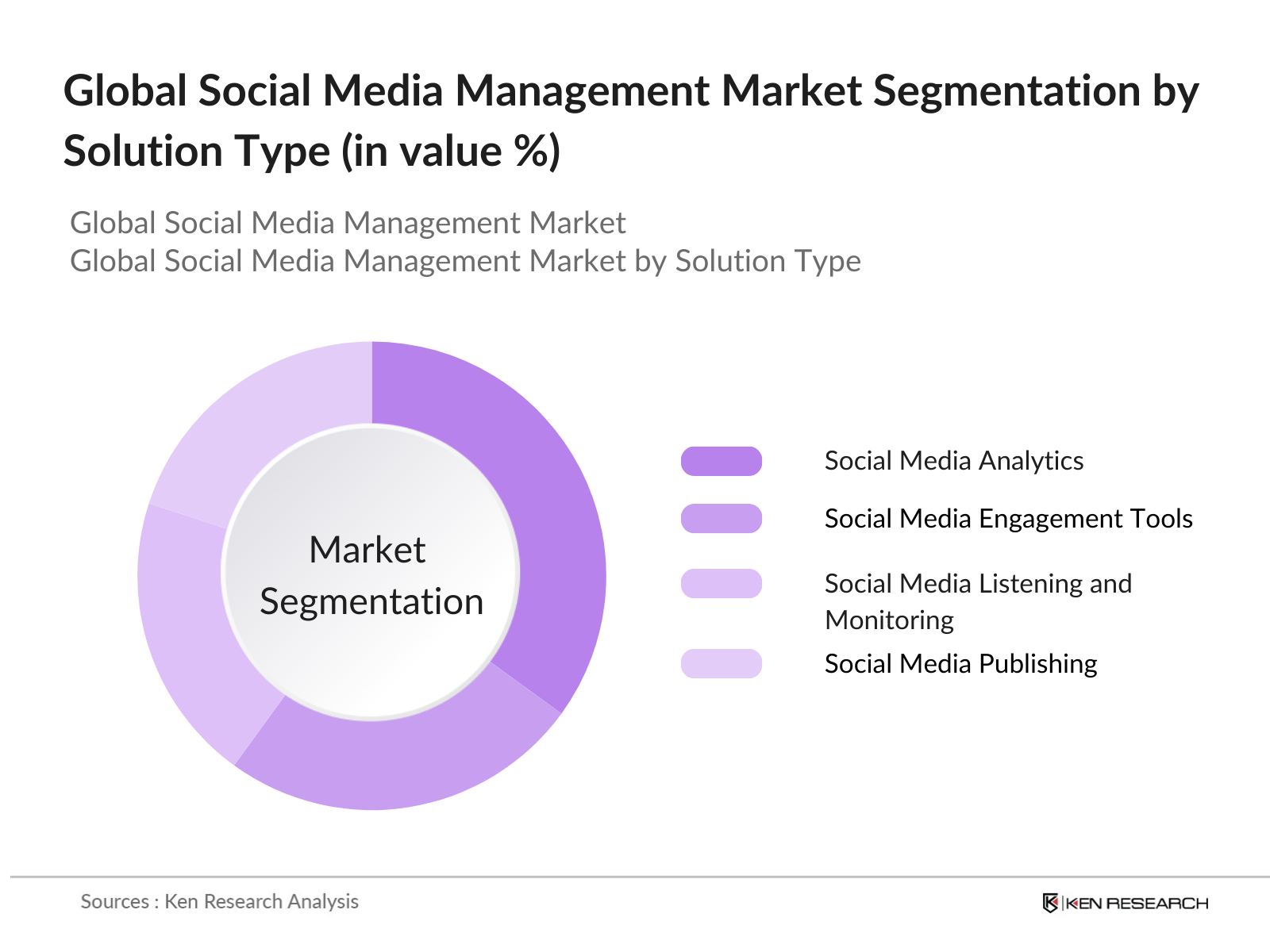
By Solution Type: The global social media management market is segmented by solution type into social media listening and monitoring, social media analytics, social media engagement tools, and social media publishing. Social media analytics has a dominant market share due to the growing emphasis on data-driven marketing strategies. Companies leverage analytics tools to monitor real-time consumer sentiment and make informed decisions about campaigns. This has become particularly crucial as competition intensifies across platforms and brands seek actionable insights to maximize their digital presence. Analytics tools help businesses better target their audiences, optimize ad spend, and measure campaign performance with a high degree of precision.
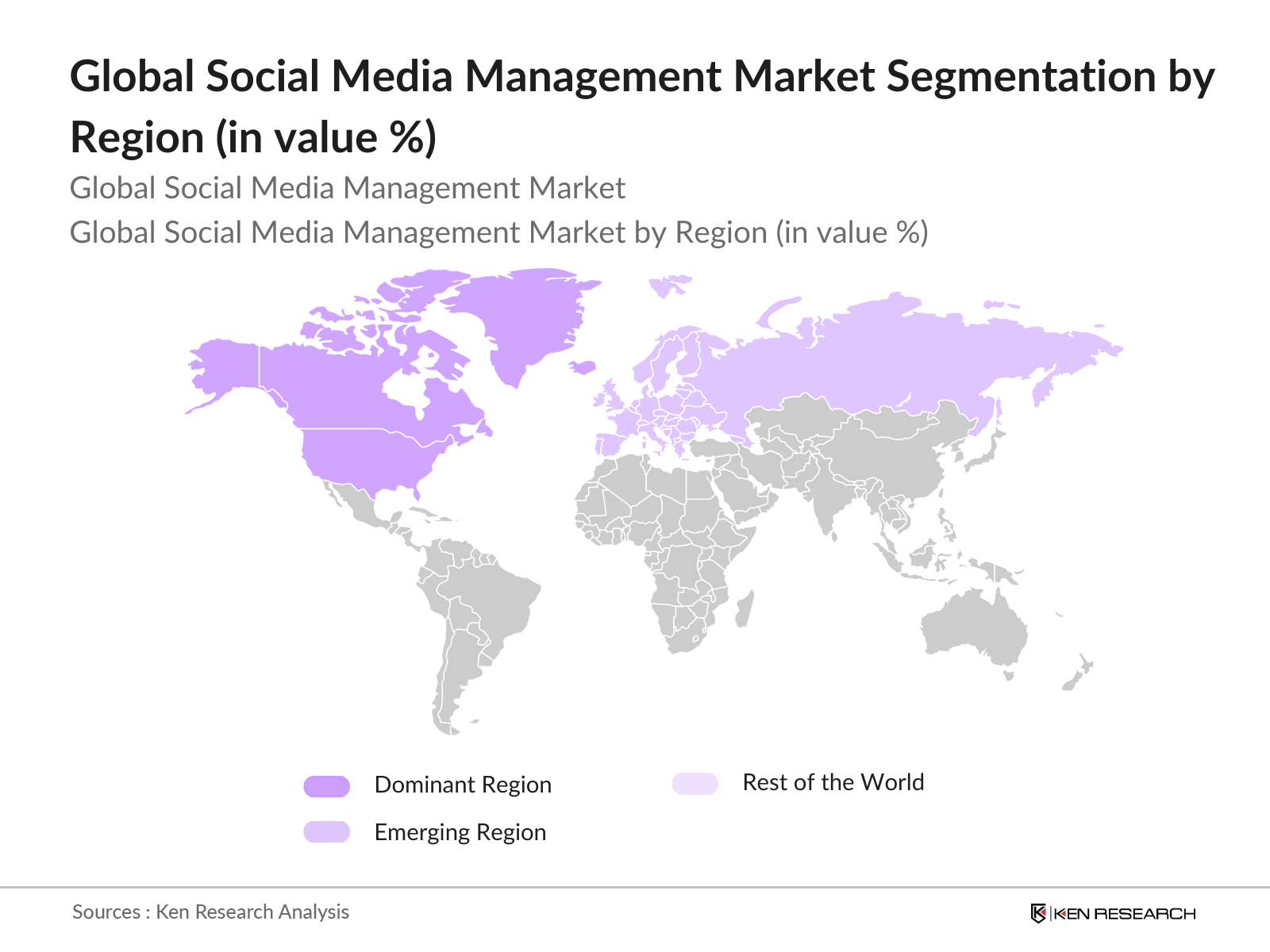
By Region: The global social media management market is segmented by region into North America, Europe, Asia-Pacific, Latin America, and the Middle East & Africa. North America dominates the market share, driven by the United States vast digital landscape and the regions early adoption of advanced social media management technologies. The region has seen significant growth in the integration of AI and big data analytics into social media platforms, making it a hub for technological innovation. The rapid growth of e-commerce in the U.S. further fuels demand for social media management tools as brands increasingly use social channels to drive sales and brand engagement.
The global social media management market is consolidated, with a few key players leading innovation and technological integration. These major companies focus on enhancing their product offerings to cater to the diverse needs of businesses across industries, ranging from small enterprises to global corporations. This consolidation reflects the growing need for sophisticated tools that can handle the increasing complexity of social media marketing, especially with the rise of multi-channel strategies.
|
Company |
Establishment Year |
Headquarters |
No. of Employees |
Revenue (USD Mn) |
Platform Reach |
Product Differentiation |
Customer Base |
Innovation Capabilities |
Social Platform Partnerships |
|
Hootsuite |
2008 |
Vancouver, Canada |
|||||||
|
Sprout Social |
2010 |
Chicago, USA |
|||||||
|
Buffer |
2010 |
New York, USA |
|||||||
|
Sprinklr |
2009 |
New York, USA |
|||||||
|
Zoho Social |
1996 |
Chennai, India |
Market Growth Drivers
Market Challenges
The social media management market is set to experience rapid growth, driven by advancements in artificial intelligence (AI), increasing demand for real-time analytics, and the need for businesses to connect with consumers in an increasingly digital landscape. The integration of AI tools in social media management platforms will allow brands to automate responses, optimize ad spend, and enhance customer interactions. Additionally, the rise of influencer marketing and social commerce will further boost demand for advanced social media management tools. As businesses move towards data-driven decision-making, tools that provide comprehensive analytics and actionable insights will become essential.
Market Opportunities:
|
By Solution Type |
Social Media Listening and Monitoring Social Media Analytics Social Media Engagement Tools Social Media Publishing |
|
By Deployment Type |
Cloud-Based On-Premise |
|
By Enterprise Size |
Small and Medium Enterprises (SMEs) Large Enterprises |
|
By End-User Industry |
Retail and E-Commerce BFSI IT and Telecommunications Healthcare and Life Sciences Government and Public Sector |
|
By Region |
North America Europe Asia-Pacific Latin America Middle East and Africa |
1.1 Definition and Scope
1.2 Market Taxonomy
1.3 Market Dynamics
1.4 Market Segmentation Overview
2.1 Historical Market Size
2.2 Year-on-Year Growth Analysis
2.3 Key Market Developments and Milestones
3.1 Growth Drivers (Social Media Advertising Expenditure, Increasing Digital Transformation, Cloud-based Platform Adoption)
3.1.1 Rise in Multi-Channel Engagement
3.1.2 Influence of User-Generated Content
3.1.3 Demand for Data-Driven Marketing Tools
3.2 Market Challenges (Data Privacy Issues, Platform Algorithm Changes, Integration Complexities)
3.2.1 Increased Data Regulations
3.2.2 Competition Among Platforms
3.2.3 Complexity in Analytics and Reporting
3.3 Opportunities (AI-Powered Tools, Influencer Marketing Integration, Expansion into Emerging Markets)
3.3.1 Enhanced Personalization Through AI
3.3.2 Expansion of Small and Medium-Sized Businesses (SMBs) into Digital Spaces
3.3.3 Rise of Niche Social Platforms
3.4 Trends (Automation in Social Media Tools, Increasing Video Content, Adoption of AR/VR in Marketing)
3.4.1 Social Commerce Growth
3.4.2 Hybrid Events and Digital Presence
3.4.3 Subscription-Based Social Media Models
3.5 Government Regulations (GDPR, CCPA, Data Localization Laws)
3.5.1 Compliance with Data Privacy Standards
3.5.2 Cross-Border Data Flow Regulations
3.5.3 Increasing Government Scrutiny of Content
3.6 SWOT Analysis
3.7 Stakeholder Ecosystem (Platform Providers, Third-Party Tool Providers, Advertising Agencies, Influencers)
3.8 Porters Five Forces (Bargaining Power of Suppliers, Bargaining Power of Buyers, Threat of New Entrants, Threat of Substitutes, Industry Rivalry)
3.9 Competition Ecosystem (Market Share, Competitor Strategies, Pricing Models)
4.1 By Solution Type (In Value %)
4.1.1 Social Media Listening and Monitoring
4.1.2 Social Media Analytics
4.1.3 Social Media Engagement Tools
4.1.4 Social Media Publishing
4.2 By Deployment Type (In Value %)
4.2.1 Cloud-Based
4.2.2 On-Premise
4.3 By Enterprise Size (In Value %)
4.3.1 Small and Medium Enterprises (SMEs)
4.3.2 Large Enterprises
4.4 By End-User Industry (In Value %)
4.4.1 Retail and E-Commerce
4.4.2 BFSI (Banking, Financial Services, and Insurance)
4.4.3 IT and Telecommunications
4.4.4 Healthcare and Life Sciences
4.4.5 Government and Public Sector
4.5 By Region (In Value %)
4.5.1 North America
4.5.2 Europe
4.5.3 Asia-Pacific
4.5.4 Latin America
4.5.5 Middle East and Africa
5.1 Detailed Profiles of Major Companies
5.1.1 Hootsuite
5.1.2 Sprinklr
5.1.3 Buffer
5.1.4 Sprout Social
5.1.5 Zoho Social
5.1.6 HubSpot
5.1.7 Agorapulse
5.1.8 Sendible
5.1.9 Falcon.io
5.1.10 Adobe Experience Cloud
5.1.11 Khoros
5.1.12 Later
5.1.13 CoSchedule
5.1.14 Meltwater
5.1.15 Brandwatch
5.2 Cross Comparison Parameters (Platform Reach, Customer Base, Product Differentiation, Pricing Models, Innovation Capabilities, Social Platform Partnerships, Global Presence, Customer Support Metrics)
5.3 Market Share Analysis
5.4 Strategic Initiatives (Product Development, Partnerships, Marketing Campaigns)
5.5 Mergers and Acquisitions
5.6 Investment Analysis (Venture Capital, Private Equity)
5.7 Government Grants
5.8 Private Equity Investments
6.1 Data Privacy Compliance
6.2 Social Media Advertising Policies
6.3 Content Moderation Guidelines
6.4 Platform Liability Regulations
7.1 Future Market Size Projections
7.2 Key Factors Driving Future Market Growth (Increased Social Commerce, AI-Driven Insights, User-Generated Content)
8.1 By Solution Type (In Value %)
8.2 By Deployment Type (In Value %)
8.3 By Enterprise Size (In Value %)
8.4 By End-User Industry (In Value %)
8.5 By Region (In Value %)
9.1 TAM/SAM/SOM Analysis
9.2 Customer Cohort Analysis
9.3 Marketing Initiatives (Influencer Partnerships, Paid Social Campaigns, Content Strategy)
9.4 White Space Opportunity Analysis
Disclaimer Contact UsThe initial step involves mapping the global social media management ecosystem, including all relevant stakeholders, such as social media platforms, tool providers, and marketing agencies. Extensive secondary research will be conducted, utilizing proprietary databases to capture critical market variables influencing industry dynamics.
During this phase, we compile and analyze historical data on social media adoption rates, platform engagement, and the revenue generated from various social media management services. This stage also includes an analysis of market entry strategies and social platform adoption trends.
Key market hypotheses will be developed and validated through consultations with industry experts, conducted via phone interviews and surveys. Insights from these consultations will be used to refine market estimates and predictions.
In this phase, direct engagements with social media management platform providers and digital marketing agencies will be employed to verify and validate key data points, including consumer adoption trends, software deployment preferences, and tool usage.
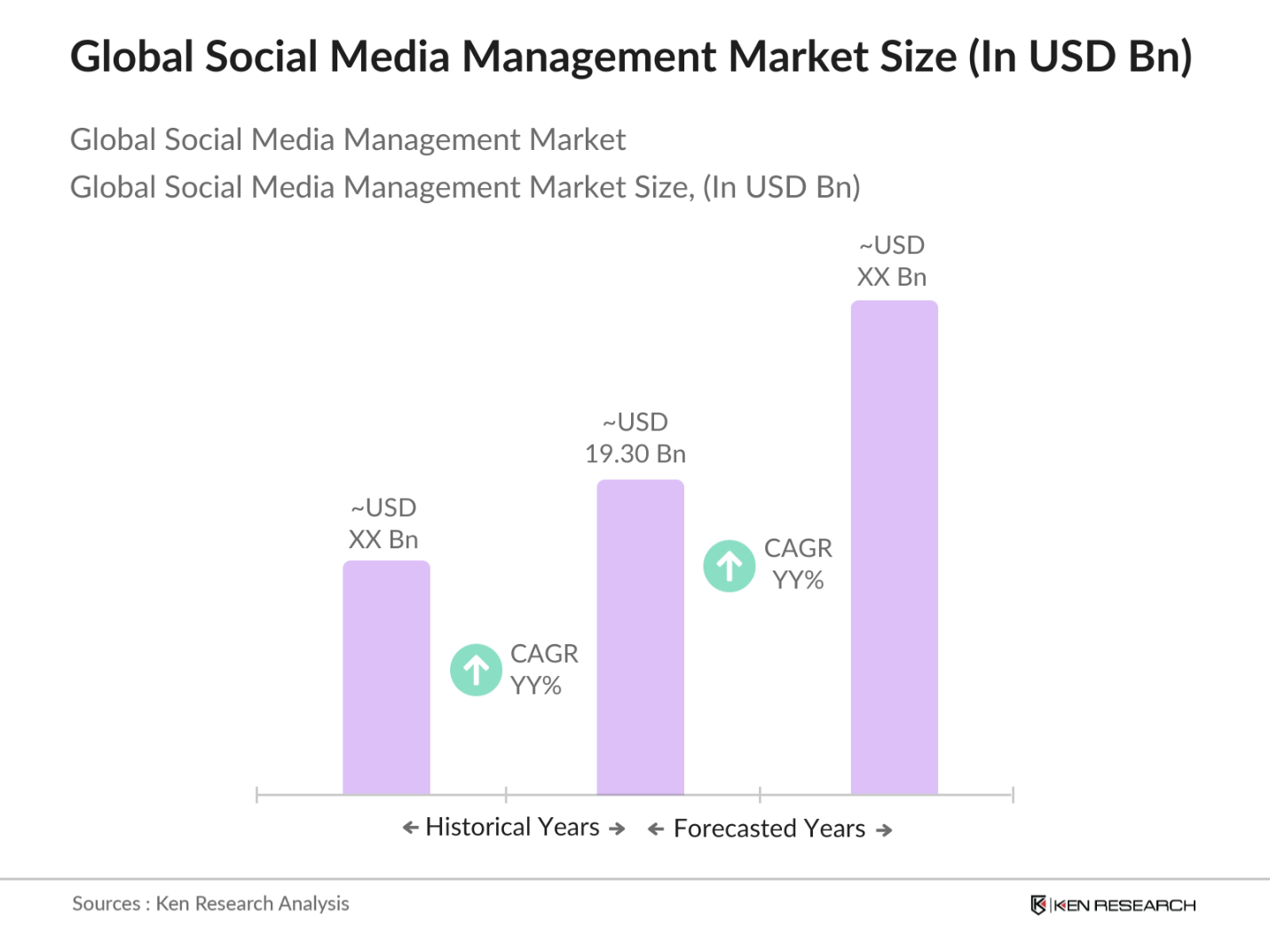
The global social media management market was valued at USD 19.30 billion, driven by the increasing adoption of digital marketing strategies and demand for data-driven insights.
The market faces challenges like data privacy issues due to stringent regulations such as GDPR and CCPA, integration complexities with other platforms, and constantly evolving social media algorithms.
Major players include Hootsuite, Sprout Social, Buffer, Sprinklr, and Zoho Social, all of which dominate due to their strong analytics capabilities, integrations with key social platforms, and comprehensive service offerings.
Growth is driven by the rising use of AI in marketing, the increasing reliance on data analytics for targeted advertising, and the expansion of small and medium enterprises into digital spaces.

What makes us stand out is that our consultants follows Robust, Refine and Result (RRR) methodology. i.e. Robust for clear definitions, approaches and sanity checking, Refine for differentiating respondents facts and opinions and Result for presenting data with story

We have set a benchmark in the industry by offering our clients with syndicated and customized market research reports featuring coverage of entire market as well as meticulous research and analyst insights.

While we don't replace traditional research, we flip the method upside down. Our dual approach of Top Bottom & Bottom Top ensures quality deliverable by not just verifying company fundamentals but also looking at the sector and macroeconomic factors.

With one step in the future, our research team constantly tries to show you the bigger picture. We help with some of the tough questions you may encounter along the way: How is the industry positioned? Best marketing channel? KPI's of competitors? By aligning every element, we help maximize success.

Our report gives you instant access to the answers and sources that other companies might choose to hide. We elaborate each steps of research methodology we have used and showcase you the sample size to earn your trust.

If you need any support, we are here! We pride ourselves on universe strength, data quality, and quick, friendly, and professional service.