Ken Research Logo

Global Space Exploration Market Outlook to 2030

Region:Global

Author(s):Naman Rohilla

Product Code:KROD11271

Published On

December 2024

Total pages

94

About the Report

Global Space Exploration Market Overview

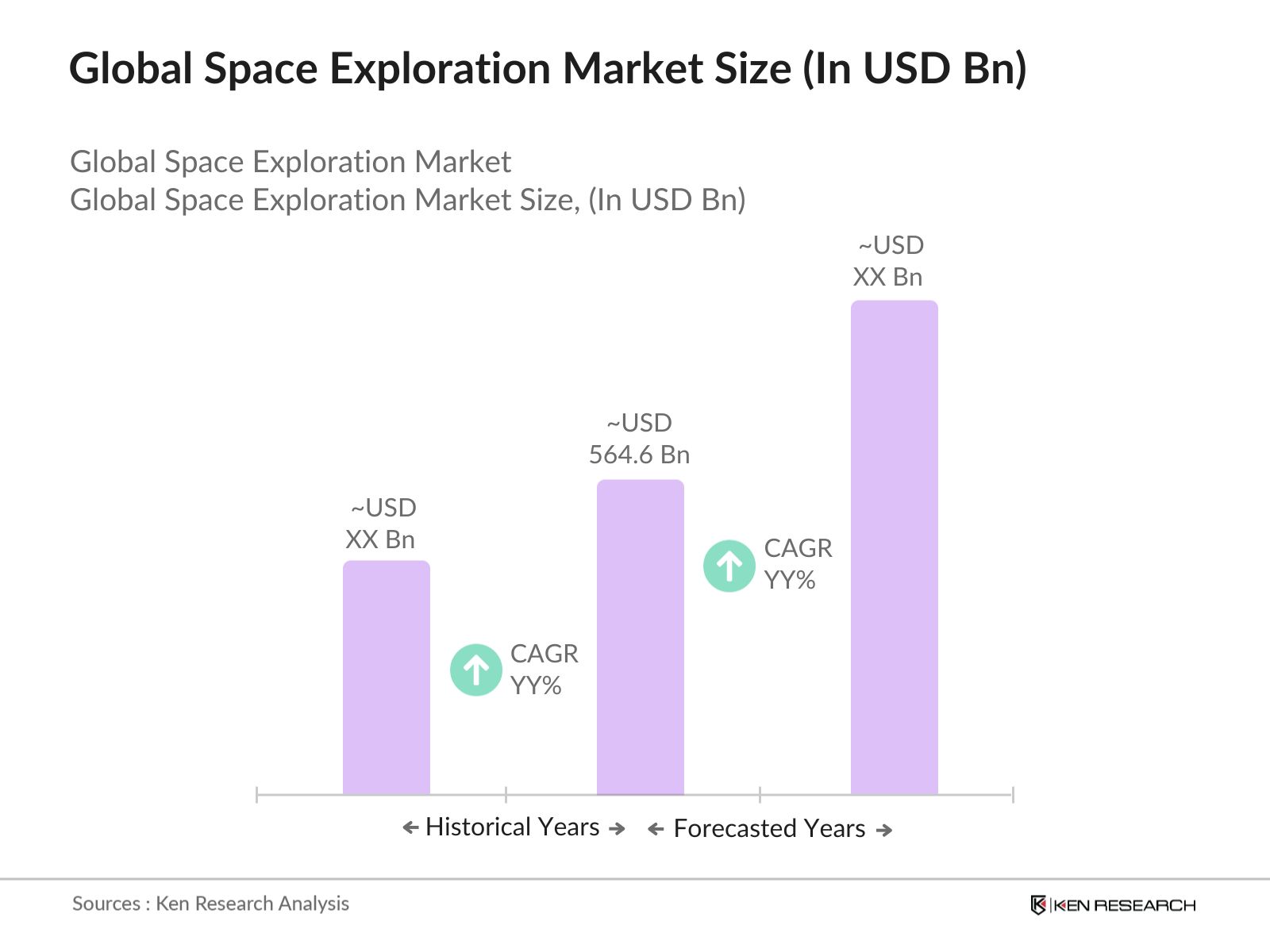
  • The Global Space Exploration Market, with a valuation of USD 564.6 billion, is driven by an increase in governmental and private investments aimed at deep space missions, satellite deployments, and lunar explorations. This robust growth is backed by both longstanding agencies like NASA and emerging private players, who are actively investing in next-generation technologies and cost-efficient propulsion systems. High-profile missions and collaborations have further propelled investments, emphasizing space as an increasingly critical sector in global development strategies.

Global Space Exploration Market Size

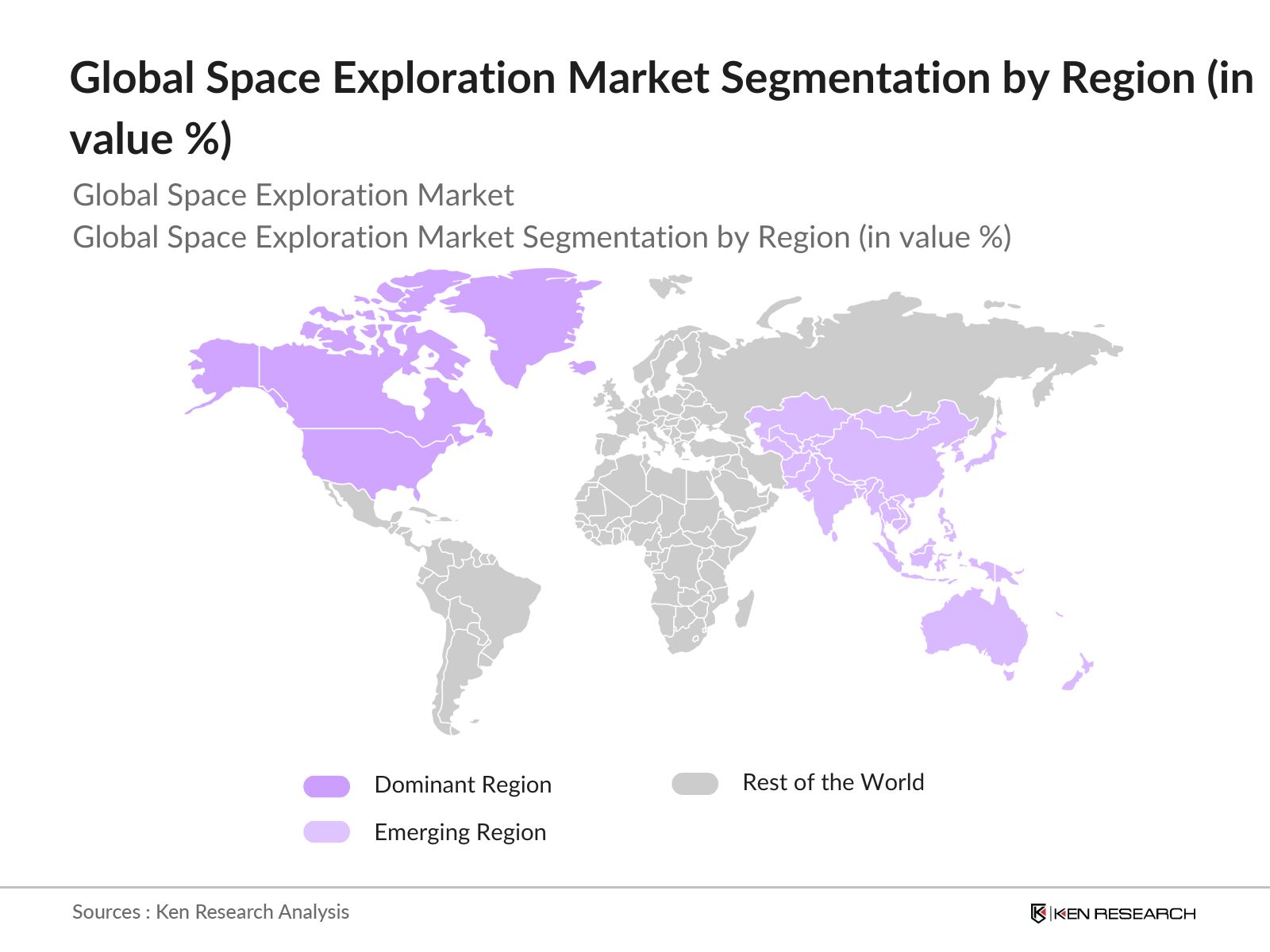
  • The United States and China are the leading countries in the space exploration market due to their well-established space agencies, NASA and CNSA, and substantial government budgets supporting extensive R&D and mission initiatives. The United States leverages private sector collaboration, with companies like SpaceX and Blue Origin contributing to the sector's expansion. Meanwhile, Chinas ambitious lunar and Mars missions, backed by government funding and resource allocation, have solidified its presence as a key player. Other regions like Europe, with ESA, also contribute through partnerships and technological expertise.
  • National policies shape space industry activities, with the U.S. Space Policy Directive-4 establishing the Space Force to protect U.S. space assets and infrastructure. Such policies prioritize space security, resource management, and technological leadership, underscoring a regulatory approach that supports both commercial and government space exploration efforts.

Global Space Exploration Market Segmentation

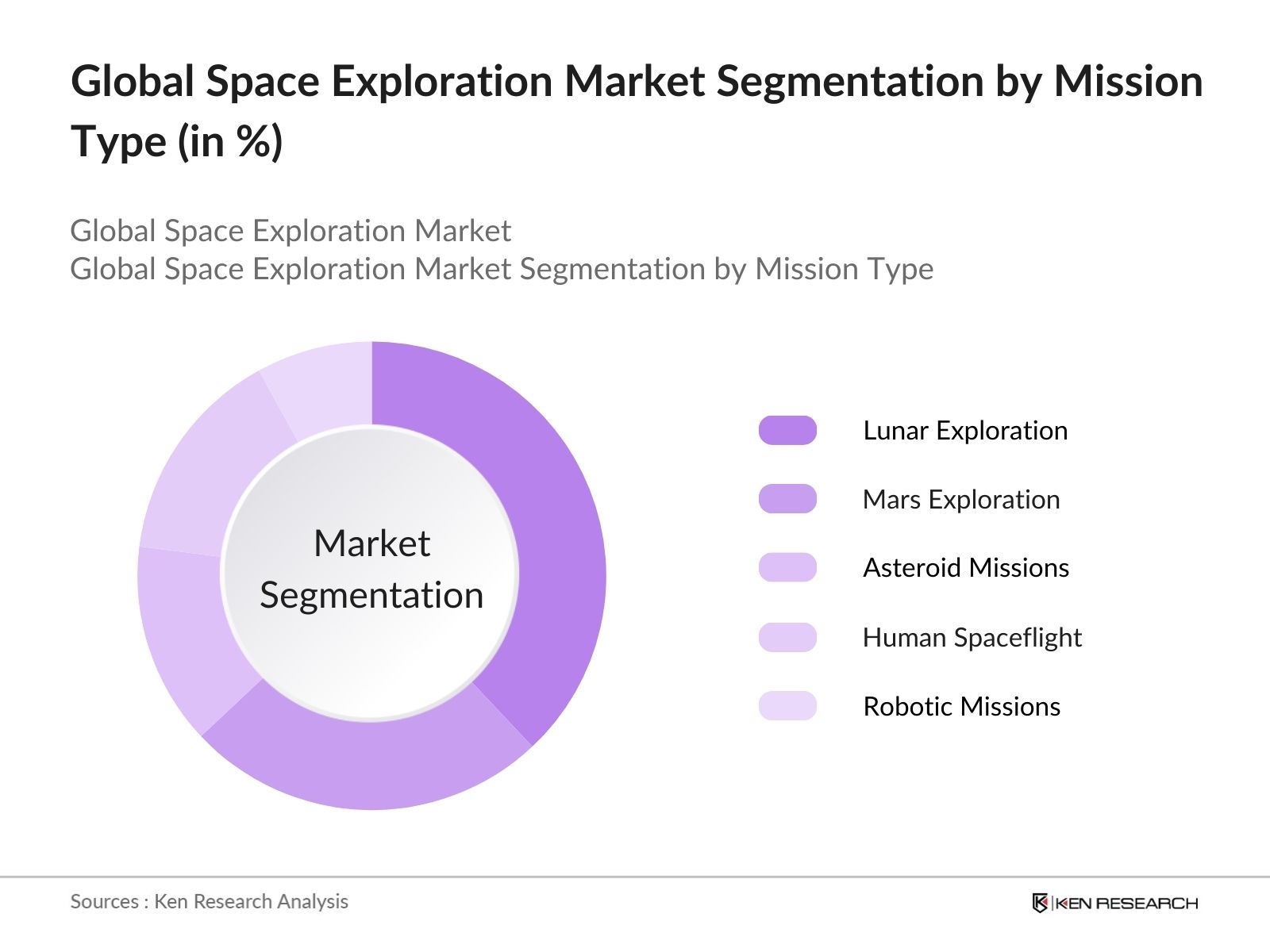
  • By Mission Type: The market is segmented by mission type into lunar exploration, Mars exploration, asteroid missions, human spaceflight, and robotic missions. Recently, lunar exploration holds a dominant share within this segmentation due to renewed interest in lunar bases and the potential for resource mining. Notable missions, like NASA's Artemis program, which aims to establish a sustainable human presence on the Moon, have fueled this segment. Increasing private and governmental investment in lunar missions has established lunar exploration as a cornerstone of space exploration growth.

Global Space Exploration Market Share

  • By End User: The space exploration market is segmented by end users into government and space agencies, private sector companies, research institutes, and commercial enterprises. Government and space agencies, notably NASA, ESA, and CNSA, dominate the market due to their funding and mission authority. They engage in large-scale projects that private enterprises may not have the financial capacity to undertake independently, such as interplanetary exploration and advanced scientific research missions.
  • By Region: The market is segmented by regions into North America, Europe, Asia-Pacific, Latin America, and the Middle East & Africa. North America holds the leading share, primarily driven by the United States' advanced infrastructure, extensive funding, and numerous private players contributing to research and development. With initiatives like SpaceX's Mars mission and NASAs deep-space exploration agenda, North America remains at the forefront of global space exploration efforts.

Global Space Exploration Market

Global Space Exploration Market Competitive Landscape

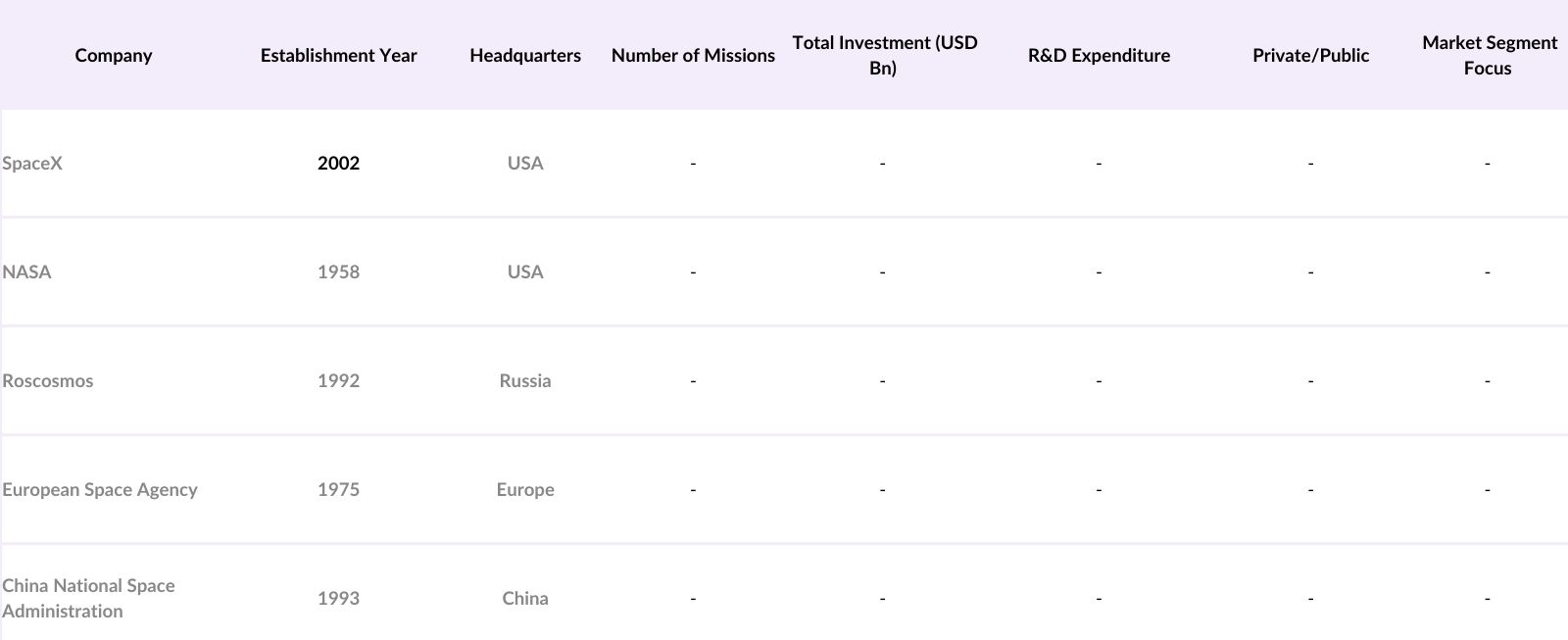
The Global Space Exploration Market is highly competitive, with influence exerted by leading space agencies and private companies. This consolidation underscores the pivotal role these entities play in pioneering space technologies and advancing space exploration capabilities.
market overviews

Global Space Exploration Market Analysis

Market Growth Drivers

  • Increased Funding for Lunar Missions: Lunar missions have gained substantial momentum with major funding from global government agencies. NASA allocated $24 billion to its Artemis program for lunar exploration, backed by the U.S. Congress in 2023. Similarly, the European Space Agency received funding exceeding 14 billion, aiming for lunar and Martian advancements. This financing facilitates lunar infrastructure, such as habitats and energy resources, boosting the commercial opportunities surrounding lunar exploration. These investments underscore governmental commitment to deep space initiatives, reinforcing growth in lunar missions.
  • Rise in Deep Space Exploration Programs: Deep space missions are expanding with unprecedented contributions from both public and private sectors. NASAs budget for planetary science increased to $3.16 billion in 2024, reflecting priorities for Mars and asteroid missions. Concurrently, Indias ISRO allocated around 13,700 crore to further Mars exploration and Venus missions, showcasing a global commitment to deep space endeavors. These programs strengthen the ecosystem by driving research and innovation in space technologies, including propulsion and navigation.
  • Growth in Satellite Constellations for Communication: Satellite constellations are essential for enhancing global connectivity, with the U.S. and European markets driving expansion. The European Union allocated 6 billion to develop its IRIS constellation for secure communications. Meanwhile, the U.S. Department of Defense committed $1.2 billion towards satellite infrastructure for military and civilian applications. The private sector, including Starlink and Amazons Project Kuiper, also fuels growth, facilitating broadband access in remote areas and driving demand in the commercial satellite segment.

Market Challenges

  • Technical Complexities in Deep Space Missions: Deep space missions present complex challenges, requiring sophisticated propulsion and communication systems. For instance, the Perseverance Mars mission involved technology costing over $2.7 billion to address communication delays, power management, and rover autonomy. Similar programs demand high-end technology for efficient operations, particularly for navigating hostile environments like Mars and beyond, which creates technical bottlenecks in mission planning.
  • Financial Constraints for Smaller Enterprises: Smaller space enterprises struggle with substantial financial barriers, as average launch costs can exceed $10 million. Without government subsidies, startups face challenges in obtaining capital, with over 45% of new space firms reporting funding limitations in 2023. Financing such initiatives often requires substantial investment rounds or government-backed grants, which may not be accessible to all companies, affecting their growth potential in the highly competitive space industry.

Global Space Exploration Market Future Outlook

Over the next five years, the Global Space Exploration Market is expected to experience robust growth, driven by advancements in reusable rocket technology, deep-space propulsion systems, and international collaborations. The increasing involvement of private sector players in space tourism, satellite communications, and resource extraction will further enhance market expansion. Furthermore, emerging economies are also beginning to invest in space exploration, suggesting an accelerated global shift towards establishing a more inclusive space economy.

Market Opportunities

  • Emerging Market in Space Tourism: Space tourism has gained traction, with over 20,000 pre-registrations reported by companies like Virgin Galactic. In 2023, private space flights increased by 300%, highlighting robust consumer interest. The U.S. tourism market benefits from regulatory support, with Federal Aviation Administration approvals for commercial flights enabling a structured and regulated entry for tourists into low-Earth orbit. This sectors growth indicates evolving consumer interest and revenue potential in commercial space travel.
  • Advancements in Space Mining for Resources: Space mining is a nascent industry with substantial prospects. NASAs asteroid retrieval mission budgeted at $1 billion, aims to explore resource extraction, and countries like Luxembourg invested 200 million to fund space mining ventures. These initiatives encourage private investment, supporting infrastructure development for material extraction and processing in space, and opening new commercial avenues for the future.

Scope of the Report

Segment

Sub-Segment

By Mission Type

Lunar Exploration
Mars Exploration
Asteroid Missions
Human Spaceflight
Robotic Missions

By End User

Government & Space Agencies
Private Sector Companies
Research Institutes
Commercial Enterprises

By Technology

Propulsion Systems
Spacecraft and Satellite Manufacturing
Ground Operations and Launch Facilities
Communication Systems

By Application

Earth Observation
Communication and Navigation
National Defense
Scientific Research

By Region

North America
Europe
Asia-Pacific
Latin America
Middle East & Africa

Products

Key Target Audience

  • Government and regulatory bodies (NASA, ESA, CNSA)

  • Private aerospace companies

  • Space exploration technology providers

  • Defense organizations

  • Investor and venture capitalist firms

  • Satellite communication companies

  • Environmental monitoring agencies

  • Space tourism enterprises

Companies

Players Mentioned in the Report

  • SpaceX

  • NASA

  • Roscosmos

  • European Space Agency

  • China National Space Administration

  • Blue Origin

  • Boeing

  • Lockheed Martin

  • Northrop Grumman

  • Rocket Lab

Table of Contents

1. Global Space Exploration Market Overview

1.1 Definition and Scope

1.2 Market Taxonomy

1.3 Market Growth Rate

1.4 Market Segmentation Overview

2. Global Space Exploration Market Size (In USD Billion)

2.1 Historical Market Size

2.2 Year-On-Year Growth Analysis

2.3 Key Market Developments and Milestones

3. Global Space Exploration Market Dynamics

3.1 Growth Drivers (Funding from Government & Private Sectors, Technological Advancements, Growing Interest in Commercial Space Ventures)

3.1.1 Increased Funding for Lunar Missions

3.1.2 Rise in Deep Space Exploration Programs

3.1.3 Growth in Satellite Constellations for Communication

3.1.4 Expanding Commercial Sector

3.2 Market Challenges (High Costs, Regulatory Hurdles, Limited Launch Capabilities)

3.2.1 Technical Complexities in Deep Space Missions

3.2.2 Financial Constraints for Smaller Enterprises

3.2.3 International Space Regulations

3.2.4 Resource Scarcity and Management

3.3 Opportunities (International Partnerships, New Horizons in Space Tourism, Mining in Space)

3.3.1 Emerging Market in Space Tourism

3.3.2 Advancements in Space Mining for Resources

3.3.3 Collaborations for Manned Space Missions

3.4 Trends (Reusable Rockets, Miniaturization in Satellites, AI and Robotics in Space Missions)

3.4.1 Rising Demand for Reusable Launch Vehicles

3.4.2 Increased Use of CubeSats

3.4.3 AI in Spacecraft and Rovers

3.5 Government Regulations (Space Debris Management, Mission Licensing, National & International Policies)

3.5.1 National Space Policies

3.5.2 Licensing and Mission Control Requirements

3.5.3 International Treaties on Space Activities

3.6 SWOT Analysis

3.7 Stakeholder Ecosystem (Space Agencies, Private Companies, Investors)

3.8 Porters Five Forces Analysis

3.9 Competitive Ecosystem

4. Global Space Exploration Market Segmentation

4.1 By Mission Type (In Value %)

4.1.1 Lunar Exploration

4.1.2 Mars Exploration

4.1.3 Asteroid Missions

4.1.4 Human Spaceflight

4.1.5 Robotic Missions

4.2 By End User (In Value %)

4.2.1 Government & Space Agencies

4.2.2 Private Sector Companies

4.2.3 Research Institutes

4.2.4 Commercial Enterprises

4.3 By Technology (In Value %)

4.3.1 Propulsion Systems

4.3.2 Spacecraft and Satellite Manufacturing

4.3.3 Ground Operations and Launch Facilities

4.3.4 Communication Systems

4.4 By Application (In Value %)

4.4.1 Earth Observation

4.4.2 Communication and Navigation

4.4.3 National Defense

4.4.4 Scientific Research

4.5 By Region (In Value %)

4.5.1 North America

4.5.2 Europe

4.5.3 Asia-Pacific

4.5.4 Latin America

4.5.5 Middle East & Africa

5. Global Space Exploration Market Competitive Analysis

5.1 Detailed Profiles of Major Companies

5.1.1 SpaceX

5.1.2 NASA

5.1.3 Roscosmos

5.1.4 European Space Agency (ESA)

5.1.5 China National Space Administration (CNSA)

5.1.6 Blue Origin

5.1.7 Lockheed Martin

5.1.8 Boeing

5.1.9 Northrop Grumman

5.1.10 Rocket Lab

5.1.11 Virgin Galactic

5.1.12 Planet Labs

5.1.13 Sierra Nevada Corporation

5.1.14 Arianespace

5.1.15 ISRO (Indian Space Research Organisation)

5.2 Cross Comparison Parameters (Launch Capabilities, Partnerships, Mission Success Rate, R&D Investment, Revenue, Technological Expertise, Workforce, Market Reach)

5.3 Market Share Analysis

5.4 Strategic Initiatives

5.5 Mergers and Acquisitions

5.6 Investment Analysis

5.7 Government Funding

5.8 Private Equity and Venture Capital Funding

6. Global Space Exploration Market Regulatory Framework

6.1 International Space Laws

6.2 Space Traffic Management

6.3 Compliance and Licensing

6.4 Debris Mitigation Requirements

7. Global Space Exploration Future Market Size (In USD Billion)

7.1 Future Market Size Projections

7.2 Key Factors Driving Future Market Growth

8. Global Space Exploration Market Future Segmentation

8.1 By Mission Type (In Value %)

8.2 By End User (In Value %)

8.3 By Technology (In Value %)

8.4 By Application (In Value %)

8.5 By Region (In Value %)

9. Global Space Exploration Market Analysts Recommendations

9.1 TAM/SAM/SOM Analysis

9.2 Opportunity Analysis

9.3 Strategic Partnership Recommendations

9.4 Market Expansion Strategy

Disclaimer Contact Us

Research Methodology

Step 1: Identification of Key Variables

This initial phase involves a comprehensive mapping of key stakeholders within the Global Space Exploration Market. Utilizing extensive secondary and proprietary data sources, we identify critical market influencers such as private companies, governmental agencies, and new entrants into space technology.

Step 2: Market Analysis and Construction

In this step, historical data for market dynamics, mission expenditures, and technological advancements are compiled and analyzed. This includes assessing the penetration rates of governmental vs. private sector projects and the annual revenue generation from each segment.

Step 3: Hypothesis Validation and Expert Consultation

Market assumptions are validated through direct consultation with industry experts, including space agency officials and leading private-sector executives, to gain operational and strategic insights into market trends and growth factors.

Step 4: Research Synthesis and Final Output

The concluding phase synthesizes findings from primary and secondary research, culminating in a comprehensive and validated report. This process involves cross-referencing data with industry standards, ensuring that final outputs provide actionable insights for stakeholders.

Frequently Asked Questions

1. How big is the Global Space Exploration Market?

The Global Space Exploration Market is valued at USD 564.6 billion, largely fueled by governmental investments and the expansion of private sector missions into space.

2. What are the major challenges in the Global Space Exploration Market?

Challenges include high mission costs, complex regulatory requirements, and limited launch capabilities. Additionally, there are technological constraints that limit certain deep-space explorations.

3. Who are the major players in the Global Space Exploration Market?

Key players include NASA, SpaceX, Roscosmos, ESA, and CNSA. These entities lead due to their extensive funding, advanced R&D capabilities, and successful track records in space missions.

4. What are the growth drivers of the Global Space Exploration Market?

Growth is driven by substantial government funding, technological advancements, and private sector expansion into areas like space tourism and satellite communications.

Why Buy From Us?

RRR
Refine Robust Result (RRR) Framework

What makes us stand out is that our consultants follows Robust, Refine and Result (RRR) methodology. i.e. Robust for clear definitions, approaches and sanity checking, Refine for differentiating respondents facts and opinions and Result for presenting data with story

Our Reach Is Unmatched

We have set a benchmark in the industry by offering our clients with syndicated and customized market research reports featuring coverage of entire market as well as meticulous research and analyst insights.

Research
Shifting the Research Paradigm

While we don't replace traditional research, we flip the method upside down. Our dual approach of Top Bottom & Bottom Top ensures quality deliverable by not just verifying company fundamentals but also looking at the sector and macroeconomic factors.

Insite
More Insights-Better Decisions

With one step in the future, our research team constantly tries to show you the bigger picture. We help with some of the tough questions you may encounter along the way: How is the industry positioned? Best marketing channel? KPI's of competitors? By aligning every element, we help maximize success.

Trust
Transparency and Trust

Our report gives you instant access to the answers and sources that other companies might choose to hide. We elaborate each steps of research methodology we have used and showcase you the sample size to earn your trust.

support
Round the Clock Support

If you need any support, we are here! We pride ourselves on universe strength, data quality, and quick, friendly, and professional service.

Why Client Choose Us?

400000+ Reports in repository
150+ Consulting project a year
100+ Analysts
8000+ Client Queries in 2022