















Global Structural Wood Screws Market Outlook to 2030
Region:Global
Author(s):Sanjna
Product Code:KROD7943
December 2024
85
About the Report
Global Structural Wood Screws Market Overview
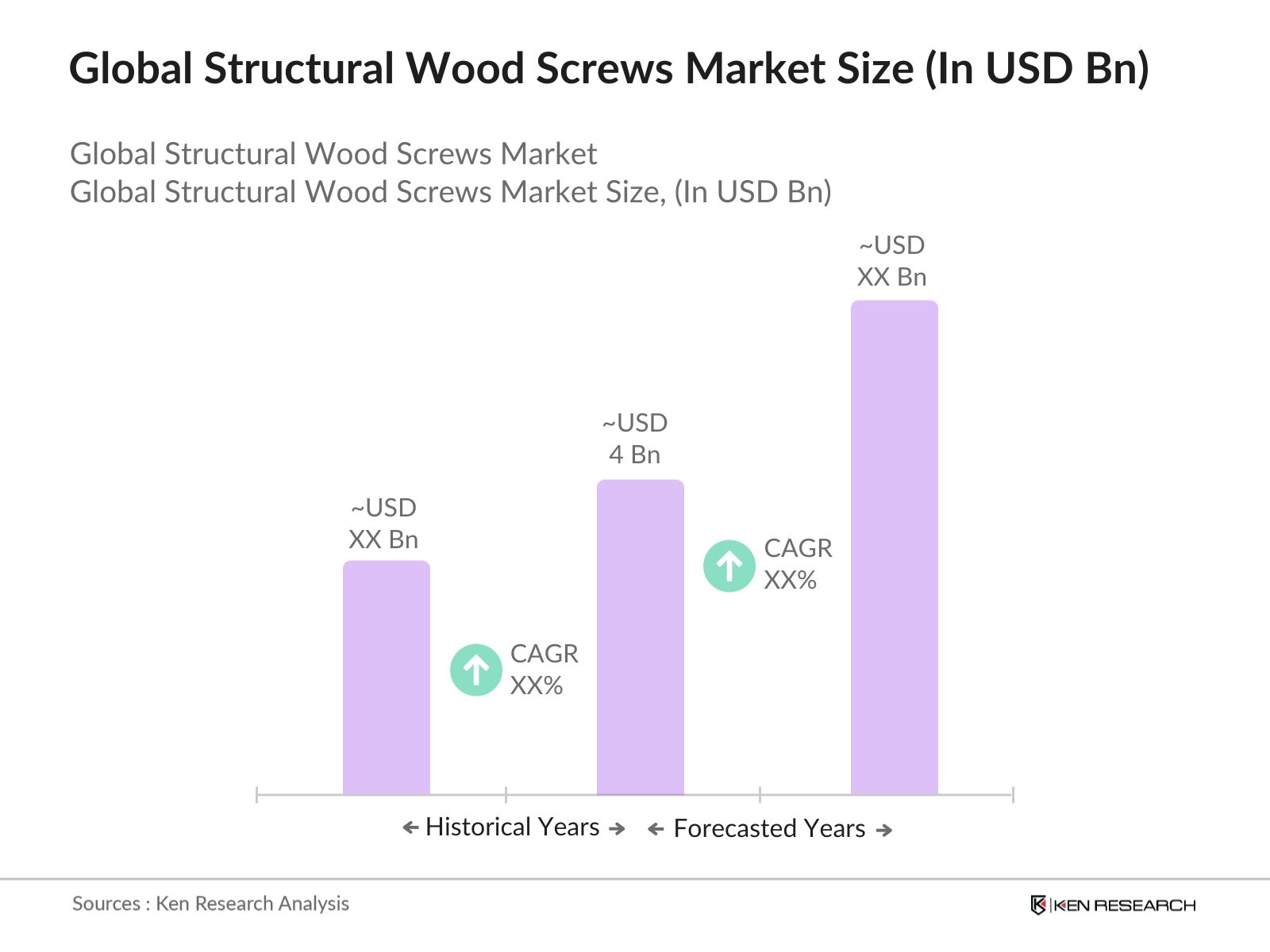
- The Global Structural Wood Screws market is valued at USD 4 billion in 2023, driven primarily by the rising demand for eco-friendly construction solutions. This demand is fueled by the increasing adoption of sustainable building practices, particularly in wooden structures, which require high-strength screws for structural integrity. Furthermore, the trend toward prefabricated and modular buildings is accelerating market growth, as structural wood screws are essential for assembly.
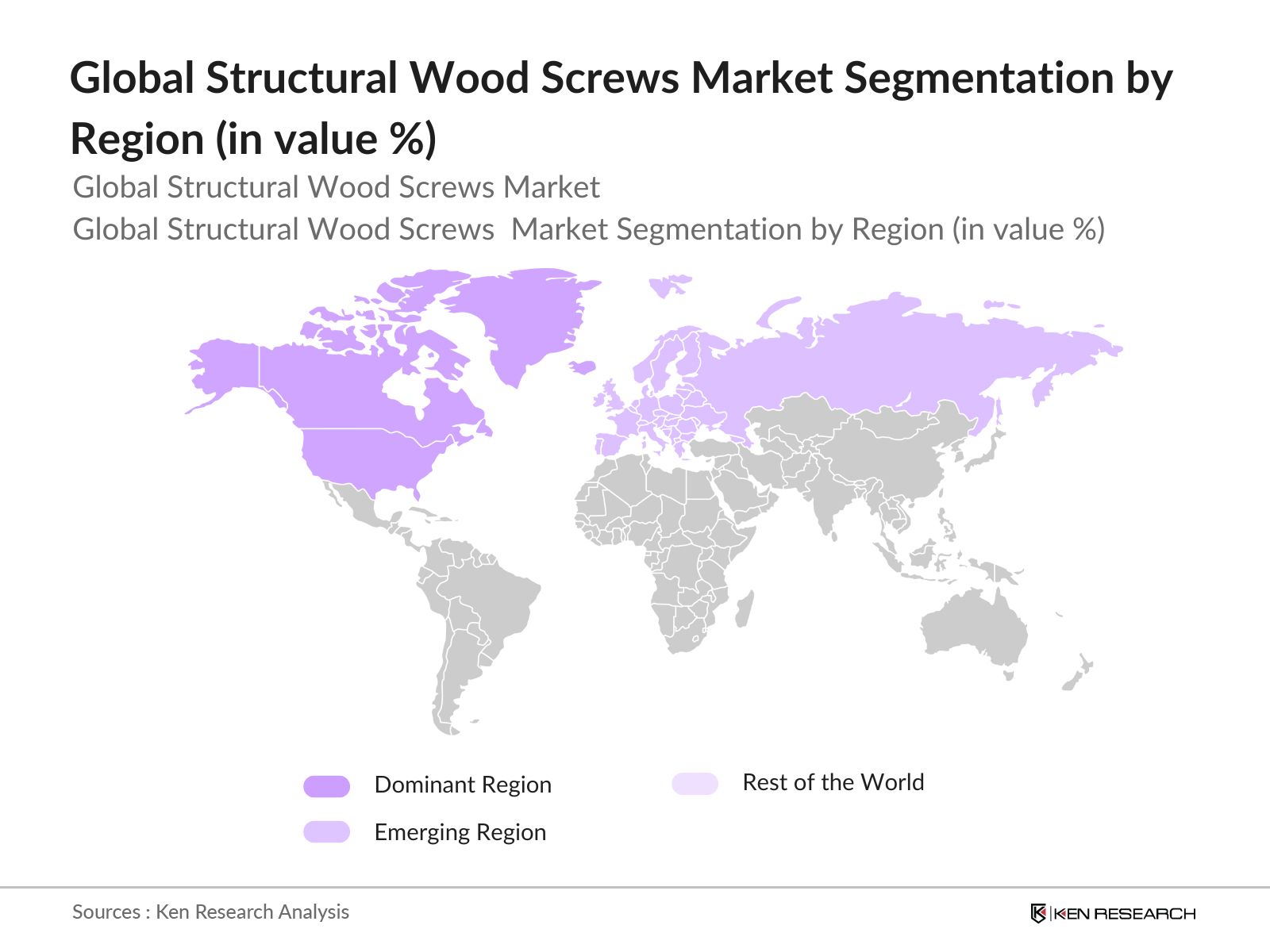
- The Global Structural Wood Screws market sees significant dominance from countries such as the United States, Germany, and Japan. The U.S. leads the market due to its strong residential and commercial construction sector, along with growing sustainability initiatives. Germany, with its stringent environmental regulations, promotes the use of sustainable building materials, thereby driving demand for wood screws.
- In 2024, governments worldwide continue to tighten regulations around the materials used in construction, with specific focus on reducing environmental impact. The European Union's latest regulations demand that wood and wood-related products, including screws, meet strict environmental and durability standards. This move has prompted manufacturers to innovate and produce screws that align with these requirements, ensuring their compliance and market access. These regulations are influencing demand trends across Europe, North America, and Asia-Pacific.
Global Structural Wood Screws Market Segmentation
- By Product Type: The market is segmented by product type into Hex Head Structural Screws, Flat Head Structural Screws, and Wafer Head Structural Screws.
Hex Head Structural Screws currently dominate the product type segmentation due to their versatility and durability, which are crucial in both residential and commercial building projects. These screws provide superior holding power, making them ideal for use in high-stress environments.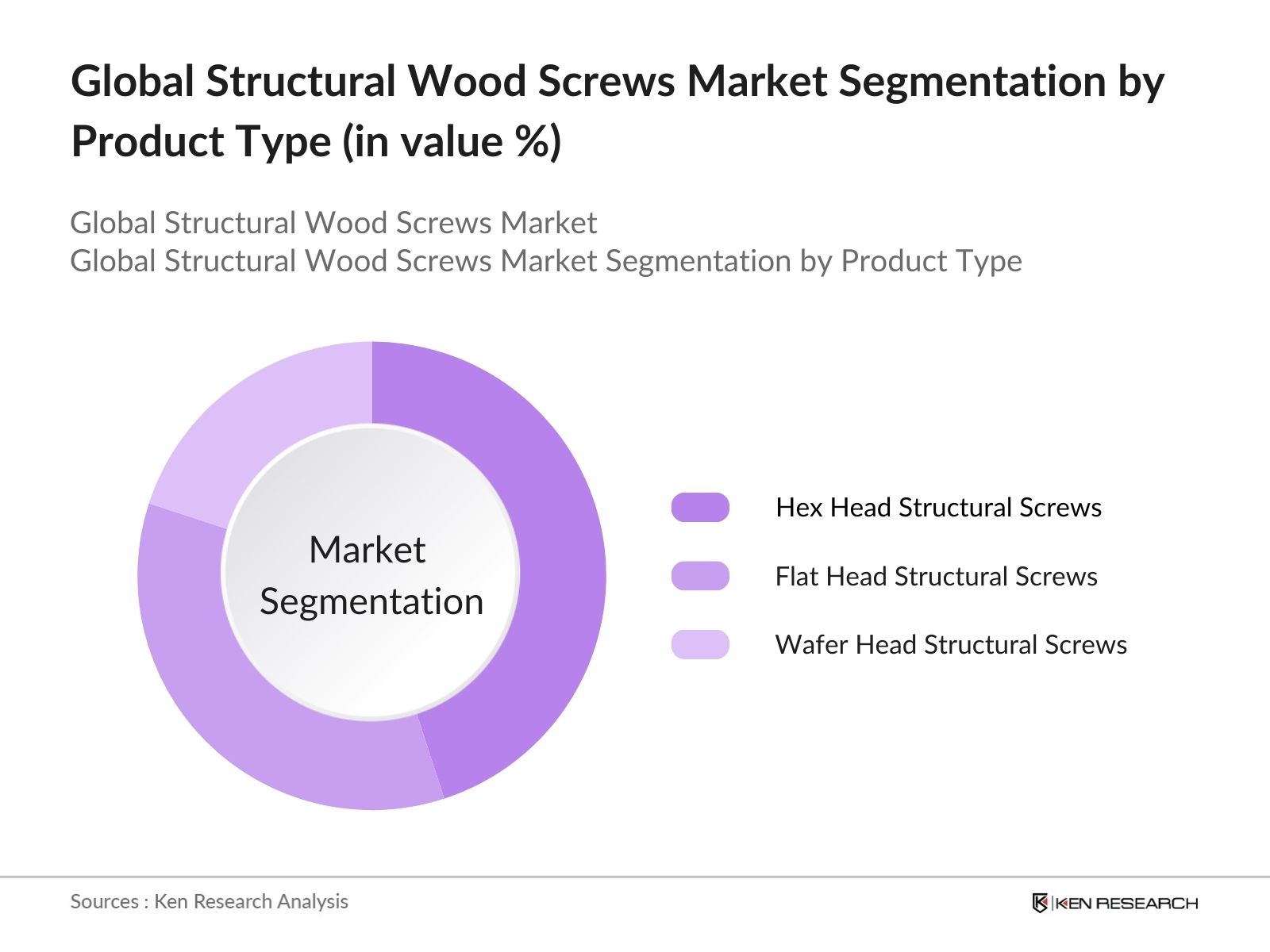
- By Region: The market is segmented into North America, Europe, Asia Pacific, Latin America, and Middle East & Africa. North America leads the regional segmentation, driven by its booming construction industry and focus on sustainable building practices. Government initiatives promoting green buildings and the widespread use of prefabricated homes in the U.S. are key drivers in this region. The regions dominance is also supported by the significant presence of key market players that manufacture and supply structural wood screws.
- By Application: The Global Structural Wood Screws market is segmented by application into Residential Construction, Commercial Construction, and Industrial Construction.
Residential construction holds the largest market share due to the increasing adoption of wood-based homes and sustainable building practices. The surge in suburban development and home renovation projects has led to a higher demand for structural wood screws in this segment. Additionally, the growing trend of DIY home projects is further boosting demand in residential applications.
Global Structural Wood Screws Market Competitive Landscape
The Global Structural Wood Screws market is dominated by several key players, ranging from international companies to local manufacturers. The competition within the market is driven by innovation, product quality, and pricing strategies. Companies are increasingly focusing on producing high-performance screws with advanced coatings for corrosion resistance to meet stringent industry standards.
|
Company |
Establishment Year |
Headquarters |
Product Range |
R&D Investment |
Revenue (USD Bn) |
Global Reach |
Sustainability Initiatives |
Innovation Index |
Market Share (2023) |
|
Simpson Strong-Tie |
1956 |
USA |
- |
- |
- |
- |
- |
- |
- |
|
Spax International |
1823 |
Germany |
- |
- |
- |
- |
- |
- |
- |
|
FastenMaster |
1981 |
USA |
- |
- |
- |
- |
- |
- |
- |
|
GRK Fasteners |
1990 |
Canada |
- |
- |
- |
- |
- |
- |
- |
|
ITW Construction Products |
1912 |
USA |
- |
- |
- |
- |
- |
- |
- |
Global Structural Wood Screws Market Analysis
Growth Drivers
- Rising Demand for Sustainable Construction: The global construction industry has seen a significant push toward sustainable building practices, driven by a need to reduce carbon emissions. In 2024, the World Bank estimates that construction in high-income nations will contribute over $10 trillion to GDP, with sustainable practices gaining traction due to government regulations promoting environmentally friendly building materials. Structural wood screws, known for their durability and eco-friendliness, are increasingly replacing traditional fasteners in sustainable projects, especially in North America and Europe.
- Preference for Wood-Based Structures: Wood-based construction is on the rise, especially in developed nations where timber-frame buildings are favored for their sustainability. There were661 completed mass timber projectsin Canada and approximately356in the U.S. as of the end of 2022. This preference aligns with governmental incentives promoting the use of sustainable construction materials. Prefabricated wooden structures also benefit from this trend, driving growth in structural wood screw demand.
- Advanced Manufacturing Technologies: The International Energy Agency reported that global investment in the manufacturing of five key clean energy technologies (solar PV, wind, batteries, electrolysers, and heat pumps) rose to about$200 billionin2023. The ability to manufacture screws with enhanced corrosion resistance and higher tensile strength has boosted their adoption across sectors like residential and commercial construction, leading to greater efficiency in building projects and a reduction in labor costs.
Challenges
- Fluctuating Raw Material Prices: According to the World Steel Association, after a decline of2.6%in steel demand in 2022, a further decline of1.1%was anticipated for 2023. This has created challenges for manufacturers of structural wood screws, as they are forced to pass on higher production costs to consumers. Additionally, global supply chains are still recovering from the effects of the COVID-19 pandemic, leading to uncertainties in sourcing and price stability.
- Competition from Alternative Fasteners: Alternative fasteners, such as adhesives and plastic anchors, have emerged as viable options in certain construction segments, particularly in developing markets. These alternatives offer benefits such as reduced installation time and lower costs, posing competition to traditional wood screws. In 2022, alternative fasteners represented over 5% of the total fastener market in emerging economies like India and Brazil, highlighting the need for wood screw manufacturers to innovate in terms of product durability and efficiency to maintain market share.
Global Structural Market Future Outlook
Global Structural Wood Screws market is expected to witness significant growth, driven by the increasing focus on sustainable construction practices and innovations in structural wood screws. The shift towards green buildings, coupled with advancements in manufacturing technologies that enhance the strength and durability of screws, will support the market's expansion. Furthermore, the growing trend of modular and prefabricated constructions will continue to bolster demand for high-performance structural wood screws.
Market Opportunities
- Expanding Green Building Initiatives: The expansion of green building initiatives globally presents a significant growth opportunity for structural wood screws. The2023 Global Status Report for Buildings and Constructionhighlights the significant role of national policies in promoting sustainable construction practices. It emphasizes the need for improved energy efficiency and reduction of carbon emissions in the building sector. Structural wood screws are key components in such projects due to their durability and low environmental impact.
- Urbanization and Rural Development Projects: Rapid urbanization and rural development projects, especially in developing countries, offer immense growth potential for structural wood screws. According to World Bank data, more than 4 billion people live in urban areas in 2024, and urbanization is expected to increase, leading to heightened demand for housing and infrastructure. Rural development initiatives, particularly in Africa and South Asia, are further boosting the construction sector, driving demand for wood-based construction materials, including high-quality screws essential for structural integrity.
Scope of the Report
|
Segment |
Sub-Segments |
|
By Product Type |
Hex Head Structural Screws |
|
Flat Head Structural Screws |
|
|
Wafer Head Structural Screws |
|
|
By Application |
Residential Construction |
|
Commercial Construction |
|
|
Industrial Construction |
|
|
By Material |
Steel |
|
Stainless Steel |
|
|
Galvanized Steel |
|
|
By Diameter |
Small Diameter Screws (<6mm) |
|
Medium Diameter Screws (6-10mm) |
|
|
Large Diameter Screws (>10mm) |
|
|
By Region |
North America |
|
Europe |
|
|
Asia Pacific |
|
|
Latin America |
|
|
Middle East & Africa |
Products
Key Target Audience
Residential Construction Companies
Commercial Construction Contractors
Industrial Infrastructure Developers
Fasteners Manufacturers
Prefabricated Building Solution Providers
Green Building Certification Authorities
Investors and Venture Capitalist Firms
Government and Regulatory Bodies (U.S. Environmental Protection Agency, European Environmental Agency)
Companies
Players Mentioned in the Report
Simpson Strong-Tie
Spax International
FastenMaster
GRK Fasteners
ITW Construction Products
SFS Group
Wrth Group
Fischer Group
Heco-Schrauben GmbH & Co KG
EJOT Holding GmbH & Co KG
Table of Contents
1. Global Structural Wood Screws Market Overview
1.1 Definition and Scope
1.2 Market Taxonomy
1.3 Market Growth Rate
1.4 Market Segmentation Overview
2. Global Structural Wood Screws Market Size (In USD Bn)
2.1 Historical Market Size
2.2 Year-On-Year Growth Analysis
2.3 Key Market Developments and Milestones
3. Global Structural Wood Screws Market Analysis
3.1 Growth Drivers (Material Durability, Sustainable Wood Usage)
3.1.1 Rising Demand for Sustainable Construction
3.1.2 Preference for Wood-Based Structures
3.1.3 Advanced Manufacturing Technologies
3.1.4 Increasing Adoption in Prefabricated Buildings
3.2 Market Challenges (Supply Chain, Sourcing Issues)
3.2.1 Fluctuating Raw Material Prices
3.2.2 Competition from Alternative Fasteners
3.2.3 Regulatory Requirements for Sustainability Certifications
3.3 Opportunities (Construction Industry Expansion)
3.3.1 Expanding Green Building Initiatives
3.3.2 Urbanization and Rural Development Projects
3.3.3 Rising Investments in Infrastructure
3.4 Trends (Technological Innovations)
3.4.1 Growing Use of High-Tensile Steel Screws
3.4.2 Integration of Anti-Corrosive Coatings
3.4.3 Adoption of Automated Screw Driving Systems
3.5 Government Regulations (Environmental Standards and Trade Policies)
3.5.1 Construction Material Regulations
3.5.2 Trade Policies and Import Tariffs on Fasteners
3.5.3 Energy Efficiency and Green Certifications
3.6 SWOT Analysis
3.7 Stakeholder Ecosystem
3.8 Porters Five Forces Analysis
3.9 Competitive Ecosystem
4. Global Structural Wood Screws Market Segmentation
4.1 By Product Type (In Value %)
4.1.1 Hex Head Structural Screws
4.1.2 Flat Head Structural Screws
4.1.3 Wafer Head Structural Screws
4.2 By Application (In Value %)
4.2.1 Residential Construction
4.2.2 Commercial Construction
4.2.3 Industrial Construction
4.3 By Material (In Value %)
4.3.1 Steel
4.3.2 Stainless Steel
4.3.3 Galvanized Steel
4.4 By Diameter (In Value %)
4.4.1 Small Diameter Screws (<6mm)
4.4.2 Medium Diameter Screws (6-10mm)
4.4.3 Large Diameter Screws (>10mm)
4.5 By Region (In Value %)
4.5.1 North America
4.5.2 Europe
4.5.3 Asia Pacific
4.5.4 Latin America
4.5.5 Middle East & Africa
5. Global Structural Wood Screws Market Competitive Analysis
5.1 Detailed Profiles of Major Companies
5.1.1 Simpson Strong-Tie
5.1.2 Spax International
5.1.3 FastenMaster
5.1.4 GRK Fasteners
5.1.5 ITW Construction Products
5.1.6 SFS Group
5.1.7 Wrth Group
5.1.8 Heco-Schrauben GmbH & Co KG
5.1.9 Fischer Group
5.1.10 EJOT Holding GmbH & Co KG
5.2 Cross Comparison Parameters (Market Capitalization, Revenue, Global Reach, Manufacturing Units, Product Range, Innovation Index, Market Share, Sustainability Initiatives)
5.3 Market Share Analysis (In Value %)
5.4 Strategic Initiatives
5.5 Mergers And Acquisitions
5.6 Investment Analysis
5.7 Venture Capital Funding
5.8 Government Grants
5.9 Private Equity Investments
6. Global Structural Wood Screws Market Regulatory Framework
6.1 Environmental Standards and Sustainability Mandates
6.2 Compliance Requirements for Fasteners in Structural Applications
6.3 Certification Processes for Eco-Friendly Products
7. Global Structural Wood Screws Future Market Size (In USD Bn)
7.1 Future Market Size Projections
7.2 Key Factors Driving Future Market Growth
8. Global Structural Wood Screws Future Market Segmentation
8.1 By Product Type (In Value %)
8.2 By Application (In Value %)
8.3 By Material (In Value %)
8.4 By Diameter (In Value %)
8.5 By Region (In Value %)
9. Global Structural Wood Screws Market Analysts Recommendations
9.1 TAM/SAM/SOM Analysis
9.2 Customer Cohort Analysis
9.3 Marketing Initiatives
9.4 White Space Opportunity Analysis
Disclaimer
Contact Us
Research Methodology
Step 1: Identification of Key Variables
The initial step involves identifying all significant variables affecting the Global Structural Wood Screws market. This includes analyzing the supply chain, manufacturing processes, and the regulatory environment. Data from proprietary databases and industry reports are utilized to map out these variables.
Step 2: Market Analysis and Construction
Next, historical market data is collected to assess the current market dynamics, including market penetration and product performance. This data is then analyzed to generate market revenue estimates and product segmentation forecasts for the next five years.
Step 3: Hypothesis Validation and Expert Consultation
During this phase, hypotheses regarding market trends and growth drivers are formulated. These hypotheses are validated through discussions with industry experts and stakeholders via interviews and surveys, ensuring the accuracy of the market data.
Step 4: Research Synthesis and Final Output
The final stage consolidates all the research findings into a comprehensive report. Insights from manufacturers, distributors, and contractors are combined with market data to provide a well-rounded analysis of the Global Structural Wood Screws market.
Frequently Asked Questions
01. How big is the Global Structural Wood Screws Market?
The Global Structural Wood Screws market is valued at USD 4 billion in 2023, driven by the increasing demand for sustainable construction materials and prefabricated building projects.
02. What are the challenges in the Global Structural Wood Screws Market?
Challenges in Global Structural Wood Screws Market include fluctuating raw material prices, supply chain disruptions, and competition from alternative fastening solutions. Additionally, meeting sustainability certifications adds pressure to manufacturers.
03. Who are the major players in the Global Structural Wood Screws Market?
Key players in Global Structural Wood Screws Market include Simpson Strong-Tie, Spax International, FastenMaster, GRK Fasteners, and ITW Construction Products. These companies dominate due to their innovation, product quality, and extensive distribution networks.
04. What are the growth drivers of the Global Structural Wood Screws Market?
Global Structural Wood Screws Market is driven by the rise in eco-friendly construction, increased adoption of modular buildings, and advancements in fastener manufacturing technologies that enhance product durability and ease of use.
Why Buy From Us?

What makes us stand out is that our consultants follows Robust, Refine and Result (RRR) methodology. i.e. Robust for clear definitions, approaches and sanity checking, Refine for differentiating respondents facts and opinions and Result for presenting data with story

We have set a benchmark in the industry by offering our clients with syndicated and customized market research reports featuring coverage of entire market as well as meticulous research and analyst insights.

While we don't replace traditional research, we flip the method upside down. Our dual approach of Top Bottom & Bottom Top ensures quality deliverable by not just verifying company fundamentals but also looking at the sector and macroeconomic factors.

With one step in the future, our research team constantly tries to show you the bigger picture. We help with some of the tough questions you may encounter along the way: How is the industry positioned? Best marketing channel? KPI's of competitors? By aligning every element, we help maximize success.

Our report gives you instant access to the answers and sources that other companies might choose to hide. We elaborate each steps of research methodology we have used and showcase you the sample size to earn your trust.

If you need any support, we are here! We pride ourselves on universe strength, data quality, and quick, friendly, and professional service.