















Global Supersonic Aircraft Market Outlook to 2030
Region:Global
Author(s):Abhinav kumar
Product Code:KROD6500
December 2024
87
About the Report
Global Supersonic Aircraft Market Overview
- , driven by advancements in aerodynamics, noise reduction technologies, and increasing investments from both private companies and governments. Supersonic aircraft development is propelled by the demand for faster travel times, particularly among high-net-worth individuals and business executives. In addition, the technological breakthroughs in sustainable aviation fuel (SAF) and noise-reducing designs have accelerated the viability of supersonic jets for commercial use.
- Countries like the United States, Japan, and the United Arab Emirates dominate the market, primarily due to their strong aerospace industries, access to advanced R&D facilities, and supportive government policies. The United States leads in both commercial and military applications, while Japan and the UAE focus heavily on business-class supersonic jets, owing to their growing demand for luxury air travel.
- The International Civil Aviation Organization (ICAO) and the U.S. Federal Aviation Administration (FAA) have strict regulations on emissions for supersonic aircraft. In 2022, the ICAO introduced new guidelines requiring supersonic jets to cut emissions by 50%, while the FAA mandated compliance with global carbon offset standards. These regulations are a significant hurdle for supersonic aircraft manufacturers, requiring ongoing research into cleaner technologies.
Global Supersonic Aircraft Market Segmentation
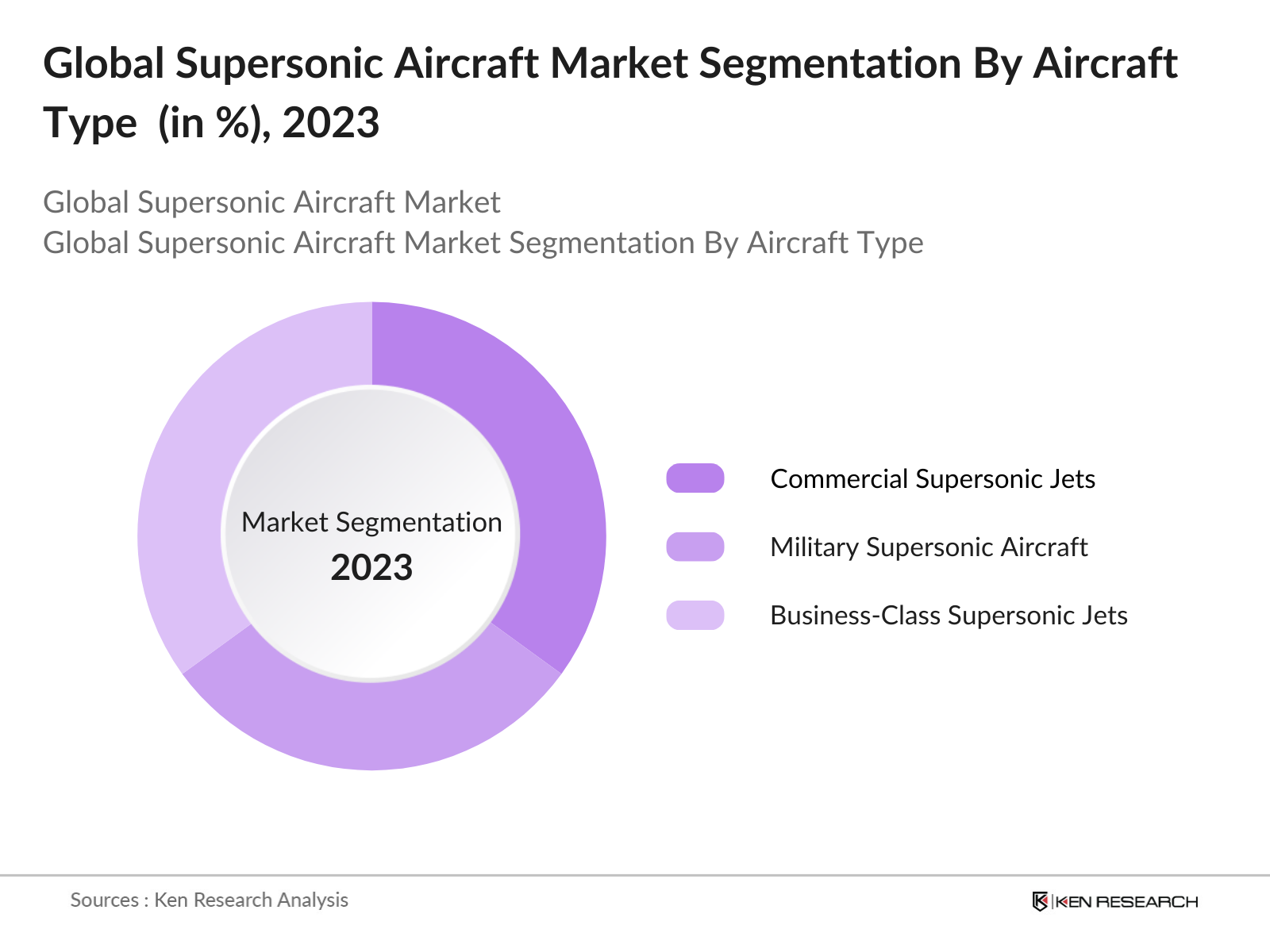
By Aircraft Type: The global supersonic aircraft market is segmented by aircraft type into commercial supersonic jets, military supersonic aircraft, and business-class supersonic jets. Business-class supersonic jets have recently dominated the aircraft type segment due to the rising demand for luxury, faster air travel among business executives and high-net-worth individuals. Companies like Aerion and Boom Supersonic have focused on developing smaller, more efficient jets catering to this niche market.
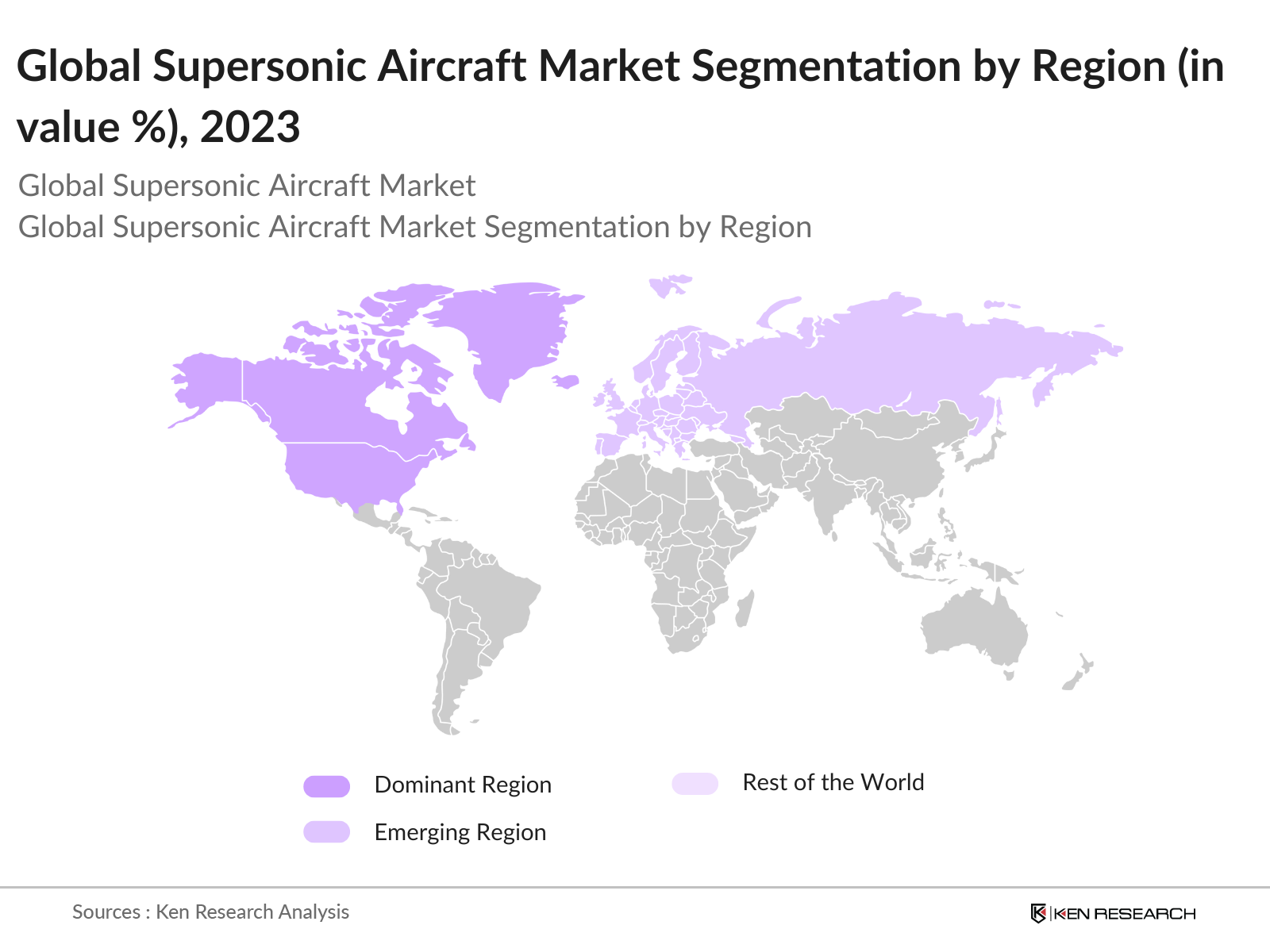
By Region: The regional segmentation of the global supersonic aircraft market includes North America, Europe, Asia-Pacific, Middle East & Africa, and Latin America. North America dominates the market due to its strong aerospace sector, especially in the U.S., which benefits from leading manufacturers and supportive policies from organizations like NASA and the FAA. Europe follows closely, with active projects in the UK and France focusing on sustainable supersonic flight.
Global Supersonic Aircraft Market Competitive Landscape
The global supersonic aircraft market is dominated by a few key players, including Lockheed Martin, Boom Supersonic, and Aerion, with emerging competition from startups specializing in next-generation propulsion systems. These companies have invested heavily in R&D and have benefited from strategic partnerships with governments and regulatory bodies to address noise and emission standards. The consolidation in the market underscores the influence of these key players in driving technological advancements and meeting regulatory requirements.
| Company | Establishment Year | Headquarters | No. of Employees | Revenue (2023) | R&D Investment | No. of Supersonic Aircraft Projects | Key Markets | Strategic Partnerships |
|---|---|---|---|---|---|---|---|---|
| Lockheed Martin | 1912 | Bethesda, MD, USA | _ | _ | _ | _ | _ | _ |
| Boom Supersonic | 2014 | Denver, CO, USA | _ | _ | _ | _ | _ | _ |
| Aerion Corporation | 2003 | Reno, NV, USA | _ | _ | _ | _ | _ | _ |
| Spike Aerospace | 2011 | Boston, MA, USA | _ | _ | _ | _ | _ | _ |
| Gulfstream Aerospace | 1958 | Savannah, GA, USA | _ | _ | _ | _ | _ | _ |
Global Supersonic Aircraft Industry Analysis
Growth Drivers
- Increasing Demand for High-Speed Air Travel: The increasing demand for faster air travel has been a significant driver for the global supersonic aircraft market, especially for long-haul flights. The number of air travelers worldwide in 2022 surpassed 4 billion, with significant growth from business travelers seeking time efficiency for international trips. For instance, global business travel expenditure reached $933 billion in 2022. With business hubs in North America, Europe, and Asia seeing an uptick in air traffic, demand for faster travel options is growing. This has pushed aerospace companies and governments to explore supersonic technology for reducing travel time.
- Technological Innovations in Supersonic Engine Development: Advancements in engine technology are accelerating the development of fuel-efficient and quieter supersonic aircraft. In 2024, significant investments were made by the U.S. government in engine research programs, including $150 million allocated to NASA's X-59 QueSST, a low-boom supersonic demonstrator. These innovations focus on improving fuel efficiency and reducing noise, a key factor in overcoming current aviation limitations. By integrating cutting-edge propulsion technologies, manufacturers are making headway in producing commercially viable supersonic jets.
- Government Funding and Private Investments in Aerospace: Governments across the globe are ramping up funding for supersonic projects. In 2023, the European Union committed over €1.5 billion to aerospace innovation as part of its Horizon Europe program, with a notable portion dedicated to supersonic research. Meanwhile, private companies like Boom Supersonic have attracted $140 million in investments. This fusion of public and private funding underscores the seriousness with which supersonic aircraft development is being pursued, signaling future breakthroughs in the market.
Market Challenges
- Stringent Noise and Environmental Regulations: Noise pollution is a significant hurdle for supersonic aircraft development. Current regulations by the International Civil Aviation Organization (ICAO) limit sonic booms over populated areas, which restricts supersonic flight over land. The U.S. Federal Aviation Administration (FAA) has also introduced stricter noise abatement rules, making it mandatory for aircraft to comply with noise standards below 85 decibels. Meeting these regulatory standards remains a substantial challenge for aircraft developers.
FAA Noise Abatement Policies 2024 - High Development and Operational Costs: The cost of developing supersonic aircraft is immense, with each new aircraft project requiring billions of dollars in research, development, and certification. For instance, the projected cost of Boom Supersonic's Overture is $200 million per aircraft, excluding the infrastructure required to support operations. Additionally, the operating costs for supersonic flights are estimated to be 2-3 times higher than subsonic flights due to fuel consumption and maintenance expenses.
Global Supersonic Aircraft Market Future Outlook
Over the next five years, the global supersonic aircraft market is expected to witness substantial growth driven by technological advancements, increasing investments from private players, and supportive government regulations aimed at commercializing supersonic flights. The development of more fuel-efficient engines and quieter supersonic jets is expected to be crucial for addressing environmental concerns and enabling widespread adoption. Regions like Asia-Pacific and the Middle East are anticipated to emerge as new markets, especially for business-class and private supersonic travel.
Opportunities
- Emerging Markets in Asia-Pacific and the Middle East: Asia-Pacific and the Middle East are emerging as key markets for supersonic aircraft, driven by rising demand for luxury travel and business connectivity. In 2023, the Asia-Pacific region accounted for over 30% of global air passenger traffic, with a significant portion coming from high-net-worth individuals in countries like China and India. The Middle East, particularly the UAE, saw a 25% growth in business jet operations, signaling a strong potential market for supersonic jets.
- Potential for Commercial and Military Applications: Supersonic technology offers opportunities in both commercial and military sectors. In 2023, the U.S. Department of Defense increased its budget for supersonic technology to $500 million, focusing on military jets with hypersonic capabilities. Commercially, airlines are exploring supersonic jets for premium business routes. The dual-use potential of supersonic technology enhances its viability, providing avenues for growth beyond passenger air travel.
Scope of the Report
|
By Aircraft Type |
Commercial Supersonic Jets Military Supersonic Aircraft Business-Class Supersonic Jets |
|
By Application |
Commercial Aviation Military Aviation Private and Business Aviation |
|
By Technology |
Supersonic Aerodynamics Supersonic Propulsion Systems Noise and Sonic Boom Reduction |
|
By Speed Class |
Mach 1 – Mach 2 Mach 2 – Mach 3 Above Mach 3 |
|
By Region |
North America Europe Asia-Pacific Middle East and Africa Latin America |
Products
- Aerospace Companies
- Commercial Airlines Industries
- Military and Defense Agencies (U.S. Department of Defense, UK Ministry of Defence)
- Private Aviation Companies
- Investments and Venture Capitalist Firms
- Government and Regulatory Bodies (FAA, ICAO)
- Noise Reduction Technology Companies
- Sustainable Aviation Fuel (SAF) Companies
Companies
- Lockheed Martin
- Boom Supersonic
- Aerion Corporation
- Spike Aerospace
- Gulfstream Aerospace
- Boeing
- Airbus
- NASA
- Dassault Aviation
- Northrop Grumman
- General Electric Aviation
- Reaction Engines
- Rolls-Royce
- Virgin Galactic
- Gulfstream Aerospace
Table of Contents
1. Global Supersonic Aircraft Market Overview
1.1. Definition and Scope
1.2. Market Taxonomy
1.3. Market Growth Rate (Flight Speed Innovation, Noise Reduction Technologies)
1.4. Market Segmentation Overview
2. Global Supersonic Aircraft Market Size (In USD Bn)
2.1. Historical Market Size
2.2. Year-On-Year Growth Analysis
2.3. Key Market Developments and Milestones (Key Supersonic Aircraft Projects, Technological Breakthroughs, Aviation Regulations)
3. Global Supersonic Aircraft Market Analysis
3.1. Growth Drivers
3.1.1. Increasing Demand for High-Speed Air Travel
3.1.2. Technological Innovations in Supersonic Engine Development
3.1.3. Government Funding and Private Investments in Aerospace
3.1.4. Rising Global Tourism and Business Travel
3.2. Market Challenges
3.2.1. Stringent Noise and Environmental Regulations
3.2.2. High Development and Operational Costs
3.2.3. Limited Infrastructure for Supersonic Aircraft Operations
3.2.4. Public Perception Regarding Safety and Environmental Impact
3.3. Opportunities
3.3.1. Emerging Markets in Asia-Pacific and the Middle East
3.3.2. Potential for Commercial and Military Applications
3.3.3. Advancements in Sustainable Aviation Fuels (SAF)
3.3.4. Strategic Collaborations Between Aerospace Manufacturers
3.4. Trends
3.4.1. Development of Hybrid-Electric Supersonic Aircraft
3.4.2. Focus on Reducing Sonic Booms
3.4.3. Integration of Advanced Aerodynamics and Materials
3.4.4. Market Shift Toward Smaller, Business-Class Supersonic Jets
3.5. Government Regulations
3.5.1. Environmental Standards for Emissions (ICAO Guidelines, FAA Regulations)
3.5.2. Noise Abatement Policies
3.5.3. Certification and Airworthiness Standards for Supersonic Aircraft
3.5.4. Air Traffic Control Regulations and Airspace Management for Supersonic Jets
3.6. SWOT Analysis
3.7. Stakeholder Ecosystem (Aircraft Manufacturers, Component Suppliers, Aviation Authorities, Investors)
3.8. Porter’s Five Forces
3.9. Competition Ecosystem
4. Global Supersonic Aircraft Market Segmentation
4.1. By Aircraft Type (In Value %)
4.1.1. Commercial Supersonic Jets
4.1.2. Military Supersonic Aircraft
4.1.3. Business-Class Supersonic Jets
4.2. By Application (In Value %)
4.2.1. Commercial Aviation
4.2.2. Military Aviation
4.2.3. Private and Business Aviation
4.3. By Technology (In Value %)
4.3.1. Supersonic Aerodynamics
4.3.2. Supersonic Propulsion Systems
4.3.3. Noise and Sonic Boom Reduction Technologies
4.4. By Speed Class (In Value %)
4.4.1. Mach 1 – Mach 2
4.4.2. Mach 2 – Mach 3
4.4.3. Above Mach 3
4.5. By Region (In Value %)
4.5.1. North America
4.5.2. Europe
4.5.3. Asia-Pacific
4.5.4. Middle East and Africa
4.5.5. Latin America
5. Global Supersonic Aircraft Market Competitive Analysis
5.1 Detailed Profiles of Major Companies
5.1.1. Lockheed Martin
5.1.2. Boeing
5.1.3. Aerion Corporation
5.1.4. Boom Supersonic
5.1.5. Airbus
5.1.6. Spike Aerospace
5.1.7. NASA
5.1.8. Dassault Aviation
5.1.9. Northrop Grumman
5.1.10. Gulfstream Aerospace
5.1.11. Rolls-Royce
5.1.12. Reaction Engines
5.1.13. General Electric Aviation
5.1.14. Virgin Galactic
5.1.15. Lockheed Skunk Works
5.2 Cross Comparison Parameters (No. of Aircraft in Service, Headquarters, Revenue, R&D Investment, Key Clients, Strategic Partnerships, Key Projects)
5.3 Market Share Analysis
5.4 Strategic Initiatives
5.5 Mergers and Acquisitions
5.6 Investment Analysis
5.7 Venture Capital Funding
5.8 Government Grants
5.9 Private Equity Investments
6. Global Supersonic Aircraft Market Regulatory Framework
6.1 Supersonic Flight Certification
6.2 Noise Emission Compliance
6.3 Airspace Usage and Allocation for Supersonic Jets
6.4 Fuel Efficiency Standards and Emission Limits
7. Global Supersonic Aircraft Future Market Size (In USD Bn)
7.1 Future Market Size Projections
7.2 Key Factors Driving Future Market Growth
8. Global Supersonic Aircraft Future Market Segmentation
8.1 By Aircraft Type
8.2 By Application
8.3 By Technology
8.4 By Speed Class
8.5 By Region
9. Global Supersonic Aircraft Market Analysts’ Recommendations
9.1 TAM/SAM/SOM Analysis
9.2 Customer Cohort Analysis
9.3 Marketing Initiatives
9.4 White Space Opportunity Analysis
Disclaimer Contact UsResearch Methodology
Step 1: Identification of Key Variables
In this initial step, the key variables influencing the global supersonic aircraft market are identified through an in-depth analysis of primary and secondary data sources. Industry-level insights are derived from comprehensive desk research to define market drivers, challenges, and growth factors.
Step 2: Market Analysis and Construction
This step includes a thorough examination of historical market data, analyzing factors like market penetration and competitive intensity. Market models are constructed to project future trends based on current data, including developments in supersonic propulsion and noise reduction technologies.
Step 3: Hypothesis Validation and Expert Consultation
In this phase, market hypotheses are validated through expert interviews with stakeholders across the industry. Insights gained from these consultations help refine market forecasts and validate the assumptions made in the market analysis.
Step 4: Research Synthesis and Final Output
The final output is generated by integrating primary and secondary data sources, expert opinions, and historical market trends. This results in a comprehensive market report that offers a detailed analysis of the global supersonic aircraft market.
Frequently Asked Questions
01. How big is the Global Supersonic Aircraft Market?
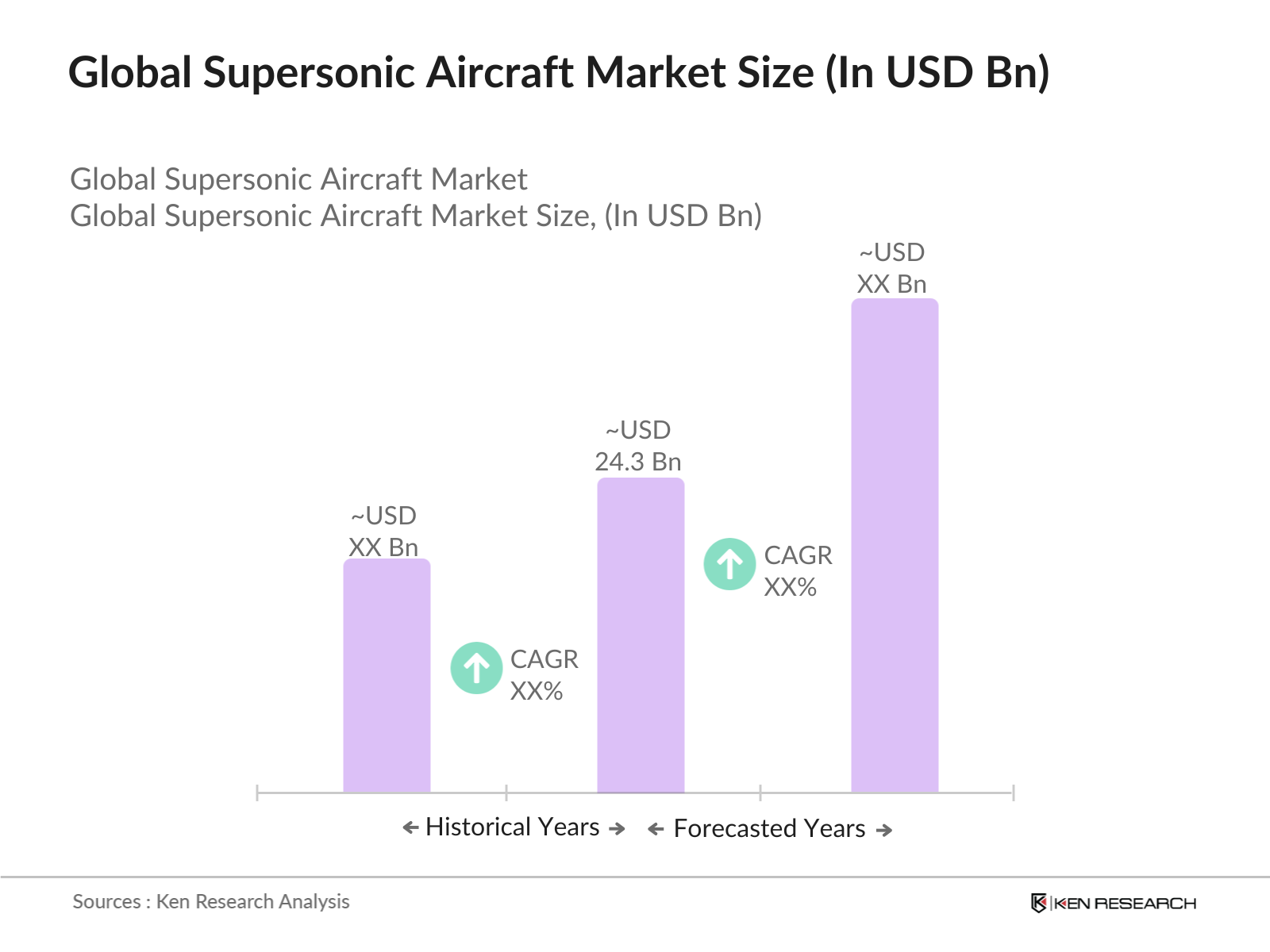
The global supersonic aircraft market was valued at USD 24.3 billion in 2023, driven by advancements in aviation technology and increasing demand for faster, more efficient air travel.
02. What are the key challenges in the Global Supersonic Aircraft Market?
Key challenges include stringent regulatory hurdles, particularly regarding noise and environmental impact, as well as high development costs associated with supersonic aircraft technology.
03. Who are the major players in the Global Supersonic Aircraft Market?
Key players include Lockheed Martin, Boom Supersonic, Aerion Corporation, Spike Aerospace, and Gulfstream Aerospace, all of which are involved in developing next-generation supersonic jets.
04. What are the key growth drivers of the Global Supersonic Aircraft Market?
The market is primarily driven by increasing investments in aviation technology, rising demand for faster air travel, and supportive government policies aimed at reducing travel times for commercial and military aircraft.
Why Buy From Us?

What makes us stand out is that our consultants follows Robust, Refine and Result (RRR) methodology. i.e. Robust for clear definitions, approaches and sanity checking, Refine for differentiating respondents facts and opinions and Result for presenting data with story

We have set a benchmark in the industry by offering our clients with syndicated and customized market research reports featuring coverage of entire market as well as meticulous research and analyst insights.

While we don't replace traditional research, we flip the method upside down. Our dual approach of Top Bottom & Bottom Top ensures quality deliverable by not just verifying company fundamentals but also looking at the sector and macroeconomic factors.

With one step in the future, our research team constantly tries to show you the bigger picture. We help with some of the tough questions you may encounter along the way: How is the industry positioned? Best marketing channel? KPI's of competitors? By aligning every element, we help maximize success.

Our report gives you instant access to the answers and sources that other companies might choose to hide. We elaborate each steps of research methodology we have used and showcase you the sample size to earn your trust.

If you need any support, we are here! We pride ourselves on universe strength, data quality, and quick, friendly, and professional service.