















Global Supplements Market Outlook to 2030
Region:Global
Author(s):Mukul
Product Code:KROD10836
November 2024
86
About the Report
Global Supplements Market Overview
- The Global Supplements Market, currently valued at USD 177 billion, has seen consistent growth primarily due to the increasing demand for health and wellness products, driven by rising health consciousness, lifestyle-related diseases, and aging demographics worldwide. With consumers prioritizing preventive healthcare and wellness, the market is expected to maintain robust growth in the coming years as more individuals incorporate supplements into their daily routines.
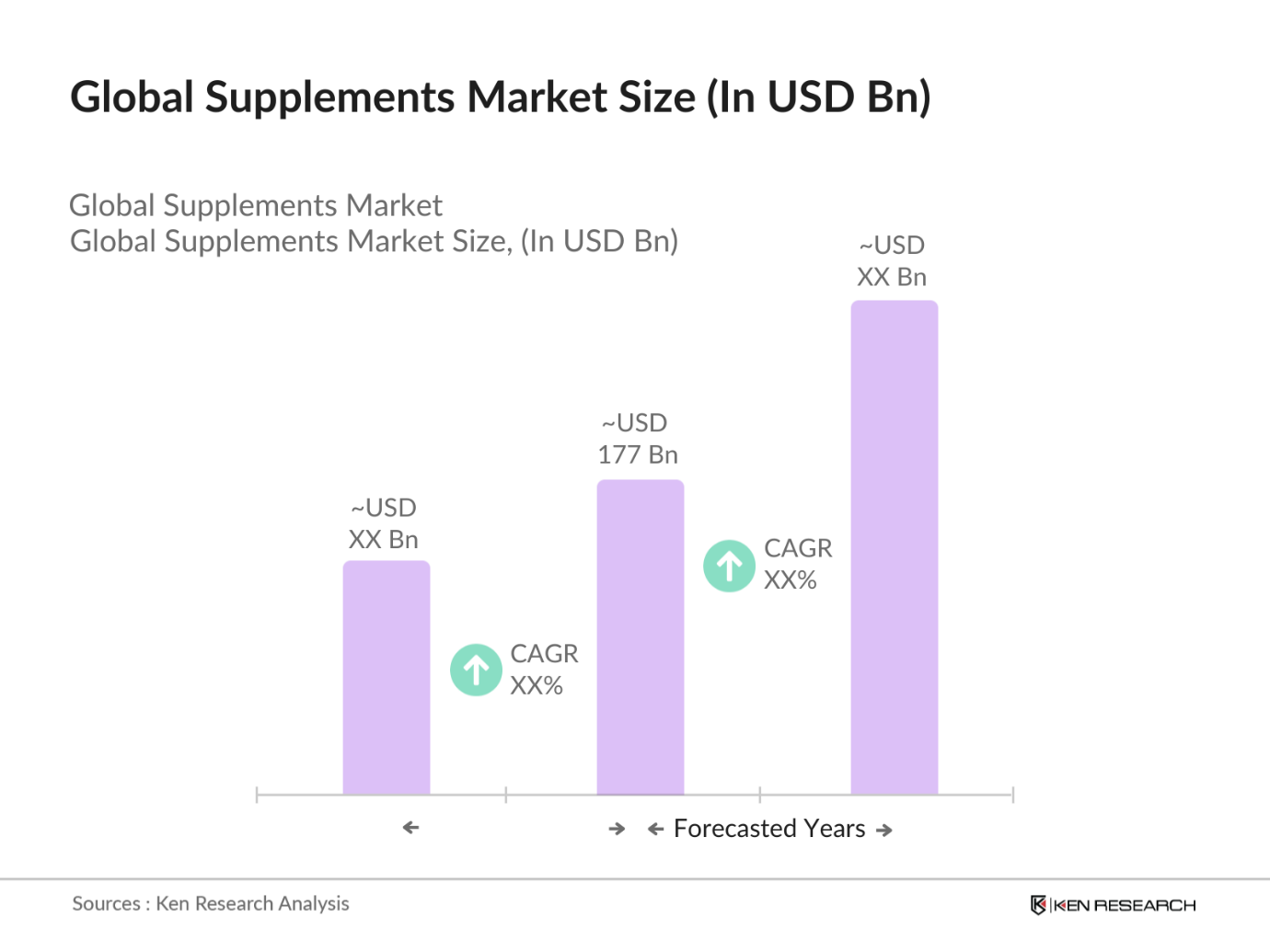
- North America and Asia-Pacific are the leading regions in the supplements market. North America's dominance is attributed to high disposable incomes, a well-developed health and wellness infrastructure, and significant consumer awareness. In contrast, Asia-Pacific's growth is driven by increasing urbanization, expanding middle-class populations, and a rapid rise in online retail channels, especially in countries like China, Japan, and India.
- Labeling requirements play a critical role in the supplements market, guiding consumer choices and ensuring informed purchasing decisions. In the U.S., the FDA mandates that dietary supplement labels provide clear information regarding serving sizes, ingredient lists, and health claims. In 2022, the FDA issued new guidance on labeling practices to enhance clarity and transparency, ensuring that consumers receive accurate information. These regulations are designed to protect consumers and foster trust in the dietary supplement industry, prompting companies to adopt compliant labeling strategies to maintain market credibility.
Global Supplements Market Segmentation
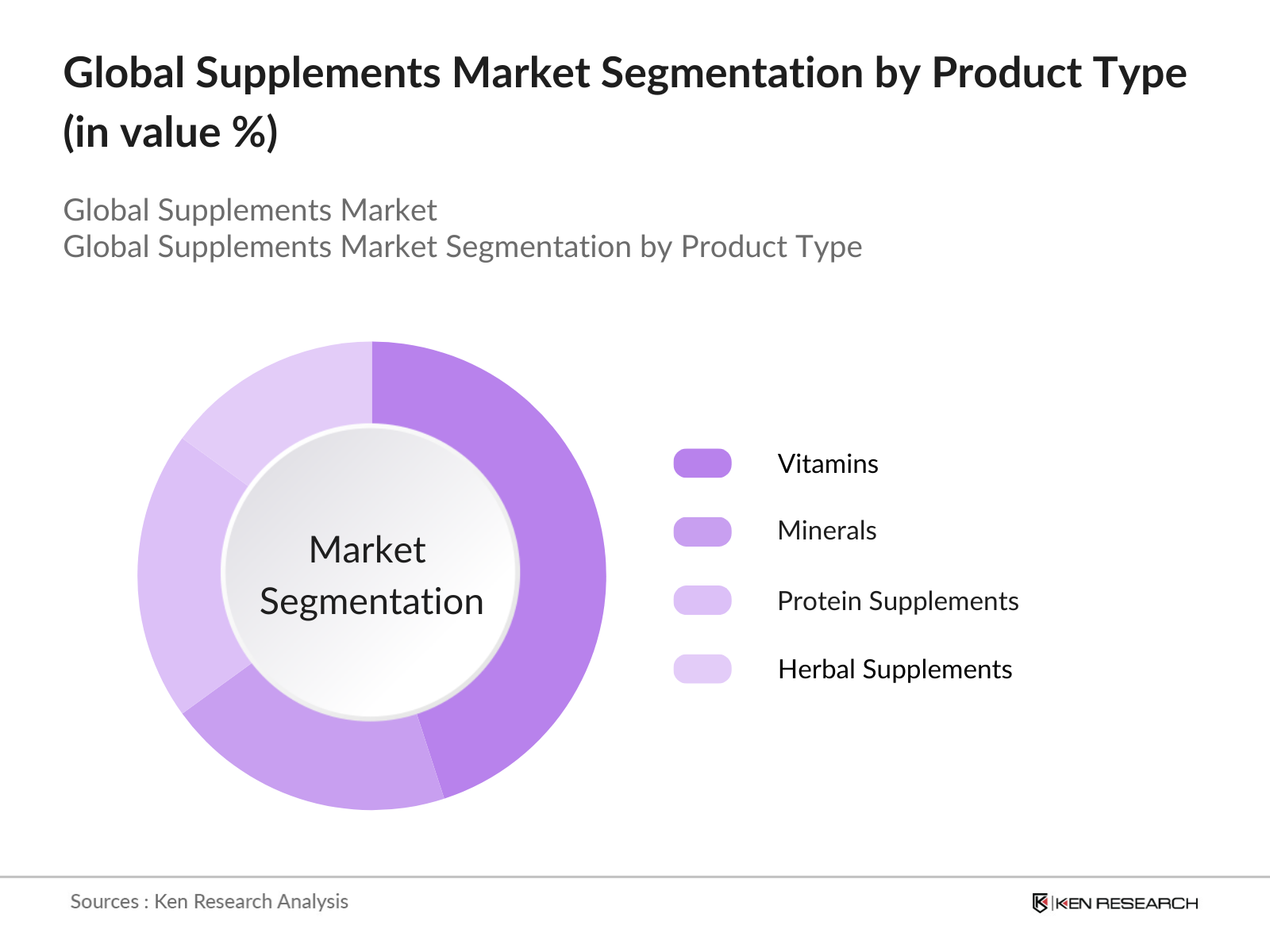
- By Product Type: The Global Supplements Market is segmented by product type into vitamins, minerals, protein supplements, herbal supplements, and amino acids. Vitamins hold a dominant market share within this category due to their widespread use in preventive healthcare, high consumer awareness about their benefits, and availability in diverse formulations and forms. Companies continuously innovate with vitamin-based supplements to meet rising demands for immunity and overall wellness.
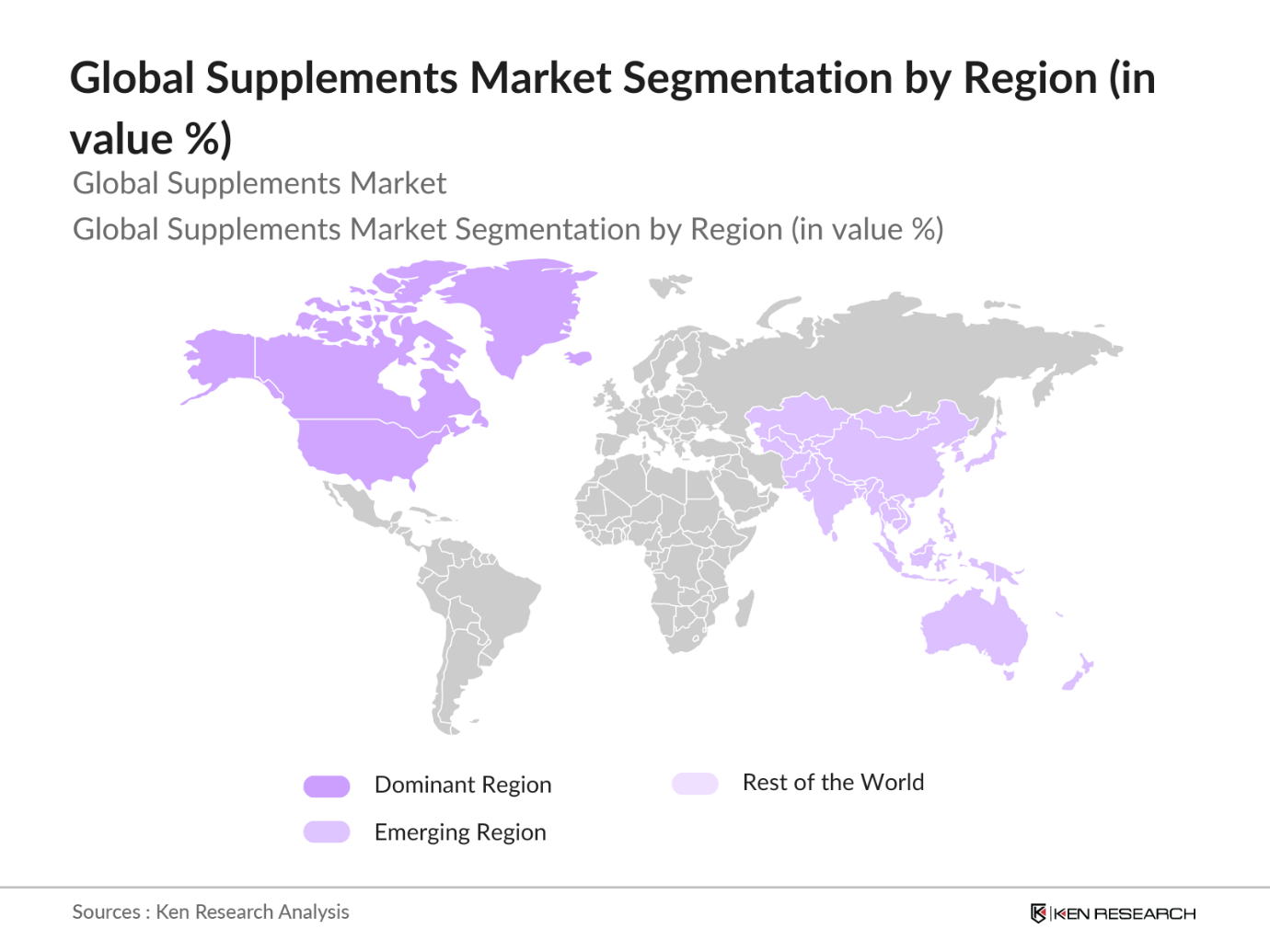
- By Region: The market is segmented by region, including North America, Europe, Asia-Pacific, Latin America, and the Middle East and Africa. North America leads the market due to high consumer awareness, favorable regulatory policies, and extensive distribution channels. The presence of key industry players and a strong online retail structure further bolsters this segment.
- By Formulation: The supplements market is segmented by formulation into tablets, powders, capsules, gummies, and liquids. Tablets dominate the market share due to their convenience, longer shelf life, and ease of manufacturing. Moreover, they are highly popular as they provide accurate dosages, are easily portable, and generally cost-effective.
Global Supplements Market Competitive Landscape
The Global Supplements Market is consolidated, with leading players holding a substantial share due to their extensive distribution networks, R&D investments, and product innovation strategies.
Global Supplements Industry Analysis
Growth Drivers
- Rising Health Consciousness: The trend towards health consciousness is notably increasing as global interest in health and wellness continues to rise. A survey conducted by the World Health Organization revealed that approximately 83% of individuals in high-income countries engage in regular physical activity, with a significant portion also opting for dietary supplements to enhance their health. Additionally, the International Food Information Council reported that 58% of Americans prioritize health and wellness, driving the demand for supplements as individuals seek preventive healthcare options. This cultural shift towards health-centric lifestyles is expected to sustain market growth through increased supplement consumption.
- Increasing Prevalence of Chronic Diseases: Chronic diseases are increasingly becoming a global health challenge, contributing to the rising demand for dietary supplements. The World Health Organization estimates that by 2023, around 71% of deaths worldwide will be due to chronic diseases such as heart disease and diabetes. In the United States, the Centers for Disease Control and Prevention report that nearly 60% of adults live with at least one chronic condition. This alarming trend is prompting individuals to seek preventive measures, including nutritional supplements, to mitigate risks associated with chronic health issues, further propelling market demand.
- Growth of E-commerce Platforms: The surge of e-commerce platforms has transformed the distribution of supplements, significantly enhancing market accessibility. According to the United Nations Conference on Trade and Development, global e-commerce sales reached $26.7 trillion in 2022, with a notable increase in health-related products. In the U.S., the National Retail Federation reported a 43% increase in online sales for health and wellness products in 2023. This rapid shift toward digital shopping enables consumers to conveniently access a variety of supplement products, driving overall market growth and providing opportunities for brands to expand their reach.
Market Restraints
- Stringent Regulatory Framework: The supplements industry faces significant challenges due to stringent regulatory frameworks. The U.S. Food and Drug Administration (FDA) mandates that all dietary supplements meet rigorous safety and labeling standards. The FDA's 2023 budget allocated $6.7 billion for food safety initiatives, including the regulation of dietary supplements. Additionally, the European Food Safety Authority (EFSA) has implemented stringent compliance requirements, including pre-market evaluations for new supplements. These regulatory demands can hinder product innovation and market entry, posing challenges for manufacturers in navigating the complex regulatory landscape.
- Intense Competition: The global supplements market is characterized by intense competition, with numerous players vying for market share. The latest data from Statista indicates that the number of supplement brands in North America has increased by 15% over the last three years, intensifying market rivalry. This competitive landscape forces companies to invest heavily in marketing and product differentiation to attract consumers. Moreover, the growing popularity of private-label supplements in retail chains adds to the competitive pressure, compelling established brands to continually innovate to maintain their market positions.
Global Supplements Market Future Outlook
The Global Supplements Market is anticipated to experience substantial growth over the next five years due to rising consumer interest in wellness products, advancements in supplement formulations, and growing availability of health-focused products online. As companies increasingly adopt digital strategies to reach customers, the markets growth trajectory will be reinforced by innovations in personalized nutrition, plant-based products, and sustainable packaging solutions.
Market Opportunities
- Innovation in Product Formulations: The demand for innovative supplement formulations presents a significant opportunity for market growth. As consumers become more discerning, they are seeking specialized products that cater to specific health needs. According to the World Health Organization, the global functional food market, which includes innovative supplements, is projected to reach $276 billion by 2025. Companies are increasingly investing in research and development to create unique formulations, such as enhanced bioavailability and targeted nutrient combinations, to capture the growing consumer interest in functional nutrition. This trend is expected to drive substantial growth in the supplements sector.
- Expansion in Emerging Markets: Emerging markets present a lucrative opportunity for growth in the supplements sector. The World Bank forecasts that the GDP of emerging economies in Asia will grow by 6.5% in 2024, driving increased consumer spending on health and wellness products. Additionally, the International Monetary Fund reports that urbanization in these regions is leading to lifestyle changes that enhance the demand for dietary supplements. For example, in India, the market for dietary supplements is expected to expand significantly as awareness of health and nutrition increases among the growing middle class, creating new avenues for business growth.
Scope of the Report
|
By Product Type |
- Vitamins |
|
- Minerals |
|
|
- Protein Supplements |
|
|
- Herbal Supplements |
|
|
- Amino Acids |
|
|
By Formulation |
- Tablets |
|
- Powders |
|
|
- Capsules |
|
|
- Gummies |
|
|
- Liquids |
|
|
By Distribution Channel |
- Online Retail |
|
- Supermarkets/Hypermarkets |
|
|
- Health and Wellness Stores |
|
|
- Pharmacies |
|
|
- Direct Sales |
|
|
By End User |
- Adults |
|
- Elderly |
|
|
- Children |
|
|
- Athletes |
|
|
By Region |
- North America |
|
- Europe |
|
|
- Asia-Pacific |
|
|
- Latin America |
|
|
- Middle East and Africa |
Products
Key Target Audience
Manufacturers in the Supplements Industry
Health and Wellness Retailers
Pharmacies and Drugstores
Fitness Centers and Gyms
Nutritional and Dietary Experts
Online Retail Platforms
Investors and Venture Capitalist Firms
Government and Regulatory Bodies (e.g., FDA, EFSA)
Companies
Players Mentioned in the Report:
Herbalife Nutrition Ltd.
Amway Corporation
Glanbia plc
Abbott Laboratories
GNC Holdings Inc.
Nestl S.A.
Natures Bounty Co.
Usana Health Sciences Inc.
Blackmores Limited
Jamieson Wellness Inc.
Orgain Inc.
Garden of Life LLC
NOW Foods
Swanson Health Products
Solgar Inc.
Table of Contents
1. Global Supplements Market Overview
1.1. Definition and Scope
1.2. Market Taxonomy
1.3. Market Growth Rate
1.4. Market Segmentation Overview
2. Global Supplements Market Size (In USD Mn)
2.1. Historical Market Size
2.2. Year-On-Year Growth Analysis
2.3. Key Market Developments and Milestones
3. Global Supplements Market Analysis
3.1. Growth Drivers
3.1.1. Rising Health Consciousness
3.1.2. Increasing Prevalence of Chronic Diseases
3.1.3. Growth of E-commerce Platforms
3.1.4. Aging Population
3.2. Market Challenges
3.2.1. Stringent Regulatory Framework
3.2.2. Intense Competition
3.2.3. Quality Control Issues
3.3. Opportunities
3.3.1. Innovation in Product Formulations
3.3.2. Expansion in Emerging Markets
3.3.3. Rise in Plant-based Supplements
3.4. Trends
3.4.1. Personalization of Supplements
3.4.2. Integration of Technology in Health Tracking
3.4.3. Clean Labeling and Transparency
3.5. Regulatory Landscape
3.5.1. International Regulations
3.5.2. Compliance Standards
3.5.3. Labeling Requirements
3.6. SWOT Analysis
3.7. Stakeholder Ecosystem
3.8. Porters Five Forces
3.9. Competition Ecosystem
4. Global Supplements Market Segmentation
4.1. By Product Type (In Value %)
4.1.1. Vitamins
4.1.2. Minerals
4.1.3. Protein Supplements
4.1.4. Herbal Supplements
4.1.5. Amino Acids
4.2. By Formulation (In Value %)
4.2.1. Tablets
4.2.2. Powders
4.2.3. Capsules
4.2.4. Gummies
4.2.5. Liquids
4.3. By Distribution Channel (In Value %)
4.3.1. Online Retail
4.3.2. Supermarkets/Hypermarkets
4.3.3. Health and Wellness Stores
4.3.4. Pharmacies
4.3.5. Direct Sales
4.4. By End User (In Value %)
4.4.1. Adults
4.4.2. Elderly
4.4.3. Children
4.4.4. Athletes
4.5. By Region (In Value %)
4.5.1. North America
4.5.2. Europe
4.5.3. Asia-Pacific
4.5.4. Latin America
4.5.5. Middle East and Africa
5. Global Supplements Market Competitive Analysis
5.1. Detailed Profiles of Major Companies
5.1.1. Herbalife Nutrition Ltd.
5.1.2. Amway Corporation
5.1.3. Glanbia plc
5.1.4. Abbott Laboratories
5.1.5. GNC Holdings Inc.
5.1.6. Nestl S.A.
5.1.7. Natures Bounty Co.
5.1.8. Usana Health Sciences Inc.
5.1.9. Blackmores Limited
5.1.10. Jamieson Wellness Inc.
5.1.11. Orgain Inc.
5.1.12. Garden of Life LLC
5.1.13. NOW Foods
5.1.14. Swanson Health Products
5.1.15. Solgar Inc.
5.2. Cross Comparison Parameters (No. of Employees, Headquarters, Inception Year, Revenue, Market Share, Product Portfolio, Geographic Presence, R&D Investments)
5.3. Market Share Analysis
5.4. Strategic Initiatives
5.5. Mergers and Acquisitions
5.6. Investment Analysis
5.7. Venture Capital Funding
5.8. Government Grants
5.9. Private Equity Investments
6. Global Supplements Market Regulatory Framework
6.1. Dietary Supplement Regulations
6.2. Compliance Requirements
6.3. Certification Processes
7. Global Supplements Market Future Market Size (In USD Mn)
- 7.1. Future Market Size Projections
- 7.2. Key Factors Driving Future Market Growth
8. Global Supplements Market Future Segmentation
8.1. By Product Type (In Value %)
8.2. By Formulation (In Value %)
8.3. By Distribution Channel (In Value %)
8.4. By End User (In Value %)
8.5. By Region (In Value %)
9. Global Supplements Market Analysts Recommendations
9.1. TAM/SAM/SOM Analysis
9.2. Customer Cohort Analysis
9.3. Marketing Initiatives
9.4. White Space Opportunity Analysis
Disclaimer Contact UsResearch Methodology
Step 1: Identification of Key Variables
The research begins by mapping the supplement industry landscape, identifying key stakeholders, major product categories, and distribution channels. This includes in-depth secondary research from proprietary databases and published reports.
Step 2: Market Analysis and Construction
Historical data on market growth, product distribution, and regional performance is analyzed to construct a solid base for the markets overall structure. Key metrics such as product penetration, distribution efficiency, and revenue trends are also examined.
Step 3: Hypothesis Validation and Expert Consultation
Hypotheses on market trends and consumer preferences are tested through interviews with industry experts, providing insights that enhance the depth of the analysis. This includes consulting leaders in major supplement companies and retailers for operational insights.
Step 4: Research Synthesis and Final Output
The findings are consolidated into a comprehensive report, incorporating quantitative and qualitative data verified through cross-validation. Final insights ensure accuracy and provide actionable recommendations for market players.
Frequently Asked Questions
01. How big is the Global Supplements Market?
The Global Supplements Market is valued at USD 177 billion, driven by rising health consciousness, increasing lifestyle diseases, and the popularity of preventive healthcare measures.
02. What are the major challenges in the Global Supplements Market?
Challenges include strict regulatory requirements, high market competition, and quality control issues, especially for raw materials and compliance in international markets.
03. Who are the leading players in the Global Supplements Market?
Leading companies include Herbalife Nutrition, Amway Corporation, Glanbia plc, Abbott Laboratories, and GNC Holdings, with a competitive edge due to extensive product portfolios and global presence.
04. What factors are driving growth in the Global Supplements Market?
The market is propelled by the growing adoption of preventive healthcare practices, innovations in product formulation, and expanding consumer demand for natural and plant-based supplements.
Why Buy From Us?

What makes us stand out is that our consultants follows Robust, Refine and Result (RRR) methodology. i.e. Robust for clear definitions, approaches and sanity checking, Refine for differentiating respondents facts and opinions and Result for presenting data with story

We have set a benchmark in the industry by offering our clients with syndicated and customized market research reports featuring coverage of entire market as well as meticulous research and analyst insights.

While we don't replace traditional research, we flip the method upside down. Our dual approach of Top Bottom & Bottom Top ensures quality deliverable by not just verifying company fundamentals but also looking at the sector and macroeconomic factors.

With one step in the future, our research team constantly tries to show you the bigger picture. We help with some of the tough questions you may encounter along the way: How is the industry positioned? Best marketing channel? KPI's of competitors? By aligning every element, we help maximize success.

Our report gives you instant access to the answers and sources that other companies might choose to hide. We elaborate each steps of research methodology we have used and showcase you the sample size to earn your trust.

If you need any support, we are here! We pride ourselves on universe strength, data quality, and quick, friendly, and professional service.