
Global Synbiotics Market Outlook to 2030
Region:Global
Author(s):Yogita Sahu
Product Code:KROD7652
Region:Global
Author(s):Yogita Sahu
Product Code:KROD7652
December 2024
95
Listen to the audio summary
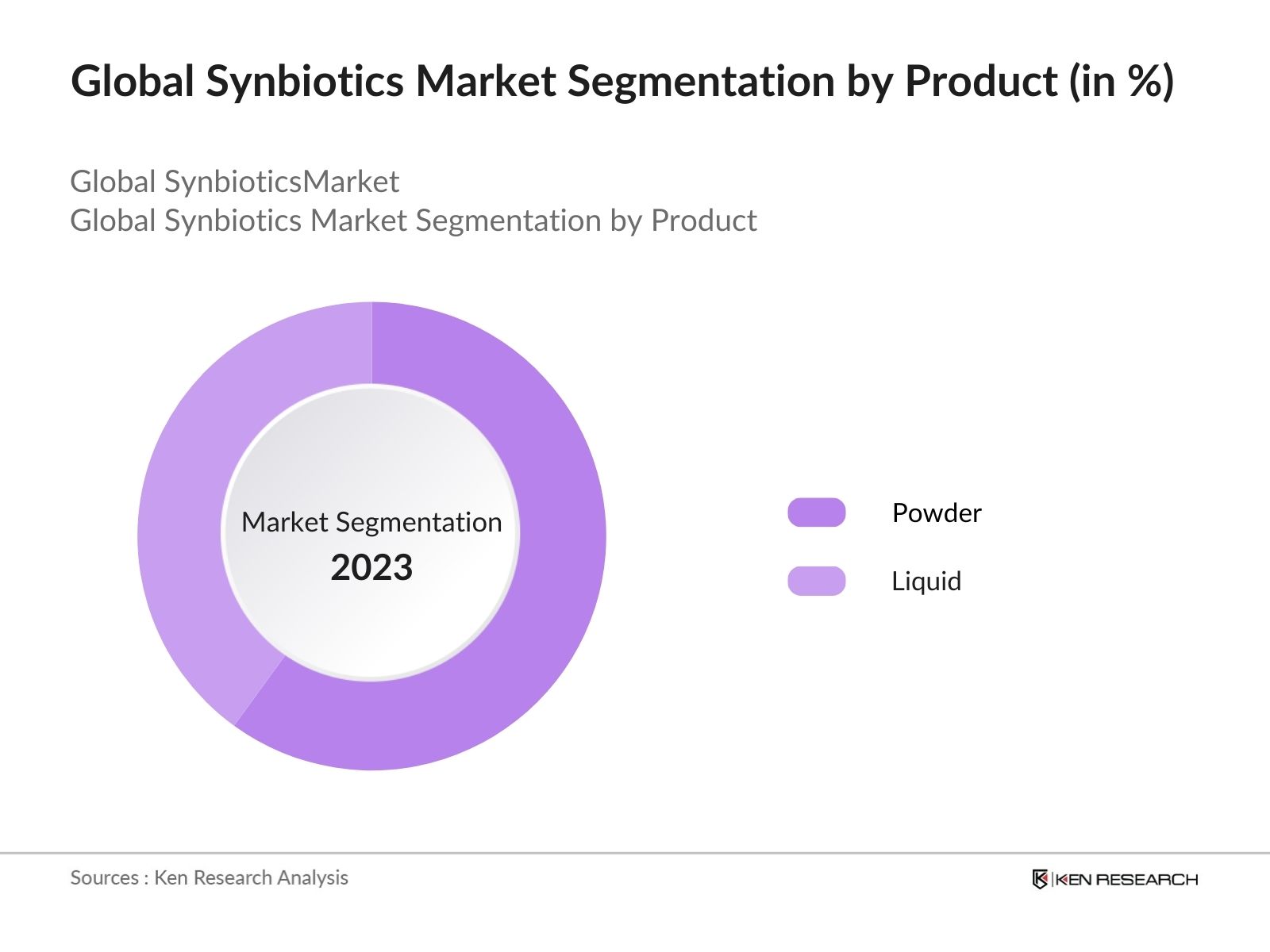
By Product Type: The market is segmented by product type into powder and liquid forms. Recently, powdered synbiotics have been dominating the market share as they offer easier storage, longer shelf life, and greater flexibility in formulation. Powdered synbiotics are commonly used in dietary supplements and functional food applications, catering to health-conscious consumers who prefer supplements that can be mixed into beverages or food.
By Application: Synbiotics are applied in various sectors such as food and beverages, pharmaceuticals, animal feed, and dietary supplements. The food and beverages segment holds a dominant position due to increasing consumer demand for fortified foods that improve digestive health. This segment is particularly strong in North America and Europe, where health-conscious consumers are adopting products such as yogurt and fermented drinks that contain synbiotics.
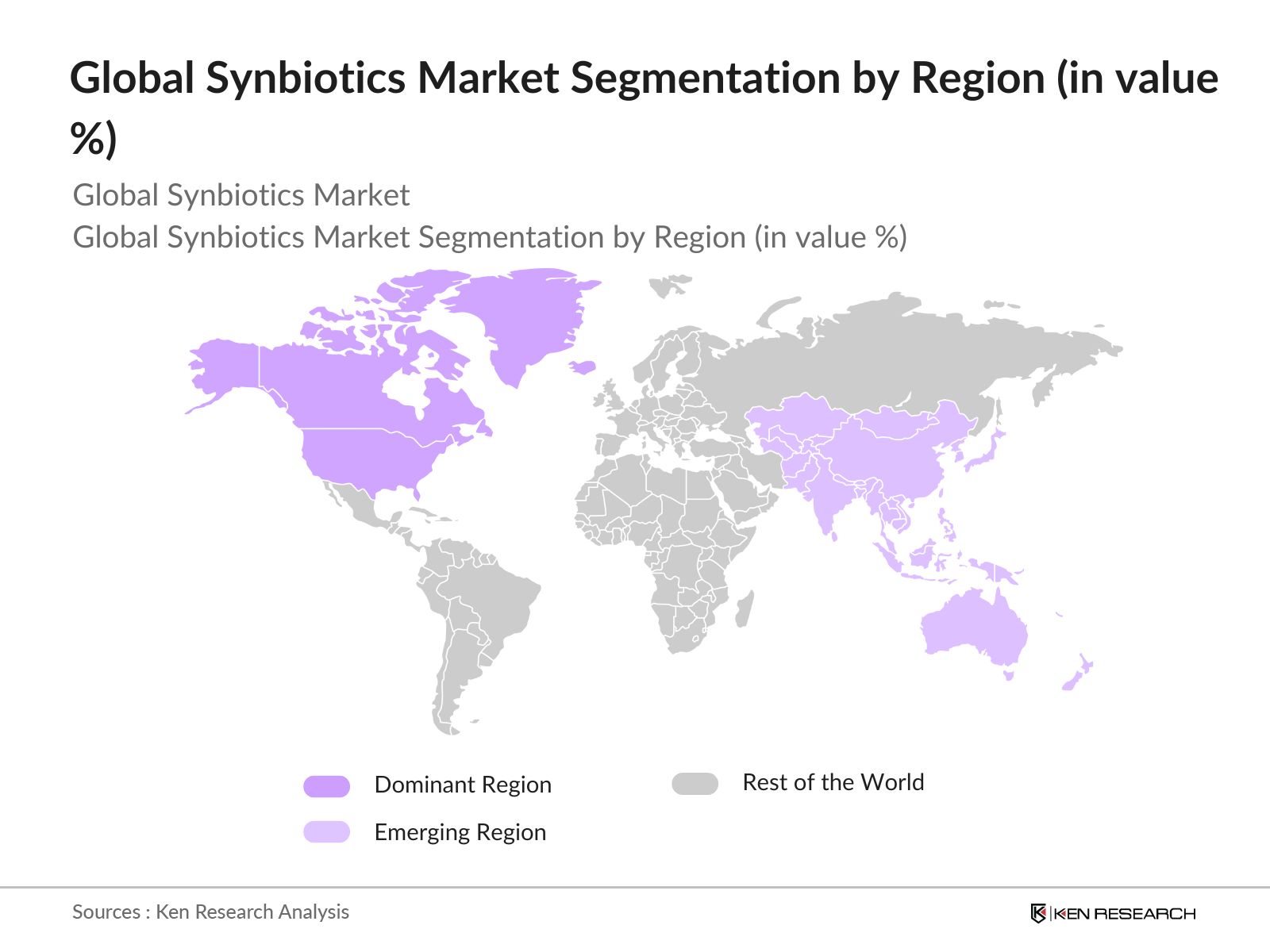
By Region: The market can be segmented into North America, Europe, Asia-Pacific, Latin America, and the Middle East & Africa. North America leads the market due to high consumer awareness and a strong focus on preventive healthcare. In Europe, countries such as Germany and France are significant markets due to their advanced healthcare systems and focus on gut health. The Asia-Pacific region, particularly Japan and China, is growing rapidly, driven by increasing consumption of functional foods and dietary supplements.
The market is dominated by both established players and emerging companies, showcasing a diverse competitive landscape. Companies are focusing on mergers and acquisitions, product innovation, and expanding their distribution networks to capture a larger market share.
|
Company Name |
Year Established |
Headquarters |
Product Range |
Key Focus |
Market Share (%) |
Strategic Initiatives |
Revenue (USD Mn) |
Employees |
|
Chr. Hansen Holding A/S |
1874 |
Denmark |
||||||
|
Danone |
1919 |
France |
||||||
|
Pfizer Inc. |
1849 |
USA |
||||||
|
Sabinsa Corporation |
1988 |
USA |
||||||
|
Yakult Pharmaceutical |
1935 |
Japan |
Over the next five years, the global synbiotics industry is expected to experience growth driven by increased consumer awareness about the importance of gut health, rising demand for functional foods, and advancements in biotechnology.
|
Product Type |
Powder Liquid |
|
Application |
Food & Beverages Pharmaceuticals Animal Feed Dietary Supplements |
|
Distribution Channel |
E-Commerce Specialty Stores Pharmacies Supermarkets |
|
Form |
Powder Capsules Liquid |
|
Region |
North America Europe Asia-Pacific Latin America Middle East & Africa |
1.1. Definition and Scope
1.2. Market Taxonomy
1.3. Market Growth Rate
1.4. Market Segmentation Overview
2.1. Historical Market Size
2.2. Year-On-Year Growth Analysis
2.3. Key Market Developments and Milestones
3.1. Growth Drivers (Synbiotic Supplements, Functional Foods, Prebiotic-Probiotic Synergy, Rising Health Consciousness)
3.1.1. Increasing Consumption of Nutritional Supplements
3.1.2. Growing Focus on Gut Health
3.1.3. Rise in Demand for Functional Beverages
3.1.4. Shift in Consumer Dietary Preferences
3.2. Market Challenges (Cost of Synbiotics, Regulatory Barriers, Consumer Education)
3.2.1. High Cost of Manufacturing Synbiotics
3.2.2. Regulatory Hurdles in Global Markets
3.2.3. Lack of Consumer Awareness
3.2.4. Limited Scientific Evidence for Health Benefits
3.3. Opportunities (Technological Advancements, Product Innovation, Emerging Markets)
3.3.1. Increasing R&D Investments in Synbiotics
3.3.2. Innovative Product Formulations (Synbiotics in Beverages and Infant Nutrition)
3.3.3. Expansion in Emerging Economies (Asia Pacific and Latin America)
3.3.4. Growth in E-Commerce Distribution Channels
3.4. Trends (Natural Ingredients, Personalized Nutrition, Clean Label Products)
3.4.1. Increasing Use of Natural Ingredients
3.4.2. Demand for Personalized Health Solutions
3.4.3. Shift Toward Clean Label Products
3.5. Government Regulations (Global Standards, FDA Guidelines, European Regulations)
3.5.1. Regulatory Framework in North America
3.5.2. EU Regulations for Synbiotic Products
3.5.3. Approval Processes in Asia-Pacific
3.5.4. Impact of Environmental Policies on Synbiotics Manufacturing
3.6. SWOT Analysis
3.7. Stakeholder Ecosystem
3.8. Porters Five Forces
3.9. Competition Ecosystem
4.1. By Product Type (In Value %)
4.1.1. Powder
4.1.2. Liquid
4.2. By Application (In Value %)
4.2.1. Food & Beverages
4.2.2. Pharmaceuticals
4.2.3. Animal Feed
4.2.4. Dietary Supplements
4.3. By Distribution Channel (In Value %)
4.3.1. E-Commerce
4.3.2. Specialty Stores
4.3.3. Pharmacies
4.3.4. Supermarkets
4.4. By Form (In Value %)
4.4.1. Powder
4.4.2. Capsules
4.4.3. Liquid
4.5. By Region (In Value %)
4.5.1. North America
4.5.2. Europe
4.5.3. Asia-Pacific
4.5.4. Latin America
4.5.5. Middle East & Africa
5.1. Detailed Profiles of Major Companies
5.1.1. Danone
5.1.2. Sabinsa Corporation
5.1.3. Yakult Pharmaceutical Industry Co., Ltd.
5.1.4. Pfizer, Inc.
5.1.5. Chr. Hansen Holding A/S
5.1.6. Synbiotic Health
5.1.7. NUtech Ventures
5.1.8. Probiotical S.p.A.
5.1.9. United Naturals
5.1.10. Daflon Probiotics
5.1.11. Behn Meyer
5.1.12. Bio Pak Nutraceuticals
5.1.13. Skystone Feed
5.1.14. Malyas LLC
5.1.15. AZMABIOTEC Ltd.
5.2. Cross Comparison Parameters (No. of Employees, Headquarters, Inception Year, Revenue, Product Portfolio, Market Share, Strategic Initiatives, R&D Focus)
5.3. Market Share Analysis
5.4. Strategic Initiatives
5.5. Mergers And Acquisitions
5.6. Investment Analysis
5.7. Venture Capital Funding
5.8. Government Grants
5.9. Private Equity Investments
6.1. Global Standards
6.2. Certification and Compliance Processes
6.3. Product Approval Mechanisms
7.1. Future Market Size Projections
7.2. Key Factors Driving Future Market Growth
8.1. By Product Type (In Value %)
8.2. By Application (In Value %)
8.3. By Form (In Value %)
8.4. By Distribution Channel (In Value %)
8.5. By Region (In Value %)
9.1. TAM/SAM/SOM Analysis
9.2. Customer Cohort Analysis
9.3. Marketing Initiatives
9.4. White Space Opportunity Analysis
The first step involves mapping the ecosystem of the global synbiotics market. This process relies on extensive desk research using secondary and proprietary databases. The aim is to define the critical variables that influence market dynamics, including consumer behavior and distribution trends.
Next, we gather and analyze historical market data for synbiotics, including sales trends across various segments. This analysis includes studying market penetration and assessing the revenue impact of distribution channels such as e-commerce and specialty stores.
In this phase, market hypotheses are validated through consultations with industry experts from major synbiotic manufacturers and distributors. Interviews and surveys provide real-world insights that help refine and validate the market estimates.
Finally, the data from the previous steps are synthesized to produce the final report, which includes verified statistics and an in-depth analysis of the synbiotics market. The report ensures accuracy by corroborating findings from multiple sources.
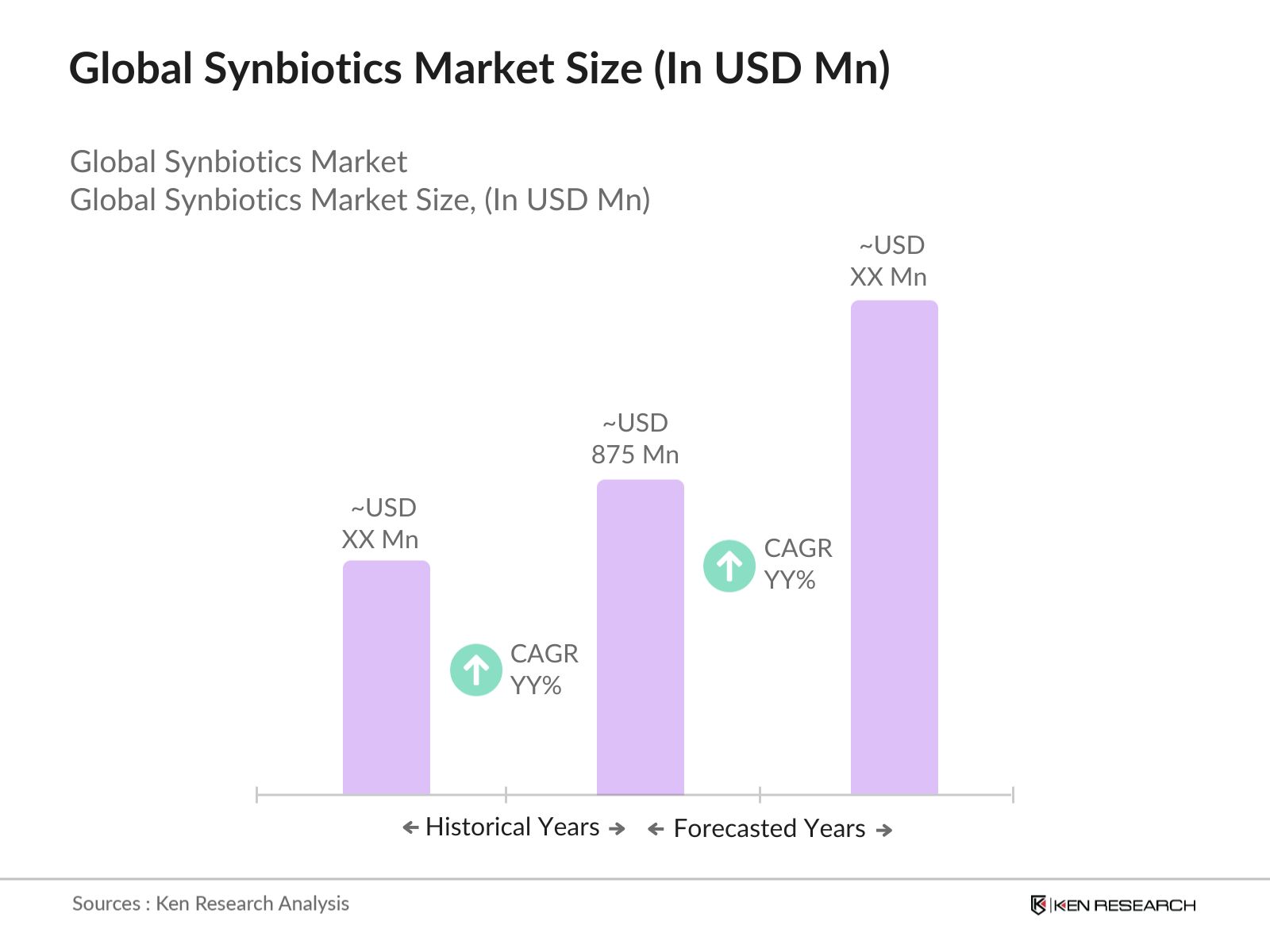
The global synbiotics market is valued at USD 875 million, driven by rising demand for digestive health supplements and functional foods.
Challenges in the global synbiotics market include high production costs, regulatory barriers in different regions, and lack of consumer awareness regarding the benefits of synbiotics.
Key players in the global synbiotics market include Chr. Hansen Holding A/S, Danone, Pfizer Inc., Sabinsa Corporation, and Yakult Pharmaceutical Industry Co., Ltd.
The growth in the global synbiotics market is driven by increasing consumer awareness of gut health, demand for functional foods, and advancements in synbiotic formulations.
North America and Europe dominate the global synbiotics market due to high consumer awareness and a well-established pharmaceutical and food industry infrastructure.

What makes us stand out is that our consultants follows Robust, Refine and Result (RRR) methodology. i.e. Robust for clear definitions, approaches and sanity checking, Refine for differentiating respondents facts and opinions and Result for presenting data with story

We have set a benchmark in the industry by offering our clients with syndicated and customized market research reports featuring coverage of entire market as well as meticulous research and analyst insights.

While we don't replace traditional research, we flip the method upside down. Our dual approach of Top Bottom & Bottom Top ensures quality deliverable by not just verifying company fundamentals but also looking at the sector and macroeconomic factors.

With one step in the future, our research team constantly tries to show you the bigger picture. We help with some of the tough questions you may encounter along the way: How is the industry positioned? Best marketing channel? KPI's of competitors? By aligning every element, we help maximize success.

Our report gives you instant access to the answers and sources that other companies might choose to hide. We elaborate each steps of research methodology we have used and showcase you the sample size to earn your trust.

If you need any support, we are here! We pride ourselves on universe strength, data quality, and quick, friendly, and professional service.