
Global Tattoo Numbing Cream Market Outlook to 2030
Region:Global
Author(s):Mukul
Product Code:KROD7667
Region:Global
Author(s):Mukul
Product Code:KROD7667
December 2024
83
The global tattoo numbing cream market is dominated by a mix of local and global players, with a few companies controlling a significant share of the market. Brands such as Ebanel Laboratories, Hush Anesthetic, and Zensa Numbing Cream have established themselves as leaders, supported by strong distribution networks and product innovation. The competition landscape is shaped by brand loyalty, regulatory compliance, and innovations in product formulations.
Global Tattoo Numbing Cream Industry Analysis
Growth Drivers
Market Restraints
Over the next few years, the tattoo numbing cream market is expected to experience steady growth, driven by increasing consumer interest in tattoos, ongoing product innovation, and the rising acceptance of body art across the globe. Growing consumer awareness about pain management solutions, combined with expanding online retail channels, will further support market expansion. Companies will likely continue to innovate with natural and vegan-based formulas to align with consumer preferences for eco-friendly products.
Market Opportunities
|
Product Type |
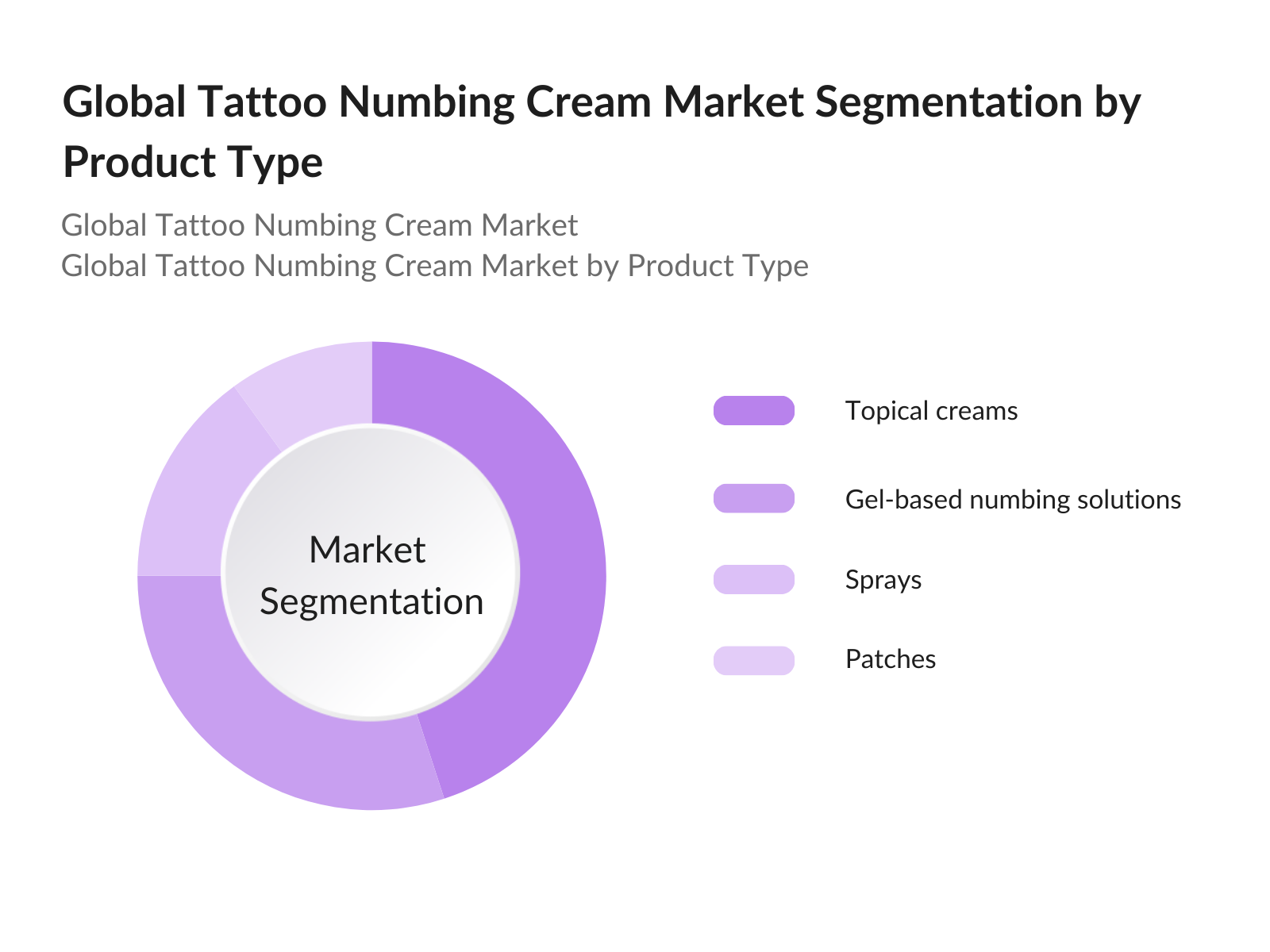
Topical Creams Sprays Gel-Based Solutions Patches |
|
Application |
Tattoo Studios Beauty Clinics Home Use |
|
Distribution Channel |
Online Sales Retail Pharmacies Specialty Stores |
|
Ingredient Type |
Lidocaine-Based Benzocaine-Based Natural Ingredients |
|
Region |
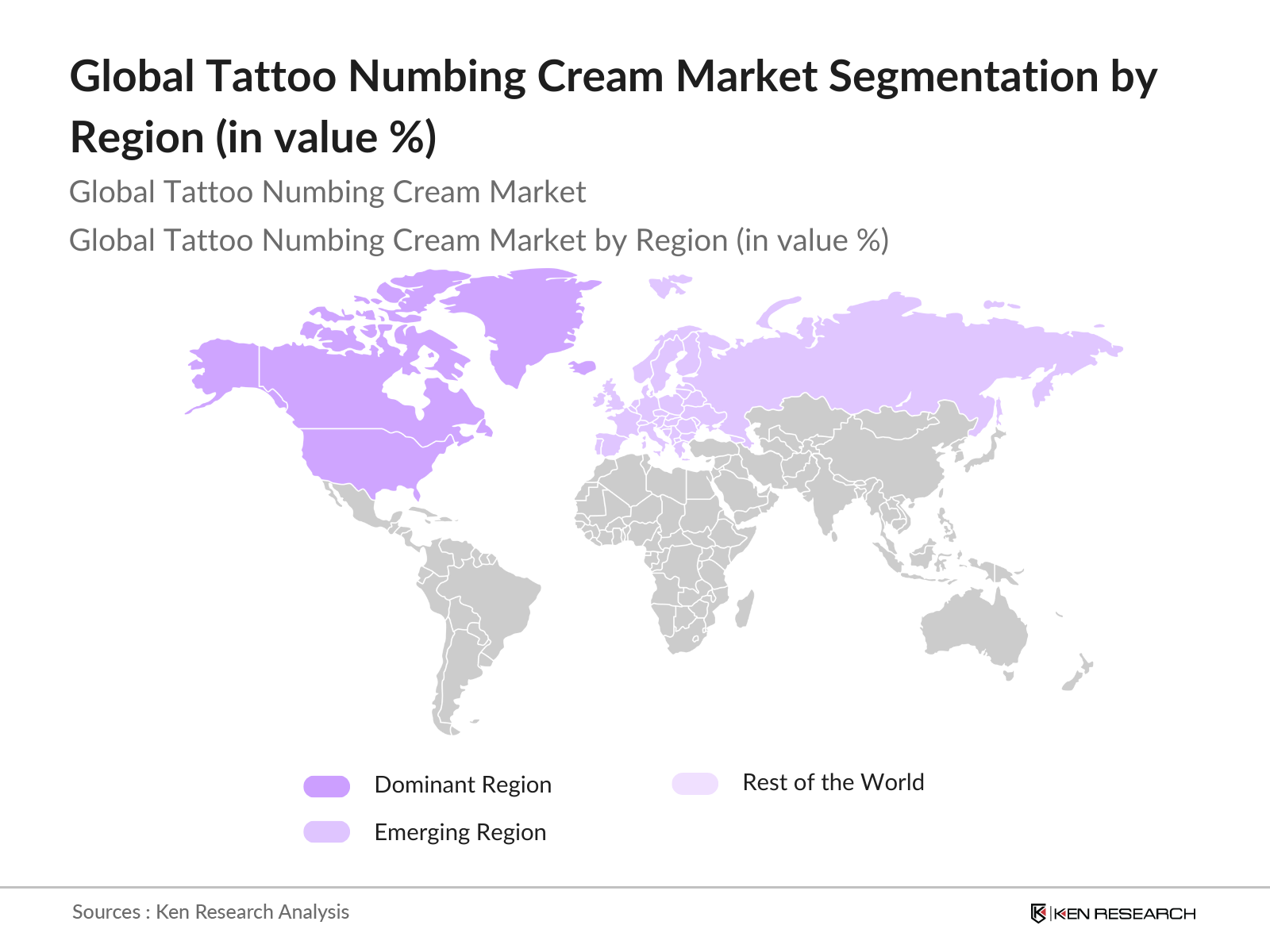
North America Europe Asia Pacific Latin America Middle East Africa |
1.1. Definition and Scope
1.2. Market Taxonomy
1.3. Market Growth Rate
1.4. Market Segmentation Overview
2.1. Historical Market Size
2.2. Year-On-Year Growth Analysis
2.3. Key Market Developments and Milestones
3.1. Growth Drivers
- Rise in Tattoo Popularity
- Increasing Demand for Pain Relief Products
- Technological Advancements in Numbing Cream Formulations
- Shifting Consumer Preference Toward Natural Ingredients
3.2. Market Challenges
- Side Effects and Allergic Reactions
- Regulatory Hurdles for Over-the-Counter Products
- Limited Awareness in Emerging Markets
3.3. Opportunities
- Expansion into New Geographies
- Increased Availability in Retail and Online Channels
- Strategic Partnerships with Tattoo Studios
3.4. Trends
- Shift Toward Vegan and Cruelty-Free Numbing Creams
- Integration of Anti-inflammatory Ingredients
- Growth of Eco-Friendly and Sustainable Packaging
3.5. Government Regulations
- FDA and Cosmetic Regulation Compliance
- Certification Requirements for Ingredients
- Labeling and Safety Standards
3.6. SWOT Analysis
3.7. Stakeholder Ecosystem
3.8. Porters Five Forces Analysis
- Competitive Rivalry
- Bargaining Power of Suppliers
- Bargaining Power of Buyers
- Threat of New Entrants
- Threat of Substitutes
3.9. Competitive Ecosystem
4.1. By Product Type (In Value %)
4.1.1. Topical Creams
4.1.2. Sprays
4.1.3. Gel-Based Numbing Solutions
4.1.4. Patches
4.2. By Application (In Value %)
4.2.1. Tattoo Studios
4.2.2. Beauty Clinics
4.2.3. Home Use
4.3. By Distribution Channel (In Value %)
4.3.1. Online Sales
4.3.2. Retail Pharmacies
4.3.3. Specialty Stores
4.4. By Ingredient Type (In Value %)
4.4.1. Lidocaine-Based Creams
4.4.2. Benzocaine-Based Creams
4.4.3. Natural Ingredient-Based Creams
4.5. By Region (In Value %)
4.5.1. North America
4.5.2. Europe
4.5.3. Asia Pacific
4.5.4. Latin America
4.5.5. Middle East & Africa
5.1. Detailed Profiles of Major Competitors
5.1.1. Ebanel Laboratories
5.1.2. Hush Anesthetic
5.1.3. Zensa Numbing Cream
5.1.4. Deeveeant
5.1.5. Numb Master
5.1.6. Dr. Numb
5.1.7. Tattoo Numbing Cream Co.
5.1.8. Numbify
5.1.9. Uber Numb
5.1.10. Ink Eeze
5.1.11. Samnyte
5.1.12. Lidocaine Plus
5.1.13. Aspen Pharmacare
5.1.14. TKTX
5.1.15. Vasocaine
5.2. Cross Comparison Parameters (Market Share, Distribution Reach, Innovation Index, Product Range, Customer Reviews, Ingredient Differentiation, Pricing Strategy, Regulatory Compliance)
5.3. Market Share Analysis
5.4. Strategic Initiatives
5.5. Mergers and Acquisitions
5.6. Investment Analysis
5.7. Venture Capital Funding
5.8. Government Grants
5.9. Private Equity Investments
6.1. FDA Regulations and Compliance
6.2. Labeling and Packaging Guidelines
6.3. Safety Standards for Active Ingredients
7.1. Future Market Size Projections
7.2. Key Factors Driving Future Market Growth
8.1. By Product Type (In Value %)
8.2. By Application (In Value %)
8.3. By Distribution Channel (In Value %)
8.4. By Ingredient Type (In Value %)
8.5. By Region (In Value %)
9.1. TAM/SAM/SOM Analysis
9.2. Customer Cohort Analysis
9.3. Marketing Initiatives
9.4. White Space Opportunity Analysis
The initial phase of research focuses on mapping the ecosystem of the global tattoo numbing cream market. This involves gathering information on the main stakeholders, such as manufacturers, distributors, and tattoo artists. Secondary databases, market reports, and proprietary sources are used to identify critical variables such as product demand, consumer behavior, and regulatory environment.
Historical data on the tattoo numbing cream market is analyzed, focusing on product adoption trends, consumer preferences, and competitive dynamics. This phase also involves examining the quality and effectiveness of various products in the market, ensuring accurate revenue estimates.
Market hypotheses are developed based on initial data and validated through consultations with industry experts, including manufacturers, distributors, and tattoo artists. These consultations provide insights into operational challenges and market trends.
Data from the bottom-up approach is synthesized and cross-verified with multiple stakeholders, ensuring a comprehensive analysis. This final step includes data triangulation to ensure accuracy and reliability of market projections and trends.
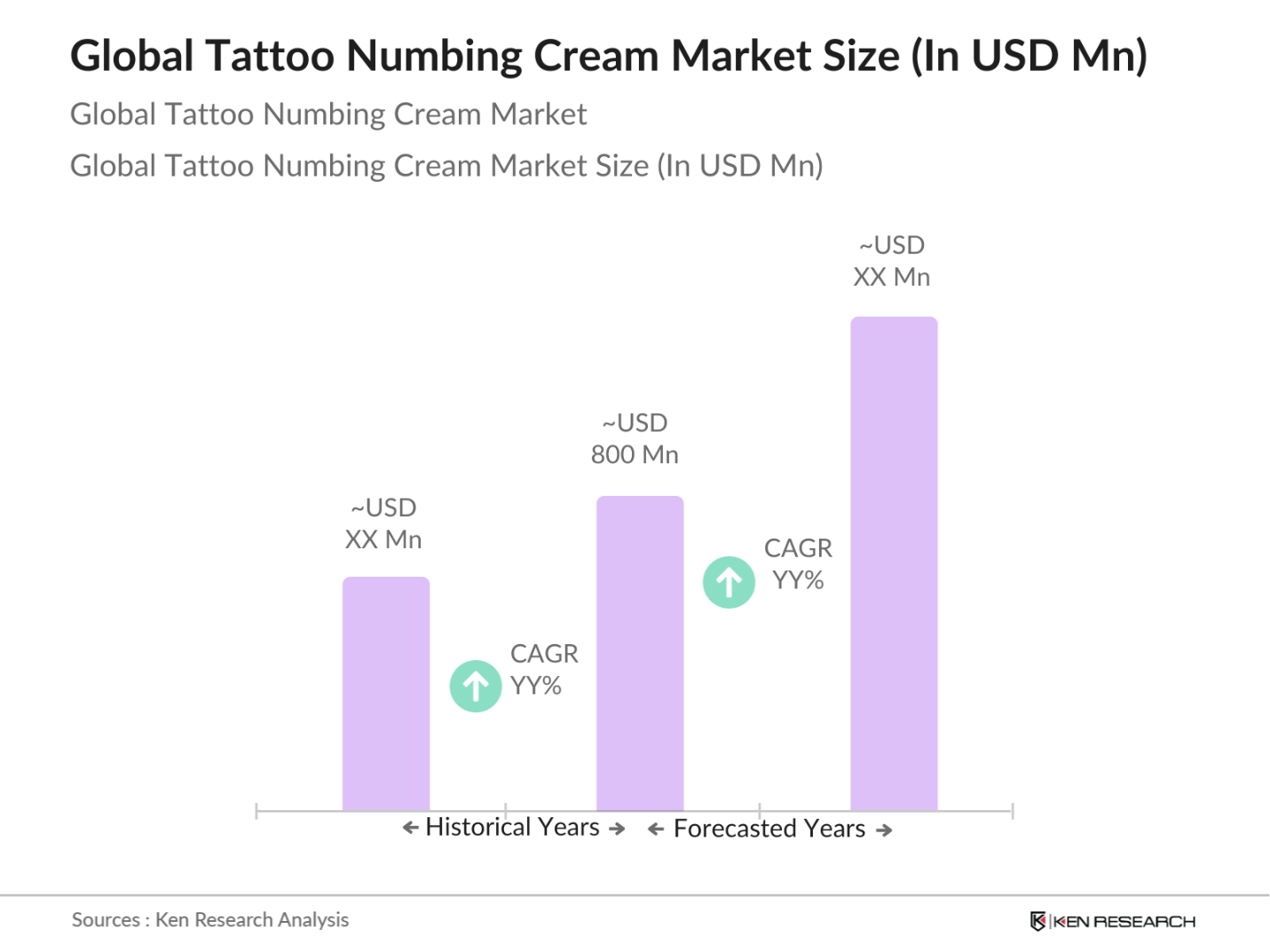
The global tattoo numbing cream market is valued at USD 800 million, driven by growing demand for pain management during tattoo procedures and the increasing popularity of tattoos worldwide.
The market faces challenges such as regulatory hurdles for over-the-counter sales, limited consumer awareness in emerging markets, and potential side effects from numbing agents like lidocaine.
Major players include Ebanel Laboratories, Hush Anesthetic, Zensa Numbing Cream, Numbify, and Dr. Numb. These companies lead the market due to strong distribution networks, innovative formulations, and compliance with regulatory standards.
Growth drivers include the increasing popularity of tattoos, advancements in numbing cream formulations, and rising consumer demand for pain management solutions during body art procedures.

What makes us stand out is that our consultants follows Robust, Refine and Result (RRR) methodology. i.e. Robust for clear definitions, approaches and sanity checking, Refine for differentiating respondents facts and opinions and Result for presenting data with story

We have set a benchmark in the industry by offering our clients with syndicated and customized market research reports featuring coverage of entire market as well as meticulous research and analyst insights.

While we don't replace traditional research, we flip the method upside down. Our dual approach of Top Bottom & Bottom Top ensures quality deliverable by not just verifying company fundamentals but also looking at the sector and macroeconomic factors.

With one step in the future, our research team constantly tries to show you the bigger picture. We help with some of the tough questions you may encounter along the way: How is the industry positioned? Best marketing channel? KPI's of competitors? By aligning every element, we help maximize success.

Our report gives you instant access to the answers and sources that other companies might choose to hide. We elaborate each steps of research methodology we have used and showcase you the sample size to earn your trust.

If you need any support, we are here! We pride ourselves on universe strength, data quality, and quick, friendly, and professional service.