















Global Traffic Signs Market Outlook to 2030
Region:Global
Author(s):Shivani Mehra
Product Code:KROD11400
December 2024
100
About the Report
Global Traffic Signs Market Overview
- The Global Traffic Signs Market, valued at approximately USD 29.06 billion, is primarily driven by increasing urbanization and infrastructural development, particularly in emerging markets. Key factors propelling this growth include government initiatives aimed at improving road safety and the rising implementation of smart city projects globally. With roads expanding and traffic management becoming increasingly digitalized, demand for both traditional and intelligent traffic signs has surged, contributing to the overall market's expansion.
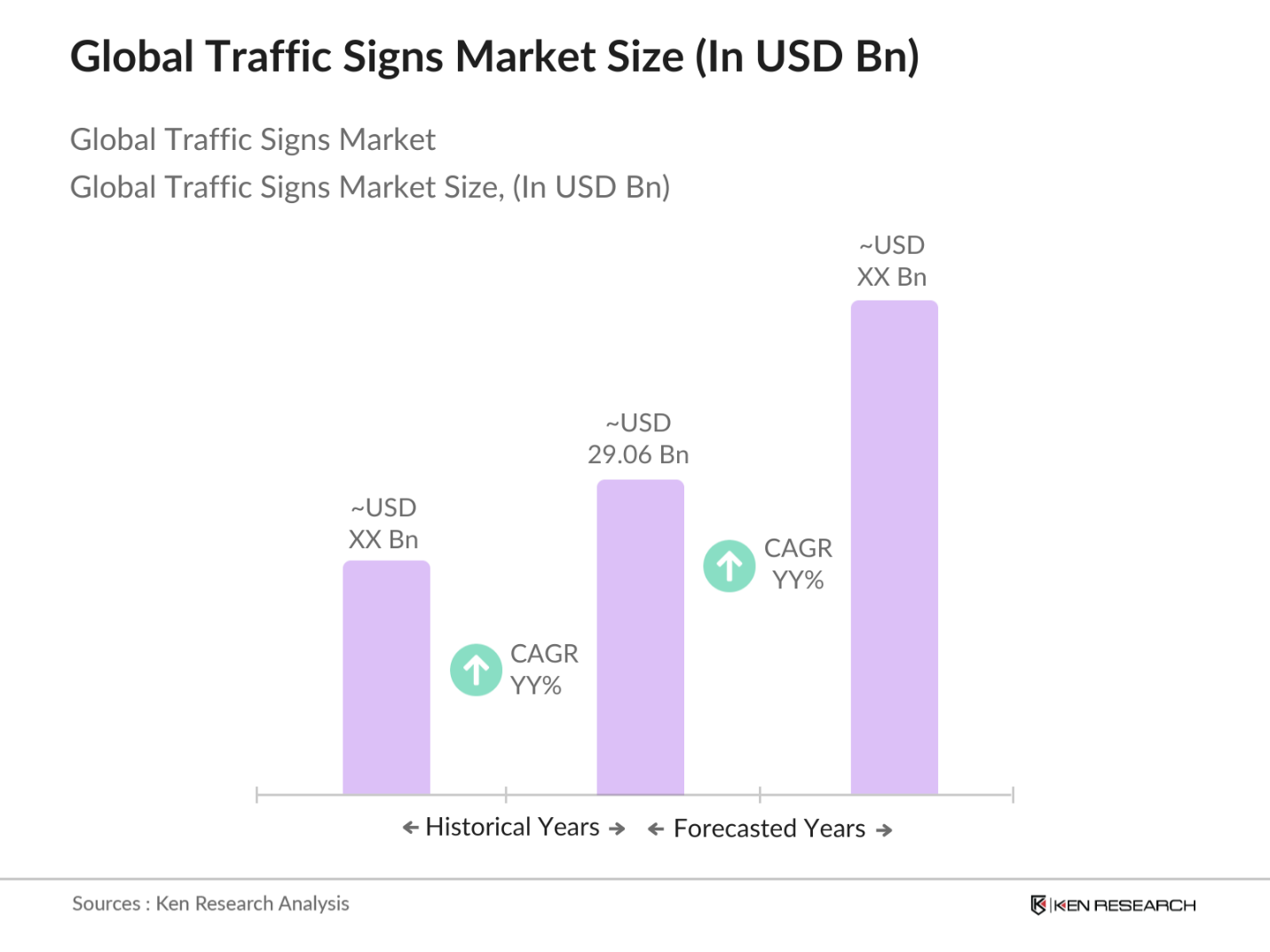
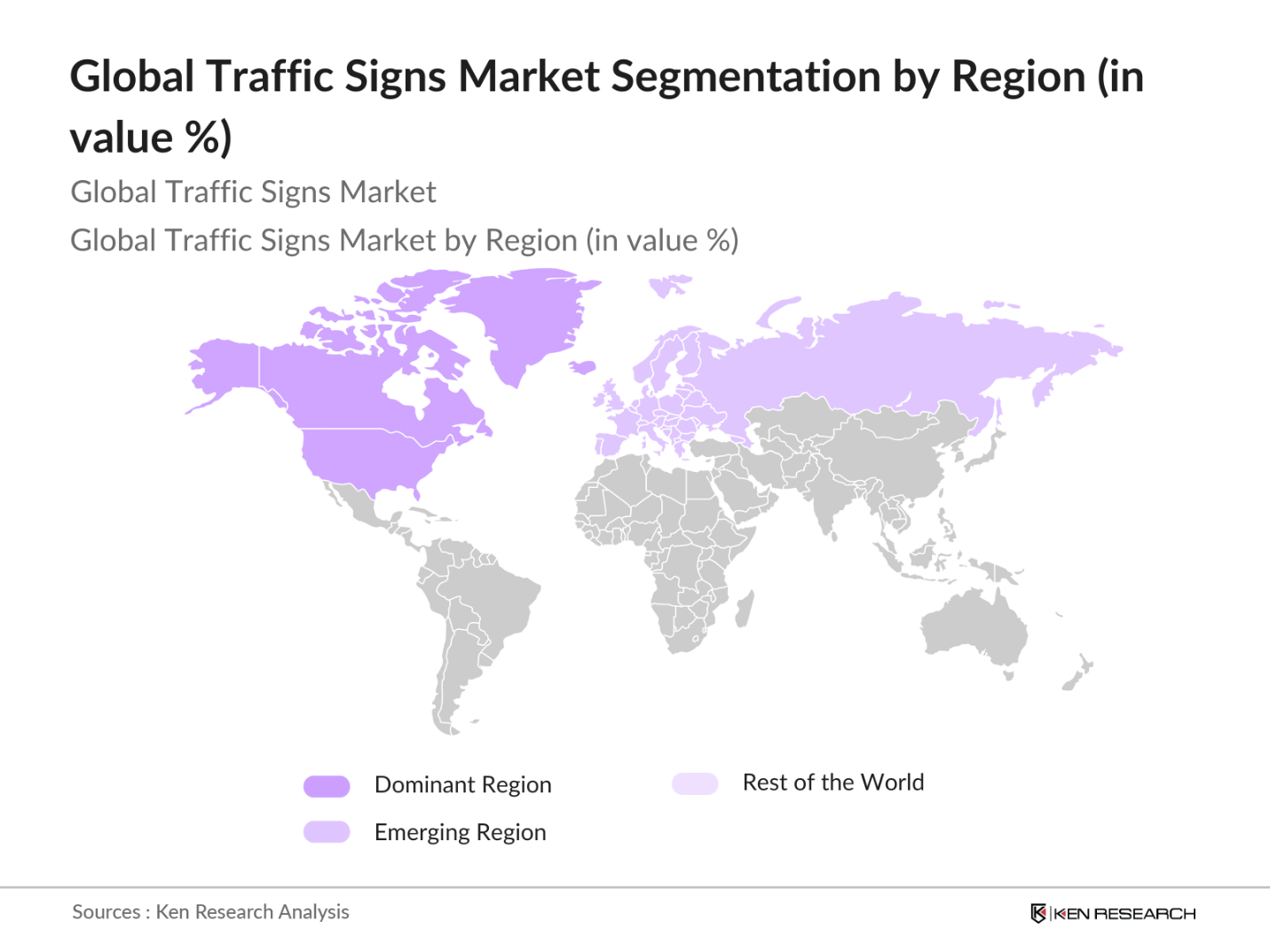
- Countries such as the United States, Germany, and China are among the market's dominant regions, largely due to their advanced road networks, significant investments in smart city projects, and stringent road safety regulations. In the United States, federal and state-level initiatives focusing on modernizing infrastructure, coupled with ongoing technological advancements, have positioned it as a leader in traffic management systems. Meanwhile, Germanys robust automotive industry and focus on sustainability have boosted demand for high-quality, smart traffic signs.
- In 2023, the Indian government launched several initiatives under its National Road Safety Policy to reduce road accidents by improving traffic infrastructure. One key initiative is the installation of reflective traffic signs on all national highways, with a budget allocation of $1 billion. This move is aimed at improving visibility at night and reducing accidents, which number over 150,000 annually according to the Ministry of Road Transport and Highways. The policy also includes a target to install traffic signals at accident-prone intersections across the country.
Global Traffic Signs Market Segmentation
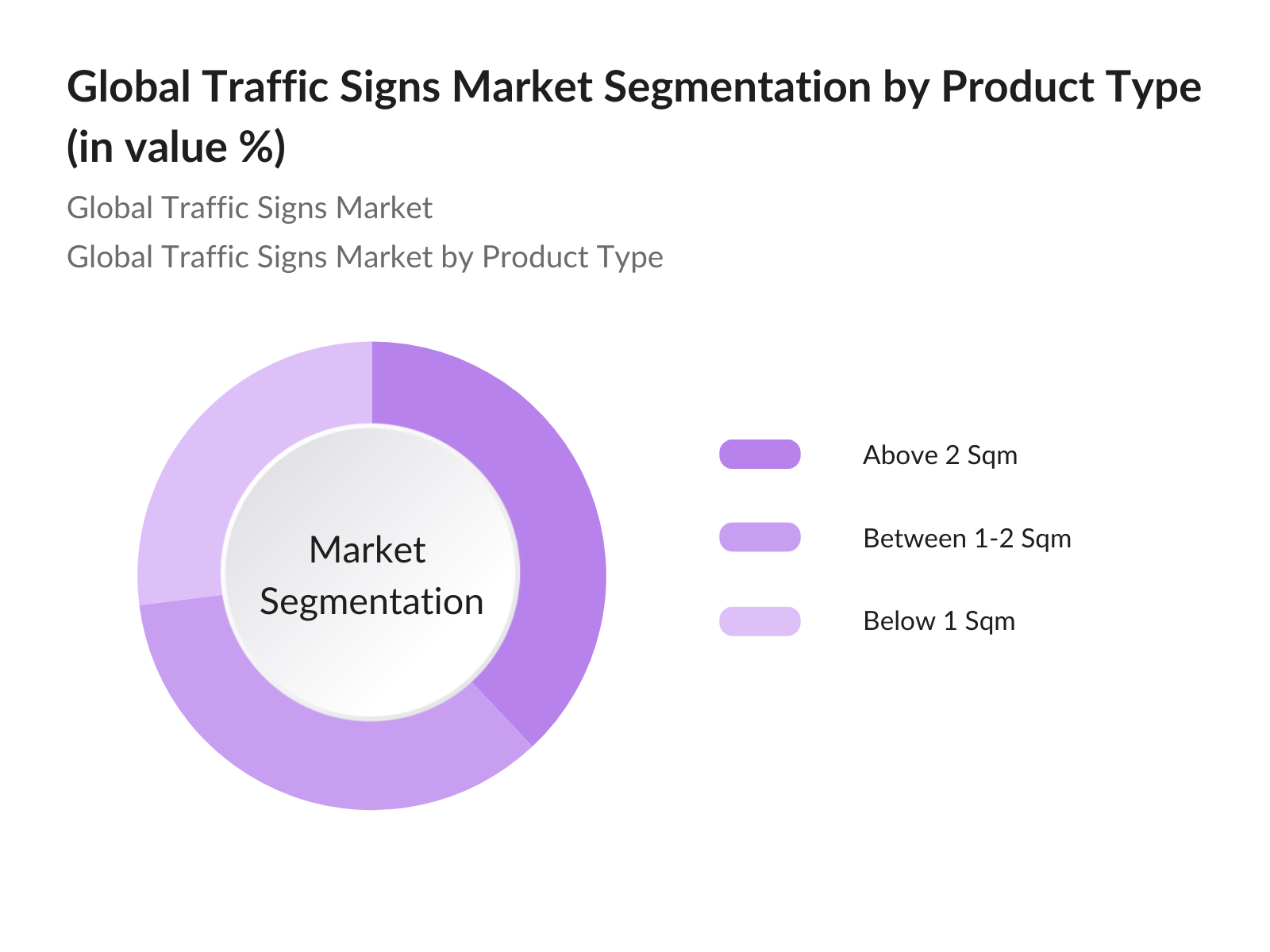
By Product Type: The traffic signs market is segmented into Above 2 Sqm, 1-2 Sqm, and Below 1 Sqm. Among these, Above 2 Sqm signs dominate the market due to their widespread use in highways, expressways, and major roads. Their visibility and durability make them the preferred choice for high-traffic zones, particularly in urban areas where traffic density is higher. This sub-segment benefits from government investment in infrastructure upgrades, especially in regions focusing on expanding road networks.
By Region: The market spans North America, Europe, Asia-Pacific, Latin America, and Middle East & Africa. North America holds the largest market share, driven by extensive road networks, high levels of vehicle ownership, and significant investments in infrastructure. The Asia-Pacific region, particularly China and India, is witnessing rapid growth due to increasing urbanization and government initiatives aimed at improving road safety.
Global Traffic Signs Market Competitive Landscape
The global traffic signs market is dominated by key players who continuously innovate to stay ahead. Companies like 3M, Swarco Traffic, and McCain Inc. are leading the market with their focus on integrating digital technologies and offering eco-friendly solutions like solar-powered signs.
|
Company Name |
Establishment Year |
Headquarters |
Product Focus |
Global Reach |
R&D Investment |
Sustainability Initiatives |
Innovation Awards |
Revenue Growth |
|
3M |
1902 |
St. Paul, USA |
Smart Traffic Signs |
- |
- |
- |
- |
- |
|
Swarco Traffic |
1969 |
Wattens, Austria |
Digital Signage |
- |
- |
- |
- |
- |
|
McCain Inc. |
1987 |
Vista, USA |
Signal Management |
- |
- |
- |
- |
- |
|
Lacroix Group |
1934 |
Saint-Herblain, France |
Regulatory Signs |
- |
- |
- |
- |
- |
|
Traffic Tech |
1990 |
Middle East |
Solar Signs |
- |
- |
- |
- |
- |
Global Traffic Signs Market Analysis
Market Growth Drivers
- Smart City Initiatives: Governments across the globe are pushing for smart city projects that require integrated traffic management systems. As of 2024, the United States has invested approximately $160 billion in smart city technologies, with a portion dedicated to smart traffic management. Europe has allocated 83 billion for smart city initiatives, including the installation of intelligent traffic systems. Indias Smart Cities Mission, with a budget of $30 billion, is implementing advanced traffic signage for smoother, safer urban transportation. These investments are designed to reduce traffic congestion and improve road safety.
- Rising Road Safety Awareness: In 2023, global traffic accidents resulted in 1.35 million deaths annually, as reported by the World Health Organization (WHO). Governments are increasingly prioritizing road safety, with the European Union implementing its Vision Zero plan, aiming to eliminate road deaths by improving signage and road infrastructure. Furthermore, Japan, which sees around 3,500 road fatalities annually, has implemented strict signage upgrades to improve visibility and legibility, even in low-light conditions. This growing awareness is prompting higher demand for advanced traffic signs with better visibility.
- Government Regulations on Traffic Management: In 2023, stringent government regulations continue to drive traffic signage upgrades. The European Unions General Safety Regulation mandates the inclusion of advanced road safety measures, including updated traffic signs, with compliance costing billions annually. The U.S. Federal Highway Administration (FHWA) introduced regulations requiring high-visibility signage in construction zones. Indias Ministry of Road Transport and Highways also mandated new reflective traffic signs to address visibility issues at night, with nationwide implementation to improve road safety under the National Road Safety Policy.
Market Challenges:
- High Installation and Maintenance Costs: Installing and maintaining advanced traffic signage systems is expensive, particularly in developing regions. According to the International Transport Forum (ITF), road infrastructure maintenance costs global governments approximately $900 billion annually. In developed regions like Europe, maintaining high-tech traffic signs can cost up to $150,000 per mile of highway. In emerging markets, installation costs can surpass $2 million for large-scale projects, hindering broader adoption. These high costs strain government budgets and limit the ability to rapidly upgrade traffic systems.
- Variability in Regional Regulations: Traffic sign regulations vary significantly by region, creating challenges for manufacturers looking to provide standardized solutions. For instance, the European Union enforces a harmonized traffic management system across member states, while countries in Southeast Asia, such as Indonesia and Malaysia, have fragmented regulations that require custom signage solutions. This regional variability increases the complexity and cost for manufacturers, limiting global integration. In Africa, where cross-border traffic is common, the lack of standard traffic sign regulations leads to traffic system inefficiencies.
Global Traffic Signs Market Future Outlook
Over the next five years, the global traffic signs market is expected to witness steady growth driven by continued urbanization, government regulations for road safety, and the adoption of smart traffic management systems. As infrastructure projects ramp up globally and digital transformation accelerates, demand for innovative and energy-efficient traffic signs is likely to increase, particularly in emerging markets.
Market Opportunities:
- Expansion into Emerging Markets: Emerging economies offer significant growth potential for the traffic signs market. Africa and Southeast Asia are urbanizing rapidly, with over 500 million people projected to move to cities by 2025. This migration is driving demand for traffic infrastructure. For instance, Nigeria, Africa's largest economy, committed $4 billion to infrastructure development in 2023, creating opportunities for traffic management system providers. The African Development Bank estimates that $70 billion annually will be needed for urban infrastructure, including traffic signage.
- Integration of AI and IoT in Traffic Signs: The integration of Artificial Intelligence (AI) and the Internet of Things (IoT) into traffic signs is an emerging trend that offers significant potential. As of 2024, the global AI market is worth $900 billion, with a considerable share allocated to smart traffic systems. In the United States, cities such as San Francisco and New York have begun implementing AI-powered traffic signs that adjust messages in real-time based on traffic conditions. In Germany, IoT-enabled signs communicate with vehicles to provide warnings about upcoming hazards.
Scope of the Report
|
By Product Type |
Above 2 Sqm Between 1-2 Sqm Below 1 Sqm |
|
By Application |
Warning Signs Regulatory Signs Guide & Direction Signs |
|
By Technology |
Reflective Digital & LED Solar-Powered |
|
By End-User |
Government Road Contractors Urban & Rural Developers |
|
By Region |
North America Europe Asia-Pacific Latin America Middle East & Africa |
Products
Key Target Audience
Government agencies (e.g., U.S. Department of Transportation)
Highway and road contractors
Smart city planners and developers
Automotive industry players
Traffic management service providers
Solar panel manufacturers for traffic signs
Investments and venture capitalist firms
Research and development institutions focused on urban planning and infrastructure.
Companies
Players Mention in the Report
3M
Swarco Traffic
McCain Inc.
Lacroix Group
Traffic Tech
William Smith
RAI Products
Traffic Signs NZ
Feiyao Jiao Tong
Haowei Traffic
Lyle Signs
Schwab Label Factory
Shanghai Luhao
Novelis
Segnaletica
Table of Contents
01. Market Overview
1.1 Definition and Scope
1.2 Market Taxonomy
1.3 Key Trends and Developments
02. Market Size (USD Million)
2.1 Historical Market Size
2.2 Year-On-Year Growth (Market Growth Dynamics)
2.3 Key Developments and Technological Milestones
03. Market Analysis
3.1 Growth Drivers
3.1.1 Urbanization and Infrastructure Expansion
3.1.2 Smart City Initiatives
3.1.3 Rising Road Safety Awareness
3.1.4 Government Regulations on Traffic Management
3.2 Market Challenges
3.2.1 High Installation and Maintenance Costs
3.2.2 Variability in Regional Regulations
3.2.3 Lack of Skilled Workforce
3.3 Opportunities
3.3.1 Expansion into Emerging Markets
3.3.2 Integration of AI and IoT in Traffic Signs
3.3.3 Increasing Demand for Solar-Powered Signs
3.4 Key Trends
3.4.1 Adoption of Digital Traffic Signage
3.4.2 Shift Towards Sustainable Materials
3.4.3 Customizable and Smart Traffic Signs
3.5 Regulatory Landscape (Standards and Compliance)
3.5.1 Traffic Sign Regulations in Developed Markets
3.5.2 Evolving Guidelines in Emerging Economies
04. Market Segmentation
4.1 By Product Type (In Value %)
4.1.1 Above 2 Sqm
4.1.2 Between 1-2 Sqm
4.1.3 Below 1 Sqm
4.2 By Application (In Value %)
4.2.1 Warning Signs
4.2.2 Regulatory Signs
4.2.3 Guide and Direction Signs
4.3 By Technology (In Value %)
4.3.1 Reflective Traffic Signs
4.3.2 Digital and LED Traffic Signs
4.3.3 Solar-Powered Traffic Signs
4.4 By End-User (In Value %)
4.4.1 Government & Municipalities
4.4.2 Road and Highway Contractors
4.4.3 Urban and Rural Developers
4.5 By Region (In Value %)
4.5.1 North America
4.5.2 Europe
4.5.3 Asia-Pacific
4.5.4 Latin America
4.5.5 Middle East & Africa
05. Competitive Landscape
5.1 Company Profiles
5.1.1 3M
5.1.2 Swarco Traffic
5.1.3 McCain Inc.
5.1.4 Novelis
5.1.5 Lacroix Group
5.1.6 William Smith
5.1.7 Traffic Tech
5.1.8 Rennicks
5.1.9 Traffic Signs NZ
5.1.10 Traffic Signs & Safety
5.1.11 RAI Products
5.1.12 Lyle Signs
5.1.13 Feiyao Jiao Tong
5.1.14 Haowei Traffic
5.1.15 Schwab Label Factory
5.2 Market Share Analysis (Market Share by Company, Revenue, and Volume)
5.3 Strategic Initiatives
5.3.1 New Product Developments
5.3.2 Mergers & Acquisitions
5.3.3 Partnerships and Collaborations
5.4 Investment & Funding
5.4.1 Government Initiatives
5.4.2 Private Equity and Venture Capital Investments
Cross-Comparison Parameters (No. of Employees, Headquarters, Inception Year, Product Portfolio, Global Presence, R&D Investments, Revenue Growth, Customer Base)
06. Regulatory Framework
6.1 Compliance with Global Traffic Management Standards
6.2 Environmental Impact Regulations (Sustainable Traffic Signs)
6.3 Certification Processes for Digital Signage
07. Future Market Size (In USD Million)
7.1 Projected Market Size (Growth Drivers and Assumptions)
7.2 Factors Influencing Future Demand
08. Market Analysts Recommendations
8.1 Total Addressable Market (TAM), Serviceable Available Market (SAM), and Serviceable Obtainable Market (SOM) Analysis
8.2 Competitive Positioning Strategies
8.3 Customer Segmentation and Targeting
8.4 White Space Opportunities in Emerging Regions
Disclaimer Contact UsResearch Methodology
Step 1: Identification of Key Variables
The first step involves mapping the global traffic signs ecosystem, identifying key stakeholders such as traffic management authorities, road contractors, and sign manufacturers. Extensive desk research and secondary databases are utilized to gather industry-level insights.
Step 2: Market Analysis and Construction
This step focuses on analyzing historical data from the global traffic signs market to assess penetration levels, product adoption rates, and regional market dynamics. Insights are derived to understand market trends and revenue generation metrics.
Step 3: Hypothesis Validation and Expert Consultation
Industry experts from leading traffic sign manufacturing companies are interviewed using CATI to validate market hypotheses and gather qualitative insights into product developments and technological trends in the traffic management sector.
Step 4: Research Synthesis and Final Output
In the final stage, research findings are synthesized and compiled into a comprehensive market report, validated using both top-down and bottom-up approaches, ensuring accuracy in market size estimates and growth projections.
Frequently Asked Questions
01. How big is the global Traffic Signs market?
The global Traffic Signs market is valued at USD 29.06 billion, driven by growing investments in infrastructure and road safety measures worldwide.
02. What are the challenges in the Traffic Signs market?
Challenges include high initial costs of smart traffic signs, variability in global traffic regulations, and the need for skilled technicians to install and maintain advanced systems.
03. Who are the major players in the Traffic Signs market?
Key players in the market include 3M, Swarco Traffic, McCain Inc., Traffic Tech, and Lacroix Group, all of whom are known for their innovation in traffic management systems.
04. What are the growth drivers of the Traffic Signs market?
Growth is propelled by increased urbanization, government mandates for road safety, and the implementation of smart city projects incorporating digital and solar-powered traffic signs.
Why Buy From Us?

What makes us stand out is that our consultants follows Robust, Refine and Result (RRR) methodology. i.e. Robust for clear definitions, approaches and sanity checking, Refine for differentiating respondents facts and opinions and Result for presenting data with story

We have set a benchmark in the industry by offering our clients with syndicated and customized market research reports featuring coverage of entire market as well as meticulous research and analyst insights.

While we don't replace traditional research, we flip the method upside down. Our dual approach of Top Bottom & Bottom Top ensures quality deliverable by not just verifying company fundamentals but also looking at the sector and macroeconomic factors.

With one step in the future, our research team constantly tries to show you the bigger picture. We help with some of the tough questions you may encounter along the way: How is the industry positioned? Best marketing channel? KPI's of competitors? By aligning every element, we help maximize success.

Our report gives you instant access to the answers and sources that other companies might choose to hide. We elaborate each steps of research methodology we have used and showcase you the sample size to earn your trust.

If you need any support, we are here! We pride ourselves on universe strength, data quality, and quick, friendly, and professional service.