
Global Trash Bag Market Outlook to 2030
Region:Global
Author(s):Abhinav kumar
Product Code:KROD4554
December 2024
81
About the Report
Global Trash Bag Market Overview
- The global trash bag market was valued at USD 12.2 billion, driven by increasing urbanization and growing environmental awareness regarding proper waste management. The rising consumer preference for eco-friendly products and sustainable waste disposal methods has contributed to the market's expansion. This growth is further fueled by governmental regulations aimed at reducing plastic waste, as well as innovations in biodegradable and compostable trash bag materials.
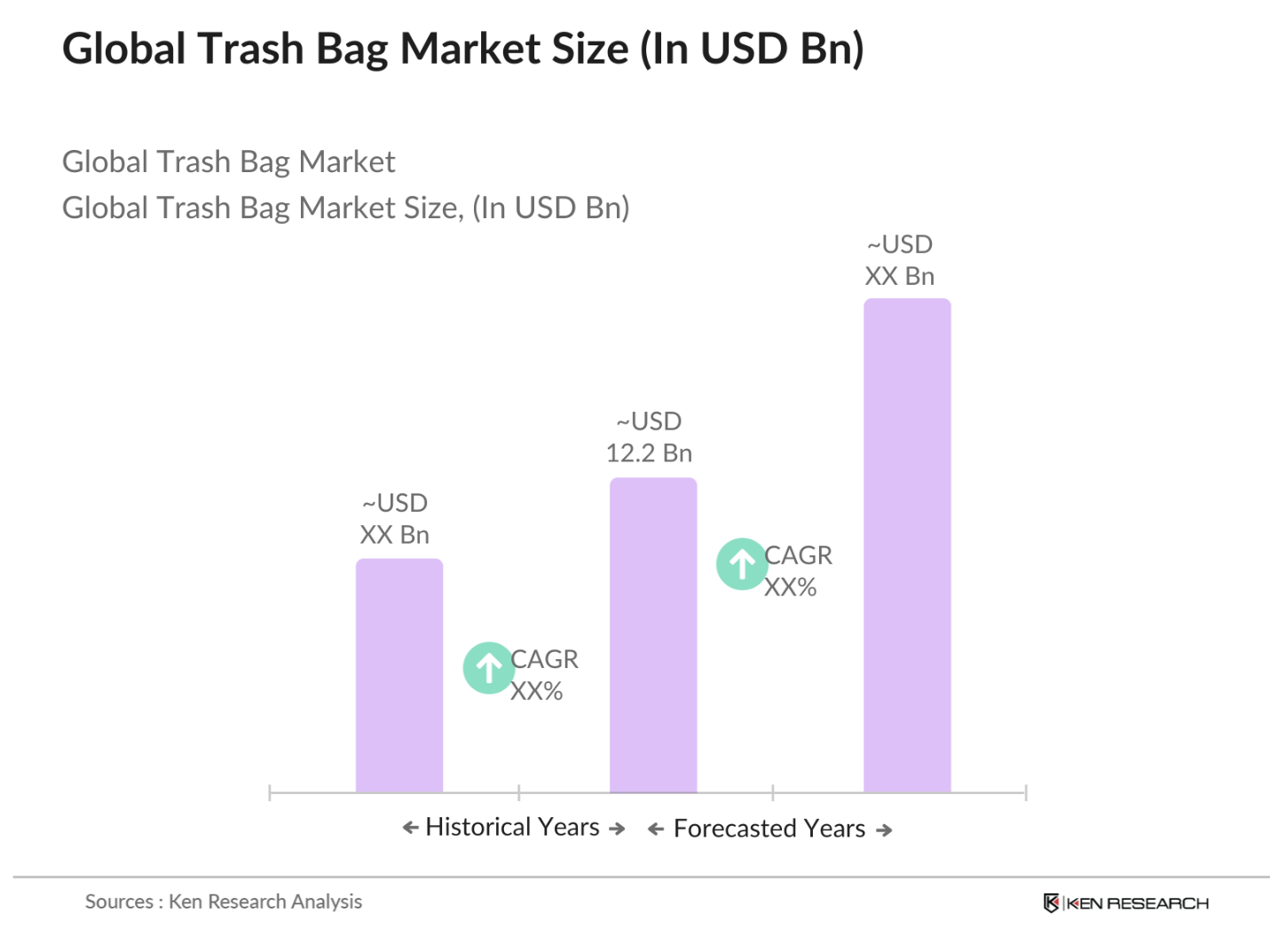
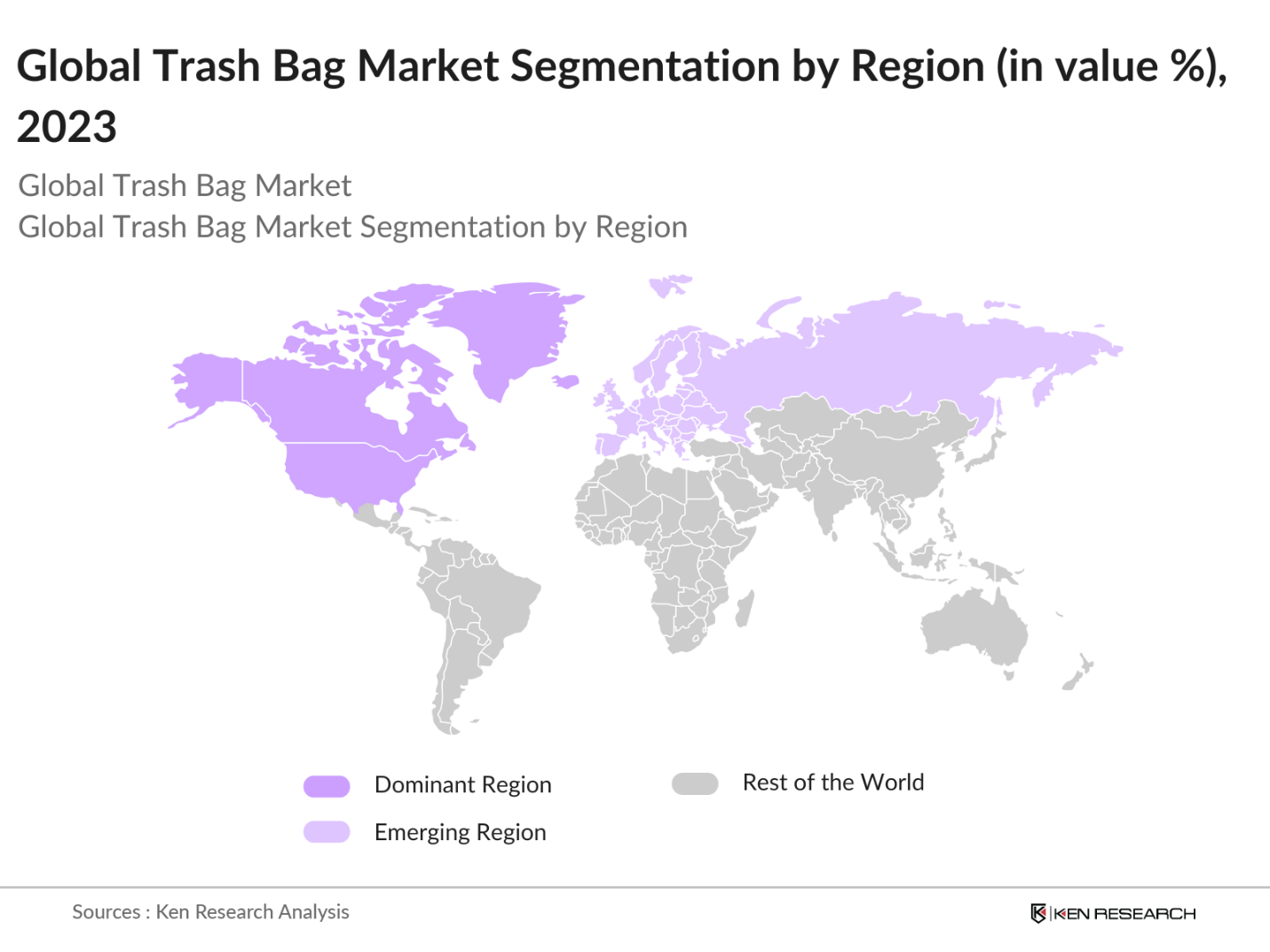
- Countries like the United States, Germany, and Japan dominate the global trash bag market. The dominance of these regions is attributed to high levels of waste generation, stringent environmental regulations, and advanced waste management infrastructure. In the United States, the demand for trash bags is propelled by the large-scale commercial and industrial sectors, while Germanys leadership in recycling efforts and Japan's adoption of innovative technologies make them key players in this market.
- As of 2023, over 130 countries have enacted policies to ban or restrict single-use plastics, reflecting a global commitment to reducing plastic waste. The implementation of these policies has resulted in increased scrutiny of plastic bag production, driving the demand for alternative solutions. For instance, the European Union's directive to ban single-use plastic bags has prompted many manufacturers to pivot towards biodegradable options. This regulatory landscape creates both challenges and opportunities for the trash bag market, pushing companies to innovate in response to legislative pressures.
Global Trash Bag Market Segmentation
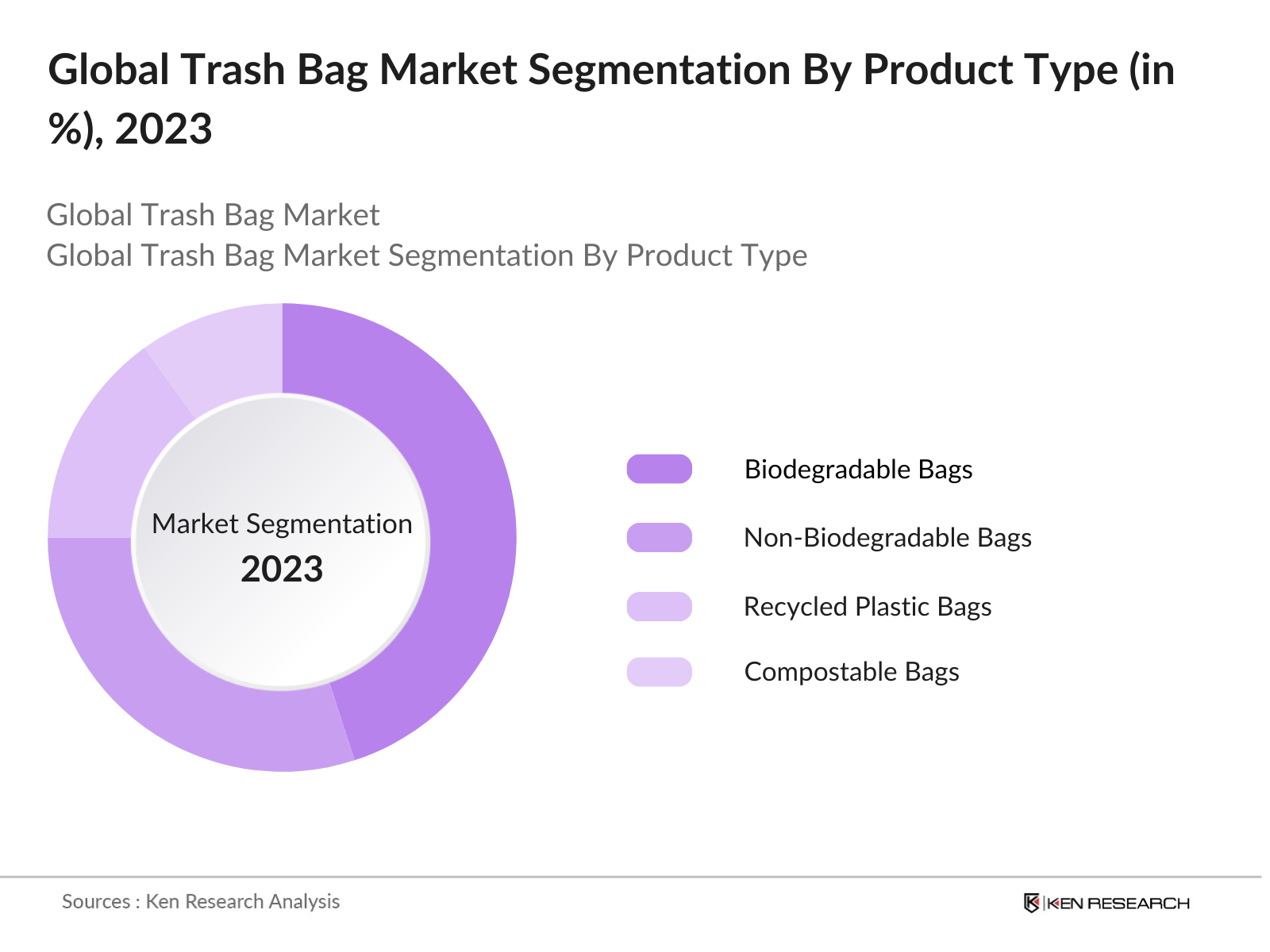
By Product Type: The global trash bag market is segmented by product type into biodegradable, non-biodegradable, recycled plastic, and compostable trash bags. Among these, biodegradable trash bags have gained a dominant market share due to the increasing preference for environmentally friendly solutions. Many countries are now implementing policies that promote the use of biodegradable materials, which further drives the demand for these trash bags. As consumer awareness of sustainable waste disposal practices increases, the biodegradable trash bags segment is expected to continue its dominance.
By Region: The trash bag market is divided into North America, Europe, Asia-Pacific, Latin America, and the Middle East & Africa. North America holds the largest market share, attributed to the regions well-established waste management systems and high per capita waste generation. In addition, stringent regulations surrounding waste disposal and plastic usage in the United States and Canada further drive market growth in this region. North Americas leadership in adopting eco-friendly alternatives is also a critical factor in the markets expansion.
By Application: Trash bags are utilized across various sectors, including residential, commercial, industrial, and healthcare. The commercial sector holds the largest market share within this segmentation, driven by the extensive use of trash bags in offices, retail stores, and food service establishments. The consistent volume of waste generated in commercial settings, alongside the growing trend of large-scale recycling programs, has resulted in significant demand for trash bags designed for high-volume use.
Global Trash Bag Market Competitive Landscape
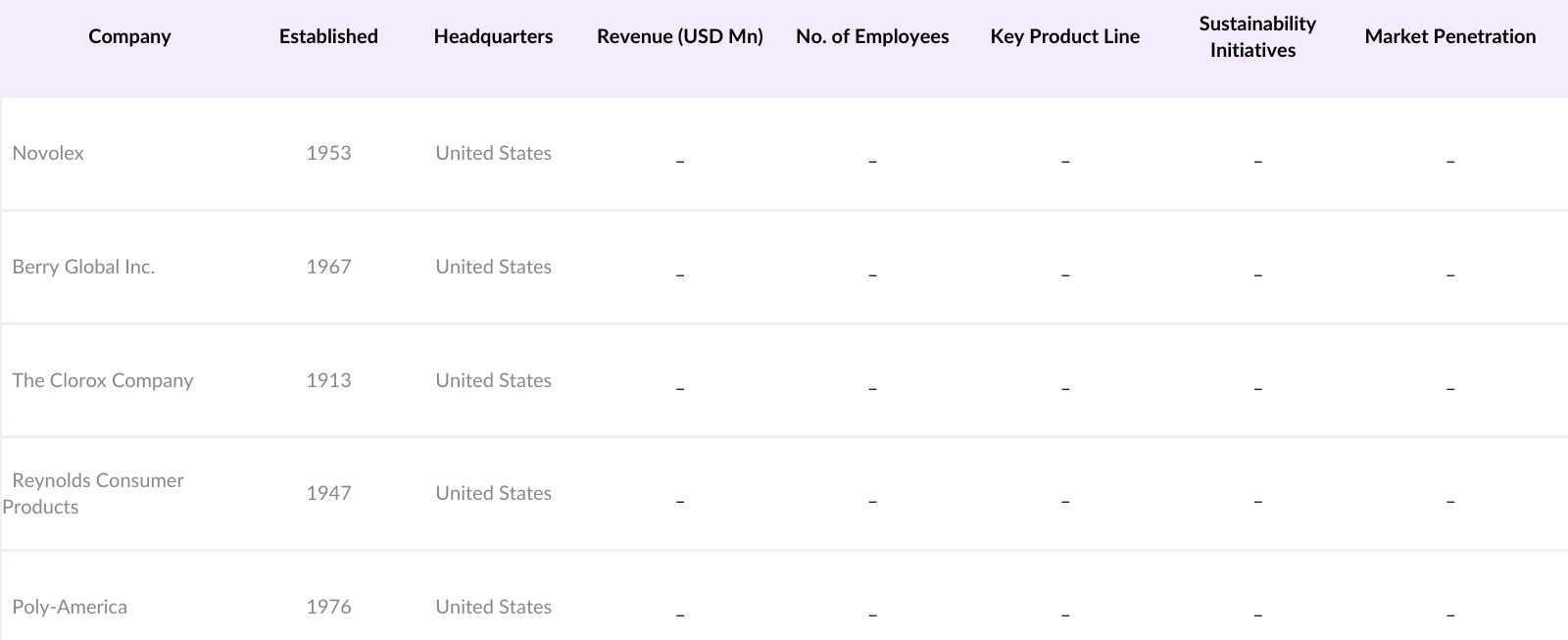
The global trash bag market is characterized by a few major players who hold significant market influence. These companies are investing in research and development to introduce sustainable products and gain a competitive edge. Many have also formed strategic partnerships with waste management firms to expand their market reach.
Global Trash Bag Industry Analysis
Growth Drivers
- Increasing Waste Generation: The global waste generation is projected to reach 3.4 billion tons by 2050, with urban areas responsible for 70% of this waste. In 2022, global waste generation was estimated at 2.01 billion tons, with each person producing an average of 0.74 kg of waste daily. This growth in waste generation directly drives the demand for trash bags. Cities, especially in developing regions, are experiencing rapid population growth, further exacerbating waste challenges and necessitating effective waste management solutions, including trash bags. The increasing volume of waste underscores the need for effective waste containment options.
- Rising Environmental Awareness: With a significant increase in environmental awareness, the demand for biodegradable products is surging. In 2022, approximately 65% of consumers indicated a preference for eco-friendly products, with biodegradable bags leading this trend. According to recent data, the global biodegradable plastic market was valued at $4.5 billion in 2022, with a notable increase in consumer interest in sustainable alternatives. This trend reflects a broader shift towards environmental consciousness, compelling manufacturers to develop and market biodegradable trash bags to cater to this growing segment of eco-aware consumers.
- Regulatory Mandates: In response to increasing environmental concerns, over 130 countries have implemented some form of plastic ban or restriction as of 2023. For example, the European Union's directive to ban single-use plastics is expected to significantly reduce plastic waste. In the United States, 24 states have enacted laws to restrict plastic bag use, driving demand for alternative products like biodegradable trash bags. These regulatory mandates create a favorable environment for the growth of sustainable trash bag solutions, as manufacturers adapt to comply with evolving legislation aimed at reducing plastic waste.
Market Challenges
- High Cost of Sustainable Materials: The cost of sustainable materials has been a significant barrier to market growth. In 2022, the price of biodegradable resins was approximately 30% higher than conventional plastics. The supply chain for sustainable materials is still developing, leading to higher production costs. For instance, the cost of plant-based plastics has increased due to fluctuations in raw material availability, impacting manufacturers' pricing strategies. The high upfront costs associated with sustainable production methods deter many companies from transitioning to eco-friendly options, posing a challenge to the broader adoption of biodegradable trash bags.
- Supply Chain Disruptions: Supply chain disruptions have been prevalent since the COVID-19 pandemic, affecting the availability of raw materials for trash bag production. In 2022, global supply chains faced challenges due to geopolitical tensions, with the price of polyethylene, a common material for trash bags, increasing by 15%. These disruptions hinder the production capacity of manufacturers, leading to delays in product availability and increased costs. The ongoing challenges in sourcing materials highlight the vulnerabilities within the supply chain, necessitating strategic adjustments by manufacturers to ensure continuity in production. International Monetary Fund.
Global Trash Bag Market Future Outlook
Over the next five years, the global trash bag market is expected to experience substantial growth, driven by an increasing shift toward biodegradable and compostable materials. Government regulations aimed at curbing single-use plastics will further propel the demand for eco-friendly products. Additionally, innovations in material science, particularly in the development of stronger, more durable trash bags made from recycled plastics, will support the market's evolution. The growing urban population and the expansion of waste management infrastructure in developing regions will also contribute to market growth.
Opportunities
- Expansion in Developing Markets: Developing markets present significant growth opportunities for the trash bag industry. In 2022, Asia-Pacific was identified as one of the fastest-growing regions, with a waste generation increase projected to reach 2.2 billion tons by 2025. Latin America is also experiencing rapid urbanization, contributing to increased waste generation. In these regions, the demand for effective waste management solutions is rising, leading to a growing market for trash bags. As economies in these areas expand, manufacturers can capitalize on the increasing need for sustainable waste disposal solutions.
- Innovations in Trash Bag Materials: Innovation in materials for trash bags is creating opportunities for manufacturers. In 2022, the market for biodegradable plastics was valued at $4.5 billion, with advancements in technology facilitating the development of compostable and recycled plastic bags. Companies are increasingly focusing on R&D to create more sustainable products that appeal to environmentally conscious consumers. The introduction of new materials not only meets regulatory demands but also aligns with consumer preferences, positioning companies for future growth in a rapidly evolving market.
Scope of the Report
|
Product Type |
Biodegradable Trash Bags Non-Biodegradable Trash Bags Recycled Plastic Trash Bags Compostable Trash Bags |
|
Application |
Residential Commercial Industrial Healthcare |
|
Material Type |
HDPE (High-Density Polyethylene) LDPE (Low-Density Polyethylene) LLDPE (Linear Low-Density Polyethylene) PLA (Polylactic Acid) |
|
Capacity |
Small (Less than 10 Gallons) Medium (10 to 30 Gallons) Large (More than 30 Gallons) |
|
Region |
North America Europe Asia-Pacific Latin America Middle East & Africa |
Products
Key Target Audience Organizations and Entities Who Can Benefit by Subscribing This Report:
Waste Management Companies
Commercial and Industrial Facility Companies
Investments and Venture Capitalist Firms
Government and Regulatory Bodies (EPA, European Commission)
Sustainable Packaging Industries
Recycling and Environmental Industries
Companies
Players Mentioned in the Reports
Novolex
Berry Global Inc.
The Clorox Company
Reynolds Consumer Products
Poly-America
Hefty
International Plastics
Inteplast Group
BioBag Americas, Inc.
Kimberly-Clark Corporation
Table of Contents
1. Global Trash Bag Market Overview
1.1 Definition and Scope
1.2 Market Taxonomy
1.3 Market Growth Rate
1.4 Market Segmentation Overview
2. Global Trash Bag Market Size (In USD Bn)
2.1 Historical Market Size
2.2 Year-On-Year Growth Analysis
2.3 Key Market Developments and Milestones
3. Global Trash Bag Market Analysis
3.1 Growth Drivers
3.1.1 Increasing Waste Generation
3.1.2 Rising Environmental Awareness (Biodegradable Products)
3.1.3 Regulatory Mandates (Plastic Ban Policies, Recycling Initiatives)
3.1.4 Urbanization and Growing Consumer Base
3.2 Market Challenges
3.2.1 High Cost of Sustainable Materials
3.2.2 Supply Chain Disruptions (Raw Material Shortages)
3.2.3 Competition from Unorganized Sector (Low-Cost Products)
3.3 Opportunities
3.3.1 Expansion in Developing Markets (Asia-Pacific, LATAM)
3.3.2 Innovations in Trash Bag Materials (Biodegradable, Compostable, Recycled Plastics)
3.3.3 Collaboration with Waste Management Companies
3.4 Trends
3.4.1 Adoption of Eco-friendly Trash Bags
3.4.2 Increased Demand for Heavy-duty Trash Bags (Commercial and Industrial Use)
3.4.3 Customization and Branding on Trash Bags (Corporate Sector)
3.5 Government Regulations
3.5.1 Single-Use Plastic Ban Policies
3.5.2 Extended Producer Responsibility (EPR) Regulations
3.5.3 Tax Incentives for Sustainable Product Use
3.6 SWOT Analysis
3.7 Stakeholder Ecosystem
3.8 Porters Five Forces
3.9 Competitive Landscape
4. Global Trash Bag Market Segmentation
4.1 By Product Type (In Value %)
4.1.1 Biodegradable Trash Bags
4.1.2 Non-Biodegradable Trash Bags
4.1.3 Recycled Plastic Trash Bags
4.1.4 Compostable Trash Bags
4.2 By Application (In Value %)
4.2.1 Residential
4.2.2 Commercial
4.2.3 Industrial
4.2.4 Healthcare
4.3 By Material Type (In Value %)
4.3.1 HDPE (High-Density Polyethylene)
4.3.2 LDPE (Low-Density Polyethylene)
4.3.3 LLDPE (Linear Low-Density Polyethylene)
4.3.4 PLA (Polylactic Acid)
4.4 By Capacity (In Value %)
4.4.1 Small (Less than 10 Gallons)
4.4.2 Medium (10 to 30 Gallons)
4.4.3 Large (More than 30 Gallons)
4.5 By Region (In Value %)
4.5.1 North America
4.5.2 Europe
4.5.3 Asia-Pacific
4.5.4 Latin America
4.5.5 Middle East & Africa
5. Global Trash Bag Market Competitive Analysis
5.1 Detailed Profiles of Major Companies
5.1.1. Novolex
5.1.2. Berry Global Inc.
5.1.3. The Clorox Company
5.1.4. Reynolds Consumer Products
5.1.5. Poly-America
5.1.6. Hefty
5.1.7. International Plastics
5.1.8. Inteplast Group
5.1.9. BioBag Americas, Inc.
5.1.10. Kimberly-Clark Corporation
5.1.11. AEP Industries Inc.
5.1.12. Advance Polybag Inc.
5.1.13. Aluf Plastics
5.1.14. Cosmoplast Industrial Company LLC
5.1.15. Terdex GmbH
5.2 Cross Comparison Parameters (Revenue, Geographical Presence, Product Range, Sustainability Initiatives, Market Penetration, Key Strategic Partnerships, Production Facilities, Online Presence)
5.3 Market Share Analysis
5.4 Strategic Initiatives
5.5 Mergers and Acquisitions
5.6 Investment Analysis
5.7 Government Grants
5.8 Private Equity Investments
6. Global Trash Bag Market Regulatory Framework
6.1 Environmental Standards
6.2 Plastic Waste Management Regulations
6.3 Compliance Requirements
6.4 Certifications
7. Global Trash Bag Future Market Size (In USD Bn)
7.1 Future Market Size Projections
7.2 Key Factors Driving Future Market Growth
8. Global Trash Bag Future Market Segmentation
8.1 By Product Type (In Value %)
8.2 By Application (In Value %)
8.3 By Material Type (In Value %)
8.4 By Capacity (In Value %)
8.5 By Region (In Value %)
9. Global Trash Bag Market Analysts Recommendations
9.1 TAM/SAM/SOM Analysis
9.2 Customer Cohort Analysis
9.3 Marketing Initiatives
9.4 White Space Opportunity Analysis
Research Methodology
Step 1: Identification of Key Variables
The first phase of research involved mapping out the trash bag market ecosystem, identifying all key stakeholders, including manufacturers, distributors, and waste management firms. This was achieved through extensive desk research, utilizing proprietary databases and secondary sources.
Step 2: Market Analysis and Construction
In this step, historical data on the trash bag market was analyzed, focusing on penetration rates, sales volumes, and revenue generated by major players. Data collection also covered the segmentation of the market by product type, application, and region.
Step 3: Hypothesis Validation and Expert Consultation
Market hypotheses were developed based on initial findings and subsequently validated through interviews with industry experts and representatives from key companies. These consultations provided insights into production trends, consumer preferences, and competitive strategies.
Step 4: Research Synthesis and Final Output
The final phase involved consolidating the findings into a comprehensive analysis, cross-referencing statistical data, and validating the research through interviews with trash bag manufacturers and distributors. This process ensured the report's accuracy and credibility.
Frequently Asked Questions
1. How big is the global trash bag market?
The global trash bag market was valued at USD 12.5 billion in 2023, driven by increasing waste generation and rising consumer preference for eco-friendly products.
2. What are the challenges in the global trash bag market?
Challenges include high costs associated with sustainable materials, competition from low-cost alternatives, and supply chain disruptions affecting raw material availability.
3. Who are the major players in the global trash bag market?
Major players include Novolex, Berry Global Inc., The Clorox Company, Reynolds Consumer Products, and Poly-America, among others, due to their innovation in sustainable products and market penetration.
4. What are the growth drivers of the global trash bag market?
The market is propelled by increasing urbanization, growing environmental awareness, and government regulations promoting the use of biodegradable and recyclable trash bags.
Why Buy From Us?

What makes us stand out is that our consultants follows Robust, Refine and Result (RRR) methodology. i.e. Robust for clear definitions, approaches and sanity checking, Refine for differentiating respondents facts and opinions and Result for presenting data with story

We have set a benchmark in the industry by offering our clients with syndicated and customized market research reports featuring coverage of entire market as well as meticulous research and analyst insights.

While we don't replace traditional research, we flip the method upside down. Our dual approach of Top Bottom & Bottom Top ensures quality deliverable by not just verifying company fundamentals but also looking at the sector and macroeconomic factors.

With one step in the future, our research team constantly tries to show you the bigger picture. We help with some of the tough questions you may encounter along the way: How is the industry positioned? Best marketing channel? KPI's of competitors? By aligning every element, we help maximize success.

Our report gives you instant access to the answers and sources that other companies might choose to hide. We elaborate each steps of research methodology we have used and showcase you the sample size to earn your trust.

If you need any support, we are here! We pride ourselves on universe strength, data quality, and quick, friendly, and professional service.