
Global Trash Bag Market Outlook 2030
Region:Global
Author(s):Shivani Mehra
Product Code:KROD4192
Region:Global
Author(s):Shivani Mehra
Product Code:KROD4192
December 2024
82
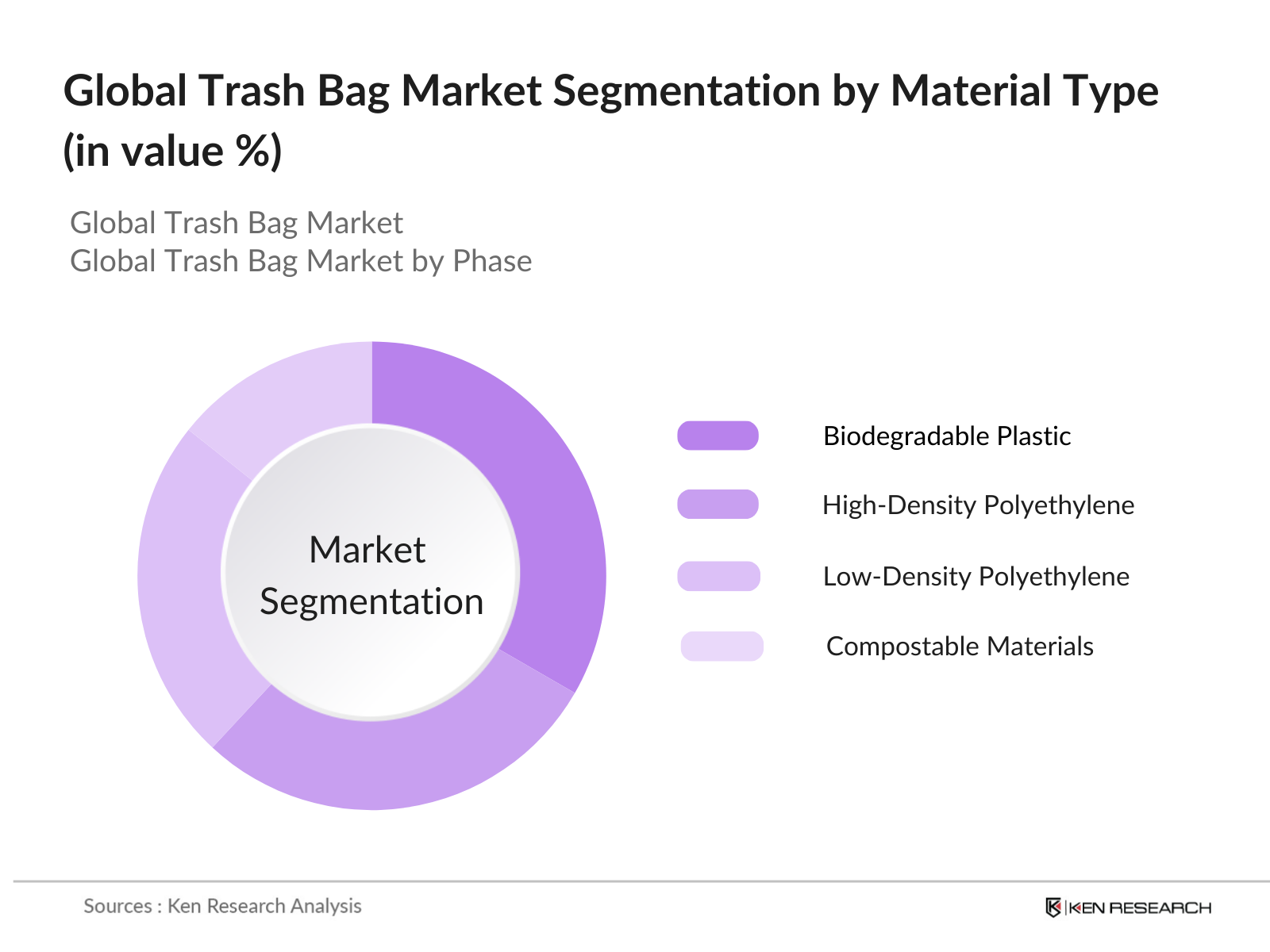
By Material Type: The global trash bag market is segmented by material type into high-density polyethylene (HDPE), low-density polyethylene (LDPE), biodegradable plastic, and compostable materials. Biodegradable plastic bags have emerged as the leading sub-segment, accounting for a dominant share due to rising environmental concerns and government regulations that promote the use of eco-friendly materials. The increasing preference for biodegradable and compostable trash bags, especially in developed regions like North America and Europe, has driven this segments growth.
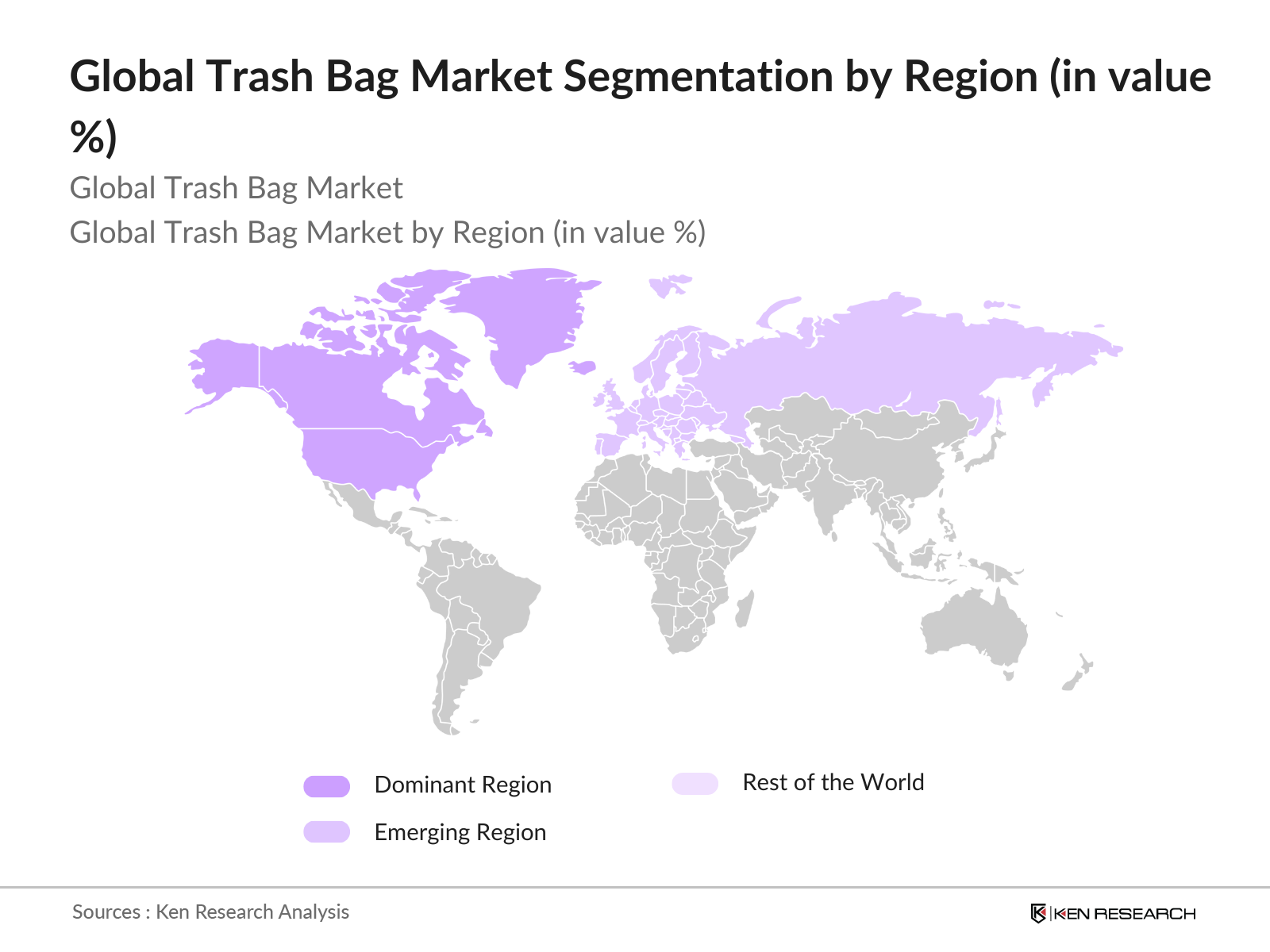
By Region: The global trash bag market is segmented into North America, Europe, Asia Pacific, Latin America, and the Middle East & Africa. North America dominates the global market due to the high consumption of trash bags in both residential and commercial sectors, driven by urbanization and stringent waste management regulations. In particular, the U.S. leads the region, supported by well-established waste collection systems and consumer awareness around environmental issues, resulting in higher adoption of biodegradable and compostable trash bags.
The global trash bag market is characterized by the presence of key players that dominate the market through strategic initiatives, innovation in materials, and a strong global distribution network. These players are focused on sustainability, eco-friendly products, and improving production efficiency. The market is competitive, with companies vying for greater market share through product diversification, mergers, and acquisitions.
|
Company Name |
Year Established |
Headquarters |
Revenue (USD Bn) |
No. of Employees |
Sustainability Initiatives |
Product Portfolio |
Geographical Reach |
R&D Investments |
Major Partnerships |
|
Berry Global Inc. |
1967 |
Evansville, Indiana |
|||||||
|
The Clorox Company |
1913 |
Oakland, California |
|||||||
|
Novolex Holdings Inc. |
2003 |
Hartsville, South Carolina |
|||||||
|
Poly-America LP |
1976 |
Grand Prairie, Texas |
|||||||
|
Inteplast Group |
1991 |
Livingston, New Jersey |
Market Challenges:
The global trash bag market is set to experience significant growth in the coming years, fueled by the increasing adoption of biodegradable and compostable materials. The shift towards sustainable waste management solutions, driven by stringent government regulations and growing environmental consciousness, is expected to shape the future of the market.
Market opportunities:
|
By Material Type |
High-Density Polyethylene (HDPE) Low-Density Polyethylene (LDPE) Biodegradable Plastic Compostable Materials |
|
By Product Type |
Drawstring Trash Bags Tie Trash Bags Flap Trash Bags Star-Sealed Trash Bags |
|
By Size |
Small (Up to 10 Gallons) Medium (10-30 Gallons) Large (30+ Gallons) |
|
By End-User |
Residential Commercial (Restaurants Offices Shopping Malls) Industrial (Manufacturing Construction Sites) Healthcare (Hospitals Clinics, Laboratories) |
|
By Region |
North America Europe Asia Pacific Latin America Middle East & Africa |
1.1 Definition and Scope
1.2 Market Taxonomy
1.3 Market Growth Rate (Compound Annual Growth Rate)
1.4 Market Segmentation Overview (Types of Trash Bags, End-Users, Material Type, Size, Distribution Channel)
2.1 Historical Market Size (Market Revenue, Volume in Metric Tons)
2.2 Year-on-Year Growth Analysis (Volume and Value Analysis)
2.3 Key Market Developments and Milestones (Product Launches, Key Regulations, Sustainability Initiatives)
3.1 Growth Drivers
3.1.1 Increasing Urban Population
3.1.2 Rising Awareness About Waste Management
3.1.3 Government Regulations on Plastic Usage
3.1.4 Shift Toward Biodegradable Trash Bags
3.2 Market Challenges
3.2.1 Volatile Raw Material Prices (Polyethylene, Biodegradable Polymers)
3.2.2 High Cost of Biodegradable Alternatives
3.2.3 Environmental Concerns Regarding Plastic Waste
3.3 Opportunities
3.3.1 Growing Demand for Eco-friendly Products
3.3.2 Expansion of Retail Channels in Emerging Markets
3.3.3 Adoption of Smart Waste Management Systems
3.4 Trends
3.4.1 Shift Towards Compostable and Recyclable Trash Bags
3.4.2 Growing Popularity of Custom-sized Trash Bags
3.4.3 Private Label Trash Bags Gaining Market Share
3.5 Government Regulations
3.5.1 Ban on Single-use Plastics
3.5.2 Waste Management Policies and Incentives (EU Directives, U.S. EPA Guidelines)
3.5.3 Tax Policies on Plastic Waste Disposal
3.6 SWOT Analysis (Strengths, Weaknesses, Opportunities, Threats)
3.7 Stakeholder Ecosystem (Manufacturers, Suppliers, End-Users, Regulatory Bodies)
3.8 Porters Five Forces (Bargaining Power of Suppliers, Threat of Substitutes, etc.)
3.9 Competitive Landscape and Industry Outlook
4.1 By Material Type (In Value %) 4.1.1 High-Density Polyethylene (HDPE)
4.1.2 Low-Density Polyethylene (LDPE)
4.1.3 Biodegradable Plastic
4.1.4 Compostable Materials
4.2 By Product Type (In Value %)
4.2.1 Drawstring Trash Bags
4.2.2 Tie Trash Bags
4.2.3 Flap Trash Bags
4.2.4 Star-Sealed Trash Bags
4.3 By Size (In Value %) 4.3.1 Small (Up to 10 Gallons)
4.3.2 Medium (10-30 Gallons)
4.3.3 Large (30+ Gallons)
4.4 By End-User (In Value %)
4.4.1 Residential
4.4.2 Commercial (Restaurants, Offices, Shopping Malls)
4.4.3 Industrial (Manufacturing, Construction Sites)
4.4.4 Healthcare (Hospitals, Clinics, Laboratories)
4.5 By Distribution Channel (In Value %)
4.5.1 Supermarkets and Hypermarkets
4.5.2 Online Retail
4.5.3 Convenience Stores
4.5.4 Specialty Stores
5.1 Detailed Profiles of Major Companies
5.1.1 Berry Global Inc.
5.1.2 The Clorox Company
5.1.3 International Plastics Inc.
5.1.4 Novolex Holdings Inc.
5.1.5 Reynolds Consumer Products
5.1.6 Poly-America LP
5.1.7 Cosmoplast Industrial Company LLC
5.1.8 Inteplast Group
5.1.9 Aluf Plastics
5.1.10 Four Star Plastics
5.1.11 SPhere Group
5.1.12 Thai Plastic Bags Industries Co., Ltd.
5.1.13 Mirpack
5.1.14 Novplasta s.r.o.
5.1.15 Pack-It BV
5.2 Cross Comparison Parameters (Market Presence, Headquarters, Revenue, Employee Count, Product Range, Geographical Presence, Sustainability Efforts, R&D Investments)
5.3 Market Share Analysis (By Company, By Region)
5.4 Strategic Initiatives (Partnerships, Expansions, Collaborations)
5.5 Mergers and Acquisitions
5.6 Investment Analysis
5.7 Venture Capital Funding
5.8 Private Equity Investments
6.1 Waste Disposal and Recycling Guidelines
6.2 International Plastic Waste Reduction Initiatives
6.3 Packaging and Labeling Regulations (Environmental Claims, Certifications)
6.4 Certifications for Biodegradable and Compostable Bags
7.1 Future Market Size Projections
7.2 Key Factors Driving Future Market Growth (Sustainability, Urbanization, Circular Economy Initiatives)
8.1 By Material Type (In Value %)
8.2 By Product Type (In Value %)
8.3 By End-User (In Value %)
8.4 By Distribution Channel (In Value %)
8.5 By Region (North America, Europe, Asia Pacific, Latin America, Middle East & Africa)
9.1 TAM/SAM/SOM Analysis (Total Addressable Market, Serviceable Available Market, Serviceable Obtainable Market)
9.2 Marketing Initiatives
9.3 White Space Opportunity Analysis
Disclaimer Contact UsIn this step, we identified the key variables impacting the global trash bag market, such as regulatory factors, material innovations, and consumer preferences. This involved conducting extensive desk research, leveraging proprietary databases, and compiling relevant industry data to map the ecosystem and stakeholder involvement.
The historical analysis of the global trash bag market, including revenue generation, market penetration, and material usage statistics, was conducted. In this phase, we assessed the adoption rate of biodegradable materials and evaluated regional waste management practices to ensure a comprehensive understanding of market trends.
We developed hypotheses regarding market growth drivers, such as the impact of government regulations on plastic usage. These hypotheses were validated through consultations with industry experts via computer-assisted telephone interviews (CATIs). Insights from these experts were essential to refining our market assumptions.
The final phase involved integrating insights from primary research with bottom-up market modeling. We consulted trash bag manufacturers and suppliers to gather data on production capacities, material preferences, and emerging trends, ensuring the final analysis was thorough and accurate.
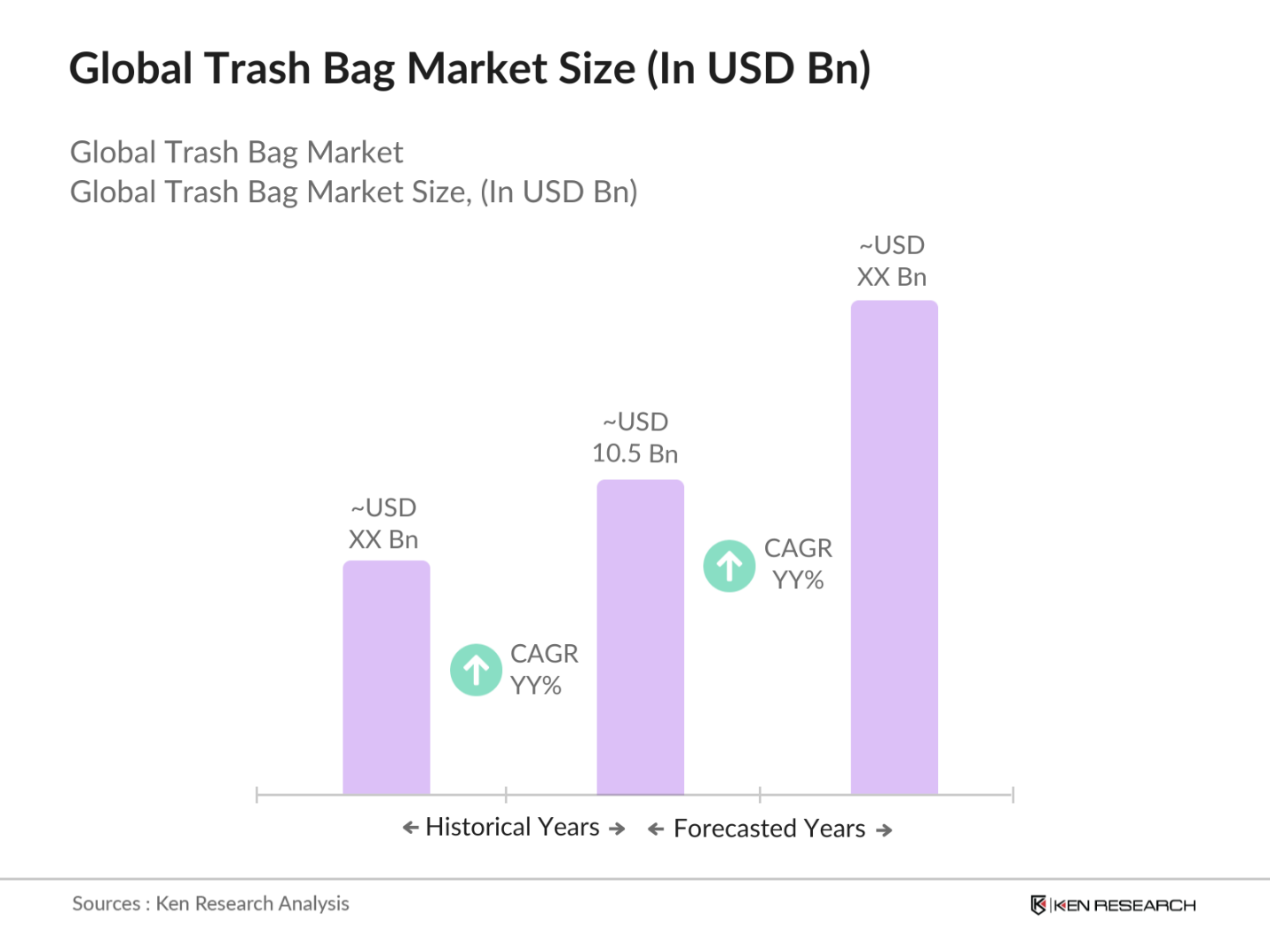
The global trash bag market was valued at USD 10.5 billion in 2023, driven by the growing demand for sustainable waste management solutions, urbanization, and stringent government regulations.
Challenges include fluctuating raw material prices, especially for polyethylene and biodegradable polymers, the high cost of eco-friendly alternatives, and the environmental concerns surrounding plastic waste.
Key players in the market include Berry Global Inc., The Clorox Company, Novolex Holdings Inc., Poly-America LP, and Inteplast Group. These companies dominate due to their extensive product offerings, strong distribution networks, and focus on sustainability.
Growth drivers include increasing urbanization, rising consumer awareness about environmental issues, government regulations promoting biodegradable products, and the expansion of retail distribution channels.

What makes us stand out is that our consultants follows Robust, Refine and Result (RRR) methodology. i.e. Robust for clear definitions, approaches and sanity checking, Refine for differentiating respondents facts and opinions and Result for presenting data with story

We have set a benchmark in the industry by offering our clients with syndicated and customized market research reports featuring coverage of entire market as well as meticulous research and analyst insights.

While we don't replace traditional research, we flip the method upside down. Our dual approach of Top Bottom & Bottom Top ensures quality deliverable by not just verifying company fundamentals but also looking at the sector and macroeconomic factors.

With one step in the future, our research team constantly tries to show you the bigger picture. We help with some of the tough questions you may encounter along the way: How is the industry positioned? Best marketing channel? KPI's of competitors? By aligning every element, we help maximize success.

Our report gives you instant access to the answers and sources that other companies might choose to hide. We elaborate each steps of research methodology we have used and showcase you the sample size to earn your trust.

If you need any support, we are here! We pride ourselves on universe strength, data quality, and quick, friendly, and professional service.