Global Tube Feeding Market Outlook to 2030

Region:Global

Author(s):Shambhavi

Product Code:KROD2007

Published On

December 2024

Total pages

93

About the Report

Global Tube Feeding Market Overview

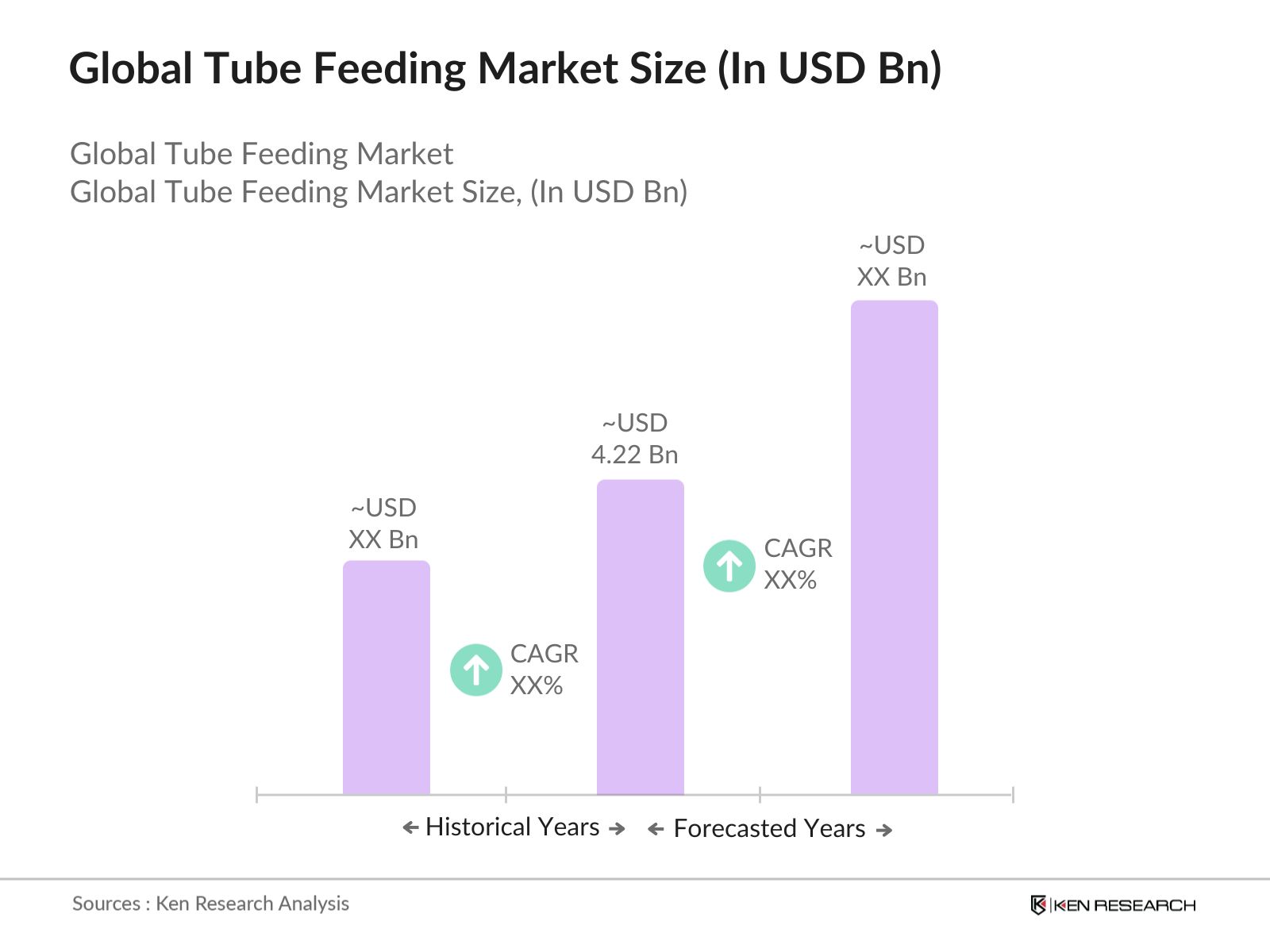
  • The global tube feeding market size in 2023 was valued at USD 4.22 billion, driven primarily by the rising prevalence of chronic diseases such as cancer and neurological disorders. The increasing geriatric population, which is more susceptible to conditions requiring tube feeding, has also contributed significantly. The market has further expanded due to advancements in formula types, enhancing nutritional delivery efficiency.
  • Prominent players in the tube feeding market include Abbott Laboratories, Nestl Health Science, Fresenius Kabi, Danone, and B. Braun Melsungen AG. These companies dominate the market due to their extensive product offerings, innovations in tube feeding formulations, and strong global distribution networks. Abbotts Ensure and Danones Nutricia products have established themselves as household names in this space, further consolidating their market leadership.
  • In February 2023, Fresenius Kabi introduced a new energy-dense enteral nutrition formula in Europe, designed for critically ill patients, which contains high protein and fiber content, providing better clinical outcomes. This launch followed its acquisition of Ivenix, boosting its technological capabilities. This development aligns with growing demand for specialized tube feeding solutions that cater to individual patient needs.
  • Cities like New York, London, and Tokyo dominate the tube feeding market. This is largely due to their highly advanced healthcare infrastructure, large aging populations, and high incidences of chronic diseases that require enteral nutrition. New York, for instance, has a network of healthcare providers and specialized cancer treatment centers, increasing the demand for tube feeding solutions.
  • market overviews

Global Tube Feeding Market Segmentation

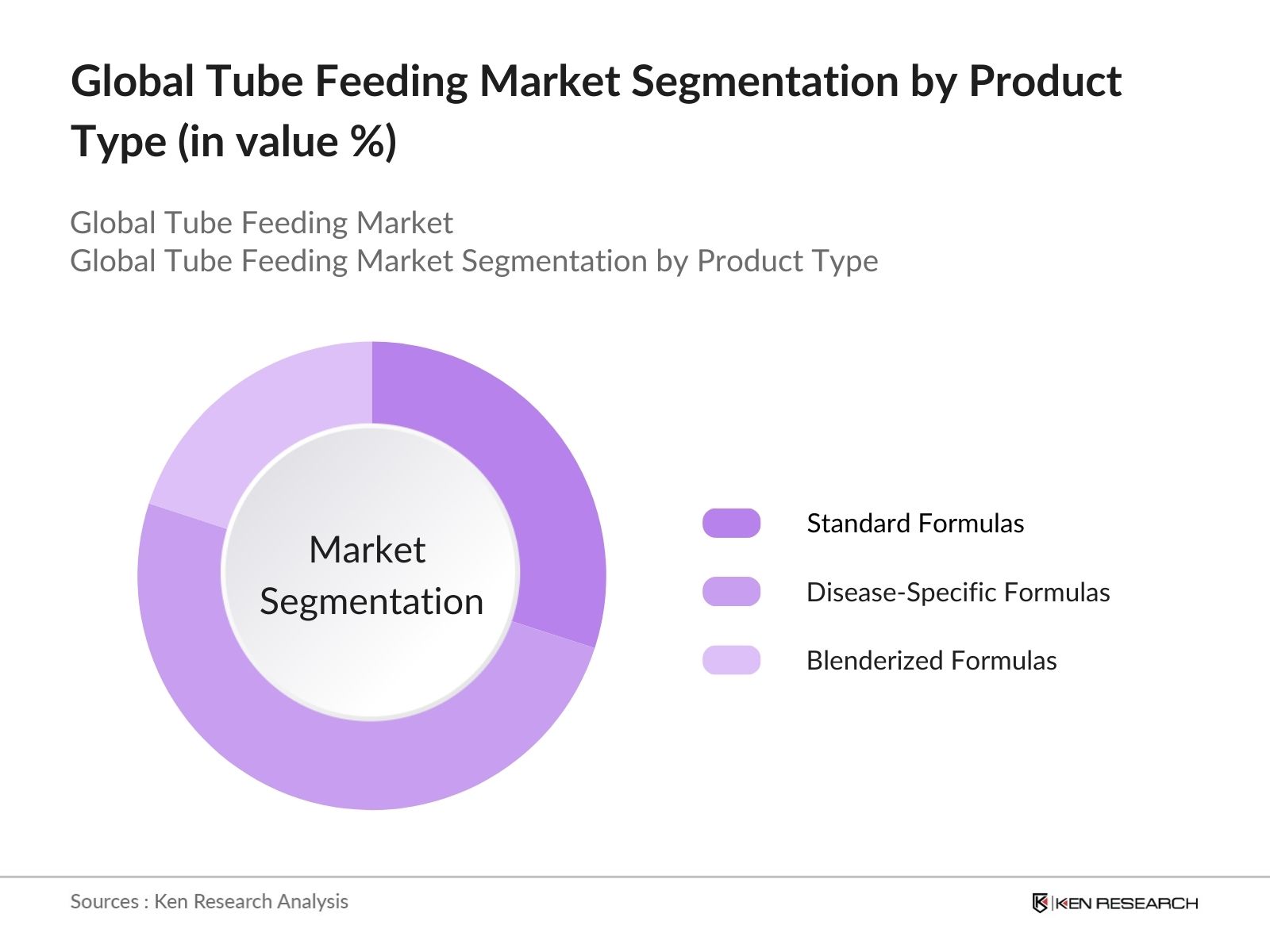
By Product Type: The tube feeding market is segmented by product type into standard formulas, disease-specific formulas, and blenderized formulas. In 2023, disease-specific formulas accounted for the largest market share, driven by the increasing prevalence of conditions like diabetes, chronic kidney disease, and cancer. These formulas are designed to meet the specific nutritional needs of patients with these conditions. Major companies such as Abbott Laboratories and Nestl Health Science have focused on developing innovative formulations, which has contributed to the dominance of this sub-segment.
market overviews

Product Type

Market Share in 2023 (%)

Standard Formulas

30

Disease-Specific Formulas

50

Blenderized Formulas

20

By End User: The market is further segmented by end users into hospitals, home care settings, and long-term care facilities. In 2023, hospitals dominated this segment. The increasing incidence of surgeries and the need for immediate nutritional support during patient recovery have spurred the use of tube feeding in hospitals. Additionally, hospitals have better access to advanced feeding pumps and formulations, making them the largest users of these products. The growth of specialized nutrition departments in healthcare facilities also supports this dominance.

End User

Market Share in 2023 (%)

Hospitals

60

Home Care Settings

25

Long-term Care Facilities

15

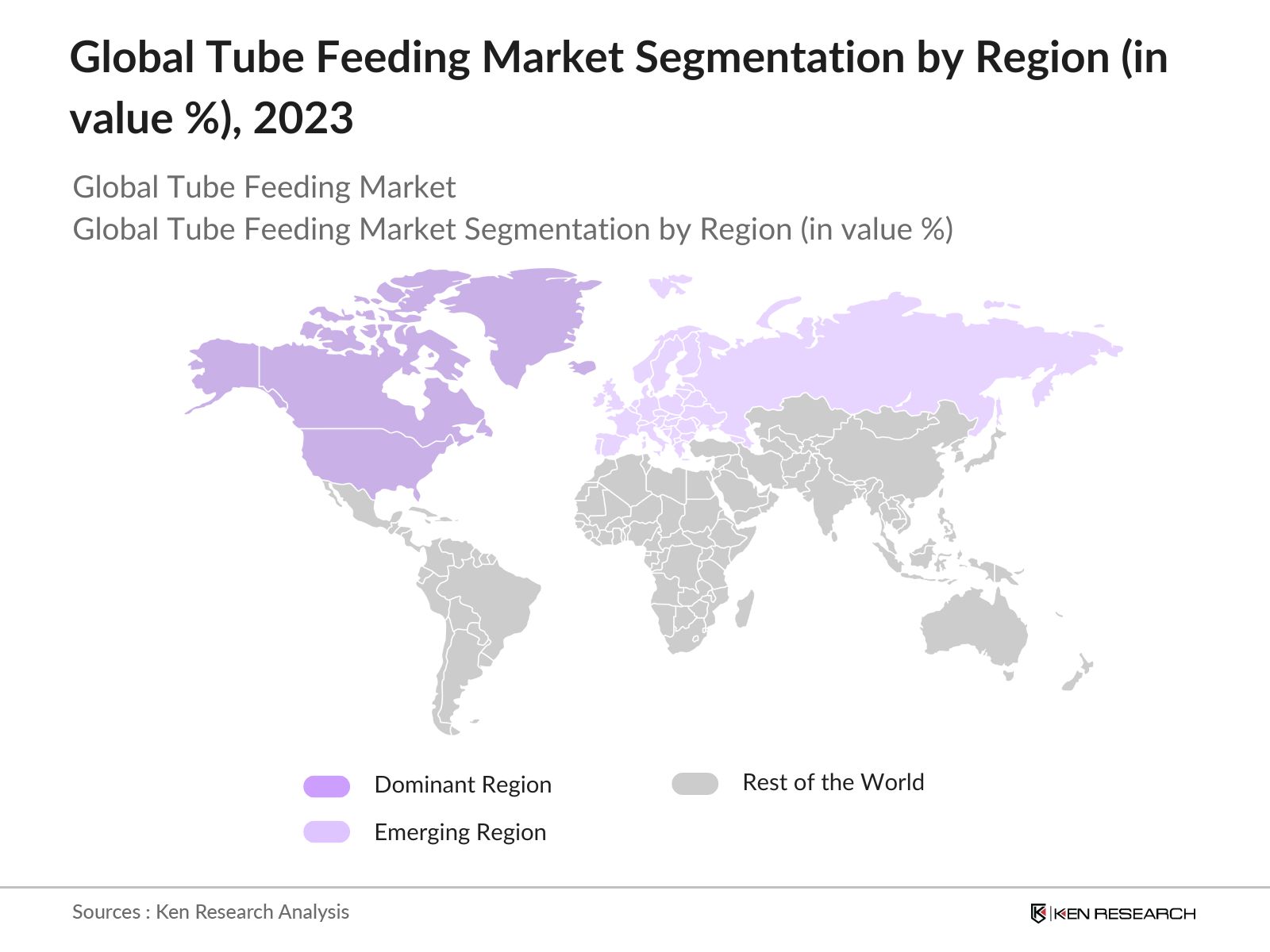
By Region: The global tube feeding market is segmented into North America, Europe, Asia-Pacific (APAC), Middle East and Africa (MEA), and Latin America. In 2023, North America held the largest market share, with the United States contributing the highest revenue due to its advanced healthcare infrastructure, high prevalence of chronic diseases, and favorable reimbursement policies. The U.S. healthcare sector, with its aging population and rising number of cancer patients, drives the demand for enteral feeding solutions.
market overviews

Global Tube Feeding Market Competitive Landscape

Company

Year of Establishment

Headquarters

Abbott Laboratories

1888

Illinois, USA

Nestl Health Science

2011

Switzerland

Fresenius Kabi

1999

Bad Homburg, Germany

Danone

1919

Paris, France

B. Braun Melsungen AG

1839

Melsungen, Germany

  • B. Braun Melsungen AGs New Product Launch (2023): In December 2023, B. Braun Melsungen AG launched a new range of high-protein enteral feeding formulas targeted at critically ill patients. This product line, available across Europe, is designed to support faster recovery for patients in intensive care units. The formulas are optimized for use with B. Brauns enteral feeding pumps, ensuring seamless integration into hospital systems. The companys focus on expanding its product portfolio underscores its commitment to innovation in the tube feeding sector.
  • Mead Johnson Nutritions Investment in R&D (2024): Mead Johnson Nutrition announced a $150 million investment in research and development (R&D) in 2024, focusing on specialized enteral nutrition solutions for pediatric care. The company aims to develop new formulations for premature infants and children with chronic illnesses requiring long-term tube feeding. This investment is expected to bolster Mead Johnsons position in the pediatric enteral feeding market, with new products set for release in early 2025.

Global Tube Feeding Market Analysis

Growth Drivers

  • Increasing Prevalence of Chronic Diseases: The growing number of patients diagnosed with chronic diseases such as cancer, neurological disorders, and gastrointestinal diseases has led to increased demand for enteral feeding solutions. According to the World Health Organization (WHO), over 19.3 million new cancers cases were recorded globally in 2023. The prevalence of chronic kidney disease also reached 850 million in 2024, further supporting the rising need for specialized nutritional care, which remains a key growth driver for the tube feeding market.
  • Growing Geriatric Population: The global aging population is another significant growth driver for the tube feeding market. In 2024, the United Nations reported that 1.05 billion people globally were aged 60 or older, with a considerable percentage suffering from conditions such as Alzheimers and stroke, which often require tube feeding. With this demographic continuing to grow, the need for enteral nutrition products and services is expected to increase further, as older adults tend to have higher hospitalization rates and require long-term care.
  • Technological Advancements in Enteral Feeding: In 2023, the global healthcare industry witnessed innovations in tube feeding delivery systems, including automated feeding pumps and advanced formulas that improve nutrient absorption. Fresenius Kabi launched a new pump system in early 2024, allowing for more precise control of feeding volumes and nutrients. The adoption of these new technologies is improving patient outcomes and safety, thus fuelling the demand for tube feeding solutions.

Challenges

  • Regulatory Hurdles: The tube feeding market faces stringent regulatory requirements, especially in terms of product approval and safety standards. In 2024, the U.S. FDA and European Medicines Agency (EMA) implemented more rigorous testing protocols for new enteral feeding formulas, which has led to delays in product launches. These regulatory hurdles add to the compliance costs for manufacturers, which could deter smaller players from entering the market.
  • Lack of Awareness in Developing Regions: A significant challenge for the tube feeding market is the lack of awareness and underutilization of these solutions in developing regions. According to the World Bank, patients in lower-income countries who could benefit from enteral feeding still rely on traditional diets due to limited knowledge and access to modern medical technologies. Additionally, inadequate healthcare infrastructure in these regions makes it difficult to introduce and implement tube feeding solutions effectively.

Government Initiatives

  • U.S. Medicare Reimbursement Policies (2024): In 2024, the U.S. government expanded Medicare coverage to include more comprehensive reimbursement for enteral feeding equipment and formulas. This move is aimed at providing better financial support for patients who require long-term nutritional care. By allowing greater access to affordable tube feeding solutions, the new reimbursement policies are expected to drive higher adoption rates, particularly in home care settings.
  • European Unions Healthcare Funding for Enteral Nutrition (2023): In 2023, the European Union allocated billions in funding specifically for the improvement of enteral nutrition programs across member states, targeting hospitals and long-term care facilities. This funding includes subsidies for the purchase of advanced feeding pumps and nutritional formulations, According, to the National Institutes for Health, more than 3 million people globally receive enteral nutrition each year. The incidence of home enteral nutrition (HEN) in 2019 in adults was 22.0 per 100,000 inhabitants per year in France.

Global Tube Feeding Market Future Outlook

The global tube feeding market is expected to experience steady growth, driven by the increasing prevalence of chronic diseases, a rising geriatric population, and advancements in personalized nutrition formulas. The demand for home-based enteral feeding solutions and innovations in feeding technologies will further propel market expansion in developed and emerging regions.

Future Trends

  • Increase in Disease-Specific Enteral Feeding Formulas: By 2028, the tube feeding market is expected to see a significant shift towards disease-specific formulas tailored to individual patient needs. Advances in medical research will allow companies to develop more precise nutrition solutions for conditions such as cancer, diabetes, and neurological disorders. The demand for these specialized products will grow, particularly in developed regions.
  • Sustainability in Tube Feeding Products: Sustainability will become a key focus for manufacturers by 2028, with companies developing eco-friendly packaging and sourcing sustainable raw materials for enteral feeding products. The use of biodegradable packaging materials is projected to rise as governments impose stricter environmental regulations. This shift is expected to attract environmentally conscious consumers and reduce the environmental footprint of the tube feeding industry.

Scope of the Report

By Product Type

Standard Formulas

Disease-Specific Formulas

Blenderized Formulas

By End user

Hospitals

Home Care Settings

Long-term Care Facilities

By Region

North America

Europe

Asia-pacific

MEA

Latin America

Products

Key Target Audience Organizations and Entities Who Can Benefit by Subscribing This Report:

  • Hospital Procurement Departments

  • Specialized Nutrition Clinics

  • Home Healthcare Service Providers

  • Long-term Care Facilities

  • Pharmaceuticals and Biotech Firms

  • Medical Device Manufacturers

  • Nutritional Formula Manufacturers

  • Government and Regulatory Bodies (e.g., FDA, EMA)

  • Investors and Venture Capitalist Firms

Time-Period Captured in the Report:

  • Historical Period: 2018-2023

  • Base Year: 2023

  • Forecast Period: 2023-2028

Companies

Players Mentioned in the Report:

  • Abbott Laboratories

  • Nestl Health Science

  • Fresenius Kabi

  • Danone

  • B. Braun Melsungen AG

  • Mead Johnson Nutrition

  • Baxter International Inc.

  • Hormel Health Labs

  • Victus Inc.

  • Moog Inc.

  • Cardinal Health

  • Vitas Healthcare

  • Applied Medical Technology

  • Kimberly-Clark Corporation

  • Medela AG

Table of Contents

1. Global Tube Feeding Market Overview

1.1. Market Definition and Scope
1.2. Market Size and Growth
1.3. Key Market Drivers
1.4. Overview of Market Segmentation

2. Global Tube Feeding Market Size and Analysis, 2018-2023

2.1. Historical Market Size
2.2. Year-on-Year Growth Analysis
2.3. Key Market Developments and Milestones

3. Global Tube Feeding Market Dynamics

3.1. Growth Drivers
3.1.1. Increasing Prevalence of Chronic Diseases
3.1.2. Growth in Geriatric Population
3.1.3. Advancements in Enteral Feeding Technology
3.2. Market Restraints
3.2.1. Regulatory Hurdles
3.2.2. High Costs of Tube Feeding Products
3.3. Market Opportunities
3.3.1. Emerging Markets in APAC and Latin America
3.4. Current Market Trends
3.4.1. Increasing Use of Blenderized Diets

4. Global Tube Feeding Market Segmentation, 2023

4.1. By Product Type (Value %)
4.1.1. Standard Formulas
4.1.2. Disease-Specific Formulas
4.1.3. Blenderized Formulas
4.2. By End User (Value %)
4.2.1. Hospitals
4.2.2. Home Care Settings
4.2.3. Long-Term Care Facilities
4.3. By Region (Value %)
4.3.1. North America
4.3.2. Europe
4.3.3. APAC
4.3.4. MEA
4.3.5. Latin America

5. Global Tube Feeding Market Competitive Landscape

5.1. Key Players and Market Share Analysis
5.2. Strategic Initiatives and Developments
5.3. Mergers, Acquisitions, and Investments
5.4. Company Profiles
5.4.1. Abbott Laboratories
5.4.2. Fresenius Kabi
5.4.3. Nestl Health Science
5.4.4. Danone
5.4.5. B. Braun Melsungen AG

6. Global Tube Feeding Market Regulatory and Legal Framework

6.1. FDA and EMA Guidelines
6.2. Certification and Regulatory Approvals

7. Global Tube Feeding Market Forecast, 2023-2028

7.1. Future Market Size Projections
7.2. Factors Influencing Future Market Growth

8. Global Tube Feeding Market Segmentation, 2028

8.1. By Product Type (Value %)
8.2. By End User (Value %)
8.3. By Region (Value %)

9. Analyst Recommendations and Strategic Insights

9.1. Total Addressable Market (TAM) Analysis
9.2. Key Strategic Initiatives for Market Penetration
9.3. Customer and Market Potential Analysis

10. Analysts Recommendations

10.1. Customer Cohort Analysis
10.2. Strategic Marketing Initiatives
10.3. White Space Opportunity Analysis

Disclaimer Contact Us

Research Methodology

Step 1: Identifying Key Variables

Ecosystem creation for all major entities and referring to multiple secondary and proprietary databases to perform desk research around the market to collate market-level information.

Step 2: Market Building

Collating statistics on the Global Tube Feeding Market over the years, analysing the penetration of Global Tube Feeding technologies, and computing the revenue generated for the market. This step also involves reviewing technology adoption rates and application effectiveness to ensure accuracy behind the data points shared.

Step 3: Validating and Finalizing

Building market hypotheses and conducting CATIs with market experts belonging to different companies to validate statistics and seek operational and financial information from company representatives.

Step 4: Research Output

Our team will approach multiple Global Tube Feeding companies to understand the nature of technology segments, consumer preferences, and other parameters. This supports validating statistics derived through a bottom-to-top approach from these Global Tube Feeding companies, ensuring accuracy and reliability in the report.

Frequently Asked Questions

01. How big is the global tube feeding market?

The global tube feeding market was valued at USD 4.22 billion in 2023, driven by the increasing prevalence of chronic diseases and the aging population. Advancements in enteral nutrition technology have also contributed to the market's expansion.

02. What are the challenges in the global tube feeding market?

Challenges in the tube feeding market include regulatory hurdles, such as stringent FDA and EMA requirements, and high product costs. Additionally, a lack of awareness in developing regions limits market penetration, especially in low-income areas.

03. Who are the major players in the global tube feeding market?

Key players in the global tube feeding market include Abbott Laboratories, Fresenius Kabi, Nestl Health Science, Danone, and B. Braun Melsungen AG. These companies dominate the market due to their innovative product lines, global reach, and strong distribution networks.

04. What are the growth drivers of the global tube feeding market?

The global tube feeding market is driven by the increasing prevalence of chronic diseases like cancer and diabetes, the rising geriatric population, and technological advancements in enteral feeding systems. Government healthcare initiatives in regions like North America and Europe also support growth.

Why Buy From Us?

RRR
Refine Robust Result (RRR) Framework

What makes us stand out is that our consultants follows Robust, Refine and Result (RRR) methodology. i.e. Robust for clear definitions, approaches and sanity checking, Refine for differentiating respondents facts and opinions and Result for presenting data with story

Our Reach Is Unmatched

We have set a benchmark in the industry by offering our clients with syndicated and customized market research reports featuring coverage of entire market as well as meticulous research and analyst insights.

Research
Shifting the Research Paradigm

While we don't replace traditional research, we flip the method upside down. Our dual approach of Top Bottom & Bottom Top ensures quality deliverable by not just verifying company fundamentals but also looking at the sector and macroeconomic factors.

Insite
More Insights-Better Decisions

With one step in the future, our research team constantly tries to show you the bigger picture. We help with some of the tough questions you may encounter along the way: How is the industry positioned? Best marketing channel? KPI's of competitors? By aligning every element, we help maximize success.

Trust
Transparency and Trust

Our report gives you instant access to the answers and sources that other companies might choose to hide. We elaborate each steps of research methodology we have used and showcase you the sample size to earn your trust.

support
Round the Clock Support

If you need any support, we are here! We pride ourselves on universe strength, data quality, and quick, friendly, and professional service.

Why Client Choose Us?

400000+ Reports in repository
150+ Consulting project a year
100+ Analysts
8000+ Client Queries in 2022