
Global Turbocharger Market Outlook to 2030
Region:Global
Author(s):Shivani
Product Code:KROD10659
November 2024
94
About the Report
Global Turbocharger Market Overview
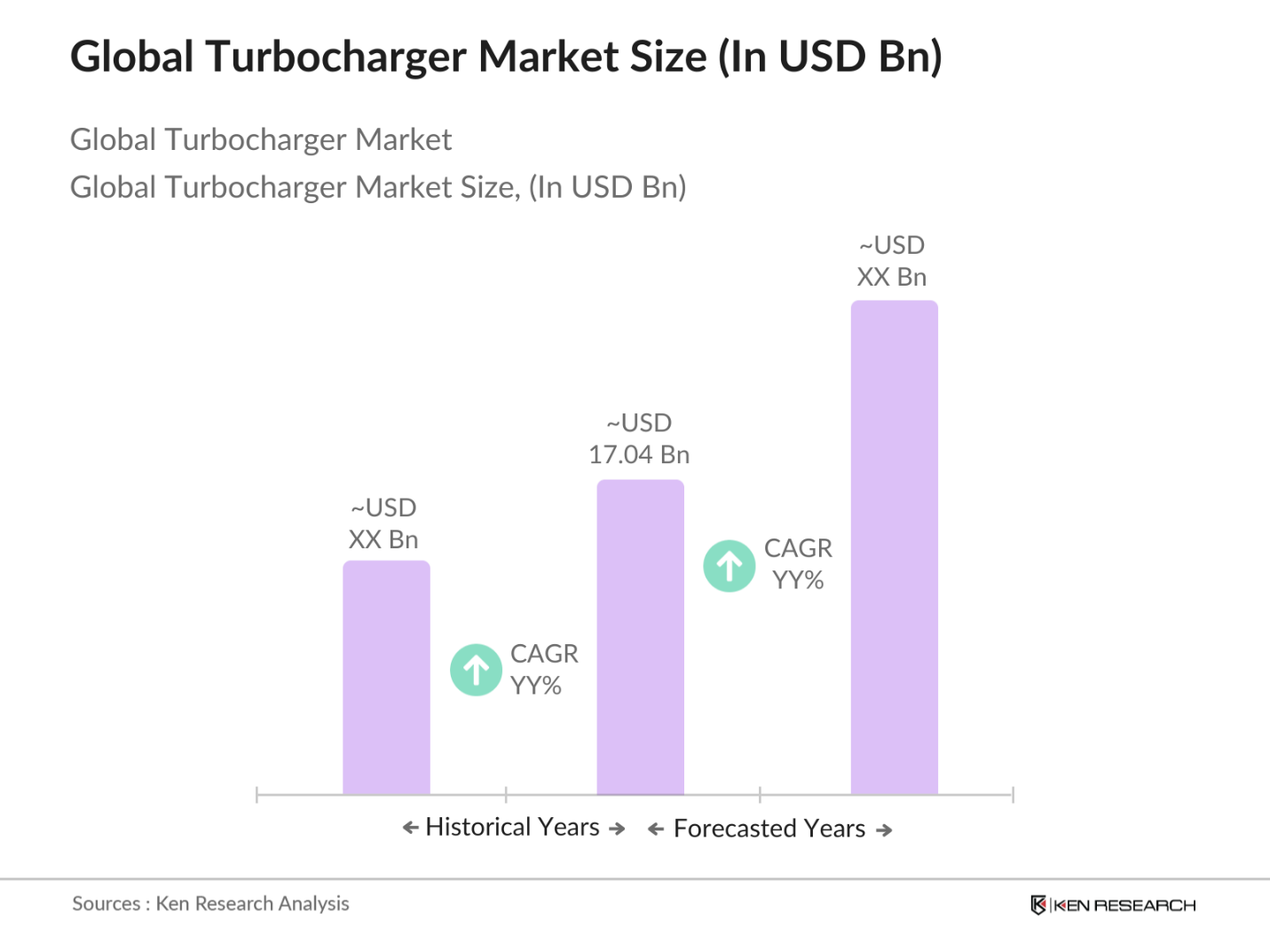
- The global turbocharger market is valued at approximately USD 17.04 billion, driven by the increasing need for fuel-efficient engines in both commercial and passenger vehicles. Turbochargers play a crucial role in improving fuel efficiency and reducing emissions, which aligns with stringent global environmental regulations. The market growth is also spurred by the adoption of downsized engines, which are equipped with turbochargers to boost performance without increasing fuel consumption. These developments have contributed to significant market expansion.
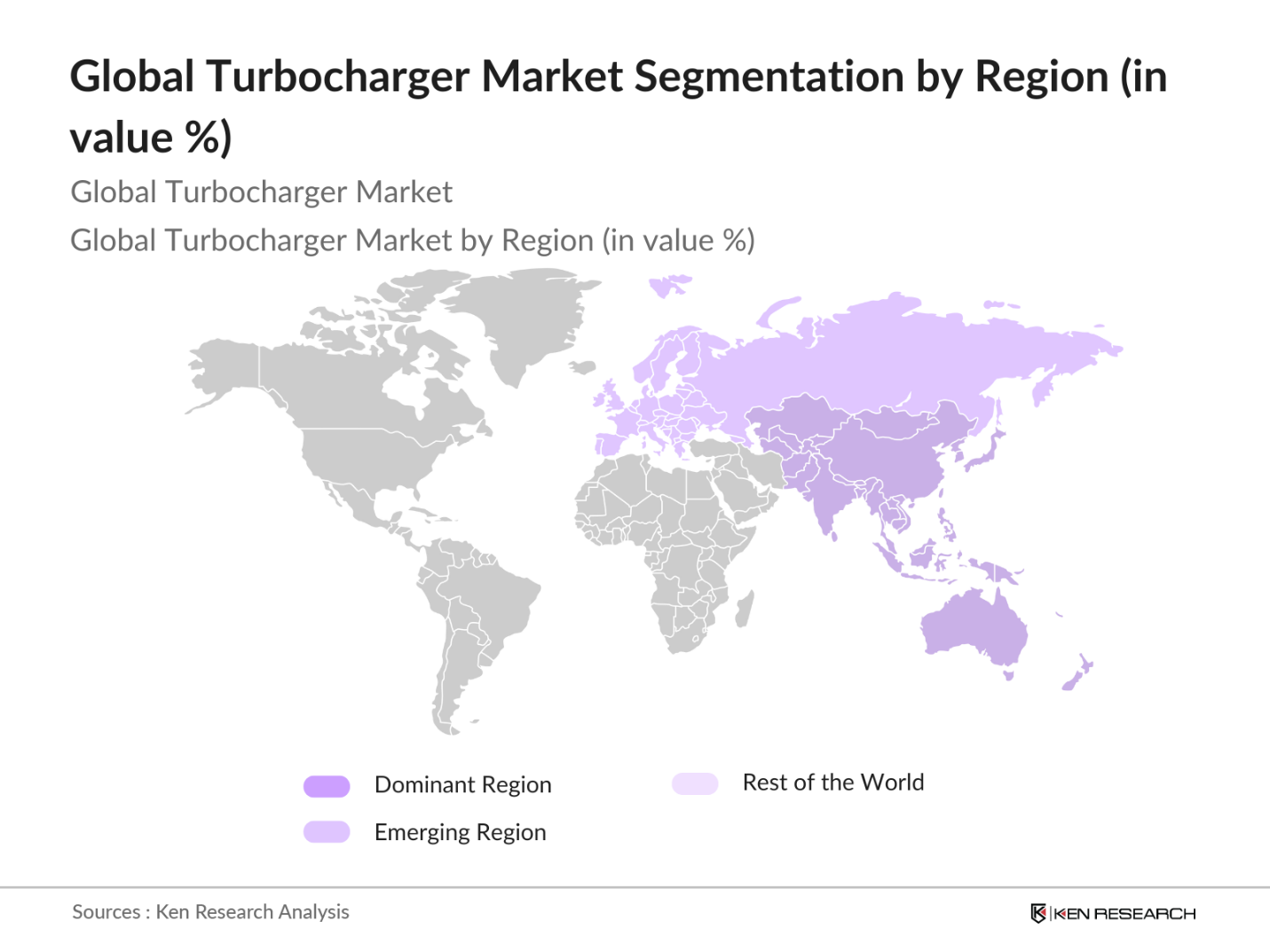
- Asia-Pacific is the dominant region in the turbocharger market, primarily due to the rapid growth of the automotive industry in countries like China and India. High vehicle production rates and rising disposable incomes in these countries fuel demand for turbocharged vehicles. Additionally, governments in this region have introduced stringent emissions regulations, pushing manufacturers to adopt turbocharging technologies to meet these standards.
- Governments worldwide are enforcing stricter fuel efficiency standards, pushing automakers to adopt turbocharging technologies to meet these targets. These regulations are prompting automakers to produce more fuel-efficient vehicles, and turbochargers play a crucial role in improving engine efficiency without sacrificing performance. As fuel efficiency standards continue to evolve, the demand for turbochargers is expected to remain strong, particularly in regions with stringent environmental and fuel economy regulations. This trend will continue to be a key driver for the turbocharger market globally.
Global Turbocharger Market Segmentation
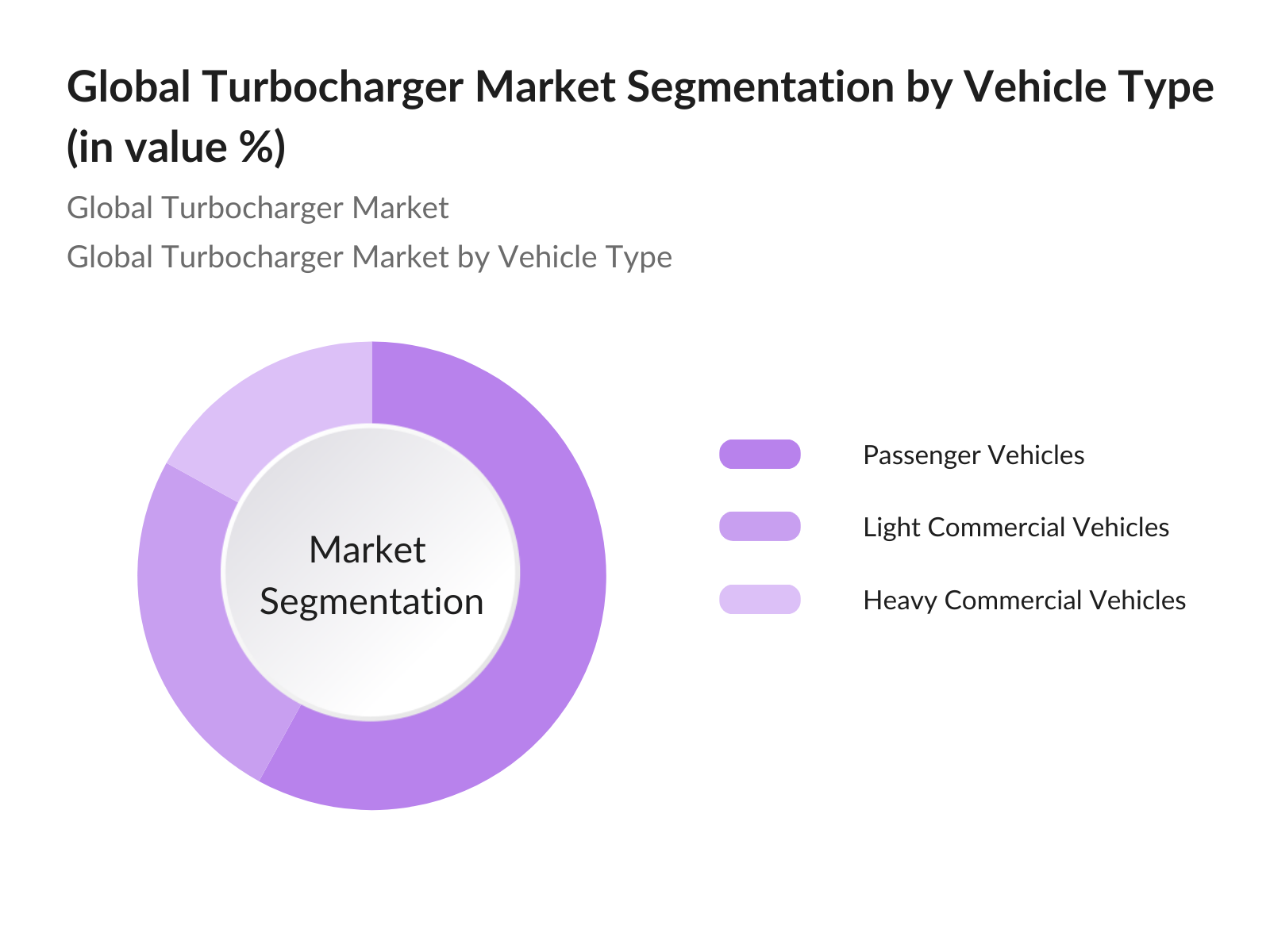
By Vehicle Type: The global turbocharger market is segmented by vehicle type into passenger vehicles, light commercial vehicles, and heavy commercial vehicles. Recently, passenger vehicles have dominated the market share under this segmentation due to the rising demand for fuel-efficient cars. The increased focus on reducing carbon emissions has encouraged manufacturers to incorporate turbochargers in passenger cars, improving engine performance without significantly increasing the size of the engine. This trend is particularly evident in regions such as Europe and Asia-Pacific.
By Region: The Asia-Pacific region dominates the market, primarily driven by high vehicle production rates and increasing demand for fuel-efficient vehicles. The region has seen rapid urbanization, particularly in China and India, which has led to a surge in automotive sales, fueling the growth of turbocharger adoption.
Global Turbocharger Market Competitive Landscape
The global turbocharger market is consolidated among a few dominant players, including Honeywell International Inc., BorgWarner, and Mitsubishi Heavy Industries. These companies hold significant market shares due to their long-standing expertise and continuous innovations in turbocharging technology. The competitive landscape is characterized by strategic alliances, such as joint ventures and mergers, to leverage new technologies and expand into emerging markets. This consolidation highlights the influence of these key players in shaping the market dynamics.
|
Company |
Established |
Headquarters |
R&D Investment |
Revenue |
Global Presence |
Key Technology |
Recent Merger |
Turbo Type Focus |
|
Honeywell International Inc. |
1906 |
USA |
High |
- |
- |
- |
- |
- |
|
BorgWarner Inc. |
1928 |
USA |
Moderate |
- |
- |
- |
- |
- |
|
Mitsubishi Heavy Industries |
1884 |
Japan |
High |
- |
- |
- |
- |
- |
|
Continental AG |
1871 |
Germany |
Moderate |
- |
- |
- |
- |
- |
|
Garrett Motion Inc. |
1936 |
Switzerland |
High |
- |
- |
- |
- |
- |
Global Turbocharger Market Analysis
Market Growth Drivers
- Engine Downsizing: Engine downsizing has become a key strategy in the automotive sector to reduce emissions and improve fuel efficiency. Turbochargers enable smaller engines to deliver higher power output, supporting the demand for lightweight, fuel-efficient vehicles. According to the International Energy Agency (IEA), global vehicle production reached approximately 92 million units in 2022, with turbocharged engines featured in nearly 40 million of these vehicles. As fuel efficiency regulations tighten, such as the European Unions Euro 6 standards, turbocharged engines are critical in meeting emission targets while maintaining performance levels.
- Fuel Efficiency Regulations: Fuel efficiency regulations are pushing automakers to incorporate advanced technologies like turbochargers. For instance, the U.S. Corporate Average Fuel Economy (CAFE) standards aim to achieve an average of 54.5 miles per gallon by 2025. Turbochargers are instrumental in achieving these targets by improving engine efficiency without sacrificing performance. Globally, millions of vehicles produced in 2023 were subject to stringent fuel efficiency standards, prompting significant adoption of turbochargers, particularly in regions like North America, Europe, and Asia where regulatory pressure is strongest.
- Increasing Automotive Production: Rising automotive production globally has driven demand for turbochargers. In 2022, China alone produced 27 million vehicles, a significant portion of the global automotive production, according to the International Organization of Motor Vehicle Manufacturers (OICA). The growing middle class in emerging economies like India and Brazil is expected to further boost vehicle demand, particularly for turbocharged engines that offer better fuel economy. The International Monetary Fund (IMF) projects that these emerging markets will drive substantial global automotive growth in the coming years.
Market Challenges:
- High Cost of Turbocharging Systems: Turbocharging systems are expensive, which can deter adoption in cost-sensitive markets. A standard turbocharger system can add between $500 and $1,500 to the cost of a vehicle, depending on the complexity and technology used. This added cost is a barrier in emerging markets, where consumers are more price-conscious. In regions like Southeast Asia, the average vehicle price is significantly lower than in Europe or North America, making the cost of turbocharging a notable deterrent for manufacturers targeting low-cost vehicle segments.
- Penetration of Electric Vehicles: The rapid growth of electric vehicles (EVs) poses a significant challenge to the turbocharger market. The shift towards EVs, particularly in countries with strong governmental support for EV adoption, reduces the potential market for turbochargers. Countries like Norway exemplify this transition, where a significant portion of new vehicle sales are electric, leading to a decline in the use of internal combustion engines (ICE). This ongoing shift is particularly impactful in regions where environmental policies and incentives favor the adoption of electric vehicles over traditional ICE vehicles.
Global Turbocharger Market Future Outlook
Over the next five years, the turbocharger market is expected to experience significant growth, driven by the continuous push towards engine downsizing and the integration of more fuel-efficient technologies. The increasing penetration of hybrid vehicles equipped with turbocharging systems and stringent emissions regulations will further boost the market. Advancements in electric turbochargers are also likely to reshape the competitive landscape, offering automakers more versatile solutions for performance enhancement while adhering to environmental standards.
Market Opportunities:
- Adoption of Hybrid Turbocharging: Hybrid turbocharging, combining traditional turbochargers with electric boosting technology, is gaining traction as a way to improve fuel efficiency and reduce emissions. In 2022, hybrid vehicles accounted for 7.2 million global sales, with a 20% increase in the adoption of hybrid turbochargers, according to the International Council on Clean Transportation (ICCT). Automakers like Toyota and Ford are integrating hybrid turbocharging systems into their latest models, offering improved performance and efficiency. This trend is expected to continue as more countries adopt stricter emission regulations.
- Expansion into Emerging Markets: Emerging markets such as India, Brazil, and Indonesia offer substantial growth opportunities for turbocharger manufacturers. In 2023, Indias vehicle production reached 5 million units, marking a 12% increase from the previous year, according to the Society of Indian Automobile Manufacturers (SIAM). These markets are increasingly adopting fuel-efficient technologies, and the penetration of turbochargers is expected to rise as automakers look to comply with new fuel efficiency standards in these regions.
Scope of the Report
|
By Vehicle Type |
Passenger Vehicles Commercial Vehicles Off-Highway Vehicles |
|
By Technology |
VGT Wastegate Turbochargers Electric Turbochargers Twin Turbochargers |
|
By Fuel Type |
Gasoline Diesel Alternate Fuel |
|
By Component |
Turbine Compressor Housing |
|
By Region |
North America Europe Asia-Pacific LATAM MEA |
Products
Key Target Audience
Automotive Manufacturers
Turbocharger Component Suppliers
Original Equipment Manufacturers (OEMs)
Government and Regulatory Bodies (EPA, European Commission)
Automotive R&D Institutions
Fuel Efficiency Regulators
Investments and Venture Capitalist Firms
Automotive Emissions Control Agencies
Companies
Major Players
Honeywell International Inc.
BorgWarner Inc.
Mitsubishi Heavy Industries Ltd.
Continental AG
Garrett Motion Inc.
IHI Corporation
Bosch-Mahle Turbo Systems
Cummins Inc.
Delphi Technologies
Eaton
ABB
Rotomaster International
Precision Turbo & Engine Inc.
Turbo Technics
Turbo Dynamics Ltd.
Table of Contents
1. Global Turbocharger Market Overview
1.1. Definition and Scope
1.2. Market Taxonomy
1.3. Market Growth Rate
1.4. Market Segmentation Overview
2. Global Turbocharger Market Size (In USD Million)
2.1. Historical Market Size
2.2. Year-on-Year Growth Analysis
2.3. Key Market Developments and Milestones
3. Global Turbocharger Market Analysis
3.1. Growth Drivers (Engine Downsizing, Fuel Efficiency Regulations, Increasing Automotive Production)
3.2. Market Challenges (Penetration of Electric Vehicles, High Cost of Turbocharging Systems, Supply Chain Disruptions)
3.3. Opportunities (Adoption of Hybrid Turbocharging, Expansion into Emerging Markets, Technological Advancements in Turbochargers)
3.4. Trends (Variable Geometry Technology, Electric Turbochargers, Free-Floating Turbochargers)
3.5. Government Regulations (Emission Norms, Fuel Efficiency Standards, Environmental Compliance)
3.6. SWOT Analysis
3.7. Stakeholder Ecosystem
3.8. Porters Five Forces Analysis (Bargaining Power of Buyers, Bargaining Power of Suppliers, Threat of New Entrants, Threat of Substitutes, Industry Rivalry)
3.9. Competitive Landscape Overview
4. Global Turbocharger Market Segmentation
4.1. By Vehicle Type (In Value %)
Passenger Vehicles
Commercial Vehicles (Light, Medium, Heavy)
Off-Highway Vehicles (Tractors, Construction Equipment)
4.2. By Technology (In Value %)
Variable Geometry Turbochargers (VGT)
Wastegate Turbochargers
Electric Turbochargers
Twin Turbochargers
4.3. By Fuel Type (In Value %)
Gasoline
Diesel
Alternate Fuel (CNG, LNG)
4.4. By Component (In Value %)
Turbine
Compressor
Housing
4.5. By Region (In Value %)
North America
Europe
Asia-Pacific
Latin America
Middle East & Africa
5. Global Turbocharger Market Competitive Analysis
5.1. Detailed Profiles of Major Companies
Honeywell International Inc.
BorgWarner Inc.
Mitsubishi Heavy Industries Ltd.
Continental AG
IHI Corporation
Garrett Motion Inc.
Cummins Inc.
Bosch-Mahle Turbo Systems
Delphi Technologies
Eaton
Rotomaster International
ABB
Precision Turbo & Engine Inc.
Turbo Dynamics Ltd.
Turbo Technics
5.2. Cross-Comparison Parameters
(Market Share, Revenue, R&D Investment, Global Presence, Product Portfolio, Technology Adoption, Strategic Alliances, Customer Base)
5.3. Market Share Analysis
5.4. Strategic Initiatives
5.5. Mergers and Acquisitions
5.6. Investment Analysis
5.7. Venture Capital Funding
5.8. Government Grants
5.9. Private Equity Investments
6. Global Turbocharger Market Regulatory Framework
6.1. Emission Standards
6.2. Fuel Efficiency Requirements
6.3. Certification Processes
7. Global Turbocharger Market Future Size Projections (In USD Million)
7.1. Future Market Size Projections
7.2. Key Factors Driving Future Market Growth
8. Global Turbocharger Market Future Segmentation
8.1. By Vehicle Type
8.2. By Technology
8.3. By Fuel Type
8.4. By Region
9. Global Turbocharger Market Analyst Recommendations
9.1. Total Addressable Market (TAM) Analysis
9.2. Serviceable Available Market (SAM) Analysis
9.3. White Space Opportunity Analysis
9.4. Marketing Initiatives for Stakeholders
Disclaimer
Contact Us
Research Methodology
Step 1: Identification of Key Variables
The initial phase involves constructing an ecosystem map for all major stakeholders in the global turbocharger market. This step utilizes desk research and secondary sources to identify the most critical variables influencing market dynamics.
Step 2: Market Analysis and Construction
Historical data is compiled to assess market penetration, sales ratios of various turbocharger technologies, and revenue generation for each region. This phase ensures the accuracy of market size estimates.
Step 3: Hypothesis Validation and Expert Consultation
Market hypotheses are validated through interviews with industry experts from leading turbocharger manufacturers, providing insights into technological trends and market drivers.
Step 4: Research Synthesis and Final Output
Detailed insights from industry experts and manufacturers are incorporated into the final analysis, offering a comprehensive view of the market, ensuring all data is validated through a bottom-up approach.
Frequently Asked Questions
01. How big is the global turbocharger market?
The global turbocharger market is valued at USD 17.04 billion, driven by the rising demand for fuel-efficient and emissions-compliant vehicles.
02. What are the challenges in the global turbocharger market?
Challenges include the penetration of electric vehicles, which reduce the need for turbocharged engines, and the high cost of turbocharging systems.
03. Who are the major players in the global turbocharger market?
Key players include Honeywell International, BorgWarner, Mitsubishi Heavy Industries, Garrett Motion, and Bosch-Mahle Turbo Systems.
04. What are the growth drivers for the global turbocharger market?
The market is driven by emission regulations, increasing demand for fuel-efficient engines, and the adoption of downsized engines equipped with turbochargers.
Why Buy From Us?

What makes us stand out is that our consultants follows Robust, Refine and Result (RRR) methodology. i.e. Robust for clear definitions, approaches and sanity checking, Refine for differentiating respondents facts and opinions and Result for presenting data with story

We have set a benchmark in the industry by offering our clients with syndicated and customized market research reports featuring coverage of entire market as well as meticulous research and analyst insights.

While we don't replace traditional research, we flip the method upside down. Our dual approach of Top Bottom & Bottom Top ensures quality deliverable by not just verifying company fundamentals but also looking at the sector and macroeconomic factors.

With one step in the future, our research team constantly tries to show you the bigger picture. We help with some of the tough questions you may encounter along the way: How is the industry positioned? Best marketing channel? KPI's of competitors? By aligning every element, we help maximize success.

Our report gives you instant access to the answers and sources that other companies might choose to hide. We elaborate each steps of research methodology we have used and showcase you the sample size to earn your trust.

If you need any support, we are here! We pride ourselves on universe strength, data quality, and quick, friendly, and professional service.