















Global Vacuum Truck Market Outlook 2030
Region:Global
Author(s):Shivani Mehra
Product Code:KROD4220
December 2024
97
About the Report
Global Vacuum Truck Market Outlook 2028
Global Vacuum Truck Market Overview
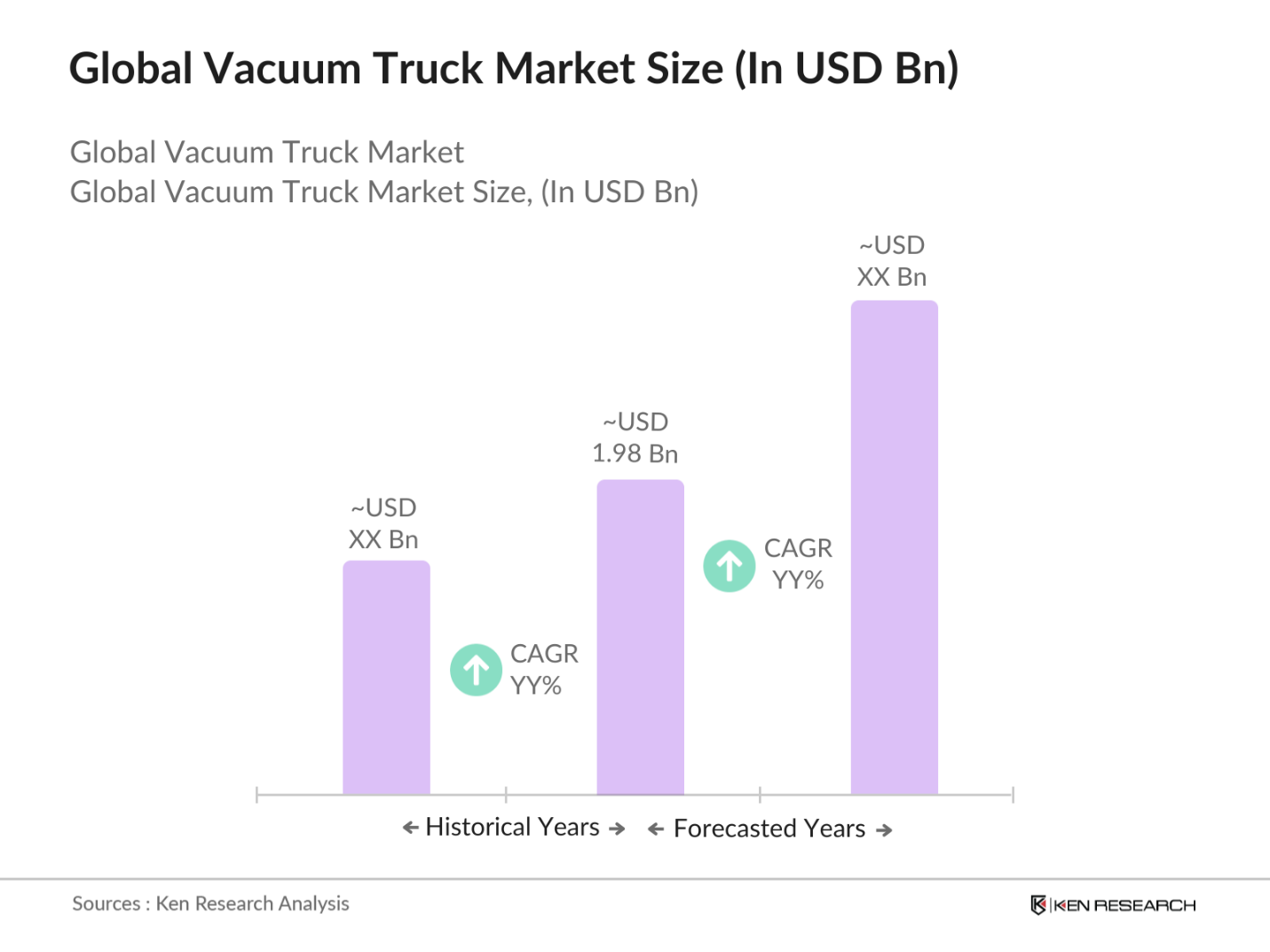
- The global vacuum truck market is valued at USD 1.98 billion based on a five-year historical analysis. This market growth is largely driven by the increasing demand for waste management solutions across industrial sectors such as oil & gas, construction, and municipal management. The push for more sustainable waste collection and transportation methods, paired with the rising number of infrastructure projects, has contributed significantly to the markets size.
- Countries such as the United States, China, and Germany dominate the vacuum truck market due to their advanced infrastructure development and strict environmental regulations. In the U.S., the increasing need for vacuum trucks in the oil & gas industry, coupled with municipal waste management, has solidified its dominance. Similarly, Chinas massive construction and industrial projects drive the need for vacuum trucks, while Germanys commitment to environmental sustainability through advanced waste disposal methods contributes to its significant market share.
- Governments around the world are incentivizing the adoption of electric and hybrid vacuum trucks to reduce emissions in waste management. In Europe, the European Green Deal has allocated 1 trillion for clean energy and emissions reduction, with specific subsidies for municipalities and waste management companies investing in electric vacuum trucks. In the U.S., the Federal Clean Vehicle Rebate Program provides rebates up to $7,500 for businesses purchasing electric trucks, including vacuum trucks, as part of the effort to cut down on fuel consumption and lower CO2 emissions.
Global Vacuum Truck Market Segmentation
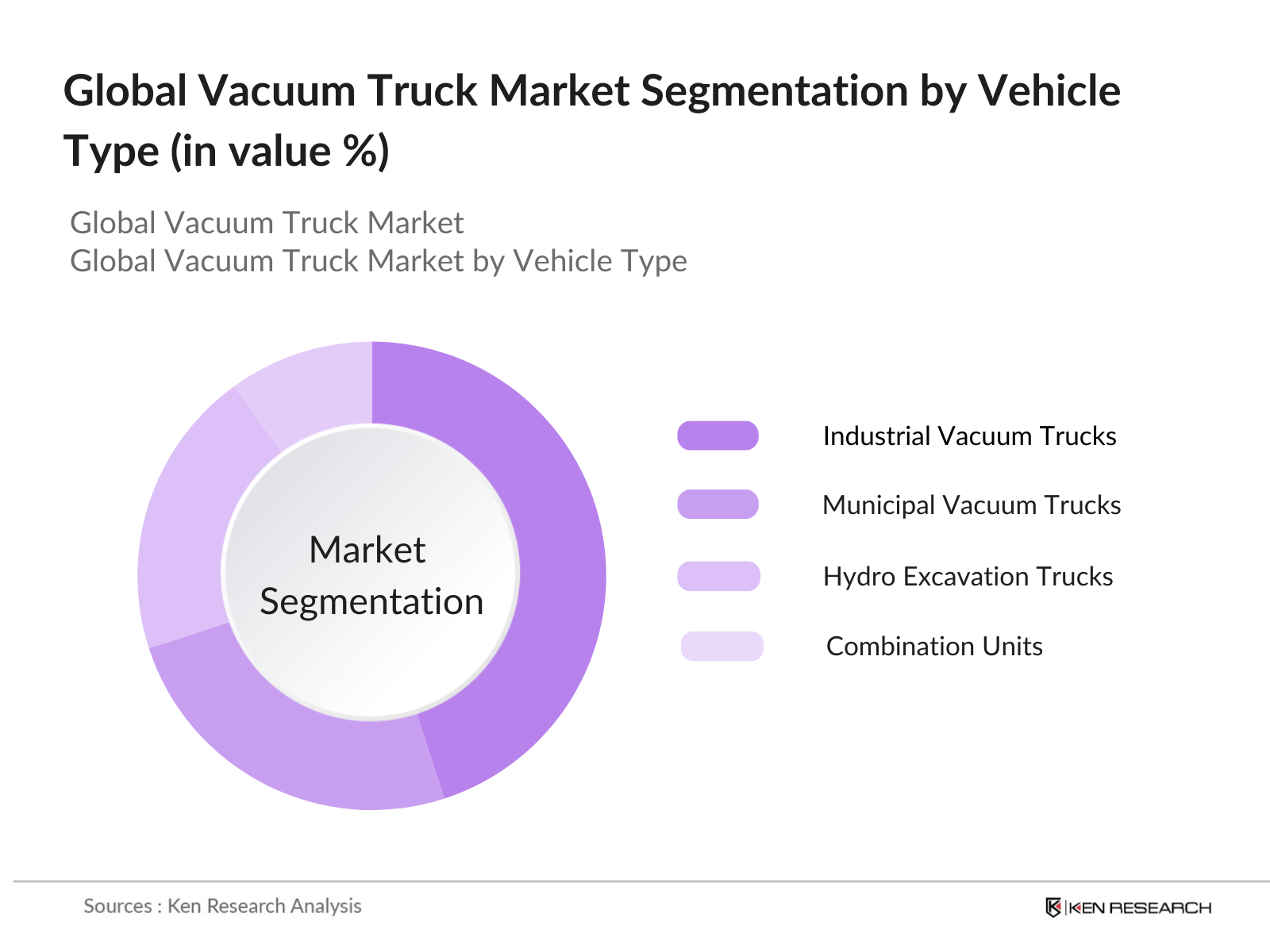
By Vehicle Type: The global vacuum truck market is segmented by vehicle type into industrial vacuum trucks, municipal vacuum trucks, hydro excavation trucks, and combination units. Currently, industrial vacuum trucks hold a dominant market share due to their widespread application in heavy industries like oil & gas and chemicals. The need for efficient waste collection and disposal in hazardous environments, along with stringent safety regulations, has bolstered the demand for industrial vacuum trucks globally.
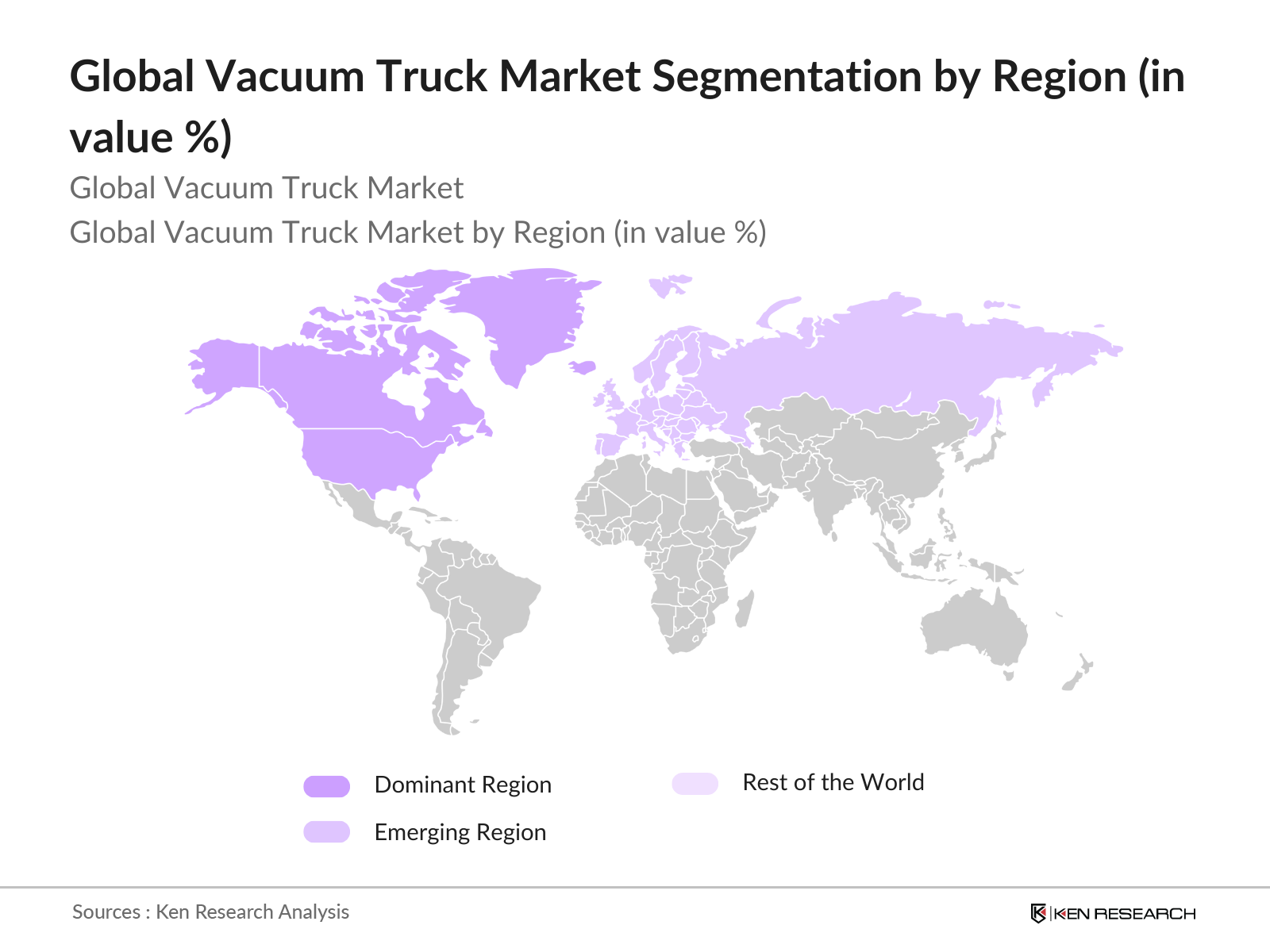
By Region: The vacuum truck market is regionally segmented into North America, Europe, Asia-Pacific, Latin America, and the Middle East & Africa. North America holds the largest market share, largely driven by the U.S., where the oil & gas industry is highly developed and urbanization is prevalent. The presence of major market players and the early adoption of waste management technologies in this region have helped North America dominate the global vacuum truck market.
Global Vacuum Truck Market Competitive Landscape
The global vacuum truck market is dominated by a few major players, including industry leaders such as Federal Signal Corporation and Vactor Manufacturing. These companies have established themselves through strong distribution networks, consistent product innovation, and an emphasis on R&D, helping them maintain significant influence over the market. The introduction of smart vacuum trucks integrated with IoT and AI technology by some companies has also enabled them to differentiate their products and maintain a competitive edge.
|
Company |
Establishment Year |
Headquarters |
Revenue (USD) |
Production Capacity |
Global Reach |
No. of Employees |
R&D Investments |
Product Portfolio |
|
Federal Signal Corporation |
1901 |
Illinois, USA |
||||||
|
Vactor Manufacturing |
1911 |
Illinois, USA |
||||||
|
KOKS Group B.V. |
1989 |
Alkmaar, Netherlands |
||||||
|
Vac-Con, Inc. |
1986 |
Florida, USA |
||||||
|
Guzzler Manufacturing |
1973 |
Illinois, USA |
Global Vacuum Truck Market Analysis
Market Growth Drivers
- Stringent Government Waste Management Regulations: Governments worldwide have ramped up regulations regarding waste collection and disposal. The European Union's Waste Framework Directive mandates proper handling of hazardous waste, impacting the vacuum truck market as these vehicles are critical in safe transportation and disposal. In the U.S., waste management policies under the Environmental Protection Agency (EPA) led to stricter control over hazardous waste, increasing the demand for specialized vacuum trucks. According to the EPA, over 291 million tons of municipal solid waste were generated in 2022, requiring efficient transportation solutions.
- Increased Infrastructure Development (Urban and Rural): Countries are investing heavily in infrastructure projects to support both urban and rural communities. The U.S. Infrastructure Investment and Jobs Act, with a total allocation of over $1.2 trillion, is expected to fuel growth in waste collection services across cities and rural areas. Vacuum trucks are essential for maintaining drainage systems, waste collection, and industrial cleanup operations, particularly in regions undergoing rapid construction and infrastructure development. Indias ongoing $110 billion smart city projects also require robust waste management solutions.
- Rising Investments in Waste and Water Management: Global investments in waste and water management are increasing as governments prioritize public health and environmental sustainability. According to the World Bank, several nations are allocating significant resources toward improving sanitation and waste management. For instance, the Middle East and Africa, regions facing severe water scarcity, have been investing heavily in efficient water reuse and waste management systems. Vacuum trucks play a crucial role in both sewage management and industrial waste cleanup, driving demand in these regions.
Market Challenges
- High Initial Investment Costs: The acquisition of vacuum trucks entails significant capital outlay, limiting market penetration, especially for smaller firms in developing economies. On average, a vacuum truck costs between $150,000 and $400,000 depending on its specifications. Governments in emerging economies like India and Brazil struggle to allocate sufficient budgets for advanced waste management technologies. Infrastructural bottlenecks and the high initial investment in these technologies remain a challenge, particularly in regions where government subsidies or financial aid are limited.
- Limited Technological Expertise in Developing Economies: In regions such as Sub-Saharan Africa and Southeast Asia, there is a shortage of skilled technicians capable of maintaining and operating advanced vacuum trucks. Countries like Nigeria and Bangladesh have faced setbacks in deploying modern waste management equipment due to a lack of trained professionals. The World Bank has noted that low technological adoption rates, combined with the absence of vocational training programs, have hindered market growth in developing nations.
Global Vacuum Truck Market Future Outlook
Over the next five years, the vacuum truck market is expected to experience steady growth, driven by the increasing need for efficient waste management solutions across various industrial sectors. Key drivers will include advancements in automation, the rising adoption of electric and hybrid vacuum trucks, and continued government investments in environmental sustainability initiatives. The shift towards more sustainable waste collection methods and the growing awareness of environmental impact are expected to reshape the market landscape, creating new opportunities for both established players and emerging competitors.
Market Opportunities:
- Adoption of Electric and Hybrid Vacuum Trucks: Governments are pushing for cleaner energy solutions in waste management, leading to the rise of electric and hybrid vacuum trucks. Europe has spearheaded the movement, with Norway and the Netherlands investing in electric waste trucks to reduce carbon emissions. As of 2023, the European Union aims to deploy over 30,000 electric vehicles across its waste management sector, significantly reducing greenhouse gas emissions and operational costs. This trend is slowly permeating other regions such as North America and Asia-Pacific.
- Smart Vacuum Trucks Integrated with IoT Technology: Smart technology is revolutionizing the waste management industry. IoT-enabled vacuum trucks equipped with sensors can monitor waste levels, optimize routes, and reduce fuel consumption. The U.S. governments "Smart Cities Initiative" allocates over $165 million toward smart infrastructure, including waste management, leading to a rise in demand for smart vacuum trucks. IoT integration in vacuum trucks is expected to enhance efficiency in urban waste collection across North America and Europe.
Scope of the Report
|
By Vehicle Type |
Industrial Vacuum Trucks Municipal Vacuum Trucks Hydro Excavation Trucks Combination Units |
|
By End-Use Industry |
Oil & Gas Construction Municipal Industrial Chemicals |
|
By Capacity |
Less than 1000 Gallons 1000-3000 Gallons More than 3000 Gallons |
|
By Technology |
Manual Operation Semi-Automated Systems Fully Automated Systems IoT-Integrated Vacuum Trucks |
|
By Region |
North America Europe Asia-Pacific Latin America Middle East & Africa |
Products
Key Target Audience
Industrial Waste Management Companies
Municipal Waste Collection Agencies
Construction Firms
Oil & Gas Companies
Chemicals Manufacturers
Government and Regulatory Bodies (EPA, Ministry of Environment)
Investments and Venture Capitalist Firms
Heavy Vehicle Manufacturers
Companies
Players Mention in the Report
Federal Signal Corporation
Vactor Manufacturing
KOKS Group B.V.
Vac-Con, Inc.
Guzzler Manufacturing
Super Products LLC
Rivard
Hi-Vac Corporation
Amthor International
Bucher Municipal AG
Foton Motor Co., Ltd.
GapVax, Inc.
Keith Huber Corporation
Presvac Systems
Emerson Electric Co.
Table of Contents
Research Methodology
Step 1: Identification of Key Variables
The initial phase involves mapping the stakeholders of the global vacuum truck market, utilizing extensive secondary research to gather industry-level information. This helps in defining the major market variables and identifying trends across the ecosystem.
Step 2: Market Analysis and Construction
In this stage, historical data related to vacuum truck manufacturing, sales, and revenue generation is analyzed. Data regarding market penetration, key industry trends, and operational capacity are collected to assess the overall market performance.
Step 3: Hypothesis Validation and Expert Consultation
Market hypotheses developed from desk research are validated via interviews with industry experts. These consultations help refine data accuracy and provide valuable insights into operational challenges and opportunities.
Step 4: Research Synthesis and Final Output
The final stage synthesizes both primary and secondary data to produce a comprehensive report. Validation is achieved through bottom-up data collection methods, ensuring a reliable and accurate representation of the vacuum truck market.
Frequently Asked Questions
01. How big is the global vacuum truck market?
The global vacuum truck market was valued at USD 1.98billion, driven by increased demand for waste management solutions in sectors like oil & gas and construction.
02. What are the key growth drivers in the vacuum truck market?
Key growth drivers include increasing industrialization, stricter waste management regulations, and technological advancements in vacuum truck automation and fuel efficiency.
03. Who are the major players in the vacuum truck market?
Major players in the market include Federal Signal Corporation, Vactor Manufacturing, KOKS Group B.V., Vac-Con, Inc., and Guzzler Manufacturing, dominating due to their large production capacities and global reach.
04. What are the challenges facing the vacuum truck market?
Challenges include the high initial cost of purchasing vacuum trucks, the lack of skilled labor to operate these machines, and the environmental impact of disposing of hazardous materials collected by the trucks.
Why Buy From Us?

What makes us stand out is that our consultants follows Robust, Refine and Result (RRR) methodology. i.e. Robust for clear definitions, approaches and sanity checking, Refine for differentiating respondents facts and opinions and Result for presenting data with story

We have set a benchmark in the industry by offering our clients with syndicated and customized market research reports featuring coverage of entire market as well as meticulous research and analyst insights.

While we don't replace traditional research, we flip the method upside down. Our dual approach of Top Bottom & Bottom Top ensures quality deliverable by not just verifying company fundamentals but also looking at the sector and macroeconomic factors.

With one step in the future, our research team constantly tries to show you the bigger picture. We help with some of the tough questions you may encounter along the way: How is the industry positioned? Best marketing channel? KPI's of competitors? By aligning every element, we help maximize success.

Our report gives you instant access to the answers and sources that other companies might choose to hide. We elaborate each steps of research methodology we have used and showcase you the sample size to earn your trust.

If you need any support, we are here! We pride ourselves on universe strength, data quality, and quick, friendly, and professional service.