
Global Variable Air Volume (VAV) Systems Market Outlook to 2030
Region:Global
Author(s):Sanjna Verma
Product Code:KROD8643
Region:Global
Author(s):Sanjna Verma
Product Code:KROD8643
December 2024
95
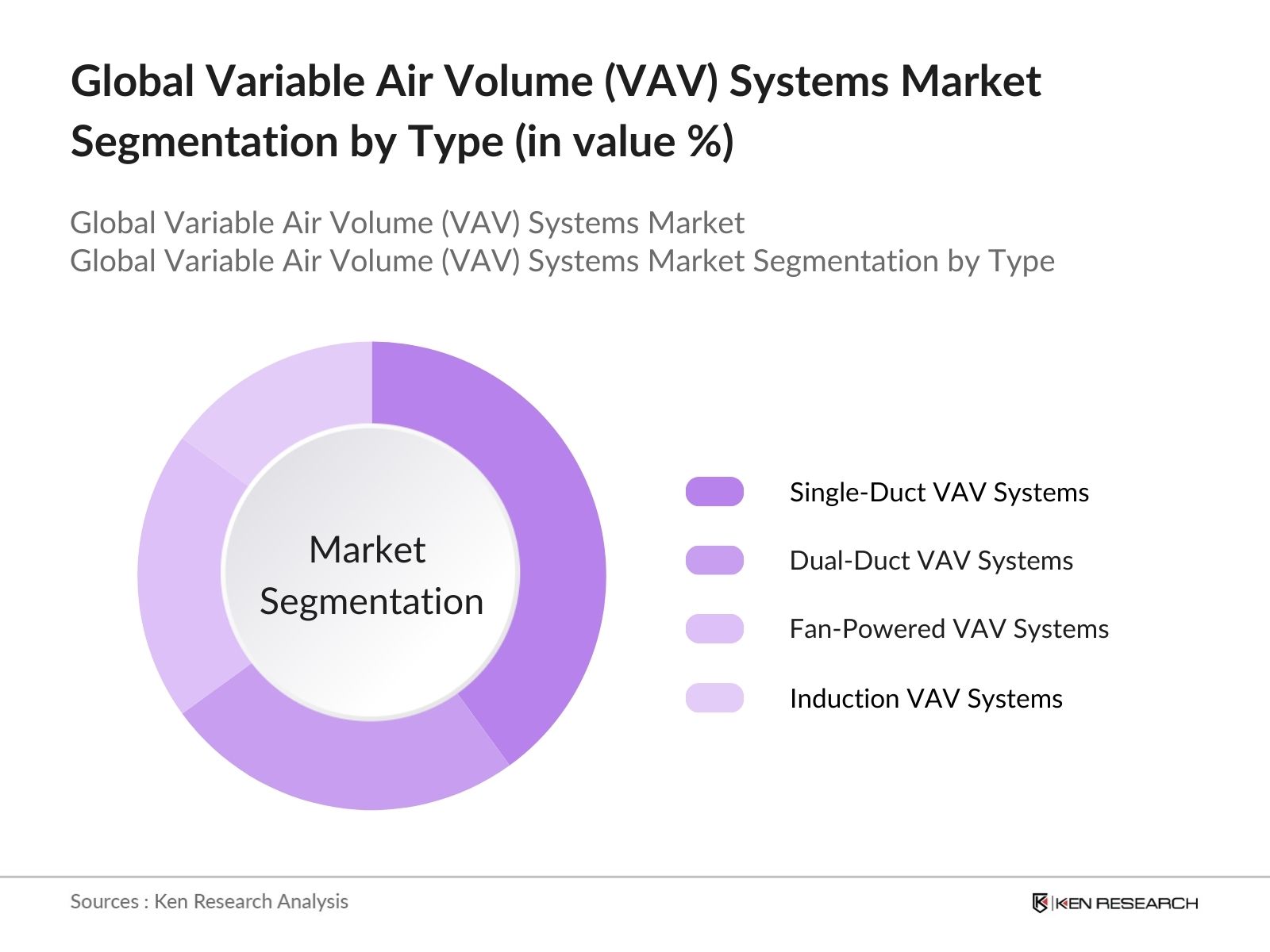
By Type: The global Variable Air Volume systems market is segmented by type into single-duct VAV systems, dual-duct VAV systems, fan-powered VAV systems, and induction VAV systems. Among these, single-duct VAV systems hold the dominant market share in 2023. This is due to their widespread usage in large-scale commercial and industrial projects where energy efficiency and cost-effectiveness are primary concerns. Single-duct VAV systems are preferred because they offer a simpler and less expensive solution while still providing excellent zone-level control of air distribution.
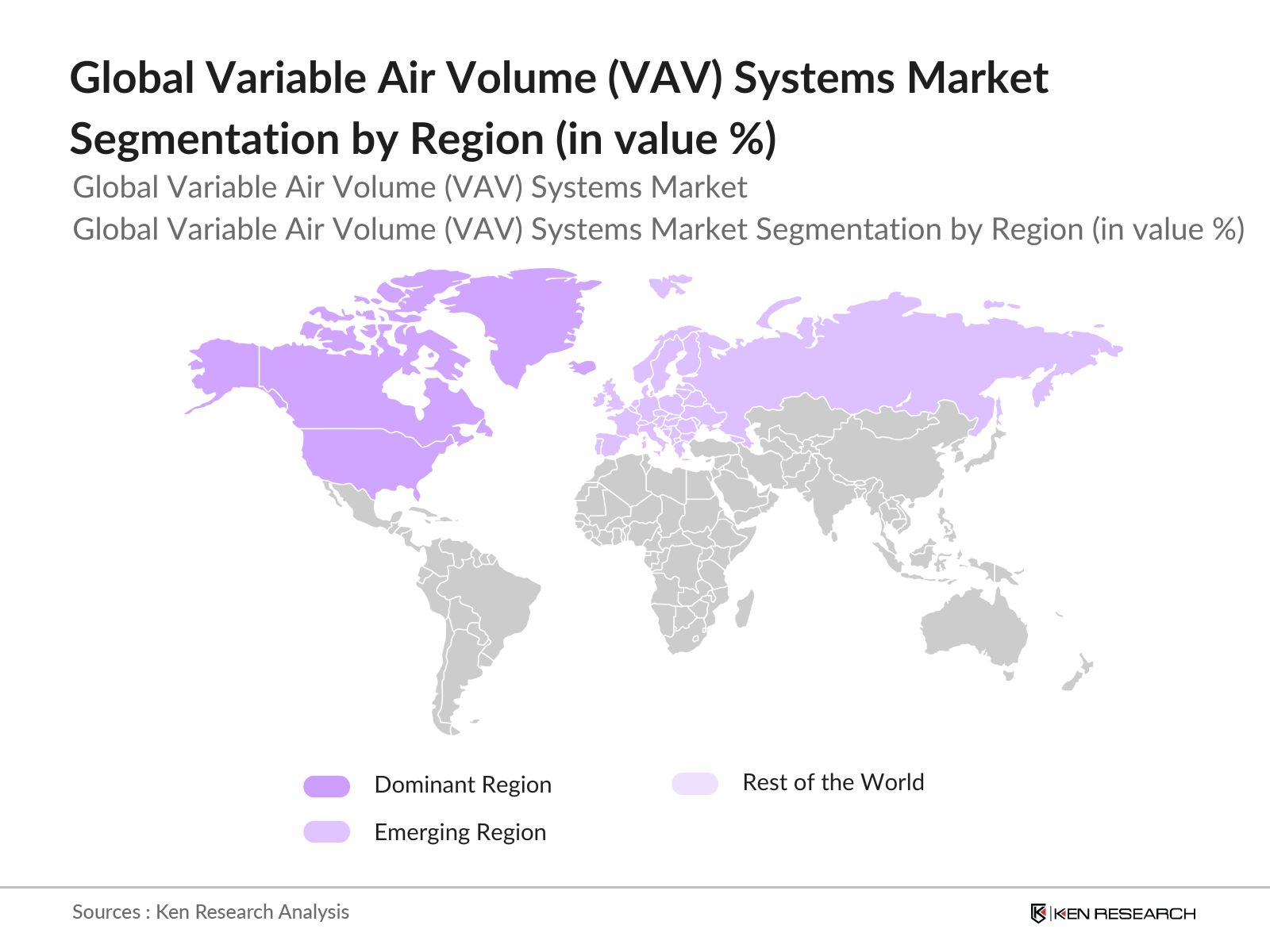
By Region: The regional segmentation includes North America, Europe, Asia Pacific, Middle East & Africa, and Latin America. In 2023, North America leads the market for VAV systems due to strict energy-efficiency regulations and a large number of high-rise commercial buildings. The regions advanced construction and HVAC industries, alongside significant retrofitting initiatives for older buildings, contribute to its leadership in the market.
By Application: The VAV systems market is also segmented by application into commercial buildings, industrial buildings, residential buildings, and healthcare facilities. Commercial buildings dominate the market in 2023, particularly large office buildings, retail spaces, and educational institutions. The reason for this dominance is the higher need for energy-efficient HVAC systems in large commercial spaces to ensure regulatory compliance with energy efficiency mandates and optimize cost savings over long-term usage.
The VAV systems market is dominated by a few major players that offer comprehensive HVAC solutions, including both product manufacturing and after-sales services. These companies often invest in R&D to introduce more energy-efficient systems that meet evolving global standards. They also engage in strategic collaborations and acquisitions to expand their market reach. The competitive landscape of the market underscores the dominance of established players who are focusing on innovative HVAC systems, partnerships, and sustainability efforts to cater to evolving market demands.
|
Company |
Establishment Year |
Headquarters |
Revenue (USD Bn) |
Number of Employees |
Product Range |
R&D Expenditure |
Geographic Reach |
Sustainability Initiatives |
Recent Mergers/Acquisitions |
|
Carrier Corporation |
1915 |
Palm Beach, Florida |
- |
- |
- |
- |
- |
- |
- |
|
Trane Technologies |
1913 |
Dublin, Ireland |
- |
- |
- |
- |
- |
- |
- |
|
Johnson Controls International |
1885 |
Cork, Ireland |
- |
- |
- |
- |
- |
- |
- |
|
Daikin Industries, Ltd. |
1924 |
Osaka, Japan |
- |
- |
- |
- |
- |
- |
- |
|
Siemens AG |
1847 |
Munich, Germany |
- |
- |
- |
- |
- |
- |
- |
Global Variable Air Volume Systems Market is expected to experience significant growth driven by the increased implementation of green building regulations, which mandate energy-efficient solutions in construction. Advancements in IoT-based HVAC control systems will also drive the market forward, as real-time air distribution control becomes a critical factor in building management. As awareness of energy efficiency and sustainable construction continues to rise, emerging markets such as India and Southeast Asia are expected to witness robust demand for VAV systems.
|
Segment |
Sub-Segment |
|
By Type |
Single-Duct VAV Systems Dual-Duct VAV Systems Fan-Powered VAV Systems Induction VAV Systems |
|
By Application |
Commercial Buildings Industrial Buildings Residential Buildings Healthcare Facilities |
|
By Component |
VAV Terminals Ducts and Dampers Control Systems and Sensors Air Filters and Purifiers |
|
By End-User |
HVAC Contractors Facilities Management Companies Government and Municipal Buildings Infrastructure Development Firms |
|
By Region |
North America Europe Asia Pacific Middle East & Africa Latin America |
1.1. Definition and Scope
1.2. Market Taxonomy
1.3. Industry Growth Rate (HVAC Market, Building Management Systems)
1.4. Key Market Drivers (Energy Efficiency, Regulatory Requirements, Occupant Comfort)
1.5. Market Segmentation Overview
2.1. Historical Market Size
2.2. Year-On-Year Growth Analysis
2.3. Key Milestones and Developments in the Market
3.1. Growth Drivers
3.1.1. Rising Energy Efficiency Regulations (LEED, BREEAM, Energy Star)
3.1.2. Integration with Building Automation Systems (BAS Integration)
3.1.3. Focus on Occupant Comfort and Indoor Air Quality (IAQ Standards)
3.1.4. Retrofit Demand in Existing Buildings (Energy Retrofitting Initiatives)
3.2. Market Challenges
3.2.1. High Initial Capital Expenditure (Installation and Maintenance Costs)
3.2.2. Complexity in System Design and Installation (Technical Skill Requirements)
3.2.3. Limited Awareness in Emerging Economies (Education and Training Gaps)
3.2.4. Compatibility Issues with Existing HVAC Systems (System Integration Barriers)
3.3. Opportunities
3.3.1. Expansion of Smart Building Projects (IOT Integration)
3.3.2. Growing Demand in Healthcare and Education Sectors (Specific HVAC Requirements)
3.3.3. Energy Consumption Optimization in Large-Scale Projects (Green Building Codes)
3.3.4. Emerging Markets for Energy-Saving Technologies (Developing Nations Adoption)
3.4. Trends
3.4.1. Integration with Renewable Energy Sources (Solar-Powered HVAC Systems)
3.4.2. Advanced Control Systems and Automation (Smart HVAC Controllers)
3.4.3. Demand for Flexible HVAC Systems (Modular and Customizable VAV Systems)
3.4.4. Integration with Advanced Air Filtration and Purification Systems (Air Quality Management)
3.5. Government Regulation
3.5.1. Energy Efficiency Standards (ASHRAE, DOE, EPBD)
3.5.2. Emission Reduction Targets (Carbon Neutrality Policies)
3.5.3. Building Energy Performance Codes (ZEB, Net-Zero Building Policies)
3.5.4. HVAC System Safety Standards (Safety Guidelines and Certifications)
3.6. SWOT Analysis
3.7. Stakeholder Ecosystem (Contractors, Distributors, Consultants)
3.8. Porters Five Forces Analysis
4.1. By Type (In Value %)
4.1.1. Single-Duct VAV Systems
4.1.2. Dual-Duct VAV Systems
4.1.3. Fan-Powered VAV Systems
4.1.4. Induction VAV Systems
4.2. By Application (In Value %)
4.2.1. Commercial Buildings
4.2.2. Industrial Buildings
4.2.3. Residential Buildings
4.2.4. Healthcare Facilities
4.3. By Component (In Value %)
4.3.1. VAV Terminals
4.3.2. Ducts and Dampers
4.3.3. Control Systems and Sensors
4.3.4. Air Filters and Purifiers
4.4. By End-User (In Value %)
4.4.1. HVAC Contractors
4.4.2. Facilities Management Companies
4.4.3. Government and Municipal Buildings
4.4.4. Infrastructure Development Firms
4.5. By Region (In Value %)
4.5.1. North America
4.5.2. Europe
4.5.3. Asia Pacific
4.5.4. Middle East & Africa
4.5.5. Latin America
5.1. Detailed Profiles of Major Competitors
5.1.1. Carrier Corporation
5.1.2. Trane Technologies
5.1.3. Daikin Industries, Ltd.
5.1.4. Johnson Controls International
5.1.5. Siemens AG
5.1.6. Honeywell International Inc.
5.1.7. Mitsubishi Electric Corporation
5.1.8. Schneider Electric
5.1.9. Lennox International
5.1.10. Ingersoll Rand
5.2. Cross Comparison Parameters (Revenue, Headquarters, Product Range, Number of Patents, Research & Development Focus, Market Penetration, Sustainability Initiatives, After-Sales Support)
5.3. Market Share Analysis
5.4. Strategic Initiatives
5.5. Mergers and Acquisitions
5.6. Investment Analysis
5.7. Government Contracts and Grants
5.8. New Product Developments
6.1. Energy Efficiency Regulations
6.2. Environmental Compliance Standards
6.3. Certification Processes (LEED Certification, Energy Star Certification)
7.1. Future Market Size Projections
7.2. Key Factors Driving Future Market Growth
8.1. By Type (In Value %)
8.2. By Application (In Value %)
8.3. By Component (In Value %)
8.4. By End-User (In Value %)
8.5. By Region (In Value %)
9.1. TAM/SAM/SOM Analysis
9.2. Customer Acquisition Strategies
9.3. Market Penetration Strategies
9.4. White Space Opportunity Analysis
The research process begins with identifying critical variables such as the types of VAV systems, key applications, and major growth drivers within the HVAC sector. This is done by reviewing industry white papers, government reports, and proprietary databases.
This phase involves the analysis of historical data and trends in the VAV systems market to establish current market dynamics. This includes evaluating the penetration of different VAV systems across sectors like healthcare, commercial, and industrial buildings.
Industry experts from leading HVAC system manufacturers and building management companies are consulted through surveys and in-depth interviews. This validation process helps refine the market forecasts and verify critical trends observed during data analysis.
In the final step, we compile and synthesize the collected data, cross-referencing it with insights from industry leaders and government databases. This ensures the report is comprehensive, accurate, and aligned with market realities.
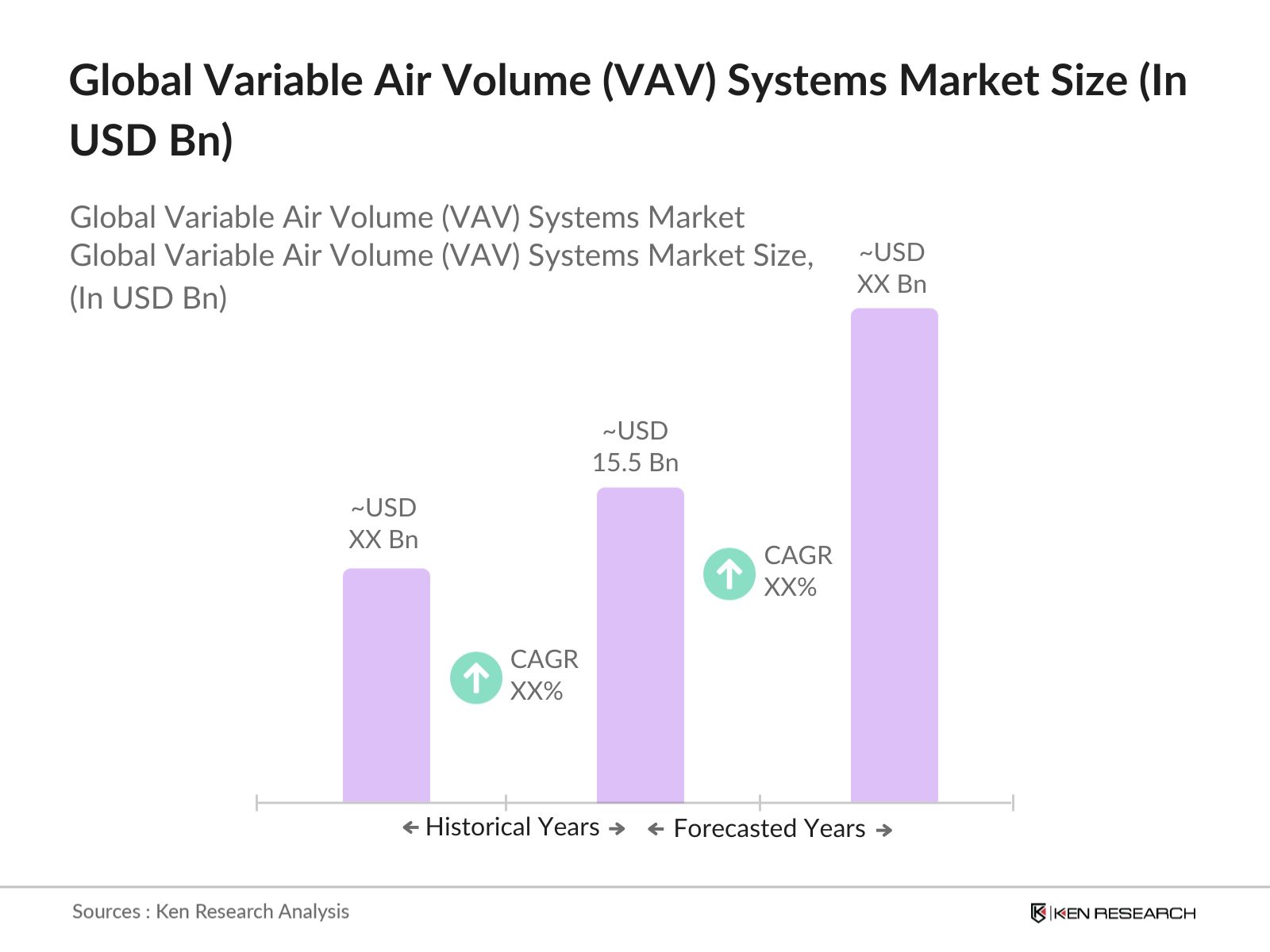
The global VAV systems market was valued at USD 15.5 billion, driven by increased demand for energy-efficient HVAC solutions in commercial and industrial buildings.
Challenges in global VAV systems market include high initial installation costs, system complexity, and the limited adoption of advanced VAV systems in emerging markets due to a lack of awareness and skilled technicians.
Key players in global VAV systems market include Carrier Corporation, Trane Technologies, Johnson Controls International, Daikin Industries, Ltd., and Siemens AG. These companies dominate due to their established product portfolios and extensive global reach.
Growth in global VAV systems market is primarily driven by stringent energy efficiency regulations, the rise of smart buildings, and advancements in IoT-based HVAC systems, which enhance energy savings and occupant comfort.

What makes us stand out is that our consultants follows Robust, Refine and Result (RRR) methodology. i.e. Robust for clear definitions, approaches and sanity checking, Refine for differentiating respondents facts and opinions and Result for presenting data with story

We have set a benchmark in the industry by offering our clients with syndicated and customized market research reports featuring coverage of entire market as well as meticulous research and analyst insights.

While we don't replace traditional research, we flip the method upside down. Our dual approach of Top Bottom & Bottom Top ensures quality deliverable by not just verifying company fundamentals but also looking at the sector and macroeconomic factors.

With one step in the future, our research team constantly tries to show you the bigger picture. We help with some of the tough questions you may encounter along the way: How is the industry positioned? Best marketing channel? KPI's of competitors? By aligning every element, we help maximize success.

Our report gives you instant access to the answers and sources that other companies might choose to hide. We elaborate each steps of research methodology we have used and showcase you the sample size to earn your trust.

If you need any support, we are here! We pride ourselves on universe strength, data quality, and quick, friendly, and professional service.